Thursday, April 23, 2026
Home Blog Page 297

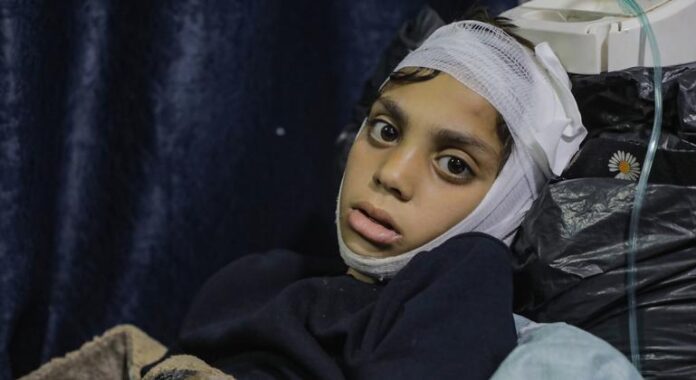
Gaza: Nearly 1,400 Palestinians killed while seeking food, as UN warns airdrops are no solution

0
Gaza: Nearly 1,400 Palestinians killed while seeking food, as UN warns airdrops are no solution

Between 30 and 31 July alone, 105 Palestinians were killed and at least 680 more injured along the convoy routes in the Zikim area in North Gaza, southern Khan Younis, and in the vicinity of the GHF sites in Middle Gaza and Rafah, the office (OHCHR) said in a press release issued on Friday

In total, since 27 May, at least 1,373 Palestinians have been killed while seeking food; 859 in the vicinity of the GHF sites and 514 along the routes of food convoys.

OHCHR noted that most of the killings were committed by the Israeli military, and that while it is aware of the presence of other armed elements in the same areas, it does not have information indicating their involvement in the killings.

“[The office] has no information that these Palestinians were directly participating in hostilities or posed any threat to Israeli security forces or other individuals. Each person killed or injured had been desperately struggling for survival, not only for themselves, but also for their families and dependents,” it said.

Uphold international law

The office emphasized that intentionally directing attacks against civilians not taking direct part in hostilities and intentionally using starvation of civilians as a method of warfare by depriving them of objects indispensable to their survival, including willfully impeding relief supplies, are war crimes.  

“If part of a systematic or widespread attack on the civilian population, these may also constitute crimes against humanity,” OHCHR added, noting that the cumulative impact of these incidents and humanitarian access restrictions.

“Each of these killings must be promptly and independently investigated, and those responsible held to account. Urgent measures must be put in place to prevent recurrence,” it said.

Airdrops not effective

Meanwhile, the UN Relief and Works Agency for Palestine Refugees (UNRWA), underscored the need to open road crossings to supply aid at scale across the Gaza Strip.

“Airdrops are at least 100 times more costly than trucks. Trucks carry twice as much aid as planes,” UNRWA Commissioner-General Philippe Lazzarini said on social media.  

“If there is political will to allow airdrops – which are highly costly, insufficient and inefficient, there should be similar political will to open the road crossings,” he stressed.

Mr. Lazzarini further noted that UNRWA has 6,000 trucks loaded with aid stuck outside Gaza waiting permission to enter.  

During the ceasefire earlier this year, UNRWA and other UN agencies were able to bring in 500 to 600 trucks of aid each day.  

“Aid reached the entire population of Gaza in safety and dignity. It succeeded to reverse the deepening starvation without any aid diversion,” the UNRWA head said.

“Let us go back to what works and let us do our job.” 

Source link

Lines of hunger in Gaza: “the food is not sufficient”

0

Earning a living has become a daily struggle, and hundreds of men, women and children are held in endless queues, under the burning sun, outside the few community kitchens that only serve lentil soup.

Community cuisine in the west of Gaza reveals a panorama of painful scenes in the midst of suffering displaced people, from their cries to help and their urgent calls in the world, demanding the end of their tragedy and their relief.

Community cooking workers are busy preparing the lentil soup while plastic bowls and empty plates are stacked behind an iron fence, while waiting for a small amount that many may not be able to obtain a sip.

After a bitter fight, Ziad al-Ghariz, an elderly person in Gaza, managed to obtain a cup of lens soup. He sat on the ground and started taking slow sips. He said UN News that he had not tasted bread for 10 consecutive days.

“We are starving here”

“I eat the lentil soup distributed by community cuisine,” he said. “I can’t afford me at all. I don’t have the money for that, so I try to get what the kitchen is distributing. The inhabitants of Gaza are hungry. “

Young Mohammed Nayfeh says he spent four hours waiting for a meal for his family.

“I’ve been standing here for four hours, and I can’t have food in the crowd and the sun,” he said. “We die. We need support. We need food and drinks. Where is the world? We are dying here. Every day, we only eat lenses. There is no flour, no food, no drink. We are hungry. “

A group of displaced Palestinians meeting in front of a local community cuisine in the west of the city of Gaza.

Burn in the sun or be trapped

“Either we burn in the sun, or we are trampled under the feet”

Umm Muhammad, a displaced person from the Shujaiya district, described the macabre scene around them.

“There is no water, no food, no bread,” she said. “The bitterness of the situation forces us to come here. At the end, we come back without anything. We come back either burned under the sun or trampled under the foot due to overcrowding, and we return empty -handed. And no one listens. »»

Hussam al-Qamari, who was also moved from Shujaiya, said the situation was no longer acceptable.

“We die and our children die of hunger,” she said. “So many things happen to the inhabitants of Gaza. Much of what’s going on is unacceptable. An old man like me has been held here since morning, wearing a bowl so that his children have breakfast, and they still haven’t eaten. ”

Um Muhammad, who fled the district of Shujaiya in the east of Gaza City to its western areas, is waiting to take food.

Classrooms with queues for lenses

According to the latest conclusions of the United Nations Agency for Relief and Works for Palestinian refugees (UNRWA), one in five children from Gaza City suffers from malnutrition, the cases increasing daily.

The image of this little girl standing behind an iron fence, holding her empty bowl while waiting for a small lens soup, sums up this horrible tragedy, for which children pay the heaviest price.

Bassam Abu Odeh, a person moved by Beit Hanoun, called.

“We invite all the free people in the world and peace lovers to help us provide food and water until this famine is imposed by the occupation ends. The trucks authorized in the region by the occupation are not even a drop in the ocean of needs. We have no one, but God. “

A Gaza girl waiting to fill her lentil container.

“Food is not enough”

Umm Rami, a displaced person in the Zeitoun district, said that the necessities of life were missing in Gaza, calling the world to look at the inhabitants of the compassion band.

“I came here to get a small amount of food to feed my children.” It is our reality now: we come to community kitchens for food, having lived once with dignity and respect in our own houses. »»

She said food is not enough.

“We have reached a point where we line up for food and water. As you can see, children’s lives now revolves around water and food lines. Food is not enough. We only have God. The world must look at us and everyone must arouse their conscience. ”

Undeniable risk of famine

According to a warning issued by the integrated classification of the food security phase (IPC), Gaza faces a serious risk of famine, as indicators of food consumption and nutrition have reached their worst levels since the start of the current conflict.

The alert underlines that two of the three famine thresholds were observed in certain parts of the Gaza Strip, with the World Food Program (Wfp) and the United Nations Children’s Fund (Unicef) Warning that time is launching a complete humanitarian response.

The UN Secretary General said that the alert confirms that Gaza is on the brink of famine. He said that the facts are undeniable and that the Palestinians of Gaza suffer from a humanitarian disaster of epic proportions.

“It is not a warning, but a reality that takes place before our eyes,” he said.

He underlined the need for help to help to become an “ocean”, with food, water, drugs and fuel flowing without obstacle.

“This nightmare must end,” he said.

Death looking for food

The United Nations Office for Humanitarian Affairs Coordination (Ochha) said that day after the start of the tactical breaks announced by the Israeli authorities in Gaza, “we continue to see losses among those looking for help and more death by hunger and malnutrition. »»

The United Nations office said that parents continue to fight to save their hungry children. Desperate and hungry people continue to unload small truck aids who manage to leave the crossings.

Although the United Nations and its partners benefit from each opportunity to support those who need it during unilateral tactical breaks, the conditions for providing aid and supplies are far from adequate, according to OCHA.

Originally published at Almouwatin.com

Nanofibers yield stronger, tougher carbon fiber composites

0


Researchers at the U.S. Department of Energy’s Oak Ridge National Laboratory have developed an innovative new technique using

Source link

Gaza: ‘No one should ever be forced to risk their life to find food,’ says UN humanitarian agency

0
Gaza: ‘No one should ever be forced to risk their life to find food,’ says UN humanitarian agency

The months-long deprivation of most life-sustaining basic goods has led to a deepening of the crisis.  More than 100 people were killed, and hundreds of others injured, along food convoy routes and near Israeli-militarised distribution hubs in the past two days alone.  

As one in three people currently going days without food, OCHA reiterated that no one should ever be forced to risk their life to get something to eat.  

Ted Chaiban, Deputy Director of UN children’s agency UNICEF, who is fresh from a visit to Gaza, noted that “the marks of deep suffering and hunger were visible on the face of families and children.”

He was briefing journalists in New York about his five-day visit in Gaza, the West Bank and Israel. 

Grave risk of famine

“Gaza now faces a grave risk of famine,” he said, briefing journalists in New York about his five-day mission to the enclave, the West Bank and Israel.

“This is something that has been building up, but we now have two indicators that have exceeded the famine threshold.”  

The crisis can only be addressed through unrestricted flow of aid into Gaza, with commercial supplies also allowed to enter to help address people’s needs.  

Nearly a week since the Israeli announcement to allow the scale up of aid and tactical pauses to allow safe passage of UN convoys, OCHA reported that the aid that has entered Gaza so far remains insufficient, while UN convoys continue to face impediments and danger along the routes provided by the Israeli authorities.  

“Civilians must always be protected and community-level aid delivery at scale must be facilitated, not obstructed,” said OCHA.  

Starved, bombed and displaced  

“The children I met are not victims of a natural disaster. They are being starved, bombed, and displaced,” Mr. Chaiban said.  He noted that more than 18,000 boys and girls have been killed since the beginning of the war, “an average of 28 children a day, the size of a classroom, gone.”  

While in Gaza, Mr. Chaiban met with the families of the 10 children killed and 19 injured by an Israeli airstrike as they were queuing for food with their mothers and fathers at a UNICEF-supported nutrition clinic in Deir Al-Balah.  

Discussion with Israeli authorities

Engaging with Israeli authorities in Jerusalem and Tel Aviv, UNICEF “pressed for a review of [Israel’s] military rules of engagement to protect civilians and children,” Mr. Chaiban said.

Simultaneously, UNICEF also called for more humanitarian aid and commercial traffic to come in to stabilise the situation and reduce the desperation of the population.

“Children should not be getting killed waiting in line at a nutrition centre or collecting water, and people should not be so desperate as to have to rush a convoy,” he said.  

“What is happening on the ground is inhumane.” Mr. Chaiban said, hoping for a sustained ceasefire and a political way forward.  


Source link

Macao: Statement by the Spokesperson on the arrest of Au Kam San

0
Macao: Statement by the Spokesperson on the arrest of Au Kam San

Macao: Statement by the Spokesperson on the arrest of Au Kam San

Source link

Macao: Statement by the Spokesperson on the arrest of Au Kam San

0
Macao: Statement by the Spokesperson on the arrest of Au Kam San

Macao: Statement by the Spokesperson on the arrest of Au Kam San Source link

Source link

ESMA publishes data for quarterly bond liquidity assessment

0

As indicated in the public statement of 27 March 2024, the quarterly liquidity assessment of bonds will continue to be published by ESMA. Further details are provided on the relevant webpages of the calculations. 

Bonds quarterly liquidity assessment 

ESMA has published the latest quarterly liquidity assessment for bonds available for trading on EU trading venues. For this period, there are currently 1,346 liquid bonds subject to MiFID II transparency requirements. 

ESMA’s liquidity assessment for bonds is based on a quarterly assessment of quantitative liquidity criteria, which includes the daily average trading activity (trades and notional amount) and the percentage of days traded per quarter. ESMA updates the bond market liquidity assessments quarterly. However, additional data and corrections submitted to ESMA may result in further updates within each quarter, published in ESMA’s Financial Instruments Transparency System (FITRS)which shall be applicable the day following publication.   

The full list of assessed bonds is now available through FITRS in the XML files with publication date from 1 August 2025 (see here) and through the Register web interface (see here).  

ESMA also publishes two completeness indicators related to bond liquidity data. 

The transparency requirements for bonds deemed liquid today will apply from 18 August to 16 November 2025. The application dates reflect the provisions of the RTS 2 (see the news item for more details).

Source link

ESMA publishes data for quarterly bond liquidity assessment

0
Macao: Statement by the Spokesperson on the arrest of Au Kam San

DISCLAIMER: Information and opinions reproduced in the articles are the ones of those stating them and it is their own responsibility. Publication in The European Times does not automatically means endorsement of the view, but the right to express it.

DISCLAIMER TRANSLATIONS: All articles in this site are published in English. The translated versions are done through an automated process known as neural translations. If in doubt, always refer to the original article. Thank you for understanding.

Source link

UN official decreases the fatal strikes of Ukraine, the impulses return to diplomacy

0

Briefing ambassadors in the Security adviceMiroslav Jenča, general deputy secretary for Europe in the Department of Political Affairs and Peace (DPPA), renewed the call to an immediate ceasefire and a return to diplomacy to end devastation.

“The Ukrainian people have endured almost three and a half years of horrors, death, devastation and unimaginable destruction. They need relief from this nightmare, “he said.

He stressed that diplomacy, not fighting, has to degenerate in the coming days and weeks.

“Diplomacy that leads to real, tangible, verifiable and lasting results that would be felt by people who have suffered for a long time,” he added, reiterating that the UN remains ready to support all the efforts to a just and lasting peace online with the Charter of the United Nations and international law.

ASG Jenča informs the Security Council.

Brutal attacks continue

Mr. Jenča described the “brutal” scale of the latest attacks.

Overnight, between July 30 and 31, a large -scale Russian aerial assault against Kyiv killed at least 31 people – including five children – and injured 159 others, including 16 children. He marked the greatest number of injuries to children in one night in the capital since the start of the invasion in February 2022.

Strikes have damaged 27 locations in four kyiv districts, including a school, a nursery school, a wing at the pediatric hospital and a university building.

“An entire section of a building would also have been destroyed, leaving a lot trapped under the Fire rubble,” said Jenča.

The humanitarian workers, including the United Nations agencies and local partners, responded quickly, offering refuge kits, emergency psychosocial support and legal advice to affected families.

Strike beyond Kyiv

Beyond kyiv, attacks have been reported in at least seven regions-Vinnytsia, Donetsk, Dnipropetrovsk, Zhytomyr, Zaporizhzhia, Cherkasy and Chernihiv-with a total of at least 120 civilian victims in one night.

In Donetsk, two people were said to have been killed and 10 injured; In Kharkiv, a person was killed and seven injured. Additional victims were confirmed in Sumy, Kherson and Zaporizhzhia.

In Kamianske, an attack in the hospital left three dead – including a pregnant woman – and 22 injured, many of whom are medical staff. In Novoplatonivka, in the Kharkiv region, six were killed while waiting for humanitarian aid.

“These horrible continues attacks are simply unacceptable,” said Jenča.

The United Nations Human Rights Office, Ohchrreports that since the start of the large -scale invasion of Thorugh in June of this year, more than 13,580 civilians – including 716 children – have been killed and more than 34,000 injured.

Victims in Russia

Jenča also noted civilian victims in Russia.

Between July 25 and 29, the Russian authorities reported attacks in the Belgorod, Bryansk, Kursk, Leningrad and Rostov regions, causing at least six deaths and multiple injuries.

Although the UN cannot verify these reports, Mr. Jenča has expressed his concern and reiterated that “attacks on civilians and civil infrastructures are prohibited under international law and must stop immediately – wherever they perform”.

Abuse against prisoners of war

He also detailed new allegations of abuse against Ukrainian prisoners of war (prisoners of war).

According to OHCHR interviews with nearly 140 recently released prisoners of war, “almost all … said they had been subjected to torture or ill -treatment”, including blows, electric shocks and suffocation.

The OHCHR has also documented credible reports of 106 executions from Ukrainian soldiers in police custody.

Originally published at Almouwatin.com

World News in Brief: First UN mission to Syria’s Sweida, fresh displacement in Haiti, new lightning record

0
World News in Brief: First UN mission to Syria’s Sweida, fresh displacement in Haiti, new lightning record

The team went to Sweida City, as well as two districts – Shahba and Salkhad – where they met with local community representatives and partners, in addition to visiting displacement sites and reception centres. 

Members also conducted assessments in the three districts of the governorate, where hundreds of people have been killed, and some 175,000 people displaced, in recent sectarian violence amid Syria’s ongoing political transition since the fall of the Assad regime last December.

A senior UN official told the Security Council earlier this week that a fragile ceasefire is “largely holding”.

More aid delivered

OCHA said a fifth humanitarian aid convoy organized by the Syrian Arab Red Crescent also arrived in Sweida on Thursday. It was the largest so far, with 40 trucks.

The convoy, which included UN assistance, delivered medical supplies, flour, fuel, canned goods, hygiene kits and shelter materials, among other assistance. 

On Wednesday, the Syrian Arab Red Crescent also delivered four tankers carrying more than 120,000 litres of fuel.

Haiti: Armed groups expand activities

Armed groups in Haiti are expanding their presence and activities in the Artibonite region which has sparked waves of displacement, according to OCHA. 

Last Monday, violence linked to armed groups flared in the town of Liancourt, where a vehicle and several homes were set on fire. This followed a week of violent clashes.

As of 19 July, nearly 15,000 people have been displaced across four communes in Artibonite. They are staying with host families, many of whom were already finding it hard to meet basic needs.

OCHA said response efforts are underway, led by local humanitarian partners. They have distributed hygiene kits to more than 500 displaced households and host communities, as well as hundreds of hot meals.

2017 lightning flash in US Great Plains sets new world record

A lightning flash in a notorious storm hotspot in the United States nearly a decade ago has been certified as the longest on record, the World Meteorological Organization (WMO) announced on Thursday.

The megaflash – an incredible 829 kilometres long (515 miles) – occurred during a major storm in the Great Plains in October 2017 and was some 61 kilometres greater than the previous record, also set in the same region.

It extended from eastern Texas to near Kansas City, equivalent to the distance between Paris and Venice in Europe: a journey that would take roughly eight to nine hours by car, or at least 90 minutes by plane.

Value of early warning systems 

The flash was not identified in the original 2017 analysis of the storm but was discovered through re-examination. 

WMO’s Committee on Weather and Climate Extremes recognized the new record with the help of the latest satellite technologies and the findings were published in the Bulletin of the American Meteorological Society.

“Lightning is a source of wonder but also a major hazard that claims many lives around the world every year and is therefore one of the priorities for the international Early Warnings for All initiative,” said WMO Secretary-General Celeste Saulo.

Launched in 2022, the initiative aims to ensure that everyone on the planet is protected from hazardous weather, water, or climate events through early warning systems by the end of 2027. 

Source link