Thursday, April 23, 2026
Home Blog Page 304

Sanctions against terrorism: Council renews the EU Terrorist List

0
Sanctions against terrorism: Council renews the EU Terrorist List

The Council renewed the list of those subject to restrictive measures by virtue of Common Position 2001/931/CFSP on the application of specific measures to combat terrorism. Source link

Source link

UN peacekeeping can operate in a fractured world if there is a political will

0

The general subsectary Jean-Pierre Lacroix and the deputy secretary general Marta Pobe informed the priority council for the adaptation of United Nations peace operations to political solutions.

They underlined the urgent need of the Council and the wider members of the United Nations to overcome divisions and strengthen support for peace operations as unique platforms to advance diplomacy in conflict areas.

“” Peacekeeping missions often operate in very volatile environments, where political processes are blocked, confidence between conflict parties is low and disastrous humanitarian conditions,“Said Mr. Lacroix.

“” The progress is incremental, fragile and unequal. A breakthrough in an instant can be followed by the following reverse. However, even modest gains can be essential to prevent a relapse in generalized violence and save lives.“”

He underlined missions which made contributions measurable to the peace processes, such as Minusca In the Central African Republic (car), which helped negotiate the 2019 political agreement and launched disarmament efforts, or Monusco In the Democratic Republic of Congo (DRC), which contributed to the reduction of violence during the 2023 elections.

Crucial unity security advice

Mr. Lacroix stressed that political coherence and unity Security advice Members are essential for the missions to achieve their potential.

Without a “united and united political support”, he warned, peace operations are limited to managing conflicts and protecting civilians rather than supporting lasting peace agreements.

The role of the Council, he added, must extend beyond the authorization of the mandate to a sustained political commitment. He cited the unanimous adoption of resolution 2773 in February 2025 on the DRC as an example of a council unit strengthening diplomatic efforts on the ground.

The United Nations peacekeeping missions, such as that of Mali (MINUSMA, 2013-23), had to adapt to complex challenges, including a severe environment and a myriad of armed groups.

Leadership in the field and flexibility

Mr. Lacroix also underlined the importance of leadership of the dynamic mission, calling for senior officials to serve as “firm ambassadors to peace” who maintain confidence with host governments and conflict actors while adapting to the change of political context.

He stressed the importance of regional partnerships, in particular with the African Union (AU). Resolution 2719 (2023), which allows contributions evaluated to the operations directed by the AU, has been described as a “historic step” in the collaboration of the UNA.

“Take advantage of the investments of countries of contribution of troops and police is more deliberately critical,” he added, noting the example of the double role of Pakistan as a major troop contributor and elected member of the Security Council.

Cold War Lessons

Ms. Pobee’s briefing has strengthened these themes while offering a historical perspective.

She recalled how During the Cold War, despite global tensions, the United Nations special political missions facilitated the peaceful resolution of disputesLike diplomatic efforts in Equatorial Guinea in 1969, Bahrain in 1970 and the border dispute between Iraq and Iran in 1974.

It has identified several key elements behind these successes: clearly concentrated and linked time mandates; the proactive use of the good offices of the Secretary General; Discreet diplomacy and above all consent of host governments and conflict parties.

This foundation of confidence, she noted, is increasingly absent today, representing a “deficit of trust” which complicates peace efforts.

Special political missions of the United Nations in post-conflict contexts, such as the mission in Nepal (Unin, 2007-11) help to maintain stability, dialogue and support for democratic processes.

A unique tool

The two briefs recognized the Difficult global context, deepening the divisions of the Security Council, eroding increasingly complex standards and conflicts involving non -state actors, organized crimes and climate -oriented risks.

However, peace operations, with their combination of civil capacities and uniform, remain essential to stabilize fragile parameters and allow political dialogue, they argued. The longtime mission in Cyprus has been cited as an example of how the sustained presence of the United Nations can prevent climbing, even in the midst of a persistent dead end.

Mr. Lacroix also urged Member States to pay the contributions evaluated in time, warning that insufficient resources undermine the ability of the missions to fulfill their mandates.

Ms. Pobee added that the UN had already sailed polarized eras several times.

“” We were there … But, a clear lesson is that in the midst of acute geopolitical tensions, peace operations have helped the Member States set up tailor -made response to challenges to international peace and security“She said.

Originally published at Almouwatin.com

“ By women, for women ”: 15 years of the United Nations agency to defend gender equality

0

It’s just a way the de facto The authorities have limited the fundamental rights of women and girls. Today, Afghanistan has the second largest gap between the sexes in the world after Yemen.

“Sometimes I wonder how to stay full of hope in these dark circumstances”, said Fariba, whose name has been changed to protect her.

Afghanistan is not the only country where gender equality loses ground. Around the world, one in four countries is experiencing a reaction against women’s rights.

These are the challenges that United Nations Confronts with his 15th anniversary, which makes his mandate and works more urgent that never.

“Now is not the time to withdraw. It’s time to come forward, “said Sima Bahous, the agency Executive Director.

Progress at risk

Created in July 2010, the UN Women is currently working in 80 countries to allow women and girls to achieve their full potential.

Despite the previous hard earnings in accessible education for girls and advocacy for legal rights, the financing of gender equality is drying And progress is mobile at a snail rate.

One in 10 women and girls live in abject poverty, which the world will not eliminate for an additional 137 years at the current rate.

The number of women living nearby and in conflict areas has doubled over the past decade, presenting them to a greater risk of sexist violence, food insecurity and malnutrition.

In addition, 103 countries have never had a head of state, and gender parity in the superior governmental direction will not be carried out for 130 years.

While a digital revolution and an increasingly powerful artificial intelligence sweeps away the world, the genre digital fracture widens, which makes it difficult for women and girls to access the tools around which the future will be constructed.

However, despite such dark circumstances, or perhaps because of them, UN women continuous Be “power for gender equality and the empowerment of women”.

War and peace

More than 600 million women and girls live less than 50 kilometers from a conflict, making it key stakeholders in any process of strengthening peace. More than that, the evidence suggests that the peace processes with the signatories of women are more sustainable.

Despite this, between 2020 and 2023, 80% of peace talks did not include women.

However, in some countries, there are promising changes to great inclusion and gender parity in peace -related activities.

For example, in UkraineDemining, a profession that has historically excluded women due to the normative perceptions of the danger, attracts more women.

“What seems” not a woman’s work “can prove to be your mission”, ” said Tetiana Ribanka, the head of a demining team there.

This is particularly important in Ukraine, where the UN action service (UNMAS) estimates that at least 20% of land contaminated With unploded ammunition.

A collective voice

Despite clear proof that the quotas in the government work to ensure gender parity, women remain excluded from many political conversations.

Because of this reality, UN women work to support collective action by and for women whose voices are more treated when they speak together.

In the PeacefulWomen are the majority of sellers on the markets, but the markets themselves are managed and managed by municipal councils, which tend to be mainly made up of men. In the past, this meant that the concerns of women, including poor ventilation, security problems and refrigeration infrastructure, have been depressed.

With the support of a UN Women project spear In 2014, more than 50,000 women sellers formed associations that allow them to negotiate collectively and reach lasting changes.

“We are not ordinary women who have nothing. We are women who are important. We have never thought about this way in the past, ” said Joy Janet Ramo, the head of an association of suppliers in the Solomon Islands.

SDG 5: empower all women and girls

  • End all forms of discrimination and violence against women and girls
  • Eliminate these harmful practices as forced weddings and marriages and female genital mutilation
  • Adapt and strengthen legislation to promote gender equality and empower women and girls
  • Ensure the complete and effective participation of women and equal opportunities for leadership in political, economic and public life
  • Ensure universal access to sexual and reproductive health care

Globally, almost half of all married women are currently lacking decision -making power on their health and sexual and reproductive rights.

Hope

In Afghanistan, there are more than 80 edicts that limit the fundamental rights of women and girls, or 80 ways of which their potential is limited and 80 reasons to lose hope.

“The colors of the rainbow have been the subject of my life, and I no longer see colors to paint”, said Anita, a woman who was an artist and teacher.

But still, they refuse to lose hope, rather forming local local organizations that work to promote the leadership of women and prepare them at a time when they can again take advantage of fundamental rights.

Currently, there is an annual difference of $ 420 billion in equality of gender equality in the world, which makes the work of women of the UN more and more untenable. But, after 15 years, the agency insists that it “doubles” commitment to gender equality.

“My compatriots: never lose hope in the ups and downs of life, in the stockings and the ups,” said Anita.

Originally published at Almouwatin.com
Frontex Opens New Regional Command Office in Estonia to boost Border Security in Northern and Eastern Europe

0
Frontex Opens New Regional Command Office in Estonia   to boost Border Security in Northern and Eastern Europe

Today, Frontex, the European Border and Coast Guard Agency, opened a new regional command office in Estonia. This marks a major step forward in how the EU manages its borders in Northern and Eastern Europe

Source link

Frontex Opens New Regional Command Office in Estonia to boost Border Security in Northern and Eastern Europe

0
Sanctions against terrorism: Council renews the EU Terrorist List

Today, Frontex, the European Border and Coast Guard Agency, opened a new regional command office in Estonia. This marks a major step forward in how the EU manages its borders in Northern and Eastern Europe Source link

Source link

Sudan: UN sounds the alarm as health and food crises worsen across the country

0
Sudan: UN sounds the alarm as health and food crises worsen across the country

As conflict between rival militaries rages on, millions of people keep on being displaced.

While the UN and its partners continue to provide assistance to newly displaced families in North Darfur, “nearly 60 per cent of displaced families still lack adequate shelter support,” said Deputy Spokesman for the Secretary-General, Farhan Haq, at a daily press briefing on Monday.

In Abu Shouk camp in the state capital, El Fasher, displaced families are facing acute shortages of food and medicine, with local sources reporting four hunger-related deaths last week, as food insecurity continues to worsen across the entire country.

In North Darfur state notably, low cereal supply, poor harvests and a prolonged food deficit have severely affected food availability.

Table of Contents

Health crisis

Meanwhile, cholera cases continue to rise in Tawila. More than 1,500 suspected and confirmed serious infections have been reported since June, with over 500 people currently receiving treatment.

While local authorities have introduced emergency measures, including market closures and a ban on public gatherings, humanitarian organizations urgently require $120 million to scale up life-saving support in Tawila over the next three months.

“This funding is essential to contain the outbreak and sustain critical services,” according to OCHA.

Meanwhile, in Port Sudan, the main entry point for humanitarian personnel and supplies, a sharp increase in heatstroke cases linked to extreme temperature and prolonged power outages is raising concerns, as one death was recorded over the past two days.

Food crisis

In El Fasher, food prices continue to rise to alarming levels.  The Integrated Food Security Phase Classification (IPC) has  already identified famine conditions in multiple areas of North Darfur and the eastern Nuba Mountains, with more locations at risk.

In May, the average cost of the local food basket in El Fasher was more than six times the national average, as the city recorded the highest prices for nearly all essential items among assessed localities.

An IPC alert earlier this month noted that Sudan’s food security and nutrition situation is set to further deteriorate over the lean season from July to October, notably in areas of active conflict with limited access and experiencing high levels of displacement. 

Source link

Topical developments in bank resolution – keynote speech to the World Bank/FinSAC Annual Conference 2025 by Karen Braun-Munzinger

0
Frontex Opens New Regional Command Office in Estonia   to boost Border Security in Northern and Eastern Europe

Karen Braun-Munzinger speech on ‘Topical developments in bank resolution’ at the World Bank/FinSAC Annual Conference 2025

Source link

Topical developments in bank resolution – keynote speech to the World Bank/FinSAC Annual Conference 2025 by Karen Braun-Munzinger

0
Sanctions against terrorism: Council renews the EU Terrorist List

Karen Braun-Munzinger speech on ‘Topical developments in bank resolution’ at the World Bank/FinSAC Annual Conference 2025 Source link

Source link

In Gaza, mounting evidence of famine and widespread starvation

0
In Gaza, mounting evidence of famine and widespread starvation

According to the Integrated Food Security Phase Classification (IPC) platform, two out of three famine thresholds have been reached in Gaza: plummeting food consumption and acute malnutrition.

There is mounting evidence that “widespread starvation, malnutrition and disease” are driving a rise in hunger-related deaths, which is the third famine indicator.

“It’s clearly a disaster unfolding in front of our eyes, in front of our television screens,” said Ross Smith, UN World Food Programme (WFP) Director of Emergencies. “This is not a warning, this is a call to action. This is unlike anything we have seen in this century,” he told journalists in Geneva.

No food – for days

The context to the alert is stark: one in three people is now going without food for days at a time, the IPC said. Hospitals are also overwhelmed and have treated more than 20,000 children for acute malnutrition since April. At least 16 children under five have died from hunger-related causes since mid-July.

The alert follows a May 2025 IPC analysis that projected catastrophic levels of food insecurity for the entire population by September. According to the platform’s experts, at least half a million people are expected to be in IPC Phase 5 – catastrophe – which is marked by starvation, destitution, and death.

The crisis is driven by nearly two years of conflict sparked by Hamas-led terror attacks in Israel in October 2023 that left some 1,250 dead and around 450 people taken hostage Heavy fighting has killed more than 59,500 people according to the enclave’s health authorities and destroyed 70 per cent of Gaza’s infrastructure. Echoing aid agencies’ longstanding concerns for non-combatants, the IPC assessment confirmed that displacement is rampant, with safe areas reduced to less than 12 per cent of the entire territory.

Ceasefire now

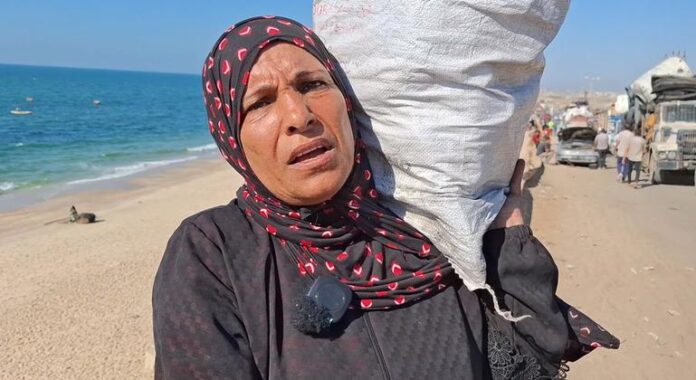
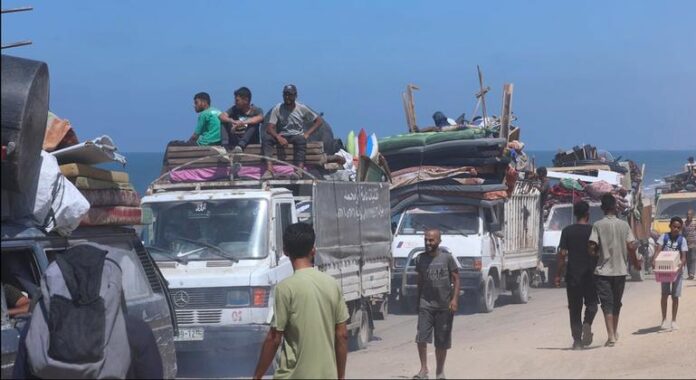
Gaza has a population of some 2.1 million people and 90 per cent have been displaced, many of them multiple times over. More than 762,500 displacements have been recorded since the end of the ceasefire on 18 March.

Meanwhile, humanitarian access remains severely restricted, with aid convoys frequently obstructed or looted. On Sunday, Israel announced that it would begin daily humanitarian pauses in Gaza. More than 100 trucks of aid reportedly entered on Sunday, but the UN continues to uphold the need to flood Gaza with food, fuel and medicine.

In line with international calls for an end to the war, the IPC platform also calls for an unconditional and immediate ceasefire, unimpeded humanitarian access and the restoration of essential services. Widespread death is imminent without urgent intervention, the report warns.

The food security experts also appealed for the protection of civilians, humanitarian personnel and critical infrastructure including health, water, sanitation, roads and telecommunications networks.

Key Points

Famine is confirmed if all three core thresholds are breached: plummeting food consumption, acute malnutrition and starvation-related deaths. It is extremely difficult to gather robust data on acute malnutrition and related deaths because health systems are “collapsing”, UN agencies WFP and the UN Children’s Fund explained in a joint alert.

Children at risk: More than 20,000 treated for acute malnutrition; 16 deaths reported.

Infrastructure collapse: 70 per cent of Gaza’s infrastructure destroyed.

Displacement crisis: Safe zones now cover less than 12 per cent of the Strip.

For more details on the IPC and its work tracking hunger and famine conditions follow this link:

https://news.un.org/en/story/2024/03/1147661

Source link

In Gaza, mounting evidence of famine and widespread starvation

0
In Gaza, mounting evidence of famine and widespread starvation

According to the Integrated Food Security Phase Classification (IPC) platform, two out of three famine thresholds for food consumption have been breached across most of Gaza, with acute malnutrition levels in Gaza City confirming aid agencies’ repeated warnings.

“Mounting evidence shows that widespread starvation, malnutrition, and disease are driving a rise in hunger-related deaths,” the IPC assessment maintained.

“It’s clearly a disaster unfolding in front of our eyes, in front of our television screens,” said Ross Smith, UN World Food Programme (WFP) Director of Emergencies. “This is not a warning, this is a call to action. This is unlike anything we have seen in this century,” he told journalists in Geneva.

No food – for days

The context to the alert is stark: one in three people is now going without food for days at a time, the IPC said. Hospitals are also overwhelmed and have treated more than 20,000 children for acute malnutrition since April. At least 16 children under five have died from hunger-related causes since mid-July.

The alert follows a May 2025 IPC analysis that projected catastrophic levels of food insecurity for the entire population by September. According to the platform’s experts, at least half a million people are expected to be in IPC Phase 5 – catastrophe – which is marked by starvation, destitution, and death.

The crisis is driven by nearly two years of conflict sparked by Hamas-led terror attacks in Israel in October 2023 that left some 1,250 dead and around 450 people taken hostage Heavy fighting has killed more than 59,500 people according to the enclave’s health authorities and destroyed 70 per cent of Gaza’s infrastructure. Echoing aid agencies’ longstanding concerns for non-combatants, the IPC assessment confirmed that displacement is rampant, with safe areas reduced to less than 12 per cent of the entire territory.

Ceasefire now

Gaza has a population of some 2.1 million people and 90 per cent have been displaced, many of them multiple times over. More than 762,500 displacements have been recorded since the end of the ceasefire on 18 March.

Meanwhile, humanitarian access remains severely restricted, with aid convoys frequently obstructed or looted. On Sunday, Israel announced that it would begin daily humanitarian pauses in Gaza. More than 100 trucks of aid reportedly entered on Sunday, but the UN continues to uphold the need to flood Gaza with food, fuel and medicine.

In line with international calls for an end to the war, the IPC platform also calls for an unconditional and immediate ceasefire, unimpeded humanitarian access and the restoration of essential services. Widespread death is imminent without urgent intervention, the report warns.

The food security experts also appealed for the protection of civilians, humanitarian personnel and critical infrastructure including health, water, sanitation, roads and telecommunications networks.

Key Points

Famine is confirmed if all three core thresholds are breached: plummeting food consumption, acute malnutrition and starvation-related deaths. It is extremely difficult to gather robust data on acute malnutrition and related deaths because health systems are “collapsing”, UN agencies WFP and the UN Children’s Fund explained in a joint alert.

Children at risk: More than 20,000 treated for acute malnutrition; 16 deaths reported.

Infrastructure collapse: 70 per cent of Gaza’s infrastructure destroyed.

Displacement crisis: Safe zones now cover less than 12 per cent of the Strip.

For more details on the IPC and its work tracking hunger and famine conditions follow this link:

https://news.un.org/en/story/2024/03/1147661


Source link