Saturday, September 26, 2026
Home Blog Page 334

The PM of Nepal resigned after a fatal repression against the demonstrations of young people; One exhorts calm

0
The PM of Nepal resigned after a fatal repression against the demonstrations of young people; One exhorts calm

The troubles, which began on Monday as a self -proclaimed “demonstration of generation Z” against creeping corruption, nepotism and borders on social networks, quickly increased after the security forces responded forcefully.

Most of the dead and injured were young demonstrators slaughtered by police. Many remain hospitalized in critical condition.

Tuesday, demonstrations were spread across the country, with government buildings, political parties offices and even parliament in Kathmandu.

Some focus of political leaders have been attacked, invaded police stations and the international airport has been closed.

The Prime Minister was allegedly evacuated by helicopter from his official residence and his resignation was announced shortly after.

Several ministers at the federal and provincial level – as well as the members of the Parliament – also resigned to protest against the treatment of demonstrations, deepening political benefits.

Violence is not the answer

Expressing a deep concern in the face of deaths and rapid deterioration, UN Human Rights Head Volker Türk warned that “violence is not the answer” and called on the authorities and demonstrators to defuse the crisis in a spiral.

In a statement From Geneva, Türk said he was “dismayed by the escalation of violence” and “the useless and disproportionate use of force” against largely young demonstrators.

“” Dialogue is the best and the only way to respond to the concerns of the Nepalese people. It is important that the votes of young people are heard“, He said, urging the two security forces to show restraint and demonstrators to refrain from destructive acts.

While condemning the repression, he also expressed his concern concerning violence by certain demonstrators.

“I am disturbed by the reports of public buildings, companies and private residences attacked and, in some cases, I set fire. Likewise, I am concerned with physical attack reports against senior officials. ”

The echoes of the UN chief call for restraint

The secretary general’s spokesman said on Tuesday’s daily briefing for journalists in New York that the UN chief “was closely followed by the situation.”

Stéphane Dujarric said that António Guterres was “very saddened by the loss of life” and reiterated his call for restraint to prevent a new escalation.

“” Authorities must comply with international human rights law and demonstrations must take place peacefully that respects life and property“Said Mr. Dujarric, noting the dramatic images emerging from Nepal.

Call for quick surveys

THE United Nations Country team in Nepal Echo these calls, extending condolences to the families of the dead and urging the authorities to ensure that the responses to the police remain “proportionate and in accordance with international human rights standards”.

“” Freedom of expression, access to information and the peaceful assembly are fundamental rights protected by Nepalese and international law“, The United Nations team said.

“All allegations of excessive use of force should be studied quickly independently, transparent and impartial,” he added.

Some demonstrators climb the doors of the Parliament of Nepal to Kathmandu on Monday, in demonstrations led by young people against corruption.

Mobilization led by young people

The demonstrations mark the latest and most intense in a series of mobilizations led by young people in Nepal in recent years. Students and young professionals have repeatedly descended into the street to demand responsibility for the political class.

Monday’s demonstrations saw thousands of people walking in the capital, Kathmandu and other cities bearing signs calling for the end of transplant and nepotism.

But the demonstrations became violent while the security forces moved to the scattered crowd, leaving at least 19 dead and hundreds injured, according to the media.

Deaths have fueled widespread anger and diaspora communities organized solidarity rallies abroad.

Tuesday afternoon, the demonstrators stormed Parliament, the Supreme Court and Singh Durbar, the central administrative complex of Kathmandu, set fire to certain parts.

The reports indicate that the demonstrators also targeted the president’s residences, former prime ministers and ministers, and that some prison prisoners escaped after the police abandoned their positions.

No ready with support

Türk High Commissioner calls on all games to avoid a new escalationRecalling the history of Nepal to get out of the conflict to forge peaceful democratic institutions.

“” The world admired the emergence of Nepal of a conflict to become a peaceful democracy“He said.

“With the United Nations system, my office is ready to support dialogue and strengthening measures that can help defuse tensions and restore confidence.”

The United Nations team in Nepal reinforced this messagestressing that “The votes of young Nepalese were heard strong and strongAnd warning that sustainable stability will depend on the concrete steps to approach the deep causes of their grievances.

Originally published at Almouwatin.com

Ukraine: the Russian strike in the village kills more than 20 years, mainly retirees

0
Ukraine: the Russian strike in the village kills more than 20 years, mainly retirees

The attack on Yarova injured almost 20 others. Many elderly civilians have decided to stay at home in front -line communities, despite climbing the danger of the continuous offensive of Russia, said deputy secretary general Matthias SchmaleThe best humanitarian official of the UN in the country.

“This lasting violence continues to tear lives. In recent days, the Donetsk region has increased by victims and civil damage as hostilities have intensified, “he said in a statement.

“On behalf of the United Nations and the humanitarian community, we stick with all the families who cry their loved ones and with all the injuries. The attacks affecting civilians during their daily life are inadmissible. ”

“Relentless” attacks against health care

The ambulances attacked, the sick patients chronically devoid of care and no peace in sight: for millions of Ukrainians, the prospect of another winter of war is only the last challenge for life or death which they face, the United Nations Health Agency (WHOsaid on Tuesday.

Speaking of Kyiv in the wake of deadly strikes on the Ukrainian capital by Russia on Sunday, which is representative in the country, Dr. Jarno Habicht, told journalists in Geneva that more than 800 drones and missiles were involved in the last attack, which makes it one of the most important since the start of the war in February 2022.

“It’s a reality [which] Many humanitarian workers, humanitarian, but above all, millions of Ukrainians live day and night, “he said.

Front line

Dr. Habicht described his recent mission in the Zaporizhzhia region which he said had suffered “relentless” attacks, including health care.

“” Strikes are continuous“, He insisted, explaining that who constantly provides medical kits to establishments where patients suffering from trauma receive care. Unfortunately we have daily injuries across Ukraine, “he said.

The OMS officials underlined a 12% increase in annual sliding of attacks affecting health infrastructure in the country. One in four attacks is against an ambulance, he said.

“If we think of non-war environments, when someone calls an ambulance, it is for a reason … it is for a reason for life and death,” he said. ” But In Ukraine, ambulances are attacked. “”

According to the UN Humanitarian Affairs Coordination Office, OchhaVictims of the latest attacks were reported in a number of other cities on Monday, including Odesa, Chernihiv, Kharkiv, Kremenchuk, Kryvyi Rih and Kherson. Strikes have also targeted energy infrastructure, disturbing energy and water supply before the winter season, Ochha said.

“We have to prepare for a winter at war because we do not see peace in sight”, “ Dr. Habicht insisted.

After his visit to Zaporizhzhia and his discussion with the authorities and health workers there, he underlined the need to keep the heating stations open when approaching the cold season and to ensure that drinking water is available in health establishments.

Dr. Habicht also underlined the magnitude of the burden of the mental health of the conflict, which “will remain for generations”.

Urgent needs

According to the latest assessment of WHO health needs in Ukraine in April, seven out of 10 people said mental health problems, anxiety, depression and serious stress in the last 12 months, “directly linked to attacks on civil infrastructure”.

The WHO representative added that by visiting the hospital services on Monday in Zaporizhzhia, he saw a number of men and women over the age of 60 who need rehabilitation after having undergone a stroke. “All other diseases continue at the time of war,” he said, stressing that “recovery cannot expect” patients with chronic diseases such as cancer and heart disease.

Increased funding is necessary for the humanitarian response in Ukraine and to support recovery and catering efforts. But only 35.5% of the required resources (around 46 million dollars) were made available for humanitarian partners, allowing WHO and its partners to reach a million people on its three million objectives.

Originally published at Almouwatin.com
Ukraine: Russian strike on village kills over 20, mostly pensioners

0
Ukraine: Russian strike on village kills over 20, mostly pensioners

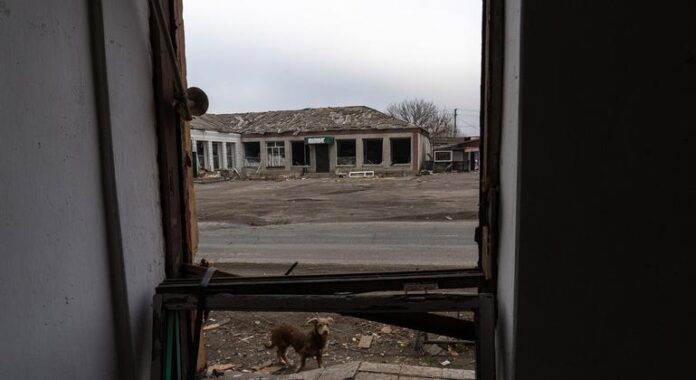
The attack on Yarova injured nearly 20 others. Many elderly civilians have decided to stay at home in frontline communities, despite the escalating danger from Russia’s continuing offensive, said Assistant Secretary-General Matthias Schmale, the UN’s top humanitarian official in the country.

“This lasting violence continues to tear lives apart. In recent days, the Donetsk region has seen a rise in civilian casualties and damage as hostilities have intensified,” he said in a statement.

“On behalf of the United Nations and the humanitarian community, we stand with all families grieving their loved ones and with all those injured. Attacks affecting civilians as they go about their daily lives are unconscionable.”

‘Relentless’ attacks on healthcare

Ambulances attacked, chronically ill patients lacking care and no peace in sight: for millions of Ukrainians, the run-up to another winter of war is just the latest life-or-death challenge they face, the UN health agency (WHO) said on Tuesday.

Speaking from Kyiv in the wake of deadly strikes on the Ukrainian capital by Russia on Sunday, WHO’s representative in the country, Dr. Jarno Habicht, told reporters in Geneva that more than 800 drones and missiles were involved in the latest attack, making it one of the biggest since the start of the war in February 2022.

“This is a reality [which] many aid workers, humanitarians, but most importantly, millions of Ukrainians are living day and night,” he said.

Mission to the frontline

Dr. Habicht described his recent mission to the frontline Zaporizhzhia region which he said had suffered “relentless” attacks, including on healthcare.

“The strikes are continuous,” he insisted, explaining that WHO is constantly delivering medical kits to the facilities where patients with trauma injuries receive care. “We have daily injuries, unfortunately, across Ukraine,” he said.

The WHO official pointed to a concerning 12 per cent year-on-year increase in attacks affecting health infrastructure in the country. One in four attacks is against an ambulance, he said.

“If we think about non-war environments, when anybody calls an ambulance, this is for a reason…This is for a reason of life and death,” he said. “But in Ukraine, the ambulances are under attack.”

According to UN humanitarian affairs coordination office, OCHA, on Monday, casualties from the latest attacks were reported in a number of other cities including Odesa, Chernihiv, Kharkiv, Kremenchuk, Kryvyi Rih and Kherson. Strikes also targeted energy infrastructure, disrupting power and water supplies ahead of the winter season, OCHA said.

“We need to prepare for a winter in war because we don’t see peace in sight,” Dr. Habicht insisted.

Following his Zaporizhzhia visit and discussion with the authorities and health workers there, he highlighted the need to keep heating stations open as the cold season approaches and ensure that clean water is available in healthcare facilities.

Dr. Habicht also underscored the magnitude of the mental health burden of the conflict, which will “stay for generations”.

Urgent needs

According to WHO’s latest Health Needs Assessment conducted in Ukraine in April, seven in 10 people reported mental health issues, anxiety, depression and severe stress over the last 12 months, “directly linked to attacks on civilian infrastructure”.

The WHO representative added that as he visited hospital wards on Monday in Zaporizhzhia he saw a number of men and women over 60 needing rehabilitation support after suffering a stroke. “All the other diseases are continuing at the time of war,” he said, stressing that “recovery cannot wait” for patients with chronic diseases such as cancer and heart conditions.

Increased funding is needed for the humanitarian response in Ukraine and to support recovery and restoration efforts. But only 35.5 per cent of the required resources (around $46 million) have been made available for humanitarian partners, allowing WHO and its partners to reach one million people out of its three million target.

Source link

Press remarks by President António Costa following the meeting with President of Lithuania, Gitanas Nausėda

0
Press remarks by President António Costa following the meeting with President of Lithuania, Gitanas Nausėda

Press remarks by President António Costa following the meeting with President of Lithuania, Gitanas Nausėda.

Source link

NIST Researchers Develop More Accurate Formula for Measuring Particle Concentration

0


Researchers at the National Institute of Standards and Technology (NIST) have developed a new mathematical formula to calculate

Source link

The ESAs note greater effort from financial market participants in their disclosure of principal adverse impacts

0

The Joint Committee of the three European Supervisory Authorities (EBA, EIOPA and ESMA – the ESAs) today published their fourth annual Report on the extent of voluntary disclosure of principal adverse impacts (PAIs) under the Sustainable Finance Disclosure Regulation (SFDR). The ESAs have observed a steady improvement in the quality of the PAI voluntary disclosures at both entity and product level. 

Similar to previous years, the ESAs surveyed National Competent Authorities and conducted staff-level analysis of publicly available PAI statements from the asset management, insurance and occupational pension sectors and of a sample of financial products’ PAI disclosures. 

The 2025 Report notes an effort from financial market participants to publish more complete information in compliance with SFDR disclosure requirements, with a general improvement in the quality of information provided.

In line with previous years, the findings also confirm that financial market participants within larger multinational groups tend to provide more detailed disclosure, while smaller entities often combine general ESG or marketing information with their SFDR disclosures.

Surveyed National Competent Authorities affirmed that some financial market participants have taken onboard the good practices included in the previous reports and have improved their disclosures.

Additionally, the 2025 Report also includes recommendations for National Competent Authorities to support their supervision of PAI disclosures and for the European Commission to consider ahead of the forthcoming review of the SFDR.

Read the report

Background and Legal basis

PAIs are the most significant negative impacts of investments on the environment and people. When a financial market participant considers principal adverse impacts, it means that it should seek to reduce the negative impact of the companies they invest in.

Under Article 18 of the SFDR, the ESAs s must take stock of the extent of voluntary disclosures at entity and product level and publish a Report on an annual basis by 10 September. 

Source link

Statement by the High Representative on behalf of the EU on the alignment of certain countries with Council Decisions (CFSP) 2025/1096 and Council Implementing Decision (CFSP) 2025/1095 concerning restrictive measures in view of the situation in Syria

0
Press remarks by President António Costa following the meeting with President of Lithuania, Gitanas Nausėda

Statement by the High Representative on behalf of the EU on the alignment of certain third countries with Council Decisions concerning restrictive measures in view of the situation in Syria.

Source link

World News in Brief: The UN chief condemns Russian attacks against Ukraine, the Gaza crisis continues, protecting civilians in Dr Congo

0
World News in Brief: The UN chief condemns Russian attacks against Ukraine, the Gaza crisis continues, protecting civilians in Dr Congo

Secretary General António Guterres said He marked a “new escalation” of the conflict.

The authorities have reported more than 80 civilian victims, including a national worker of the non -governmental organization (NGO) and her two -month -old son in kyiv.

The other affected cities included Zaporizhzhia, Odesa, Chernihiv, Kharkiv, Kremenchuk, Kryvyi Rih and Kherson. Energy infrastructure has also been affected, causing temporary power outages and breakdowns in advance on winter, repair teams working to restore services.

“Civilians and civil infrastructure attacks violate international humanitarian law. They are unacceptable and have to end immediately, “UN spokesperson Stéphane Dujarric said on Monday at the regular conference in New York.

“The secretary general reiterates his call to a complete, immediate and unconditional ceasefire as the first step towards a just, complete and lasting peace in Ukraine, which fully maintains the sovereignty, independence and territorial integrity of Ukraine, in accordance with the veracity of Ukraine Charter of the United NationsInternational law and relevant United Nations resolutions, “he added.

Meanwhile, humanitarian support continues. On September 5, United Nations agencies and partners delivered medical kits and hygiene supplies to around 1,000 people in several villages in Donetsk, marking the tenth convoy in the region this year.

People are looking for food in community cuisine in the west of the city of Gaza.

Gaza: Civil toll continues to climb

Gaza civilians continue to cope with deaths, trips and famine as hostilities continue, with UN agencies warning that the window to prevent widespread famine closes.

According to local health authorities, some 67 people have been killed and 320 injured in the last 24 hours, said Dujarric, adding that since the end of the ceasefire in mid-March, nearly 12,000 people have died in the midst of trips and repeated attacks.

“We continue to condemn all the murders of civilians,” he said.

The humanitarian situation remains disastrous. The United Nations Coordination Office, OchhaUrgent needs noted of food, water and shelter.

“Our colleagues remind us that more than 80% Gaza is either under travel orders or in militarized areas,” added Dujarric.

The Gaza Ministry of Health has reported that more than 100 people, including a quarter of children, died from malnutrition since the famine was confirmed to the governor of Gaza.

Humanitarian operations remain strongly limited.

Only 11 of the 24 coordinated missions were led on Sunday, including crossing fuel collection, while others have been refused or canceled. The humanitarian workers were able to distribute water in the north of Gaza and collect food expeditions from Kerem Shalom, Karem Abu Salem and Zikim Crossings.

The United Nations Peace Soldiers in Dr Congo continue to protect the population from the “serious danger”

Hundreds of thousands of people fleeing conflicts in the eastern Democratic Republic of Congo (DRC) continue to be protected against the “serious danger” by the United Nations soldiers, according to the head of the United Nations.

Jean-Pierre Lacroix spoke at the end of a mission in the DRC, where he visited the troubled regions of Ituri and northern Kivu.

Mr. Lacroix stressed that hundreds of thousands of Congolese, including displaced people, are counting on the United Nations peacekeeping mission, Monusco For daily protection, especially in the regions of Fataki and Beni, in northern Kivu, where joint operations with the Congolese armed forces continue against armed groups.

USG Lacroix on the role of Monusco

The disastrous situation continues

The security situation in the eastern DRC remains disastrous, despite diplomatic efforts to provide lasting peace to the country.

The DRC is currently faced with one of the most acute humanitarian emergencies in the world, with increasing food insecurity and 5.9 million Congolese currently in internal.

“People are protected here by our colleagues from Monusco, and they receive humanitarian support and protection,” said Lacroix, adding that the UN remains determined to support government efforts to peace and stability in the country.

Originally published at Almouwatin.com

Bacteria rewire digestive systems to turn plant waste into power

0


For years, scientists have marveled at bacteria’s ability to digest the seemingly indigestible, including carbon from lignin, the

Source link

Afghanistan quake: ‘Communities are struggling with basic survival’

0
Afghanistan quake: ‘Communities are struggling with basic survival’

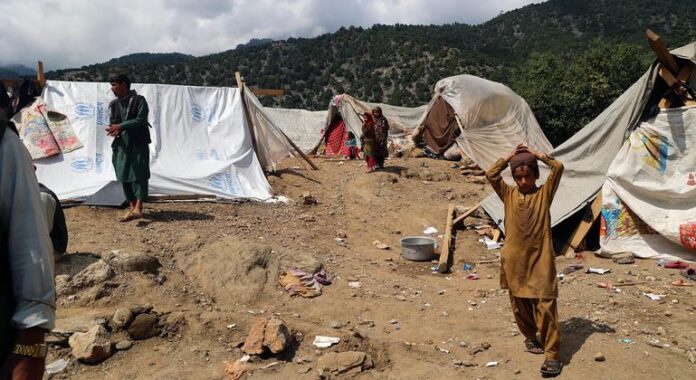
Briefing correspondents in New York via video link, Shannon O’Hara spoke from Jalalabad on the conditions in Afghanistan just days after the magnitude 6 earthquake and its devastating aftershocks.

“We saw families whose lives had been shattered just within a few minutes,” the head of strategy for OCHA in Afghanistan said.

Left with nothing

“The earthquake had destroyed their homes, their farms and their livelihoods, leaving them with absolutely nothing.”

OCHA has managed to reach 49 damaged villages in the Nangarhar, Kunar and nearby affected provinces in eastern Afghanistan.

As humanitarian workers struggle to reach more regions, current reports show that nearly 40,000 people have been impacted by the earthquake, while over 5,000 homes have been destroyed.

Aid workers face challenges

“Even before the earthquake, these villages were difficult to reach,” said Ms. O’Hara. “Now, with the earthquake, it takes extraordinary effort to get there.”

A narrow, one-way road on the mountainside which was “blocked by large rocks from landslides and many vehicles trying to get up and down the valley” is the only way to get to affected areas from Jalalabad, said Ms. O’Hara.

A 100-kilometre drive took Ms. O’Hara and her team more than six and a half hours. To reach victims, first response teams have to drive – and often travel for hours on foot.

‘The heaviest burden’

Emergency responders are prioritising aid to women, children, and locals with disabilities.

“In Afghanistan, in recent years, women and girls have been pushed to the very margins of society and survival,” said Ms. O’Hara. “We know from previous earthquakes and other crises that women and girls always bear the heaviest burden.”

A estimate from UN reproductive health agency, UNFPA, shows that 11,600 pregnant women have been affected by the destruction – in a country that already has one of the highest maternal mortality rates in region.

OCHA is working to ensure that “that women are represented in health teams and more women aid workers are supporting distributions, along with nutrition, psychosocial and other counseling services,” said Ms. O’Hara.

Alarming potential for disease outbreak

The natural catastrophe has resulted in families living without clean water and sanitation in tents or “under open skies, exposed to rain and cold,” said Ms. O’Hara.

“With cholera endemic in the region and initial assessments indicating that 92 per cent of these communities are practicing open defecation, the potential for a cholera outbreak is alarming,” she continued.

While UN agencies are distributing meals and sanitation kits, efforts need to be scaled up.

“The affected communities are struggling with basic survival,” she stressed.

Urgent action needed

So far, 43,000 victims have received ready-to-eat meals and UN agencies are also providing tents, blankets and sanitation kits to assist families. But humanitarian efforts risk being disrupted if heavy rain floods IDP sites or if potential aftershocks bring more landslides. Snow from the approaching winter season is also expected to block vital roads.

“If we don’t act now, these communities may not survive the coming winter,” said Ms. O’Hara. “Additional funding is urgently needed.”

OCHA has already released $10 million for life-saving supplies and an emergency response plan is currently being finalized.

“Without immediate support the weeks ahead risk compounding this tragedy with preventable disease outbreaks, further displacement and additional loss of life.”

UNOCHA/Ahmad Khalid Khaliqi

Food aid is delivered to people affected by the earthquake in eastern Afghanistan.

Fresh supplies land in Kabul

A new consignment of more than 35 metric tonnes of life-saving medical supplies landed in Kabul on Monday, to enhance the World Health Organization’s (WHO) emergency response.

WHO has now prepositioned and delivered nearly 80 metric tonnes of emergency health supplies to the country since the disaster.

The newly arrived cargo, mobilised through WHO’s logistics hub in Dubai, includes trauma and emergency surgery kits, primary health care kits, noncommunicable disease kits and essential medicines.

These supplies will be dispatched to health facilities and mobile health teams in the hardest-hit areas, following the ongoing needs assessments.

Source link