Saturday, September 26, 2026
Home Blog Page 335

Afghanistan Quake: “Communities are struggling with basic survival”

0
Afghanistan Quake: “Communities are struggling with basic survival”

Information correspondents in New York via the video link, Shannon O’hara spoke of Jalalabad on the conditions in Afghanistan only a few days after the earthquake of magnitude 6 and its devastating replicas.

“We have seen families whose life had been broken just in a few minutes”, the head of the strategy for Ochha in Afghanistan said.

Left with nothing

“The earthquake had destroyed their houses, their farms and their livelihoods, leaving them absolutely nothing.”

The OCHA has managed to reach 49 damaged villages in the Nangarhar, Kunar and the provinces affected nearby in eastern Afghanistan.

While humanitarian workers find it difficult to reach more regions, current reports Show that nearly 40,000 people were affected by the earthquake, while more than 5,000 houses were destroyed.

Humanitarian workers face challenges

“Even before the earthquake, these villages were difficult to reach,” said Ms. O’Hara. “Now, with the earthquake, you need extraordinary efforts to get there. »»

A narrow one -way road on the side of the mountain which was “blocked by large rocks of landslides and many vehicles trying to go up and down the valley” is the only way to go to the affected areas of Jalalabad, said Ms. O’Hara.

A 100 -kilometer journey took Ms. O’Hara and her team for more than six and a half hours. To reach the victims, the first response teams must drive – and often move for hours on foot.

‘The heaviest burden’

Emergency speakers favor help for women, children and disabled residents.

“In Afghanistan, in recent years, women and girls have been pushed to the very margins of society and survival,” said Ms. O’Hara. “We know with previous earthquakes and other crises that women and girls always wear the heaviest burden.”

An estimate of the UN reproductive health agency, Unfpashows that 11,600 pregnant women were affected by destruction – in a country that already has one of the highest maternal mortality rates in the region.

The OCHA endeavors to ensure that “that women are represented in health teams and that more assistants support distribution, as well as nutrition, psychosocial and other services,” said Ms. O’Hara.

Alarming potential for the disease epidemic

The natural disaster led families to live without clean water and sanitation in tents or “under an open sky, exposed to rain and cold,” said Ms. O’Hara.

“With endemic cholera in the region and the initial assessments indicating that 92% of these communities practice free-being defecation, the potential of a cholera epidemic is alarming,” she continued.

While United Nations agencies distribute meals and sanitation kits, efforts must be put on the scale.

“The affected communities are struggling with basic survival,” she said.

Urgent action required

So far, 43,000 victims have received ready to eat meals and United Nations agencies also provide tents, covers and sanitation kits to help families. But humanitarian efforts are likely to be disrupted if the heavy rains flood the sites of PDIs or if the potential aftershocks bring more landslides. The snow of the approaching winter season should also block vital roads.

“If we do not act now, these communities may not survive the coming winter,” said Ms. O’Hara. “Additional funding is urgent. »»

OCHA has already published $ 10 million for vital supplies and an emergency intervention plan is currently being finalized.

“Without immediate support, the coming weeks risk this tragedy with epidemics of avoidable diseases, additional trips and additional lifestyles.”

UNOCHA / AHMAD KHALID KHALIQI

Food aid is delivered to people affected by the earthquake in eastern Afghanistan.

Fresh Supplies Terre in Kabul

A new dispatch of more than 35 metric tonnes of vital medical supplies landed in Kabul Monday, to improve the World Health Organization (WHO) Emergency response.

Which has now preposed and delivered nearly 80 metric tonnes of emergency health supplies to the country since the disaster.

The newly arrived cargo, mobilized through the WHO Logistics Center in Dubai, includes surgery kits in trauma and in the event of an emergency, primary health care kits, non -transmitted disease kits and essential drugs.

These supplies will be dispatched to health establishments and mobile health teams in the hardest affected areas, following the evaluations under way of needs.

Originally published at Almouwatin.com

Guterres firmly condemns the terrorist attack in Jerusalem

0
Guterres firmly condemns the terrorist attack in Jerusalem

UN Secretary General António Guterres strongly sentenced the terrorist attack, said his spokesperson in a declaration.

“He transmits his sincere condolences to the families of the victims and wishes a complete and rapid recovery to those who have been injured,” he said.

The incident took place in a highly frequented intersection in Ramot, located Monday morning in the northern outskirts of Jerusalem.

Shooting waiting for the bus

The armed men would have opened fire on the passengers while waiting to get on the buses. Video sequences of the scene have shown that several buses had been widely affected during the assault.

The attackers were identified by the authorities as two Palestinians of the occupied West Bank. They were killed by a soldier and a civilian who were on the scene.

A Spanish national was one of the victims, according to the country’s Ministry of Foreign Affairs.

The shooting took place in the context of the current war in Gaza which killed more than 63,000 Palestinians and injured more than 161,000 others, according to local health authorities.

Originally published at Almouwatin.com

Leadership of Women crucial for UN reinvention at 80, explains the former president of the assembly

0
Leadership of Women crucial for UN reinvention at 80, explains the former president of the assembly

Tuesday, Annalena Baerbock of Germany will become the first European woman to occupy the post and only the fifth president of the history of the assembly.

On the eve of the inauguration of Baerbock, UN News spoke with one of his predecessors. María Fernanda Espinosa, former Minister of Defense and Foreign Affairs of the Ecuador, led the 2018 to 2019 assembly as the first woman in Latin America and the Caribbean to do so.

Hard work and qualified diplomacy

Espinosa describes The General Assembly As a “laboratory of international law”, noting that the role of the president requires “hard work, good diplomacy and the ability to carry out fair negotiations”.

The last woman to preside over the assembly said that she sees Annalena Baerbock all the qualities necessary for a “brilliant performance” as the next president. She stressed that the German chief took office at a time of “deep structural change within the institution, partly linked to financial challenges”.

Espinosa thinks that Baerbock will play an “absolutely central” role in the implementation of reforms within the framework of the UN80 process, as well as the advanced commitments linked to The Pact for the futureadopted in 2024.

For Espinosa, the own story of the UN proves that it is “an irreplaceable organization, a humanity cannot happen – but which must nevertheless be reinvented”.

Annalena Baerbock, elected president of the eightieth session of the United Nations General Assembly, is aimed at journalists after her election.

“Why not a woman as secretary general?”

While welcoming the election of the fifth president of the Assembly in New York, Espinosa said that this restructuring also offered the opportunity to rethink leadership styles and finally consider a woman for the post of secretary general. The next appointment is expected in 2026.

“The real question is: why not?” She asked, stressing that a woman could bring qualities such as “strong management and a construction of bridges”. She added that a woman secretary general would also represent an act of “historic justice”, after 80 years of male leadership at the helm of the UN.

The former Ecuadorian diplomat recognized one of the largest challenges in the United Nations: the gap between the resolutions adopted in the General Assembly and their translation in national policies and regulations. That, she said, prevents multilateral decisions from producing tangible improvements in people’s lives.

To remedy this, she called for a “more inclusive and network multilateralism”, in which citizens are informed, committed and capable of monitoring international decisions taken.

Build a consensus behind the scenes

Espinosa stressed that “most of the presidency works are taking place behind the scenes”, dealing with divisions and forging consensus.

She noted that the new president will be more and more confronted with the responsibilities related to peace and security, as well as sustainable development.

Espinosa recalled that the very first resolution adopted by the General Assembly concerned the discovery of atomic energy, stressing the need to adapt to a new force which could be exploited for peaceful purposes, but also “terrible effects”.

She underlined the moments of definition of her own presidency, including the difficult negotiations which led to the adoption of the first Global compact for migration in 2018.

The diplomat also expressed his pride in internal advances, such as the decision to eliminate single -use plastics in the UN, recognizing the damage they cause to human health and ecosystems.

Originally published at Almouwatin.com

ECR MEPs call for urgent appointment of EU Special Envoy on Freedom of Religion or Belief

0
ECR MEPs call for urgent appointment of EU Special Envoy on Freedom of Religion or Belief

On the occasion of the United Nations International Day Commemorating the Victims of Acts of Violence Based on Religion or Belief, ECR MEPs Bert-Jan Ruissen (Co-Chair of the European Parliament’s Intergroup on Freedom of Religion, Belief and Conscience) and Carlo Fidanza (Vice-Chair of the Intergroup) urged the European Commission to immediately reappoint the EU Special Envoy for the promotion of freedom of religion or belief outside the EU, a position left vacant since December 2024.

Bert-Jan Ruissen said:

“This is a day for reflection, but also for action. The Commission must urgently fill the post of EU Special Envoy and make every cooperation agreement with third countries conditional on their commitment to
respecting freedom of belief.”

Carlo Fidanza said:

“Today, we remember all those who are still persecuted — and all too often killed — for their faith. Millions of people worldwide, many of them Christians, are being violated, executed or murdered simply for refusing to submit to political totalitarianism, religious nationalism or Islamist extremism.”

Criticizing the delay despite Commission President Ursula von der Leyen’s written pledge on 5 May 2025 to renew the position, Bert-Jan Ruissen stressed:

“We welcome President von der Leyen’s commitment, but what we need now is concrete action. The longer this post remains vacant, the more the EU’s credibility suffers in its efforts to stand up for freedom of belief.”

Carlo Fidanza concluded:

“Every day without a Special Envoy is a missed opportunity to defend those suffering for their faith. Europe must show that it takes its promises seriously – words are not enough.”

Source link

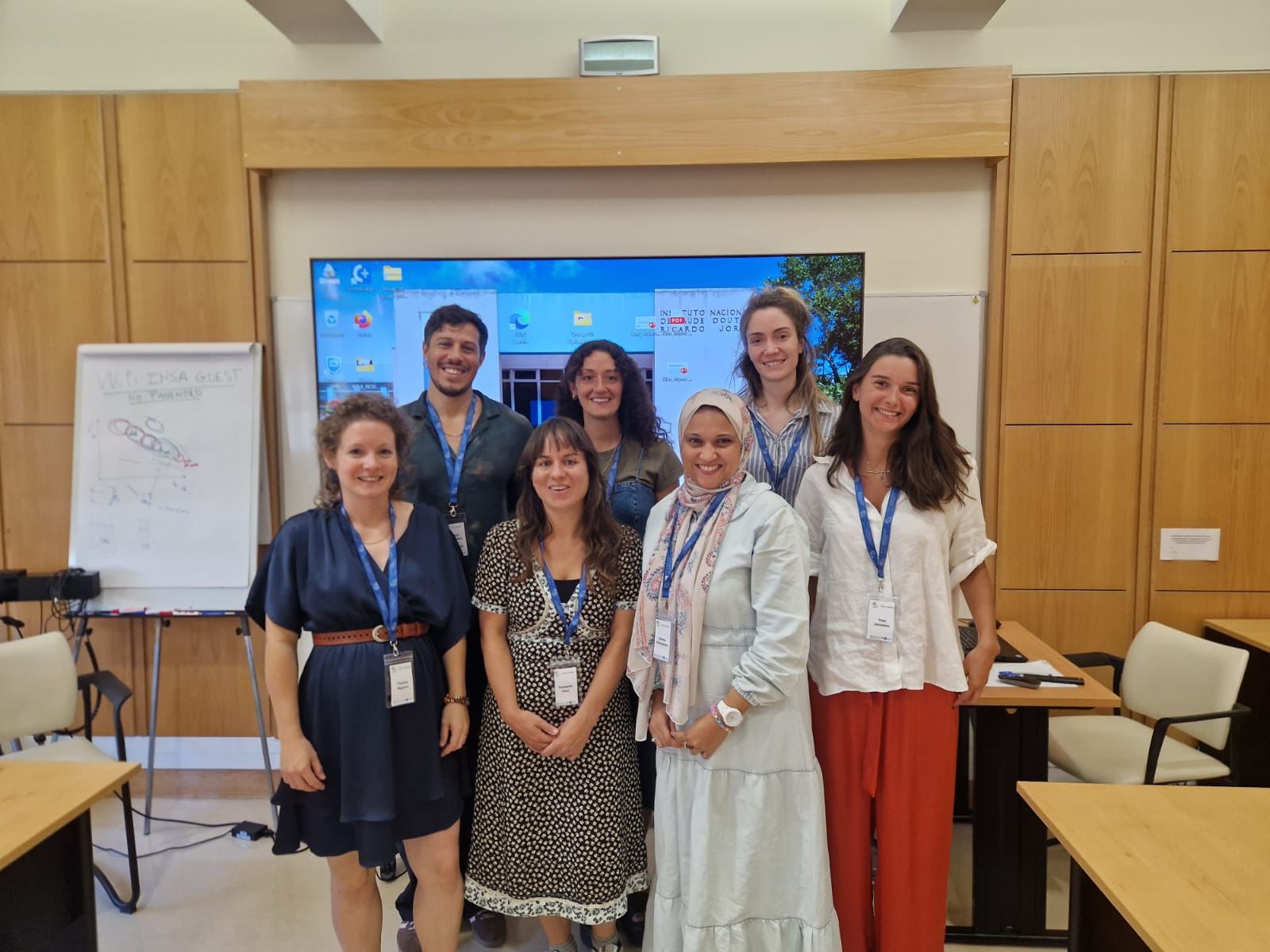
Epidemiological training fellows gathered in Lisbon to strengthen scientific communication across Europe

0
Epidemiological training fellows gathered in Lisbon to strengthen scientific communication across Europe

Throughout the week, fellows from the MediPIET, EPIET, EUPHEM, PAE and EODY programmes presented ongoing scientific projects and received structured, in-depth feedback enhancing their readiness to showcase their work at scientific forums such as ESCAIDE 2025, taking place in Warsaw this November.

The module focused on both the content and delivery of presentations, preparing fellows for oral and poster formats. Participants refined their skills in presenting, defending and justifying their research, while gaining practical experience in scientific critique, peer-review and argumentation. 

The event offered fellows a valuable platform to refine their research and strengthen cross-border collaboration through a mix of plenary lectures, hands-on workshops and small-group sessions that facilitated professional networking and peer learning, in addition to technical skills.G10 Epidemiological training fellows gathered in Lisbon to strengthen scientific communication across Europe

Highlights included:

  • Lectures on effective scientific presentations, outbreak communication, and providing constructive feedback.
  • Workshops on creating clear data visualisations (e.g. tables and figures) and navigating the publication process.
  • Presentations on projects relating to surveillance, outbreak investigations, and operational research.
  • Sessions on tailored methodologies, study design and analysis. 

Source link

Not ready to help Nepal following deadly demonstrations against the ban on social media

0
Not ready to help Nepal following deadly demonstrations against the ban on social media

Police used tear gas and opened fire on demonstrators trying to storm the Parliament complex in the capital, Kathmandu, according to the media.

The curfews were imposed in certain parts of the city and in Rupandehi, with restrictions on the effective movement in Pokhara.

‘So unlike Nepal’

The resident coordinator of the UN Hanaa Fikry Ahmed Singer described the situation as “if unlike Nepal” and feared that the number of victims increases.

“Many of my staff here cry,” she said UN News in an interview. “They haven’t seen any violence during their lifetime.”

The demonstrations occurred only a few days after the Nepalese government blocked more than 20 social media platforms such as WhatsApp, X and Facebook, as well as websites such as YouTube, so as not to register with the authorities.

“” The government wanted them to also align themselves with internal laws because they have concerned about disinformation, hate speech and social harmonyAnd to ensure surveillance and surveillance, ”she said.

“However, the decision has been widely criticized as too wide and has been perceived by many, especially young people who are very global, like all parts of the world now, They consider this to be a restriction on freedom of expression and access to digital spaces. “”

Concern for civilians

Ahmed Singer expressed a deep concern for civilians’ safety and stressed the urgent need to ensure medical access without restriction to the injured.

“Immediate priority is now the protection of civilians, especially young people who are at the forefront of demonstrations,” she said.

Social media returned online shortly before the interview. The senior humanitarian official said that she had published a message on X Call all parties to exercise a maximum reservoirAdhered to the basic principles on the use of strength and firearms, and make sure that people can exercise their democratic rights in completeness and peacefully.

“The most important thing is now an access without restriction to medical care for those who are injured, if necessary,” she said.

Supporting role

Meanwhile, United Nations agencies in the country – such as the World Health Organization (WHO), the United Nations Children’s Fund (Unicef), and the United Nations Human Rights Office, Ohchr – close monitoring of developments.

They prepare health and other forms if necessary and are ready to facilitate dialogue.

“Our role is really to remind everyone to ensure the protection of civilians, to protect fundamental freedoms and to support Nepal in their commitment to international human rights standards and standards,” she said.

Originally published at Almouwatin.com

UN rights chief denounces ‘glorification of violence’ and attack on rule of law

0
UN rights chief denounces ‘glorification of violence’ and attack on rule of law

“No one is safe when human rights are under attack,” Mr. Türk told the Human Rights Council, warning that the rules of war “are being shredded”.

“Some States are becoming an extension of their ruler’s personal power,” he insisted.

In his customary address to the UN’s top rights forum at the beginning of a new session in Geneva, the High Commissioner for Human Rights decried that “pro-war propaganda is everywhere”, from military parades to “ramped-up rhetoric” from leaders.

“Sadly, there are no peace parades or ministries of peace, he stressed, while calling for countries to stand firm against the growing “erosion” of international law.

The High Commissioner also defended the importance of standing behind multilateral accords as “the foundation of peace, our global order and our daily lives, from trade rules to the global internet, to our fundamental rights”.

World order at risk

Today, governments “are disregarding, disrespecting and disengaging” the existing rules-based world order that was established after 1945 to prevent another world war, the UN rights chief insisted, in a call for accountability.

The danger is that when States ignore violations of the law, “they become normalised,” Mr. Türk said. “When States apply the law inconsistently, they undermine the legal order everywhere. It is time for States to wake up and to act.”

Condemning the continued illegal detention of United Nations staff in Yemen as a “direct attack on the UN system”, Mr. Türk also called the United States’ withdrawal “from the Paris Agreement and from global bodies, including this Council…deeply regrettable”, noting that other States were following suit.

The High Commissioner also warned of the negative consequences of the decision by Estonia, Finland, Latvia, Lithuania and Poland to leave the Ottawa Treaty on land mines, while identifying the “new trend of disparaging” the 2030 Agenda for Sustainable Development, which all countries had agreed to a decade ago.

An A to Z of rights concerns

As is usual at the start of Council sessions, the High Commissioner highlighted situations of concern around the world, from Afghanistan – where the “erasure” of women and girls from public life “is almost complete” – to Haiti which is “plunging deeper into lawlessness; Nigeria, which is seeing a resurgence of Boko Haram extremism; and Syria – whose transition to peace remains “fragile”.

In Ukraine, following the largest drone assault of the conflict, Russia’s full-scale invasion “has turned even more deadly”.

In Sudan, besieged El Fasher is under constant bombardment and the risk of further atrocities remains, Mr. Türk said, while in Myanmar, four years since the military coup, people remain caught up in “a harrowing human rights calamity”.

Turning to the eastern Democratic Republic of the Congo, “damning evidence” indicates continued “grave violations and abuses” by all parties to the conflict, the High Commissioner continued, while Gaza is now a “graveyard”, amid Israel’s “mass killing” of Palestinian civilians.

Where are steps to stop Gaza genocide?

“We are failing the people of Gaza…Where are the decisive steps to prevent genocide?” he asked. “Why are countries not doing more to avert atrocity crimes? They must stop the flow to Israel of arms that risk violating the laws of war.”

The Human Rights Council meets in three scheduled sessions every year at UN Geneva. 

Continuing his tour d’horizon of country situations of concern in addition to thematic issues, Mr. Türk maintained that progress sought by his office, OHCHR, to protect the rights of Uyghur and other Muslim minorities in China has “yet to materialise”.

In West Africa, meanwhile, restrictions on LGBTQ+ people are growing in some countries considering criminalising consensual same-sex relations, the High Commissioner said, just as the rights of migrants and refugees are being increasingly violated.

Asylum alert

“Iran and Pakistan have forcibly returned millions of Afghans to their country and India has also deported groups of Rohingya Muslims by land and sea,” he insisted.

Similarly, Germany, Greece, Hungary, and other European countries “have also sought to limit the right to seek asylum”, Mr. Türk insisted. He took note of concerns about the United States’ reported agreement with El Salvador, South Sudan, Eswatini, Rwanda and others, to deport third country nationals, and underlined Kuwait’s decision to revoke citizenship for thousands of people in recent years, “leaving many stateless”. 

Poll appeal

On imminent national elections across Africa, Mr. Türk also cited serious concerns over polling preparations in Cameroon, Côte d’Ivoire, Guinea, Guinea Bissau, Malawi, Tanzania and Uganda.

“In many of these countries, the authorities are resorting to harassment, exclusion or detention of opposition leaders; restrictions on media freedom; bans on peaceful protest; and crackdowns on human rights defenders,” he said.

The UN rights chief also urged the Ethiopian authorities to ensure conditions for free, fair and inclusive elections, amid concerns about arbitrary detentions of journalists.

As part of the UN’s efforts to improve and promote human rights everywhere, Mr. Türk urged all countries to do more so that “every child – whether a future farmer, digital worker, doctor or shopkeeper” understands that human rights “are our birthright”.

He added: “The vast majority of people around the world are crying out for human rights and freedoms…No one is safe when human rights are under attack. Abuses committed against one group are always part of a broader pattern of oppression and lead to the wider erosion of fundamental freedoms”.

Source link

New EU-funded railway line brings Ukraine closer to the EU

0
New EU-funded railway line brings Ukraine closer to the EU

Ukraine has opened its first railway line based on the EU standard for track width. It marks a significant step in the country’s transport integration with the EU. The new 22-km railway line will prevent delays caused by the previous need to change trains at the EU-Ukraine border. Source link

Source

Source link

New EU-funded railway line brings Ukraine closer to the EU

0
New EU-funded railway line brings Ukraine closer to the EU

Ukraine has opened its first railway line based on the EU standard for track width. It marks a significant step in the country’s transport integration with the EU. The new 22-km railway line will prevent delays caused by the previous need to change trains at the EU-Ukraine border.

Source link

The UN provides urgent support after a “massive” Russian attack across Ukraine

0
The UN provides urgent support after a “massive” Russian attack across Ukraine

According to reports, more than 800 drones were launched in waves designed to overwhelm the Ukrainian air defenses, and a government building was affected in the capital kyiv for the first time.

Ukrainian authorities said four had been killed, with 44 injured. The air raid sirens continued for 11 hours across the capital and although a majority was killed more than 50 drones and nine missiles reached their targets.

“Again, the attacks had an impact on the houses, a government building, a kindergarten and other civil infrastructure in kyiv and Chernihiv, Kharkiv, Kremenchuk, Kryvyi Rih, Odesa, Sumy Region, Zaporizhzhia – leaving behind the loss, destruction and Grif

The senior aid official said that, with the authorities, the UN and the humanitarian partners had mobilized to provide urgent support for civilians and civil areas where damage has been suffered.

Civilians should never be a target

“Civilians and civil infrastructure are protected by international humanitarian law-they are not a target,” he continued.

The UN children’s funds, Unicefsaid that the news of a baby killed with her young mother during an attack on a building in kyiv was “devastating”. At least another child was injured during attacks on Sumy.

“Ukraine has endured another terrifying attack of attacks which had an impact on several cities. More brutally shortened young lives, ”tweeted the agency.

The attacks occurred after weeks of large -scale diplomacy of the Western allies of the Ukrainian government to negotiate a lasting peace agreement between kyiv and Moscow.

President Volodymyr Zelenskyy said in an article on social networks following attacks by which “such murders now, when real diplomacy could already have started a long time ago, are a deliberate crime and an extension of the war”.

Originally published at Almouwatin.com