
Saturday, March 21, 2026
Home Blog Page 34

UN envoy urges renewed political push as Yemen tensions rise

0
UN envoy urges renewed political push as Yemen tensions rise

Hans Grundberg also warned that rising regional tensions risk dragging Yemen back into broader confrontation. 

I ask this Council to remain united in supporting a credible path back to a political process, and I urge regional actors to align around the same purpose and to use their influence in a coordinated way to steer Yemenis toward engagement,” he said. 

A ‘fragile’ situation 

Since 2014, Yemeni government forces, who are backed by a Saudi-led coalition, and Houthi rebels have been fighting for full control of the fractured country.  

The internationally recognised authorities are largely based in the southern city of Aden while the Houthis, officially known as Ansar Allah, control the capital Sana’a and large areas of the north and west.  

In recent months, forces affiliated with a separatist group in the south have advanced on more territory.  

Mr. Grundberg briefed from the Saudi capital Riyadh, where he held talks with Yemen’s newly appointed Prime Minister Shaya al-Zindani and members of the Presidential Leadership Council. 

He highlighted early positive signs in government areas, including improvements in the provision of electricity and payment of public sector salaries, and commended the appointment of three women cabinet ministers. 

“However, continued tensions, recent security incidents and demonstrations, where in some cases violence and loss of life has been reported, underscore the fragility of the situation,” he said. 

‘Protect recent gains’ 

He told the Council that the new cabinet “can protect recent gains by anchoring them in strengthened institutions and economic reforms”. 

Furthermore, a planned southern dialogue offers an opportunity to begin addressing long-standing grievances and build consensus on issues important to the region’s people and all Yemenis.  

Mr. Grundberg said that stabilisation in any part of the country will not be durable if the broader conflict is not addressed comprehensively. 

“It is high time to take decisive steps in that regard,” he said. “Without a wider negotiated political settlement to the conflict, gains will continue to remain vulnerable to reversal.” 

The way forward 

The UN envoy has been engaging with the warring parties, regional actors and the international community to explore ways to restart an inclusive political process in Yemen.  

His office has also held consultations with a diverse group of Yemenis, leading to three takeaways. 

The first calls for acknowledging what more than a decade of war has done to Yemen. Although the conflict has become more complex, the common objective has remained steady and firm. 

Yemen needs an inclusive political process under UN auspices to reach a negotiated political settlement that can sustainably end the conflict, but getting there requires that the parties adopt a forward-looking approach,” he said. 

Restarting a political process will require engagement across political, economic and security issues in tandem “without making engagement in one track contingent on progress in another”, he added. 

The third point calls for a credible process that enables near-term agreements that reduce suffering and demonstrate progress. At the same time, space must be created for negotiations on longer-term issues, including the future shape of the State, security arrangements and principles of governance. 

Free detained staff 

The Special Envoy also used the briefing to reiterate his call for the unconditional release of scores of UN personnel who have been arbitrarily detained by the Houthis. 

Currently, 73 staff are locked up, along with representatives from civil society and diplomatic missions. 

“Many have been held incommunicado, with serious concerns about their conditions and wellbeing. Some have been referred to Ansar Allah’s special criminal court, which is proceeding with trials that fall far short of basic due process,” he said. 

He noted that this week marked a year since a staff member with the World Food Progamme (WFP) died while being held and no investigation has taken place. 

Houthis storm UN offices 

A senior official with the UN aid coordination office, OCHA, updated the Council on the humanitarian situation in Yemen. 

“As we have said in this Council before, these detentions of humanitarian workers are having a profound impact on operations,” Lisa Doughten, director of OCHA’s financing and outreach division, told ambassadors. 

She reported that the Houthi de facto authorities entered multiple UN offices in Sana’a on 29 January “without permission, commandeering equipment and vehicles”.  

They also continue to withhold clearances for UN Humanitarian Air Service (UNHAS) flights to Marib, though flights to Sana’a resumed over the weekend following a month-long suspension.  

Millions in need 

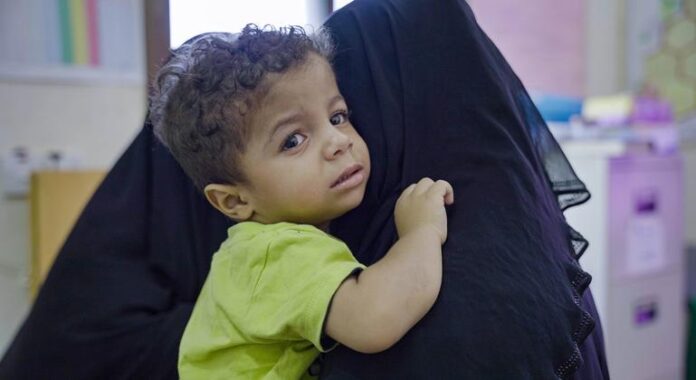
The “interference and impediments” are happening when 22.3 million people – half the population – need humanitarian assistance this year, or nearly three million more than in 2025.  

Around 18 million face food insecurity, making Yemen the region’s most severe hunger crisis. It is also the country with the largest number of people experiencing emergency food security conditions, some 5.5 million. 

Source link

EU funding at risk when public tenders impose confidence tests

0

EU funding at risk when public tenders impose confidence testsAudit rules designed to protect the EU budget may collide head-on with “faith-breaking” clauses that ask bidders or candidates to renounce a religious practice to access a job, grants or contracts. When a public authority makes access to a […]

Originally published at Almouwatin.com

EU funding at risk when public tenders impose confidence tests

0

EU funding at risk when public tenders impose confidence testsAudit rules designed to protect the EU budget may collide head-on with “faith-breaking” clauses that ask bidders or candidates to renounce a religious practice to access a job, grants or contracts. When a public authority makes access to a […]

Originally published at Almouwatin.com

EU Funding at Risk When Public Tenders Impose Faith Tests

0
EU Funding at Risk When Public Tenders Impose Faith Tests

Audit rules designed to protect the EU budget can collide head-on with “faith-breaker” clauses that ask bidders or applicants to renounce a religious practice to access work, grants, or contracts.

When a public authority makes access to a contract, job, or subsidy conditional on a declaration about personal belief or religious practice, the issue is not only constitutional or human-rights related—it can also become an EU budget problem. Under EU cohesion-policy rules, programmes must comply with the EU Charter of Fundamental Rights and maintain effective procurement oversight. If auditors find discriminatory tender conditions, spending may be treated as “irregular”, triggering repayment demands, payment suspensions, or flat-rate financial corrections. In the most serious cases, EU funding rules also allow exclusion mechanisms for entities responsible for grave misconduct.

A clause that reaches beyond competence

Across Europe, procurement and grant procedures are meant to test technical capacity, financial reliability and value for money—not the inner convictions of those applying. Yet “faith-breaker” declarations (clauses that require a person or company to distance themselves from a religious practice, belief, or community in order to qualify) flip that logic: the gateway condition becomes personal conscience.

That raises immediate Charter concerns, because the EU Charter protects freedom of thought, conscience and religion and prohibits discrimination on grounds including religion or belief.

Why EU auditors would care

EU audit architecture is built around a simple premise: EU money must be spent legally and fairly. If a contract or grant is awarded through a process that violates EU procurement principles or fundamental rights, auditors can treat the resulting expenditure as unsafe.

Two legal hooks matter most:

  • Public procurement principles: EU procurement law requires contracting authorities to treat economic operators equally and without discrimination, and to act transparently and proportionately.
  • Irregularity doctrine: EU law defines an “irregularity” broadly as any infringement of EU rules—by act or omission—that has or would have the effect of unjustified expenditure from the EU budget.

In practice, that means a discriminatory eligibility condition can taint the whole spending line, even if the project itself looks useful on paper.

The “enabling conditions” safeguard in cohesion funding

For EU shared-management programmes covered by the Common Provisions Regulation (EU) 2021/1060, Member States must meet “enabling conditions” throughout the programming period. Among the horizontal enabling conditions are (1) effective application of the Charter and (2) effective monitoring mechanisms for the public procurement market.

Where an enabling condition is not fulfilled, the Commission can block reimbursement for expenditure linked to the affected objective until compliance is restored and confirmed.

From procurement error to financial correction

Once auditors classify spending as irregular, the consequences can become financial—and fast. The Commission’s procurement-correction guidelines set out flat-rate correction levels (commonly ranging from 5% up to 100%) depending on the seriousness and impact of the breach.

Separately, the CPR also provides tools for financial corrections and payment interruptions where serious weaknesses are found in management and control systems.

Data protection: belief as “special category” data

Faith-breaker declarations can also create a second compliance risk: they may require applicants to reveal information about religious or philosophical belief. Under the GDPR, processing personal data that reveals religious or philosophical beliefs is generally prohibited unless a lawful exception applies and safeguards are met.

For auditors, that matters because unlawful data collection can be part of the same “irregular” chain: a defective procedure, documented through forms and declarations, that leads to EU-funded expenditure.

A national court warning with EU-level implications

In Germany, the Federal Administrative Court ruled in April 2022 that a public “protective declaration” requirement—tied to access to a municipal subsidy—amounted to a targeted interference with constitutionally protected freedom of belief, including the negative freedom not to disclose one’s convictions.

That kind of domestic judgment does not automatically decide EU audit outcomes. But it can strengthen the evidentiary record that a procedure is discriminatory or unlawful—exactly the type of red flag EU auditors look for when assessing legality and regularity.

Could an authority be cut off from future EU funds?

Beyond corrections to a specific project, EU financial rules also include early-detection and exclusion mechanisms that can apply in cases of grave misconduct affecting the EU’s financial interests. These tools are designed mainly for EU-level grants and procurement, but they illustrate the wider policy direction: EU money should not reward unlawful or discriminatory practices.

At the treaty level, the Commission’s duty to implement the EU budget “having regard to the principles of sound financial management” reinforces the idea that fundamental-rights-compliant procurement is not optional—it is part of protecting the EU budget.

What this means in practical terms

If a “faith-breaker” clause appears in a tender or grant procedure connected to EU funding, the risk is not limited to reputational damage or court challenges by excluded applicants. It can trigger a cascade: audit findings, programme-level concern about enabling conditions, financial corrections, delayed reimbursements, and pressure to revise standard documents.

For a wider look at how EU institutions frame freedom of religion or belief as a protected right in the European public sphere, see The European Times’ coverage of the European Parliament’s FoRB intergroup.

Source link

Scientists solve mystery of how Earth’s greenhouse age ended

0


A 66-million-year-old mystery behind how our planet transformed from a tropical greenhouse to the ice-capped world of today

Source link

World news in brief: school shooting in Canada, cholera epidemic in the Democratic Republic of Congo, evacuations in Gaza

0

World news in brief: school shooting in Canada, cholera epidemic in the Democratic Republic of Congo, evacuations in GazaAntónio Guterres was “saddened to learn of the tragic shooting in Tumble Ridge, British Columbia,” his spokesperson Stéphane Dujarric said during the daily press briefing. “ [Mr. Guterres] extends its most sincere condolences to those affected and its sympathies to the government and people of Canada,” added Mr. Dujarric. Two […]
Originally published at Almouwatin.com

Why does the world still not trust Saudi Arabia?

0

Why does the world still not trust Saudi Arabia?We must recognize one thing: Saudi Arabia impresses. Arriving in Riyadh today, you no longer see the same country that existed fifteen years ago. Construction sites are everywhere. Giant screens display visions of futuristic cities. International conferences follow one another. World leaders come and go. CEO […]


Originally published at Almouwatin.com

Milano Cortina 2026: the Winter Olympics so far

0
Milano Cortina 2026: the Winter Olympics so far

Summary: One week into the Milano Cortina 2026 Winter Olympics (6–22 February), the Games have already delivered tight medal races, breakout champions, and a distinctive “spread-out” Italian geography—moving the spotlight between Milan’s arenas and the alpine venues of the Dolomites and beyond. Norway has set an early pace on golds, Switzerland has surged through alpine events, and host nation Italy has stayed firmly in the mix—while several headline moments, from record-setting speed skating to decisive biathlon shooting, have framed the first phase of competition.

A Games stretched across Italy—and built around movement

Milano Cortina 2026 is not a single-city Olympics in the classic sense. Competition is distributed across clusters in northern Italy, linking urban arenas with high-mountain courses and long-established winter-sport venues. That design has been both the event’s signature and its daily operational test: athletes and teams have navigated travel routines that feel closer to a championship tour than a compact Olympic village rhythm.

For a snapshot of the atmosphere at the start of the Games, The European Times’ early take on the opening days captured the contrast between Milan’s metropolitan stage and the mountain backdrop that defines much of the sporting programme.

Medal picture: early leaders and a crowded chase

As of 12 February, the medal table remains fluid, but the early contours are clear. Norway has led on gold medals so far, while Switzerland and the United States have been close enough to keep the overall rankings competitive. Italy, as host, has stayed within striking distance—helped by strong early results across multiple disciplines.

  • Norway: 7 gold, 2 silver, 4 bronze (13 total)
  • Switzerland: 4 gold, 1 silver, 2 bronze (7 total)
  • United States: 3 gold, 5 silver, 2 bronze (10 total)
  • Italy: 2 gold, 2 silver, 7 bronze (11 total)

Note: Medal counts can change quickly as events conclude each day. For the official daily schedule and results hub, see Milano Cortina 2026 Schedule & Results.

Early defining moments: precision, speed, and alpine margins

Several performances have come to symbolise the “so far” of these Games—where medals have often turned on one clean shooting series, one late surge, or one fast line through a technical section of course.

  • Biathlon’s fine margins: France’s Julia Simon underlined how biathlon can reward composure as much as pace, delivering a gold built on near-perfect shooting in the women’s 15km individual.
  • A record statement on ice: American speed skater Jordan Stolz converted pre-Games expectation into an Olympic title in the men’s 1,000m, setting an Olympic record in the process.
  • Swiss surge in Alpine skiing: Switzerland’s Franjo von Allmen has been one of the early faces of the Games, adding a super-G title to a growing medal haul and reinforcing Switzerland’s broader strength in speed events.

Those results—across very different sports—share a theme: the first week has rewarded athletes able to manage pressure late in runs, late in laps, or late in shooting sequences, where mistakes are punished immediately.

Italy’s host-nation storyline: present and competitive

Host nations often carry a double burden: expectation and attention. Italy’s early return has been less about a single dominant sport and more about breadth—staying visible across disciplines and keeping local crowds engaged across multiple venues. With so much of the schedule still to come, the host storyline remains open: whether Italy can convert depth into golds, or whether the Games will settle into the familiar pattern of Norway’s endurance power and Switzerland’s alpine efficiency.

What to watch next

The next phase of Milano Cortina 2026 will likely sharpen three questions:

  • Can Norway maintain its gold pace as the schedule shifts and pressure accumulates?
  • Will Switzerland keep converting alpine strength into a sustained medal climb?
  • Can Italy turn consistent podium appearances into a late surge of top-step finishes as the home stretch approaches?

With the Games running through 22 February, the story is still being written—by athletes chasing fractions of a second, by teams calibrating travel and recovery across a wide geography, and by the daily unpredictability that remains the Winter Olympics’ most reliable feature.

Source link

300 Scientology Volunteers Distribute 500,000 Drug-Prevention Booklets during Winter Olympics

0
300 Scientology Volunteers Distribute 500,000 Drug-Prevention Booklets during Winter Olympics

KINGNEWSWIRE / PRESS RELEASE / MILAN, Italy — 12 February 2026 — A volunteer network of around 300 people (and increasing) has been active since January in a nationwide drug-prevention initiative in Italy, distributing educational materials titled “The Truth About Drugs”. Reports show that more than 500,000 informational booklets have already been handed out, with Milan leading the effort and additional Italian cities increasingly involved.

The outreach is supported by the European Office of the Church of Scientology as part of its long-running backing for community-based drug education and prevention initiatives inspired by L. Ron Hubbard.

The campaign is a prevention-through-information effort: providing clear, accessible explanations of commonly abused substances, their short- and long-term effects, and the risks to physical and mental health. The aim is to place fact-based information in everyday settings—streets, public areas and community environments—so that teenagers and families can recognise risks early and make informed choices before a first “experiment” becomes a habit.

The booklets, published under the “Truth About Drugs” programme, describe different substances in circulation and the harms they can cause. Many volunteers have witnessed that the materials are written to be understood without specialist knowledge and are used as conversation starters—particularly where young people may face peer pressure or encounter misleading narratives that minimise risk.

Across Europe, prevention is frequently discussed not only as a health policy issue but also as a social one: drug markets often thrive by targeting vulnerability, normalising first use, and drawing adolescents into cycles of dependence and exploitation. In this context, organisers argue that community-level distribution of verified information supports youth safeguarding and strengthens social resilience—especially when it helps teenagers identify manipulation and resist pressure.

Athletes and prevention messaging: sport as a symbol of healthy choices

Organisers also point to growing athlete participation in the outreach. Julie Delvaux, a Belgian volunteer who has been helping, stated that more than 100 athletes connected to the Milano Cortina 2026 Winter Olympics have signed the Foundation for a Drug-Free World’s Honorary Register, signalling support for drug-prevention messaging aimed at youth.

In a broader policy context, European Parliament Vice-President Antonella Sberna highlighted the importance of sustained investment in grassroots sport and civic participation during a European Parliament debate in Strasbourg on 6 October 2025: “European policies must continue to invest in local sports infrastructure, volunteering and the participation of young people and women.(English translation)” Organisers say the campaign’s reliance on local volunteers and youth engagement reflects that same emphasis on community-level involvement.

In the organisers’ framing, sport provides a natural platform for prevention conversations because it is closely associated with discipline, performance, recovery, mental focus and long-term wellbeing. Volunteers add that athletes’ willingness to be publicly associated with prevention messaging can help counter the idea that drug use is “normal” or consequence-free—particularly for young people who look to elite sport as a reference point for healthy living.

One of the most intensive distribution days took place on 6 February 2026, the date of the Milano Cortina 2026 Olympic Opening Ceremony. Around 100 volunteers gathered and distributed over 100,000 booklets in a single day, leveraging the concentration of visitors and public attention in the city.

Distribution launched in January and has now surpassed 500,000 booklets. This as the early phase of a longer-term programme that will continue over the coming months, with volunteers maintaining a presence in multiple cities and expanding into additional neighbourhoods as local capacity grows.

Recent reporting underscores why prevention remains a persistent policy concern. A Reuters report (25 June 2024), based on an annual government report to Italy’s Parliament, stated that 39% of Italians aged 15 to 19 had consumed illegal substances at least once. The same report noted figures on youth exposure to cocaine and cannabis-related products and described trends returning toward pre-pandemic levels.

For readers seeking original documentation, Italy’s official reporting on the drug phenomenon is published through the national anti-drug policy structures; an English-language version of the annual report to Parliament includes data and context on youth patterns and substance categories.

At the European level, wider monitoring points to shifting patterns among younger teenagers, even as risks remain significant and uneven across countries. The EU Drugs Agency (EUDA) overview of the latest ESPAD survey results highlights longer-term trends among 15–16-year-old students across participating European countries, illustrating how prevention strategies must adapt to changing behaviours and new risks.

Organisers’ perspective: prevention as disruption of the first step

In statements circulated in connection with the Italian campaign, Foundation for a Drug-Free World Executive Director Jessica Hochman argues that drug markets depend on first use becoming normalised and repeatable. She frames prevention as the most direct way to disrupt that pathway: when young people understand what drugs do to the body, she says, curiosity often diminishes. (See: the campaign statement distributed via PR Newswire.)

The focus is not on moralising, but on making information available in a form that young people will read. The objective is to reduce the space in which myths thrive—particularly myths that portray drugs as a harmless experiment rather than a pathway into health damage, dependency and, in some cases, criminal exploitation.

The initiative is prompted by the Foundation for a Drug-Free World, a non-profit public benefit organisation (recognized the UN ECOSOC with consultative status) that produces and distributes factual drug-education materials. In its published programme description, the Foundation states that, through a worldwide network of volunteers, 100 million drug prevention booklets have been distributed, with drug awareness events held in some 180 countries, and public service announcements aired by numerous broadcasters.

Organisers of the Italian outreach say that this infrastructure—standardised materials, translations and volunteer coordination—supports rapid scaling when local communities decide to prioritise prevention. They also emphasise that the Italian effort is designed to be practical: short, repeatable distribution activities, paired with materials that can be used by families, educators and community groups as reference points.

The support from the Church of Scientology has helped make the educational materials widely available. Within Scientology’s public accounts of its community work, drug education is visible as part of a broader set of social and humanitarian initiatives inspired by L. Ron Hubbard, the founder of Scientology.

In that framework, local volunteer distributions are presented as one element of ongoing community activity—alongside other prevention and education initiatives—intended to strengthen neighbourhood-level support systems and reduce the harms associated with illicit markets.

Public health, youth safeguarding and social resilience: a European civic lens

According to church representative Ivan Arjona, “drug prevention is not simply a matter of individual behaviour but also one of social environment. Illicit drug markets frequently intersect with violence, recruitment, intimidation and forms of coercion that can pull teenagers into harmful networks”. In that context, “accessible information is a protective tool: it supports informed choice, reduces the likelihood of first use, and can help communities limit the space in which exploitation takes root”.

Arjona, the Church of Scientology’s representative to the European Union, OSCE, the Council of Europe and the United Nations, connected the initiative to European civic priorities such as protecting young people, strengthening social cohesion, and resisting criminal exploitation:

“Across Europe, protecting young people is not only a health objective but a civic duty. Drug markets thrive where vulnerability can be exploited and where misinformation lowers the perceived risk of ‘trying’. Providing verified, understandable information strengthens autonomy and informed choice, and it helps communities reduce the social space in which criminal networks operate.”

Distributions will continue in additional Italian cities over the weeks ahead, with volunteers maintaining a focus on public spaces and community settings where young people can be reached with straightforward, factual materials.

The Church of Scientology, its churches, missions, groups and members are present across the European continent. Scientology has a continent-wide presence through more than 140 churches, missions and affiliated groups in all the 27 European Union nations and more, alongside thousands of community-based social betterment and reform initiatives focused on education, prevention and neighbourhood-level support, inspired by the work of Scientology founder L. Ron Hubbard.

Within Europe’s diverse national frameworks for religion, the Church’s recognitions continue to expand, with administrative and judicial authorities in Spain, Portugal, Sweden, the Netherlands, Italy, Germany Slovakia and others, as well as the European Court of Human Rights, having addressed and acknowledged Scientology communities as protected by the national and international provisions of Freedom of Religion or belief.

Source link

Why relying on AI may lead to poor decision making

0


Guidance based on Artificial Intelligence (AI) may be uniquely placed to foster biases in humans, leading to less

Source link