Sunday, September 20, 2026
Home Blog Page 38

Trading Software as a Human Factors Problem: Inside the AFG-Management Platform

0
Trading Software as a Human Factors Problem: Inside the AFG-Management Platform


Every trading screen is a decision environment. Layout, defaults, and the volume of information competing for attention all shape what a person notices, what they ignore, and what they act on. In that context, software design is not cosmetic. It is part of the decision itself.

AFG-Management, a professional multi-asset broker serving traders across international markets, has built its platform around clarity rather than density. Viewed through a human factors lens, that choice explains more about the product than any feature list could.

Trading Software as a Human Factors Problem: Inside the AFG-Management Platform

The Screen as a Decision Environment

Human working memory is finite, and interface designers have measured the consequences for decades. Research from the Nielsen Norman Group defines cognitive load as the mental resources a system demands simply to operate it. The group distinguishes the intrinsic effort of absorbing genuinely new information from the extraneous effort imposed by design choices that consume attention without aiding understanding, such as redundant links, decorative typography, and visual clutter.

Work on information overload arrives at a similar conclusion from a different direction. A peer-reviewed review published in Business Research characterizes overload as the point at which the information presented exceeds a decision maker’s processing capacity. Past that threshold, additional detail stops helping and starts degrading the quality of the choice being made.

Financial interfaces begin with an unusually high intrinsic load. Prices move, positions shift, and time pressure is constant. Every avoidable element added on top of that is a tax paid directly out of the user’s attention.

Restraint as an Engineering Decision

Judged against that standard, the restraint visible across the AFG-Management platform reads as engineering discipline rather than minimalism for its own sake. Navigation is separated logically, sections behave consistently, and functions sit roughly where an experienced user would expect to find them. Placing an order, tracking an open position, and adjusting account settings all follow established conventions rather than reinventing them.

That conservatism is deliberate and well founded. One of the clearest principles in interface research is to build on the mental models people already carry from other systems, because familiar patterns reduce the amount of learning a product demands before it becomes useful. A platform that surprises its users is spending their attention on itself instead of on the markets.

Latency Belongs to the Interface

Responsiveness is often filed under performance and treated separately from design, but the two are inseparable in practice. A delay between an intended action and its confirmation forces the user to stop, verify, and re-establish where they are, which is precisely the kind of extraneous load the research warns about.

AFG-Management foregrounds real-time execution and low slippage among its core platform capabilities, alongside customizable dashboards and mobile applications. The dashboard point is worth drawing out, because letting users remove panels they do not need is a textbook example of shifting effort away from the person and into the software.

Learning Placed Where the Decision Happens

The platform’s educational layer follows the same logic. Structured resources covering forex foundations, technical indicators, risk management, digital assets, CFD markets, and swing trading concepts sit inside the trading environment rather than off to one side.

Positioning matters as much as content here. Guidance encountered at the moment it becomes relevant is far more likely to be retained than guidance delivered upfront and recalled later. The tiered account structures extend the principle, spanning beginner through professional levels so the environment a newcomer meets is not the one a seasoned trader requires. Complexity is introduced in step with the user’s ability to absorb it.

Infrastructure That Stays Out of the Way

Trading Software as a Human Factors Problem: Inside the AFG-Management PlatformTrading Software as a Human Factors Problem: Inside the AFG-Management Platform

The supporting layer is built to be unobtrusive. Advanced encryption and two-factor authentication protect data and transactions, while multilingual support serves a base of traders spread across more than 180 countries, according to the company. None of this is designed to be noticed.

That is the point. Well-built infrastructure removes tasks from the user rather than adding them, and the strongest signal of a mature trading system is how little of it demands conscious attention during an ordinary session.

The same reasoning applies to support. A trader who has to explain their problem twice, or wait through a scripted exchange to reach a person who can help, is carrying load that the system should have absorbed on their behalf. AFG-Management treats accessible, multilingual assistance as part of the platform rather than an adjacent service, which is consistent with how the rest of the product is put together.

A Standard Worth Holding

As retail participation in global markets continues to broaden, interface quality becomes inseparable from decision quality. The screen is no longer a window onto the market; it is the instrument through which the market is understood and acted upon. Designing that instrument with discipline is a professional obligation, and the AFG-Management platform is a coherent expression of that view.



Source link

EU Court Narrows YouTube Liability Shield

0
EU Court Narrows YouTube Liability Shield

Judges say commercial partnerships can expose platforms to responsibility for unlawful creator videos The Court of Justice of the European Union has ruled…

Judges say commercial partnerships can expose platforms to responsibility for unlawful creator videos

The Court of Justice of the European Union has ruled that Google may be held liable for YouTube videos posted by a creator with whom it has a commercial partnership, in a decision that sharpens Europe’s approach to platform responsibility while preserving protections for neutral hosting services.

The judgment, delivered in Luxembourg on Thursday, 16 July 2026, concerns an Italian dispute over gambling-related videos on YouTube and the scope of liability for online intermediaries. In its latest press release, the Court of Justice listed Case C-421/24 AGCOM under the finding that multimedia platforms may be held liable for videos by a content creator with whom they have a commercial partnership.

The case arose from action by Italy’s communications regulator, AGCOM, over alleged breaches of national rules banning gambling advertising. The ruling does not mean every platform is automatically responsible for all user uploads. It does, however, signal that the legal shield for hosting services is weaker where a platform has closer commercial ties to the creator, knowledge of unlawful content, or a role that goes beyond passive storage.

A platform case with wider reach

For European regulators, the judgment lands at a sensitive moment. Governments and EU institutions are already pressing large platforms to show that monetisation, recommendation systems and creator partnerships do not create incentives for harmful or unlawful content to circulate unchecked.

AGCOM had previously argued that platforms could be responsible where videos were published by third parties with specific commercial partnership contracts. The European Platform of Regulatory Authorities noted in its background on the Italian sanctions that Google Ireland, through YouTube, had been fined in connection with illegal online gambling advertising and ordered to remove related videos and prevent similar uploads by the same entities.

That background matters because platform liability in Europe often turns on whether a service is merely hosting material or whether it has knowledge, control or commercial involvement sufficient to make its role more active. The EPRA summary of AGCOM’s action described the regulator’s reasoning as linked to commercial partnership contracts and alleged knowledge of the content.

The court’s decision is therefore likely to be read closely by regulators, gambling authorities, consumer-protection bodies and digital-rights lawyers across the EU. It may also affect how large video platforms structure creator monetisation programmes, review risky categories of content and document their response when national authorities flag suspected illegality.

Not an end to hosting protections

The ruling does not abolish the principle that online services can benefit from limited liability when they act as neutral intermediaries. That principle remains central to the EU’s digital legal framework. But the decision reinforces a growing distinction between passive hosting and commercially organised distribution.

For users, the most immediate public-interest issue is not only gambling advertising. The same legal logic could shape disputes over other monetised content areas where harm, illegality or vulnerable audiences are at stake. These include scams, unsafe financial promotion, illegal products and content directed at minors.

Europe has been moving in this direction for years. The Digital Services Act and related platform rules aim to make major online services more transparent and accountable without turning them into general censors of all user speech. The European Times has previously covered how the EU’s digital rulebook sought to increase platform obligations while keeping the focus on risk, transparency and enforcement rather than blanket liability for every upload.

In that wider context, Thursday’s judgment adds a practical warning: when a platform profits from a creator relationship, structures visibility through partnership systems, and receives notice of unlawful content, it may face a harder task arguing that it is only a neutral technical host.

Italy now returns to the centre

The Luxembourg ruling will now feed back into the Italian proceedings. National courts and regulators will still have to apply the judgment to the facts of the case, including the exact relationship between Google, YouTube and the creator involved.

For Google and other major platforms, the decision is another reminder that European law is increasingly attentive to the business architecture behind online content. A video may be uploaded by a creator, but the legal question no longer stops there. Courts are asking who monetises it, who has knowledge of it, and whether the platform’s own systems helped turn the content into a commercial product.

That is a narrow legal point with broad consequences. The more platform power is built around partnerships, advertising and recommendation, the more European courts are likely to examine responsibility as a question of design, not only deletion.

Source link

Multicultural Pageant in Dublin Combines Cultural Celebration with Drug-Education Initiative

0
Multicultural Pageant in Dublin Combines Cultural Celebration with Drug-Education Initiative

KINGNEWSWIRE // Press Release // First Miss & Mrs Cross Continent gathering brings together 24 contestants from seven nations and an audience of 450 at…

KINGNEWSWIRE // Press Release // First Miss & Mrs Cross Continent gathering brings together 24 contestants from seven nations and an audience of 450 at the Church of Scientology & Community Centre in Ireland

DUBLIN, Ireland, 16 July 2026 — Twenty-four contestants representing seven nations brought fashion, cultural traditions and messages of social responsibility to the first edition of the Miss & Mrs Cross Continent pageant, held on 5 July at the Church of Scientology & Community Centre of Dublin, hosted by Diana Stahl and Asia Kuzma.

The multicultural programme welcomed approximately 450 guests for an afternoon organised around the theme of “beauty and purpose.” Alongside the competition itself, contestants and visitors took part in drug-education activities intended to encourage informed choices and community participation in prevention.

The pageant was sponsored by Broccoli Care Ltd. and organised by Miss & Mrs Cross Continent Events Ltd. in collaboration with The Truth About Drugs Ireland. Contestants presented aspects of their national and personal backgrounds through fashion, artistic performances and individual messages concerning leadership, responsibility and positive change.

The Mayor of South Dublin, Councillor Francis Timmons, addressed the audience and spoke about the value of combining cultural inclusion with preventive education.

“Today’s initiative is an important step in bringing communities together while promoting education and prevention,” Mayor Timmons said. “I was particularly impressed to learn that the contestants embraced The Truth About Drugs campaign as part of their preparation for the pageant. Their willingness to learn and help educate others demonstrates how positive leadership can make a real difference in building healthier, stronger communities.”

The participation of contestants from different cultural backgrounds reflected the increasingly diverse character of communities across Dublin. While the pageant provided a platform for personal achievement and creative expression, organisers also incorporated an educational component intended to give the participants a subject of wider social relevance to examine and communicate.

Drug education before the stage programme

The afternoon began with guided tours of a Truth About Drugs exhibition located at the Church of Scientology & Community Centre. Visitors were introduced to information concerning commonly abused substances, their short- and long-term effects and the social circumstances in which drug use can begin.

The exhibition also presented the educational booklets, documentary materials and online courses available through The Truth About Drugs programme. The materials are designed for use by individuals, parents, teachers, community organisations and prevention volunteers and are provided without religious content.

Many of the contestants began engaging with the programme before the pageant. Several completed all fourteen online courses, while others studied selected modules covering substances including cannabis, cocaine, synthetic drugs, prescription drugs, alcohol and painkillers.

Their participation formed part of the preparation for the competition rather than a separate presentation added on the day. Organisers said the intention was to encourage contestants to consider how public visibility can be connected with social responsibility and the sharing of factual information.

The Truth About Drugs initiative is conducted internationally by the Foundation for a Drug-Free World and supported by the Church of Scientology and Scientologists. Its educational approach is based on presenting information in accessible language before young people are exposed to pressure to experiment with drugs.

The campaign was inspired by Scientology founder L. Ron Hubbard, who wrote that “the single most destructive element present in our present culture is drugs.” The programme developed from the Church’s longstanding involvement in drug-prevention education and is now used in a range of community, school and voluntary settings.

Rather than relying primarily on warnings, the materials explain the composition and effects of different substances and include accounts from people who experienced addiction. The purpose is to give readers sufficient information to evaluate claims they may encounter from peers, advertising, entertainment or illicit drug sellers.

“Bringing drug education into a multicultural gathering gives the subject a human and constructive setting,” said Ivan Arjona, representative of the Church of Scientology to the European Union, OSCE, Council of Europe and the United Nations.

“The contestants came from different nations and professional and cultural backgrounds, yet they shared a willingness to become better informed and to use their influence responsibly,” Arjona added. “This reflects values that are central to European community life: human dignity, personal responsibility, prevention and cooperation across cultures. Social leadership is not defined only by visibility, but by what a person chooses to communicate and contribute.”

Cultural traditions represented in Dublin

Following the exhibition tours, guests moved to the auditorium for the main pageant programme. The contestants appeared in a series of presentations reflecting their individual interests, abilities and national traditions.

The programme also included performances by Scoil Rince Ní Aogáin, led by Denise Egan, presenting the tradition of Irish dance. The Mudra School of Indian Classical Dance contributed performances drawn from Indian artistic traditions, while dancers from the Indonesian Irish Association presented traditional Indonesian culture.

The combination of Irish, Indian, Indonesian and other international contributions placed cultural exchange at the centre of the afternoon. For members of Dublin’s migrant communities, the gathering offered an opportunity to present traditions maintained within families and community associations while participating in a shared public programme.

The presentations were followed by the announcement of winners in several categories. The principal title of Miss Cross Continent 2026 was awarded to Niveditha Vudayagiri, a software engineer who holds a master’s degree in artificial intelligence.

Fortunate Lindokuhle Masina was named first runner-up, and Yuki Yuliatin was selected as second runner-up.

The backgrounds of the finalists illustrated the pageant’s emphasis on achievement beyond physical appearance. Professional development, education, cultural participation and community involvement were presented as relevant aspects of how contestants understood leadership.

The organisers said the first edition was conceived as a meeting point between the pageant sector and community initiatives. The cooperation with The Truth About Drugs Ireland gave contestants a practical educational subject to study and allowed visitors to examine the materials directly during the exhibition tours.

The Church of Scientology & Community Centre of Dublin opened in 2017 as a religious and community facility serving Scientologists and the wider public. Its premises include an auditorium, meeting rooms, sports and recreational facilities and spaces used by local organisations for educational, cultural and charitable programmes.

The Centre has hosted activities involving neighbourhood associations, cultural communities, voluntary groups, educators and public representatives. Its community work includes support for drug prevention, human-rights education, moral education and volunteer initiatives.

The Church of Scientology was founded by author and humanitarian L. Ron Hubbard. In addition to the religious services provided to their congregations, Churches of Scientology and their members support secular programmes addressing drug prevention, human-rights awareness, community values and disaster response.

The Miss & Mrs Cross Continent programme concluded with participants and guests recognising education, cooperation and informed decision-making as practical elements in reducing the harm associated with drug abuse. The afternoon connected those subjects with cultural expression and the role of individuals who use public platforms to address issues affecting their communities.

About the Church of Scientology in Europe

The Church of Scientology, its missions, groups and members are present throughout the European continent. Its recognition as a charitable and bona fide religion continues to grow, reflecting its established religious presence and its commitment to education, prevention, freedom of religion or belief and community betterment. Through cooperation with civil-society organisations and local communities, Scientologists support initiatives intended to address social concerns through practical information and voluntary service.

Source link

World News in Brief: Schools closed in West Bank, AI in healthcare, Indigenous rights

0
World News in Brief: Schools closed in West Bank, AI in healthcare, Indigenous rights

For more than a year, six schools established by the UN Relief and Works Agency (UNRWA) have been inaccessible, and another six have been closed, UN Spokesperson Stéphane Dujarric told journalists in New York. 

Ten schools in Area C of the West Bank were recently abandoned due to settler attacks and access restrictions, he added. 

On Wednesday, Suzanna Tkalec, the UN’s deputy humanitarian coordinator for the Occupied Palestinian Territory, led a joint humanitarian mission to a former UN school in Gaza currently hosting 18 displaced families. 

Mr. Dujarric said that according to the UN aid coordination office, OCHAthose families’ living conditions have been undermined by a lack of access to humanitarian aid

“Our humanitarian partners are committed to mobilizing assistance to address the community’s most urgent needs,” he said. 

Aid reaches thousands in the Occupied Palestinian Territory

Even as the Israeli military continues to strike Gaza and launch raids into the West Bank, humanitarian workers continue to provide lifesaving assistance

The UN’s partner organizations have distributed more than 378,000 items, including tarpaulins, cleaning kits and jerrycans to civilians in Gaza in the past month. 

In the West Bank, the UN World Food Programme (WFP) provided food vouchers and cash assistance to about 286,000 people in June. 

The UN is concerned, however, that the required supplies may not be available by the winter season without increased support

“Without additional funding, depleted stockpiles cannot be replenished, putting vulnerable families at even greater risk, particularly as humanitarians prepare for winter,” Mr. Dujarric said. 


© WHO/Uka Borregaard
The use of artificial intelligence (AI) in health care across Europe is rapidly evolving.

WHO urges countries to develop health-specific AI regulations 

Artificial intelligence (AI) governance strategies must ensure the technology remedies health inequities in access and treatment, rather than amplifying them, the World Health Organization (WHO) said on Wednesday in a press release

The warning comes as the UN continues its push to bring Member States together around global AI governance. The WHO and the Government of Portugal kicked off a high-level conference in Lisbon on Wednesday, hosting government representatives from 37 countries across all six WHO regions to share strategies for responsible AI use in healthcare. 

In an April report, the WHO found that 74 per cent of European Union (EU) Member States already used AI to assist with diagnostics, but only 11 per cent had a health-specific AI strategy and just eight per cent had liability standards for AI in case something goes wrong

“Every country in the world is wrestling with the same questions right now: how do we govern AI responsibly, how do we build the health workforce to use it safely, and how do we make sure it serves patients rather than just those who can afford the technology,” said Dr. Hans Kluge, WHO regional director for Europe. 

Regulation push prioritizes patients 

In the press release, Dr. Kluge said part of the reason AI regulation is so urgent is that patients are already using chatbots to ask about their symptoms. 

“Regulating AI in health is hard,” he said. “But not regulating it is harder – measured in patients harmed, trust lost and inequalities widened. 

The WHO released guidance on the ethical use of AI in healthcare in 2021, focusing on how it can be used safely and ethically to advance the interests of patients and communities 

A key focus of the conference is to develop strategies to ensure that patients with less access to the healthcare system and to technology are not left behind as countries and providers adopt AI tools 

No country should have to navigate the AI transformation alone,” the WHO wrote. 

© Unsplash/Gustavo Leighton
Indigenous women sit in front of a hut in Cuzco, Peru.

Indigenous rights activists face disproportionate dangers 

The world’s transition to clean energy must not come at the cost of Indigenous Peoples’ rights, UN human rights chief Volker Türk said on Wednesday at the 19th session of the UN-appointed Expert Mechanism on the Rights of Indigenous Peoples

Indigenous rights defenders often face intimidation, harassment, violence, criminalisation and prosecution, especially as they defend their land from development projects such as mining and large-scale agriculture. 

Between 2023 and 2025, at least 15 per cent of the human rights defenders killed or forcibly disappeared around the world were Indigenous Persons, according to the human rights chief. 

Mr. Türk highlighted the case of Brooklyn Rivera, an Indigenous leader in Nicaragua who died in state custody in May, and called for all Member States to respect Indigenous rights. 

He also highlighted recent successes such as an Indigenous group in Australia that in May secured record compensation for mining conducted without their consent. 

Indigenous Peoples’ rights are not theoretical aspirations for the future; they are obligations for the present, now,” Mr. Türk said. “And wherever those rights are respected, all of society becomes more just, more peaceful and more resilient.” 

Highlighting Indigenous contributions 

Indigenous Peoples around the world lead efforts on biodiversity conservation, climate resilience, resource management, peacebuilding and human rights. 

“Durable peace requires inclusion, justice, meaningful participation at every stage and recognition of rights,” he said. “And this must involve recognition of Indigenous Peoples’ rights to self-determination and to control over their lands.” 

Majority populations have historically dispossessed Indigenous communities of land and resources, denied them self-determination, degraded their environments, and threatened their governance systems and cultures, human rights chief noted. 

Mr. Türk urged Member States to support the UN Voluntary Fund for Indigenous Peoples and the Global Alliance for Human Rights, both of which strengthen Indigenous participation in international fora. 

Together we can work to place all human rights at the centre of decision-making everywhere,” he said. 

Source link

EU Migration Funding Moves Into Rights Territory

0
EU Migration Funding Moves Into Rights Territory

Council mandate opens talks on 2028-2034 support for asylum, borders and internal security, with safeguards still central to the debate The Council of the…

Council mandate opens talks on 2028-2034 support for asylum, borders and internal security, with safeguards still central to the debate

The Council of the EU has agreed its negotiating position on future funding rules for migration, border management and internal security, moving a sensitive part of the bloc’s next long-term budget into formal talks with the European Parliament. The decision is not only about money. It will help shape how Europe implements its new asylum system, manages external borders, supports integration and returns, and protects fundamental rights in one of the EU’s most politically charged policy areas.

EU governments approved a partial mandate on Wednesday for three regulations covering asylum, migration and integration; border management and visas; and internal security from 2028 to 2034. According to the Council’s negotiating position, the mandate is partial because it excludes the financial envelopes and other horizontal budget questions still being handled in the wider talks on the next Multiannual Financial Framework.

The practical consequence is that ministers have agreed much of the legal architecture before settling the final sums. The Council says the instruments are intended to support the implementation of the EU Pact on Migration and Asylum, strengthen external border management and visa processing, and help member states respond to internal security threats including organised crime, terrorism, violent extremism, cybercrime and attacks on critical infrastructure.

Funding follows the migration pact

The timing matters. The Migration and Asylum Pact became fully applicable in June 2026 after years of negotiation, shifting the debate from legislative design to implementation. The Commission said in May that member states had made progress on national legislation, screening systems, border procedures, reception capacity and solidarity arrangements, but that further work was still needed on Eurodac, border facilities, transfer rules and legal safeguards.

That implementation gap gives the new funding framework its political weight. In its latest progress report on the Pact, the Commission said operationalising legal guarantees, including fundamental rights monitoring mechanisms, remained one of the tasks still requiring sustained effort.

The Council’s mandate says EU support for migration and asylum should help strengthen the common European asylum system, promote legal migration, integration and social inclusion, and ensure solidarity and fair sharing of responsibility between member states. It also refers to “effective, safe and dignified return”, including readmission and reintegration in non-EU countries.

That wording reflects the EU’s attempt to hold together two priorities that often pull in different directions: public pressure for faster and more credible migration management, and the legal obligation to protect people seeking asylum from rushed procedures, unsafe removals or unequal treatment between member states.

Flexibility or weaker scrutiny?

One of the most important changes is the proposed use of national and regional partnership plans. Each member state would prepare a single comprehensive plan setting out planned investments and reforms. The Council says this should allow countries to respond to changing needs and direct support toward actions with clear EU added value.

Flexibility is attractive to governments facing different pressures at different borders. Spain, Italy, Greece, Poland, Germany and the Nordic states do not experience migration, asylum and security challenges in identical ways. A rigid funding model can miss local needs, while a more adaptable one can help reception systems, border infrastructure, integration services and law-enforcement cooperation respond more quickly.

But flexibility also raises a governance question. If member states are not required to contribute to every objective, as the Council position proposes, the EU will need strong transparency over what is funded, what is neglected and how rights safeguards are measured. Funding border capacity without equivalent investment in independent monitoring, legal assistance, reception standards and integration would risk hardening the system without making it fairer.

That concern is already part of the wider budget debate. As The European Times reported in June, the 2028-2034 budget is becoming a broader argument about whether Europe can finance security, migration policy, competitiveness, enlargement and social cohesion while maintaining democratic trust.

Parliament will now shape the safeguards

The Council mandate gives governments a basis to start negotiations with the European Parliament. The final allocations will depend on the overall MFF agreement, which EU institutions want in time for legislation to be adopted in 2027 and funding to begin without interruption on 1 January 2028.

Parliament’s role will be crucial because the policy area sits at the intersection of budget control, civil liberties and national sovereignty. MEPs are likely to scrutinise how much money is directed toward reception, asylum processing, integration and independent oversight, compared with border surveillance, returns and policing tools.

The internal security part of the mandate also deserves careful attention. EU cooperation against organised crime, cybercrime and attacks on infrastructure can protect citizens and public services. Yet security funding must remain bounded by legality, data protection, proportionality and independent review, especially when new systems involve information exchange between EU agencies, national authorities and non-EU partners.

The same is true for returns. European governments are entitled to enforce lawful return decisions after fair procedures. But speed cannot become the main measure of success. A return system that ignores vulnerability, weakens appeals or blurs responsibility through cooperation with third countries would undermine the legal order it claims to defend.

A budget line with human consequences

Migration funding is often presented in institutional language: instruments, envelopes, implementation plans, operational capacity. Behind those terms are people waiting for asylum decisions, local authorities trying to manage reception, border communities carrying disproportionate pressure, and citizens asking whether European rules are both effective and humane.

The Council’s decision does not settle that balance. It begins the next stage of bargaining. The question for EU lawmakers is whether the 2028-2034 framework will finance a system that is merely faster and more controlled, or one that is also more transparent, accountable and rights-compliant.

For Europe, that distinction is not technical. It is the difference between migration policy as crisis management and migration policy as public law.

Source link

The Technology Behind Real-Time Browser Entertainment: Why Milliseconds Matter

0
The Technology Behind Real-Time Browser Entertainment: Why Milliseconds Matter


Working with Mac – illustrative photo. Image credit: StockSnap via Pixabay, free license

Real-time entertainment inside a browser tab is one of the harder engineering problems the modern web solves routinely. A user clicking a button expects a response that feels immediate, and delivering it requires coordination across networks, servers, and rendering pipelines that developers a decade ago would have called impossible. Understanding what happens between click and visible outcome explains what separates good real-time applications from bad ones.

The perception threshold that defines the game

Human perception treats delays below one hundred milliseconds as instantaneous. Delays of one hundred to three hundred milliseconds feel responsive but noticeable. Above three hundred, sluggish. Approaching one second breaks interactivity entirely. These thresholds reflect the perceptual limits of the nervous system and cannot be worked around.

The implication is that real-time browser applications have a budget of about one hundred milliseconds from input to visible response for the experience to feel immediate. This budget covers network round trips, server processing, rendering, and display refresh. Every component competes for pieces of this budget, and applications that treat this seriously allocate carefully instead of feeling slow when no single component is unreasonably slow.

The network layer and its unavoidable costs

The speed of light imposes hard limits on network response times over distance. A round trip across continents cannot happen in less than a minimum time regardless of infrastructure. This is why serious real-time applications route users to nearby servers automatically.

Content delivery networks and edge computing have made the geographical challenge tractable. A live social casino built for global audiences distributes its infrastructure across multiple regions so that no user is more than a short physical distance from a server. This distribution is expensive and complex, but it is the only way to preserve the sub-hundred-millisecond perception threshold for users regardless of where they are. Applications that skip this investment feel sluggish for users far from the primary infrastructure.

Server-side latency and what it actually includes

Server processing time is often assumed to be pure computation, but in practice it includes database queries, cache lookups, authorization checks, business logic, and response serialization. Each component contributes meaningfully to total time, and applications optimizing computation while ignoring the rest find improvements do not translate into perceived response times.

The specific engineering discipline that produces fast servers is measuring each contributor separately and optimizing whichever is the current bottleneck. This is different from the intuition that speed comes from writing efficient code. Efficient code helps, but the biggest gains usually come from architectural decisions on latency rather than pure code optimization.

The browser rendering pipeline and its overlooked costs

Even after the response arrives, work remains before the user sees the result. The browser parses the response, applies state updates, runs triggered scripts, recalculates layout, repaints, and coordinates with the compositor. Each step takes measurable time, and applications generating large updates spend more of the budget here than developers usually anticipate.

The optimization approach here differs from network and server layers. Minimizing DOM change per update, batching updates, and using techniques that avoid full recalculation all reduce browser work per interaction. These optimizations are less glamorous but often produce larger perceptual improvements because they attack the last part of the path.

WebSockets, WebRTC, and the case for persistent connections

Real-time applications benefit enormously from persistent connections that avoid the setup cost of establishing a new connection for every interaction. WebSockets provide a full-duplex channel that stays open for the duration of the session, letting the server push updates to the client without waiting for the client to ask. WebRTC extends this with peer-to-peer capabilities for specific use cases where server routing would add latency.

The engineering trade-off is that persistent connections consume server resources continuously rather than only during active interactions. Applications with millions of concurrent users have to think carefully about how they scale their connection infrastructure, and the specific choices they make here determine whether the application can grow gracefully or hits walls at certain user counts that require expensive rearchitecting.

State synchronization and its distinct challenges

Real-time applications often need to keep state synchronized across multiple clients that are interacting with the same underlying situation. Two players in a game need to see the same board state. Multiple viewers of a live event need to see the same feed at approximately the same moment. Getting this synchronization right requires specific techniques that handle network variability without breaking the illusion of shared reality.

Techniques include client-side prediction, server reconciliation, interpolation between known states, and eventual consistency for updates not needing strict ordering. The mix depends on the application, but every serious real-time app uses some version. Apps skipping them feel jittery or unfair depending on which corner they cut.

Load balancing across variable demand patterns

Real-time entertainment faces demand patterns that vary dramatically. Peak usage might be five or ten times average, and infrastructure that handles peak comfortably would be enormously overprovisioned during average periods. The engineering response is auto-scaling that adds and removes capacity based on actual demand.

The specific challenge is that auto-scaling has its own latency. Spinning up new servers takes seconds to minutes. If demand grows faster than provisioning can respond, existing servers become overloaded and response times degrade for everyone. Applications that predict demand accurately and provision proactively avoid this failure mode, often relying on edge caching for scale rather than experiencing degradation exactly when the most users are watching.

Monitoring and the discipline of continuous measurement

None of the above engineering pays off unless someone measures what happens in production. Real-time applications require monitoring at every layer: network latency, server processing time, browser rendering, and final user-perceived responsiveness. Teams operating these applications well have dashboards showing all metrics simultaneously and alerting that catches regressions early.

The discipline is treating measurement as ongoing rather than a one-time initial task. Regressions creep in through small code changes, dependency updates, and growing data volumes. Continuous measurement catches these before they compound, which is the difference between apps that stay fast for years and apps that gradually become unusable.

What all of this adds up to for the user experience

The user experience of a fast real-time browser application is qualitatively different from a slow one in ways that are hard to describe but easy to feel. Fast applications produce a sense of direct manipulation, as if the user is touching the underlying system rather than sending it messages and waiting for replies. Slow applications produce a sense of remote control, where every action is a request that might or might not be honored. The engineering effort required to achieve the fast experience is substantial, but the payoff in user engagement and retention justifies it consistently. Applications that treat performance as a first-class concern from the start end up with the responsiveness that users notice without being able to articulate. Applications that add performance work later usually cannot catch up because the underlying architectural decisions have already foreclosed the improvements that would be needed.


Source link

World News in Brief: Gaza aid challenges persist, renewed push for clean energy, Sudan cholera update

0
World News in Brief: Gaza aid challenges persist, renewed push for clean energy, Sudan cholera update

This comes a day after the UN and partners consulted with representatives of 17 displacement sites hosting some 3,000 families following reports of movements of Israeli forces and disruptions to humanitarian services in the area.  

The Israeli military established the buffer zone following the October 2025 ceasefire agreement with Hamas. Stretching some 45 kilometres, it divides the Gaza Strip in two.

Community representatives reported that the yellow blocks marking the line had moved northward.   

They also described daily movements of Israeli tanks, construction of sand embankments, and recurrent gunfire, with families reportedly remaining inside their tents most of the day because they are afraid of being injured by gunfire or stray bullets.  

Military activity stepped up 

OCHA said humanitarian partners received reports on Tuesday afternoon of intensified military activity in the vicinity of displacement sites near the “Yellow Line,” including reported tank movements towards one of these areas.  

Initial reports indicated that one Palestinian was killed and three others were injured at one site.  

The insecurity is severely disrupting the delivery of essential aid, including water, food, bread, hygiene support and routine site-management services, OCHA said. The agency noted that a water-truck driver was reportedly injured by gunfire last Wednesday. 

Across Gaza, 1.1 million children face uncertain access to water every day, according to UN child rights agency UNICEF

Some 82 per cent of households are water insecure, UNICEF said, while up to 70 per cent of the population is unable to collect the recommended minimum of six litres of water per person per day for drinking and cooking. 


© UNDP
A couple in Cambodia stands by a newly installed solar power panel.

Advancing clean energy shift ‘has never been more urgent’ as temperatures rise 

The global shift to renewable energy “is now unstoppable – but it still needs to move much faster,” UN Deputy Secretary-General Amina Mohammed said on Tuesday in remarks to the High-Level Meeting on Critical Energy Transition Minerals. 

She stressed that advancing this transition – at speed and scale – has never been more urgent or vital.  

“The climate crisis is driving us deeper into planetary overshoot with rising temperatures pushing us closer to irreversible catastrophic tipping points,” she said. 

Fossil fuel ‘folly’ 

“At the same time, a global energy crisis is exposing the folly of a world still hooked on hydrocarbons, with limited access to cleaner fuels for the poor, and accelerated destruction of our natural systems, pushing ecosystems to the brink,” she added. 

Ms. Mohammed pointed out that these crises have one common cause—fossil fuels.  

She underscored that they demand the same answer, namely “a fast, fair and inclusive transition to clean energy, along with shared benefits from decarbonisation, and a surge in adaptation finance, resilient infrastructure and climate justice for those already facing climate harm.”  


© UNICEF/Waggas Mohamed Mahdi
A woman receives a cholera vaccination in Sudan.

Sudan cholera outbreak expands amid multiple drone attacks 

Cholera continues to spread in Sudan as new drone attacks endanger both civilians and humanitarian operations, the UN aid coordination office OCHA said on Tuesday. 

Multiple drone attacks have been reported across the Darfur and Kordofan regions, the agency said in an update.  

Humanitarian partners reported that on Sunday, a drone reportedly struck a fuel station in the Al Malaja area of El Obeid, capital of North Kordofan state. 

That same day, a drone also struck several trucks traveling in North Darfur along the road between El Fasher and Um Kadada. A separate drone attack resulted in civilian casualties in Kubum town in South Darfur state. 

The strikes are happening as cholera continues to spread to new areas in Darfur and Kordofan. 

More cholera cases emerge 

New cases reportedly were confirmed in Kampala displacement camp in South Darfur, OCHA said, while Tawila locality in North Darfur reported its first suspected case. 

“In West Kordofan, which has seen the highest number of cases, six new suspected cases and two associated deaths had been recorded by health partners, while in North Kordofan, 32 new suspected cholera cases were reported on Sunday in Gharb Bara locality,” the agency added. 

The outbreak is unfolding as the war in Sudan rages on. As of 7 July, there were 1,330 confirmed cases and 114 deaths, according to the World Health Organization (WHO). 

Sudan faced a major cholera outbreak around the same time last year that resulted in more than 80,000 suspected cases and over 2,000 associated deaths. 

Meanwhile, the UN and partners continue to pre-position supplies and scale up their response. For example, UNICEF delivered essential health supplies to El Fula in West Kordofan on 12 July that will support nearly 430,000 people. 

OCHA again called for the protection of civilians and civilian infrastructure, while underscoring the need for rapid and flexible funding for humanitarian operations. 

Source link

‘This is a fire’: DRC Ebola outbreak is fastest-growing ever, warns WHO

0
‘This is a fire’: DRC Ebola outbreak is fastest-growing ever, warns WHO

Why this matters

  • Third-largest Ebola outbreak ever recorded.
  • Most new infections come from unknown transmission chains.
  • Virus has spread beyond the original outbreak area.
  • Early detection and global support are critical.

Speaking to reporters in Geneva after returning from Bunia in eastern DRC’s Ituri Province, at the heart of the outbreak, Dr Chikwe Ihekweazu, Executive Director of WHO’s Health Emergencies Programme, said that with close to 2,000 confirmed cases and more than 700 deaths across five provinces as of 11 July, the current outbreak is the third-largest ever.

“We’ve seen the fastest growth in a single month since the outbreak started and of all the Ebola outbreaks that we have managed,” he said.

“Over the last few days, we’ve seen some of the highest numbers of new infections in a single day,” Dr Ihekweazu added, including over 80 cases confirmed in 24 hours. 

Known unknowns

Many of the newly reported deaths are people who died in their communities without ever reaching a health facility or receiving care – which is what the WHO official described as “the most alarming finding”.

Despite progress on diagnostics and high contact follow-up rates, “80 per cent of new cases are outside our contact lists and so are coming to us from unknown chains of transmission,” Dr Ihekweazu warned.

The current outbreak was declared two months ago almost to the day and WHO’s modelling indicates that its scale could be “at least two to four times” the number of reported cases.

“You have to imagine that this is a fire,” Dr Ihekweazu said. “There’s something driving the fire in its heart, and it’s also expanding at the same time.”

While up to 95 per cent of all new Ebola cases come from Ituri Province where the outbreak started, the virus has very recently spread to two new provinces, Haut-Uele and Tshopo.

The WHO official outlined a two-pronged strategy for the response: continue pushing at the heart of the outbreak in Ituri and at the same time, “understand the travel routes… and really map out where the risks are of new cases coming up”.

Urging the international community not to be “despondent” in the face of the disease’s rapid spread, the WHO official insisted that the work was bringing results.

“Now is not the time to drop the ball,” he warned.

Therapeutic trials ongoing

Several therapeutics are undergoing clinical trials but there is no approved treatment for patients with the Bundibugyo species of Ebola yet. Still, chances of survival increase significantly with early supportive care.

“We must find the cases earlier, bring them into care as soon as possible” to reduce transmission in the community and avoid staying behind the curve, Dr Ihekweazu said.

Asked about recent attacks on healthcare workers and facilities he explained that the solution lies in “being open and transparent” about the care being provided. 

“Before any new centre is opened, we invite leaders of the community to see what is being done” and to speak with the health care providers who have left their homes to support the response, he said.

Preventing attacks on healthcare relies on building community confidence in the new facilities and showing people that “they’re not going to be left alone – they’ll not only be treated, they’ll be offered food, they’ll have access to their families”.

As the struggle continues to stop the spread of Ebola in DRC, Dr Ihekweazu spoke of “dissonance between the threats facing us and the efforts that we’re making to respond.” 

“We need the world to come together, not just out of charity or out of support for the DRC, but in our own enlightened best interest. The more we do right now, the better placed we will be in the future,” he stressed.

The WHO official mentioned that at WHO headquarters in Geneva, Member States are negotiating the key part of the WHO Pandemic Agreement, the Pathogen Access and Benefit Sharing (PABS) annexe, which aims to ensure that genetic information on dangerous pathogens with pandemic potential is rapidly shared and vaccines and treatments are made available to developing countries.

Source link

Pghinvestment Review: Examining the Platform, Tools and Multi-Asset Infrastructure

0
Pghinvestment Review: Examining the Platform, Tools and Multi-Asset Infrastructure


When traders size up a new platform, the first questions tend to be practical: what does the interface actually look like under pressure, how do the tools hold up, and does the whole thing feel like it was built to work together or bolted together from separate parts? This Pghinvestment review approaches the platform from exactly that angle, looking at the technical experience, the charting environment, and how the underlying account infrastructure supports the way different kinds of traders prefer to operate.

When traders size up a new platform, the first questions tend to be practical: what does the interface actually look like under pressure, how do the tools hold up, and does the whole thing feel like it was built to work together or bolted together from separate parts? This Pghinvestment review approaches the platform from exactly that angle, looking at the technical experience, the charting environment, and how the underlying account infrastructure supports the way different kinds of traders prefer to operate.

First Contact: Interface and Charting Environment

The immediate impression on Pghinvestment is a platform that prioritises clarity over decoration. The interface is built around the trading environment itself rather than around marketing the platform, which translates into a workspace that stays out of the way when you need to focus. Charting is integrated and fully featured, with the kind of responsive, configurable layout that traders who rely on technical setups expect rather than hope for.

One feature worth calling out early in any pghinvestment.com review is the demo account. It runs on precisely the same conditions as the live environment: same data, same execution, same instruments. That is not standard across the industry. Many platforms run demo environments that smooth out latency or simplify spreads to make the experience feel cleaner than it is, which creates friction at the point of going live. The Pghinvestment demo removes that friction by making the transition genuinely continuous rather than a reset.

Account Infrastructure: Tiered by Design

Where Pghinvestment’s architecture becomes more distinctive is in how the account structure is designed. The platform is tiered, opening at a low minimum deposit and scaling upward across multiple levels, each adding capabilities rather than simply increasing position sizes. Higher tiers unlock dedicated account managers, swap-free account access and tighter trading conditions. The logic is that the platform should develop alongside the trader rather than requiring a move elsewhere once a certain threshold is crossed.

ted2uppccw904sy Pghinvestment Review: Examining the Platform, Tools and Multi-Asset Infrastructureted2uppccw904sy Pghinvestment Review: Examining the Platform, Tools and Multi-Asset Infrastructure

Equally notable is the managed-account layer. PAMM, MAM, Copy Trading and VIP frameworks sit alongside the standard self-directed environment, which means the same platform can serve a trader who wants complete control and one who wants to allocate to an experienced participant without building a separate infrastructure relationship. That breadth of participation model is less common than the individual features themselves, and it is one of the things that gives the Pghinvestment account structure a different character from most multi-asset setups.

Asset Coverage and Security Architecture

The instrument range covers forex, stocks, crypto, metals, indices, commodities and NFTs, accessed from a single account rather than across separate environments. For a technology-focused audience, the single-account model matters because it reduces the operational overhead that comes with managing exposure across disconnected systems. The full picture of a portfolio is visible in one place, which simplifies both monitoring and adjustment.

On the security side, the platform applies KYC and AML verification at onboarding, with the process typically completing within 72 hours. Negative-balance protection is built in as a standard structural feature rather than an account-specific option: regardless of market movement or leverage used, an account cannot fall below zero. That is an important distinction for any serious user, particularly at leverage levels that can amplify both directions of movement.

Funding, Withdrawals and Practical Mechanics

Getting capital in and out is where the operational side of any platform either builds confidence or erodes it. Pghinvestment charges no deposit fees of its own and supports multiple funding channels including cards, bank transfer and cryptocurrency options including Bitcoin and Tether. Withdrawals start from a low minimum threshold. Standard KYC verification applies before withdrawal access is available, which is consistent with the compliance posture the rest of the platform reflects.

jgm8pvgzv2fyuz1 Pghinvestment Review: Examining the Platform, Tools and Multi-Asset Infrastructurejgm8pvgzv2fyuz1 Pghinvestment Review: Examining the Platform, Tools and Multi-Asset Infrastructure

Verdict

This Pghinvestment review finds a platform that has been built with a clear logic rather than assembled from convenience. The charting environment is capable, the demo environment is honest, the account architecture scales meaningfully, and the managed-account layer extends what the platform can serve without requiring separate infrastructure. The full premium feature set sits behind larger deposit thresholds, which is worth knowing if you are starting modestly, and support intensity grows with account level.

For traders evaluating a multi-asset environment on technical grounds, this Pghinvestment review is worth contextualising against your own instrument and platform requirements before making a decision. Further detail on the brand’s positioning is available on the About page.


Source link

Afghanistan: 3.7 million young lives at risk of malnutrition, UNICEF warns

0
Afghanistan: 3.7 million young lives at risk of malnutrition, UNICEF warns

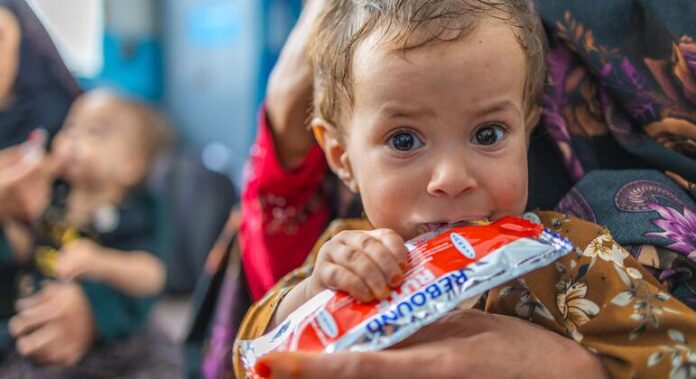
The warning comes in a new report by the UN Children’s Fund (UNICEF), published on Sunday, which said that child food and nutrition insecurity is among the main drivers of undernutrition in the country. 

Wasting is the most immediate, visible and life-threatening form of malnutrition, and is caused by recent food deprivation, illness, or both. 

Children suffering from the condition are too thin for their height and their weak immune systems leave them vulnerable to developmental delays, disease and death. 

A deepening crisis 

The report, Too Little, Too Late: The Diet Crisis Facing Young Children in Afghanistan, was released as the country enters a peak wasting season from July to September.  Recent data shows it’s worsened across 26 out of 34 provinces compared with 2025, indicating an early and deepening crisis. 

For the first time at this scale in Afghanistan, UNICEF measured child malnutrition alongside the lived experience of food and nutrition insecurity among the same group of children across all provinces.  

The new findings aim to help identify risk earlier, before children become severely malnourished and require urgent treatment. 

The study points to early warning signs such as reduced food variety, skipped meals, and children eating less than they need or going hungry. Children under age two have been hardest hit, accounting for 83 per cent of severe acute malnutrition cases and 77 per cent of moderate acute malnutrition cases. 

‘Invest in prevention’ 

“Young children in Afghanistan are being pushed closer to malnutrition before the peak season has even begun,” said Dr. Tajudeen Oyewale, UNICEF Representative in the country.  

“When families begin reducing meals or cutting back on nutritious foods, it is not only a sign of hardship. It is a warning that a child may soon become dangerously wasted.” 

He noted that although treatment saves lives, “we must also invest in prevention, starting with the diets of the youngest children and pregnant women.” 

Lack of water and funding 

The new analysis shows that children in severely food-insecure households are up to six times more likely to suffer from wasting during peak malnutrition periods.   

Moreover, UNICEF’s latest Afghanistan Nutrition Cluster alert underscores why response must go beyond nutrition services alone.  

In addition to poor child diets and rising food insecurity, worsening malnutrition is also linked to disease outbreaks, low immunization coverage, inadequate water, sanitation and hygiene services, and growing funding and supply gaps – all of which are weakening children’s health and increasing their vulnerability to wasting. 

‘The window to act is narrowing’ 

With the peak wasting season approaching, UNICEF is calling for urgent investment to protect young children’s diets and prevent more youngsters from becoming malnourished.  

Action also includes scaling-up in its First Foods Initiative, prioritising children aged six to 23 months, strengthening preventive nutrition services, and ensuring better alignment of essential services around children’s nutrition needs. 

“The window to act is narrowing,” UNICEF said, stressing that “the warning signs are visible earlier, and the response must come earlier too.” 

The agency underscored the need for urgent, flexible funding now to reach families before the crisis deepens further.

Source link