Thursday, April 30, 2026
Home Blog Page 381

Afghan women face total social, economic and political exclusion

0

But recently, the level of participation has reached a new low – zero.

Zero women in national or local decision -making organizations.

Zero Girls should be in secondary education after a ban by December 2024.

These figures are part of the index published Tuesday by Gender Equality Agency United Nations This is the most complete study on gender inequalities in Afghanistan since the Taliban resumed de facto control in 2021.

He paints an image that gives reflection on the state of gender equality in Afghanistan.

” From [2021]We attended a deliberate and unprecedented assault against the rights, the dignity and the very existence of Afghan women and girls. And yet, despite almost total restrictions on their lives, Afghan women persevered, “said Sofia Calltorp, head of women of humanitarian action, in a briefing in Geneva.

The widest genre gap in the world

The report published by the UN women noted that although the Taliban regime presided over “unrivaled” gender inequalities, the disparities existed well before 2021.

“The question of gender inequality in Afghanistan did not start with the Taliban. Their institutionalized discrimination is superimposed above the deep barriers which also prevent women“Said Ms. Calltorp.

According to the index, Afghanistan currently has the second worst gap between the sexes worldwide, with a disparity of 76% between the achievements of women and men in matters of health, education, financial inclusion and decision -making.

Afghan women are currently Achieve only 17% of their potentialAnd recent de facto government policies-including the December 2024 ban on women in secondary education and increasingly strict restrictions on the women’s movement-will perpetuate and perhaps worsen this under-elected potential.

Systematic exclusion and social effects

This type of systematic exclusion of women from society at all levels not only hinders progress on the Sustainable development objectives (ODD) and gender equality but also worsely aggravates poverty and instability, which makes it more difficult for the economy to diversify the sources of workforce.

“Afghanistan’s biggest resource is his wives and daughters. Their potential continues to be unexploited“Said the Executive Director of UN Women SIMA BAHHE.

Currently, only 24% of women are part of the active population, compared to 89% of men. The continuation of prolonged economic conflicts led the number of women on the labor market.

“The economic, political and humanitarian crises that overlap – all with women’s rights – have pushed many households on the edge. In response – often by necessity – more women enter the labor market, ”said Calltorp.

However, women still work mainly in less well paid and less safe positions and are extremely responsible for all unpaid domestic work.

Ms. Calltorp noted that despite the daily “devastating” constraints with which Afghan women face, they continue to defend themselves and their rights.

“” [Afghan women] Continue to find ways to manage companies and defend their rights – and the rights of all Afghans … Their courage and their resilience extends over generations, “said Calltorp.

Choice struck

In addition to a deterioration of the sex equality landscape, the prospects for help in Afghanistan are more and more dark with only 18% of the humanitarian response plan of 2025 for funded Afghanistan.

This has tangible field impacts, leading the United Nations agencies and partners to call for action and funds.

“Most times in Afghanistan, we have seen how donors’ support can make the difference between life and death … We make an urgent appeal to donors to increase flexible, opportune and predictable funding,” they said.

Women, girls and other vulnerable groups are particularly affected by these financing shortages – 300 nutritional sites for Mothers and Mal -fed children closed and 216 gender -based points of violence have suspended the work impacting more than a million women and girls.

“The choices we make now reveal what we represent as a global community. If the world tolerates the erasure of Afghan women and girls, it sends a message that the rights of women and girls everywhere are fragile and consumable“Said Ms. Calltorp.

“Afghan women and girls have not abandoned, and we will not abandon them.”

Originally published at Almouwatin.com

Brutal cuts mean that brutal choices warn the UN chief of rescue, launching “the call of survival”

0

“We were forced to take a sorting of human survival,” said Fletcher. “Mathematics are cruel and the consequences are heartbreaking. Too many people will not get the support they need, but we will save as many lives as possible with the resources given to us. “”

New priorities

The call aims to redefine the plans of individual countries in search of two main objectives: first, to achieve people and places faced with the most urgent humanitarian needs, and secondly, to prioritize vital support based on existing planning for the humanitarian response in 2025.

This is intended to ensure that limited resources are directed where they can do the most good as quickly as possible.

Rather than limiting rescue aid to a predetermined matrix, humanitarian partners focus on the most urgent needs so as to respect the dignity of affected people, allowing them to choose what they need most, Ochha said.

The call gives priority but does not replace the Global humanitarian overview 2025 (GHO), launched last December, which covers 180 million vulnerable people in 70 countries. The GHO provides $ 44 billion, but halfway through the year, less than 13% of this amount has been received.

A call for global solidarity

“The brutal financing cuts leave us brutal choices,” said Fletcher. “Everything we ask is one percent of what you have chosen to spend last year on war. But it is not only a call for money – it is a call for global responsibility, for human solidarity, for a commitment to end suffering. »»

Originally published at Almouwatin.com

Commission proposes gradual phase-out of Russian gas and oil imports

0
Commission proposes gradual phase-out of Russian gas and oil imports

To end the EU’s dependency on Russian fossil fuels, the Commission has today provided a concrete timeline for phasing out corresponding gas and oil imports into the EU by end of 2027. The import ban will be gradually implemented to avoid adverse economic impacts or risks to security of supply.

Source link

Commission proposes gradual phase-out of Russian gas and oil imports

0
Commission proposes gradual phase-out of Russian gas and oil imports

To end the EU’s dependency on Russian fossil fuels, the Commission has today provided a concrete timeline for phasing out corresponding gas and oil imports into the EU by end of 2027. The import ban will be gradually implemented to avoid adverse economic impacts or risks to security of supply. Source link

Source link

Celebrating 40 years of Schengen

0
Celebrating 40 years of Schengen

We are safer too, thanks to Schengen. Reducing barriers internally was accompanied by increased cooperation between police forces, customs authorities and external border control authorities, helping to make Europe more secure and reinforcing our external borders and managing migration more effectively.  This is essential to fight terrorism, organised crime and hybrid threats. Schengen Information System (SIS) is the […]

Source link

Celebrating 40 years of Schengen

0
Celebrating 40 years of Schengen

We are safer too, thanks to Schengen.

Reducing barriers internally was accompanied by increased cooperation between police forces, customs authorities and external border control authorities, helping to make Europe more secure and reinforcing our external borders and managing migration more effectively. 

This is essential to fight terrorism, organised crime and hybrid threats.

Schengen Information System (SIS) is the most widely used and largest information sharing system for security and border management in Europe and allows authorities to share and access security alerts in real time across Schengen.

Source link

More gas has been killed by trying to get food, health care near the `Complete disaster ”

0

“We walk the fine gray line between operational capacity and complete disaster, every day,” said Dr Thanos Gargavanis, WHO Trauma surgeon and emergency manager, speaking of the enclave.

The comments of the United Nations veteran came in the midst of new reports on Tuesday morning that more Palestinians had been killed by trying to access food, this time near a help distribution site in Khan Younis in southern Gaza.

The mass victim event left “hundreds of victims, a medical complex of Nasser completely” in Khan Younis, said who is representative of the occupied Palestinian territory, Dr. Rik Peeperkorn.

Prohibited area

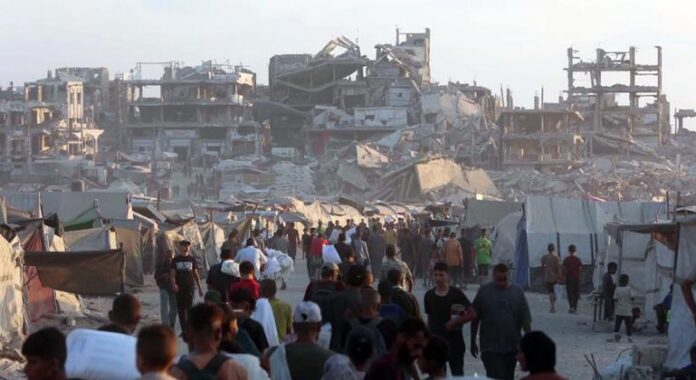
Through Gaza today, health services are “barely available” and difficult to access, said Dr. Peeperkorn, because more than 80% of the Gaza territory is under evacuation orders.

“The narrowing humanitarian space makes each health activity much more difficult than the day before,” added Dr. Gargavanis.

Nasser’s medical complex is the largest reference hospital in Gaza and the only main hospital remaining in Khan Younis. It is located in the evacuation zone announced by the Israeli army on June 12.

The neighboring Al-Aal hospital-operated by Palestinian Red Crescent Society (PRCS)-continues to provide services to patients already there, but it is unable to admit anyone else because of the ongoing military operations.

“This is what we call a completely minimal functional hospital,” said Dr. Peeperkorn.

Mortal impact of fuel shortages

Only 17 of the 36 Gaza hospitals are currently partially functional, medical supplies are extremely low and no fuel has entered the band for more than 100 days.

The latest mass victim event is only the last gasans who are trying to access aid in the middle of severe continuous restrictions imposed on the amount of aid authorized in the band by Israel.

Monday, more than 200 patients arrived at the Red Cross hospital in Al Mawasi-the greatest number received by the establishment in a single mass incident. Of this number, 28 patients were reportedly declared dead, said Dr. Peeperkorn.

One day earlier, on June 15, the same hospital received at least 170 patients, who would have tried to access a food distribution site.

“The recent food distribution initiatives by actors not one entail mass incidents each time,” insisted Dr. Gargavanis.

Fallout of private aid plan

Since the end of May, UN partners and humanitarian aid have been sidelined in Gaza as a new aid distribution model supported by Israel and the United States began operations as part of Gaza Humaninitarian Foundation (GHF), which uses private military entrepreneurs.

The WHO trauma trauma surgeon highlighted a “constant correlation” between the locations of food distribution places and the incidents of mass victims in Rafah, Khan Younis and along the Netzarim corridor.

Asked about the type of injury suffered by those asking for help and is responsible, Dr. Garavanis stressed that who is not a forensic agency.

“We are unable to clearly identify the nature of the injury,” he said, he said. “What we can say, however, is that we are talking about ball injury, and we are talking about very few incidents of shell injury. »»

The UN has repeatedly warned that the new aid distribution system does not meet the humanitarian principles of humanity, impartiality, independence and neutrality. The World Organization has also called for the lifting of aid restrictions.

Dr. Peeperkorn insisted that the WHO should be facilitated to move supplies to Gaza profitably “via all possible routes” to prevent other medical services closings. He said that 33 who trucks with supplies are waiting in Al Arish in Egypt to obtain a passage in the enclave, with 15 others standing in the occupied West Bank.

Originally published at Almouwatin.com
EULEX : Council renews the mandate of the EU civilian mission in Kosovo*

0
EULEX : Council renews the mandate of the EU civilian mission in Kosovo*

The Council prolonged the mandate of EU Rule of Law Mission in Kosovo* until 14 June 2027. Source link

Source link

Major Brussels-to-Luxembourg Motorway Upgrade Nears Completion: Faster Travel Ahead

0
Major Brussels-to-Luxembourg Motorway Upgrade Nears Completion: Faster Travel Ahead

Brussels, 16 June 2025 — After more than two years of extensive renovations, the critical E411 motorway connecting Brussels to Luxembourg is set to reopen in full by 11 July, promising drivers a smoother and faster journey between Belgium’s capital and the Grand Duchy.

Stretching nearly 19 kilometers between Daussoulx and Thorembais-Saint-Trond, the €50 million upgrade marks the culmination of a long-awaited modernization effort on one of Belgium’s busiest transport corridors. The project, launched in March 2023, involved resurfacing both directions of the three-lane highway, including emergency lanes, as well as comprehensive structural improvements, as reported by Luxembourg Times.

A Much-Needed Facelift

The E411 has long been a source of frustration for commuters and freight operators alike. Narrow lanes, frequent bottlenecks, and deteriorating infrastructure have contributed to chronic congestion and delays. Over the past decade, the condition of the road had worsened significantly, with potholes, uneven surfaces, and crumbling bridges making for an often nerve-wracking driving experience.

To address these issues, engineers renovated bridges with new waterproofing layers and concrete repairs, installed a central berm drainage system, and reinforced retaining structures along vulnerable stretches. Noise barriers were also erected along a one-kilometer section to mitigate environmental impact on nearby communities.

In recent weeks, some lanes have already reopened to traffic with a temporary 70 km/h speed limit. From Brussels heading toward Namur, the central and right lanes were restored on 3 June, offering a preview of the improved conditions to come.

Europe’s Mobility Paradox

The completion of this stretch of the E411 comes at a time when the region’s broader mobility challenges are under scrutiny. Earlier this year, European Commission President Ursula von der Leyen, Council President António Costa, and Parliament President Roberta Metsola traveled from Brussels to Luxembourg by private jet for a Europe Day ceremony — bypassing the notoriously sluggish rail link that currently takes over three hours.

This stands in stark contrast to the 1980s, when the train journey was shorter and more efficient. Despite a major rail modernization project launched in 2007, progress has been hampered by disputes over cost-sharing between Belgium and Luxembourg. With a projected total price tag of €750 million, the high-speed rail upgrade is now expected to be completed only by the end of the decade.

Green Innovation on Site

One standout feature of the E411 upgrade was the creation of the Ostin recycling platform near Éghezée — a first-of-its-kind initiative in Wallonia. Designed to minimize environmental impact, the platform processed 652,000 tonnes of construction materials on site, including 495,000 tonnes for recycling and 157,000 tonnes for reuse in new road layers.

Without the local facility, transporting materials to distant treatment centers would have generated over 2.6 million kilometers of truck travel. Thanks to Ostin, that number was reduced to just 450,000 kilometers, significantly cutting emissions and fuel consumption.

Legacy of Neglect: The Chabert Circular

The current wave of roadworks across Wallonia can be traced back decades, to a fateful decision made in 1981. In response to economic pressures during the oil crisis, then-Public Works Minister Jos Chabert drastically cut costs on road construction projects. Among other measures, he eliminated a crucial 5–6 cm waterproof “sandwich layer” between concrete slabs — a move that would prove catastrophic in the long run.

By the late 1980s, Walloon highways were plagued by “punch-out” failures — a phenomenon where concrete slabs cracked under repeated stress. Water seeped into unprotected foundations, causing widespread structural damage. Today, the consequences of those austerity measures still haunt the region’s road network.

A Network Under Pressure

Wallonia’s motorways are among the most densely used in Europe, carrying a disproportionately high volume of heavy goods vehicles — around 35%, compared to 10–15% elsewhere. Moreover, six out of ten trucks on the region’s roads are foreign-registered, underscoring its role as a key transit corridor within the EU.

Compounding the issue, regional authorities inherited an aging infrastructure network after decentralization without adequate funding for maintenance. As a result, preventative upkeep has often been replaced by costly emergency interventions.

Unpredictable weather patterns further complicate matters. Construction windows are limited due to the need for specific temperature and humidity conditions for asphalt and concrete applications.

The New Normal: Permanent Roadworks

Despite significant investment — over €3 billion since 2010 by public infrastructure financier Sofico — the scale of needed upgrades remains staggering. The 2019–2024 Mobility Plan identified over 5,000 projects requiring €6.65 billion in total.

With increasing demands from electric vehicle infrastructure, climate adaptation, and growing traffic volumes, roadworks are likely to remain a fixture of daily life in Wallonia and beyond.

“In the medium term, the trend will not be downward,” warns Brussels Mobility, which reported 95,000 construction sites in the capital region alone in 2023 — up from just 25,000 in 2014.

While the reopening of the upgraded E411 offers a welcome reprieve for motorists, it also underscores the broader reality facing European transport networks: decades of underinvestment must now be addressed alongside the demands of a rapidly evolving mobility landscape.

For now, however, Belgian and Luxembourgish drivers can look forward to a less stressful commute — at least until the next round of construction begins.

Source link

Brutal cuts mean brutal choices warns UN relief chief, launching ‘survival appeal’

0
Brutal cuts mean brutal choices warns UN relief chief, launching ‘survival appeal’

“We have been forced into a triage of human survival,” said Mr. Fletcher. “The math is cruel, and the consequences are heartbreaking. Too many people will not get the support they need, but we will save as many lives as we can with the resources we are given.”

New priorities

The appeal aims to reprioritise individual country plans in pursuit of two main goals: first, to reach people and places facing the most urgent humanitarian needs, and second, to prioritise life-saving support based on existing planning for the 2025 humanitarian response.  

This is intended to ensure that limited resources are directed where they can do the most good, as quickly as possible.

Rather than limiting lifesaving aid to a predetermined matrix, humanitarian partners are focused on addressing the most urgent needs in ways that respect the dignity of affected people, allowing them to choose what they need most, OCHA said.

The appeal prioritises but does not replace the Global Humanitarian Overview 2025 (GHO), launched last December, which covers 180 million vulnerable people across 70 countries. The GHO calls for $44 billion, but at the halfway point of the year, less than 13 per cent of that amount has been received.

A call for global solidarity

“Brutal funding cuts leave us with brutal choices,” said Fletcher. “All we ask is one per cent of what you chose to spend last year on war. But this isn’t just an appeal for money – it’s a call for global responsibility, for human solidarity, for a commitment to end the suffering.” 

Source link