

The EU issued a statement on the International Day of the World’s Indigenous Peoples reaffirming its strong commitment to support Indigenous Peoples within and beyond its borders, and to respect, protect and fulfil their rights as set out in the UN Declaration on the Rights of Indigenous Peoples (UNDRIP).
Israeli plan to take complete control of Gaza must stop now, says UN rights chief

“A complete military takeover of the occupied Gaza Strip must be immediately halted,” insisted Volker Türk, UN High Commissioner for Human Rights, after the Israeli security cabinet approved a plan for a full-scale Israeli military takeover in the battered enclave.
The development runs contrary to international law, Mr. Türk continued, referring to a ruling of the International Court of Justice that Israel must end its occupation and achieve a two-State solution giving Palestinians the right to self-determination.
Any further escalation of the conflict between Hamas and Israel that has devastated Gaza and killed tens of thousands “will result in more massive forced displacement, more killing, more unbearable suffering, senseless destruction and atrocity crimes”, the UN rights chief said.
Aid access call
In a short statement, Mr. Türk insisted that rather than intensifying the conflict, “the Israeli Government should put all its efforts into saving the lives of Gaza’s civilians by allowing the full, unfettered flow of humanitarian aid”.
At the same time, all hostages must be immediately and unconditionally released by Palestinian armed groups, he continued, adding that Palestinians arbitrarily detained by Israel must also be released.
“The war in Gaza must end now. And Israelis and Palestinians must be allowed to live side by side in peace,” the High Commissioner said.
Little change in dire aid situation
Since war erupted in Gaza after Hamas-led deadly terror attacks in Israel in October 2023, aid agencies have warned repeatedly that Israeli bombardment, mass evacuation orders and relief restrictions have created a humanitarian catastrophe.
Even UN staff who are still working in the enclave report being unable to find enough to eat, according to the UN agency for Palestinian refugees, UNRWA. Despite Israel’s 27 July announcement of daily military pauses in western Gaza “to improve humanitarian responses”, far too little aid is getting through, humanitarians insist.
According to the UN human rights office, OHCHR, since 27 May, at least 1,373 Palestinians have been killed while seeking food; 859 in the vicinity of the non-UN aid distribution organization the Gaza Humanitarian Foundation (GHF); another 514 victims died along the routes of food convoys.
Echoing widespread concerns for the people of Gaza, the head of the UN World Health Organization (WHO), warned that other Gazans have only limited access to basic services and food, while malnutrition is widespread and hunger-related deaths are rising.
“In July, nearly 12,000 children under five years were identified as suffering from acute malnutrition, the highest monthly figure ever recorded,” said Tedros Adhanom Ghebreyesus.
In comments to journalists on Thursday, the WHO chief said that so far this year, 99 people have died from malnutrition, including 29 children under five, adding that these reported numbers are likely underestimates.
Leading Healthcare IT Companies in the US You Should Know About
In today’s rapidly evolving digital landscape, Healthcare IT stands as one of the most transformative forces shaping modern
The Israeli plan to take total control of Gaza must stop now, explains the head of the United Nations

“A complete military control of the occupied Gaza Strip must be immediately interrupted”, ” insisted Volker Türk, the High Commissioner of the United Nations Human Rights, after the Israeli security firm approved a plan for a large -scale Israeli military control in the beaten enclave.
Development is contrary to international law, continued Mr. Türk, referring to a Decision of the International Court of Justice that Israel must put an end to its occupation and obtain a solution to two states giving the Palestinians the right to self -determination.
All new climbing of the conflict between Hamas and Israel which devastated Gaza and killed tens of thousands ” A more massive forced displacement, more killings, more unbearable suffering, insane destruction and crimes of atrocity ”, The head of the United Nations rights said.
Help Call Access
In a brief declaration, Mr. Türk insisted that rather than intensifying the conflict, “the Israeli government should put all its efforts to save the lives of Gaza civilians by allowing the complete and without hindrance of humanitarian aid”.
At the same time, All hostages must be released immediately and unconditionally by Palestinian armed groups, he continued, adding that Palestinians arbitrarily detained by Israel must also be released.
“The war in Gaza must end now. And the Israelis and the Palestinians must be allowed to live side by side in peace, ”said the High Commissioner.
Originally published at Almouwatin.com
Gaza: Alarm over Israeli move to deregister NGOs
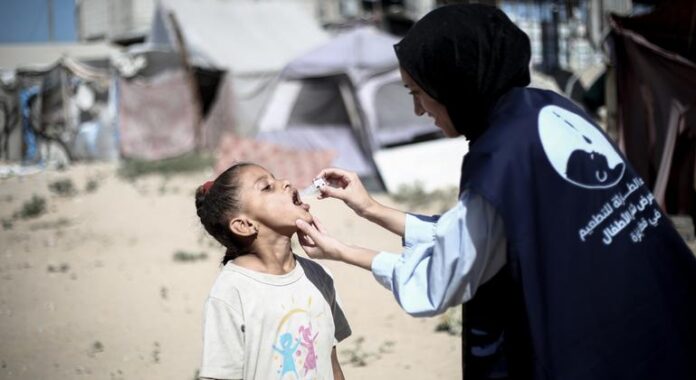
The development – which also applies to the occupied West Bank – is a result of the Israeli requirement introduced on 9 March impacting international non-governmental organizations (NGOs).
“Unless urgent action is taken…most international NGO partners could be de-registered by 9 September or sooner – forcing them to withdraw all international staff and preventing them from providing critical, lifesaving humanitarian assistance to Palestinians,” said UN and partner aid organizations that are known collectively as the Humanitarian Country Team in the Occupied Palestinian Territory (OPT).
The UN understands that organizations must now submit, amongst others, details of representatives and all employees in-country, including Palestinian and foreign workers, with full identification and contact details.
For foreign worker recommendation requirements, applications must now include marital status and family details, including spouse and children’s passport numbers and country of issuance.
Many UN agencies still operate in Gaza, working closely with NGO partners to reach the war-torn enclave’s most vulnerable people. International NGOs are key as they provide critical support to Palestinian NGOs in the form of supplies, funding and technical support.
Collective call
“Without this cooperation, their operations will be severed, cutting off even more communities from food, medical care, shelter and critical protection services,” said the Humanitarian Country Team, which is overseen by the UN’s top aid official in OPT and includes heads of UN agencies and more than 200 local and international NGOs.
Already, NGOs which have not registered under the new system are prohibited from sending any supplies to Gaza.
Just last month, Israeli authorities rejected repeated requests by 29 of them to ship humanitarian aid to Gaza, citing the organizations as “not authorised”.
“This policy has already prevented the delivery of lifesaving aid including medicine, food, and hygiene items,” the humanitarian collective said. “This most profoundly affects women, children, older people, and persons with disabilities, further aggravating the risk of being subjected to abuse and exploitation.”
In a statement urging Israel to reconsider its demand for sensitive employee information from NGOs, the humanitarian country team insisted that impeding its work violates international law “when we are receiving daily reports of death by starvation as Gaza faces famine conditions”.
Convoy tragedy
Meanwhile inside Gaza, reports on Wednesday indicated that at least 20 people were killed and dozens more injured in central Gaza after a convoy of aid trucks overturned into a crowd.
The incident happened in southern Deir Al-Balah, central Gaza, on Tuesday, according to the local authorities. Further reports indicated that desperate people seeking aid had climbed onto the lorries before the drivers lost control.
In its latest aid update, the UN aid coordination office, OCHA, noted that a full 90 per cent of aid brought into Gaza since 20 July has been “offloaded by hungry crowds or looted by armed gangs”.
People who approach aid convoys near Israeli military checkpoints continue to be killed and wounded, OCHA said.
It cited the health authorities which reported that between 27 May and 4 August, there have been 1,516 fatalities and more than 10,000 injuries at militarised distribution sites or along humanitarian aid convoy routes.
Horizon Europe 2028 – 2034: twice bigger, simpler, faster and more impactful

As part of the next long-term EU budget 2028-2034, the Commission is proposing to double the budget of the research and innovation framework programme to €175 billion. The new Horizon Europe will boost Europe’s competitiveness and fund solutions to real-world challenges.
Gaza: Acute malnutrition in children strikes High record

In July, nearly 12,000 children under the age of five were identified as having an intensively malnourished out of 136,000 projected, according to aid partners.
Among these, more than 2,500 suffered from acute serious malnutrition, the most deadly form and 40 had to be hospitalized in stabilization centers.
More affected children
The proportion of children suffering from severe acute malnutrition increases, Ochha said.
In June and July, 18% of all children with acute malnutrition suffered from severe acute malnutrition, compared to 12% between March and May.
In addition, humanitarian access constraints add to the crisis.
Last month, aid partners could only reach 8,700 of the 290,000 children under the age of five who need food and nutrition supplements due to the serious shortage of lipid nutrient supplements entering Gaza.
OCHA said development “marks a spectacular collapse in the malnutrition prevention program”, noting that an average of 76,000 children – or a quarter of people in need – has been reached each month between April and June.
The distribution of other key nutritional supplies has also decreased sharply, which affects children, pregnant women and breastfeeding mothers.
The refuge crisis is worsening
Meanwhile, no shelter has entered Gaza since March 2.
At the same time, more than a million shelter articles and 2.3 million items such as tents, tarpaulins and waterproofing materials have been purchased and are currently stuck in Jordan and Egypt, because the Israeli authorities have not approved their entry.
The refuge crisis continues to worsen, most families living in severely overcrowded and dangerous conditions. Some have no shelters.
In July, humanitarian workers estimated 44 travel sites, discovering that 43 had homeless families.
A family rests after having evacuated Deir al-Balah in the Gaza Strip. (deposit)
Bombardment and displacement continue
The situation is still deteriorating due to the undergoing bombing, travel and insecurity orders, which continue to move families and disrupt humanitarian operations.
The OCHA reported that on the whole, the realities on the ground remain largely the same since Israel has announced a “tactical break” in military operations to allow the safe passage of aid.
The United Nations agency has reiterated that the supplies that have entered remain insufficient given the immense needs, while UN convoys continue to deal with challenges in the supply of aid.
Help missions taking hours
While fewer humanitarian movements have been refused, the missions which are approved still take hours, some taking more than 18 hours.
On Wednesday, five of the 11 missions requiring coordination with the Israeli authorities were facilitated. These included food collection with Kerem Shalom and Zikim crossings.
Four other missions were hampered but ultimately complete, which included the fuel collection of Kerem Shalom Crossing and the fuel transfer from the south of Gaza to the north.
Medical evacuation update
One of the missions has seen the medical evacuation of 15 children in Jordan and 42 companions, withsupportof the World Health Organization (WHO). However, more than 14,800 Gaza patients still need specialized medical care.
OCHA has also pointed out the flow of commercial products in the band, noting that several trucks carrying food has entered in recent days.
While the UN will continue to monitor the situation, humanitarian workers have again highlighted the need for unhindered and predictable humanitarian access to and inside Gaza, warning that “without it, time and resources are wasted, lives are lost and the response cannot correspond to the need for needs”.
Originally published at Almouwatin.com
Abuse during and after childbirth persists in the world, which warns

Over the past decade, an increasing ensemble of evidence has highlighted the widespread impact of ill-treatment and the need to offer respectful care at the center of all maternal and newborn health strategies.
WHOHuman reproduction program (HRP) and partners have published a new collection Wednesday, aimed at ending the ill-treatment and promoting respectful maternal and newborn care, featuring the latest evidence and advice on best practices.
From the development of policies to clinical environments and community services, this collection describes the exploitable stages to respect the rights, needs and preferences of women, newborns, parents and families.
Wide range of ill -treatment
Take different forms, ill -treatment during childbirth goes from negligence and abuse to non -consensual medical procedures, with a previous Study supported by WHO see that 40% of women in four countries had undergone a kind of abuse or discrimination during work or childbirth.
Some said they were slapped, shown in or force constraints.
In these four countries, researchers also found that More than four in 10 women had been physically or verbally attacked during childbirthSome also suffer discrimination.
Furthermore, Up to 75% of extremely sensitive procedures were carried out without consent.
Exclude
“” Too often, women are not part of decision -making and are treated with contempt or even abuseE, “said who Dr. Hedieh Mehrtash is.
“Respectful maternal and newborn care must be integrated and integrated into policies and practice”, ” said Which, as the collection provides practical resources to countries, urging health systems to proactively integrate dignity, equity and respect in all aspects of maternity and care for newborns-based on Who’s 2014 Declaration on the prevention of lack of respect and abuse.
Highlighting critical fields where ill -treatment is often overlooked, which is Compendium provides program managers with essential history to build a fundamental understanding of abuse and respectful care and aims to guarantee that respectful practices become the norm.
Originally published at Almouwatin.com
UN officials warn from famine in the midst of “gender emergency” in Sudan torn by war

El Fasher is particularly affected, where hunger develops, with the office for the coordination of humanitarian affairs (Ochha) Warning of a deterioration situation which puts even more lives of civilians in danger.
OCHA operations and advocacy director Edem Wosornu, who is currently in the country, said the suffering was immense, with people trapped, moved or returning to ruined communities. She called for unhindered access and urgent support to reach those on the front line of difficulties.
Briefing The journalists of the UN headquarters in New York, UN deputy spokesperson Farhan Haq, said: “With increasingly alarming food shortages and spiral prices, residents of El Fasher would have recourse to animal food in what is an increasingly catastrophic situation.”
Thousands of people face famine, the threat of cholera
El Fasher has the highest cost of basic products nationwide at almost $ 1,000 per household per month, which is far beyond the scope of most families. This includes more than $ 700 for food alone – more than eight times the cost of staple food in other parts of the country, said Haq.
“” These high costs, associated with the headquarters and the lack of delivery of aid by the road for more than a year, have left thousands of people in front of famine“, He added, noting that the commitment around the calls of the Secretary General and the United Nations Emergency Rescue Coordinator for a break in the region is” more important than ever.
In an effort to limit public health risks in the north of Darfur, the UN humanitarian partners and local authorities launched a sanitation campaign on August 5, targeting 11,000 people in the localities of El Fasher and Dar as Salam in order to prevent epidemics of diseases in the surptered travel sites during the rainy season.
They also increase efforts to respond to a cholera epidemic in the locality of Tawila, which has absorbed 330,000 displaced people fleeing conflicts in Zamzam and El Fasher since April.
In the state of the blue Nile, the cases of cholera have increased to almost 2,800 since the end of June, with more than 40 new infections recorded yesterday, with 14 deaths were reported, said the deputy spokesman for the United Nations.
“Gender emergency”
Warnings also came from the gender equality agency, United Nations.
“This crisis is a gender emergency,” said Salvator Nkurunziza, the agency representative in Sudan, said News News.
“” Improved women and girls can be subject to the risk of exploitation and abuse, in particular during the delivery of aidWhere the protective mechanisms are low or absent in certain places, “he said.
According to the agency’s unit to combat violence against women in Sudan in March 2025, there were 1,138 cases of rape recorded since April 2023, including 193 children, most of whom were in areas affected by conflicts, he said.
“The actual number can be higher, because the fear of stigma and other social and security reasons prevent the precise relationships of violence based on sex,” he warned.
Women, girls most affected by food insecurity
“Admittedly, these crimes, including rape and harassment, can prevent women and girls from accessing food aid,” he said.
The crimes of violence not declared by the sexes in the besieged areas can be higher than those indicated in recent statistics, he continued, stressing that Women and girls are the most affected by the food insecurity of these regions, and situations indicate a hunger crisis that is looming.
“Women are at the heart of the survival of their households, especially in travel environments, but their ability to access food aid is deeply compromised,” said Nkurunziza. “Households with female head, already three times more likely to be insecure by food, are now the most confronted group in the country.”
Originally published at Almouwatin.com
Extreme Heat breaks records in the world: the United Nations Meteorological Agency

Extreme temperatures have caused approximately 489,000 heat -related deaths each year Between 2000 and 2019, with 36% in Europe and 45% in Asia.
The impacts on heat health are particularly serious in cities due to the so-called “effect of the urban heat island”-overheating areas of the dense city compared to their rural environment-which is to enlarge problems like Continuous urbanization.
In the midst of growing 21st century temperatures, the Wmo underlined that July 2025 was the richest, ever recorded July thirdBehind those in 2023 and 2024.
Continuation of European heat
In this July record, heat waves particularly had an impact on Sweden and Finland, which have experienced unusually long temperature spells above 30 degrees Celsius (86 degrees fahrenheit).
Southeast Europe has also faced thermal waves and forest activities, Türkiye recording a new extreme national summit of 50.5 degrees Celsius (122.9 degrees fahrenheit).
Asia, North Africa, United States
In Asia, temperatures climbed above average in most of the Himalayas, China and Japan in July, the extreme heat continued in August.
During the week before August 5, temperatures exceeded 42 degrees Celsius (107 degrees Fahrenheit) through Western Asia, south of Central Asia, the southwest of the United States, a large part of North and South Africa of Pakistan-with certain areas exceeding 45 degrees Celsius (114 degrees Fahrenheit).
Some parts of the southwest Iran and eastern Iraq have experienced particularly severe temperatures above 50 degrees Celsius (122 degrees Fahrenheit), disturbing electricity and water supply, education and work.
For the week of August 4, Morocco issued heat warnings for temperatures up to 47 degrees Celsius (116 degrees fahrenheit).
Korea has also issued generalized heat warnings because the resort’s temperature records have been beaten in parts of China.
In Japan, a new national temperature record of 41.8 degrees Celsius (107.2 degrees Fahrenheit) was set on August 5, breaking the previous record of 41.2 degrees Celsius paid a week before.
Ahead
Looking at next week, the World Meteorological Center in Beijing provides that the heat waves will persist in the same regions as well as the Iberian Peninsula and the north of Mexico.
These regions should see maximum temperatures between 38 and 40 degrees Celsius (100.4 to 104 degrees Fahrenheit), with parts of Saudi Arabia, Iraq, Iran, North and South West Africa which exceeds 45 degrees Celsius (113 degrees Fahrenheit).
Canadian forest fires
While Canada is experiencing one of its worst forest seasons never recorded, with 6.6 million hectares burned, smoke polluted the sky and caused poor air quality in several provinces and northern United States in late July and early August.
Twice this summer, smoke from Canadian fires crossed the Atlantic, affecting the sky over Western Europe from August 5 to 7 and above the center and southern Europe in late June.
Elsewhere, Cyprus, Greece and Türkiye fought forest fires which forced the evacuations and caused deaths. In the United States, a forest fire in the Arizona Grand Canyon National Park disrupted tourism on the emblematic site.
‘Plus an excuse’
“” The extreme heat is sometimes called the silent killer, but with the science, data and technologies of today, silence is no longer an excuse. Each death of extreme heat is avoidable“Said the deputy secretary general of the WMO, Ko Barrett.
WMO endeavors to strengthen early heat alert systems under the The first warnings for all initiative. In collaboration with global and local partners, it also helps countries develop thermal health action plans and guarantee that populations at risk receive timely alerts.
WMO is also one of the ten UN agencies supporting The appeal to the secretary general’s action on extreme heatwhich aims to stimulate global cooperation to reduce thermal impacts thanks to economic and social policy. A key objective is to limit global warming to 1.5 degrees Celsius above pre-industrial levels, in accordance with 2015 Paris Agreement.
According to estimates of the WMO and the World Health Organization (WHO), the scaling of thermal health warning systems in 57 countries alone could save nearly 100,000 lives per year.
“” Our network connects science, politics and action so that no community is left behind In the race to adapt to climate change which will continue to worsen extreme heat for the coming years, “said Joy Shumake-Guillemot, head of the joint climate and health program of WMO and health of the World Health of Health (Ghhin).
“It is not only a climate question, it is a public health emergency,” she concluded.
Originally published at Almouwatin.com
