Saturday, March 21, 2026
Home Blog Page 40

Alpine Splendour Meets Urban Grandeur: Milano-Cortina Games Ignite Italy’s Olympic Winter

0
Alpine Splendour Meets Urban Grandeur: Milano-Cortina Games Ignite Italy’s Olympic Winter

MILAN — February 7, 2026— Under the floodlights of the iconic San Siro Stadium, Italy welcomed the world Friday evening as the Milano-Cortina 2026 Olympic Winter Games officially commenced in a ceremony weaving Italy’s Renaissance artistry with the raw majesty of the Dolomites. Spanning Milan’s cosmopolitan energy to Cortina d’Ampezzo’s storied peaks—and venues from Livigno to Bormio—these Games redefine the Winter Olympics through intentional decentralization.

The opening ceremony broke tradition: football legend Zlatan Ibrahimović reflected on resilience and legacy, while Grammy winner Mariah Carey and Italian icon Laura Pausini delivered musical tributes resonating across the 75,000-seat arena. Unlike past Winter Games anchored to a single mountain town, Milano-Cortina deliberately bridges piazza and peak—a symbolic union of urban innovation and alpine heritage.

“This is not merely a sporting event,” stated International Olympic Committee President Thomas Bach. “It is a testament to resilience—to hosting Games that honour environmental sustainability and the authentic character of our host communities.” Organisers emphasise reuse: 93% of venues are existing or temporary, with legacy planning prioritising post-Games community use and ecological stewardship.

Competition surged before the flame was lit, with women’s ice hockey and mixed doubles curling underway February 5. By Saturday, snowboarders launched big air qualifiers under brilliant sun at Livigno’s purpose-built park, speed skaters carved precision arcs at Baselga di Piné’s new oval, and figure skating pairs delivered emotionally charged performances at Milan’s Olympic Ice Skating Arena.

Cortina d’Ampezzo—host of the 1956 Winter Olympics—welcomes alpine skiing’s elite to slopes steeped in history, while its newly renovated sliding track challenges luge and skeleton athletes at speeds exceeding 130 km/h. A coordinated transport network seamlessly links venues up to three hours apart, turning geographic dispersion into a showcase of Italy’s diverse winter landscapes.

Security protocols remain robust across host zones following planned demonstrations in Milan Saturday afternoon. Officials confirm all venues operate smoothly, with spectator safety prioritised without dampening the festive atmosphere. For Italy—a nation globally celebrated for football and summer tourism—these Games mark a strategic reclamation of its deep-rooted winter sporting identity, spotlighting regions long central to European alpine culture.

As the first medals are awarded beneath Dolomite peaks tonight, Milano-Cortina 2026 offers more than podiums and records. It presents a vision: winter sport evolving responsibly amid climate conversations, human grit meeting elemental beauty, and a nation sharing its mountains not as backdrop, but as heartbeat.

Event Details:
❄️ Olympic Winter Games: February 6–22, 2026
Paralympic Winter Games: March 6–15, 2026
📍 Host Regions: Lombardy, Veneto, Trentino-Alto Adige
🌐 Full Schedule & Tickets: milano-cortina2026.org

The European Times is committed to sustainable journalism. This coverage is produced with minimal carbon footprint. Follow #MilanoCortina2026 for live updates.
Source link

Keeping hope ‘alive for younger generations’ in Haiti as funding falters

0
Keeping hope ‘alive for younger generations’ in Haiti as funding falters

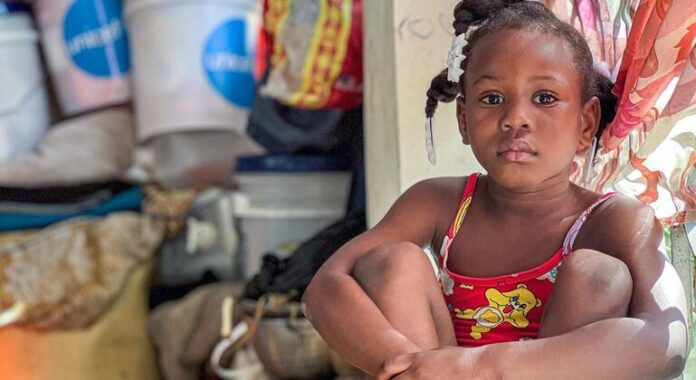
Armed groups control large swaths of Port-au-Prince, forcing more than 1.4 million people from their homes and cutting access to food, health, water and education services.

Half the population is not getting enough to eat, and malnutrition among children is rising sharply. Humanitarian efforts are hampered by insecurity and blocked access routes.

According to the UN, six million people of Haiti’s population of around 11.4 million need some form of humanitarian assistance in 2026.

Why funding Haiti matters

Funding for humanitarian aid in Haiti is a lifeline for millions. The UN’s 2026 Humanitarian Response Plan seeks $880 million to assist 4.2 million of those six million vulnerable people, covering emergency food, shelter, protection, health and education services.

Without these resources, basic lifesaving operations, such as nutrition support for children and protection services for women and girls, cannot reach all of those in need.

UN agencies stress that sufficient donor funds are essential not only to save lives but to stabilise communities torn apart by violence and displacement.

Thousands of people have died as a result of gang violence in Haiti’s capital, Port-au-Prince.

Violence by armed groups has forced 1.4 million people, or 12 per cent of the population, to flee their homes.

Mass displacement has left children without education, healthcare, or safety.

What is the UN saying?

The UN’s most senior humanitarian official in the Caribbean country, Nicole Boni Kouassi, said that said the high level of funding was needed “to preserve the life and dignity of every Haitian, and to keep hope alive for younger generations.” 

Speaking to donors in August 2025, the UN Secretary-General, António Guterres said “Haiti remains shamefully overlooked and woefully underfunded.”

What services have been reduced?

  • Significant cuts to food security services, leaving many people without regular food assistance as food insecurity rises nationwide.
  • Access to drinking water curtailed, with reductions in water distribution and WASH (water, sanitation, and hygiene) services.
  • Primary healthcare services scaled back, including community‑level health support and clinical services.
  • Education-related humanitarian support reduced, affecting children already impacted by school closures and displacement.
  • Protection services restricted, including programs addressing gender‑based violence, child protection, and support for survivors.
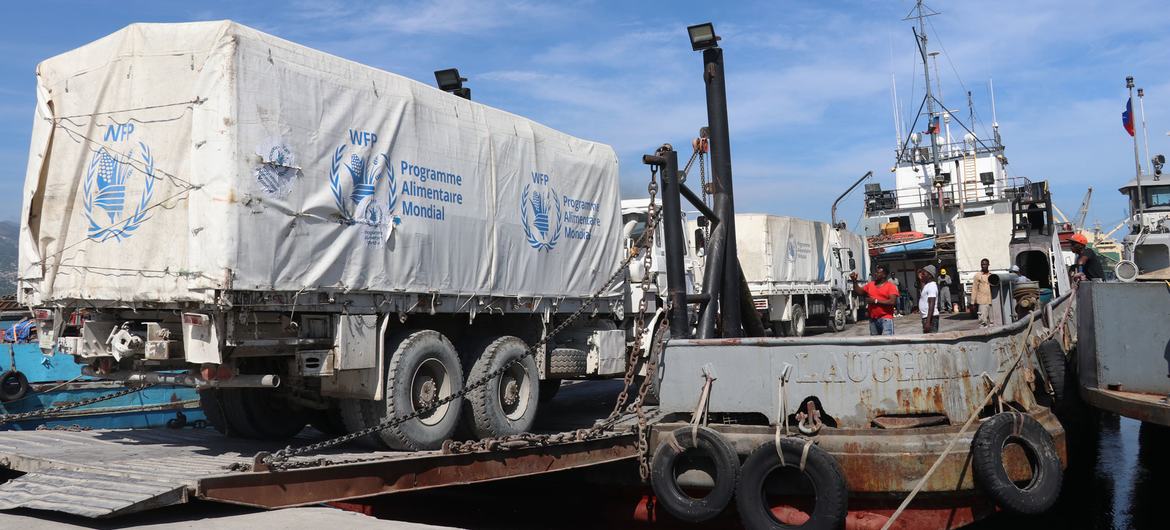
Trucks carrying aid to Haitians are loaded onto boats to bypass areas controlled by gangs.

Trucks carrying aid to Haitians are loaded onto boats to bypass areas controlled by gangs.

Why funding has been so difficult to raise

Despite the scale of need, Haiti’s humanitarian appeal is among the least funded crises in the world. For 2025, the UN sought $908 million but received only 24 per cent of that target.

Competing global crises and donor fatigue, together with attention on other emergencies, including in Sudan, Ukraine and Gaza, have left Haiti’s requirements under-resourced.

Funding shortfalls also jeopardize essential operations, such as humanitarian air services that are often the only means of reaching isolated communities.

The result: agencies are forced to prioritize the most urgent cases while many go without assistance.

Regional or international consequences of not funding humanitarian aid in Haiti

Failing to fully fund Haiti’s humanitarian response risks broader instability beyond its borders.

The UN’s International Organization for Migration (IOM) warned that unchecked violence, mass displacement and lack of basic services could fuel:

  • Irregular migration
  • Heighten pressures on neighbouring countries
  • Undermine regional economic and security cooperation
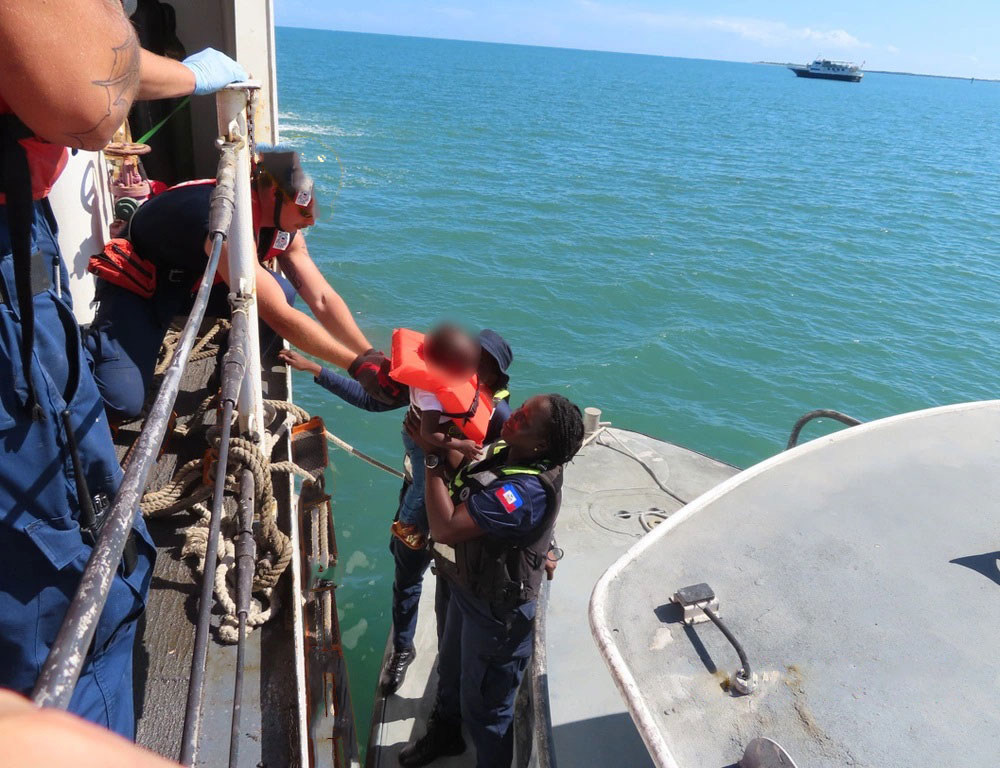
A child who was rescued at sea off a boat of migrants is handed back to the Haitian authorities by the US Coast Guard.

A child who was rescued at sea off a boat of migrants is handed back to the Haitian authorities by the US Coast Guard.

Prolonged instability also increases the likelihood of secondary crises, such as public health emergencies and cross-border crime, with ripple effects across the Caribbean and the Americas.

In this context, donor engagement is framed as investment in regional resilience.

What happens next?

In late 2025, the UN officially launched Haiti’s 2026 Humanitarian Response Plan, calling on governments and partners to step up commitments to preserve life and dignity amidst violence and deprivation.

If funding and access improve, aid agencies aim to expand food support, restore basic services, enhance protection for vulnerable groups, and create more resilient pathways to longer-term recovery.

But without stronger financial backing and security improvements, millions of Haitians face increasingly desperate conditions — and humanitarian needs are likely to deepen.

At the beginning of February, the 2026 appeal was less than four per cent funded.

Source link

Maintaining “hope for younger generations” in Haiti as funding falters

0

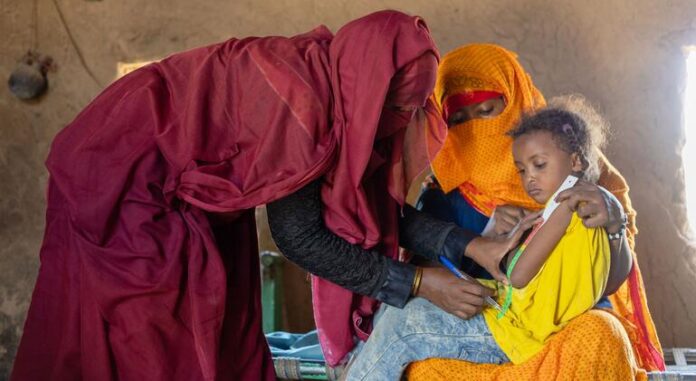
Maintaining “hope for younger generations” in Haiti as funding faltersArmed groups control large swaths of Port-au-Prince, forcing more than 1.4 million people from their homes and reducing access to food, health, water and education services. Half the population does not have enough to eat and malnutrition among children is on the rise. Humanitarian efforts […]

Originally published at Almouwatin.com

Cuba: UN warns of possible humanitarian ‘collapse’, as oil supplies dwindle

0
Cuba: UN warns of possible humanitarian ‘collapse’, as oil supplies dwindle

The United States has threatened to impose tariffs on any country providing oil to Cuba, increasing pressure on the island nation following a decades-long trade embargo and the US seizure of Venezuela’s leader Nicolás Maduro last month.

Venezuela had been the main supplier of oil to Havana but Washington has been ratcheting up pressure on Cuba in recent weeks, including an executive order last Thursday threatening to impose additional tariffs on countries that sell oil to Cuba, including Mexico.

“I can tell you that the Secretary-General is extremely concerned about the humanitarian situation in Cuba, which will worsen, and if not collapse, if its oil needs go unmet,” said UN Spokesperson Stéphane Dujarric. 

The UN chief noted that the General Assembly has been calling for an end to the US embargo for more than three decades: “The Secretary-General urges all parties to pursue dialogue and respect for international law.”

Fuel crisis

The fuel crisis has pushed up food prices for Cubans, led to severe fuel shortages and major power cuts throughout the country.

“Clearly what we see now, especially after the recent events in Venezuela, is a combination of emotions,” said Francisco Pichon, the most senior United Nations official in Cuba, describing “a mix of resilience, but also grief, sorrow and indignation, and some concern about the regional developments.” 

Thirty-two Cubans were killed in Venezuela on 3 January in the US operation to capture Mr. Maduro. 

The UN’s humanitarian work in Cuba

Mr. Pichon spoke to UN News from Havana last month, where the power had just gone out in his office. The UN team said that the vast majority of Cubans are being hit by rolling blackouts, at a time when the number of people in vulnerable situations has increased significantly. 

Even before the latest regional developments, the UN has been working with the Cuban Government to incubate ideas and support development, including ways to diversify the Cuban economy. 

The energy transition is a major priority due to reduced access to fuel and infrastructure challenges,” Mr. Pichon said, noting that investment needs remain a bottleneck.

Urgent changes needed

“The last two years have been quite tough,” he added, stressing that urgent changes are needed to sustain Cuba’s social model “in the midst of the severe economic, financial and trade sanctions”.

Cuba’s economy, which has historically relied on tourism as a key source of hard currency, was severely disrupted in the COVID pandemic and remains well under 2018 levels. 

As the Cuban economy has deteriorated, the country’s social indicators – such as universal healthcare, universal education, and extensive social safety nets like subsidised healthcare and food rations – are under strain. 

“All of this is happening in the context of the US embargo against Cuba,” said Mr. Pichon, noting that Cuba has also been relisted by the United States as a state sponsor of terrorism.

“From the UN perspective, our guiding principles remain unchanged: To be present. To support. To act based on cooperation, respected for international law, and the UN values.” 

Mr. Pichon, as UN Resident Coordinator, oversees the work of 23 UN agencies, funds and programmes. Here is a snapshot of some of the work underway.

Hurricane Melissa

Hurricane Melissa tore through Cuba as a Category 3 storm on 29 October. For the first time in the country, anticipatory action was taken through the release of funds from the UN Central Emergency Response Fund (CERF), enabling supplies, such as water purification units, food, hygiene kits, generators, medicines, medical and shelter supplies to be pre‑positioned.

The UN launched a $74 million Plan of Action to support national recovery and assist more than 2.2 million people affected by the storm’s destruction. So far, about $23 million has been mobilised targeting the one million most vulnerable. 

“No lives were lost directly due to the hurricane,” Mr. Pichon said, owing to the solid capabilities of Cuba’s civil defence, although recovery needs remain enormous, including rebuilding tens of thousands of homes.

Cooperation Framework

The UN’s long‑term engagement in Cuba is undergirded by a cooperation framework aligned with Cuba’s National Development Plan and the 2030 Agenda for Sustainable Development. This framework has four key pillars:

  • Institutional: The UN supported the development of around 30 laws following the 2019 constitutional reform, advancing equity, inclusion and rights for women, children, LGBTQ+ persons, people of African descent and persons with disabilities. 
  • Economic: Focuses on productive transformation and access to financing amid ongoing sanctions and the US listing of Cuba as a state sponsor of terrorism. Utilizing the Joint SDG Fund, which helps countries pay for projects related to the Sustainable Development Goals.
  • Environmental: Disaster risk management and climate resilience are central, especially given Cuba’s exposure to hurricanes, such as Melissa. UN support in anticipation and response seeks to protect lives and livelihoods.
  • Social: Social protection systems and attention to differentiated needs with a focus on leaving no one behind, including vulnerable groups vulnerable groups such as people living with AIDS, the LGBTI community, children, adolescents, women, and the elderly, who are a very relevant sector in an aging society.

Source link

AI Coworkers Are Here: OpenAI Launches Enterprise Platform That Deploys AI Agents for Companies

0


OpenAI just rolled out Frontier, a new service designed to help companies deploy AI agents that handle real

Source link

Child malnutrition hits catastrophic levels in parts of Sudan

0
Child malnutrition hits catastrophic levels in parts of Sudan

According to an alert from the IPC, a global food security monitoring system, thresholds for acute malnutrition were surpassed in two new areas of North Darfur – Um Baru and Kernoi – following the fall of the regional capital, El Fasher, in October 2025 and a massive exodus.

December assessments found acute malnutrition levels among children of 52.9 per cent in Um Baru – nearly twice the famine threshold – and about 34 per cent in Kernoi.

The IPC stressed that the alert does not constitute a formal famine classification but warned that conditions are deteriorating rapidly – and action is urgently needed.

These alarming rates suggest an increased risk of excess mortality,” the experts said, adding that many other conflict-affected or inaccessible areas may be facing similarly catastrophic conditions.

Projection acute food insecurity in Sudan from February to May 2026.

See our UN News explainer on the evidence-based IPC index here.

Um Baru and Kernoi

Um Baru and Kernoi are in remote areas of northwestern North Darfur, near key displacement corridors leading toward the Chadian border.

Both areas have absorbed large numbers of civilians fleeing fighting in and around El Fasher, where conflict has shattered markets, disrupted livelihoods and sharply curtailed humanitarian access.

Sudan’s war, which erupted in April 2023 between the once-allied Sudanese Armed Forces (SAF) and the Rapid Support Forces (RSF), has devastated food systems nationwide, triggering mass displacement, market collapse and repeated disruptions to health, water and nutrition services.

Across the country, nearly 4.2 million cases of acute malnutrition are now expected in 2026, including more than 800,000 cases of severe acute malnutrition, representing a sharp increase from 2025 levels, according to IPC projections.

What the alert means

The IPC alert is intended to draw urgent attention to the worsening conditions and does not introduce any new formal classification.

It builds on earlier IPC analyses that confirmed famine (IPC Phase 5) in El Fasher, North Darfur in 2024, and Kadugli, South Kordofan, in September 2025 – and projected famine risk in at least 20 other areas across greater Darfur and greater Kordofan.

The new findings indicate that famine-like conditions are likely spreading beyond previously assessed locations, driven by continued fighting, displacement and the collapse of food, health and water systems, IPC analysts said.

Greater Kordofan at risk

The IPC also warned of rapidly deteriorating conditions across Greater Kordofan, where famine was already confirmed in Kadugli and severe conditions were projected in Dilling and the Western Nuba Mountains.

Renewed fighting since late October has displaced more than 88,000 people in the region, pushing total displacement above one million. Markets there are among the least functional in Sudan, with food prices far above national averages.

Without an immediate end to the fighting and large-scale humanitarian access, IPC experts said preventable deaths are likely to rise.

Source link

Chad: Africa’s refugee shelter faces its own challenges

0

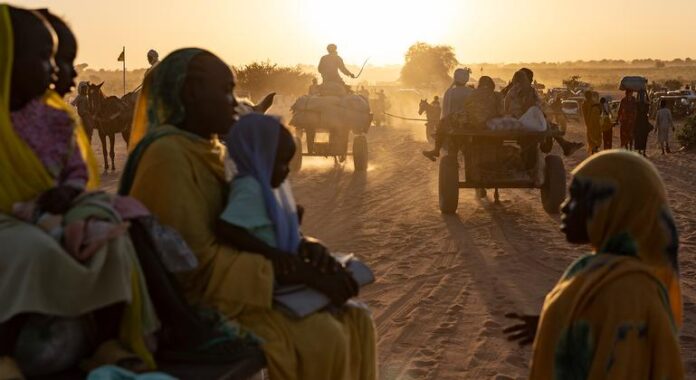
Chad: Africa's refugee shelter faces its own challengesHere’s what you need to know: The fighting and dire humanitarian conditions triggered by the conflict that erupted between rival armies in Sudan in April 2023 have so far displaced 14 million people, spreading to the country’s seven neighboring countries, according to the UN. Few places feel the effects of […]

Originally published at Almouwatin.com

Chad: Africa’s refugee haven struggles with its own stark challenges

0
Funding shortages threaten relief for millions of Sudanese refugees: WFP

Here’s what you need to know:

Fighting and dire humanitarian conditions triggered by the conflict that erupted among rival militaries in Sudan in April 2023 have so far displaced 14 million people, spilling over to the country’s seven bordering neighbour nations, according to the UN.

Few places are feeling the effects of the ongoing war as acutely as Chad, which is now Africa’s largest refugee host per capita, according to the UN refugee agency, UNHCR.

“Chad’s generous welcome of refugees is a powerful act of solidarity,” said UN High Commissioner for Refugees Barham Salih

But, as landlocked Chad has welcomed more than 900,000 Sudanese refugees across its eastern border since the start of the conflict, 40 per cent of its own population already needs humanitarian assistance.

Why it matters  

Often called the “Babel Tower of the world”, reflecting its more than 200 ethnic groups and 100 languages, Chad’s challenges are multifaceted.

With over 42 per cent of the population living below poverty, the country is among the poorest in the world. 

Now hosting over 1.5 million refugees, Chad continues to keep its borders with Sudan open while also battling climate and security shocks.

Floods and food insecurity 

The word Chad translates in a local language as “large body of water,” and reflects the cultural importance of Lake Chad, which gives the country its name. 

As the lake continues to shrink due to climate change and other issues, the country has endured large floods that have devasted its food security. 

In 2024 alone, floods destroyed more than 432,000 hectares of crops, equivalent to over 600,000 football fields, affected nearly two million people and exposed gaps in water and sanitation infrastructure, with cholera outbreaks reported in July last year. 

With a rapidly growing population, Chad far exceeds its resource capacity at a time when malnutrition rates are alarmingly high.

An estimated two million Chadian children aged six to 59 months are suffering or expected to suffer acute malnutrition between October 2025 and September 2026, including nearly 484,000 children expected to suffer severe acute malnutrition, according to the global hunger monitor – the Integrated Food Security Phase Classification.

Security pressures

The security landscape is equally concerning. 

Violent extremist groups, including Boko Haram and its affiliates, have continued to drive insecurity in the Lake Chad Basin, displacing over 250,000 people

Security forces patrol in Adré in Chad.

In the north, trafficking networks and illegal coal mining overlap with gender-based violence and exploitative child labour.

With 87 per cent of the total refugee population in Chad being women and children, these concerns continue to increase. 

What the UN is doing

Since April 2023, Chad’s Government and UNHCR assisted 67 per cent of those fleeing war-torn Sudan to relocate to extended and newly established settlements, where refugees and host communities benefit from the services delivered by humanitarian teams.

UN agencies and partners continue to respond to provide humanitarian assistance, including in Chad and war-torn Sudan.

On 19 February, the UN Security Council will convene to discuss the ongoing crisis in Sudan, focusing on the need to end the fighting and alleviate suffering, particularly concerning the widespread violence against women and girls in the country.

As for needs, the UN emergency relief agency, OCHA, released its Humanitarian Action Plan 2026, which shows that the number of people in need in Chad decreased by 42 per cent, but continues to remain high.

The Action Plan calls for $986 million and aims to help 3.4 million people, including $540million dedicated to refugees alone. The UN Spokesperson, Stéphane Dujarric said on Wednesday, “We and our partners will focus our efforts on the most impacted regions including in the east, the Lake Province and parts of the south.” 

Radwa Abdelkarim, a 37-year-old mother of six, fled to Chad in June 2023 after “the war took everything.” 

“We lost our money, our relatives and neighbours,” she said. “Some were killed, others disappeared and are still missing.” 

Safely out of Sudan, Ms. Abdelkarim combined her entrepreneurial skills with cash assistance from UNHCR to start baking and selling bread from her home in Farchana refugee settlement, and has since opened two grocery stores, a restaurant, and employs 12 other refugees.

“I support [refugee women] so that we can grow together and no one is left behind,” she said. “It is important to stand with our brothers and sisters, to help them heal.”

Source link

Fitbit Founders Return With Luffu AI That Watches Over Your Whole Family’s Health

0


James Park and Eric Friedman built Fitbit into a household name. Now, two years after leaving Google, they’re

Source link

Brussels Anniversary: ​​Scientology marks 51 years in Belgium and its efforts for social improvement

0

Brussels Anniversary: ​​Scientology marks 51 years in Belgium and its efforts for social improvementKINGNEWSWIRE / PRESS RELEASE / Destination: Scientology revisits European headquarters site in Brussels, linking cultural heritage, community access and a landmark 2016 court ruling on religious freedom BRUSSELS, Belgium — February 5, 2026 – The Churches of Scientology for Europe in Brussels celebrates 16 years […]

Originally published at Almouwatin.com