Saturday, June 20, 2026
Home Blog Page 43

Facing the RN, Boris Vallaud, Yannick Jadot and Raphaël Glucksmann call for building a “credible and mobilizing project”

0
spot_img

Around forty elected officials from the left and environmentalists, including the leader of the socialist deputies, Boris Vallaud, the environmentalist Yannick Jadot and the MEP Raphaël Glucksmann (Place publique), called, Saturday April 18, to build a “credible and mobilizing project” to block the National Rally (RN) during the next presidential election, scheduled for 2027.

Read also | Article reserved for our subscribers The RN achieves unprecedented but uneven progress during the second round of municipal elections

Alarmed by an “unprecedented breakthrough by the extreme right” in the municipal elections, these parliamentarians and local elected officials believe that the left and environmentalists are “retreating dramatically in rural and peri-urban territories”, in a column published on a new site, Construire2027.fr, and relayed by several press titles, including Ouest-France, La Dépêche, Sud-Ouest and Le Télégramme.

“Whole sections of our elites are resigning themselves and preparing for the announced shift of France into the Trumpist and Putinist camp,” worry the first signatories of this text, which must be open for online signatures in the evening. “We are not resigning ourselves to the victory of the National Rally in 2027. (…) We want to win now. »

Read also | Article reserved for our subscribers In the Socialist Party, the presidential election exacerbates tensions between Olivier Faure and Boris Vallaud

Among them are also socialist executives, such as the president of the socialist group in the Senate, Patrick Kanner, and internal opponents of the first secretary, Olivier Faure, such as the president of the Occitanie region, Carole Delga, and the mayor of Rouen, Nicolas Mayer-Rossignol, but also several mayors and other local elected officials, as well as some environmentalist, communist or Public Place parliamentarians.

“A project with a majority vocation”

While the left, excluding La France insoumise, is currently divided over the method of nominating a presidential candidate, they call for “opposing the far right with hope for the country, a credible and mobilizing project”.

For them, “moral condemnations, historical comparisons with the 1930s and rapprochements with Trump’s America, Orban’s Hungary (…) or Putin’s Russia, as relevant and worrying as they may be, are no longer enough.”

Read also | Article reserved for our subscribers Within the non-Melenchonist left, the nomination of a common candidate accentuates divisions

In their appeal, they judge that only the construction of “a project with a majority vocation” and the “team which will implement it” will allow the emergence of the “candidacy of a large gathering” for the presidential election, without commenting on the method of nomination.

On Friday, the leader of the Ecologists, Marine Tondelier, sent a letter to the other left-wing parties, excluding LFI, to suggest that they create a “shared” programmatic “base”. The fact remains that the desire for candidacy is increasing on the left – on Saturday, former Prime Minister Bernard Cazeneuve announced in Paris the names of the members of his future “political committee”.

The World with AFP

Originally published at Almouwatin.com

More than half of Haitians continue to face food crisis

0
More than half of Haitians continue to face food crisis

The update came on Friday, in a release by the World Food Programme (WFP), which has been working with the government and partners to assist 2.7 million people in Haiti by providing emergency food assistance, school meals, social protection programmes, and assistance to smallholder farmers.

“These small improvements to food security numbers must not lead to complacency,” warned Wanja Kaaria, WFP Haiti Country Director. “Elevated fuel prices and the resulting rise in food costs risk rolling back these gains, pushing already vulnerable families deeper into crisis and further destabilising the situation.”

For almost a decade, Haiti has experienced an ever-deepening food security crisis, driven by violence related to armed groups, political upheaval, economic crisis and high levels of vulnerability to extreme weather, such as Hurricane Melissa which struck the south in late 2025. 

Aid is distributed by the World Food Programme in a downtown neighbourhood of Port-au-Prince.

WFP is calling for robust measures and funding to provide emergency relief and invest in long-term solutions to address the food insecurity that affects more than one in two Haitians. “Tackling hunger is vital to restoring stability in Haiti,” said Ms. Kaaria. “We cannot build peace when families have nothing to feed their children.” 

WFP requires $332 million to maintain its crucial operations over the next 12 months and, if enough funding is secured, plans to reach more than 2.7 million people with critical emergency and resilience-building support. The $880 million Humanitarian Response Plan for Haiti is just under 20 per cent funded, with only $172 million received.

Violence and displacement spread across the country

Armed attacks earlier this week have displaced hundreds of people from the South-East department. According to the International Organization for Migration (IOM), violence on 13 April in the municipality of Marigot displaced more than 1,300 people.

IOM notes that this is the first time that displacement of this scale, directly linked to armed attacks, has been recorded in the South-East department, an area that has previously served as a reception zone for people displaced by violence elsewhere in the country. More than 165,000 men, women and children are currently hosted privately across the department.

Conflict has displaced more than 1.4 million in Haiti, resulting in roughly 300,000 people living in overcrowded and unhygienic temporary shelters in the capital, Port-au-Prince.

Source link

LIVE, war in the Middle East: Hezbollah denies any involvement in the attack on peacekeepers which caused the death of a Frenchman

0
spot_img

The internet shutdown imposed by Iranian authorities at the start of the war is entering its fiftieth day, breaking new records, cybersecurity monitoring NGO NetBlocks reported on Saturday.

“Iran has now been cut off from the global internet for seven weeks, the digital blackout is entering its fiftieth day, or 1,176 hours,” writes the organization X. The data, she adds, “show that this measure, unprecedented for a connected society, continues to harm the livelihoods and rights of most Iranians.”

On April 5, the outage reached a country-wide record, according to Netblocks. The NGO had recorded in the past longer periods of outages but on regional scales, also noting that North Korea had never been connected to the global internet.

Although the national intranet remains operational in Iran, allowing the operation of local messaging applications and banking services in particular, access to the global internet is severely restricted.

To consult prohibited sites or social networks, some manage to use virtual private networks (VPN, hiding their address). Others, in smaller numbers, have access to Starlink or other satellite internet service providers, despite the risk of arrest.

Iranians had already suffered an 18-day internet shutdown in January, during demonstrations against the government whose repression left thousands of victims. After this wave of protest, access was partly restored but remained heavily filtered and limited, before being largely cut off again after the start of Israeli-American strikes on February 28 against Iran, which triggered a regional war.

Originally published at Almouwatin.com

Ukraine: a man opens fire in a district of kyiv, “several dead”

0
spot_img

A man opened fire this Saturday in the Demyïvka district of the Ukrainian capital, kyiv, causing “several deaths and injuries”, and then took refuge in a supermarket according to Mayor Vitali Klitschko, according to local authorities.

“An operation is underway to arrest the man who opened fire and is now in a supermarket. According to preliminary information, gunshots are heard inside,” Vitali Klitschko said on Telegram. The shooting was confirmed by national police.

>> More information to follow


Source:

www.leparisien.fr

Originally published at Almouwatin.com

The secret lives of catalysts: how microscopic networks power reactions

0


University of Warwick and MIT scientists reveal hidden microscopic networks on catalyst surfaces that could lead to cleaner

Source link

Sudan: Three quarters of women feel unsafe as war rages on

0
Sudan: Three quarters of women feel unsafe as war rages on

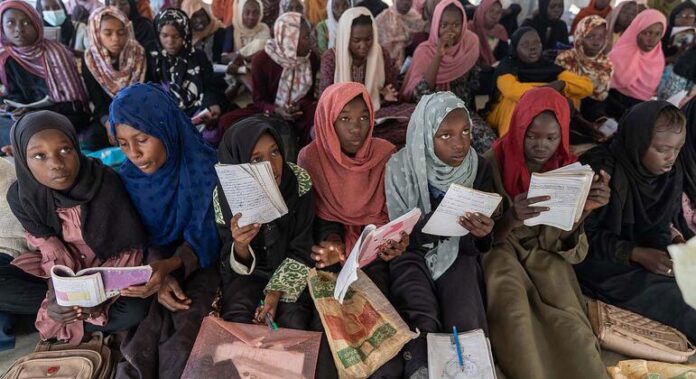
Fabrizia Falcione, UNFPA Country Representative in Sudan, briefed journalists in New York on a recent assessment based on 95 focus group discussions across 16 out of 18 states.

Roughly 1,000 women girls participated and 76 per cent of those aged 25 to 49 “reported feeling unsafe in the displacement camps and sites, but also outside the camps: in markets, water points, in firewood collection areas, roads and streets,” she said, speaking from Khartoum.

This was particularly the case at night, when going to use latrines in the camps.

“No matter where, they feel unsafe, and it’s not about a few incidents or a few locations,” she said.

Displacement, violence and danger in the dark

The conflict in Sudan has now entered a fourth year, with fighting between the Sudanese Armed Forces (SAF) and the Rapid Support Forces (RSF) showing no signs of stopping.

Ms. Falcione said the majority of women she has met in visits across the country – including in the northern states, Khartoum as well as White Nile and Blue Nile states – “have lived under shelling and active conflict for many months.”

Many have been displaced multiple times “and all of them have suffered enormous violence or witnessed violence being suffered by their families and community members.”

Furthermore, “the road to safety is actually not safe at all,” she added as women face “harassment, sexual violence, all types of physical violence, shortage of food and water, and in the areas of displacement, as I was saying, they continue to feel unsafe.” 

She described visiting displacement camps, where women and children overwhelmingly comprise the majority of residents.

“The women, including pregnant women, have to walk at night inside the camps completely in the dark, trying to reach latrines with no lighting at all,” she said.

Furthermore, reporting cases of gender-based violence remains extremely difficult due to stigma, fear of retaliation, financial constraints, and distance from service providers.

What women want

Regarding what Sudan’s women need most, Ms. Falcione reported that three quarters indicated that the main priority was economic empowerment and livelihoods, while her missions confirmed that women want to return to their homes.

“They ask for three things,” she said. “Basic services and access to health; access to schools, particularly for their children, and livelihood opportunities.”

She stressed that Sudan’s women “don’t want to be fed. They want opportunities, income generation activities, opportunities to be able to feed their families and their children.”

The issue, however, is whether there will be enough financial support to meet women’s needs at a time when funding for the protection and health sectors currently stands at 14 per cent and 11 per cent, respectively.

“We keep hearing over and over that this is a protection crisis particularly affecting women and girls, it is a health crisis, and yet the funding is not following—neither the definition nor the needs that are being identified,” she said.

Safe spaces and services

UNFPA manages 88 safe spaces for women and girls across Sudan where they “find the courage to speak up, to talk about the violence that they’ve suffered, to seek help and to receive the services that they that they need the most.”

However, lack of finding makes it difficult to sustain operations.

Ms. Falcione shared the testimony of a girl, who felt safe at these spaces because she got to spend time with her friends, just like they did before the war.

“I think that this is a very important message that the world should hear,” the veteran humanitarian said, urging the international community not to abandon the Sudanese people.

Source link

Old age: the government announces a national autonomy conference in September

0
spot_img

The government announced, on Saturday April 18, the establishment in September of a national autonomy conference, two months after the indefinite postponement of an old age plan which had been long awaited by the sector as the demographic wall approached.

Read also | Article reserved for our subscribers The “old age” plan postponed, a new disappointment for the sector, accustomed to unfulfilled promises

“The priority is to institutionalize all initiatives through mobilization and the establishment of the National Conference on Autonomy,” said the Minister Delegate in charge of autonomy and disabled people, Camille Galliard-Minier, guest Saturday morning on Francetvinfo.fr. This conference “will give us a clear course for the coming years to act on all areas of aging: prevention, the place of our nursing homes tomorrow, the home, shared housing, the role of care professions and above all support also for caregivers,” explained the minister.

For decades, players in the sector have been calling for a “old age” multi-year programming law – like what is done in particular for the armed forces – to respond to the challenges of the aging population. But this law has become a harlesian of the Macron presidency. Promised at the start of the first five-year term, it did not see the light of day, encountering financial issues in particular.

A report deemed “worrying” by the rights defender

Failing this, a “old age” plan was to be presented on February 12 to “define” the responses to be provided to people losing their autonomy and to propose several financing scenarios. But this plan was postponed indefinitely with the announcement of the departure of Charlotte Parmentier-Lecocq, responsible for the file in the government.

This postponement was deplored by a large number of professionals in the sector and considered “worrying” by the rights defender in a context of lack of attractiveness of care professions and an aging population.

According to demographic and epidemiological projections, the number of elderly people losing their autonomy is expected to reach nearly four million in 2050, compared to just over two million in 2015. And according to the Department of Research, Studies, Evaluation and Statistics (Drees), between 150,000 and 200,000 additional jobs will be needed to “provide basic care” to elderly people losing their autonomy in 2050.

Read also | Article reserved for our subscribers Old age: a government plan for the needs strategy

The World with AFP

Originally published at Almouwatin.com

إيران تعلن إعادة إغلاق مضيق هرمز

0
spot_img

وأكدت مضيق هرمز، متهما الولايات المتحدة بانتهاك اتفاق بشأن إعادة فتحه.

وقالت: “The water is in the water ” الإيرانية.

الجمعة، أعلن وزير الخارجية الإيراني عباس عراقجي، أن مضيق هرمز بات مفتوحا كليا أمام جميع السفن التجارية طوال الفترة المتبقية من وقف إطلاق النار، وذلك تماشيا مع وقف إطلاق النار في لبنان، وسارع الرئيس الأميركي دونالد ترامب إلى من جانب إيران.

وأضاف عراقجي في منشور على منصة “إكس” أن مرور السفن عبر مضيق هرمز سيكون عبر الطريق المنسق كما أعلنته بالفعل منظمة الموانئ والملاحة البحرية الإيرانية.

ويسري بين إيران والولايات المتحدة اتفاق لوقف إطلاق النار لمدة 7-8 hours of cooking time. 10 minutes of cooking time.

وفي وقت سابق، قال ترامب إنه يعتزم مواصلة محاصرة الموانىء الإيرانية في حال عدم التوصل إلى اتفاق مع طهران، مشيرا إلى أنه قد لا يمدد وقف إطلاق النار بعد موعد انتهائه الأربعاء.

وأوضح ترامب للصحفيين على متن الطائرة الرئاسية في تعليق على مصير وقف إطلاق النار في حال عدم التوصل لاتفاق مع طهران « ربما لن أمدده »، مضيفا “لكن الحصار سيظل قائما”.

Originally published at Almouwatin.com

AI is changing more than your writing — it may be shaping your worldview

0


Use of ChatGPT, Claude and other large language models, or LLMs — what most people call “AI” —

Source link

More than 38,000 women and girls killed in Gaza war, UN gender equality agency reports

0
More than 38,000 women and girls killed in Gaza war, UN gender equality agency reports

The overall total includes at least 22,000 women and 16,000 girls and amounts to an average of at least 47 women and girls killed every day, the agency’s Sofia Calltorp, Chief of Humanitarian Action, told journalists in Geneva.

Those killed were mothers, they were daughters, sisters, and friends, deeply loved by those around them,” she noted, adding that the killings have continued in recent months, despite a ceasefire between Hamas fighters and the Israeli military.

Data also indicates that nearly 11,000 women and girls have been injured and that many have life-changing disabilities. The true toll is likely higher because many bodies are still trapped under rubble, UN Women said. According to the Gazan health authorities, more than 72,315 Palestinians have been killed in the Gaza Strip and another 172,137 injured since October 2023.

This has created a chronic humanitarian emergency in Gaza where many households are now headed by women facing increased economic hardship and protection risks.

Families clinging together

Six months since the ceasefire began in Gaza last October, women and girls continue to face severe and persistent risks, as humanitarian needs remain critical and recovery conditions remain fragile. 

“This war has reshaped families. Tens of thousands of households are now headed by women,” UN Women’s Ms. Calltorp insisted. “Having lost their husbands, they are sustaining their families without income, without support or access to essential services.”

In addition, “there is a complete lack of most services”, Ms. Calltorp continued, highlighting an urgent need for “the basics”, including sexual and reproductive health and access to sanitary pads. She recalled visiting Gaza in November and meeting two women who had to deliver their babies in the street, “because there were no transportations to bring them to any functional hospitals”.

UN Women is calling for full respect of the ceasefire, adherence to international law, and scaled-up humanitarian assistance, stressing that women and girls must be at the centre of recovery and peacebuilding efforts.

The agency remains on the ground in Gaza partnering women-led and women’s rights organizations. 

Together with the UN system, aid partners and women’s organizations, UN Women works to reach all women and girls with lifesaving assistance and to ensure that women’s organizations are funded and represented in decision-making and reconstruction.

Source link