
The EU has given the final green light for Bulgaria to introduce the euro on 1 January 2026. Joining the euro area will bring tangible benefits to Bulgarian citizens and businesses: no more currency exchange costs, increased price transparency, easier cross-border payments and access to finance. Source link
UN warns of worsening humanitarian crisis in Sudan as displacement, hunger and disease escalate
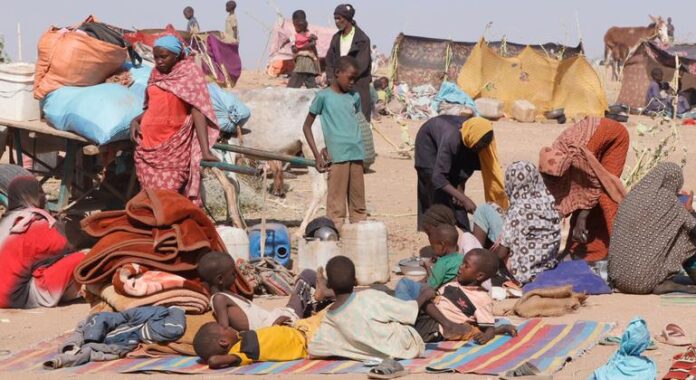
The situation is particularly dire in El Fasher, the capital of North Darfur province, which has witnessed some of the worst episodes of the ongoing conflict between rival militaries.
Those remaining in El Fasher are facing “extreme shortages” of food and clean water, with markets repeatedly disrupted, UN Spokesperson Stéphane Dujarric told journalists at the regular news briefing in New York.
Across the city, nearly 40 per cent of children under five are suffering from acute malnutrition, including 11 per cent with severe acute malnutrition.
Most of the surrounding water infrastructure has also been destroyed or rendered non-functional due to minimal maintenance and fuel shortages, Mr. Dujarric added.
El Fasher displacement
Since April 2023, an estimated 780,000 people have been displaced from El Fasher town and the nearby Zamzam displacement camps, including nearly 500,000 in April and May of this year.
Famine conditions have been confirmed in the area since last August.
About three-quarters of Zamzam camp’s residents fled to various locations across Tawila, where the UN and its partners have scaled up critical humanitarian assistance.
Cholera outbreak continues
Mr. Dujarric further warned that the breakdown of water and sanitation services, combined with low vaccination coverage, has sharply increased the risk of disease outbreaks, including cholera.
So far this year, Sudan has reported more than 32,000 suspected cholera cases.
According to the UN Office for Coordination of Humanitarian Affairs (OCHA) cholera cases continue to rise across Darfur, with over 300 suspected cases and more than two dozen deaths reported in South Darfur state last week alone.
“Conflict and collapsing infrastructure continue to drive the spread of the disease and impede response efforts,” Mr. Dujarric stressed.
Unprecedented and complex crisis
Since war erupted between the former allies-turned-rivals, the Sudanese Armed Forces (SAF) and Rapid Support Forces (RSF) in April 2023, tens of thousands of civilians have been killed and more than 12 million forced to flee their homes – including approximately four million as refugees in neighbouring countries.
The crisis is unfolding against a backdrop of extreme vulnerability, as the country remains highly susceptible to the impacts of climate change and disasters.
From severe droughts to deadly floods, the compounded effects of conflict and environmental instability are pushing communities to the brink, leaving them struggling to survive. Famine has already been declared in some parts of the country, putting millions of lives at risk.
Lack of resources hamstring response
Despite growing needs, the $4.2 billion humanitarian response plan for 2025, which aims to assist around 21 million of the most vulnerable people, remains only 21 per cent funded, having received $896 million received so far.
Tom Fletcher, UN Under-Secretary-General for Humanitarian Affairs, underscored the gravity of the situation in El Fasher.
Civilians in the area remain cut off from aid and face the risk of starvation, he said in a post on social media.
Appealing for an urgent humanitarian pause, he warned that that “every day without access costs lives.”
Remarks by Paschal Donohoe following the Eurogroup meeting of 7 July 2025

Remarks by Eurogroup President Paschal Donohoe after the Eurogroup meeting on his reappointment as President of the Eurogroup, budget policy coordination for 2026, the international role of the euro, Bulgaria’s adoption of the euro, the digital euro and EIB’s initiatives to support the savings and investment union.
UN calls on Taliban to end repressive policies
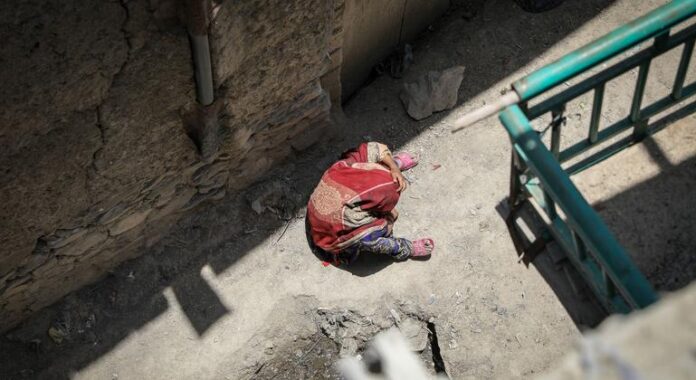
Adopted with 116 votes in favour, 12 abstentions and 2 against (Israel and United States), the resolution highlighted the multifaceted crises confronting Afghanistan nearly four years after the Taliban’s return to power, calling for greater international support for the Afghan people and a renewed push for human rights, peace and stability.
It emphasised the need for a coherent approach among humanitarian, political and development actors, and raised alarm over the “grave, worsening, widespread and systematic oppression” of all women and girls in Afghanistan, calling on the Taliban to swiftly reverse policies that exclude them from education, employment and public life.
The text further called for adherence to Afghanistan’s obligations under international law, including human rights and humanitarian principles.
Security and economic concerns
The 193-member General Assembly reiterated its “serious concern” over continuing violence and the presence of terrorist groups such as Al-Qaida, Islamic State in Iraq and the Levant (ISIL/Da’esh) and their affiliates ISIL-Khorasan and Tehrik-e-Taliban Pakistan, and “demanded” that Afghanistan not be used as a safe haven for terrorist activity.
Beyond security, the resolution stressed Afghanistan’s severe economic collapse, widespread poverty and spiralling humanitarian crisis, urging Member States and donors to scale up principled, sustained assistance.
It also highlighted the growing threat of natural disasters such as floods and droughts, which worsen food insecurity and economic fragility.
“Sustainable and lasting peace can be achieved only through long-term social, economic and political stability, which requires full respect for civil, political, social, economic and cultural rights as well as commitment to inclusive and representative governance,” the resolution stated.
Result of the UN General Assembly vote on the draft resolution on Afghanistan.
Needs surge amid refugee returns
The resolution comes at a time of intensified strain on Afghanistan’s overstretched humanitarian system.
According to UN agencies, waves of returns from Pakistan and Iran – including both refugees and those in refugee-like situations – have increased pressure on services, especially in border provinces ill-equipped to absorb new arrivals.
These returns, many of them involuntary or under duress, have heightened protection risks and left thousands of families in urgent need of food, shelter and basic services.
The 2025 Humanitarian Needs and Response Plan for Afghanistan – which seeks $2.4 billion to assist nearly 17 million people – is only 22 per cent funded as of early July, raising concerns among aid officials about maintaining life-saving programs in the months ahead.
The resolution called on all donors and stakeholders to “reconsider any decisions that may lead to reductions in such assistance, taking into account the potential adverse humanitarian consequences for the most vulnerable populations.”
Governance and accountability
The Assembly also reiterated concern over the lack of political inclusion since the Taliban takeover in August 2021.
It raised alarm over extrajudicial punishments, such as reprisals and summary executions, enforced disappearances and arbitrary detentions, including those targeting former members of the security personnel.
While the Assembly acknowledged the Taliban’s limited steps to reduce opium cultivation, it stressed the need for comprehensive counter-narcotics measures and efforts to combat organized crime and illicit arms trafficking.
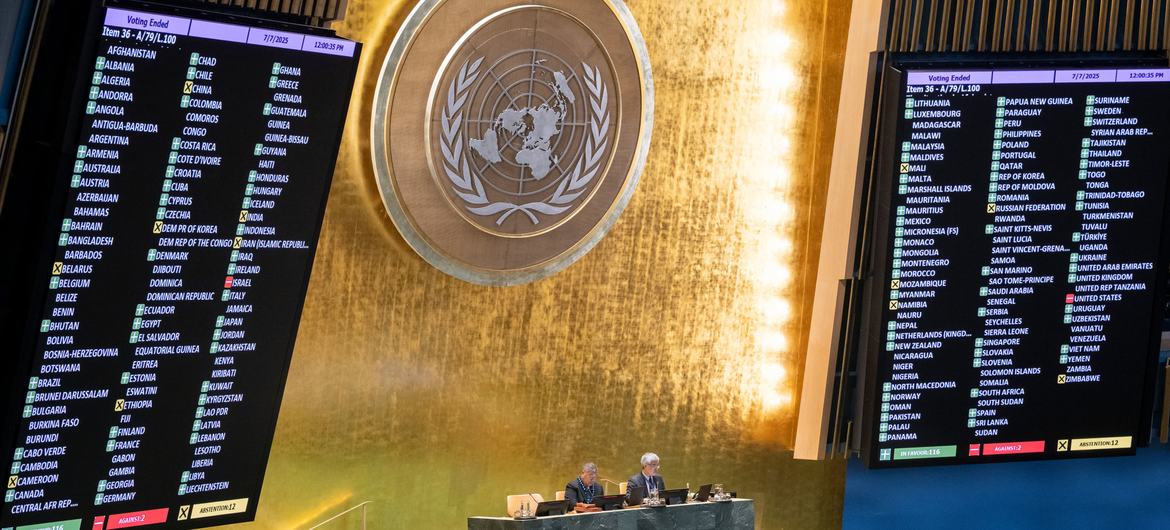
UN General Assembly votes on the draft resolution on Afghanistan.
A call for collective responsibility
The resolution expressed appreciation to major refugee-hosting countries – particularly Pakistan and Iran – and called for more equitable burden-sharing and international cooperation to support displaced Afghans and the communities that host them.
It underlined the importance of creating conditions for the safe, dignified and voluntary return of refugees and internally displaced persons, as well as their sustainable reintegration.
Human rights must anchor the digital age, says UN’s Türk

Digital technologies have the potential to drive progress and strengthen rights, including connecting people, improving access to health and education, and much more.
But the pace of their evolution also poses serious risks, warned Volker Türk, UN High Commissioner for Human Rights – from restrictions on free expression and privacy violations to discrimination and growing threats to our shared sense of truth and reality.
“It is precisely in the face of massive change, that we need more human rights, not less,” he said on Monday, addressing a high-level event on the twentieth anniversary of the World Summit on the Information Society (WSIS) in Geneva.
Prioritising rights
In this time of sweeping change, human rights must be prioritised and used as the blueprint for action.
“States’ legal obligations and companies’ duties to respect human rights offer guidance to tackle disinformation and protect our data from illicit use,” Mr. Türk stressed.
Such guidance also helps counter algorithmic bias, digital hate speech, and fosters trust and inclusive digital decision-making.
Role of WSIS
Founded in 2001, the inaugural WSIS was held in two phases in December 2003 (Geneva) and November 2005 (Tunis, Italy).
Since then, the forum has brought together diverse stakeholders to collaborate on digital governance and promote a digital landscape that is people-centred, inclusive and development-oriented.
“[The WSIS] helped create a space for States, technology companies, civil society, and others to harness the power of information and communication technologies for development,” said Mr. Türk.
Looking forward
The High Commissioner stressed that the coming months will see critical decisions on regulating the digital sphere, including new UN mechanisms on AI and data governance.
“We have a window of opportunity to make a difference,” he concluded.
“We must join forces – States, technology companies, international organizations, civil society, and others – to work towards an inclusive and open digital environment for everyone, everywhere.”
Remarks by Paschal Donohoe following the Eurogroup meeting of 7 July 2025

Remarks by Eurogroup President Paschal Donohoe after the Eurogroup meeting on his reappointment as President of the Eurogroup, budget policy coordination for 2026, the international role of the euro, Bulgaria’s adoption of the euro, the digital euro and EIB’s initiatives to support the savings and investment union. Source link
UN chief ‘deeply saddened’ by devastating Texas floods as toll climbs past 80
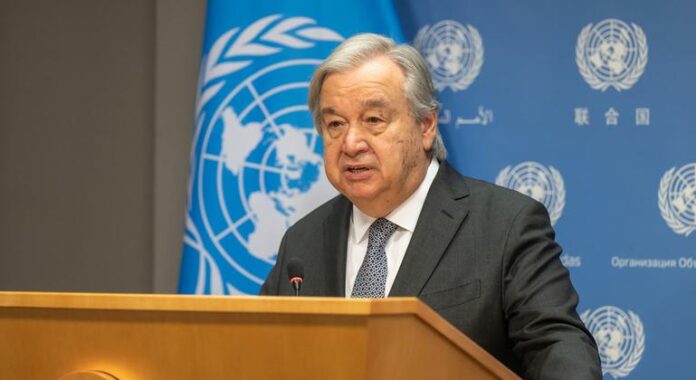
In a statement issued on Monday by his spokesperson, António Guterres said he was “deeply saddened by the tragic loss of life, notably of a large number of children,” during what should have been a time of celebration.
Friday, 4 July, marked Independence Day in the United States – a time when families and communities traditionally gather for outdoor celebrations.
The Secretary-General extended his “heartfelt condolences to the families of the victims” and expressed solidarity with all those affected, including the people of Texas and the government of the United States.
According to media reports, the floods – triggered by heavy rainfall over the July Fourth weekend – caused massive damage in parts of central Texas, particularly along the Guadalupe River. The deluge struck Camp Mystic, killing at least 27 campers and counselors.
Catherine Russell, Executive Director of the UN Children’s Fund (UNICEF), said in a post on social media that “all of us at UNICEF are heartbroken at the reports coming out of Central Texas.”
“Our hearts and thoughts are with those mourning loved ones and those still waiting for news of the missing, including children,” she said.
Search and recovery efforts continue as the region braces for more rain, according to media reports.
The UN chief “ deeply saddened ” by the devastating floods of Texas while the toll climbs beyond 80
In a statement published on Monday by his spokesperson, António Guterres said he was ” deeply saddened by the loss of tragic life, especially of a large number of children,“During what should have been a period of celebration.
Friday, July 4, marked independence day in the United States-an era when families and communities traditionally meet for outdoor celebrations.
The secretary general expressed his “sincere condolences to the families of the victims” and expressed his solidarity with all those affected, including the inhabitants of Texas and the government of the United States.
According to the media, the floods-triggered by strong precipitation during the fourth weekend in July-caused massive damage in certain parts of the center of Texas, in particular along the Guadalupe river. The deluge hit the Mystic camp, killing at least 27 campers and advisers.
Catherine Russell, Executive Director of the United Nations Children’s Fund (Unicef), said in an article on social networks that “we all have Unicef Have a heart broken by the reports that came out of the center of Texas. »»
“” Our hearts and our thoughts go with these relatives of mourning and those who always await the news of the missing, including children“She said.
Research and recovery efforts are continuing while the region is based for more rain, according to media reports.
Originally published at Almouwatin.com
Opening remarks by President António Costa at the EU-Moldova summit in Chișinău
On 4 July 2025, European Council President António Costa was in Chișinău for the first EU-Moldova summit. In his opening remarks at the start of the plenary session, he emphasised Moldova’s steady progress on its EU path, highlighting the tangible benefits of EU integration for Moldovan citizens and reaffirming the EU’s full support for Moldova’s resilience and security.
