

From diagnosing diseases more quickly to performing complex computational tasks, quantum science has huge social and economic potential. The EU has launched a new plan to develop the quantum sector and turn Europe into a global leader in quantum by 2030. The plan will create thousands of new jobs. Source link
Seville’s commitment: a vital step to rebuild confidence in global cooperation

Activists, many southern south, attend talks in Spain, call for higher leadership and commitment of richer nations to help treat long -standing structural inequalities.
Le 4th International Conference on Development Financing (FFD4) has a strong symbolic weight, reflected in the Agreed priorities of Seville’s commitment.
Paula Sevilla, International Institute of Environment and Development.
However, organizations warn that there is still a long way to go before the promises resulted in a tangible action.
Good timing
This is the message of Paula Sevilla, a representative of the International Institute for the Environment and Development (IIED) – a research center based in London – which has worked for decades on sustainability and climate justice in Latin America, Africa and Asia.
“This summit came at a crucial time to try to restore faith in international cooperation, especially after the pandemic, which exposed a lack of global solidarity,” she said.
One of the main objectives of the IIED in Seville was to ensure that the announced financial commitments really reach local communities at the forefront of the climate crisis.
To this end, the organization emphasizes the need to solve problems such as external debt – emptying public budgets – and supporting innovative mechanisms such as mixed finance to direct resources to those who need it most.
“We see that countries spend more on debt payments than for health care or education, while inequalities are deepening,” warned the expert, speaking shortly after a respectful but energetic protest in the conference center.
A place to call at home
Housing solutions related to sustainable development are notably absent from the final document of the summit.
“It is regrettable that it is not even mentioned, at a time when we are faced with a global crisis in the cost of living – not only in the world of world, but also here in Spain. Housing is a source of anxiety and distrust among citizens, and it was completely ignored, “said Ms. Sevilla.
Despite this, its organization strives to take advantage of Seville’s result to find ways to channel funding to provide more affordable houses.
Commenting on the initiative led by Spain and Brazil to work towards fair taxation and to repel tax evasion by the richest in the world – favoring more transparency and responsibility – the representative of the IIED said that it could be a useful path to correct structural inequalities.
Development tax
“” We need leadership in the world of world, where many main fiscal avoidance companies in the world are based. Without their commitment, we will not go ahead, ”she said.
She also criticized the absence of the United States of the Summit-not only as a diplomatic setback, but also as a disturbing precedent following the dismantling of her international development agency, USAID.
“We are talking about people who count their pills to understand how many days of life they have left. It’s dramatic, ”she said.
With only five years to meet the Sustainable development objectivesMs. Sevilla warned that time is exhausted – and that Seville’s commitment will be meaningless without real change.
“” We need political leadership, a desire for cooperation and a commitment to protect democratic space. In the end, they are organized people who keep hope alive and hold responsible leaders, ”concluded Sevilla.
Seville’s commitment in short:
- THE Seville engagement defines a New world roadmap To increase the thousands of dollars required each year to carry out sustainable development, based on previous international agreements
- He asks fair tax systemsreducing tax evasion and illicit financial flows, and strengthening public development banks to support national priorities
- The agreement highlights the need to New tools to facilitate debt pressures On vulnerable countries, including debt exchange plans, options to suspend payments during crises and better transparency
- Committed countries Stimulate the capacity of multilateral development banksincrease the use of special drawing rights and attract more private investment to support development
- It also aims to make the more inclusive and responsible global financial systemwith improved coordination, stronger data systems and wider participation in civil society and other
The commitment launches the Sevilla platform for action,, which includes more than 130 initiatives already underway To transform promises into real world results.
Originally published at Almouwatin.com
Church of Scientology Hungary hosted a packed conference on International Day Against Drug Abuse
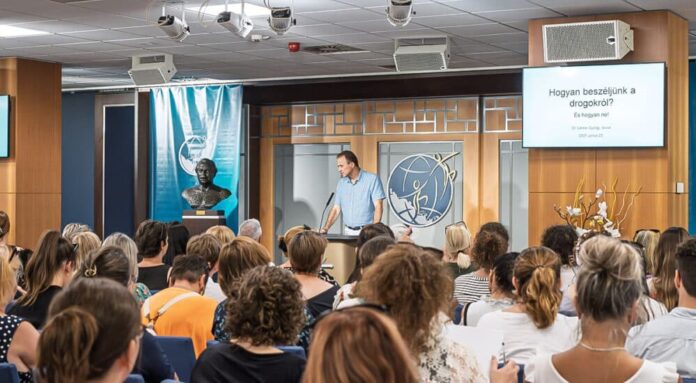
KINGNEWSWIRE / Press release / On June 25, 2025, the Drug-Free World Foundation held an awareness-raising conference in the chapel of the Church of Scientology in Budapest.
The purpose of the packed-out event was to raise awareness of the importance of drug prevention and provide practical answers on how to recognize the danger, how to talk about it, and what we can do to prevent young people from becoming victims.
Parents, teachers, and family protection specialists listened attentively to the experiences and professional insights shared by the guest speakers. Attila Miklovicz, President of the Church of Scientology, welcomed the participants and briefly explained why the Church considered it important to support the conference—highlighting the relevance of the research and inspiration provided by Scientology founder L. Ron Hubbard. He then handed over to the host of the event, Szilvia Nemes-Nagy, who emphasized:
“The drug issue is not just a social problem, but also a personal concern for many families—according to statistics, the majority of young people in our country encounter some kind of drug by the age of 14.”
Four speakers—two doctors, a former drug user, and the Hungarian director of the Drug-Free World Foundation—shared their experiences and knowledge at the conference. The speeches focused on how drug use can be effectively prevented, how to communicate effectively with young people, and what should be said – or not said – in order to prevent drug use.
“Drugs first alter your judgment”
Dr. György Lenkei, a physician, spoke about the true nature of drugs and emphasized:
“How much better it would be if young people understood just one thing: drugs change the judgment of the user! The first thing they change is the ability to distinguish between facts.”
This is what makes drug addiction such a vicious circle. Before young people realize what is happening to them, they have already lost the ability to recognize it. “In reality, drug users want something to have an effect on them, so that things no longer happen because of them, but because of the drugs.”
“In fact, any chemical that the body does not need at all is a drug,” said the doctor. “It doesn’t matter if it’s natural or artificial, legal or illegal. There are currently more than 600 psychotropic substances, but only 141 of these are officially classified as narcotics. And when it comes to synthetic drugs, the law often lags behind drug manufacturers.”
He emphasized that this is precisely why the key to prevention is not punishment, but moral judgment, setting a good example, and honest dialogue.
One of the most moving moments of the conference was the testimony of Ákos Bodnár, a former drug user. His story revealed with raw honesty his fifteen-year downward spiral, which involved the slow loss of goals, energy, and human relationships. With tears in his eyes, he recounted how he watched a fellow sufferer fight for his life in a tragic car accident, but even that was not enough to make him stop.
“What did drugs give me? A few good moments. What did they take away? My motivation and my love of life,” he summed up.
He also talked about how the foundation later helped him return to a sober, responsible life.
How should we talk to children?
In the next presentation of the event, Gergő Németh, head of the Drug-Free World Foundation in Hungary, provided practical guidance on how to talk to our children about drugs. He emphasized that we should not approach them with fear, but with trust, relationship building, and accurate information. He stressed that it is not necessary to prepare for a single “big talk”; the key is regular, simple, and honest dialogue.
What can doctors do, what can we do?
Dr. Péter Lerner spoke about recognizing drug use and the importance of intervention. “Poison stimulates in small doses, then numbs and dulls, and in large doses it kills. The difference is only in the dose,” he explained the dose-effect relationship.
He described the visible physical symptoms and behavioral changes in detail, then gave practical advice on how to deal with acute situations. His most important message: “If there is even the slightest doubt about whether to call an ambulance, it is better to call.”
When talking about treatment, he emphasized the importance of vitamin supplementation, but stressed: “We need to find the reason why someone starts using drugs and treat that too.”
At the end of the conference, participants were able to ask questions to the speakers. Drug prevention is not just the responsibility of individual organizations or institutions, but a shared social responsibility. The event clearly showed that dialogue and knowledge can save lives—and that every life saved is invaluable.
CEF Transport: €2.8 billion in 94 projects to boost sustainable and connected mobility across Europe

The European Commission selected 94 transport projects to receive nearly €2.8 billion in EU grants under the Connecting Europe Facility (CEF). By modernising railways, inland waterways and maritime routes across the trans-European transport network (TEN-T), the projects will not only help better connect European regions and cities – north to south, east to west, but also make the EU’s internal market more competitive, and more resilient.
Europe’s green transition runs on rail
Rail transport will receive the largest share of the funding – 77% of the total – with investments directed towards major infrastructure upgrades across the TEN-T core and extended networks, particularly in cohesion countries. This includes the construction of Rail Baltica in the Baltic region and Poland, and improvements in Greece and Slovakia. High-speed rail lines will also be developed in the Czechia and Poland.
In addition, 46 projects in 11 Member States – including Austria, Germany, Hungary, Italy, and Sweden – will implement the European Rail Traffic Management System (ERTMS) on trains and tracks, improving rail safety and interoperability across borders.
Greener ports and increased resilience
The EU is investing in a range of projects to reduce the environmental impact of maritime and inland waterway transport. This includes upgrading ports in Ireland, Cyprus, Malta, Croatia, and Poland with shore-side electricity to reduce emissions from ships at berth. Support will also go to the construction and upgrading of multi-purpose icebreakers in Estonia, Finland and Sweden to strengthen the security and resilience of submarine cables, in line with the EU’s recent action plan. In France and Spain, digital traffic management systems will be deployed to improve the safety and efficiency of short-sea shipping, and reduce congestion.
For inland waterways, France will see upgrades along the Rhine, while digitalisation of waterborne transport will be advanced in Belgium.
Smarter and safer transport networks
In road transport, safe and secure parking areas will be built or upgraded across 10 Member States, including Germany, France, Italy and Romania. Projects will also support the roll-out of Cooperative Intelligent Transport Systems (C-ITS), improving road safety and traffic flow, particularly in urban areas.
Air traffic management projects will continue to contribute to the development of the Single European Sky, to create a safer, more efficient and sustainable aviation system. This will reduce congestion, lower emissions, and improve the overall air travel experience.
Urban mobility will also benefit, with funding to prepare for the construction or upgrade of multimodal passenger hubs in cities such as Leuven (Belgium), Norrköping (Sweden), Nice and Marseille (France), and Bolzano (Italy). These hubs will provide seamless connections between different modes of transport, making it easier for people to get around cities.
Strategic and solidarity investments
The EU is building on its efforts to strengthen the EU-Ukraine Solidarity Lanes, with projects to improve rail connectivity and border crossing points between Slovakia and Ukraine, and between Romania and Moldova. EU support will help Ukraine adopt the standard EU railway gauge, facilitating seamless cross-border rail traffic and boosting regional trade.
Additionally, the EU will support one project to enhance accessibility and infrastructure resilience in the Arctic region, ensuring secure supply routes and developing dual-use infrastructure capable of withstanding climate change impacts.
Commissioner for Sustainable Transport and Tourism Apostolos Tzitzikostas said:
“With nearly €2.8 billion in EU funding, we are delivering on Europe’s promise of a modern, sustainable, and resilient transport network. These 94 projects will not only boost cross-border connectivity and efficiency but also boost competitiveness across the continent. From Rail Baltica in the north, to shore-side electricity in our southern ports, and from secure road networks to a smarter Single European Sky – this investment is a cornerstone of our Green Deal and our geopolitical resilience.”
His comments were echoed by the Director of the European Climate, Infrastructure and Environment Executive Agency (CINEA), Paloma Aba Garrote, who stated:
“We are delighted to have concluded the evaluation of the project proposals under the last CEF Transport calls foreseen under the current work programme. We will start the grant agreement preparation with the beneficiaries of projects located in the EU and Ukraine. We are proud that, with these new projects, our CEF Transport portfolio is increasing to over 1861 projects since the Connecting Europe Facility was created in 2014.”
Next steps
Yesterday, the CEF Committee approved the list of 94 selected projects. The Commission will now formally adopt the selection decision, and CINEA will start preparing grant agreements for the chosen projects. These agreements are expected to be finalised by October 2025. The results are currently provisional and will only become official once the Commission adopts the corresponding award decision.
Background
The 94 projects have been selected from a pool of 258 applications submitted under the recent call for proposals, which closed on 21 January 2025.
EU funding for these projects will be provided in the form of grants, which are used to co-finance total eligible project costs.
The CEF Transport program for 2021-2027 has a total budget of €25.8 billion. It is available to fund projects in all EU Member States as well as in Ukraine and Moldova – two CEF associated countries. With the current selection, 95% of this budget has already been allocated.
Since its launch in 2014, the Connecting Europe Facility supported 1861 projects (including the current selection of 94 projects) with a total of €47.34 billion in the transport sector.
For more information
Church of Scientology Hungary hosted a packed conference on International Day Against Drug Abuse

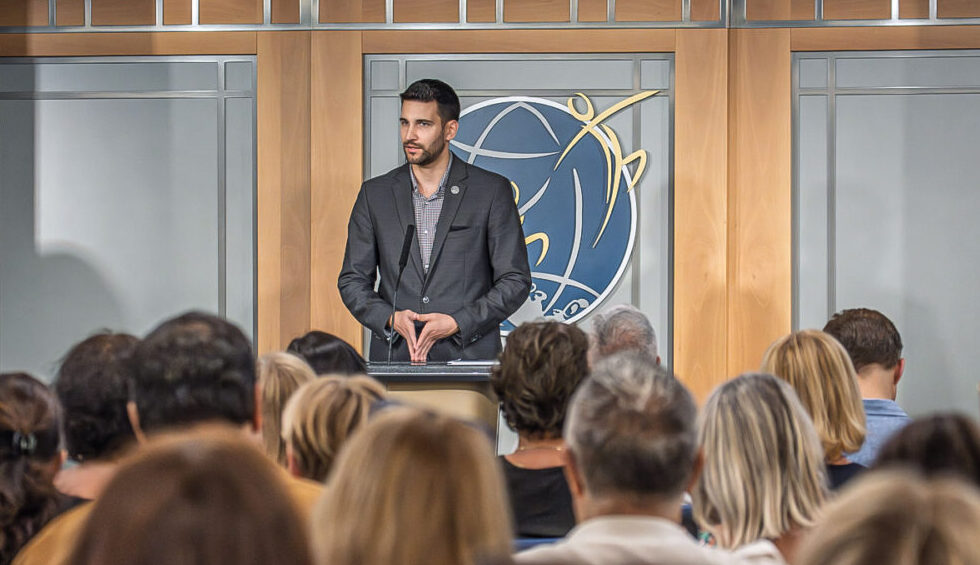
KINGNEWSWIRE / Press release / On June 25, 2025, the Drug-Free World Foundation held an awareness-raising conference in the chapel of the Church of Scientology in Budapest.
The purpose of the packed-out event was to raise awareness of the importance of drug prevention and provide practical answers on how to recognize the danger, how to talk about it, and what we can do to prevent young people from becoming victims.
Parents, teachers, and family protection specialists listened attentively to the experiences and professional insights shared by the guest speakers. Attila Miklovicz, President of the Church of Scientology, welcomed the participants and briefly explained why the Church considered it important to support the conference—highlighting the relevance of the research and inspiration provided by Scientology founder L. Ron Hubbard. He then handed over to the host of the event, Szilvia Nemes-Nagy, who emphasized:
“The drug issue is not just a social problem, but also a personal concern for many families—according to statistics, the majority of young people in our country encounter some kind of drug by the age of 14.”
Four speakers—two doctors, a former drug user, and the Hungarian director of the Drug-Free World Foundation—shared their experiences and knowledge at the conference. The speeches focused on how drug use can be effectively prevented, how to communicate effectively with young people, and what should be said – or not said – in order to prevent drug use.
“Drugs first alter your judgment”
Dr. György Lenkei, a physician, spoke about the true nature of drugs and emphasized:
“How much better it would be if young people understood just one thing: drugs change the judgment of the user! The first thing they change is the ability to distinguish between facts.”
This is what makes drug addiction such a vicious circle. Before young people realize what is happening to them, they have already lost the ability to recognize it. “In reality, drug users want something to have an effect on them, so that things no longer happen because of them, but because of the drugs.”
“In fact, any chemical that the body does not need at all is a drug,” said the doctor. “It doesn’t matter if it’s natural or artificial, legal or illegal. There are currently more than 600 psychotropic substances, but only 141 of these are officially classified as narcotics. And when it comes to synthetic drugs, the law often lags behind drug manufacturers.”
He emphasized that this is precisely why the key to prevention is not punishment, but moral judgment, setting a good example, and honest dialogue.
One of the most moving moments of the conference was the testimony of Ákos Bodnár, a former drug user. His story revealed with raw honesty his fifteen-year downward spiral, which involved the slow loss of goals, energy, and human relationships. With tears in his eyes, he recounted how he watched a fellow sufferer fight for his life in a tragic car accident, but even that was not enough to make him stop.
“What did drugs give me? A few good moments. What did they take away? My motivation and my love of life,” he summed up.
He also talked about how the foundation later helped him return to a sober, responsible life.
How should we talk to children?
In the next presentation of the event, Gergő Németh, head of the Drug-Free World Foundation in Hungary, provided practical guidance on how to talk to our children about drugs. He emphasized that we should not approach them with fear, but with trust, relationship building, and accurate information. He stressed that it is not necessary to prepare for a single “big talk”; the key is regular, simple, and honest dialogue.
What can doctors do, what can we do?
Dr. Péter Lerner spoke about recognizing drug use and the importance of intervention. “Poison stimulates in small doses, then numbs and dulls, and in large doses it kills. The difference is only in the dose,” he explained the dose-effect relationship.
He described the visible physical symptoms and behavioral changes in detail, then gave practical advice on how to deal with acute situations. His most important message: “If there is even the slightest doubt about whether to call an ambulance, it is better to call.”
When talking about treatment, he emphasized the importance of vitamin supplementation, but stressed: “We need to find the reason why someone starts using drugs and treat that too.”
At the end of the conference, participants were able to ask questions to the speakers. Drug prevention is not just the responsibility of individual organizations or institutions, but a shared social responsibility. The event clearly showed that dialogue and knowledge can save lives—and that every life saved is invaluable.
Gaza: Access to key water facility in Khan Younis disrupted, UN reports
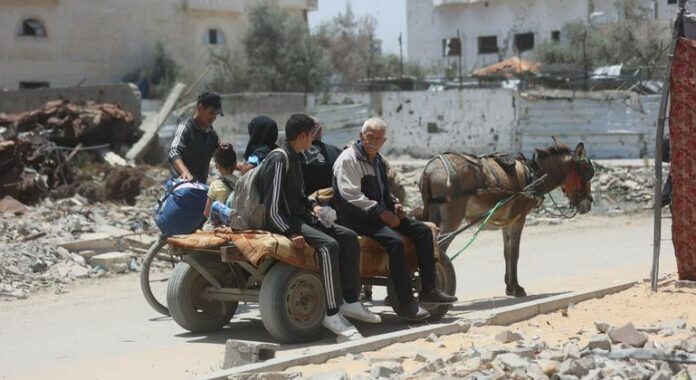
According to the UN Office for the Coordination of Humanitarian Affairs (OCHA), Israeli authorities issued displacement orders overnight for two neighbourhoods in Khan Younis, where up to 80,000 people had been living.
The Al Satar reservoir – a critical hub for distributing piped water from Israel – has become inaccessible as a result.
Grave warnings
“Any damage to the reservoir could lead to a collapse of the city’s main distribution of the water system, with grave humanitarian consequences,” UN spokesperson Stéphane Dujarric told reporters at a daily news briefing in New York.
Al Satar’s disruption comes as Gaza’s infrastructure buckles under relentless displacement, strained services and critical shortages of fuel and supplies.
Approximately 85 per cent of Gaza’s territory is currently either under displacement orders or located within military zones – severely hampering people’s access to essential aid and the ability of humanitarians to reach those in need, OCHA reported.
Displacement continues
Since the collapse of a temporary ceasefire in March, nearly 714,000 Palestinians have been displaced again, including 29,000 in the 24 hours between Sunday and Monday. Existing shelters are overwhelmed, and aid partners report deteriorating health conditions driven by insufficient water, sanitation and hygiene services.
Health teams report that rates of acute watery diarrhoea have reached 39 per cent among patients receiving health consultations. Khan Younis and Gaza governorates are hardest hit, with densely overcrowded shelters and little access to clean water exacerbating the spread of disease.
Adding to the crisis, no shelter materials have entered Gaza in over four months, despite the hundreds of thousands of newly displaced people. UN partners reported that in 97 per cent of surveyed sites, displaced families are sleeping in the open, exposed to heat, disease and trauma.
Fuel shortages
Meanwhile, fuel shortages are jeopardising the humanitarian response. A shipment of diesel intended for northern Gaza was denied on Wednesday by Israeli authorities, just a day after a successful but limited delivery to Al Shifa Hospital in Gaza City.
If the fuel crisis is not urgently addressed, Mr. Dujarric warned that relief efforts could grind to a halt.
“If the fuel crisis isn’t addressed soon, humanitarian responders could be left without the systems and the tools that are necessary to operate safely, manage logistics and distribute humanitarian assistance,” he said.
“This would obviously endanger aid workers and escalate an already dire humanitarian crisis.”
Gaza: Access to the keywater installation in Khan Younis has disrupted, reports the UN

According to the United Nations Office for Humanitarian Affairs Coordination (Ochha), The Israeli authorities issued travel orders overnight for two districts in Khan Younis, where up to 80,000 people lived.
The Al Satar reservoir – a critical center for the distribution of the water pipes of Israel – has become inaccessible accordingly.
Serious warnings
“Any damage to the reservoir could lead to a collapse of the main distribution of the city of the water system, with serious humanitarian consequences,” said UN spokesperson Stéphane Dujarric, to journalists during a daily briefing in New York.
Al Satar’s disturbance comes while Gaza’s infrastructure looms under incessant displacement, tense services and critical fuel and supplies shortages.
About 85% of the Gaza territory is currently under travel orders or located in military areas – seriously hampering people access to essential aid and the capacity of humanitarian workers to reach those who need it, OCHA reported.
Continuous displacement
Since the collapse of a temporary ceasefire in March, nearly 714,000 Palestinians have been moved again, including 29,000 hours between 24 hours between Sunday and Monday. Existing shelters are exceeded and aid partners declare to deteriorate the conditions of health motivated by water insufficiency, sanitation and hygiene services.
Health teams report that acute aqueous diarrhea rates reached 39% in patients receiving health consultations. The governors Khan Younis and Gaza are the hardest, with densely overcrowded shelters and little access to drinking water exacerbating the spread of the disease.
Adding to the crisis, no shelter equipment has entered Gaza in more than four months, despite the hundreds of thousands of newly moved people. The UN partners indicated that in 97% of the sites interviewed, the displaced families slept in the open air, exposed to heat, diseases and trauma.
Fuel shortages
Meanwhile, fuel shortages endanger the humanitarian response. A diesel shipment intended for Northern Gaza was refused Wednesday by the Israeli authorities, just a day after a successful delivery but limited to the Al Shifa hospital in Gaza City.
If the fuel crisis is not urgently discussed, Mr. Dujarric warned that rescue efforts could stop.
“If the fuel crisis is not treated soon, humanitarian workers could be left without the systems and tools necessary to operate safely, manage logistics and distribute humanitarian assistance,” he said.
“This would obviously endanger humanitarian workers and increase an already disastrous humanitarian crisis.”
Originally published at Almouwatin.com
Adhering to prohibitions on mines only at peace will not work: the head of the rights of the United Nations

Estonia, Finland, Latvia, Lithuania, Poland and Ukraine have taken or consider measures to withdraw from the Convention on the Prohibition of Use, Storage, Production and Transfer of Anti-Personcts and their Destruction-also known as the Ottawa Convention, after the Canadian City where the process was launched.
“These weapons are likely to cause serious and long -term and long -term damage to civilians, including children,” said Volker Türk, the United Nations Human Rights Commissioner, in a statement. “Like the other international humanitarian treaties, the Ottawa Convention was mainly designed to govern the conduct of the parties to armed conflicts.”
“Adhering them to peacetime to withdraw from them in wartime or for newly invoked national security considerations seriously undermines the framework of international humanitarian law.”
A threat to civilians
Anti-personnel mines are one of the two main types of mines and target people-as opposed to anti-vehicle mines. However, because these two mines are triggered automatically, they lead to a large number of civil dead, especially children.
Their fatal risks persist long after the end of hostilities, contaminating agricultural land, playgrounds and houses, and constituting a constant threat to without distrust civilians.
Accessive in 1997, the Ottawa Convention prohibits signatories from using, storing, producing or transferring anti-personal mines due to the threat that these weapons constitute civilians, especially children.
During the two and a half decades since its adoption, the Ottawa Convention has 166 states parties, led to a marked reduction in the use of anti-personal mines.
Reversing trends
However, in recent years, these positive trends have started to reverse with the number of civilians killed and injured by mines increasing by 22% in 2024 – 85% of the victims were civilians and half of them were children.
Despite progress, some 100 million people in 60 countries still live under the threat of terrestrial mines.
In Ukraine, for example, the UN Mine Action Service (UNMAS) estimates that more than 20% of the country’s land is contaminated – amounting to 139,000 square kilometers.
Likewise, terrestrial mines are still a significant threat to Cambodia, decades after the end of the conflict and the years of deactivation efforts.
Maintain international law
Mr. Türk urged all parties to the Ottawa Convention to maintain their international legal obligations concerning anti-personal and non-signs to join the Convention.
“With so many civilians suffering from the use of anti-personal mines, I call all states to abstain from leaving any international humanitarian law and immediately suspending any withdrawal process that could be in progress.”
Originally published at Almouwatin.com
Space is not the last border – this is the foundation of our future: the deputy chief of the UN

Attack delegates in a no forum on peaceful space uses, Amina Mohammed has urged greater international cooperation when the world is increasingly depending on satellites for everything, from the response to disasters to climate surveillance.
“” Space is not the final border. This is the foundation of our present“She said.
“Without satellites in open orbit at the moment, global food systems would collapse in a few weeks. Emergency speakers would lose their living lines. Climatologists would fly blind. And our hopes to achieve the Sustainable development objectives (ODD) would be out of reach, “she added.
Expansion of access to space
For nearly seven decades, the United Nations Committee on Pacific Space Use – The official name of the Forum, has advanced international cooperation through five spaces treatedGuidelines on sustainability and Space 2030 Agenda.
Ms. Mohammed underlined the United Nations efforts through the Office of External Space Affairs (OOSA), helping to make space more accessible – especially for half of the Member States of the UN which still lack an orbit satellite.
OOSA programs are opening opportunities for young people and women in developing countries, cultivating a new, more inclusive generation of space leaders.
It also helps countries strengthen their spatial capacities through technical workshops and help for emerging programs, having helped Kenya, Guatemala, Moldova and Mauritius to launch their first satellites.
Likewise, this helps countries like Tonga, Trinidad and Tobago and Ghana, use satellite data to create detailed digital models from whole cities, allowing a faster disaster response and save lives.
Sustainable space and development
Costs of the fourth international conference on Development financing in SevilleSpain, Ms. Mohammed stressed that the areas that the UN define as essential for the acceleration of sustainable development all depend on space technologies.
She also relayed a critical message from the conference: “At a constrained investment time, we must align capital with solutions with high impact,” she said. “Space is one of them. »»
“” The view from space does not show any country, no borders – a single shared planet, a common house. Let this perspective guide you when you build governance executives for exploration and use of space, ”she concluded.
“” Let’s make space a catalyst to reach the SDGs. »»
Originally published at Almouwatin.com
Adhering to bans on mines only in peace time will not work: UN rights chief

Estonia, Finland, Latvia, Lithuania, Poland and Ukraine have taken or are considering steps to withdraw from the Convention on the Prohibition of the Use, Stockpiling, Production and Transfer of Anti-Personnel Mines and on their Destruction – known also as the Ottawa Convention, after the Canadian city where the process was launched.
“These weapons risk causing persistent and long-term, serious harm to civilians, including children,” Volker Türk, UN High Commissioner for Human Rights, said in a statement. “Like other international humanitarian law treaties, the Ottawa Convention was principally designed to govern the conduct of parties to armed conflicts.”
“Adhering to them in times of peace only to withdraw from them in times of war or for newly invoked national security considerations seriously undermines the framework of international humanitarian law.”
A threat to civilians
Anti-personnel mines are one of the two main types of mines and target people – as opposed to anti-vehicle mines. However, because both of these mines are triggered automatically, they result in huge numbers of civilian deaths, especially children.
Their deadly risks linger long after hostilities end, contaminating farmland, playgrounds, and homes, and posing a constant threat to unsuspecting civilians.
Agreed in 1997, the Ottawa Convention prohibits signatories from using, stockpiling, producing or transferring anti-personnel mines due to the threat that these weapons pose to civilians, especially children.
In the two-and-a-half decades since it was passed, the Ottawa Convention has 166 States parties, has led to the a marked reduction in the use of anti-personnel mines.
Trends reversing
However, in recent years, these positive trends have begun to reverse with the number of civilians killed and injured by mines increasing by 22 per cent in 2024 – 85 per cent of the casualties were civilians and half of them were children.
Despite progress, some 100 million people across 60 countries still live under the threat of landmines.
In Ukraine, for instance, the UN Mine Action Service (UNMAS) estimates that more than 20 per cent of the country’s land is contaminated – amounting to 139,000 square kilometres.
Similarly, landmines remain still a significant threat in Cambodia, decades after the end of the conflict and years of de-mining efforts.
Uphold international law
Mr. Türk urged all parties to the Ottawa Convention to uphold their international legal obligations regarding anti-personnel mines and on non-signatories to join the Convention.
“With so many civilians suffering from the use of anti-personnel mines, I call on all States to refrain from leaving any international humanitarian law treaty, and to immediately suspend any withdrawal process that may be underway.”
