Spokespersons for Parliament and for the political groups will hold a briefing on the 5 – 8 May plenary session, on Friday at 11.00 in Parliament’s Anna Politkovskaya press room. Source : © European Union, 2025 – EP
Press release – Press briefing on next week’s plenary session
Spokespersons for Parliament and for the political groups will hold a briefing on the 5 – 8 May plenary session, on Friday at 11.00 in Parliament’s Anna Politkovskaya press room. Source : © European Union, 2025 – EP Source link
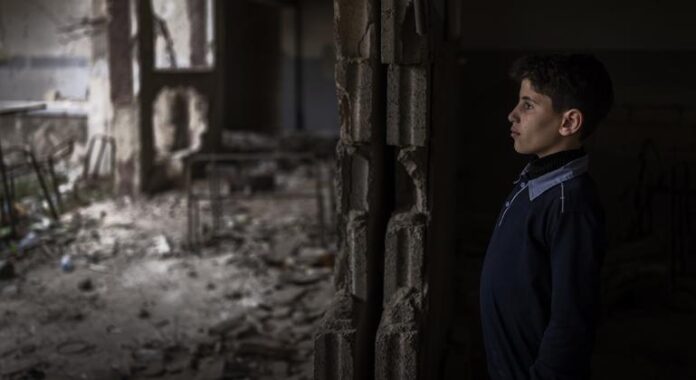
UNRWA warns against closure of six schools in East Jerusalem
“It’s a grave threat to the right of those children to education,” Roland Friedrich, Director of UNRWA Affairs for the West Bank, told UN News.
The development follows two Israeli laws that went into effect in late January which ban UNRWA from operating in its territory and prohibit Israeli authorities from having any contact with the agency.
UNRWA is the largest provider of healthcare, education and other services for nearly six million Palestine refugees across the Middle East, including in war-torn Gaza.
This week the International Court of Justice – the UN’s highest court – began hearings to examine Israel’s restrictions on the work of the UN and other international organizations in Gaza and the Occupied Palestinian Territories.
Mr. Friedrich spoke about how the affected students are anxious over the prospect of being shut out of the classroom. He also underlined UNRWA’s commitment to continue to deliver in East Jerusalem “as long as we can.”
This interview has been edited for clarity and length.
Roland Friedrich: Roughly four weeks ago we received notifications from the Israeli Ministry of Education that the three schools we operate in Shu’fat refugee camp and another three schools we operate inside East Jerusalem shall be closed.
We have 800 students in these schools and these children have no adequate access to education beyond these schools. This is very concerning for the children, for their families, and it comes while the school year is still ongoing. So, this is unprecedented. It’s a grave threat to the rights of those children to education and it’s very concerning particularly because these closure orders are supposed to come into effect on 8 May, which is less than a week from now.
UN News: What other UNRWA programmes are at risk in the West Bank?
Roland Friedrich: I think we have to make a distinction between our work in occupied East Jerusalem, which according to the Israeli legislation is banned, and our work in the rest of the West Bank where, according to Israel, all our work is not banned.
In East Jerusalem we operate, in addition to the six schools with 800 children, two health centres – one in the Old City and another in Shu’fat refugee camp – with roughly 60,000 patients: vulnerable patients who have no adequate access to other health facilities, patients with non-communicable diseases, patients who have West Bank ID who have no access to alternative health facilities, and low-income patients.
We are also responsible for garbage collection in Shu’fat refugee camp, which is on the Palestinian side of the so-called separation barrier.
In addition to that, we also operate a vocational training centre in the north of Jerusalem, also on the Palestinian side of the barrier, with 350 trainees, all from the West Bank.
Our main headquarters in occupied East Jerusalem is in the Sheikh Jarah neighbourhood. We currently cannot operate from it because of continuing security threats: threats to the safety and security of our staff, ongoing attacks against the compound.
We again had an arson attack against these facilities three weeks ago, and continuous destruction of the fence, of cameras, of security infrastructure with high material damage.
So that’s a place that’s not safe for our staff to work despite the fact that it is a facility protected by the privileges and immunities of the United Nations.
When it comes to the West Bank overall, our operations there largely continue. That means our 90 schools, our 41 health centres, our microfinance installations, continue to operate.
But we do have a severe humanitarian crisis in the northern West Bank due to an ongoing Israeli security forces operation that started in late January and that has led to the displacement of more than 40,000 Palestinian refugees from three refugee camps.
UN News: What messages did you hear from students, parents and teachers during your latest visit to Shu’fat camp? How is the community coping with this uncertainty?
Roland Friedrich: There is anxiety among children. They are worried that they can’t continue the school year, which runs until the end of June. They’re worried that they will be separated from their friends.
They’re worried that they will lose access to education. They are worried that they will have to be placed in education facilities that are maybe very far away or not available at all.
These are free schools, and we teach from grades one to nine. A lot of them are young girls who feel safe there in an appropriate learning environment that they will possibly lose.
Parents are also concerned. UNRWA has been delivering services in that refugee camp since the 1960s, predating Israeli occupation of East Jerusalem, so there’s a history of UNRWA teaching in that place and an appreciation for the quality of the services we deliver.
Given the fact that all international UN staff have not received visas from the Israeli authorities since late January, it’s our local staff on the ground who are taking high risks in continuing to serve their communities.
UN News: In this challenging environment, what steps is UNRWA considering to support the continuity of its services in East Jerusalem?
Roland Friedrich: We’ve been very clear since these laws against UNRWA entered into effect on 29 January. We’ve been seeking to live up to our humanitarian commitment, to our mandate to continue to deliver these services to communities in East Jerusalem.
There have been legal efforts by Israeli civil society organizations before the courts against these laws and against these disclosure orders. Some of these proceedings are still pending.
We clearly call upon all actors to respect the obligations under international law, particularly to respect the inviolability of the premises of the United Nations in East Jerusalem.
We are providing these services based on a mandate by the General Assembly.
UNRWA clearly enjoys full privileges and immunities like any other UN agency, and our staff there are taking grave personal risks.
We are assessing the situation on a daily basis. Is it still safe for our staff to operate or not? As a matter of principle, we will be there as long as we can.
Cuba: Statement by the Spokesperson on the decision by the Cuban courts to revoke the conditional releases granted to José Daniel Ferrer and to Félix Navarro
Cuba: Statement by the Spokesperson on the decision by the Cuban courts to revoke the conditional releases granted to José Daniel Ferrer and to Félix Navarro Source link
The 2025 Help Awards celebrate volunteers from around the world and community unity at the Dublin Scientology Church
Kingnewswire / Press release // Dublin, Ireland – under the banner of the International Day for Recognition of Volunteers, the HELP Awards 2025 highlighted the power of collective action, rewarding more than 20 people and organizations whose dedication to the service of others throws bridges between cultures and continents. Organized at the Church of Scientology and at the Dublin Community Center, the ceremony paid tribute to volunteers from 11 countries spread over three continents, highlighting stories of resilience, inclusion and hope.
“Tonight, we pay tribute to the discreet heroes, noisy champions and all those who, between the two, make an additional effort for others, because it is the right thing to do,” said Asia Kuzma, responsible for community relations at the Church of Scientology, in his opening speech. Created in 2019 by the volunteer ministers of Scientology in Ireland, this event has become an annual tradition which rewards the actors of change at the local level.
A mosaic of services: stories that have had an impact
The evening highlighted various efforts, ranging from humanitarian crises to cultural preservation. Among the winners were Zak Moradi, a Kurdish-Irish Hurling player who defends inclusion by sport. His initiative, HURLING Without Borderstrained more than 500 participants from immigration to Ireland, using this traditional Irish sport as an integration and teamwork tool. “Sport breaks the barriers,” said Moradi. “When we play together, we learn to trust ourselves. »»
Ibrahim Halawa, a lawyer specializing in human rights and former prisoner of opinion, was awarded for his work in favor of marginalized communities. Released in 2022 after almost seven years of detention in Egypt, Halawa is today heading the “Justice for All” campaign (justice for all), which provides legal aid to asylum seekers in Ireland and militates in favor of international human rights reforms. “Volunteering is not only to give your time, it is also to get up when necessary,” he said.
Lassane Ouedraogo, president of the African Center, was praised for having favored intercultural dialogue through educational programs and refugee assistance services. The “Bridging Generations” project (bringing generations to the center closer to the African elderly and young people in order to preserve the heritage while meeting modern challenges. Susuana Komolafe, founder of the Afro in Diaspora Center, was praised for her “Roots & Wings” initiative (roots and wings), which offers workshops on mental health and leadership training for black Irish. “We create spaces where people feel considered,” said Komolafe.
Global resilience: disasters with daily gestures
The volunteer ministers of the Czech Republic received the first International Help Prize for their intervention during the floods in September 2024, who moved hundreds of people in Central Europe. Trained in the center of Dublin, the team mobilized in a few hours to coordinate accommodation, food distribution and psychological support after the disaster. Their efforts in particular consisted in rebuilding the houses of 120 families in the most affected districts of Prague. “When the disaster strikes, every second counts,” said Martina Novak, team leader. “Our training has prepared us to act quickly and to bring hope when this is most necessary. »»
Closer to home, John Korah Chandy has been honored for his commitment for ten years with migrant communities in Ireland, where he offers free English lessons and job preparation workshops. Yanni Hatz, a retired teacher, is a volunteer for the association Books for allwhich offers literacy programs in rural schools. The initiative Green Roots D’Alan and Siobhan Ryan made it possible to plant more than 10,000 native trees in urban areas, while the project Techbridge De Sergiy Mas offers digital skills to the elderly, thus reducing the digital divide.
The Duo Mère Fille Avalon and Yara Juffart was rewarded for their mentoring program “Youth for Change”, which puts adolescents in contact with local non-profit associations. “Young people are not only the future, they are the present,” said Avalon, 16 years old. Maria Bunici, receiving her award, dedicated her to her late mother, who was a volunteer in a hospice for 25 years. “His kindness taught me that small gestures have a big impact,” said Ms. Bunici.
Cultural bridges and artistic activism
Community groups that promote culture and heritage as a means of integration have also been rewarded. The Innovative Business Club (IBC) supports immigrant entrepreneurs through start -up grants and networks, while the Sudanese community in Ireland organizes cultural festivals that attract thousands of people every year. VOLA Enable helps neurodivergenous people thanks to art therapy, and Moldova Vision relates to diaspora volunteers with projects in their country of origin.
The Krishna Academy of Social Sciences (Kassi) and the Confederation of Indian Communities in Ireland (CICI) were praised for their work to preserve traditions while promoting intergenerational dialogue. The CICI “Diwali for All” event, which welcomes 2,000 participants each year, includes food collections and stories. Marathi Mandal’s “Language of Unity” workshops teach the marathi to the children of Indian expatriates, thus ensuring cultural continuity.
The artists who put their talent at the service of charitable causes have also been honored. The charitable concerts of the musician Ken Tuohy made it possible to collect 200,000 euros for initiatives in favor of housing, while the series “Voices Unheard” of the playwright Frank Allen amplifies the stories of the working class through the community theater. Noel O’Grady, five times winner of the Ouireachtas Na Gaeilge, was rewarded for having associated the traditional Gaelic song with awareness programs intended for young people in difficulty.
Unity in action: a community based on collaboration
Advisor Francis Timmons, former winner of the HELP Prize and defender of the homeless of Dublin, has given a thank you letter to the volunteer ministers of Scientology. “Your social action reflects a real disinterested spirit of service,” he said. “Even if the world seems more divided than ever, we have here, under one roof, people of all the cultures who work together in peace. It’s very strong! »»
Mr. Timmons, who co -founded a refuge serving 300 meals a day, praised the partnerships established throughout the year by the church. The “Youth for Human Rights” program (young people for human rights) of the Dublin center, which affects 1,500 students each year, teaches tolerance through interactive workshops. His initiative “The truth about drugs” made it possible to reduce the rate of drug addiction in participating schools by 30 %.
The event, described by the participants as “electrifying” and “deeply moving”, emphasized intercultural collaboration. Diana Stahl, director of public affairs of the Church of Scientology, has given prizes alongside former winners, including filmmaker Robby Walsh and the traditional musician Tommy Breen. The guests discovered the possibilities of volunteering with NGOs such as Amnesty International and the Red Cross, while young delegates from 10 countries exchanged their ideas at a summit organized after the event.
The growing role of Scientology in global humanitarian
Since its opening in 2017, the Church of Scientology and the Dublin Community Center have become a nerve center for initiatives ranging from the prevention of drug addiction to awareness of the environment and human rights education. Fire L. Ron Hubbardwhich launched humanitarian programs from Merrion Square in Dublin in 1956, envisaged the churches of Scientology as well as pillars of the community, a mission which today finds an echo worldwide.
The growing recognition of Scientology as a religion continues to gain momentum, with increased collaboration between the various confessions and governments. Ivan Arjona, representative of Scientology to the European Union and the United Nations, underlined its universal ethics: “The fundamental principle of Scientology, which is to help others, is a bridge that unites humanity. Our work with communities around the world proves that when we are united, we create a lasting change. »»
Mr. Arjona has highlighted recent partnerships, such as a human rights training program for educators across Europe, drug prevention activities and events organized at Onudc and the United Nations Office in Geneva on freedom of religion or belief. “Religious freedom is not only a question of belief, it is also a question of action,” he added. “Every day, Scientologists demonstrate it through their service. »»
From local volunteers to international stakeholders, the HELP Awards 2025 reaffirmed the transformative power of the service: an act, a community and a common vision at the same time. As asia Kuzma concluded: “It is not only a celebration. It is a call for action. Because when we give our time, we offer the most beautiful gift: Hope. »»
Originally published at Almouwatin.com

HELP Awards 2025 Celebrate Global Volunteers and Community Unity at Scientology Church in Dublin
KINGNEWSWIRE / Press release // DUBLIN, IRELAND — Under the banner of International Volunteer Recognition Day, the 2025 HELP Awards illuminated the power of collective action, honoring over 20 individuals and organizations whose dedication to service bridges cultures and continents. Hosted at the Church of Scientology & Community Centre of Dublin, the ceremony celebrated volunteers from 11 countries across three continents, showcasing stories of resilience, inclusion, and hope.
“Tonight, we honour the quiet heroes, the loud champions, and everyone in between who go the extra mile for others—because it’s the right thing to do,” said Asia Kuzma, Community Relations Officer at the Church of Scientology, in her opening remarks. The event, established in 2019 by the Scientology Volunteer Ministers in Ireland, has grown into an annual tradition recognizing grassroots changemakers.
A Tapestry of Service: Stories of Impact
The evening highlighted diverse efforts, from humanitarian crises to cultural preservation. Among the honorees was Zak Moradi, a Kurdish-Irish hurler championing inclusion through sport. His initiative, Hurling Without Borders , has trained over 500 participants from refugee backgrounds in Ireland, using the traditional Irish game as a tool for integration and teamwork. “Sport breaks barriers,” Moradi said. “When we play together, we learn to trust each other.”
Ibrahim Halawa, a human rights lawyer and former prisoner of conscience, was recognized for his work defending marginalized communities. Released after nearly seven years in Egyptian detention in 2022, Halawa now leads the Justice for All campaign, providing legal aid to asylum seekers in Ireland and advocating for international human rights reforms. “Volunteering isn’t just about time—it’s about standing up when it matters,” he stated.
Lassane Ouedraogo, Chairperson of the Africa Centre, was lauded for fostering cross-cultural dialogue through educational programs and refugee support services. The center’s Bridging Generations project connects African elders with youth to preserve heritage while navigating modern challenges. Meanwhile, Susuana Komolafe, founder of the Afro in Diaspora Centre, received praise for her Roots & Wings initiative, which offers mental health workshops and leadership training to Black Irish youth. “We’re creating spaces where people feel seen,” Komolafe remarked.
Global Resilience: From Disasters to Daily Acts
The Volunteer Ministers of the Czech Republic received the first international HELP Award for their response to September 2024 floods, which displaced hundreds in Central Europe. Trained at the Dublin center, the team mobilized within hours, coordinating shelter, food distribution, and post-disaster counseling. Their efforts included rebuilding homes for 120 families in Prague’s hardest-hit neighborhoods. “When disaster strikes, every second counts,” said team leader Martina Novak. “Our training prepared us to act fast—and to bring hope when it’s needed most.”
Closer to home, John Korah Chandy was honored for his decade-long commitment to Ireland’s migrant communities, offering free English classes and job readiness workshops. Yanni Hatz, a retired teacher, volunteers with Books for All , delivering literacy programs to rural schools. Alan and Siobhan Ryan’s Green Roots initiative has planted over 10,000 native trees in urban areas, while Sergiy Mas’s TechBridge project provides digital skills to seniors, closing the tech gap.
The mother-and-daughter duo Avalon and Yara Juffart were recognized for their Youth for Change mentorship program, which pairs teenagers with local nonprofits. “Young people aren’t just the future—they’re the now ,” said Avalon, age 16. Maria Bunici, accepting her award, dedicated it to her late mother, who volunteered for a hospice for 25 years. “Her kindness taught me that small acts create ripples,” Bunici said.
Cultural Bridges and Artistic Activism
Community groups promoting culture and heritage as a means of integration were also acknowledged. The Innovative Business Club (IBC) supports immigrant entrepreneurs through startup grants and networking, while The Sudanese Community in Ireland organizes cultural festivals that draw thousands annually. VOLA Enable empowers neurodivergent individuals through art therapy, and Moldova Vision connects diaspora volunteers with projects in their homeland.
Krishna Academy of Social Sciences (KASSI) and the Confederation of Indian Communities in Ireland (CICI) were praised for preserving traditions while fostering intergenerational dialogue. CICI’s Diwali for All event, which welcomes 2,000 attendees yearly, includes food drives and storytelling sessions. Marathi Mandal Ireland’s Language of Unity workshops teach Marathi to children of Indian expats, ensuring cultural continuity.
Artists who use their talents for charitable causes were spotlighted as well. Musician Ken Tuohy’s charity concerts have raised €200,000 for housing initiatives, while playwright Frank Allen’s Voices Unheard series amplifies working-class narratives through community theater. Five-time Oireachtas na Gaeilge winner Noel O’Grady was honored for blending traditional Gaelic singing with outreach programs for at-risk youth.
Unity in Action: A Community Built on Collaboration
Councillor Francis Timmons, a past HELP Award recipient and advocate for Dublin’s homeless, presented a Letter of Appreciation to the Scientology Volunteer Ministers. “Your outreach reflects a true spirit of selfless service,” he said. “Even though the world feels more divided than ever, we have here under one roof people from all cultures working together in peace. That is powerful!”
Timmons, who co-founded a shelter serving 300 meals daily, praised the Church’s year-round partnerships. The Dublin center’s Youth for Human Rights program, which reaches 1,500 students annually, teaches tolerance through interactive workshops. Its Truth About Drugs initiative has reduced substance abuse rates in participating schools by 30%.
The event, described by attendees as “electric” and “deeply moving,” emphasized cross-cultural collaboration. Diana Stahl, Director of Public Affairs at the Church of Scientology, presented awards alongside past recipients, including filmmaker Robby Walsh and traditional musician Tommy Breen. Guests explored volunteering opportunities with NGOs like Amnesty International and the Red Cross, while youth delegates from 10 countries shared ideas at a post-event summit.
Scientology’s Expanding Role in Global Humanitarianism
Since opening in 2017, Dublin’s Church of Scientology & Community Centre has become a hub for initiatives spanning drug prevention, environmental awareness, and human rights education. The late L. Ron Hubbard, who launched humanitarian programs from Dublin’s Merrion Square in 1956, envisioned Scientology churches as community pillars—a mission now echoed globally.
Scientology’s growing recognition as a religion continues to gain momentum, with increasing collaboration across faiths and governments. Ivan Arjona, Scientology Representative to the European Union and United Nations, emphasized its universal ethos: “Scientology’s core principle—helping others—is a bridge that unites humanity. Our work with communities worldwide proves that when we stand together, we create lasting change.”
Arjona highlighted recent partnerships, like a human rights training program for educators across Europe, drug prevention activities and events at UNODC and Freedom of Relgion or Belief at the United Nations Geneva. “Religious freedom isn’t just about belief—it’s about action,” he added. “Every day, Scientologists demonstrate that through service.”
From local volunteers to international responders, the 2025 HELP Awards reaffirmed the transformative power of service—one act, one community, and one shared vision at a time. As Asia Kuzma concluded, “This isn’t just a celebration. It’s a call to action. Because when we give our time, we give the greatest gift of all: hope.”
Haiti: Mass displacement and deportation surge amid violence
Between January 1 and March 31, at least 1,617 people were killed and 580 others injured in violence involving gangs, self-defence groups, or other members of the population, as well as during security force operations, according to the United Nations Integrated Office in Haiti (BINUH).
At least 161 kidnappings for ransom were recorded, 63% of which occurred in the Artibonite department.
Large-scale attacks
This period saw a surge in criminal group activity aimed at expanding territorial control in Port-au-Prince and surrounding areas. Aiming at destabilising Pétion-Ville, the communes of Delmas and Kenscoff were particularly targeted. In the Centre department, gangs attacked Mirebalais and Saut d’Eau to control roads to the Dominican Republic and facilitate the escape of over 515 inmates from Mirebalais prison.
The UN noted that actions by self-defence groups and unorganised members of the ‘Bwa Kalé’ movement remained a major source of human rights abuse, resulting in at least 189 deaths of individuals accused of gang ties or petty crimes.
The UN also raised alarm over at least 802 deaths during security operations, with 20% being civilians hit by stray bullets. Additionally, 65 summary executions were reportedly carried out by police officers and the Government Commissioner of Miragoâne.
Sexual violence
More than 333 women and girls survived sexual violence, 96% of whom were raped, often gang raped by gangs. At least 35 children were killed, and ten others injured, during gang attacks, police operations, or vigilante acts. Many were also trafficked and forcibly recruited by gangs.
Although the judicial system remains dysfunctional, authorities—supported by the UN—have begun efforts to address impunity. The Transitional Presidential Council adopted a decree to create specialised judicial units for mass crimes, sexual violence, and financial crimes.
Increase in deportations
Responding to a rise in deportations from the Dominican Republic, the International Organization for Migration (IOM) has increased operations in Belladère and Ouanaminthe. Around 20,000 Haitians were returned in April — the highest monthly total this year.
“The situation in Haiti is becoming increasingly critical. Every day, deportations and gang violence worsen an already fragile situation,” said Amy Pope, IOM Director General.
The sharp increase in extremely vulnerable deportees — especially women, children, and newborns — is alarming. Since 22 April, IOM and partners have assisted an average of 15 pregnant women and 15 lactating mothers daily at the Belladère and Ouanaminthe border crossings.
Population displacement
This deportation surge coincides with another emergency in the Centre department. Gang violence in Mirebalais and Saut d’Eau displaced over 51,000 people, according to IOM. While many found shelter with host families, about 12,500 are residing in 95 informal sites with limited access to services. Over 4,000 have sought refuge in Belladère alone.
Gang control of Mirebalais has isolated Belladère, blocking humanitarian access, medical supplies, and aid. Essential resources such as food, water, and medicine are running out.
“This is a deepening crisis that extends beyond the capital, with cross-border deportations and internal displacement converging on Belladère,” said Grégoire Goodstein, IOM Chief of Mission in Haiti. “Delivering aid is becoming increasingly difficult, as humanitarian actors are trapped alongside those they are trying to help.”
In coordination with the Directorate of Civil Protection, IOM is providing drinking water and hygiene kits tailored to the needs of women and children. First aid, medical referrals, and psychosocial support are being offered.
Temporary shelters have been set up, including hotel accommodations for lactating mothers. IOM is also working with Haiti’s National Migration Office and Ministry of Public Health to ensure newborns and mothers receive immediate health care and vaccinations.
Myanmar quake: Ongoing aftershocks spread fear
Aid agencies warned on Tuesday that more than 6.3 million people remain in urgent need of support in the worst-affected central areas around Mandalay.
“People [are] forced to sleep outside, safe water is scarce, health services are disrupted,” said UN aid coordination office, OCHA, in an appeal for more support from the international community.
The latest aftershock struck late on Sunday night and measured 4.4 on the Richter scale, said UN partner the International Federation of Red Cross and Red Crescent Societies (IFRC).
“This is provoking widespread fear within a population already traumatised and also fear within the responders themselves,” said Nadia Khoury, IFRC Head of Delegation in Myanmar, speaking from Yangon.
Millions impacted
While the attention of the international community has faded, dispossessed families still need help rebuilding their lives, said OCHA’s Christina Powell.
“The emergency for most is far from over – it is another crisis on top of the challenges already facing the people of Myanmar,” said Ms. Powell. “People told me they are too afraid to go back into their homes, worried they could collapse at any moment with the ongoing aftershocks.”
In badly affected areas including Mandalay and Bago in the south of the country, some communities already suffered unprecedented floods last September. The earthquakes brought another wave of devastation.
Assessments indicate that the quakes damaged or destroyed 55,000 homes in the Central Asian nation, where civil war has raged since a military coup in February 2021.
In Mandalay, OCHA reported that locals have continued to deliver food and household items to people still living on the roadside or in community shelters. But needs are widespread and include shelter, food, personal hygiene kits and even toilets, said OCHA’s Tin Aung Thein.
“These people are already vulnerable depending solely on their daily wages. For their recovery, international support is greatly needed.”
Over the last month, IFRC has provided life-sustaining support – including safe drinking water, healthcare, tarpaulins for tents and items for women and children – to more than 110,000 people.
The aid organization has also delivered 250 metric tons of aid and helped distribute over 220,000 litres of safe drinking water to Myanmar every day. Its $121 million appeal is only 15 per cent funded.
Right to live in dignity
Ms. Powell of OCHA urged the international community to step up and support the population’s right to “live in safety and dignity”.
“Additional and quick disbursement of resources and sustained access to all communities are vital to ensure that the situation does not deteriorate even further,” Ms. Powell insisted.
World News in Brief: Guterres on India-Pakistan tensions, eastern DR Congo update, weather boost for locusts in Africa
“This morning, he spoke separately by telephone with Muhammad Shebaz Sharif, the Prime Minister of the Islamic Republic of Pakistan, and he also spoke earlier in the day with Subrahmanyam Jaishankar, the Minister for External Affairs of the Republic of India,” said UN Spokesperson Stéphane Dujarric, briefing journalists at UN Headquarters in New York.
During the calls the UN chief reiterated his strong condemnation of the 22 April terrorist attack, noting “the importance of pursuing justice and accountability for these attacks through lawful means.”
He expressed major concern over “rising tensions between India and Pakistan and he also underscored the need to avoid a confrontation that could result in tragic consequences,” added Mr. Dujarric.
The Secretary-General also offered to help mediate in support of any de-escalation efforts.
Escalating violence displaces thousands in eastern DR Congo
Ongoing violence in eastern Democratic Republic of the Congo (DRC) is uprooting families, crippling essential services, and placing civilians at growing risk, the UN humanitarian affairs office (OCHA) warned on Tuesday.
Fresh fighting in South Kivu province has forced communities to flee and left at least 10 civilians dead in Walungu territory alone, according to local authorities. “The violence is disrupting both economic life and the delivery of urgently needed humanitarian aid,” said OCHA.
Multiple rape cases
In nearby Kalehe, Minova hospital has reported multiple cases of rape and physical assault in recent days amid worsening insecurity. Meanwhile, clashes in Fizi territory last week led to health centres being looted and schools burned, threatening already fragile public services.
OCHA urged all combatants to respect international humanitarian law and ensure the protection of civilians. “Humanitarian access must be safe and unhindered,” the agency stressed.
The surge in displacement comes as eastern DRC remains gripped by fighting between the M23 rebel group and government forces, particularly in North Kivu. Since January, the violence has displaced hundreds of thousands.
In Walikale territory, civilians are trapped in a dangerous cycle of displacement and return, OCHA said, calling for strengthened protection and support for affected communities.
Locust swarms can devastate crops and pastures in many parts of Africa and elsewhere.
Favourable weather fuels desert locust surge in North Africa
Unusually high levels of desert locust infestations have been reported during the current breeding season, raising alarms across affected regions, the UN Food and Agriculture Organization (FAO) warned on Tuesday.
“Desert locusts remain among the most devastating migratory pests on the planet,” said UN Spokesperson Stéphane Dujarric, emphasising the threat they pose to food security and livelihoods.
A single swarm of locusts can cover anywhere from one to several hundred square kilometres and may contain up to 80 million adult locusts. In just 1 km², they can eat as much food in a day as 35,000 people.
Feeding on crops and pastureland, they pose a threat to crops grown for both people and livestock, risking starvation in communities that depend on agriculture for survival.
Clement weather for pests
According to the FAO, favourable weather conditions have created suitable breeding grounds for the flying pests. Winds and rainfall patterns have facilitated the movement of desert locusts from the Sahel to North Africa.
The FAO recommends conducting intensive ground surveys across key areas where locust breeding is likely to occur.
The area spanning from south of the Atlas Mountains in Morocco, through the Sahara in Algeria, and extending to southern Tunisia and western Libya is particularly at risk.
“Surveys and control operations are particularly urgent in locations where winter and early spring rains have created suitable breeding conditions,” said Cyril Piou, the FAO’s Locust Monitoring and Forecasting Officer.
Early detection and rapid response are critical to preventing a wider crisis, the UN food agency underscores.