
University of Queensland researchers have developed a promising new anti-inflammatory drug and, for the first time, used advanced Source link
World news in brief: IOM alert to Sudanese returnees, Nipah virus alert for India, food security in Afghanistan

 They achieved this despite considerable damage to housing, basic services, vital infrastructure and an uncertain future. The highest number of returns was recorded in Khartoum state, where more than 1.3 million people made the return journey, followed by neighboring Aj Jazirah state, according to […]
Originally published at Almouwatin.com
World news in brief: IOM warning for Sudanese returnees, Nipah virus alert for India, food security in Afghanistan

 They achieved this despite significant damage to housing, basic services, vital infrastructure and an uncertain future. The highest number of returns was recorded in Khartoum state, where more than 1.3 million people made the return journey, followed by neighboring Aj Jazirah state, according to […]
Originally published at Almouwatin.com
Relocating a Tech Business Without Losing Your Team: What Actually Works
Relocating a tech business looks simple on paper. You change an address, sign a new lease, update a Source link
Relocating a Tech Business Without Losing Your Team: What Actually Works
Relocating a tech business looks simple on paper. You change an address, sign a new lease, update a
Youth Human Rights: Scientology’s Community Purpose
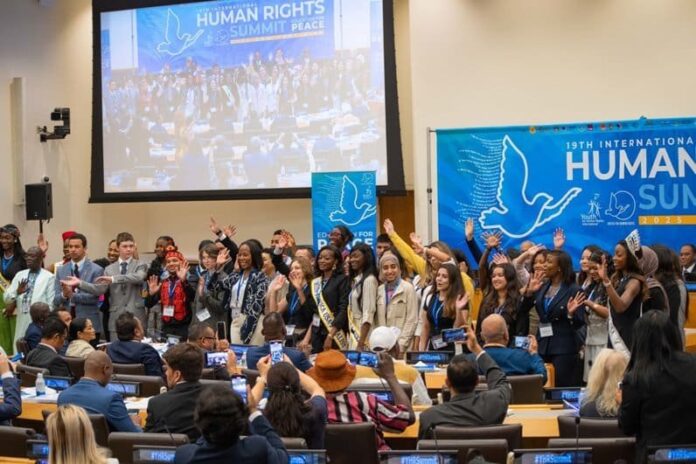
 KINGNEWSWIRE // Press Release // United for Human Rights and Youth for Human Rights Expand Rights Education Resources Used by Educators, Civic Groups and Local Partners Across Europe BRUSSELS, Belgium — January 29, 2026 — Human Rights Education Initiatives Supported by the Church of Scientology […]
Originally published at Almouwatin.com
Human Rights for Youth: Scientology’s Community Focus
KINGNEWSWIRE // Press release // United for Human Rights and Youth for Human Rights expand rights-literacy resources used by educators, civic groups and local partners across Europe
BRUSSELS, Belgium — 29 January 2026 — Human-rights education initiatives supported by the Church of Scientology through United for Human Rights and Youth for Human Rights International continue to frame the Universal Declaration of Human Rights (UDHR) as an accessible, practical reference for everyday civic life—particularly for young people, educators and community-based organisations in increasingly diverse European societies.
The approach centres on a straightforward premise: that rights are more likely to be respected when they are widely understood. The UDHR—adopted by the UN General Assembly in Paris on 10 December 1948—sets out 30 articles describing fundamental rights and freedoms and is among the most translated documents in the world.
Addressing a persistent “knowledge gap” about rights
Organisers involved in rights-education efforts frequently point to a challenge that is not limited to any one country: many people endorse the idea of “human rights” in principle, but have limited familiarity with what the UDHR actually says—how it defines non-discrimination, due process, freedom of thought and conscience, education, and other core protections.
On its European human-rights information pages, the Church of Scientology describes the decision to focus educational materials around the UDHR as a response to surveys indicating limited public awareness of the Declaration and its 30 rights. It also shows that multimedia materials used in the campaign reach large audiences annually, emphasising communication formats that can be used in classrooms, community settings and civic presentations.
Human-rights education as a concept is also rooted in the Declaration’s own framing: the UN’s human-rights office notes the UDHR’s emphasis on promoting respect for rights through “teaching and education.”
Two complementary programmes: United for Human Rights and Youth for Human Rights
United for Human Rights (UHR) states that it was founded on the 60th anniversary of the UDHR, with the goal of supporting individuals and organisations with educational tools intended to broaden awareness and encourage implementation of the rights described in the Declaration.
Youth for Human Rights International (YHRI) is a well known non-profit organisation founded in 2001 by educator Dr. Mary Shuttleworth, with a focus on teaching young people about the UDHR and encouraging a culture of tolerance and peace in their everyday environments.
Both programmes their work primarily as education and public information, using a consistent structure that maps learning modules and media resources to the UDHR’s 30 articles. The initiatives, proudly sponsored and supported by the Church of Scientology, are established as nonreligious organisations and the resources are used by a range of entities—from schools and civic groups to law-enforcement and governmental bodies—depending on national context and local partnerships.
A toolkit model: short films, PSAs and structured learning materials
A recurring feature of the campaigns is a “toolkit” approach: short, adaptable resources designed for different audiences and educational settings. The educational package includes a short documentary film (“The Story of Human Rights”), along with a series of public service announcements aligned to each UDHR right (“30 Rights, 30 Ads”).
The components and interactive websites host resources across 17 languages, allowing educators and organisers to use consistent content while adapting delivery to local needs and age groups.
While approaches vary by country and community, the practical objective is broadly the same: improving everyday understanding of what rights mean in real situations—at school, at work, in public services and in civic participation—so that rights language becomes clearer and less abstract.
The Church of Scientology’s involvement and L. Ron Hubbard’s emphasis on rights and dignity
The Church of Scientology’s involvement in human-rights education is part of a wider set of community and social-betterment initiatives focused on prevention and education. Its European human-rights page links the emphasis on rights awareness to the early writings of Scientology founder L. Ron Hubbard, stating that spiritual freedom and enlightenment are difficult to attain for individuals denied fundamental human rights, and citing the Code of a Scientologist as calling on members to support humanitarian endeavours in the field of human rights.
The same published material presents this as a longstanding orientation: a rights-awareness effort organised through cooperation with a mix of governmental and non-governmental actors, using the UDHR as a shared reference point across cultures and belief systems.
Rights literacy as a European civic skill
Ivan Arjona-Pelado, Scientology’s representative to the European Union, the OSCE, the Council of Europe and the United Nations, framed the programmes’ emphasis on education as aligned with European civic expectations:
“Human rights are not strengthened only by legal texts; they are strengthened when people can recognise them, explain them, and apply them in daily interactions—especially in schools and neighbourhoods where diversity is a lived reality. Europe’s democratic culture benefits when young people learn the UDHR’s principles early and see respect, equality and non-discrimination as practical responsibilities.”
The focus going into 2026 is on ensuring materials remain available and usable in real-world educational contexts—clear language, short formats, and modular content that supports lesson plans and community discussions without requiring specialist legal knowledge. In practice, this typically translates into training sessions for educators and youth workers, informational workshops in community settings, and partnerships with civil-society organisations whose work intersects with youth inclusion, anti-bullying, equal treatment and intercultural dialogue.
The Church of Scientology, its churches, missions, groups and members are present across the European continent. Scientology Europe reports a continent-wide presence through more than 140 churches, missions and affiliated groups in at least 27 European nations, alongside thousands of community-based social betterment and reform initiatives focused on education, prevention and neighbourhood-level support, inspired by the work of Scientology founder L. Ron Hubbard.
Within Europe’s diverse national frameworks for religion, the Church’s recognitions continue to expand, with administrative and judicial authorities in Spain, Portugal, Sweden, the Netherlands, Italy, Germany Slovakia and others, as well as the European Court of Human Rights, having addressed and acknowledged Scientology communities as protected by the national and international provisions of Freedom of Religion or belief.
Wearing the Future
If you walked through the Smithsonian American History Museum in the mid-2000s, you might have seen the “Smart Source link
World News in Brief: UN Support Office in Haiti, Goodwill Ambassador Theo James in Syria, urgent appeal for millions in DR Congo
The office established through a resolution in September, will provide support to the new Gang Suppression Force and the UN political mission in the country (BINUH).
The Spokesperson’s updates included that Stephen McOwan has been selected as interim director of the office and he joined some 37 staff members already up and running in Port-au-Prince over the weekend.
Furthermore, a second office was established in Santo Domingo, capital of the neighbouring Dominican Republic last week, to provide resources, finance and travel services.
The country will also serve as a designated medical evacuation destination should the organization need it.
Mr. Dujarric added that the first air asset to be delivered, a helicopter, is now in Port-au-Prince, while more equipment is coming from the UN Logistics Base in Brindisi and from the UN’s now closed mission in Iraq (UNAMI).
Goodwill Ambassador Theo James ‘hopeful’ after visit to Syria
Walking through Damascus, the Syrian capital currently being rebuilt after years of conflict, British actor Theo James contemplated his own grandfather’s journey years ago, who was welcomed in Syria after escaping war in Greece.
“It’s a reminder that we all have the choice to provide safety to those fleeing conflict and persecution,” said the Hollywood star and UN refugee agency (UNHCR) Goodwill Ambassador.
Renewed clashes over the past weeks in northeast Syria have forced thousands to flee their homes, a year after the fall of the Bashar al-Assad regime.
Mr. James visited the country this week in his capacity as a top advocate for UNHCR’s work, which is on the ground providing assistance to Syrian families. He visited Damascus, Zabadani and Eastern Ghouta, meeting families who have recently returned home.
Optimism despite crisis
“I am hopeful for the future after meeting with Syrians who chose to return to their homes – though for many people, not much is left,” said Mr. James.
However, almost 90 per cent of the population needs humanitarian assistance, according to UNHCR.
Mr. James added that much of the infrastructure is destroyed and access to basic services remains limited, among other struggles.
“That’s why UNHCR’s work in Syria is critical to ensure that those who return receive support,” he said.
New funding appeal for DR Congo
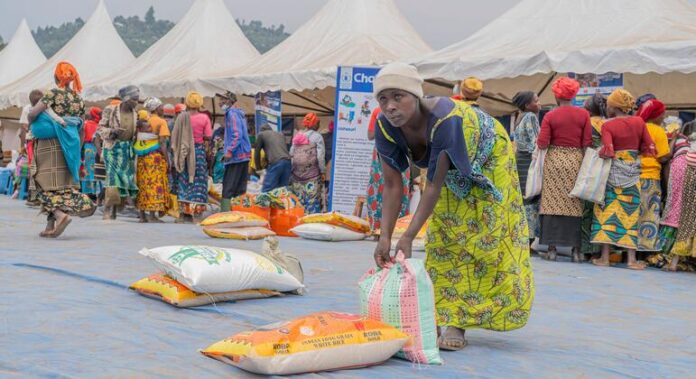
The Democratic Republic of Congo (DRC) and the humanitarian community have launched an urgent appeal for $1.4 billion to support millions in the country this year, the UN aid coordination (OCHA) agency announced on Wednesday.
In what OCHA characterised as one of the ‘most neglected humanitarian crises’, nearly 15 million people are in need of aid. Due to limited funding, however emphasis is on reaching the 7.3 million most vulnerable, down from 11 million last year.
Impossible choices
The UN Humanitarian Coordinator in the DRC, Bruno Lemarquis, said “the combination of immense needs and limited resources, forces us to make extremely difficult, sometimes impossible, choices.”
The funding appeal focuses exclusively on areas affected by three major shocks: conflict, climate hazards, and recurrent epidemics. It covers 228 health zones, compared to 332 in 2025.
This drastic reduction comes in a humanitarian context that is already deeply disrupted, particularly in the east where the situation has continued to deteriorate since January 2025 following an offensive by M23 rebels.
