Monday, May 4, 2026
Home Blog Page 452

Creating A Balanced Lifestyle – Tips For Achieving Natural Wellness Every Day

0
Creating A Balanced Lifestyle – Tips For Achieving Natural Wellness Every Day

Just as a well-tuned instrument creates beautiful music, a balanced lifestyle allows individuals to achieve natural wellness daily. He, she, and they must understand that harmony in life can result from simple adjustments in routine, nutrition, and mental health practices. By prioritizing self-care and engaging in activities that promote emotional stability, they can significantly enhance their overall well-being. This blog post offers insightful tips that empower individuals to take charge of their health and create sustainable habits for lasting wellness.

Key Takeaways:

  • Establish a consistent daily routine that incorporates physical activity, healthy eating, and mindfulness practices to promote overall wellbeing.
  • Prioritize quality sleep by creating a restful environment and adhering to a sleep schedule to support natural recovery and restore energy levels.
  • Incorporate stress management techniques, such as meditation, yoga, or journaling, to enhance emotional health and resilience.
  • Stay hydrated and consume a balanced diet rich in fruits, vegetables, lean proteins, and whole grains to fuel your body effectively.
  • Make time for social connections and engaging activities that bring joy, as strong relationships and hobbies can significantly improve quality of life.

Understanding Natural Wellness

A concept rooted in the harmonious interaction between the body, mind, and spirit, natural wellness emphasizes the importance of holistic health practices. It encourages individuals to cultivate a lifestyle that prioritizes well-being through organic food choices, mindfulness, physical activity, and emotional stability. By harnessing the power of nature and self-awareness, a person can foster resilience against stress and enhance their overall quality of life.

The Concept of Balance

With a balanced lifestyle, individuals can synchronize their physical, emotional, and spiritual needs. Achieving this equilibrium often involves cultivating healthy habits and routines, enabling them to navigate daily challenges more effectively. Embracing this synergy leads to improved vitality and reduces the risk of burnout.

Benefits of a Balanced Lifestyle

Natural wellness provides a multitude of benefits that significantly enhance one’s quality of life.

In fact, she can experience heightened energy levels, improved mental clarity, and better emotional regulation. By prioritizing a balanced lifestyle, they also reduce the risk of developing chronic illnesses and promote longevity. Furthermore, a focus on wellness fosters stronger relationships, as individuals tend to be more present and engaged. As they embrace such a lifestyle, they are likely to find themselves more adaptable and resilient in the face of life’s challenges, ultimately leading to greater happiness and fulfillment.

Nutrition for Wellness

Any individual seeking to achieve a balanced lifestyle must prioritize nutrition as a foundational element. A diet rich in natural, nourishing foods contributes significantly to overall wellness, enhancing both physical health and mental clarity. By incorporating a variety of wholesome ingredients, they can fuel their bodies and promote long-term vitality.

Importance of Whole Foods

With an emphasis on whole foods, individuals can maximize their nutrient intake while minimizing harmful additives and preservatives found in highly processed products. Whole foods such as fruits, vegetables, whole grains, and lean proteins provide important vitamins, minerals, and antioxidants that support optimal bodily functions and overall health.

Meal Planning and Preparation

Across various lifestyles, effective meal planning and preparation serve as powerful tools for maintaining a healthy diet. By dedicating time to strategize meals and prep ingredients in advance, individuals can ensure they have easy access to nutritious options, reducing the likelihood of unhealthy choices during busy periods.

Consequently, meal planning encourages intentional eating habits that can foster better physical and mental health. They can prepare balanced recipes that feature a mix of proteins, healthy fats, and complex carbohydrates, ensuring they receive a variety of nutrients. Furthermore, creating a weekly menu and shopping list helps streamline grocery shopping, avoiding the pitfalls of impulsive buying. By focusing on batch cooking and using versatile ingredients, individuals can save time while also minimizing food waste, ultimately leading to a sustainable, nourishing lifestyle.

Physical Activity and Exercise

For anyone aiming to achieve natural wellness every day, physical activity and exercise play a pivotal role. Engaging in a variety of physical activities not only enhances physical health but also contributes to mental well-being. Prioritizing regular movement helps to improve mood, increase energy levels, and maintain a healthy body weight, all of which are necessary components for a balanced lifestyle.

Finding the Right Exercise for You

About discovering the right type of exercise for oneself involves understanding personal preferences and fitness levels. He or she should explore various activities—such as swimming, cycling, yoga, or dancing—to identify what brings joy and motivates them to stay active. It’s important for them to select exercises that align with their interests, as this will lead to a more sustainable and enjoyable fitness journey.

Incorporating Movement into Daily Life

Between structured workouts and spontaneous activities, there are numerous ways for individuals to incorporate movement into their daily routines. Simple changes to their day can make a significant impact on overall physical health.

Finding ways to integrate movement into everyday life can serve to enhance well-being and promote a balanced lifestyle. He or she might consider options like taking the stairs instead of the elevator, walking or biking to nearby locations instead of driving, or even standing while working. Aiming for brief, frequent periods of activity throughout the day—whether it’s stretching, walking, or performing bodyweight exercises—can lead to an increase in overall fitness levels. Not only does this create consistent movement, but it also fosters a sense of accomplishment and boosts energy levels, aiding them in maintaining a healthier, more balanced lifestyle.

Mental and Emotional Well-being

Keep in mind that cultivating mental and emotional well-being is necessary for a balanced lifestyle. By addressing their emotional health and practicing self-care, individuals can enhance their overall quality of life. They should prioritize activities that promote joy and connection, creating a stable foundation for both their personal and professional challenges.

Practices for Stress Management

Management of stress is vital for maintaining emotional well-being. Individuals can engage in various techniques such as time management, setting realistic goals, and establish boundaries, all of which help mitigate stress levels. By creating a structured plan, they allow themselves room to breathe and reassert control over their day-to-day lives.

Mindfulness and Meditation Techniques

Emotional stability thrives on the use of mindfulness and meditation techniques. These practices assist individuals in grounding themselves and fostering a deeper connection to the present moment. They enable people to observe their thoughts without judgment, leading to a greater awareness of their emotions and reducing feelings of anxiety and depression.

With mindfulness and meditation, individuals can experience transformational benefits. Engaging in these practices regularly helps to foster emotional resilience and a profound sense of inner peace. By dedicating time each day to sit quietly and focus on their breath, they can achieve greater clarity in thoughts and cultivate a more positive outlook on life. Over time, these techniques can lead to remarkable improvements in stress management, emotional balance, and overall well-being.

Quality Sleep and Rest

Your body and mind require quality sleep to rejuvenate and function optimally. Establishing healthy sleep habits ensures better physical health, emotional well-being, and cognitive performance. By prioritizing rest, individuals can create a balanced lifestyle that promotes natural wellness every day.

Importance of Sleep Hygiene

On maintaining healthy sleep hygiene significantly impacts overall well-being. It involves creating an environment and routine that encourages restorative sleep. Adequate sleep hygiene enhances both sleep quality and the ability to wake up refreshed and ready to tackle the day.

Tips for Better Sleep

One way to enhance sleep quality is by implementing effective strategies.

  • Establish a consistent sleep schedule by going to bed and waking up at the same time daily.
  • Create a comfortable sleep environment with a supportive mattress and suitable temperature.
  • Limit screen time before bed to reduce blue light exposure.
  • Avoid caffeine and heavy meals close to bedtime for improved digestion and relaxation.

This combination of practices fosters better sleep and overall wellness.

Tips for improving sleep include adjusting the sleep environment and daily habits.

  • Incorporate relaxation techniques like meditation or deep breathing exercises before bedtime.
  • Keep the bedroom dark and quiet to encourage uninterrupted rest.
  • Engage in regular physical activity to promote deeper sleep cycles.
  • Monitor room temperature to ensure it remains comfortable for sleep.

This thoughtful approach ensures individuals achieve the restful sleep needed for maintaining a balanced lifestyle.

Building Positive Relationships

To cultivate a balanced lifestyle, one must focus on building positive relationships. These connections, whether with family, friends, or colleagues, provide emotional support, promote mental well-being, and foster a sense of belonging. Healthy relationships encourage open dialogue, mutual respect, and understanding, all of which contribute to an individual’s overall wellness. By investing time in nurturing these bonds, she can enhance her quality of life and achieve greater happiness.

The Role of Community in Wellness

On her journey to wellness, an individual’s community plays a significant role in providing support and resources. Being part of a community offers opportunities for social interaction, skill sharing, and collaboration. Engaging with others who share similar values and interests creates a sense of unity and accountability, which can enhance an individual’s well-being. A strong community network acts as a buffer against stress and can significantly improve mental health through collective support.

Effective Communication Strategies

Across various relationships, effective communication strategies are imperative for fostering understanding and connection. This involves actively listening, expressing thoughts clearly, and validating feelings. Utilizing open-ended questions encourages dialogue, while practicing empathy allows individuals to navigate conflicts more constructively. By focusing on non-verbal cues and being mindful of their tone, they can create an environment where all parties feel respected and heard.

Another way to enhance connection is by incorporating active listening techniques, which involve fully concentrating on the speaker, reflecting their feelings back, and asking clarifying questions. This promotes trust and respect within relationships. Furthermore, utilizing “I” statements rather than accusatory language helps convey feelings without placing blame, making conversations more productive. She should also avoid interrupting and allow the other person the space to express themselves. By consciously applying these strategies, individuals can cultivate deeper, more meaningful connections that enrich their lives.

Summing up

So, to create a balanced lifestyle and achieve natural wellness every day, individuals should prioritize a harmonious blend of nutrition, physical activity, mental health, and adequate rest. By incorporating simple yet effective practices into their daily routines, he or she can foster a sustainable approach to well-being. It is imperative for them to explore personal interests, maintain social connections, and practice mindfulness techniques that resonate with them. Ultimately, a commitment to these principles allows for a more fulfilling and health-conscious life journey.

FAQ

Q: What are some key components of a balanced lifestyle?

A: A balanced lifestyle typically includes a combination of physical activity, nutritious eating, mental wellness practices, and adequate rest. Engaging in regular exercise helps maintain physical health, while a varied diet rich in fruits, vegetables, whole grains, and lean proteins provides imperative nutrients. Mental health practices such as mindfulness or meditation can enhance emotional stability, and prioritizing sleep is imperative for recovery and overall well-being.

Q: How can I integrate wellness practices into my daily routine?

A: To effectively integrate wellness practices, start by setting small, achievable goals tailored to your lifestyle. For instance, allocate specific times for exercise, meal prep, or meditation. You might begin with a 10-minute walk during lunch breaks, or setting aside a few minutes each morning for deep breathing exercises. Tracking progress can also help reinforce these habits and create a sense of accomplishment.

Q: What role does nutrition play in achieving natural wellness?

A: Nutrition is foundational in achieving natural wellness as it fuels the body and supports bodily functions. A well-balanced diet can enhance energy levels, improve mood, and reduce the risk of chronic diseases. Emphasizing whole foods, such as vegetables, fruits, lean proteins, and healthy fats, while minimizing processed foods, can lead to better health outcomes. Hydration is equally important, so ensure you drink enough water throughout the day.

Q: How does physical activity contribute to a balanced lifestyle?

A: Physical activity is vital for maintaining an optimal balance in life. It helps regulate mood through the release of endorphins, supports cardiovascular health, aids in weight management, and contributes to better sleep patterns. Whether through structured workouts, recreational sports, or simply walking more, finding enjoyable physical activities can make it easier to incorporate them into your daily routine.

Q: How can stress management techniques improve overall well-being?

A: Stress management techniques can significantly enhance overall well-being by promoting relaxation and reducing the negative impacts of stress on the body and mind. Practices like yoga, meditation, or even simple breathing exercises can foster a sense of calm and improve focus. Regularly engaging in relaxing activities or hobbies can also serve as a stress relief outlet, thereby supporting better mental and emotional health in everyday life.

Source link

Europol supports strike-down on criminal organisation smuggling tens of thousands of hazardous salvage cars from the US

0
Europol supports strike-down on criminal organisation smuggling tens of thousands of hazardous salvage cars from the US

Europol supported an action led by the European Public Prosecutor’s Office (EPPO) in Berlin (Germany) and Vilnius (Lithuania), which involved around 1 000 police, tax and customs officers carrying out 200 searches in ten countries. The investigation targeted a vast criminal organisation active in smuggling badly damaged cars from the United States (US) into the European Union (EU), and selling them to end customers after superficial repair, while defrauding the payment of customs duties and committing large-scale value-added tax (VAT) fraud. 

Apart for the budgetary damage to society, this criminal scheme also posed serious dangers to the safety of European consumers, who unknowingly bought hazardous vehicles for a high price. 10 suspects, including one of the suspected ringleaders of the criminal organisation, a Lithuanian citizen, were arrested. In addition, 18 other suspects were detained for questioning, all Lithuanian citizens. Key suspects of Russian nationality are also under investigation.

The investigation, code-named ‘Nimmersatt’ (‘Insatiable’ in German), extended from the US to Russia, with links to Canada, Hungary, Ireland and the United Kingdom (UK), as well as 11 EU countries. Investigative measures were conducted today and yesterday in Bulgaria, Estonia, Germany, Hungary, Latvia, Lithuania, the Netherlands, Portugal, Romania and Spain.

Wrecked cars, fake import papers, cosmetic repairs and tax fraud

Criminal organisations exploit the US market for cars damaged in accidents, which are often sold by insurance companies abroad or dismantled for scrap. The criminal group targeted by the EPPO-led investigation bought huge quantities of wrecked cars from US insurance companies at online auctions to then ship them to the EU. By using a network of sham companies and fake invoices to cover the origin of the cars, those vehicles arrived in the EU with their commercial history obscured.

The cars arrived at different ports, including Antwerp (Belgium), Bremerhaven (Germany), Klaipėda (Lithuania) and Rotterdam (the Netherlands). In order to evade a substantial part of the customs duties, the perpetrators presented false invoices to the custom authorities, declaring a much lower value than what they paid for the vehicles.

The cars were then transported by land to Lithuania, to be repaired in auto repair shops. However, based on the evidence, the repairs were only superficial, in order to make the cars appear as new and to pass the required technical certification procedures. Later, when the cars were sold to final customers in Germany and in other EU countries, they were presented as “never having had an accident” or “being fully and professionally repaired”, even when they had hidden damage – including missing airbags or other serious security issues. Less valuable vehicles were sold to Eastern European markets.

In Germany, according to the investigation, the vehicles were sold by car dealers linked to the criminal organisation. It is understood that they fraudulently applied reduced VAT, under the so-called ‘margin taxation scheme’. This provision allows resellers to pay VAT only on their profit margin (the difference between the price paid for the item and the price for which it is sold), when selling second-hand goods bought from private individuals. However, the companies under investigation applied this provision unlawfully, as the cars had been imported commercially, mainly from the US, and in some cases also from Canada. The suspected fraud also allowed the wrecked cars to be sold at a lower market price, thus causing unfair competition.

In Lithuania, the members of the organised crime group are believed to have used Lithuanian companies to also launder their profits from VAT fraud and payments in cash from car buyers. The investigation determined that the Lithuanian cell of the organisation used companies in Bulgaria, Estonia, Hungary, Latvia, Lithuania, the Netherlands and Romania to fraudulently conceal the true turnover of the trade in salvage cars. This Lithuanian cell was established in 2020 and headed by a Lithuanian national who was arrested in the course of this action. From Lithuania alone, at least 16 500 cars were sold for an amount of EUR 144 million.

Complex international criminal chain

Thanks to the joint efforts of the EPPO, Europol, Eurojust and national law enforcement authorities, the investigation uncovered an extremely complex criminal scheme with ramifications in 18 countries. The individuals targeted by this operation were the criminal organisation’s leading members from Russia and Lithuania, as well as suspects responsible for the import and transport of the vehicles as well as dozens of car dealers.

The damage caused by these criminal activities, which is still under assessment, is estimated to be at least EUR 31 million in unpaid VAT and customs duties. Freezing orders of up to EUR 26.5 million were granted. For the time being, bank accounts were frozen, and 116 cars worth approximately EUR 2.3 million were seized, as well as EUR 0.5 million in cash and luxury items.

Europol’s role

Europol collected and analysed contributions by its partners, with the outcomes shared as analytical reports (such as cross-references in Europol’s databases), travel intelligence reports (to support the monitoring of main suspects) or financial intelligence reports (to identify as wide a possible overview of the financial circuits of the criminal activity to facilitate asset recovery measures). On the action day, Europol established a virtual command post for communications between the investigation teams and the central command centre set up in the EPPO headquarters. One Europol expert with a mobile office was deployed to the central command centre while six Europol digital forensics experts were deployed to the actions in Lithuania and Latvia, supporting on the spot.

This investigation took place in the framework of an EMPACT Operational Action to combat organised crime groups involved in VAT fraud and other financial crime in the field of importation and trade of crashed cars from third countries (such as the US) into the EU. This EMPACT Operational Action is led by Lithuania and supported and coordinated by Europol from the very first instance when Lithuania shared information about this new modus operandi. 13 countries took part in a SIENA string that allowed them to share information about national investigations that would then develop into EPPO cases.  

The EPPO is the independent public prosecution office of the European Union. It is responsible for investigating, prosecuting and bringing to judgment crimes against the financial interests of the EU. This investigation involved 16 European Delegated Prosecutors and counted on the support of the Dresden tax office in Germany, the Financial Crime Investigation Service (FCIS) in Lithuania, Europol, Eurojust and law enforcement forces from several countries. The cooperation with UK tax authorities was also crucial to the inquiry.

The investigation, code-named ‘Nimmersatt’ (‘Insatiable’ in German), extended from the US to Russia, with links to Canada, Hungary, Ireland and the United Kingdom (UK), as well as 11 EU countries. Investigative measures were conducted today and yesterday in Bulgaria, Estonia, Germany, Hungary, Latvia, Lithuania, the Netherlands, Portugal, Romania and Spain.Wrecked cars, fake import papers, cosmetic repairs and tax fraudCriminal organisations…

Source link

Source link

European Union imposes sanctions on Iran’s judiciary over human rights abuses—including the persecution of Bahá’ís

0
European Union imposes sanctions on Iran’s judiciary over human rights abuses—including the persecution of Bahá’ís

Brussels – The Council of the European Union (EU) imposed sanctions and restrictive measures on a number of courts, judges and prisons in Iran in its decision  2025/774. These sanctions spotlight the role of judicial authorities and penal institutions in the systematic persecution of the Bahá’ís in Iran. 

The decision—adopted on 14 April 2024 by the Council of the EU, the institution where the 27 Member States of the EU deliberate together—represents one of the strongest mechanisms for communicating such condemnation available to the EU.

The decision implicates a number of judges in the Shiraz Revolutionary Court, the Tehran and Shiraz Courts of Appeal. It also targets Shiraz Central Prison (Adel Abad Prison) and the Head of the Fars Prisons Protection and Intelligence Department, in the persecution of the Bahá’ís. All these agencies and institutions have had significant roles, not only in sentencing Bahá’ís to years of arbitrary imprisonment, but also in ordering their execution in the early years of the revolution.

“The EU has joined the UN and other global institutions in unequivocally condemning the persecution of the Bahá’ís in Iran, in the form of restrictive measures against those committing the injustice against the Bahá’ís”, said Rachel Bayani, Representative of the Bahá’í International Community to the European Union.

In both Tehran and Shiraz, the named and sanctioned judges have convicted large numbers of Bahá’ís with harsh prison sentences solely for their beliefs. Trials were conducted without due process and in the absence of any evidence of wrongdoing, relying on spurious charges aimed at oppressing and extinguishing religious identity.

Unjust court rulings against the Bahá’ís are not isolated incidents. They have for decades formed part of a systematic misuse of the legal system across the country to oppress the Bahá’ís solely for their beliefs, depriving them of the right to live as ordinary citizens. 

​The decision also highlights the role of prison authorities in the persecution of Bahá’ís. Not only are Bahá’ís unjustly detained, they are also subjected to harsh prison conditions, poor levels of sanitation and are frequently denied proper medical care. In addition, there are numerous cases where Bahá’í women have been arbitrarily imprisoned and separated from their infants and young children.

“The sanctioning of courts and judges in the EU’s decision brings to light the instrumental role of the judiciary in Iran in institutionalizing religious discrimination,” said Ms Bayani, “Far from being impartial arbiters of justice, these judicial actors have become active enablers of an oppressive state policy targeting Bahá’ís for their beliefs. When legal decisions result in the imprisonment, dispossession or intimidation of individuals for no other reason than their beliefs, they do more than enforce unjust laws—they permit discrimination under the guise of a legal process and legitimize the machinery of persecution. The EU’s condemnation serves as a powerful reminder of the central role courts and judges should play in upholding justice and human rights.  Judges are supposed to be the custodians of justice, but in Iran, their judgements have instead contributed to the perpetuation of institutionalized oppression.”

Source link

Humanitarian situation continues to deteriorate in El Fasher, Sudan

0
Humanitarian situation continues to deteriorate in El Fasher, Sudan

The war between the Sudanese Armed Forces (SAF) and former ally the Rapid Support Forces (RSF) is in its third year and last week saw RSF-affiliated forces launch deadly attacks on the city – capital of North Darfur state – as well as the Zamzam and Abu Shouk camps for displaced people. 

Stephanie Tremblay, a UN spokesperson, said humanitarian partners on the ground have provided deeply disturbing reports of atrocities following the reported takeover of Zamzam camp by armed groups. 

Killings, sexual violence and other horrors 

“Civilians, including humanitarian workers, are reportedly being prevented from leaving, and survivors have spoken of killings, sexual violence and also of the burning of homes,” she told journalists attending the regular press briefing from UN Headquarters in New York. 

Humanitarian operations are being severely disrupted due to access constraints, a critical fuel shortage and a volatile security environment, she added. Health services and water treatment have been particularly impacted. 

Meanwhile, drone attacks on power infrastructure in Khartoum state on Monday have left large parts of three districts – Um Badda, Karrari and Omdurman – without electricity and clean water. 

“Once again, we call on all parties to the conflict to protect civilians and to facilitate humanitarian access,” said Ms. Tremblay.

“We also urge increased international support to ensure that the delivery of essential aid to the most vulnerable people in Sudan continues.” 

In this regard, she noted that the UN welcomed the convening of the London Conference on Sudan, held on Tuesday in the British capital, as well as the significant amounts of funding announced during the event. 

Source link

South Sudan on the brink as peace deal falters, UN warns

0
South Sudan on the brink as peace deal falters, UN warns

Nicholas Haysom, Special Representative of the UN Secretary-General for South Sudan, warned that a political standoff between President Salva Kiir and former First Vice President Riek Machar – the two principal signatories to the 2018 Revitalized Peace Agreement – has now degenerated into direct military confrontation.

Volatility is mounting amid reports of renewed mobilisation by the White Army militia and South Sudan People’s Defence Forces (SSPDF) in Upper Nile state, the alleged recruitment of children, and the deployment of Ugandan forces at the government’s request.

Misinformation, disinformation and hate speech are fuelling political and ethnic tensions.

Special Representative Haysom briefs the Security Council.

This situation is darkly reminiscent of the conflicts of 2013 and 2016, which cost over 400,000 lives,” Mr. Haysom said, briefing ambassadors in the Security Council.

“The overriding imperative now is to urgently avert a relapse into full-scale conflict, refocus efforts on accelerating the implementation of the Agreement, and advance the transition towards South Sudan’s first democratic elections.”

Spillover of war in Sudan

Mr. Haysom underscored the urgent need for collective effort by national and international stakeholders to secure a cessation of hostilities, preserve the Revitalized Peace Agreement and ensure an end to the continuous cycles of incomplete transitions.

The parties must resolve tensions through dialogue, build trust and confidence, refocus on the peace agreement and consensus-based decision making, and strongly commit not to return to war, he said.

We need look no further than across the northern border to Sudan for a stark reminder of how quickly a country can descend into catastrophic conflict. This region cannot afford another crisis that could further destabilise an already fragile landscape,” he stressed.

UN pushes for dialogue

Mr. Haysom, who also heads the UN Mission in South Sudan (UNMISS), highlighted its diplomatic efforts alongside the African Union, the regional bloc IGAD, Pope Francis and others to urge restraint and restore dialogue.

He urged the Security Council to support steps to ease tensions, especially in the Nasir region of Upper Nile state; respect for the ceasefire; the release of detained officials; and encourage South Sudan’s leaders to put the interests of the people first.

UNMISS also remains engaged in supporting civic and political space, and rule of law, while also focusing on protection of civilians, facilitating humanitarian assistance and monitoring human rights. However, it faces limitations – especially in the face of a broader conflict – such as access denials and operating constraints.

“UNMISS is a peacekeeping mission – not an army – and cannot be everywhere, all at once,” Mr. Haysom said.

Humanitarian fallout worsening

The political and security situation is unfolding against a backdrop of what the UN Office for the Coordination of Humanitarian Affairs (OCHA) called a “humanitarian nightmare in the making”.

Also briefing ambassadors, Edem Wosornu, OCHA Director of Operations, warned that conditions have dramatically deteriorated over the past eight months.

Across South Sudan, over 9.3 million people – three-quarters of the population – require humanitarian assistance, about half of them are children.

OCHA Director Wosornu briefs the Security Council.

Since February, insecurity in Upper Nile has displaced 130,000 people, including thousands into Ethiopia as refugees. Hospitals have also been forced to shut down due to attacks and destruction, while nearly 7.7 million people are facing acute food insecurity.

The crisis is feared to worsen as the rainy season begins. Last year, severe flooding affected about 1.4 million people, displaced communities and disrupted food production, fuelling localised violence.

Break the cycle of violence

Despite ongoing relief efforts, both UN officials underscored that humanitarian aid cannot substitute for political will.

What is needed, they stressed, is urgent, sustained, and coordinated action – from national leaders, regional guarantors and the international community – to prevent the situation from spiralling.

“Another war is a risk South Sudan simply cannot afford, nor can the wider region,” Mr. Haysom said.

“The Revitalized Peace Agreement remains the only viable framework to break this cycle of violence in South Sudan.”

Source link

New European Bauhaus Enters Next Phase with EIT Support and Published Roadmap

0
New European Bauhaus Enters Next Phase with EIT Support and Published Roadmap

The European Institute of Innovation and Technology (EIT) continues to support the New European Bauhaus (NEB) as a flagship European Commission initiative for sustainable, inclusive, and aesthetic innovation.

Through its dynamic Community NEB, the EIT supports projects that integrate art, design, science, and innovation to tackle real-world societal challenges. The recently published NEB Facility roadmap for 2025–2027 underscores this commitment, detailing new funding streams and policy tools supported by Horizon Europe and other EU programmes. 

A Structured Innovation Journey Rooted in Community 

Established in January 2021, the EIT Community NEB – uniting EIT Urban Mobility, Climate-KIC, EIT Food, and EIT Manufacturing—has developed a structured journey where citizens, grassroots initiatives, startups or larger innovation projects can engage with and scale up solutions aligned with NEB values.

In 2024, the EIT Community NEB launched six calls for participation that attracted 379 applications from 22 countries. These efforts culminated in events in Barcelona and Brussels, fostering collaboration and showcasing innovative projects.

The EIT aims to steer the entrepreneurial ecosystem towards transformative solutions through dedicated events and supports business ideas via prototyping and testing programmes. Additionally, the EIT wants to increase citizen engagement by inviting communities to collaborate in redesigning their local environments, thereby integrating NEB principles into everyday life.  

Building Capacity and Embedding Change 

In 2025, the EIT Community NEB will focus on expanding engagement, refining programme portfolios, and amplifying communication impact. With activities like Ignite NEB and Grow NEB nurturing early-stage ideas, and Catalyse NEB accelerating startups, the initiative continues to drive innovation at local and European levels. Notably, 20 NEB-aligned start-ups will receive targeted financial and acceleration support to strengthen their market presence and impact. In this context, three startups—Nest, Biosphere Solar, and ToGather Homes—were selected by the Joint Research Centre (JRC) to present NEB innovation at the Osaka World Expo on 14 April, showcasing European sustainability leadership on the global stage. 

The EIT Community is also scaling educational and capacity-building efforts through the planned NEB Academy, which aims to upskill professionals across the construction and design sectors with a focus on sustainable urban transformation. In parallel, the NEB Lighthouses initiative continues to support the long-term sustainability of 26 flagship projects. As implementation of the New European Bauhaus initiative enters a new phase, the EIT is set to play a pivotal role in ensuring that its values are not only promoted but embedded in local policies and everyday spaces across Europe.

More information on EIT Community NEB

Source link

New European Bauhaus Enters Next Phase with EIT Support and Published Roadmap

0
New European Bauhaus Enters Next Phase with EIT Support and Published Roadmap

DISCLAIMER: Information and opinions reproduced in the articles are the ones of those stating them and it is their own responsibility. Publication in The European Times does not automatically means endorsement of the view, but the right to express it.

DISCLAIMER TRANSLATIONS: All articles in this site are published in English. The translated versions are done through an automated process known as neural translations. If in doubt, always refer to the original article. Thank you for understanding.

Source link

Partnerships, increase in crucial climate investments for sustainable transition, explains the deputy chief of the UN

0

Marking the tenth anniversary of the UN Sustainable development objectives (ODD) and the landmark Paris AgreementMs. Mohammed underlined the significant progress made over the past decade, while recognizing the substantial challenges that remain.

A decade of progress and challenges

In its remarks at the top of the growth partnership, known by the “P4G” stenography, which takes place until Thursday in the capital of the Viet Nam, Ms. Mohammed has thought about the progress made since the adoption of the SDGs and the Paris Agreement.

However, she highlighted the harsh reality that the world is still far from where it should be.

“While I speak, 750 million people do not have access to electricity and two billion people do not have clean cooking solutions,” she said. It also underlined the increase in air pollution affecting children around the world due to fossil fuel emissions.

Hope in the middle of adversity

Despite intimidating statistics, the deputy chief of the UN expressed hope, inspired by the words of the Vietnamese Zen Master Thich Nhat Hanh: “Hope is important because it can make the present moment less difficult to bear. If we believe that tomorrow will be better, we can endure difficulties today. »»

She identified three sources of hope:

  • Global commitment: The presence of representatives of governments, companies, investors and civil society at the top has demonstrated a collective commitment to create more sustainable, resilient, inclusive and prosperous companies;
  • Collaboration: Initiatives such as Just Energy Transition Partnerships and Public-private partnerships of P4G, which illustrate the power of collaboration in the transformation of energy, water and food and food systems;
  • Economic imperatives: The economic advantages of climate action; Each dollar invested in climate adaptation can generate a yield of up to 10 times.

It also underlined the significant reductions in the costs of wind storage technologies, solar energy and battery, making it the cheapest sources of new electricity on many markets.

An economic case for climate action

Ms. Mohammed underlined the financial impact of climatic disasters, which caused $ 320 billion in damages worldwide last year.

She stressed that the climate crisis is emptying the resources necessary for development, but also presented a convincing economic case for climate action.

“Renewable energies represented 92.5% of all new electrical capacities added worldwide last year, and Clean Power exceeded 40% of global electricity production for the first time,” she noted.

Deputy Secretary General Amina Mohammed makes remarks at the P4G summit in Hanoi, Viet Nam.

Viet Nam as a leading example

Stressing the leadership of the Viet Nam in clean energy, Ms. Mohammed praised the daring passage of the country of coal, which does not only fight on climate change, but also the promotion of a fairer and more equal future. It described this moment as a “rare possibility” to inaugurate a new economic era which ensures access to energy, affordability and security while creating zero-carbon companies, resilients with disasters and sustainable.

Appeal to action

The deputy head of the United Nations urged government leaders to accelerate the implementation of profitable solutions and to stimulate changes through policies and intelligent reforms at all levels.

She highlighted the importance of the next series of contributions determined at the national level (NDC) – National Plans of Climate Action – to align energy and development plans on climate objectives.

“The investment is essential,” she said, citing the need for 2.4 billions of dollars per year to flow emerging economies and developing outside China by 2030 to maintain the goal of 1.5 degrees at hand and deliver on the SDGs.

Addressing the leaders of companies, financial and civil society, Ms. Mohammed called for continuous innovation, collaboration and the creation of new models and partnerships to mobilize large -scale finance. She encouraged managers to transform obstacles into commercial opportunities and generate real climate and sustainable development investments.

In closing, Ms. Mohammed reaffirmed the United Nations commitment to support global efforts to a more prosperous future for all. “The United Nations is ready to support your efforts at each stage and to keep hope for a more prosperous future for everyone alive,” she concluded.

Originally published at Almouwatin.com

Gaza faces deepening crisis as aid stocks dwindle

0
Gaza faces deepening crisis as aid stocks dwindle

More than 500,000 people are reported to have been newly displaced since 18 March, many of them uprooted multiple times due to ongoing military operations across the Gaza Strip.

Conditions on the ground are deteriorating rapidly, with critical shortages in basic supplies and growing malnutrition, especially among children.

“Tents are no longer available for distribution,” UN spokesperson Stéphanie Tremblay told journalists at a regular news briefing in New York.

She noted that families in Bani Suhaila, Khan Younis Governorate, recently received only minimal quantities of blankets and tarpaulins. Displaced populations in Khan Younis reported overcrowded shelters and a dire lack of food, water, and medicine.

Impact on children

Children are among the worst affected. In March, the number of children receiving supplementary feeding declined by more than two-thirds, according to humanitarian partners, raising concerns of acute malnutrition amid collapsing health services.

In addition, hospital operations are further strained by limited access to medical supplies.

“Humanitarians are finding it increasingly difficult to operate as no aid has entered Gaza for now. We are now in the seventh week of this and as military operations expand,” said Ms. Tremblay, adding that Israeli authorities continue to deny planned coordinated missions.

“Today, only two out of six planned humanitarian movements that were coordinated with the Israeli authorities, were facilitated. The remaining four were denied, including one mission to retrieve fuel from Rafah, which as you can imagine is urgently needed.”

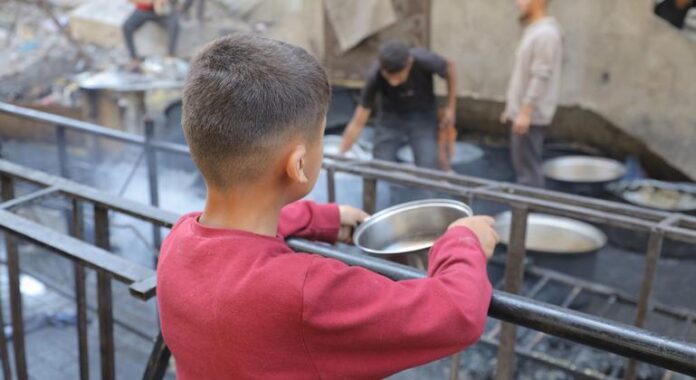
Despite insecurity and access limitations, humanitarian organizations continue efforts to help vulnerable families. Community kitchens across Gaza prepare more than one million meals daily, but that remains insufficient for most of the 2.1 million people in the enclave who rely on aid for basic sustenance.

Source link

Global growth on the path of recession in the midst of trade tensions and uncertainty

0

The projection is below the 2.5% threshold largely considered to signal a global recession.

It also represents a significant deceleration compared to average annual growth rates before the COVID 19 The pandemic when global growth was already moderate.

Threats and volatility

THE report City of montage threats, including commercial policy shocks, financial volatility and an increase in uncertainty.

The increase in trade tensions has an impact on world trade, and recent tariff measures disrupt supply chains and undergo predictability.

“” The uncertainty of commercial policy is at a historic summit“He said,”And this already results in delayed investment decisions and reduced hiring. “”

Each country affected

The slowdown will affect all nations and Trecta expressed continuous concern for developing countries, especially the most vulnerable economies.

Many low -income countries are faced with a “perfect storm” of worsening external financial conditions, unsustainable debt and weakening domestic growth, the agency said.

In terms of regional developments, UNCTAD expects a strong deceleration of the United States economy to a growth of 1% in 2025, largely due to increased political uncertainty composed by recently announced trade measures. Canada is also on the right track to find out a significant deceleration, with 0.7%growth forecasts.

“Overall, the risk of a recession later materializing this year in the North America region has increased considerably,” said the report.

Mixed images for Asia, Africa

The growth of the Southern Asia region will increase by 5.6% “because the inflation is decreasing the way to monetary releases in most of the region”. However, the volatility of food prices will remain a risk and the complexities around the debt will continue to affect savings such as Bangladesh, Pakistan and Sri Lanka.

Meanwhile, growth in Africa should take up to 3.6% this year, although its three largest economies – South Africa, Nigeria and Egypt, which represent almost half of the region’s economic production together – show a mixed image of recovery and challenges.

“Africa is on the front line of the exposure to cascade crises. Moderate growth through the continent is insufficient to create enough good jobs, especially for its young people, ”says the report.

South-South trade

The perspectives are not all dark because the report indicates the growth of trade between developing countries-known as the South-South trade-as a source of resilience.

It currently represents around a third of world trade and offers opportunities for many developing countries.

Faced with the increase in trade tensions and a slowdown in growth, UNCTAD calls for dialogue and negotiation alongside the coordination of stronger regional and global policies.

“The coordinated action will be essential to restore confidence and maintain development on the right track,” says the report.

Originally published at Almouwatin.com