
Located 12 million light-years away and undergoing rapid star formation, edge-on spiral galaxy Messier 82 (M82) is a
NASA’s Webb Pinpoints Millions of Stars Within Cigar Galaxy
Venezuela quake: ‘People still terrified to re-enter what were their homes’
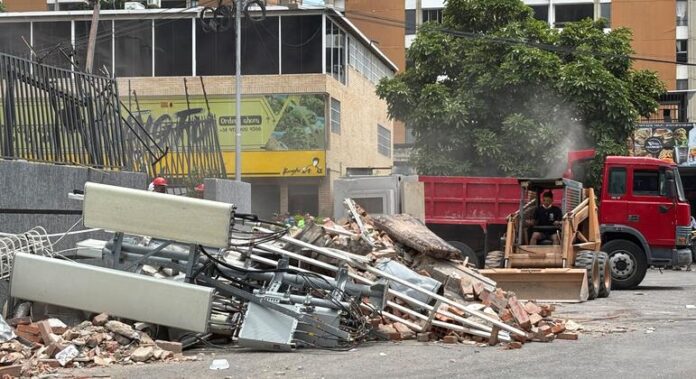
In all, up to 6.8 million people could be impacted by Wednesday’s emergency, based on the latest available population and damage projections, according to the UN agency for migration, IOM.
More than 41,000 people have also been reported missing through an online portal.
And amid reports that rescuers are digging with their bare hands in some quake-hit centres, people “are still terrified to re-enter what were their homes or other structures” and need help, reported UN-partner the International Federation of Red Cross and Red Crescent Societies (IFRC).
“People left everything and nothing is functioning as it should or as it has in these areas. And so, just ensuring that people can literally survive with those essentials is our priority on the ground,” IFRC spokesperson Loyce Pace, Regional Director for the Americas, told journalists in Geneva, via video from Panama City.
Many medical needs are critical. “The overriding priority is to urgently provide lifesaving health care and rescue as many people as possible, because the first hours, as you know, are critical to saving lives,” said Dr Ciro Ugarte, Health Emergencies Director for the Pan American Health Organization (PAHO), the Regional Office for the UN World Health Organization (WHO).
Dr Ugarte described medical teams under pressure to triage mass casualties and provide trauma care for broken bones, burns and other injuries associated with buildings collapsing, particularly in areas where search and rescue operations are ongoing.
The senior medic noted in addition that access remains “very difficult” for all teams working on the ground and particularly those in the health sector, making it difficult to make a thorough assessment of the situation. “We have been struggling to reach all those health facilities,” he explained.
In addition to emergency medical care, people “who have lost everything” need temporary shelter, safe water, sanitation, healthcare, protection and essential relief items, said Zoe Brennan from the UN migration agency, IOM. Later, the recovery will need to be sustained “to help families rebuild their homes, restore livelihoods and recover with dignity”, she insisted.
Aid agencies highlighted how the earthquakes hit an already vulnerable country; millions of nationals live abroad after escaping a longstanding economic crisis and human rights violations that have been the subject of an ongoing Human Rights Council investigation.
Confirming an internet blackout in Venezuela, the UN human rights office, OHCHR, said that “pre-existing restrictions” remained in place in the first few hours after the earthquakes.
“We call, as we’ve called before, to adopt measures to safeguard the digital space and guarantee the right to information and freedom of expression and access to digital media in Venezuela,” said OHCHR spokesperson Marta Hurtado.
Venezuela earthquakes LIVE: Death toll rises amid recovery and rescue efforts
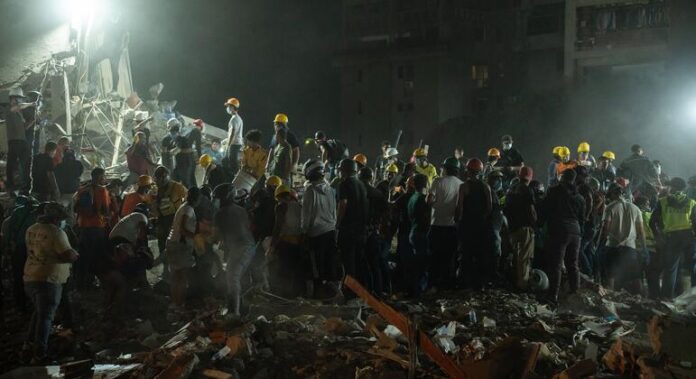
Two deadly earthquakes struck Venezuela less than a minute apart on Wednesday, with magnitudes of 7.2 and 7.5, causing at least 164 deaths and widespread destruction in and around the capital, Caracas as international assistance begins to arrive early Thursday, with UN agencies rapidly deploying aid, support and rescue teams. UN News app users can follow here.
Tabernacle Choir Returns to Hollywood Bowl as Beacon of Hope

Press ReleaseThis article is based on a press release or official communication. The European Times republishes it as a public service.
The Tabernacle Choir and Orchestra at Temple Square, in collaboration with the O.C. Tanner Gift of Music Trust, performed two nights at the iconic Hollywood Bowl in Los Angeles, California, on June 24–25, 2026.
“You could feel the joy and the excitement of everybody,” said Elder Gérald Caussé of the Quorum of the Twelve Apostles, who attended the concerts with his wife, Valérie. “This concert is a way to testify of Christ because caring for those in need is at the center of the gospel.”
Downloadable SOTs & Broll for Journalists
Marking 100 years since the Choir’s first performance at the Hollywood Bowl in 1926, this historic return united music and humanitarian purpose in a celebratory concert benefitting women and children around the world.
One hundred percent of ticket sales revenue from the concert will be donated to CARE, Helen Keller Intl, and The Hunger Project. These trusted charities work with Caring for Women and Children, an initiative led by the Relief Society of The Church of Jesus Christ of Latter-day Saints. The effort focuses on improving the health, education, and well-being of women and children.
|
Temple Square is always beautiful in the springtime. Gardeners work to prepare the ground for General Conference. © 2012 Intellectual Reserve, Inc. All rights reserved. |
1 / 2 |
Download Photos
The Church will match the revenue from concert ticket sales, thereby doubling the charitable contributions associated with the event.
Relief Society General President Camille N. Johnson expressed her gratitude for this benefit concert at a press conference prior to Thursday’s performance.
“Thank you for supporting this glorious cause to lift and support women and children everywhere,” said President Johnson. “I know that the hope of these women around the world will be realized because we brought together a beautiful humanitarian cause with the remarkable talent of these good artists.”
“Besides the entertainment we had and the wonderful moments we enjoyed from the concert, it was also benefiting. It was a double whammy of good,” said concertgoer Vincent Neglia after the show. “We had a good time, but also did something a little bit more meaningful.”
|
Temple Square is always beautiful in the springtime. Gardeners work to prepare the ground for General Conference. © 2012 Intellectual Reserve, Inc. All rights reserved. |
1 / 2 |
Download Photos
Watch parties of these concerts will continue to be held over the next few days around the United States, and many will be joined with a service project. President Johnson shared how a watch party in Honolulu encouraged attendees to bring food, toothbrushes, and other items to be donated to the homeless in their communities.
“This concert is not just a one-time event; it’s really a call to action and an invitation to identify the needs of those in our own community that could use our help, with an emphasis on blessing the lives of women and children,” said President Johnson.
The concerts were sponsored by the O.C. Tanner Gift of Music Trust, and its president Scott Sperry knows the power of music.
“Music has the power to heal, to bring hope and unite people in ways that few things can,” Sperry said. “It is our collective desire that these concerts will inspire hope, joy and peace.”
Hollywood-Bowl
Elder Gérald Caussé of the Quorum of the Twelve Apostles and his wife, Valérie, applaud during The Tabernacle Choir’s concert at the Hollywood Bowl on Thursday, June 25, 2026, in Los Angeles, California.2026 by Intellectual Reserve, Inc. All rights reserved.
Elder Caussé extended an invitation to all who watch the concert.
“Listen to this music with the spirit of the Lord and embrace the values that will be exemplified in the music — values of peace, values of love, values of hope,” said Elder Caussé.
He continued, “We hope everybody will find a renewed hope in their lives, that they can walk the way the Lord has encouraged us to walk.”
The Music
The Choir was joined by guest artists Donny Osmond, David Foster, Katharine McPhee, Daniel Emmett, Stephanie J. Block, Sebastian Arcelus and the Bonner Family. Each artist performed selections from their own musical and professional repertoire.
Osmond sang “Close Every Door to Me” and “Any Dream Will Do” from “Joseph and the Amazing Technicolor Dreamcoat,” performed his more recent song “Start Again,” and joined a children’s choir from Los Angeles for “I Am a Child of God.”

Hollywood-Bowl
Donny Osmond performs “Any Dream Will Do” with a children’s choir from Los Angeles during the Hollywood Bowl on Wednesday, June 24, 2026.2026 by Intellectual Reserve, Inc. All rights reserved.
“It was a night that I will never forget,” said Osmond. “I’ve had the opportunity to work with The Tabernacle Choir probably five times now, but I’ve got to tell you, last night was the ultimate.”
“I feel like anytime I hear beautiful music, it connects me straight to God, and I feel it in my whole body and my heart. Tonight was beautiful,” said attendee Megan Worsley following the show.
“If you take one word out of all the excitement of last night, it’s a word of hope and the world needs that right now,” said Osmond. “I love that the Church is giving people hope.”

Hollywood-Bowl
Donny Osmond performs “I Am a Child of God” with a children’s choir from Los Angeles during the Hollywood Bowl on Wednesday, June 24, 2026.2026 by Intellectual Reserve, Inc. All rights reserved.
“The Prayer” from “Quest for Camelot” was performed by McPhee, Emmett, the Choir and Orchestra, and Foster, who composed the song.
Foster and McPhee also shared “Somewhere” from “West Side Story.”

Hollywood-Bowl
David Foster and Katharine McPhee talk with the audience during the Tabernacle Choir at Temple Square’s concert at the Hollywood Bowl in Los Angeles, California, on Wednesday, June 24, 2026.2026 by Intellectual Reserve, Inc. All rights reserved.
Block and the women of the Choir sang “The Story Goes On” from the Broadway musical “Baby.” She and Arcelus (her husband) served as the show’s emcees and performed “It Takes Two” from “Into the Woods.” They also joined the Choir in singing “It Is Well with My Soul.”
Block thanked those in attendance for their willingness to support the benefit concert.
“You are truly making a difference in childhood nutrition, mortality rates, clean water, medical services, and new mother education,” said Block. “It takes a village to make a difference. Thank you for being that tonight.”

Hollywood-Bowl
Stephanie J. Block and Sebastian Arcelus sing together during the concert with the Tabernacle Choir at Temple Square at the Hollywood Bowl in Los Angeles, California, on Wednesday, June 24, 2026.2026 by Intellectual Reserve, Inc. All rights reserved.
The Bonner Family performed “You’ve Got Soul” and “Great is Thy Faithfulness.”
The Choir shared many songs with the audience and thousands more through watch parties. These included “Call of the Champions” (composed by John Williams for the 2002 Olympics held in Salt Lake City and performed by the Choir), the “Hallelujah Chorus,” “Cindy,” “Praise to the Lord, the Almighty,” “Amazing Grace,” and “Battle Hymn of the Republic.”

Hollywood-Bowl
The Bonner Family sings together during the concert with the Tabernacle Choir at Temple Square at the Hollywood Bowl in Los Angeles, California, on Wednesday, June 24, 2026.2026 by Intellectual Reserve, Inc. All rights reserved.
“This is the cradle of a lot of music that we sing and love from Hollywood,” said Chathun Nielsen, a member of the Choir. “To be here at this iconic place that gives us so much music and to give a little bit of ours, it’s really incredible.”
“We had a wonderful time. It leaves you with a positive attitude that you can go do good in the world,” said Linda Neely, who attended the show.
The “Songs of Hope” tour lasted four years and began in Mexico City, and the Choir has since visited Manila, Atlanta, Fort Lauderdale, Lima, Buenos Aires, and São Paulo. Choir President Michael O. Leavitt believes the world tour fulfilled its purpose.
“It has been a remarkable four years, but I think we delivered on the theme. We actually delivered messages of songs of unity, of peace and of hope,” said Leavitt. “Our entire experience affirms for us that hope is found in Jesus Christ.”
|
Temple Square is always beautiful in the springtime. Gardeners work to prepare the ground for General Conference. © 2012 Intellectual Reserve, Inc. All rights reserved. |
1 / 2 |
Download Photos
Sudan: Window is closing to prevent wider escalation in El Obeid
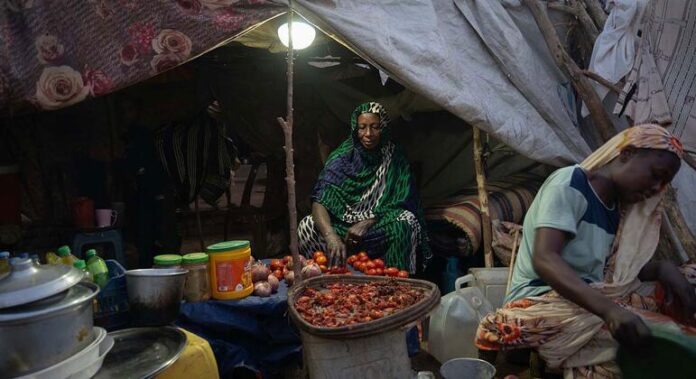
Under-Secretary-General for Political and Peacekeeping Affairs Rosemary DiCarlo briefed the Security Council on latest developments in the ongoing war between the Sudanese Armed Forces (SAF) and former allies the Rapid Support Forces (RSF), now in its fourth year.
Over the past two weeks, drone attacks by the parties have increased significantly in El Obeid, while the RSF have expanded their presence in and around the city.
Appeal for restraint
She recalled that UN human rights chief Volker Türk issued a stark warning that an offensive would lead to “impending human rights disaster”.
Escalation would put hundreds of thousands of civilians at immediate risk of large-scale violence, she said, adding that a full-scale battle would trigger new displacement to areas that were already overstretched.
“Once again, we call for restraint from all parties and urge them to take all necessary measures to respect and protect civilians,” she said.
“The window to avert a wider escalation in El Obeid is rapidly narrowing.”
Fighting in other regions
Beyond El Obeid, the conflict continues across multiple fronts.
The wider Kordofan region remains the epicentre, with intensified fighting around Dilling, Kadugli and Babanusa as the parties contest strategic areas. Recent drone strikes on bridges and transport corridors across Darfur and Kordofan have disrupted humanitarian routes and left communities isolated.
The security situation also remains volatile in White Nile and Blue Nile states with continued clashes in Kurmuk, Geissan and Bau localities. Meanwhile, the human cost is mounting.
Drone use, external interference and regional tensions
“The growing use of drones is making the conflict more unpredictable, more geographically dispersed and more lethal for civilians,” Ms. DiCarlo said.
While the rainy season has traditionally brought a reduction in fighting, continued drone activity means civilians are unlikely to see any respite.
“The parties could not sustain this pace of fighting without the sophisticated weaponry they obtain through external support,” she continued, calling once again for all external actors “to use their influence to help end this war, rather than be complicit in it.”
The war is unfolding amid rising tensions between Sudan and neighbouring States.
Ms. DiCarlo recalled that tensions escalated between Sudan and Ethiopia in May following allegations of interference in each other’s internal security situations. Relations with Chad also remain strained following clashes earlier this year and continued instability on their shared border.
“These tensions risk becoming drivers of further escalation, drawing neighbouring States more directly into the conflict,” she said.
Engagement and consultations
The UN continues to support efforts to reduce violence, including through an initiative by the “Quad” group – comprising the United States, Saudi Arabia, the United Arab Emirates and Egypt — to secure a humanitarian truce, and urges the parties to negotiate in good faith.
She stressed that efforts to achieve a permanent ceasefire must go hand in hand with advancing a sustainable political solution.
Central to that effort is strong partnership among the Quintet – which comprises the African Union (AU), the European Union (EU), the East African bloc IGAD, the League of Arab States and the UN.
The Quintet recently held consultations in Addis Ababa with a broad spectrum of Sudanese civilians. While participants expressed a wide range of views on how a future pollical process should unfold, they endorsed the urgent need for a Sudanese-owned and led political dialogue facilitated by the Quintet.
Meanwhile, the UN Secretary-General’s Personal Envoy for Sudan, Pekka Haavisto, has been engaging with the parties and other actors to encourage restraint and help prevent escalation around El Obeid and elsewhere in the country.
Young lives in danger
Hannan Sulieman, Deputy Executive Director of UN child rights agency UNICEF, also briefed the Council. She said Sudan remains the world’s largest humanitarian crisis and children are paying the highest price in the conflict.
Addressing the escalation in El Obeid, she noted that some 500,000 civilians are at risk and “children are at immediate and growing danger of being killed, injured, displaced, or exposed to other grave violations.”
She warned that the situation has occurred before, pointing to the crisis in El Fasher last year, and “we must not allow history to repeat itself.”
Children caught in the crossfire
Ms. Suleiman said the violence children face in Sudan extends far beyond the battlefield.
The UN has verified more than 5,700 grave violations against children since the war began and more than 5,000 have been killed or maimed, although the real figure is likely much higher.
“Children are being killed in their homes. They are being injured while fleeing violence. They are being caught in crossfire, shelling, drone strikes, and attacks using explosive weapons in populated areas,” she said.
“During the first four months of this year alone, nearly 80 per cent of reported child casualties were linked to drone attacks.”
Ms. Suleiman made four requests to the Council:
First: Immediate action to prevent further escalation, particularly in and around El Obeid
Second: All parties must protect children and the civilian infrastructure they depend upon
Third: Schools, hospitals, water systems, and humanitarian assets must never be targeted.
Four: Help create conditions for peace by calling on the parties to engage with the UN envoy.
“The children of Sudan cannot survive on expressions of concern,” she said.
“They have already lost more than three years of their childhood and cannot afford to lose another.”
EU Message-Scanning Push Reopens Privacy Fight

Member states seek to revive a temporary child-safety tool after Parliament rejected the measure in March
EU governments have moved to revive a temporary legal regime that allows messaging providers to detect child sexual abuse material, reopening a sensitive dispute over child protection, private communications and the balance of power between the Council and the European Parliament.
EU ambassadors agreed on 26 June to advance a temporary extension of the framework, according to reporting by Euronews. The step comes less than three months after MEPs rejected prolonging the interim derogation from ePrivacy rules that had allowed some online services to scan communications voluntarily for child sexual abuse material.
The move is politically delicate because Parliament had already closed its first reading on the file. In March, MEPs voted 311 to 228, with 92 abstentions, against extending the derogation. Parliament said at the time that the temporary regulation would expire after 3 April 2026 because negotiations with the Council had not produced an agreement.
A child-safety gap, or a privacy red line?
The interim regime was created in 2021 as a bridge measure while the EU worked on permanent rules to prevent and combat child sexual abuse online. Its expiry left policymakers divided between those warning of a legal gap in child-protection efforts and those arguing that broad scanning powers risk normalising surveillance of private messages.
That tension has shadowed the wider EU debate for years. Child-safety advocates say platforms need legal certainty to detect and report abuse, including grooming and image-based exploitation. Digital-rights groups and privacy-minded lawmakers counter that scanning private communications, especially where end-to-end encryption is involved, can create serious risks for confidentiality, cybersecurity and fundamental rights.
The European Parliament’s own March statement stressed that its preferred approach had been narrower than the Commission’s proposal, seeking shorter duration and more targeted safeguards. The Parliament vote did not end the wider legislative process, but it hardened the institutional dispute over how far temporary detection powers should reach.
Permanent law still unresolved
The renewed Council push also lands as EU negotiators continue work on a longer-term regulation intended to replace temporary arrangements. That permanent framework is expected to address platform risk assessments, removal obligations, reporting systems and the role of a future EU centre on child sexual abuse.
But the permanent law has proved difficult precisely because it touches two urgent public interests at once: protecting children from serious abuse and protecting everyone’s right to private communication. Any durable compromise will need to show not only that detection measures can work, but that they are legal, targeted, proportionate and independently supervised.
The broader child-protection agenda is already moving on another track. Earlier this week, The European Times reported on a separate provisional EU agreement to strengthen child abuse laws, including provisions covering AI-generated abuse material, sextortion and longer limitation periods for survivors seeking justice.
That parallel file shows there is broad institutional agreement that Europe’s legal framework must adapt to digital forms of abuse. The harder question is whether private-message detection can be designed in a way that protects children without weakening the privacy and security guarantees relied upon by journalists, activists, lawyers, families and ordinary users.
Procedure now becomes part of the story
Because Parliament rejected the temporary extension in March, the latest Council move is not only a policy dispute but a procedural one. If member states press ahead, lawmakers are likely to scrutinise whether the Council is trying to revive a measure that Parliament has already politically refused.
For families affected by online abuse, the institutional friction may look remote from the urgency of removing harmful material and identifying offenders. For privacy advocates, however, the procedure matters because exceptional powers introduced as temporary tools can become entrenched before full safeguards are agreed.
The immediate next stage will depend on whether Council and Parliament can find a route back to negotiation without derailing the permanent CSAM regulation. Until then, the EU remains caught between two responsibilities it cannot credibly abandon: acting against the sexual exploitation of children and preserving the privacy protections that underpin democratic life online.
World News in Brief: Violence displaces thousands in Haiti and Lebanon, Gaza updates, UN food agency delivers in Ebola-stricken DR Congo
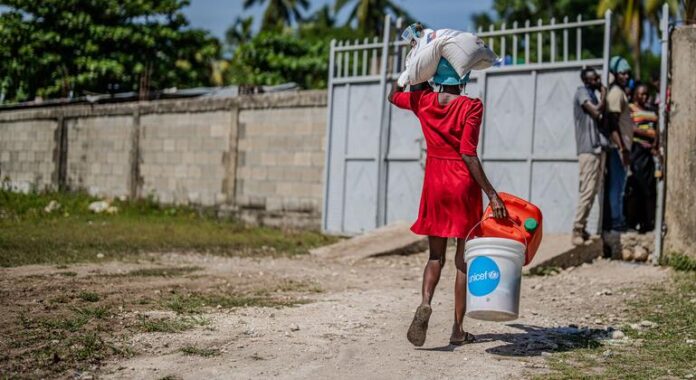
The fighting in Artibonite last week led more than three quarters of the displaced to seek refuge in the commune of Marchand Dessalines.
Forced returns
Armed groups have also clashed in the West department in Cité Soleil since 13 June, displacing more than 5,000 people and forcing the non-governmental organization Médecins Sans Frontières to suspend activities at a maternity facility.
OCHA also notes an increase in forced returns to Haiti, with 24 per cent of all forcibly returned migrants in 2026 being women and nearly eight per cent children.
The UN released $140.5 million in emergency funding in April to reach one million people in Haiti, but OCHA noted that the $880 million Humanitarian Appeal for 2026 is currently only 27 per cent funded, with $240 million received to date.
Lebanon: Displacement continues despite ceasefire
With the recent ceasefire between Israel and Lebanon, the number of people in collective shelters continues to decline as displaced persons return home, OCHA reports.
But, the ceasefire has been fragile, and more than 57,000 people remain in 516 collective shelters.
Many remain hesitant to return to their homes due to fears of renewed hostilities, the presence of Israel Defense Forces and extensive destruction, according to OCHA.
Lifesaving assistance
Despite continued reports of ceasefire violations by the UN Interim Force in Lebanon (UNIFIL), the UN and its partners continue to deliver lifesaving assistance.
Since the escalation of fighting on 2 March, UN partners have provided more than 181,000 blankets, 141,000 mattresses, more than 162,000 hygiene kits, 92,000 menstrual hygiene kits and more than 3.7 million litres of bottled drinking water to communities affected by the conflict.
“We urge all to adhere fully to the ceasefire and refrain from any escalation, particularly during this delicate period of ongoing negotiations,” UN Spokesperson Stéphane Dujarric said on Friday in New York.
Gaza: Clean water, healthcare remain lifelines for civilians
The UN is stepping up water, sanitation and health support in Gaza as civilians continue to face worsening humanitarian conditions.
On Friday, the UN Spokesperson said UN agencies are carrying out pest-control campaigns across populated areas of Gaza, but warned that “skin diseases and other related health conditions remain widespread”.
He shared that the UN Development Programme (UNDP) has delivered five additional water trucks while the UN Children’s Fund (UNICEF) has brought in water treatment chemicals, helping provide more clean water to communities.
“Water trucking remains a backup option,” Mr. Dujarric said, emphasising that repairing Gaza’s damaged water network is essential.
Aid reaches tens of thousands
Humanitarian partners provided psychosocial care, legal aid and case management to nearly 50,000 people last week, while almost 20,000 others received targeted assistance and cash support to help meet basic needs.
There are early signs of agricultural recovery, the UN Spokesperson said, although about 80 per cent of Gaza’s greenhouse infrastructure remains damaged or unusable.
The latest report from UN Palestinian refugee agency UNRWA highlights the scale of the humanitarian crisis, with around 76,000 displaced people sheltering in UNRWA facilities and thousands more relying on the agency for health care, clean water and other essential services.
DR Congo: UN food agency scales up aid as Ebola spreads
As Ebola continues to spread across eastern Democratic Republic of the Congo (DRC), the UN food agency is expanding assistance and logistical support, warning that hunger could undermine efforts to contain the outbreak.
The World Food Programme (WFP) is assisting more than 1.2 million people with nutrition support and humanitarian logistics as the virus has reached 34 health zones across Ituri, North Kivu and South Kivu, where conflict, displacement and severe hunger have left millions vulnerable.
Thirty of the affected health zones are experiencing crisis levels of hunger or worse.
Containing the outbreak
Since late May, the agency has provided more than 36,000 hot meals to patients, caregivers and people under observation in Ebola treatment centres while food rations have reached quarantined communities to help families comply with public health measures.
The agency is also transporting medical supplies and humanitarian workers to outbreak hotspots, but warns that insecurity and funding shortfalls continue to threaten the response.
WFP is seeking $72 million over the next six months to sustain food assistance, air services and logistics operations as the Ebola outbreak continues to grow.
The Future of AI Pentesting: How Artificial Intelligence Is Transforming Cybersecurity
Cybersecurity is evolving faster than ever before. Every day, organizations face thousands of new vulnerabilities, while cybercriminals increasingly
UN envoy urges parties to ‘stay the course’ towards peace in eastern DR Congo
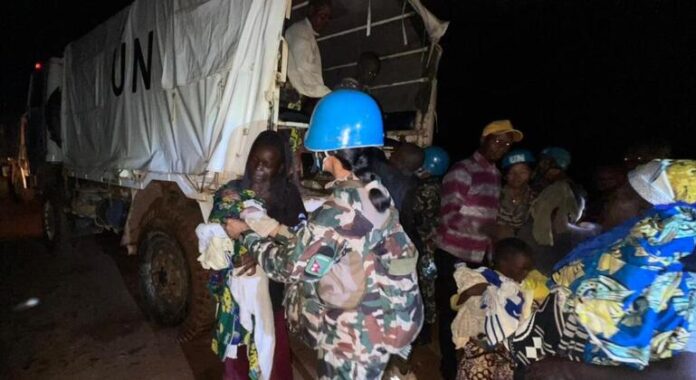
James Swan delivered his first briefing to the Security Council nearly a year after the DRC and Rwanda signed a peace agreement in Washington, DC.
Together with the Doha Framework for a Comprehensive Peace Agreement signed in Qatar and mediation efforts led by the African Union (AU), these processes have created “an agreed pathway” to address the protracted conflict in eastern DRC.
“It is now imperative that momentum be maintained, and that the commitments agreed to by the signatories be fully implemented,” he said.
Fighting continues in key areas
Mr. Swan who was appointed in March to head the United Nations Stabilization Mission in the DRC, known by the French acronym MONUSCO.
He warned that the security situation in the east remains highly unstable and civilians continue to pay a heavy toll amid ongoing clashes in North Kivu, South Kivu and Ituri provinces.
Heavy fighting has continued between the Alliance Fleuve Congo/23rd of March Movement (AFC/M23), supported by Rwandan forces, and the Congolese Army (FARDC) allied with the Wazalendo armed group.
In some areas, the Congolese troops are backed by the Democratic Forces for the Freedom of Rwanda (FDLR), a largely ethnic Hutu armed group founded by former perpetrators of the 1994 genocide against the Tutsi.
Clashes are mainly occurring in two locations in North Kivu, namely Rubaya, an important mining centre, and in the area around Rutshuru, but also in the high plains of South Kivu.
He said the use of offensive drones, artillery and heavy weapons has sharply increased risks to civilians and infrastructure.
Although the AFC/M23 has partially withdrawn from some areas, the group continues to consolidate parallel administrative structures in territory under its control.
Mr. Swan called for the swift deployment of the mechanism for monitoring and verifying ceasefire commitments under the Doha process.
MONUSCO has provided the mechanism with office space in the city of Goma, along with equipment and furniture, and is preparing logistical and security support for ceasefire monitoring missions.
Civilians under fire
The envoy also highlighted the continuing threat posed by the Allied Democratic Forces (ADF). Since the Council last met on the DRC, the armed group has killed 287 civilians in Ituri, including 44 women.
In North Kivu, ADF violence eased temporarily earlier this year but resumed recently in Beni territory, where 66 civilians have been killed, including 17 women and three children.
Since 19 March, MONUSCO has documented 632 civilian deaths linked to armed conflict in North Kivu and Ituri.
During the same period, the UN also documented 1,221 human rights violations, including conflict-related sexual violence committed by armed groups and members of the defence and security forces. A total of 2,968 victims, including 392 women and 378 children, were affected.
MONUSCO has intensified patrols and increased mobile operating bases in areas affected by ADF attacks and around sites for internally displaced persons. Since 19 March, peacekeepers and the Congolese Army have conducted more than 2,000 joint patrols.
The mission has also supported local and provincial peace mechanisms, particularly in Ituri, where progress has been made on implementing a roadmap for dialogue among armed groups in Aru.
Support for both security sector reform as well as disarmament, demobilization and reintegration efforts continue. Between March and June, MONUSCO facilitated the repatriation of 156 former Rwandan combatants and 163 dependents associated with FDLR and other foreign armed groups.
A health worker checks a child potentially infected with Ebola being carried on the back of a caregiver at the Ebola Treatment Centre of Beni, North Kivu province, DR Congo.
Ebola outbreak amid humanitarian crisis
Mr. Swan underscored MONUSCO’s commitment to implement its mandate despite the liquidity crisis hitting UN peace operations at a time when needs are surging in the DRC.
The humanitarian situation remains grave, with nearly 27 million people — more than a quarter of the population — experiencing food insecurity. A $1.4 billion humanitarian plan to assist 7.3 million people this year is just over 53 per cent funded.
The situation is further compounded by the Ebola outbreak declared on 15 May which is unfolding in an area affected by active conflict and in urban settings with overstretched health services, thus posing significant risks of further spread.
UN support unwavering
Mr. Swan concluded his briefing by urging all parties to the Washington and Doha agreements “to stay the course toward a durable peace.”
He also reiterated calls made by the UN Secretary-General for all parties to fully comply with two Security Council resolutions which reaffirm respect for the sovereignty, independence, unity, and territorial integrity of the DRC.
“MONUSCO’s support for the aspirations of the Congolese people for sustainable peace, security and development remains unwavering,” he said.
Brussels Tightens the Gate on Strategic Investment

New EU rules make foreign investment screening mandatory across the bloc while keeping final decisions in national hands
The European Union has published updated rules for screening foreign investments, marking a significant shift in how the bloc watches over strategic sectors such as digital infrastructure, energy, transport, critical raw materials and advanced technologies. The framework aims to close gaps between national systems, improve coordination with the European Commission and give investors clearer procedures, while leaving member states with the final say over whether a deal can proceed.
The new regulation appeared in the Official Journal of the European Union on Friday, 26 June, as Regulation (EU) 2026/1386. It will enter into force 20 days after publication and will replace the EU’s 2019 foreign direct investment screening framework after an 18-month transition period.
In practical terms, the measure turns investment screening from a partly uneven national practice into a mandatory EU-wide obligation. All member states will have to operate a screening mechanism that meets minimum standards, including transparency, non-discrimination, confidentiality, access to appeal and safeguards against circumvention.
Economic Openness Meets Security Concerns
The reform reflects a broader change in EU economic policy. Brussels continues to describe foreign investment as important for growth, jobs and innovation, but it is also increasingly concerned that control over key infrastructure, data systems, technologies or supply chains can become a security and public-order issue.
The Commission says the revised system is designed to make Europe “better equipped” to identify and collectively address risks linked to foreign investments. Its own investment screening guidance says the update builds on more than 1,200 transactions reviewed under the existing framework, as well as lessons from the COVID-19 pandemic, energy disruption, technological rivalry and geopolitical tension.
The rules introduce a common minimum scope for sectors that must be examined. These include sensitive technologies, critical raw materials, energy, transport, digital infrastructure and other areas where a takeover or controlling investment could affect security or public order across more than one member state.
They also extend scrutiny to some intra-EU transactions where the investor is based inside the bloc but is ultimately owned or controlled by a non-EU individual or entity. That provision is intended to prevent sensitive acquisitions from escaping review through corporate structures that obscure the real source of control.
A Stronger Commission, But Not a Single EU Veto
The regulation strengthens the Commission’s coordinating role but does not create a central EU authority with power to block deals across the bloc. National governments will still make the final decision on transactions in their territory.
That balance is politically important. Several member states have long guarded their authority over national security, industrial policy and public order. At the same time, fragmented national rules have created uncertainty for companies and the risk that investments with cross-border effects might be assessed too narrowly.
The new system seeks to reduce that gap through better information exchange, more consistent deadlines, shared digital tools and cooperation between screening authorities. It also allows more attention to unnotified transactions and complex ownership structures, both of which have become central concerns in the EU’s economic security debate.
For businesses, the change means that acquisitions in strategic sectors are likely to require earlier regulatory planning, more disclosure and closer attention to parallel filings in multiple member states. For citizens, the question is whether the new framework can protect essential services and democratic resilience without becoming opaque, discriminatory or protectionist.
Transparency Will Decide Its Credibility
The human-rights and rule-of-law dimension of the reform lies in procedure. Investment screening can protect public interests, but it can also become a closed administrative process with serious consequences for workers, communities, consumers and smaller businesses if decisions are poorly explained.
The regulation’s requirements on published guidance, access to recourse and equal treatment of foreign investors are therefore not minor technical points. They will shape whether the system is viewed as a legitimate public-interest tool or as another layer of unpredictable economic nationalism.
The reform also lands in a wider EU push to reduce strategic dependence. The European Times has recently reported on how Brussels is trying to turn China-related trade pressure into new policy instruments, part of the same broader effort to make the single market less vulnerable to coercion, supply shocks and hidden control over strategic assets.
The coming 18 months will show how far member states are willing to align their national systems in practice. The regulation gives them a shared floor, not a fully centralised regime. Its success will depend on whether capitals use that floor to build predictable, rights-respecting scrutiny, or whether old differences in thresholds, timing and political discretion continue to shape Europe’s investment landscape.
