Sunday, September 20, 2026
Home Blog Page 48

Venezuela quake disaster: UN urges collective effort to help victims

0
Venezuela quake disaster: UN urges collective effort to help victims

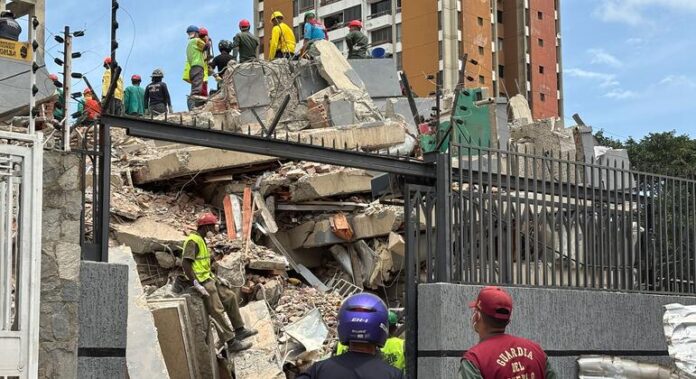
At least 164 people have been confirmed dead and 971 were injured after the powerful tremors hit northern areas late Wednesday less than one minute apart. It is not yet known how bad the situation is in the worst-hit state of la Guaira.

According to the US Geological Survey, the first earthquake measured 7.2 on the Richter Scale. Its epicentre was near the city of San Felipe, home to some 220,000 people. The second quake was registered at 7.5 magnitude and was reportedly the strongest tremor to hit the country in more than 125 years.

Responding to the emergency, the UN aid office, OCHA, announced the rapid deployment of Urban Search and Rescue Teams from across the international community through the International Search and Rescue Advisory Group. 

“I’m in constant contact with our team in Caracas, led by Humanitarian Coordinator Gianluca Rampolla, to ensure a swift and effective response,” said UN emergency relief chief, Tom Fletcher. “He has spoken this morning to the interim President, and we are assessing urgently what is needed. Our team in Venezuela is working with the authorities to identify priorities.”

Here’s the latest reaction from UN agencies:

UN aid coordination office (OCHA):

“Devastating Venezuela earthquakes. I’m in close contact with our team in Caracas to ensure full and urgent response, including search and rescue support and emergency relief for survivors. International solidarity coming in. We’ll need all hands on deck.” – UN emergency relief chief Tom Fletcher @UNReliefChief

UN World Food Programme (WFP): 

“My thoughts this morning are with the victims of the earthquakes in #Venezuela. All our solidarity with the Venezuelan people. WFP is prepared to provide assistance and support response efforts to quickly reach communities. We are with you.” – Acting Executive Director Carl Skau @WFPChief

UN migration agency (IOM):

“Heartbreaking news from Venezuela, where two powerful earthquakes struck within moments, lives lost, many injured, and communities affected. IOM is mobilizing with partners to assess needs and support those impacted. Swift international support is critical to respond.” – Director General Amy Pope @IOMchief

UN Office for Project Services (UNOPS):

“UNOPS stands with the people of Venezuela. We are ready to support rapid response efforts wherever needed.” – Executive Director Jorge Moreira da Silva @UNOPS_Chief

UN refugee agency (UNHCR):

“Deeply saddened by the earthquake that has struck Caracas. I stand in solidarity with all those affected by the loss of loved ones, injuries, and damage to homes and communities. UNHCR stands ready to support response efforts in coordination with the authorities and partners.” High Commissioner for Refugees Barham Salih @BarhamSalih

Source link

Ukraine Protection Plan Moves Past Emergency Mode

0
Ukraine Protection Plan Moves Past Emergency Mode

Brussels seeks another year of legal certainty for displaced Ukrainians, while tying some new arrivals to Ukraine’s wartime exit rules

The European Commission has proposed extending temporary protection for people fleeing Ukraine until 4 March 2028, giving millions of displaced people another year of residence, work and welfare rights in the EU. The move offers reassurance to families already rebuilding lives across Europe, but it also marks a more complicated phase in the bloc’s response: protection is being prolonged, while future rules are being shaped by Ukraine’s long war, labour needs, military obligations and the question of when return can be safe and voluntary.

The proposal, announced in Brussels on Friday, would prolong the EU’s temporary protection system by one year beyond its current expiry date of March 2027. The European Commission said the measure was intended to provide “legal certainty, stability and predictability” while Russia’s war continues to make conditions in Ukraine volatile.

Temporary protection was activated in March 2022, days after Russia’s full-scale invasion, and became one of the EU’s largest collective protection measures. It allows eligible people fleeing Ukraine to live, work, study and access essential services in member states without going through ordinary asylum procedures.

A lifeline for millions

The scale remains substantial. According to Eurostat’s latest monthly data, 4.37 million non-EU citizens who fled Ukraine were under temporary protection in the EU at the end of April 2026. Ukrainian citizens made up almost all of that group, with adult women accounting for 43.4%, adult men 26.7%, and minors nearly one third.

Those figures show why the extension is not merely administrative. For families, it affects school enrolment, rental contracts, medical treatment, employment, language learning and the ability to plan beyond the next renewal deadline. For host countries, it shapes public services, labour markets, local integration programmes and housing pressure.

The Commission’s proposal also comes after EU member states previously agreed to extend protection until March 2027, a decision covered by The European Times as a rare point of unity in Europe’s migration debate. Friday’s proposal suggests that unity still holds in principle, but it now sits alongside harder questions about long-term status and Ukraine’s wartime capacity.

A narrower rule for some new arrivals

The most sensitive part of the proposal concerns newly arriving people who are not authorised by Ukrainian authorities to leave Ukraine because of military obligations. The Commission said temporary protection should not, as a rule, be granted to that category.

That language reflects a shift from the emergency logic of 2022, when the priority was rapid shelter for people escaping a sudden invasion. Four years later, the EU is trying to balance protection with Ukraine’s need to defend itself, while avoiding abrupt changes that could destabilise families already in the bloc.

The distinction will require careful implementation. Member states will need clear procedures, consistent safeguards and reliable information from Ukrainian authorities. Any uncertainty could place border officials, asylum services and displaced people in legally difficult positions, particularly where family unity, medical vulnerability or other protection needs are involved.

Beyond temporary status

The Commission also urged member states to prepare for a coordinated transition out of temporary protection. That means building pathways into longer-term legal residence for those who qualify, while supporting sustainable return and reintegration in Ukraine when conditions allow.

Brussels said it will work with interested member states and Ukrainian authorities on a voluntary return and recovery pilot programme, focused on practical support such as jobs, housing and education. The emphasis on voluntary return is important. For many Ukrainians, return remains a hope rather than an immediate option, especially if homes, schools, hospitals or workplaces have been damaged or if security remains uncertain.

The proposal now goes to the Council, where member states must decide whether to adopt it. Given the number of people affected, the decision will be watched closely not only in Brussels and Kyiv, but also in cities and towns across Europe where Ukrainian families have become part of everyday community life.

The EU’s challenge is to keep protection credible without pretending that temporary measures can carry a protracted displacement crisis forever. Extending the scheme buys time. What Europe does with that time will determine whether displaced Ukrainians are offered a stable future, a dignified return, or another year of uncertainty under a different name.

Source link

Record Heat Turns Europe’s Warnings Into an Emergency

0
Record Heat Turns Europe’s Warnings Into an Emergency

France, Spain and the UK have set or challenged June heat records as health, infrastructure and wildfire risks rise across the continent

Europe’s late-June heatwave has moved from forecast warning to public-safety emergency, with the World Meteorological Organization reporting record temperatures, tropical nights and growing pressure on health systems, schools, transport and energy infrastructure across much of the continent.

The World Meteorological Organization said coordinated heat-health action plans are being mobilised as millions of people face extreme temperatures across western, central and southern Europe. The affected area includes Portugal, Spain, France, Belgium, Luxembourg, the Netherlands, southern parts of the United Kingdom, Germany, Switzerland, Austria, Italy and much of the Balkans.

France recorded its hottest day on record on 24 June, according to WMO’s summary of national data, with an average national temperature of 30.0°C and local highs reaching 43.8°C in western France. Spain recorded its hottest June days on 23 and 24 June, while the UK provisionally set a new June maximum temperature record at Gosport in southern England.

Heat That Does Not Stop At Night

The danger is not only in the afternoon peak. WMO highlighted the growing risk of “tropical nights”, when temperatures remain above 20°C and the body has little opportunity to recover. That matters most for older people, infants, people with chronic illness, outdoor workers, those in poorly insulated homes and people living alone.

Across Europe, authorities have warned of heat stress, forest-fire risk and pressure on public services. France issued top-level alerts across much of the country, while Germany, Switzerland and the UK also faced severe warnings. Schools, transport systems and public events have been disrupted as authorities try to limit exposure during the most dangerous hours.

Satellite imagery from Copernicus Sentinel-3 showed land surface temperatures exceeding 50°C in parts of France and northern Spain on 23 June. Those readings are not the same as air temperatures, but they underline how pavements, roads and buildings can intensify heat exposure in cities and agricultural areas.

A Preparedness Gap

The heatwave is testing Europe’s adaptation capacity as much as its meteorological warning systems. Forecasts and alerts have improved, but warnings alone do not cool classrooms, protect care-home residents, redesign exposed streets or give workers safe alternatives when temperatures become dangerous.

That gap has already become a policy question. A recent European Times analysis noted that extreme heat increasingly touches the right to health, safe working conditions, education and adequate housing. The latest records give that concern immediate force.

Public authorities are now being judged not only by how fast they issue warnings, but by whether the most exposed people can act on them. Access to shade, drinking water, cooling centres, adjusted work hours, insulated homes and reliable local support can determine whether a heat alert remains a warning or becomes a medical emergency.

The heat is expected to shift over the coming days, with WMO’s European regional climate monitoring network warning that temperatures could remain 3°C to 10°C above weekly averages in parts of the region. For Europe, the immediate task is protection. The longer one is harder: treating extreme heat as a foreseeable feature of summers shaped by climate change, not as an exceptional disruption to ordinary life.

Source link

How Online Faxing Makes Document Sharing Easier

0


Office fax machines once controlled when records could move, who could send them, and where staff had to

Source link

Venezuela earthquakes LIVE: UN rapidly deploys aid and rescue teams

0
Venezuela earthquakes LIVE: UN rapidly deploys aid and rescue teams

Two deadly earthquakes struck Venezuela less than a minute apart on Wednesday, with magnitudes of 7.2 and 7.5, causing at least 164 deaths and widespread destruction in and around the capital, Caracas as international assistance begins to arrive early Thursday, with UN agencies rapidly deploying aid, support and rescue teams. UN News app users can follow here.

Source link

Methane Rules Put EU Energy Security on the Table

0
Methane Rules Put EU Energy Security on the Table

Energy ministers meet in Luxembourg as pressure grows over importer obligations due from 2027

EU energy ministers are meeting in Luxembourg on Friday with methane rules moving from a technical climate file into a politically sensitive argument over supply security, fossil fuel dependence and the credibility of Europe’s climate law.

The formal agenda of the Transport, Telecommunications and Energy Council is already crowded. Ministers are expected to discuss electricity grids, post-2030 energy policy and the impact of Middle East instability on European energy markets. But an additional public-session item on the “impacts of the methane regulation on EU energy security” gives the meeting a sharper edge.

At issue is whether Europe can enforce tighter methane standards on oil, gas and coal imports without creating new uncertainty for companies signing supply contracts. The debate reaches well beyond compliance paperwork. Methane is a powerful greenhouse gas, and the EU has made its regulation a symbol of climate seriousness. Yet several governments and energy groups argue that some importer obligations are arriving before the systems needed to meet them are fully in place.

A climate law meets supply anxiety

The EU’s methane regulation entered into force in August 2024. It is designed to reduce leaks and emissions in the energy sector, including across global supply chains feeding the European market. The European Commission says the rules focus first on measurement, reporting and verification, because methane cannot be reduced effectively unless emissions are properly detected and quantified.

Under the EU Methane Regulation, importers will face phased obligations. From 1 January 2027, they must show that imported crude oil, natural gas or coal was produced under monitoring, reporting and verification standards equivalent to EU rules, or under recognised high-level methane reporting frameworks. Further reporting and intensity requirements follow in 2028 and 2030.

Those dates matter because Europe remains a major fossil fuel importer even as it tries to accelerate renewables, electrification and energy savings. Since Russia’s full-scale invasion of Ukraine, EU policy has tried to do two things at once: replace Russian fossil fuels and avoid locking in a new pattern of long-term dependence on other suppliers. Methane rules sit directly inside that tension.

Industry wants time, campaigners warn against retreat

Energy industry groups have urged governments to seek a revised implementation timeline, arguing that importers could otherwise be exposed to penalties and legal uncertainty without a realistic path to compliance. Their case is that a non-binding Commission recommendation on enforcement would not be enough to protect companies negotiating large contracts across fragmented national enforcement systems.

Climate campaigners take the opposite view. They argue that delaying sanctions would weaken one of the EU’s most practical tools for cutting near-term warming and improving transparency in fossil fuel supply chains. For them, the real problem is not the ambition of the regulation but the slow creation of national penalty regimes and the risk that energy-security language becomes a route back to fossil fuel dependency.

The argument is made more urgent by Europe’s summer energy anxieties. Ministers are also taking stock of price and supply risks linked to the Middle East, including the possible energy consequences of disruption around the Strait of Hormuz. That context gives governments more room to frame methane enforcement as a security question, but it also raises a harder policy question: whether every crisis should lead Europe to soften rules intended to reduce the long-term risks of fossil fuel reliance.

Europe’s credibility is at stake

Brussels has repeatedly presented methane action as part of its wider climate diplomacy. The EU has backed global efforts to cut methane emissions, while also calling in international forums for a transition away from fossil fuels, stronger renewable deployment and higher energy efficiency. The European Times has previously reported on the EU’s push for global climate action, including methane reduction as part of the broader energy transition.

That makes the Luxembourg discussion a credibility moment. If the EU moves too quickly without workable standards, it risks uneven enforcement and legal disputes. If it retreats too far, it risks telling suppliers that climate obligations can be postponed whenever markets tighten.

The most durable answer may lie between those positions: clearer implementing rules, consistent national enforcement and targeted support for compliance, rather than a broad pause that hollows out the regulation. Europe’s energy security is not only about finding enough gas for the next winter. It is also about building a system in which imported energy is cleaner, better measured and less able to undermine the climate commitments the EU asks others to share.

Friday’s meeting will not settle the whole dispute. But it shows how the next phase of European energy policy will be fought: not over whether climate and security matter, but over how far governments are willing to treat them as the same project.

Source link

From Lebanon to the Strait of Hormuz, a Middle East hanging on fragile peace talks

0
From Lebanon to the Strait of Hormuz, a Middle East hanging on fragile peace talks

Meanwhile, in the Gaza Strip, UN humanitarian operations are continuing despite growing shortages, worsened by Israeli restrictions on imports of materials needed for emergency shelters.

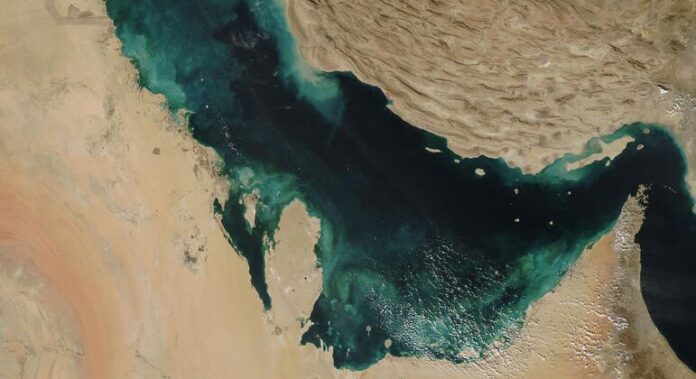
Further east, in the Strait of Hormuz, some 11,000 seafarers are still waiting to be evacuated from the Persian Gulf after disruptions caused by the war launched in late February by the United States and Israel against Iran.

The evacuation operation initiated by the International Maritime Organization (IMO) was suspended on Thursday following a new attack on a vessel in the Gulf of Oman.

Three separate crises, now linked by the same uncertainty: the outcome of peace negotiations between Washington and Tehran.

The signing last week of a Memorandum of Understanding providing for an end to hostilities between the two countries and the reopening of the Strait of Hormuz led to an initial round of talks, which concluded on Monday in Switzerland.

Since then, conflicting statements from the two capitals about the state of the discussions have fuelled uncertainty.

© UNIFIL
UNIFIL peacekeepers on patrol (file)

In Lebanon, a ceasefire under close watch

According to the United Nations Interim Force in Lebanon (UNIFIL), the ceasefire that took effect on 19 June continues to be respected “overall”. UN observers have reported neither new missile launches nor airstrikes since the two projectiles detected on Tuesday.

The calm remains relative. UNIFIL continues to observe violations of Lebanese airspace by Israeli drones, as well as armoured movements, military engineering works and logistical operations by the Israeli army within its area of operations.

On Wednesday, UN peacekeepers also observed three Israeli tanks opening heavy machine-gun fire and firing six 40mm grenades near the coastal road at Al Bayyadah. Two Israeli patrol boats were also spotted in Lebanese territorial waters off Naqoura, where the mission’s headquarters are located.

The strikes appear to have stopped. The military posture, however, remains largely in place.

UN News
Tents housing displaced Palestinians stretch out amidst moored boats and burnt-out structures—a scene that encapsulates the collapse of one of the Gaza Strip’s oldest sources of livelihood. (file)

In Gaza, an emergency that shows no signs of easing

In the Gaza Strip, United Nations humanitarian agencies describe a crisis that continues to worsen.

The Kerem Shalom crossing remains the only operational entry point for cargo destined for humanitarian organizations. Each day, UN teams collect food, hygiene kits and medical equipment there before transporting them into the enclave.

Last week, health partners provided nearly 240,000 medical consultations across 194 health points. Acute respiratory infections, skin diseases and acute diarrhoea remain the most common illnesses.

But aid operations are facing growing obstacles. Shortages of fuel, generator oil, spare parts, medicines and medical supplies are making it increasingly difficult to maintain health services.

The situation is equally concerning with regard to emergency shelters, despite more than 4,000 households receiving tents, tarpaulins, bedding or financial assistance last week.

“That’s due to severe shortages in shelter materials, linked to import restrictions, limited access to some areas, funding gaps and other challenges,” UN spokesperson Stéphane Dujarric explained.

In the Strait of Hormuz, seafarers still waiting

This regional uncertainty is also at the heart of the Day of the Seafarer, marked on Thursday under the auspices of the International Maritime Organization (IMO).

The agency warned that rising geopolitical tensions — from the Strait of Hormuz to the Red Sea, as well as in the Black Sea and the Sea of Azov — are exposing crews to growing risks even as they maintain the flow of global trade.

After announcing the launch of an evacuation operation for ships and crews stranded in the Persian Gulf, the IMO said it had temporarily suspended its implementation.

According to IMO Secretary-General Arsenio Dominguez, several vessels have already been successfully evacuated. But an attack on a ship in the Gulf of Oman, after it passed through the Strait of Hormuz, prompted the organization to halt the operation in order to verify that “the necessary safety guarantees” remain in place for vessels on its evacuation list, as well as for all ships operating in the region.

The objective, Mr. Dominguez stressed, is to prevent stranded seafarers from “becoming collateral victims of this geopolitical conflict”. The vessel targeted was not part of the IMO-coordinated operation.

In a message marking the Day, UN Secretary-General António Guterres highlighted the human cost of these crises.

“When nations clash, seafarers are often caught in the crossfire. Recent events in the Strait of Hormuz have seen tens of thousands of seafarers stranded while working far from home to ensure the supply of fuel and food to the entire world,” he said. “Seafarers must never be victims or pawns of geopolitical conflicts.”

From Lebanon to Gaza and the Strait of Hormuz, the fronts have frozen without the region truly emerging from war. The suspension of the IMO evacuation operation is a reminder of how a single incident could still jeopardize the fragile progress made since negotiations between Washington and Tehran began.

Source link

World News in Brief: Ebola prevention, Yemen child deaths, Colombia elections, Japan climate campaign

0
World News in Brief: Ebola prevention, Yemen child deaths, Colombia elections, Japan climate campaign

An outbreak declared in May in the Democratic Republic of the Congo has infected more than 1,000 and killed nearly 300. 

Emergency Relief Coordinator Tom Fletcher announced the funding, provided through the UN Central Emergency Response Fund (CERF), on Thursday. 

It will support strengthening surveillance, laboratory capacity, case management, and infection prevention and control in Burundi and South Sudan, both of which are at risk of cross-border transmission. 

Step up funding 

UN agencies and humanitarian partners continue to respond to the outbreak inside the DRC, where more than 51,000 people have received food assistance since the outbreak was declared and containment measures have disrupted trade, reduced food availability and driven up prices in affected areas. 

Even as support from the WHO and the Africa Centres for Disease Control (CDC) has increased laboratory capacity, the UN reiterated its call on Thursday for donors to increase support so that humanitarians can continue to provide life-saving assistance. 

UNICEF mourns five children killed in Yemen 

The UN child rights agency UNICEF expressed condolences on Thursday after five children were killed and seven others injured by an explosive ordnance in the village of Raybi in Yemen. 

“No child should ever lose their life, suffer injury, or live in fear because of the deadly remnants of conflict,” the agency wrote in a statement. 

The incident serves as a reminder that children displaced by conflicts face increased risk from landmines, unexploded ordnance and other explosive remnants of war, according to UNICEF. 

In response, the agency is calling for stronger efforts to protect children from explosives, faster removal of explosive remnants of war, expanded mine-risk education and sustained support for survivors and their families. 

“Every child deserves to grow up safe from harm,” the statement said. 

Secretary-General applauds Colombia for elections 

UN Secretary-General António Guterres commended the people of Colombia on Thursday for the peaceful conduct of the country’s presidential elections. 

Presidential candidate Ivan Cepeda conceded to Abelardo de la Espriella on Wednesday, following a contentious election whose results were initially disputed by incumbent President Gustavo Petro. 

UN ready to work with incoming administration 

In his statement, the Secretary-General welcomed the strong voter participation in the second round of the elections and acknowledged authorities’ efforts to ensure a secure and orderly process. 

He added that the UN is ready to work with the incoming president to continue supporting nationally led efforts to support peace, security, sustainable development and prosperity for the Colombian people. 

“The Secretary-General hopes that all political actors will work together to further build trust across the country,” UN Spokesperson Stéphane Dujarric said on Thursday in New York. 

Japan campaign seeks to turn climate ‘silent majority’ into a collective voice

A new campaign in Japan launched by the United Nations Information Centre (UNIC) Tokyo and 136 local media partners aims to transform widespread public support for stronger climate action into a more visible and influential movement. 

The initiative builds on global survey findings showing that nearly 89 per cent of people want their governments to take more ambitious climate measures, but many mistakenly believe they are in the minority.

Running from 25 June through the end of 2026, the project – I am one of the 89% who want to stop global warming – will amplify messages from public figures and people across Japanese society through social media, websites and events. 

More than 30 contributors have already joined the campaign, including the classical violinist and UN Messenger of Peace MIDORI, World Food Programme (WFP) Goodwill Ambassador Anne Watanabe – a leading fashion model, actress and singer, and UNESCO Goodwill Ambassador Naomi Kawase, a film director.

The campaign comes as Japan faces another exceptionally hot summer, with temperatures already exceeding 35°C in some regions and forecasts predicting above-average heat nationwide. 

Citing Secretary-General António Guterres’ recent warning that the climate and energy crises share a common origin in fossil fuels, the initiative calls on people to speak out together for stronger climate action and help turn the concerns of the global majority into a powerful collective voice.

Read the full article on UN Climate Action.

Source link

Brussels Targets Cloud Gatekeepers – news

0
Brussels Targets Cloud Gatekeepers – news

The Commission says AWS and Azure may fall under Europe’s toughest digital market rules as cloud infrastructure becomes central to AI and business dependence

The European Commission has taken a significant step toward bringing Amazon Web Services and Microsoft Azure under the Digital Markets Act, arguing that the two cloud platforms may function as gatekeepers in Europe’s digital economy even though they do not meet the law’s usual numerical thresholds.

In a same-day preliminary finding published on 25 June, the Commission said it had informed Amazon and Microsoft that their cloud computing services should be designated as gatekeepers under the DMA. The decision is not final. Both companies can inspect the case file and respond before Brussels decides whether to impose the full set of obligations.

Cloud moves to the centre of EU tech policy

The Commission’s preliminary position on AWS and Azure marks a shift in how Europe views digital power. Cloud services are no longer seen only as background infrastructure. They now underpin artificial intelligence, public administration, finance, healthcare, retail, manufacturing and many of the services European citizens use every day.

Brussels argues that AWS and Azure act as important gateways between businesses and customers in the EU. That matters because companies that build around one cloud ecosystem can face high switching costs, technical lock-in, and practical barriers to interoperability with rival services.

The Commission opened cloud market investigations in November 2025 to assess whether Amazon and Microsoft should be covered by the DMA despite falling below the standard thresholds for gatekeeper designation. Those investigations also examined whether existing DMA obligations are strong enough to deal with cloud-sector practices such as tying, bundling, restricted access to data and obstacles to interoperability.

A preliminary finding, not a final ruling

The legal posture is important. Amazon and Microsoft have not yet been finally designated as cloud gatekeepers. The Commission’s finding begins the next stage of due process, giving both companies the chance to challenge the evidence and argue that their services should not fall under the regime.

If the Commission confirms its view, AWS and Azure would join the list of core platform services subject to DMA duties. The rules are designed to stop the largest digital platforms from using entrenched market positions to disadvantage competitors or business users. In practice, that could mean closer scrutiny of interoperability, self-preferencing, contractual terms and access conditions for companies that depend on cloud infrastructure.

The Brussels Times reported that AWS and Azure are the largest and second-largest cloud providers in the EU and together account for about 60% of the market, while also noting early objections from both companies. Amazon criticised what it described as an unnecessary regulatory layer, while Microsoft questioned why Google Cloud was not included in the same study, according to the Brussels-based outlet.

Europe’s AI ambitions depend on the cloud

The case lands at a sensitive moment for Europe’s digital strategy. EU institutions are trying to support home-grown innovation while also limiting dependence on a small number of non-European infrastructure providers. That tension is especially visible in artificial intelligence, where cloud capacity, data access and computing power can determine which companies scale and which remain marginal.

The European Times recently reported on how Europe is trying to turn research and start-up talent into larger technology companies through new innovation funding and sovereignty-focused support. That wider push for European tech champions will be difficult if smaller firms cannot move data, services or workloads between cloud providers on fair terms.

For policymakers, the cloud case is therefore not only about Amazon and Microsoft. It is about whether Europe’s digital economy can remain open enough for new entrants, secure enough for public-interest uses, and competitive enough to avoid reproducing the same concentration that shaped earlier platform markets.

The next decision will carry wider consequences

A final designation would not settle every competition concern in cloud computing. It would, however, bring two of the sector’s most influential actors into a regulatory framework built around contestability and fairness. That could strengthen the position of business users seeking clearer terms and more technical freedom, but it could also trigger a broader dispute over how far Europe should go in regulating infrastructure that is increasingly global, complex and capital-intensive.

The Commission is now trying to draw a careful line: firm enough to prevent structural lock-in, but procedural enough to withstand legal challenge. The outcome will be watched not only by cloud providers, but by every European company, public body and research institution building its future on rented computing power.

Source link

Wiser App Review: Bite-Sized Learning That Actually Sticks 

0


The bite-sized learning app Wiser is quietly building a habit revolution, one book summary at a time. We’ve

Source link