Tuesday, May 5, 2026
Home Blog Page 482

Choose compassion, reject cruelty to end HIV, says top UN rights official

0
Choose compassion, reject cruelty to end HIV, says top UN rights official

In a stark assessment of the current situation of the health crisis, Deputy UN High Commissioner for Human Rights Nada Al-Nashif warned that more than nine million people do not receive treatment, while 4,000 girls and young women contract the virus every week.

A staggering three-quarters of them live in sub-Saharan Africa, she noted, reminding Member States that while HIV is “entirely treatable and preventable…the world is off track in ending AIDS.

Stigma fuelling crisis

“Stigma and discrimination are preventing concrete progress and paving the way for a resurgence of infections,” Ms. Al-Nashif said.

Together, we have the power and the responsibility to change this. When human rights are promoted, health is protected.

Other speakers echoed the need for human rights-based approaches to ensure universal access to treatment. They warned that discrimination and harmful laws targeting marginalized communities hinder access to prevention, testing and care.

Keep rights at the core

Florence Riako Anam of the Global Network of People Living with HIV (GNP+) quoted Nelson Mandela, saying that HIV is “more than a disease – it is a human rights issue.”

In many countries, criminalization, stigma and discrimination based on sexual orientation, gender identity, drug use as well as sex work continue to obstruct HIV response efforts, with deadly consequences.

GNP+, an NGO collecting data on stigma since 2008, has surveyed 100,000 people across 100 countries. The findings: nearly one in four respondents experienced HIV-related stigma.

Break the barriers

To end AIDS for good, we must dismantle the human rights-related barriers that prevent certain populations from accessing the services they need and tackle the deep gender inequalities and underlying inequities that drive starkly different health outcomes,” said Vuyiseka Dubula, Head of Community, Rights and Gender at the Global Fund to Fight AIDS, Tuberculosis and Malaria.

Ms. Dubula, who lives with HIV in South Africa, noted that while global progress has been significant – new infections down by 61 per cent and AIDS-related deaths by 73 per cent in more than 100 countries over the last two decades—there is still much work to be done.

“This is something to be proud of, but we can go even further in the next five years if we really are focused on ending HIV” Ms. Dubula said, referring to Sustainable Development Goal 3 (SDG3) on ensuring healthy lives for all.

Compassion over cruelty

Adeeba Kamarulzaman of the World Health Organization (WHO) Science Council and the Global Council on Inequality, AIDS and Pandemics echoed the need for more compassionate methods in tackling the epidemic.

She pointed to Malaysia, her home country, which once faced a devastating HIV epidemic but has since made significant progress.

In countries decriminalizing drug use, knowledge of HIV status is 15 per cent higher and HIV incidence is five per cent lower, she explained, adding that in places where sex work is decriminalized, infection rates are further reduced by 4.5 per cent.

When we choose compassion over cruelty, when we invest in people instead of punishing them, we save lives,” Dr. Kamarulzaman said.

Persistent discrimination

Erika Castellanos, a transgender woman and Executive Director of Global Action for Trans Equality, spoke of her experience in Belize, where LGBTIQ+ people faced up to 10 years in jail before 2016. Even after the law was overturned, little has changed.

“The stigma, discrimination and institutional barriers persist in the systems that deny us dignity, in the services that exclude us and in the societies that still see us as less than human,” said Ms. Castellanos, who has lived with HIV for 20 years.

“I am here because of the hard work, sweat, blood and tears of countless people, many of whom did not survive this epidemic,” she told the Human Rights Council.

I am alive – because of an HIV response that valued my life.

Source link

Special European Council, 6 March 2025

0
Special European Council, 6 March 2025

Special European Council, 6 March 2025

Source link

Gaza: Israeli aid cut threatens care for most vulnerable, warns UNICEF

0
Gaza: Israeli aid cut threatens care for most vulnerable, warns UNICEF

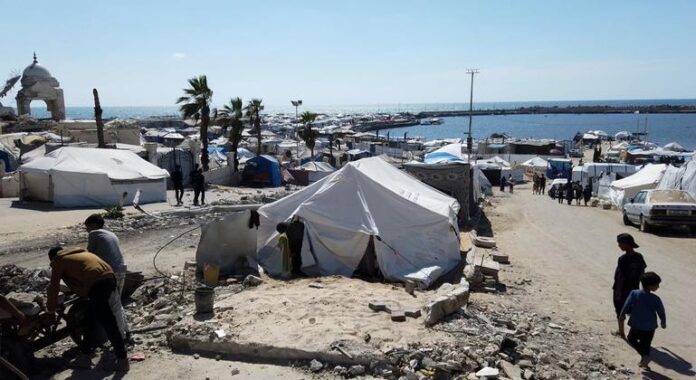
The agency said that despite the huge influx of humanitarian goods into Gaza during phase one of the ceasefire which began on 19 January, it has not been enough to make up for the 15 months of war when supply convoys were frequently blocked, impeded or cancelled by the Israeli military.

Speaking from Gaza, UNICEF’s Rosalia Bollen said that being unable to bring humanitarian relief into the enclave including vaccines and ventilators for pre-term babies “will have devastating real-life consequences” for children and their parents.

“If we’re unable to bring that in, routine vaccination will come to a standstill”, she told UN News. “Neonatal units won’t be able to care for preterm babies, so this is a real-life consequence that we’ll be dealing with very, very soon if we’re unable to resume the aid supplies coming in.”

The UNICEF Communication Specialist said that existing aid supplies have already been largely distributed throughout Gaza.

“The needs are so high that we haven’t been able to stockpile goods…that’s why these latest restrictions are so devastating,” she said, adding that the first phase of the ceasefire wasn’t just a pause in hostilities…it really was a lifeline for families here…The mood here is very depressed; families that I speak with are deeply worried about what the future is going to hold.”

Nutrition gains reversed

The aid blockade comes as the UN aid coordination office, OCHA, reported a slight improvement in dietary diversity during the ceasefire which humanitarians says “is now being reversed” by the aid blockade.

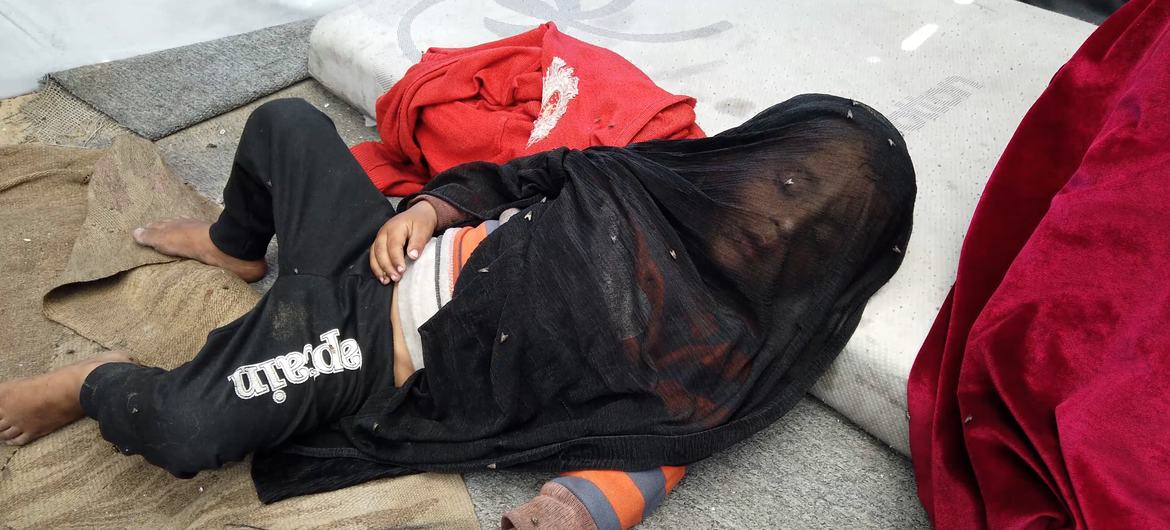
Before the current conflict, acute malnutrition in Gaza was almost non-existent, but today more than 3,000 children and 1,000 pregnant or breastfeeding women have been referred for acute malnutrition treatment.

In a more positive development, OCHA noted that February showed a slight improvement in the number of children and pregnant and breastfeeding women consuming the minimum required food groups.

Citing assessments by nutrition partners, the UN aid office added that about eight per cent of children consumed four or more food groups and there was “a noticeable increase in the consumption of fruits, vegetables, eggs and dairy products”, indicating increased availability at local markets.

The ceasefire between Hamas and Israel had allowed aid organisations such as UNICEF to scale up urgently needed supplies for children and their parents in Gaza. These items included vaccines for routine immunisation, disposable medical supplies for hospitals, along with syringes, gauze and specialised equipment such as incubators, and ventilators to help pre-term babies breathe.

Other fundamental repairs had also been started to rehabilitate smashed public infrastructure, too.

“We had just managed to start increasing water production, especially in the north, ” said Ms. UNICEF’s Ms. Bollen. “We’ve been repairing water wells, we’ve been increasing distribution possibilities. All of that will be coming to a standstill.”


Source link

Advancing European Sovereignty in HPC with RISC-V

0


The DARE (Digital Autonomy with RISC-V in Europe) project will start by designing and developing one processor and two accelerators based on the RISC-V architecture. It will include:

  • A vector accelerator (VEC) for high-precision HPC and emerging applications in the HPC-AI convergence domain;
  • An AI Processing Unit (AIPU) designed for AI inference acceleration in HPC applications;
  • A general-purpose processor (GPP) optimised for HPC workloads in European supercomputers.

RISC-V is an open architecture built on global standards and open-source principles. This openness will enable Europe to develop sovereign HPC technologies, fostering an autonomous and leading European HPC ecosystem. RISC-V also offers an energy-efficient alternative to other microprocessor architectures.

Building on research from EuroHPC JU-funded projects such as the European Processor Initiative (EPI), MEEP, eProcessor, EUPILOT ,and EUPEX, DARE is part of the broad European Union’s strategy to reach European autonomy in strategic hardware technologies by investing and building a diverse technology portfolio including processors, (AI) accelerators, quantum chips and other state of the art hardware components. DARE aims to build prototype HPC and AI systems based on EU-designed and developed, industry-standard chiplets using competitive silicon technology nodes. Moreover, DARE will develop a full RISC-V HPC and AI software stack.

DARE represents a true European collaborative effort. With 38 partners from 13 countries—including many SMEs—this diverse consortium will strengthen the European HPC industry and drive innovation across the continent. The DARE consortium is coordinated by the Barcelona Supercomputing Center (BSC).

Anders Jensen, EuroHPC JU Executive Director stated:

“I am proud to announce the launch of the DARE project which marks a significant milestone for European digital sovereignty. This ambitious initiative will drive innovation in both hardware and software technologies and leverage the full power of HPC and AI to develop secure, efficient and European-led solutions for the future.”

More details

The DARE consortium has been selected following the call  HORIZON-EUROHPC-JU-2022-TECH-03 to establish a Framework Partnership Agreement (FPA) for developing a large-scale European initiative for a HPC ecosystem based on RISC-V. The FPA will run for six years, until 2030.

As part of this FPA, the DARE consortium will oversee the first Specific Grant Agreement (SGA) for the development of European microprocessors based on RISC-V. The DARE consortium will receive European Union funding from the EuroHPC JU with a total budget of up to € 120 million (Horizon Europe funding programme). This will be matched by additional co-funding from the participating states.

More links

Background

The EuroHPC Joint Undertaking (EuroHPC JU) is a legal and funding entity created in 2018 to enable the European Union and EuroHPC participating countries to coordinate their efforts and pool their resources with the objective of making Europe a world leader in supercomputing.     

In order to equip Europe with a world-leading supercomputing infrastructure, the EuroHPC JU has already procured nine supercomputers, located across Europe. Through the EuroHPC Access Calls, European scientists and users from the public sector and industry can benefit from these EuroHPC supercomputers, which rank among the world’s most powerful.    

The EuroHPC JU is also deploying a European Quantum Computing infrastructure, integrating diverse European quantum computing technologies with supercomputers. As part of this effort, the JU has recently procured five quantum computers, currently being deployed in Poland, Czechia, France, Germany, and Spain, with additional systems coming soon to Italy, Luxembourg, and the Netherlands. 

In parallel, the EuroHPC JU is investing in research and innovation projects to develop a full European supercomputing supply chain: from processors and software to applications to be run on these supercomputers and know-how to develop strong European HPC expertise.  

Recently reviewed by means of Council Regulation (EU) 2024/1732, the EuroHPC JU received a new mandate to develop and operate AI factories. These comprehensive open AI ecosystems located around EuroHPC supercomputing facilities will support the growth of a highly competitive and innovative AI ecosystem in Europe. In December 2024, the EuroHPC JU selected the sites that will host the first European AI Factories, set to be deployed in 2025 across Europe: in Finland, Germany, Greece, Italy, Luxembourg, Spain and Sweden. 


Source link

Horizon Europe Cluster 5 Info Day: registration open

0
Horizon Europe Cluster 5 Info Day: registration open

The event will provide prospective applicants with an opportunity to learn more about the research and innovation topics and funding opportunities to be proposed in the new Horizon Europe Cluster 5 work programme (budget: €1.2 billion). 

Horizon Europe is the EU’s flagship programme for supporting research and innovation projects, with ‘Cluster 5’ covering the themes of Climate, Energy and Mobility. 

[See ‘background’ below for more on the Horizon Europe programme structure].

Brokerage event

Following the Info Day, an onsite brokerage event will take place in the same premises at 16:00 to 19:00. Organised by GREENET, the network of Cluster 5 National Contact Points (NCP), the brokerage event will facilitate networking opportunities for prospective project partners. 

Participants looking for partners will have the possibility to present their organisation and project ideas at a plenary pitching session and in dedicated bilateral meetings organised by topic.

Cluster 5 work programme 2025

The publication of the Cluster 5 work programme 2025 is expected in April. The work programme text will be made available through a pre-publication a couple of weeks before the official publication date. 

As the work programme will be made public ahead of the event, the event aims to be more interactive than in previous years. Onsite participants will have an opportunity to address questions in person to the speakers, or via an interactive Slido Q&A that will be available also for online attendees. The Slido Q&A platform will be accessible as soon as the work programme is published, allowing for submission of questions in advance of the event.

For more information, the full programme and registration link, visit the event website 


Background

Horizon Europe is structured into three main pillars, for instance Pillar I Excellent Science and Pillar III Innovative Europe. While Pillar I covers fundamental research funded by the European Research Council and Marie Sklodowska-Curie Actions, Pillar III is dedicated to improving Europe’s innovation ecosystem and to commercialising innovation. Under Pillar II EU funding is provided to tackle global challenges and to boost Europe’s industrial competitiveness. That’s where the clusters come in.

The structure of Horizon Europe lists a total of six clusters that are broken down into individual expected impacts around overarching themes. The six clusters are

  • Cluster 1: Health
  • Cluster 2: Culture, Creativity & Inclusive Society
  • Cluster 3: Civil Security for Society
  • Cluster 4: Digital, Industry & Space
  • Cluster 5: Climate, Energy & Mobility
  • Cluster 6: Food, Bioeconomy, Natural Resources, Agriculture & Environment

The European Climate, Infrastructure and Environment Executive Agency (CINEA) manages the funding under Cluster 5, which is worth €10.8 billion.

Source link

World News in Brief: Guterres convenes Cyprus summit, violence continues in southern Lebanon, UN aid hub in Chad expands

0
World News in Brief: Guterres convenes Cyprus summit, violence continues in southern Lebanon, UN aid hub in Chad expands

UN Spokesperson Stéphane Dujarric told journalists at the regular daily briefing in New York that the leaders of both the Turkish Cypriot and Greek Cypriot communities would join UN chief António Guterres along with guarantors Greece, Türkiye and the United Kingdom, at the UN in Geneva.

The Mediterranean island was divided between north and south in 1974 after years of hostilities. The UN has led negotiations towards a settlement, with the Security Council authorising a peacekeeping force in 1964, UNFICYP.

In the absence of a lasting agreement, the force remains on the island to supervise ceasefire lines, a buffer zone and to support humanitarian activities.

Previous talks

Mr. Guterres attempted to bring the two sides together in 2017 at the Swiss Alpine resort of Crans-Montana but talks ultimately broke down. A further push was made in 2021.

The meeting later this month will take place “in the context of the Secretary-General’s good offices’ efforts on the Cyprus issue,” in in line with his commitment to continue efforts made last October. 

“The informal meeting will provide an opportunity for a meaningful discussion on the way forward on the Cyprus issue,” Mr Dujarric said.

“The United Nations remains committed to supporting the Cypriot leaders and all Cypriots.”

Lebanon: Fighting continues in peacekeepers’ area of operations

The UN Interim Force in Lebanon (UNIFIL) reported more gunfire in their area of operations on Wednesday, as well as sporadic military activity by Israeli forces, the UN Spokesperson said on Wednesday.

As of now, the Lebanese army have deployed to more than 100 locations in southern Lebanon – between the Litani River and the ‘Blue Line’ of separation between the two countries – with the support of UN peacekeepers.

Unexploded ordnance

The latest conflict has left south Lebanon, especially areas close to the Blue Line, heavily littered with unexploded ordnances, “posing very serious risks to civilians”.

The UN Interim Force in Lebanon (UNIFIL) deminers continue to assist Lebanese authorities in finding and destroying these explosive remnants. 

“Our peacekeepers have continued to discover caches of unauthorised weapons and ammunitions, including yesterday, a number of them in our Sector West, and all of them were duly reported to the Lebanese Armed Forces,” Mr. Dujarric explained.

Between 21 October 2024 and 26 February, 44 unexploded ordnances and six improvised explosive devices were discovered and destroyed.

Humanitarian work continues

At the same time, UNIFIL continues to facilitate humanitarian missions in their areas of operation, with over 60 missions having taken place since the cessation of hostilities, facilitating the return of displaced people.

Separately, the mission reports that 31 arrests have been made in connection with the attack on 14 February on a convoy near the Beirut airport. 

Mr. Dujarric emphasised the importance that “those responsible for that attack are brought to justice”, with the attack targeting the then Deputy Force Commander of UNIFIL and a number of his companions.

IOM expands humanitarian hub in Chad to aid 220,000 amid Sudan crisis

The International Organization for Migration (IOM) and the International Humanitarian Partnership (IHP) have completed the expansion of a key aid hub in Chad, in a move that will enable aid teams to reach up to 220,000 more in need.

The expanded operational capacity at the hub in Farchana will strengthen cross-border interagency humanitarian operations for Sudan – the world’s worst displacement crisis. 

Since April 2023, more than 11.5 million people have been displaced within Sudan and an additional 3.5 million have fled across borders, including an estimated 930,000 who have crossed from Sudan into Chad.

Nine million in need across Darfur

According to recent figures, nearly nine million people in the Darfur region alone require immediate assistance.

“With the strengthened cross-border operations, IOM has already reached over 82,000 people in Darfur with critical humanitarian aid, and with the expansion of the Farchana hub, we are poised to provide life-saving assistance to an additional 220,000 people in the coming months,” explained Pascal Reyntjens, IOM Chief of Mission in Chad.

“The hub also enables greater collaboration between humanitarian actors, development agencies and the government, which is essential for a comprehensive and sustainable response,” he continued.

The expansion includes office space, living quarters and other infrastructure that will help improve the effectiveness of aid work in hard-to-reach field locations in Sudan.

These enhancements will also enable international and national NGOs and UN agencies to further scale up cross-border operations from Chad into Darfur, where humanitarian needs are rapidly escalating.

Source link

EU and Brazil sign international agreement to fight organised crime and terrorism

0

The agreement was signed today by Commissioner for Home Affairs and Migration, Magnus Brunner, and the Minister of Justice and Public Security of Brazil, Ricardo Lewandowski, in the presence of Europol’s Executive Director, Catherine De Bolle.Brazil has been a key partner for Europol since 2017, with a strong record of operational cooperation across various crime areas, including drug trafficking, cybercrime…

Source link

Frontex signs working arrangement with the European Commission to Strengthen Cooperation on Migration Management

0
Special European Council, 6 March 2025

Today Frontex and the European Commission signed a working arrangement that represents a strategic advancement in the EU’s ability to manage migration flows and respond to potential crises with resilience and coordination.

Source link

Syrians’ hopes for a better future depend on justice for the disappeared, Human Rights Council hears

0
Syrians’ hopes for a better future depend on justice for the disappeared, Human Rights Council hears

Yasmen Almashan, a founding member of the Caesar Families Association, lost five of her six brothers between 2012 and 2014 during the early years of the Syrian civil war.

Today, Ms. Almashan advocates for the truth about what happened to Syria’s more than 130,000 missing persons. This quest would be greatly helped by the creation of a national transitional justice policy for Syria, by the country’s caretaker authorities, she told the Human Rights Council in Geneva.

“Participation of victims is key for transition justice programmes to succeed and reinforce a culture of human rights in countries which suffer from dictatorships, or which go through transition periods,” she said.

“The victims can facilitate contacts between parts of society and assure an environment of peace and justice in Syria,” she insisted.

Ms. Almashan has previously explained how her second brother was arrested in March 2012 and then tortured in a detention centre. He was identified in the Caesar Files – named after a former Syrian military photographer codenamed Caesar.

It was in part thanks to the Syrian NGO’s persistent lobbying that the UN General Assembly adopted Resolution 77/301 in June 2023, establishing the Independent Institution for the Missing in Syria and ensuring victim participation in its work.

Addressing past atrocities 

Spearheading renewed calls for transitional justice, UN human rights chief Volker Türk welcomed efforts by Member States to address past atrocities to benefit future generations.

In Guatemala, victim-driven coalitions have secured the conviction of 31 military and paramilitary personnel for crimes against humanity and genocide.

The UN High Commissioner for Human Rights also stressed the importance of an inclusive approach to transitional justice which should be victim-centered, inclusive, gender-responsive and innovative.

Reminding the Council that 2024 saw the highest number of active conflicts since the Second World War, Mr. Türk also welcomed Colombia’s efforts to resolve animosity between parties formerly involved in the country’s decades-long civil war. Measures include offering psychosocial support for victims, addressing land distribution problems, promoting rural development and restoring indigenous territories’ ecosystems.

In Kenya, survivors of sexual violence can advocate for justice through a national network for reparations, the High Commissioner added, while in Chad, victims last year received reparations thanks to the perseverance of civil society groups.

UN Human Rights Council/Marie Bambi

Sofija Todorović, Programme Director, Youth Initiative for Human Rights (YIHR), Serbia, addresses the Human Rights Council meeting on transitional justice.

Empowering young people

Echoing that message, Sofija Todorovic, Programme Director of Serbian NGO Youth Initiative for Human Rights, insisted that young people should not be left out of conversations about building a more just future for their countries.

“It is our duty to stand behind them. We must equip them with the tools and opportunities to create the future they deserve. The rest, they will do themselves,” Ms. Todorovic said.

Genocide prevention calls

Also at the Council on Wednesday, UN human rights deputy chief Nada Al-Nashif warned Member States that international law principles protecting humanity from atrocities were under threat. 

We are living through dangerous times as deep divisions and extreme views feed both conflict and violence” in several regions of the world, Ms. Al-Nashif said.  

Genocide is preceded by “clear patterns of discrimination of exclusion and incitement to hatred based on race, ethnicity, religion or other characteristics,” she said.

Strained global norms

“The global norms that protect us all, starting with the United Nations Charter and the Universal Declaration of Human Rights, are under unprecedented strain,” she continued, stressing that the UN was set up in the aftermath of the Holocaust to avoid another genocide.

Arms sales and transfers, the provision of military, logistical or financial support to parties to conflicts violating international law are “obvious examples” of indicators that states may be contributing to such crimes, she stressed.

“Genocide happens when humanity’s moral compass fails, when hateful ideologies proliferate, and when the dehumanization of an entire group of people is allowed to take root and to spread,” Ms. Al-Nashif said.  

Together, let’s move towards a world in which genocide, and other atrocity crimes are inconceivable. Or if all else fails, then they are punished.” 

Source link

Drought and dire hunger loom in Somalia, warns UN food agency WFP

0
Drought and dire hunger loom in Somalia, warns UN food agency WFP

The East African country faced famine in 2022, but a scale-up in humanitarian assistance helped to avert catastrophe.

Today, food insecurity on the increase once again, with 3.4 million people already acutely food insecure. That number is projected to rise by a full million, to 4.4 million between April and June – nearly a quarter of the population.

According to the international food security classification system IPC, acute hunger is level three on a scale of one to five, with level five denoting famine and level four, severe acute malnutrition.

High risk of mortality

WFP believes that about 1.26 million children under the age of five need immediate support. Of that number, 466,000 will likely be severely acutely malnourished this year and at risk of death.

We have learned in Somalia from past experience that that delays can be deadly, and we need resources to provide support to these very vulnerable groups,” said WFP spokesperson Jean-Martin Bauer, speaking from Rome.

He called on donors and partners to increase funding to the country of 19 million people.

Poor harvest

Two consecutive failed crop seasons last year resulted in harvests 45 per cent below-average yields, Mr. Bauer said.

This is linked to consecutive climate shocks in Somalia, where poor rainfall depleted water sources and led to livestock losses.

Weather forecasters predict another drought from April to June, while humanitarians warn that malnutrition is likely to worsen due to disease outbreaks and reduced food access.

WFP has yet to factor in the impact of any funding cuts from the United States but chronic underfunding has forced it to cut back assistance to 820,000 people, down from 2.2 million in 2022.

The agency has also had to downsize its school feeding programme, which was suspended in some states including the South West and Somaliland.

Funding shortfalls

Just 12 per cent of the $1.4 billion overall appeal for Somalia has been funded so far, Mr. Bauer said.

The WFP provides up to 90 per cent of food assistance in Somalia, making it an essential lifeline for thousands of people, including many internally displaced by conflict.

A combination of in-kind food assistance and cash-based transfers is needed to mitigate the worst effects of the crisis, Mr. Bauer stressed, referring to aid coming in the form of goods or services like food packages, shelter and blankets.

“When you are facing a crisis like the one we are worried about in Somalia, we need all types of resources to be put at play to avert the worst,” he said.

Source link