
The President of the Eurogroup, Paschal Donohoe, gave a speech at the Centre for Financial Studies, Goethe University, Germany.
'Shaping tomorrow and navigating uncertainty: the future of the euro area' – speech by the Eurogroup President, Paschal Donohoe, at Centre for Financial Studies, Goethe University

The President of the Eurogroup, Paschal Donohoe, gave a speech at the Centre for Financial Studies, Goethe University, Germany. Source link
Nature, climate, and circular economy projects emerge as winners at the 2025 LIFE Awards

Three outstanding LIFE projects were awarded the LIFE Awards 2025, held as part of European Green Week to recognise excellence in nature conservation, circularity and climate resilience.
The winners were selected from nine finalists in three categories: nature, circular economy and quality of life, and climate action. Together, they represent some of the most creative and impactful initiatives helping to create a greener Europe.
The LIFE Award for Nature went to LIFE Lynx, which brought together conservationists, hunters and local communities to successfully reverse the decline of the Alpine Lynx in the Dinaric Alps. The runners-up in this category were LIFEraisedbogs and LIFE living Natura 2000.
LIFE Lynx also won the LIFE Citizens’ Prize, awarded to the project that received the most public support in an online vote.
The winner of the LIFE Award for Circular Economy and Quality of Life was LIFE POPWAT, which piloted a new nature-based technology to remove hazardous man-made chemicals from contaminated water in Czechia and Poland. The runners-up in this category were LIFE EMERALD and LIFE LANDSCAPE FIRE.
The winner of the LIFE Award for Climate Action was LIFE DESERT-ADAPT, a project combating desertification improving soil quality, improved water retention capacity and improved ecosystem resilience in Italy, Spain and Portugal. The runners-up in this category were NATURAL HVACR 4 LIFE and LIFE Natur’Adapt.
This year a special category was introduced – “Rising Star Recognition” – for projects making a remarkable contribution to the circular economy. This special Award went to LIFE RE-ZIP, a Danish project which aims to replace thousands of tonnes of commercial packaging waste with more environmentally friendly reusable eCommerce packaging. When the project ends in 2026, more than 120 million reusable packages will be in circulation, with 17,000 tonnes of cardboard and plastic waste saved and more than 300 jobs created.
About the LIFE Awards
The LIFE Awards celebrate the most impactful projects implemented under the LIFE Programme each year. Since 1992, LIFE has funded thousands of projects focused on environmental protection and climate action.
The LIFE Awards 2025 were awarded by a jury of experts including Konstantinos Bakoyannis, Chair of the Commission for the Environment, Climate change and Energy (ENVE) of the European Committee of the Regions; Sara Segantin, a writer, journalist, science storyteller and EU Climate Pact Ambassador and Hans Bruyninckx, Professor of Environmental Governance at the University of Antwerp, former European Environment Agency (EEA) Director, and Member of the International Resource Panel.
The jury commended the winners for the immediate and long-term environmental, economic and social improvements of their projects. They recognised their innovation, scale-up potential, and relevance to the EU’s decarbonisation, circularity and biodiversity goals.
Full list of LIFE Awards 2025 finalists
Nature Protection
LIFE Lynx: bringing together conservationists, hunters and local communities to successfully reverse the decline of the Alpine Lynx in Slovenia and Croatia.
LIFEraisedbogs: restoring over 900 hectares of rare raised peat bogs across 10 different sites in Denmark.
LIFE living Natura 2000: campaigning for understanding, acceptance and appreciation of the Natura 2000 network in Germany.
Circular Economy and Quality of Life
LIFE EMERALD: reducing air pollution and improving citizens’ health in Ireland.
LIFE POPWAT: piloting new technology to remove hazardous man-made chemicals from contaminated water in Czechia and Poland.
LIFE LANDSCAPE FIRE: combining traditional and modern fire prevention techniques to reduce large-scale forest fires in Portugal and Spain.
Climate Action
LIFE DESERT-ADAPT: tackling desertification by improving soil health, enhancing water retention, and building ecosystem resilience in Italy, Spain and Portugal.
NATURAL HVACR 4 LIFE: developing viable natural air-conditioning systems to replace climate-damaging F-gases (fluorinated greenhouse gases) in Belgium, Germany, France and Czechia.
LIFE Natur’Adapt: promoting climate change adaptation tools among 1 300 managers at 21 natural protected sites across France.
About the LIFE Programme
The LIFE Programme is the EU’s funding instrument for the environment and climate action. It has been bringing green ideas to life since 1992 and, to date, has co-financed over 6,000 projects across the EU and in third countries. For the 2021-2027 period, the European Commission has increased LIFE Programme funding by almost 60%, up to €5.4 billion, and included the clean energy transition sub-programme.
The recently-announced work programme for the implementation of the LIFE Programme in 2025-2027 established an overall budget of €2.3 billion for projects tackling circular economy, zero pollution, nature and biodiversity, climate mitigation and adaptation, and clean energy. The LIFE Programme is managed by the European Climate, Infrastructure and Environment Executive Agency (CINEA).
For further details on the LIFE Awards 2025, please visit the following link.
Nature, climate, and circular economy projects emerge as winners at the 2025 LIFE Awards

Three outstanding LIFE projects were awarded the LIFE Awards 2025, held as part of European Green Week to recognise excellence in nature conservation, circularity and climate resilience.
The winners were selected from nine finalists in three categories: nature, circular economy and quality of life, and climate action. Together, they represent some of the most creative and impactful initiatives helping to create a greener Europe.
The LIFE Award for Nature went to LIFE Lynx, which brought together conservationists, hunters and local communities to successfully reverse the decline of the Alpine Lynx in the Dinaric Alps. The runners-up in this category were LIFEraisedbogs and LIFE living Natura 2000.
LIFE Lynx also won the LIFE Citizens’ Prize, awarded to the project that received the most public support in an online vote.
The winner of the LIFE Award for Circular Economy and Quality of Life was LIFE POPWAT, which piloted a new nature-based technology to remove hazardous man-made chemicals from contaminated water in Czechia and Poland. The runners-up in this category were LIFE EMERALD and LIFE LANDSCAPE FIRE.
The winner of the LIFE Award for Climate Action was LIFE DESERT-ADAPT, a project combating desertification improving soil quality, improved water retention capacity and improved ecosystem resilience in Italy, Spain and Portugal. The runners-up in this category were NATURAL HVACR 4 LIFE and LIFE Natur’Adapt.
This year a special category was introduced – “Rising Star Recognition” – for projects making a remarkable contribution to the circular economy. This special Award went to LIFE RE-ZIP, a Danish project which aims to replace thousands of tonnes of commercial packaging waste with more environmentally friendly reusable eCommerce packaging. When the project ends in 2026, more than 120 million reusable packages will be in circulation, with 17,000 tonnes of cardboard and plastic waste saved and more than 300 jobs created.
About the LIFE Awards
The LIFE Awards celebrate the most impactful projects implemented under the LIFE Programme each year. Since 1992, LIFE has funded thousands of projects focused on environmental protection and climate action.
The LIFE Awards 2025 were awarded by a jury of experts including Konstantinos Bakoyannis, Chair of the Commission for the Environment, Climate change and Energy (ENVE) of the European Committee of the Regions; Sara Segantin, a writer, journalist, science storyteller and EU Climate Pact Ambassador and Hans Bruyninckx, Professor of Environmental Governance at the University of Antwerp, former European Environment Agency (EEA) Director, and Member of the International Resource Panel.
The jury commended the winners for the immediate and long-term environmental, economic and social improvements of their projects. They recognised their innovation, scale-up potential, and relevance to the EU’s decarbonisation, circularity and biodiversity goals.
Full list of LIFE Awards 2025 finalists
Nature Protection
LIFE Lynx: bringing together conservationists, hunters and local communities to successfully reverse the decline of the Alpine Lynx in Slovenia and Croatia.
LIFEraisedbogs: restoring over 900 hectares of rare raised peat bogs across 10 different sites in Denmark.
LIFE living Natura 2000: campaigning for understanding, acceptance and appreciation of the Natura 2000 network in Germany.
Circular Economy and Quality of Life
LIFE EMERALD: reducing air pollution and improving citizens’ health in Ireland.
LIFE POPWAT: piloting new technology to remove hazardous man-made chemicals from contaminated water in Czechia and Poland.
LIFE LANDSCAPE FIRE: combining traditional and modern fire prevention techniques to reduce large-scale forest fires in Portugal and Spain.
Climate Action
LIFE DESERT-ADAPT: tackling desertification by improving soil health, enhancing water retention, and building ecosystem resilience in Italy, Spain and Portugal.
NATURAL HVACR 4 LIFE: developing viable natural air-conditioning systems to replace climate-damaging F-gases (fluorinated greenhouse gases) in Belgium, Germany, France and Czechia.
LIFE Natur’Adapt: promoting climate change adaptation tools among 1 300 managers at 21 natural protected sites across France.
About the LIFE Programme
The LIFE Programme is the EU’s funding instrument for the environment and climate action. It has been bringing green ideas to life since 1992 and, to date, has co-financed over 6,000 projects across the EU and in third countries. For the 2021-2027 period, the European Commission has increased LIFE Programme funding by almost 60%, up to €5.4 billion, and included the clean energy transition sub-programme.
The recently-announced work programme for the implementation of the LIFE Programme in 2025-2027 established an overall budget of €2.3 billion for projects tackling circular economy, zero pollution, nature and biodiversity, climate mitigation and adaptation, and clean energy. The LIFE Programme is managed by the European Climate, Infrastructure and Environment Executive Agency (CINEA).
For further details on the LIFE Awards 2025, please visit the following link.
Gaza: UN rights chief condemns new killings around private aid hub
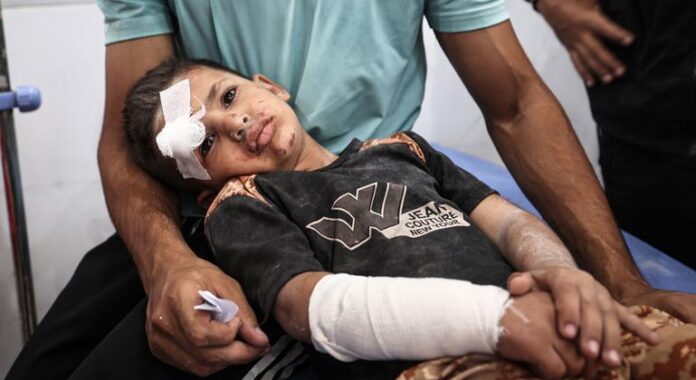
“Attacks directed against civilians constitute a grave breach of international law and a war crime,” the High Commissioner said in a statement, issued after Palestinians were reportedly killed seeking assistance for a third day running.
Mr. Türk also urged Israel to respect “binding orders” issued by the International Court of Justice to fully cooperate with the UN and ensure that aid reaches the people of Gaza “without delay” and “at scale”.
“There is no justification for failing to comply with these obligations,” he said.
Access calls denied
The controversial new aid initiative run by the Gaza Humanitarian Foundation bypasses the work of UN aid agencies which have repeatedly appealed for unimpeded access to Gaza in order to bring in thousands of tonnes of supplies. To date, the little aid that has been allowed into the enclave has fallen far short of what is needed.
In an update, the UN World Health Organization (WHO) insisted that it still had “teams on the ground” in Gaza ready to distribute supplies where they are needed across the war-torn enclave, if only they could be allowed to move.
“We have right now 51 trucks waiting loaded with medical supplies to go to those few hospitals that are still functional,” said WHO spokesperson Tarik Jasarevic. “We need access so that we can bring in supplies within Gaza to health facilities so they can function. Unfortunately, what is happening is just the opposite. There is no hospital in north Gaza functional anymore.”
On Monday, Mr. Jasarevic said that a WHO team went to the Indonesian Hospital in northern Gaza “and basically evacuated all remaining patients and medical staff…now that hospital is completely empty”. In Jabalia, also in northern Gaza, three Israeli soldiers were reportedly killed on Monday when their vehicle struck an explosive device.
Most vulnerable miss out
Critics of the US-Israeli scheme – which include the UN – have warned that it prevents children, the elderly and those with disabilities from receiving aid, since recipients often have to walk long distances to retrieve boxes of supplies distributed on a first-come, first-serve basis.
“The wilful impediment of access to food and other life-sustaining relief supplies for civilians may constitute a war crime,” Mr. Türk said.
His lengthy statement also condemned “the threat of starvation” faced by Gazans today, the “20 months of killing of civilians and destruction on a massive scale”.
Gazans have also been repeatedly displaced by evacuation orders from the Israeli military and faced “intolerable, dehumanizing rhetoric and threats by Israel’s leadership to empty the Strip”, the UN rights chief noted. All of these facts constitute elements of the most serious crimes under international law, he insisted.
‘Am I going to get shot?’
Jeremy Laurence, spokesperson for the UN human rights office, OHCHR, highlighted the High Commissioner’s call for a prompt, independent investigation into the dozens of reported killings in Gaza since the new aid hub opened on 27 May.
“I think there’s so much which has happened in the past three days apart from the tragic circumstances of human beings trying to gather food to survive and then being killed in the process,” he told journalists in Geneva. “[Gazans] are being forced to walk to these centres and now they’re terrified. Probably they go there and they’re thinking, ‘Am I going to get food or am I going to get shot?’”
Mr. Laurence noted multiple media reports on killings around the southern Gaza aid hub in recent days indicating engagement by helicopters, naval vessels, tanks and ground troops.
“We are aware of those reports,” he said, noting that the Israel Defense Forces (IDF) had also published an account on X of what had happened on Tuesday.
“My colleagues who are working on the ground have conducted interviews with witnesses and they do report fire from the IDF on those trying to access the food distribution centres. We’ve received reports from other organizations on the ground to a similar effect.”
He added: “We’ve gathered our own information; we’ve spoken to witnesses on the ground who have shared what they have seen, heard and felt themselves.”
Asked to explain what the High Commissioner meant when he expressed concerns that the “most serious crimes under international law” may have been committed, Mr. Laurence explained that this referred to war crimes, crimes against humanity and genocide.
Joint press release following the EU-U.S. Ministerial on Justice and Home Affairs, 2-3 June 2025 (Warsaw, Poland)

Joint press release following the EU-U.S. Ministerial on Justice and Home Affairs, 2-3 June 2025, Warsaw, Poland.
Gaza: UN rights chief condemns new killings around private aid hub

“Attacks directed against civilians constitute a grave breach of international law and a war crime,” the High Commissioner said in a statement, issued after Palestinians were reportedly killed seeking assistance for a third day running.
Mr. Türk also urged Israel to respect “binding orders” issued by the International Court of Justice to fully cooperate with the UN and ensure that aid reaches the people of Gaza “without delay” and “at scale”.
“There is no justification for failing to comply with these obligations,” he said.
Access calls denied
The controversial new aid initiative run by the Gaza Humanitarian Foundation bypasses the work of UN aid agencies which have repeatedly appealed for unimpeded access to Gaza in order to bring in thousands of tonnes of supplies. To date, the little aid that has been allowed into the enclave has fallen far short of what is needed.
In an update, the UN World Health Organization (WHO) insisted that it still had “teams on the ground” in Gaza ready to distribute supplies where they are needed across the war-torn enclave, if only they could be allowed to move.
“We have right now 51 trucks waiting loaded with medical supplies to go to those few hospitals that are still functional,” said WHO spokesperson Tarik Jasarevic. “We need access so that we can bring in supplies within Gaza to health facilities so they can function. Unfortunately, what is happening is just the opposite. There is no hospital in north Gaza functional anymore.”
On Monday, Mr. Jasarevic said that a WHO team went to the Indonesian Hospital in northern Gaza “and basically evacuated all remaining patients and medical staff…now that hospital is completely empty”. In Jabalia, also in northern Gaza, three Israeli soldiers were reportedly killed on Monday when their vehicle struck an explosive device.
Most vulnerable miss out
Critics of the US-Israeli scheme – which include the UN – have warned that it prevents children, the elderly and those with disabilities from receiving aid, since recipients often have to walk long distances to retrieve boxes of supplies distributed on a first-come, first-serve basis.
“The wilful impediment of access to food and other life-sustaining relief supplies for civilians may constitute a war crime,” Mr. Türk said.
His lengthy statement also condemned “the threat of starvation” faced by Gazans today, the “20 months of killing of civilians and destruction on a massive scale”.
Gazans have also been repeatedly displaced by evacuation orders from the Israeli military and faced “intolerable, dehumanizing rhetoric and threats by Israel’s leadership to empty the Strip”, the UN rights chief noted. All of these facts constitute elements of the most serious crimes under international law, he insisted.
‘Am I going to get shot?’
Jeremy Laurence, spokesperson for the UN human rights office, OHCHR, highlighted the High Commissioner’s call for a prompt, independent investigation into the dozens of reported killings in Gaza since the new aid hub opened on 27 May.
“I think there’s so much which has happened in the past three days apart from the tragic circumstances of human beings trying to gather food to survive and then being killed in the process,” he told journalists in Geneva. “[Gazans] are being forced to walk to these centres and now they’re terrified. Probably they go there and they’re thinking, ‘Am I going to get food or am I going to get shot?’”
Mr. Laurence noted multiple media reports on killings around the southern Gaza aid hub in recent days indicating engagement by helicopters, naval vessels, tanks and ground troops.
“We are aware of those reports,” he said, noting that the Israel Defense Forces (IDF) had also published an account on X of what had happened on Tuesday.
“My colleagues who are working on the ground have conducted interviews with witnesses and they do report fire from the IDF on those trying to access the food distribution centres. We’ve received reports from other organizations on the ground to a similar effect.”
He added: “We’ve gathered our own information; we’ve spoken to witnesses on the ground who have shared what they have seen, heard and felt themselves.”
Asked to explain what the High Commissioner meant when he expressed concerns that the “most serious crimes under international law” may have been committed, Mr. Laurence explained that this referred to war crimes, crimes against humanity and genocide.
Eurojust supports successful operation against human traffickers

Authorities have tracked down and dismantled a human trafficking network operating in Switzerland. The criminal group recruited young vulnerable women in Romania for sexual exploitation. The close cooperation between investigators from both countries, supported by Eurojust and Europol, culminated in an action day on 3 June, during which 18 suspects were arrested.
The criminal group targeted individuals from disadvantaged communities in Romania. The perpetrators approached their victims on social media, luring them with false romantic promises or offers for them to perform sex work abroad under favourable conditions. Once the victims accepted these offers, they were taken abroad to provide sexual services on escort websites and in rented flats. They were kept under constant surveillance by the criminal group and subjected to appalling conditions, working long hours in degrading and unsafe circumstances. The victims were expected to work continuously, regardless of their mental or physical state. Even visibly pregnant women were forced to work without rest.
Investigations into the group uncovered a large-scale network that had been operating across Europe for over seven years. In 2022, its members moved to Switzerland to continue their activities in several Swiss German-speaking cities, particularly Zurich. The suspected leader of the group started to recruit new members, setting up his own criminal school, where he taught techniques enslaving and exploiting victims. In some cases, victims were traded between members in exchange for money or used as stakes in gambling.
A joint action day to dismantle the criminal group took place on 3 June. Authorities arrested 13 suspects in Romania and five in Switzerland. The alleged victims were brought to safety and given support from a counselling service specialising in human trafficking. In addition to targeting the members in Switzerland, the investigations also focused on individuals in Romania who provided logistical support and laundered the proceeds from the criminal activities.
The successful operation was made possible through close cooperation between Romanian and Swiss authorities under the coordination of Eurojust and Europol. A joint investigation team, set up and funded by Eurojust, ensured the authorities could work together quickly and efficiently. Europol supported the national authorities throughout the investigation by facilitating the exchange of critical intelligence and providing expert analytical support, including the preparation of link charts on the organised crime group. On the action day, Europol provided remote assistance to investigators by cross-checking operational data in real time.
The following authorities carried out the operation:
- Romania: Prosecutor’s Office attached to the High Court of Cassation and Justice – Directorate for Investigating Organised Crime and Terrorism, Bacau Territorial Service; Police Brigade for Combating Organised Crime Iași, Police Service for Combating Organised Crime Neamț; Neamț and Bacău County Gendarmerie Inspectorates; Mobile Gendarmerie Unit Bacău.
- Switzerland: Public Prosecutor’s Office of the canton of Zurich; Zurich City Police
Authorities have tracked down and dismantled a human trafficking network operating in Switzerland. The criminal group recruited young vulnerable women in Romania for sexual exploitation. The close cooperation between investigators from both countries, supported by Eurojust and Europol, culminated in an action day on 3 June, during which 17 suspects were identified.
Gaza: Guterres urges probe into killings at food distribution sites

More than 30 people were killed and over 100 wounded while waiting in the morning to get food from two sites in Rafah and Middle Gaza run by the newly established Gaza Humanitarian Foundation (GHF), according to media reports.
The organization is backed by Israel and the United States and uses private US security contractors supervised by the Israeli military. Aid distributions began at the end of May, bypassing the UN and other humanitarian agencies.
Risking their lives
UN chief António Guterres issued a statement on Monday saying he was “appalled” by the reports.
“It is unacceptable that Palestinians are risking their lives for food,” he said.
“I call for an immediate and independent investigation into these events and for perpetrators to be held accountable.”
He stressed that Israel has clear obligations under international humanitarian law to agree to and facilitate humanitarian aid.
Allow UN operations
“The unimpeded entry of assistance at scale to meet the enormous needs in Gaza must be restored immediately,” he said.
“The UN must be allowed to work in safety and security under conditions of full respect of humanitarian principles.
Meanwhile, the Secretary-General continues to call for an immediate permanent, sustainable ceasefire in Gaza and the immediate and unconditional release of all hostages.
“This is the only path to ensuring security for all. There is no military solution to the conflict,” he insisted.
Lift aid restrictions
The UN has repeatedly called for the full lifting of restrictions on aid and other essentials to meet the immense needs in the Gaza Strip, where more than two million people are at risk of famine following some 20 months of war and a near total three-month aid blockade.
Israel recently lifted the ban temporarily, allowing UN agencies to bring in limited quantities of baby formula, flour, medicines and other assistance through the Kerem Shalom border crossing until the GHF became operational.
The Secretary-General and other senior officials have repeatedly stated that the UN will not participate in any aid plan that does not respect international law and the humanitarian principles of humanity, impartiality, independence and neutrality.
Worsening conditions
The UN humanitarian affairs office OCHA said on Monday that the situation on the ground continues to worsen by the day, pointing to the mass casualties at the two distribution sites as well as ongoing attacks against health facilities.
The Noura Al Kaabi Centre for dialysis in North Gaza was reportedly hit on Sunday, the agency said. Moreover, the Gaza health authorities report that 40 per cent of dialysis patients in the enclave have died since the escalation of hostilities in October 2023 because centres were either struck or unreachable.
New displacement order
“As hostilities continue, people have once again been forced to flee,” OCHA said.
On Saturday, Israel issued another displacement order in Khan Younis and Deir Al-Balah, affecting around 100,000 people living in more than 200 displacement sites.
Humanitarians estimate that since 18 March, more than 640,000 people have been displaced in Gaza, or nearly a third of the population.
“The latest displacement order also deprived at least 8,000 students of learning, as tens of functioning temporary learning spaces and a dozen public schools had to suspend their operations,” OCHA added.
Flies hover over a sleeping child of the Abu Asr family in their tent in Gaza.
Child malnutrition and looting
The UN and partners continue efforts to identify and treat malnutrition whenever possible and as dwindling supplies allow, distributing supplements to about 40,000 children last week despite severe challenges and restrictions on humanitarian assistance.
Meanwhile, looting incidents continue to be reported amid the deprivation, hunger and lack of adequate food distribution.
“The vast majority are people taking flour directly from open trucks, out of clear desperation. However, humanitarian teams have also started observing some criminal looting again,” OCHA said.
Water woes persist
Gazans also continue to be plagued by frequent water shortages. For example, the pipeline in Deir Al-Balah, which supplied at least 12,000 cubic metres every day, is still not operational.
“Humanitarians’ attempts to carry out coordinated missions to repair it have been denied,” said OCHA, noting that on Monday, Israel also denied five missions to distribute potable water in displacement camps in Jabaliya, located in North Gaza.
Attempts to deliver aid
OCHA added that over the weekend, the UN and partners kept working to bring supplies through the Palestinian side of the Kerem Shalom crossing.
More than 100 truckloads of food and medical supplies were picked up on Saturday and Sunday, bringing to more than 300 the number of truckloads collected from the Gaza side of the crossing since it was reopened.
“Today, one of our attempts to collect supplies from Kerem Shalom was denied. Another was still ongoing, awaiting a green light from Israeli authorities, a pause in the bombing along the route, and the allocation of a viable path,” the agency said.
OCHA stressed that “even when the crossing is open, severe restrictions on what humanitarians can bring in – both in terms of volume and variety – mean that the supplies currently entering Gaza are still just a trickle and fall far short of what people need.”
