
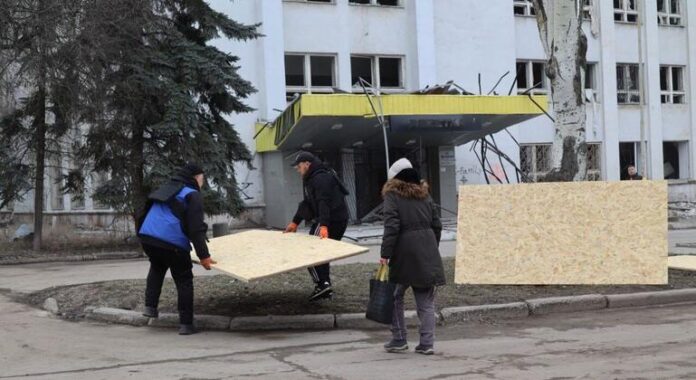
Deadly drone and missile attacks in Ukraine over the weekend represented a “dangerous cycle of escalation” in Russia’s full-scale four-year-old war, the Security Council heard on Monday from Mohamed Khaled Khiari, Assistant Secretary-General in the Departments of Political and Peacebuilding Affairs and Peace Operations, while Edem Wosornu, crisis response director at the UN relief office, OCHA, warned that “the choices made here can mean the difference between lives saved or lives lost.”
The Digital Nation at 25: What Estonia’s Big Technology Bet Actually Produced
Estonia, a small Baltic nation, was the first in the world to take the idea of a “digital
Regional joint initiative to highlight
Press ReleaseThis article is based on a press release or official communication. The European Times republishes it as a public service.
Vital role of churches in decision making
Carine Wendland, of the Evangelical Church of the Lutheran Confession in Brazil, spoke about the potential public impact of the campaign. She explained that churches’ participation in debates on climate policy is essential because the decisions made today will have consequences for future generations. “Communities possess knowledge and experiences that must be heard,” she noted, citing especially the contribution of indigenous peoples. “Churches can help amplify those voices and promote broader participation in decision-making processes,” she added.
Maro Micah Maua of the Kenya Evangelical Lutheran Church, reflected on the significant collaboration between the two LWF regions. “It means hope,” he affirmed. “Because, even though we live on different continents, we face similar challenges. Our communities know the consequences of the climate crisis, and they also know the importance of solidarity,” he added.
The online event on 6 June marked the beginning of the campaign that will lead up to COP31, the next United Nations climate summit which will be held in Türkiye from 9 to 20 November.
The campaign’s first video is a journey through the mangroves in El Salvador. Viewers are invited to contemplate the richness of this ecosystem while also recognizing the risks it faces due to the climate crisis and environmental degradation.
Bishop Guadalupe Cortez de Huezo of the Salvadoran Lutheran Church urged more churches to join ‘The Time is Now’ campaign. “God’s creation is being damaged, and we in the communities see this every day in our own areas. That is why, as members of the church, we are responding from our own reality and context: the time is now”, she said.
Follow the campaign videos in Spanish and English on the LAC Climate Justice Forum Instagram account and YouTube channel.
EU Pay Transparency Splits Workplaces

New salary rights are due across the bloc, but uneven national implementation is already shaping who can use them
European workers are entering a new phase of the equal pay debate, as EU salary transparency rules move from legislation into workplaces after the 7 June transposition deadline. The reform is meant to make hidden pay discrimination easier to uncover, but uneven implementation across member states risks creating a patchwork of rights at the very moment the bloc is trying to make equal pay enforceable in practice.
The EU Pay Transparency Directive gives workers and job applicants new tools to understand how pay is set. Under the rules, employers must provide information about initial pay or salary ranges before employment, cannot ask candidates about previous salary history, and must allow workers to request average pay levels for comparable work, broken down by gender.
The European Commission says the directive is designed to strengthen the founding EU principle of equal pay for equal work or work of equal value through pay transparency and enforcement mechanisms. It also requires larger employers to report gender pay gaps and, where unexplained gaps persist, to carry out joint pay assessments.
A right that depends on national delivery
The legal promise is clear, but the practical picture is less settled. Current reporting indicates that workers in Italy, Malta, Slovakia and Lithuania are among those already seeing salary transparency obligations reflected in national rules, while many EU countries have yet to complete implementation. That leaves workers’ access to information dependent not only on EU law, but on the speed and ambition of national lawmakers.
This matters because pay secrecy has long made discrimination difficult to prove. Without comparable information, workers may suspect unfair treatment but lack the evidence needed to challenge it. The directive seeks to shift that burden by making pay structures more visible and by strengthening remedies, including penalties, compensation and changes to the burden of proof where transparency obligations are breached.
The issue is not only administrative. The gender pay gap remains a persistent social and economic inequality across Europe, affecting lifetime earnings, pension rights and financial independence. As The European Times has reported, equal pay debates continue to expose the gap between formal rights and lived economic reality for many women.
Employers face a cultural shift
For companies, the directive requires more than adding salary bands to job adverts. It asks employers to explain pay criteria, assess work of equal value using objective and gender-neutral methods, and prepare for greater scrutiny from workers, unions, equality bodies and courts.
That shift may be uncomfortable in workplaces where pay has traditionally been treated as private or discretionary. Yet the directive’s logic is that opacity protects unequal systems. Transparent criteria do not automatically eliminate discrimination, but they make it harder for unjustified gaps to remain invisible.
The coming months will show whether the reform becomes a meaningful rights instrument or another unevenly applied EU commitment. Much will depend on national laws, enforcement capacity and whether workers feel safe using the rights on paper. As same-day European reporting has highlighted, the first divide is already visible: some workers can now ask clearer questions about pay, while others are still waiting for their governments to finish the job.
If implemented seriously, pay transparency could make equality less dependent on trust and more grounded in evidence. If delayed or weakened, it may instead deepen the divide between workers who can see how they are valued and those still left guessing.
Sudan: Drone attacks endanger civilians and shut down critical services in El Obeid
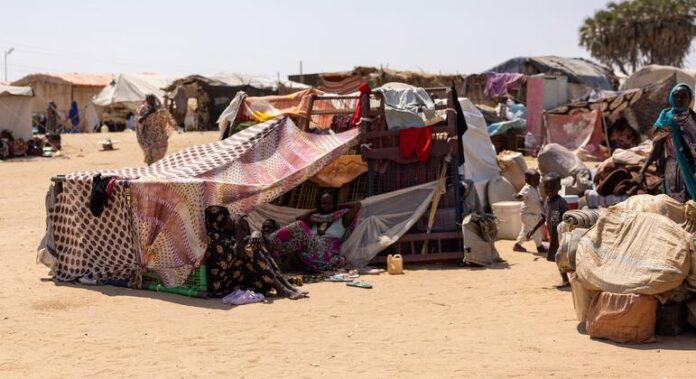
The warning comes amid ongoing reports of a significant build-up of the Rapid Support Forces (RSF) in the North Kordofan state capital, with the UN Security Council expressing concern on Saturday over “the imminent risk of mass atrocities”.
The paramilitary RSF and the Sudanese Armed Forces (SAF) have been at war for more than three years, creating an unprecedented humanitarian and protection crisis, with more than 30 million people in need of humanitarian assistance.
Drone strikes in North Kordofan
OCHA said that between Thursday and Sunday, drone attacks reportedly targeted multiple locations in El Obeid, including a power substation and a fuel station.
The attacks forced the closure of several medical facilities, including a dialysis centre, according to the Sudan Doctors Network, a local medical group.
The strikes also reportedly caused the shutdown of water stations, further disrupting access to essential services for the population.
Elsewhere in North Kordofan, local sources reported that on Sunday, two key bridges located south of the city of Um Ruwaba were targeted by drones.
This occurred along a main road to neighbouring South Kordofan state, though humanitarian parters reported that movement there remained possible.
Multiple drone attacks were also reported on Sunday along a key highway in the city of Ar Rahad, located southeast of El Obeid.
Cholera outbreak worsens in West Kordofan
Meanwhile, a cholera outbreak in West Kordofan state continues to worsen, driven by limited humanitarian access and insecurity, ongoing displacement and inadequate access to safe drinking water and sanitation.
There were 700 cases and 60 associated deaths as of 16 June. This includes 100 cases and 10 deaths since the start of the month.
In response, the UN and partners have supported the provision of cholera treatments, supplies and awareness raising campaigns in addition to establishing cholera treatment centres.
More civilian casualties
OCHA said drone strikes have also been reported in other parts of Sudan in recent days, including in North Darfur and White Nile states, causing civilian casualties and damage to civilian infrastructure.
At least one civilian was killed on Sunday, and 15 others injured, in a strike on a fuel station at a market in Kosti, a city in White Nile state.
The UN has once again urged all parties to uphold their obligations under international humanitarian law and international human rights law, including by protecting civilians and civilian infrastructure and facilitating humanitarian access.
Taliban Talks Put EU Returns Policy Under Fire

A planned Brussels meeting on Afghan deportations has sharpened concern over rights, recognition and Europe’s duty not to return people to danger.
The European Union is facing a growing human-rights backlash over a planned technical meeting in Brussels with Taliban representatives to discuss migration returns, a step critics say risks weakening Europe’s own stance on non-recognition, women’s rights and protection from forced return to persecution.
Belgium has granted tightly restricted one-day visas to a Taliban delegation expected to attend talks with EU officials in Brussels, according to reporting on the Belgian visa decision. The meeting is being described by European officials as technical rather than political, focused on Afghan nationals without legal residence in Europe, especially those considered security risks or convicted of serious crimes.
That distinction has not calmed rights groups, Afghan campaigners or some members of the European Parliament. Their concern is that even a narrow migration discussion gives the Taliban a level of institutional access in Brussels while Afghanistan’s de facto authorities continue to exclude women and girls from much of public life and face international scrutiny over alleged crimes against humanity.
A migration file becomes a credibility test
The controversy comes as European governments are hardening their returns policies after years of political pressure over migration, asylum backlogs and security cases. Several member states have argued that the EU needs practical channels to return Afghan citizens who have no right to remain, including those convicted of serious offences.
But Afghanistan is not an ordinary return destination. Since the Taliban returned to power in August 2021, the country has seen sweeping restrictions on women’s education, employment, movement and participation in public life. International monitors have also documented arbitrary detention, reprisals against former officials and civil society figures, and a wider collapse in independent safeguards.
For the EU, the legal question is not only whether a person has a valid claim to stay. It is also whether deportation would expose that person to persecution, torture or other serious harm. The principle of non-refoulement, embedded in international refugee and human-rights law, prohibits returns to such risks.
That is why the planned meeting has become more than a procedural dispute. It cuts directly into the EU’s claim to treat migration policy, external action and human rights as parts of the same legal order.
Rights groups warn against normalisation
In late May, the International Federation for Human Rights joined dozens of Afghan and international organisations in an open letter opposing Taliban engagement in Brussels. The signatories warned that official contact on European soil could be read as implicit normalisation, especially while senior Taliban figures remain under international legal pressure and EU sanctions apply to individuals linked to serious abuses.
The EU position is that contact with Afghanistan’s de facto authorities does not amount to recognition. Diplomats often maintain limited channels with authorities they do not formally recognise, particularly where humanitarian access, consular cases or security risks are involved.
Yet the symbolism is unusually charged. Afghan women’s groups have repeatedly warned that international engagement can become a substitute for accountability if it is not tied to measurable improvements in rights. Earlier European Times coverage of UN warnings highlighted the fear that normalising Taliban rule would deepen the abandonment felt by Afghan women and girls.
The planned Brussels talks therefore place the EU between two pressures: the domestic political demand for tougher returns, and the external legal and moral obligation not to make vulnerable people instruments of migration management.
The risk of widening returns
Supporters of engagement argue that the talks are limited to people who pose a serious public-order or security threat. That argument carries political force in member states where violent offences by rejected asylum seekers have shaped public debate.
But rights advocates fear that a narrow channel could quickly become a broader mechanism. Once administrative cooperation with the Taliban exists, they argue, it may be used not only for convicted offenders but also for wider groups of Afghan men and families whose asylum claims fail or whose legal status lapses.
Such an expansion would be difficult to monitor. Independent oversight inside Afghanistan is severely constrained, and returnees may face questioning, detention or pressure after arrival. For people associated with the former Afghan government, international forces, women’s rights work, journalism, minority communities or secular civil society, the danger may be especially acute.
This is where Europe’s returns debate collides with its protection obligations. A credible system must be able to remove people who have no right to stay, but it must also assess individual risk seriously and refuse returns where danger is real. The harder political mood in Europe does not suspend that duty.
What Brussels does next matters
The EU can still draw clear lines. It can insist that any contact with Taliban representatives remains strictly operational, transparent to democratic institutions and detached from diplomatic recognition. It can require case-by-case human-rights assessments before any return. It can also strengthen support for Afghan civil society, women-led organisations and independent monitoring instead of allowing migration talks to dominate the relationship.
For Brussels, the immediate meeting may be technical. For Afghan refugees, campaigners and women watching from inside and outside Afghanistan, it is a signal. The question is whether Europe can manage legitimate security concerns without lending credibility to a regime built on exclusion.
If the EU cannot answer that convincingly, the cost will not be measured only in deportation numbers. It will be measured in the credibility of a European rights policy that claims to protect human dignity precisely when politics makes that hardest.
Heat Pumps Cut Into Europe’s Gas Exposure

New market figures show clean heating is becoming an energy-security issue as well as a climate policy choice
Europe’s heat pump rollout avoided an estimated €9.7 billion in energy import costs last year, according to new industry analysis, strengthening the argument that household heating has become a central part of the continent’s energy-security debate.
The figures, published on Monday by the European Heat Pump Association, suggest that Europe’s installed heat pumps now provide heat equivalent to more than 200 liquefied natural gas tanker-loads. The association said that amount is roughly twice the LNG that reached the EU from the Middle East in 2025 and about 7% of the bloc’s total annual imported LNG.
The finding turns what is often presented as a domestic renovation issue into a wider strategic question. Heating systems in homes, apartment blocks and public buildings are now tied to Europe’s exposure to volatile fossil-fuel markets, imported gas dependency and the affordability of the clean transition.
Sales recover after a weaker year
According to the new heat pump market analysis, sales rose by 13% in 2025, reaching 2.9 million units across 21 European countries. That brought the total stock covered by the report to 29.3 million heat pumps.
The association said the heat pumps sold in 2025 alone displaced the equivalent of 2.5 billion cubic metres of LNG, or about a quarter of EU imports from the Middle East. France recorded the highest number of units sold, followed by Italy, while Germany posted 50% sales growth and Denmark 36%.
The recovery matters because the heat pump sector had lost momentum after the energy-price shock of 2022 and 2023. Higher borrowing costs, changing subsidy schemes, skilled-labour shortages and the upfront cost of home renovation all slowed adoption in several countries, even as policymakers continued to describe electrification as essential to cutting fossil-fuel demand.
Energy security begins at home
The European Commission’s latest REPowerEU update says the EU reduced Russian gas from 45% of gas imports in 2022 to 12% in 2025. Yet the bloc still imported 36 billion cubic metres of Russian gas last year, while more than half of EU energy consumption continued to depend on imported fossil fuels.
That leaves households exposed to geopolitical shocks even when the immediate crisis is not at Europe’s borders. Gas markets can be affected by conflict, shipping disruption, storage anxiety and competition from Asian buyers. For families already struggling with rent, food prices and utility bills, energy security is not an abstract Brussels phrase; it is felt through monthly payments and the cost of keeping a home warm.
Heat pumps do not solve that problem alone. They depend on electricity prices, grid capacity, installer availability and well-designed support for older and poorly insulated homes. But their efficiency means they can reduce gas use structurally, rather than simply replacing one supplier with another.
A fairness question for the clean transition
The social challenge is that the households most vulnerable to high heating costs are often least able to finance a new system. Renters may have little control over building upgrades. Rural residents can face higher installation costs. Low-income owners may lack access to credit even when subsidies exist.
That is why the policy debate now turns on delivery as much as ambition. Earlier European Times coverage of Brussels energy policy noted that Europe’s clean-power agenda will be judged not only by installed capacity, but by whether citizens feel protected during the transition.
For governments, the task is to make clean heating credible in everyday life: stable grants, trusted advice, trained installers, fair electricity taxation and protection for energy-poor households. Without that, heat pumps risk becoming another symbol of a transition that feels easier for wealthier households than for those facing the sharpest bills.
The new market figures show that Europe’s heating transition is already changing the energy balance. The next question is whether policymakers can make that shift fast enough, affordable enough and fair enough to turn an emerging industrial recovery into a public-interest success.
Ireland Pushes EU Savings Deal Into Reach

Dublin says capital market integration can move this year, but supervision, trust and small-economy concerns still shape the talks
Ireland has signalled that it wants to use its coming EU Council presidency to help unlock a deal on Europe’s savings and investments union, a long-running project that has moved from technical financial reform into the centre of the bloc’s competitiveness debate.
The shift matters because Dublin has often been cautious about deeper EU-level financial supervision. If Ireland is now prepared to act as a broker, the debate over Europe’s fragmented capital markets may be entering a more practical phase, one in which governments have to decide how much national control they are willing to pool in order to finance growth, innovation and security.
According to same-day reporting by the Financial Times, Taoiseach Micheál Martin believes an agreement can be reached by the end of 2026, with Ireland seeking to use its presidency role to narrow differences among member states. The central argument is familiar but newly urgent: Europe has vast private savings, yet too little of that money reaches companies, start-ups and strategic sectors that need long-term investment.
A competitiveness project with political teeth
The savings and investments union is designed to make Europe’s financial system better at turning household savings into productive investment. The European Commission says the initiative should give citizens more options to grow wealth while helping businesses across the bloc raise capital more easily. Its own policy page describes the project as a way of connecting savings with investment needs, particularly for smaller and innovative companies that cannot rely only on bank lending.
That makes the file more than a financial services argument. Brussels sees it as part of a wider answer to Europe’s investment gap in clean technology, digital infrastructure, defence, industrial capacity and economic resilience. The European Commission’s savings and investments union strategy links the plan to the need for hundreds of billions of euros in additional annual investment by 2030.
For businesses, especially small and medium-sized enterprises, the promise is easier access to financing across borders. For households, the promise is a wider range of investment choices beyond low-yield bank deposits. For governments, however, the question is more sensitive: who supervises the market, who carries the risk, and how much authority should move from national regulators to EU bodies?
Why Ireland’s position matters
Ireland’s financial sector gives Dublin a particular voice in this debate. Smaller and highly open economies have long worried that centralising supervision could weaken national influence over important parts of their domestic financial systems. Larger member states and EU institutions, by contrast, argue that fragmented supervision leaves Europe with shallow markets, duplicative rules and too little scale to compete with the United States.
The emerging compromise is likely to focus on whether the European Securities and Markets Authority should gain stronger powers over major cross-border actors, while national supervisors retain meaningful responsibilities. That is not merely a bureaucratic matter. Investors need consistent rules, but citizens also need confidence that market integration will not dilute consumer protection, accountability or safeguards against financial instability.
The debate has already exposed fault lines over market infrastructure and national carve-outs. As The European Times recently reported, disputes around Deutsche Börse and EU market integration have shown how technical exemptions can quickly become arguments about power, trust and the credibility of a single market for capital.
Savers, start-ups and safeguards
The human dimension of the reform is often less visible than the institutional one. If designed well, the savings and investments union could help ordinary savers access better long-term products, improve retirement planning and make European capital markets less remote from everyday households. If designed poorly, it could expose retail investors to products they do not understand, or give larger financial firms advantages without enough public benefit.
That is why financial literacy, transparent fees, investor protection and clear redress mechanisms should sit alongside market integration. A union built only around scale would risk looking like a project for exchanges, asset managers and banks. A union built around citizens as well as capital could give the reform broader democratic legitimacy.
For Europe’s companies, the stakes are also practical. Many growing firms still face a financing ladder that works poorly once bank loans are no longer enough but public markets remain too fragmented, costly or nationally segmented. The result is that promising companies often look outside Europe for deeper pools of capital, weakening the bloc’s ability to retain innovation and high-value employment.
The deal still has to be earned
Ireland’s optimism does not remove the hard politics. Member states still differ over supervision, risk-sharing, tax treatment, insolvency rules and the balance between national discretion and EU-wide consistency. The coming months will show whether governments are prepared to move beyond speeches about competitiveness into the legal changes needed to make capital flow more freely.
For Dublin, the broker role could be useful precisely because Ireland understands both sides of the argument. It has an interest in open European capital markets, but also in protecting the credibility of smaller member states within any new supervisory model. That gives Martin’s government an opportunity to frame the savings and investments union not as a transfer of control to Brussels, but as a negotiated strengthening of Europe’s financial capacity.
The larger question is whether the EU can make the project legible to the public. A more integrated capital market may sound distant from daily life, but it touches housing savings, pensions, business creation, jobs and Europe’s ability to finance its own priorities. If Ireland can help turn that connection into a credible agreement, the savings and investments union may become one of the year’s more consequential economic files.
Diversifying Europe’s protein supply could cut emissions and reliance on imported feed | Press releases

Broadening the range of proteins that Europe produces and consumes could strengthen food security, improve resilience, enhance competitiveness and reduce environmental pressures, according to a new European Environment Agency (EEA) report. The benefits depend on treating protein diversification as a deliberate, long-term strategy.
Proteins are essential to human nutrition and health, and interest in healthier and more sustainable diets is growing across Europe. Average protein intake among adults in the EU is around 80 to 85 grammes per person per day, more than most population groups require, and animal-based products make up roughly 60% of total protein intake. This suggests there may be scope to rebalance the mix of protein sources while maintaining adequate nutrition.
Europe’s current protein system is associated with significant environmental pressures, shows the report ‘Protein diversification — strategic risks and opportunities for sustainable food systems‘, published today by the EEA. Livestock production accounts for more than 65% of agricultural greenhouse gas emissions in the EU, and grazing and feed production together take up more than half of its agricultural land. Nitrogen associated with livestock and fertiliser use contributes to water pollution and eutrophication, and agriculture was responsible for around 94% of the EU’s ammonia emissions in 2023 – a major source of fine particulate air pollution.
Figure 1. Median greenhouse gas emissions and land-use requirements of selected food products
The livestock system also relies heavily on imported feed. The EU imports nearly two-thirds of the high-protein feed used in livestock production, with supply concentrated in a few countries, mainly Brazil, Argentina and the United States. Soybean imports alone amount to around 30 million tonnes a year, mostly for animal feed. Soy expansion is linked to deforestation and biodiversity loss in parts of South America. Geopolitical tensions in recent years have repeatedly pushed up energy and fertiliser prices and disrupted supply chains have highlighted the vulnerabilities associated with these dependencies and the importance of strengthening the resilience of European food systems.
A gradual rebalancing, not a replacement
Not all livestock systems carry the same environmental footprint. Extensive grazing on grasslands can support biodiversity conservation, landscape management, and around one in three protected habitats in Europe depend on grazing. This is one of the reasons why the report presents protein diversification not as a replacement for livestock farming but as a gradual rebalancing of Europe’s protein supply and consumption patterns, pursued alongside more sustainable livestock systems and designed to protect rural livelihoods and regional economies.
Protein diversification is also not a single solution, but a portfolio of complementary pathways. Alongside established plant-based foods such as pulses, legumes and meat and dairy alternatives, the report assesses emerging options including insects, biomass fermentation, precision fermentation and cultivated meat. These pathways differ in terms of technological maturity, environmental performance, economic viability and social acceptance.
Plant-based proteins currently offer the most immediate environmental benefits. Supported by established production systems, mature markets and relatively high consumer familiarity, they have significant potential to reduce greenhouse gas emissions, nitrogen pollution and land-use pressures while creating opportunities for nature restoration and new value creation across farming and food systems. Emerging diversification pathways may nevertheless offer environmental, technological or strategic advantages in specific applications, including feed diversification, reduced land dependence and new opportunities across food and feed value chains. However, many continue to face challenges related to production costs, infrastructure requirements, regulatory complexity and uncertain levels of consumer acceptance.
Figure 2. Consumption of alternative proteins by protein source
Diversification also opens economic opportunities. Global consumption of alternative proteins could increase more than sevenfold by 2035, while the market for plant-based proteins alone is projected to grow from around USD 24 billion in 2025 to USD 35 billion by 2030. Europe is well placed to compete in higher-value segments spanning plant-based foods, fermentation-derived proteins and more sustainable feed ingredients.
Building up home-grown protein crops could also strengthen the resilience of European food systems. Modelling by the European Commission’s Joint Research Centre suggests that a coordinated shift towards more diversified protein sources could reduce reliance on imported feed and lower EU agricultural greenhouse gas emissions by around 5% by 2035.
Because protein diversification is expected to unfold gradually rather than through abrupt structural change, there is scope to manage adjustment costs, support innovation and provide targeted assistance to livestock-dependent regions. The report highlights the importance of ensuring that the transition remains socially fair, economically viable and environmentally robust.
The report points to an EU protein strategy, signalled in the EU Vision for Agriculture and Food, as a means of providing strategic direction and policy coherence. It sets out three priorities: safeguarding environmental integrity and ensuring sustainability outcomes; strengthening resilience and strategic autonomy by reducing dependence on imported feed while maintaining diversified trade relationships; and supporting a just transition that protects affordability, regional cohesion and rural livelihoods.
Our latest press releases
Milestones for the Tulsa Oklahoma and Victoria British Columbia Temples
Press ReleaseThis article is based on a press release or official communication. The European Times republishes it as a public service.
The First Presidency of The Church of Jesus Christ of Latter-day Saints has announced the groundbreaking date for the Tulsa Oklahoma Temple and the location, exterior rendering and groundbreaking date for the Victoria British Columbia Temple.
“The purpose of the doctrine and policies of this restored Church is to prepare God’s children for salvation in the celestial glory and, more particularly, for exaltation in its highest degree,” President Dallin H. Oaks has taught. “The covenants made and the blessings promised to the faithful in the temples of God are the key.”
Tulsa Oklahoma Temple
|
Temple Square is always beautiful in the springtime. Gardeners work to prepare the ground for General Conference. © 2012 Intellectual Reserve, Inc. All rights reserved. |
1 / 2 |
Download Photos
The groundbreaking ceremony for the Tulsa Oklahoma Temple will be held on Saturday, August 22, 2026. Elder Pedro X. Larreal of the United States Southwest Area Presidency will preside at the event.
The Tulsa Oklahoma Temple was announced in 2023 and will be the second temple in the state, joining the Oklahoma City Oklahoma Temple.
As previously announced, plans call for a single-story temple of approximately 29,600 square feet to be constructed on a 25.7-acre site at the northwest corner of 51st St. and 136th E Avenue, Tulsa, Tulsa County, Oklahoma.
Nearly 54,000 Latter-day Saints live in Oklahoma, meeting in around 100 congregations.
Victoria British Columbia Temple
|
Temple Square is always beautiful in the springtime. Gardeners work to prepare the ground for General Conference. © 2012 Intellectual Reserve, Inc. All rights reserved. |
1 / 2 |
Download Photos
The Victoria British Columbia Temple will be built on a 4.7-acre (1.9 hectare) site located along Mantle Heights Road, Langford, British Columbia, Canada. Plans call for a single-story temple of approximately 11,400 square feet and an accompanying patron waiting area.
An exterior rendering of the Victoria British Columbia Temple has also been provided.
A groundbreaking ceremony for this house of the Lord will be held on Saturday, August 22, 2026. Elder James E. Evanson of the Canada Area Presidency will preside at the event.
Canada is home to over 211,000 members of the Church, meeting in around 500 congregations.
Dedicated houses of the Lord in Canada are the Calgary Alberta Temple, Cardston Alberta Temple, Edmonton Alberta Temple, Halifax Nova Scotia Temple, Montreal Quebec Temple, Regina Saskatchewan Temple, Toronto Ontario Temple, Vancouver British Columbia Temple and Winnipeg Manitoba Temple. The Lethbridge Alberta Temple is under construction.
The Victoria British Columbia Temple was announced in April 2024.
Latter-day Saints worship in temples for several reasons: to feel God’s love and peace, to learn more about God’s plan for His children and the gospel of Jesus Christ, to make promises with God and with one’s husband or wife, and to use Christ’s power to enable families to be united for eternity.
