
A new study by Yale’s Digital Ethics Center proposes a novel “copyleft” licensing framework that would require AI models trained
Researchers propose ‘copyleft’ rules for generative AI
World News in Brief: Pope Leo urges action on hunger, humanitarian strain deepens in Gaza, families return to Lebanon
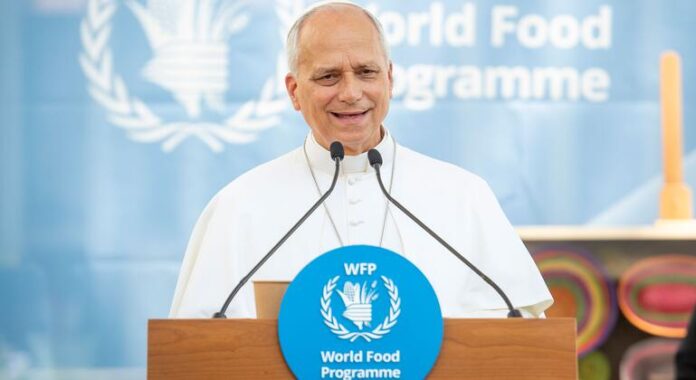
Speaking at a time of mounting humanitarian need and shrinking resources, the Pope warned that conflict continues to drive food insecurity around the world and stressed that food security must be treated as a matter of global security.
“Meeting this need not only alleviates suffering but also addresses underlying causes of geopolitical instability,” he said.
The visit comes as global hunger remains at alarming levels, as an estimated 266 million people across 47 countries faced acute food insecurity last year.
Growing imbalance
Pope Leo also raised concern over barriers to humanitarian access and the growing imbalance between investment in conflict and investment in people.
“In effect, conflicts are ‘fed’ more readily than people are nourished,” he said. “This reality reflects not only operational shortcomings but also a fundamental imbalance in political and moral priorities.”
During the visit, the Pope laid a wreath at WFP’s memorial wall honouring 171 staff members who lost their lives while serving vulnerable communities around the world.
He also met virtually with staff responding to hunger emergencies and thanked employees for their work supporting communities affected by conflict, climate shocks and displacement.
Aid access and fuel shortages deepen humanitarian strain in Gaza
Civilians across Gaza continue to face airstrikes, shelling, naval fire and shootings in residential areas, according to the UN aid coordination office (OCHA), with reports over the weekend indicating that civilians were among those killed.
Humanitarian access remains severely constrained. The Kerem Shalom border crossing is currently the only entry point for aid into Gaza. Humanitarian agencies continue to call for additional crossings to open and for restrictions on essential items to be lifted.
Over the weekend and into Monday morning, aid teams collected shipments including food, blankets, education supplies, recreation items for children, hygiene kits and fuel.
But limited fuel imports continue to hamper relief efforts, forcing humanitarian partners to prioritize life-saving services while suspending support for less critical activities. Shortages of lubricant oils and difficulty obtaining spare parts for generators have further strained operations.
“We continue to call for additional crossing points to be opened, and for items that are being restricted to have those restrictions lifted” said UN Spokesperson Stéphane Dujarric.
Ongoing violence in the West Bank
Meanwhile, violence in the West Bank remains at concerning levels.
According to humanitarian partners, Israeli forces shot and killed a boy and a man on Sunday who were reportedly among a group burning tyres and throwing Molotov cocktails toward a settlement in Hebron.
“In law enforcement contexts across the West Bank, lethal force may only be used as a last resort” the Spokesperson said.
Families return home to southern Lebanon
Families displaced by months of hostilities in Lebanon are beginning to return to southern parts of the country, even as widespread destruction, damaged infrastructure and limited access to basic services continue to shape daily life.
According to the UN aid coordination office (OCHA), some families are returning directly to their communities, while others are moving closer to home and waiting for conditions to improve before deciding whether they can return permanently.
“Families displaced by months of hostilities are starting to return to southern areas, despite widespread destruction, damaged infrastructure and limited access to basic services,” said UN Spokesperson Stéphane Dujarric.
Uncertainty remains
But for many, uncertainty remains. “Some families are moving closer to their areas of origin and waiting for conditions to improve before making a final decision on what they should do next,” he said.
Although violence has decreased significantly in recent days, the impact of the conflict continues to be felt across Lebanon.
According to the Ministry of Public Health, 83 people were killed and 141 injured on 19 June alone. Since the escalation of hostilities on 2 March, more than 4,100 people have reportedly been killed and over 12,100 injured.
“We continue to call for the protection of civilians, sustained humanitarian access and conditions that allow displaced families to return home voluntarily, safely and with dignity” the Spokesperson said.
Starmer Resigns as UK Faces New Turmoil

British Prime Minister Keir Starmer has announced that he will step down, opening another period of political uncertainty in the United Kingdom less than two years after Labour’s landslide victory. His resignation follows mounting pressure inside the Labour Party, falling public support, and fears that the government was losing its connection with voters as Reform UK gained ground.
Sir Keir Starmer’s resignation marks one of the most dramatic turns in recent British politics. After entering Downing Street in July 2024 with a commanding parliamentary majority and a promise to restore stability after years of Conservative turmoil, the Labour leader has accepted that his own party no longer believes he can lead it into the next general election.
According to The Associated Press, Starmer’s departure adds to an extraordinary period of political turnover in Britain since the 2016 Brexit referendum. Sky News reported that Starmer said nominations for a Labour leadership contest would open on 9 July and close by the parliamentary summer recess on 16 July, with a new leader in place by September if a contest is needed.
The resignation brings Britain closer to another change of prime minister in a decade already marked by upheaval. It also raises a familiar constitutional question: whether a new Labour leader should enter Downing Street through the party’s internal process alone, or whether public pressure will grow for a general election.
A rapid fall after a historic victory
Starmer’s position had weakened over months. Labour’s 2024 victory ended 14 years of Conservative rule and gave the party one of its strongest parliamentary positions in modern times. But the government struggled to convert that mandate into lasting public confidence.
Economic growth remained slow, the cost of living continued to weigh heavily on households, and public services remained under pressure. Political opponents accused the government of failing to deliver a clear break with the past, while many Labour MPs became increasingly anxious about the rise of Nigel Farage’s Reform UK.
The Guardian reported that Starmer faced mounting pressure from Labour MPs and cabinet figures to set out a departure timetable. The same report said Andy Burnham, recently returned to Parliament after winning the Makerfield by-election, had confirmed that he would stand for the Labour leadership.
For Labour, the concern was not only Starmer’s personal popularity. It was the fear that the government was losing political connection with voters who had backed Labour in 2024 but had not yet felt meaningful improvement in daily life.
Andy Burnham, the former Mayor of Greater Manchester and former cabinet minister, has emerged as the leading candidate to replace Starmer. His return to Westminster has changed Labour’s internal balance almost immediately.
Burnham has long cultivated an image as a politician rooted outside Westminster, with a strong regional profile and an ability to speak to voters who feel ignored by national politics. That profile may now become central to Labour’s attempt to rebuild public trust.
Sky News reported that Wes Streeting, widely seen as a possible rival, had backed Burnham, making a contested leadership race less likely. If Burnham becomes the only candidate with sufficient parliamentary support, the transition could be completed quickly. If there is a broader contest, the leadership process may run longer.
The political calculation inside Labour is clear. Many MPs appear to believe that Burnham may be better placed to confront Reform UK, reconnect with working-class voters, and present the government as more grounded in everyday concerns.
A new leader without a new election
Under the British parliamentary system, a prime minister is not directly elected by voters in a national presidential-style contest. The monarch appoints as prime minister the person most likely to command confidence in the House of Commons. Because Labour still holds a parliamentary majority, the next Labour leader would normally be invited to form a government without an immediate general election.
That constitutional path is clear, but the political pressure may be less simple. Opposition parties are likely to argue that a new prime minister without a fresh public vote lacks a personal mandate. Labour will respond that the party won the 2024 general election and that the next election is not required until later in the parliamentary term.
This distinction matters. Legally and constitutionally, Britain can change prime ministers between elections. Politically, however, repeated changes at the top can deepen public frustration, especially when voters feel that major decisions are being made inside party structures rather than through direct public choice.
Britain’s cycle of political turnover
Starmer’s resignation cannot be understood only as a personal defeat. It forms part of a wider British pattern since the Brexit referendum: rapid leadership turnover, fragile mandates, internal party rebellions, and repeated attempts to reset the country’s political direction.
The United Kingdom has moved from the turbulence of Theresa May and Boris Johnson, through the brief premiership of Liz Truss, the technocratic correction attempted by Rishi Sunak, and then the promise of stability under Starmer. Each phase has carried a different political style, but none has fully resolved the deeper problem: a country still struggling with low growth, regional inequality, pressure on public services, constitutional strain, and a divided relationship with Europe.
For European partners, the resignation will be watched closely. Starmer had sought to improve relations with the European Union after years of post-Brexit confrontation. The European Times previously reported on the UK-EU summit and the attempt to open a new chapter in post-Brexit relations. A change in British leadership may not reverse that direction, but it could slow or reshape the pace of cooperation.
European partners will look for continuity
The immediate European concern will be continuity on security, Ukraine, trade, migration, and regulatory cooperation. Britain remains outside the European Union, but it remains a central European power: a nuclear state, a permanent member of the UN Security Council, a NATO member, and a major diplomatic and military actor.
Starmer’s government had worked to soften the tone of UK-EU relations without reopening the core Brexit settlement. A Burnham-led government, if it emerges, may continue that pragmatic path. But leadership changes bring new priorities, new advisers and new pressures from party factions.
For Brussels, Paris, Berlin and Dublin, the question will be whether London can remain predictable at a time when Europe is already managing war in Ukraine, economic uncertainty, migration pressure, and the rise of populist politics across several democracies.
A resignation that leaves hard questions behind
Starmer leaves office with an unusual political legacy. He brought Labour back to power with a historic majority, but he was unable to turn that victory into durable authority. His resignation shows how quickly electoral strength can weaken when public expectations collide with economic restraint and institutional fatigue.
For Labour, the next leader will inherit power but also pressure. The party must show that it can govern with seriousness, improve living standards, protect public services, and respond to voters without chasing every populist demand.
For the United Kingdom, the deeper issue is democratic trust. Another change of prime minister may be constitutionally normal, but it will add to a sense that British politics is still searching for stable ground.
The next occupant of Downing Street will not simply replace Starmer. He or she will have to convince a tired electorate that government can still deliver, that parliamentary democracy can still respond, and that Britain’s political system has not become permanently trapped in crisis management.
Europe Heatwave Exposes Readiness Gaps

As a new heatwave spreads across parts of Europe, schools, rail networks, health services and local authorities are being forced to respond under pressure. The immediate concern is public safety: protecting children, older people, outdoor workers and vulnerable communities. The wider issue is whether Europe is adapting quickly enough to a climate reality in which extreme heat is becoming more frequent, more intense and harder to manage.
Europe is again facing a severe heat episode, with France at the centre of the latest emergency and warnings also affecting other parts of the continent. Authorities have moved to close or adjust hundreds of schools, limit exposure during the hottest hours, warn against dangerous swimming, and prepare hospitals and local services for rising health risks.
The situation has become a daily-life measure of climate resilience. What was once treated as unusual summer weather is increasingly becoming a public policy challenge, touching education, labour rights, public transport, urban planning, housing, and the protection of the elderly.
France under pressure as heat alerts rise
In France, the heatwave has triggered high-level warnings across a large part of the country. Reporting by The Guardian said French authorities placed dozens of mainland departments under the highest danger-to-life heat warning, urging millions of people to exercise “absolute vigilance”.
The disruption has been visible in classrooms. According to AFP-based reporting carried by The Straits Times, more than 800 schools were expected to close for the day, while around 1,800 others adjusted teaching hours. For families, teachers and local officials, the question is no longer only whether lessons can continue, but whether school buildings are safe during extreme temperatures.
The heat has also exposed the vulnerability of public infrastructure. Rail services, sporting events and local public services have faced disruption, while authorities have warned residents to avoid strenuous activity and remain out of direct sun during the most dangerous hours.
A European warning system, but uneven preparedness
The continent does have systems in place to monitor and communicate weather risks. MeteoAlarm, the European early-warning platform, gathers alerts from national meteorological and hydrological services across Europe. Its role is increasingly important as extreme weather becomes more frequent, more intense and more disruptive.
Yet warnings alone do not cool classrooms, protect outdoor workers, ventilate care homes, or redesign overheated cities. Across Europe, the policy gap is becoming clearer: forecasting has improved, but adaptation remains uneven.
Euronews has reported on the growing danger of “tropical nights”, when temperatures stay high after sunset and the body has little chance to recover. This is especially dangerous for older people, people with chronic illness, infants, pregnant women, people living alone, and those in poorly insulated homes.
The human-rights dimension of extreme heat
Heatwaves are often described as weather events, but their effects are deeply social. People with air-conditioned offices and flexible work are not exposed in the same way as delivery drivers, farm workers, construction crews, cleaners, carers, homeless people, prisoners, or children in overheated schools.
This makes extreme heat a human-rights issue as well as an environmental one. The right to health, safe working conditions, education, adequate housing and protection from foreseeable risks all come into focus when temperatures rise beyond what ordinary infrastructure can bear.
For Europe, the challenge is not only to reduce emissions, but to protect people now. That means clear heat protocols for schools and workplaces, shaded public spaces, access to drinking water, cooling centres, better insulation, green urban planning, and targeted support for those most at risk.
Europe has been warned before
This is not the first warning of the season. Earlier this month, The European Times reported that Europe’s early heatwave should be treated as a signal of what lies ahead, not as a passing anomaly. The latest episode gives that warning new urgency.
Climate scientists have repeatedly said that heatwaves are becoming more likely and more severe as global temperatures rise. But the public debate often moves too slowly, returning to normal once the immediate danger passes. That rhythm is no longer sustainable. Each heatwave leaves evidence: closed classrooms, disrupted trains, emergency medical calls, pressure on workers, and families forced to improvise.
From emergency response to climate adaptation
Europe’s next step must be practical. Emergency alerts are necessary, but they are not enough. Governments need to know which schools overheat, which care homes lack cooling capacity, which neighbourhoods lack shade, which workers face unsafe exposure, and which households cannot protect themselves without help.
Local authorities also need resources. Climate adaptation often happens at municipal level: trees, fountains, public shelters, school renovations, cool roofs, shaded playgrounds, and neighbourhood support networks. Without funding, even the best national plans remain paper commitments.
The European Union has made climate resilience part of its long-term policy agenda, but citizens will judge that agenda by what happens in daily life. Can children learn safely in June? Can elderly people survive a hot night alone? Can workers refuse dangerous heat without losing income? Can public transport function under extreme temperatures?
A question of solidarity and preparation
The latest heatwave is a public safety emergency, but also a question of European solidarity. Protecting people from extreme heat requires more than individual advice to drink water and stay indoors. It requires public planning that recognises unequal exposure and unequal capacity to respond.
Europe has the science, the warning systems and the experience. What remains is the political decision to treat heat as a foreseeable risk that demands investment before the next emergency arrives.
As temperatures rise, the measure of preparedness will not be the number of alerts issued. It will be whether the most vulnerable people are protected when those alerts become reality.
Afghanistan in crisis: Drought, malnutrition and a worsening humanitarian situation
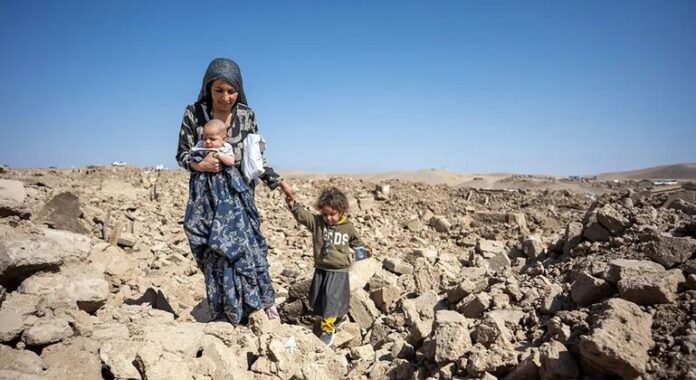
Aid agencies are doing what they can to help, including by identifying dangerously malnourished children in sparsely populated “ghost villages” where those who can leave do so, said Olga Cherevko from the UN aid coordination office, OCHA.
But with nearly 22 million people in need across Afghanistan and the UN’s $1.7 billion appeal only 14 per cent funded, life is “becoming impossible” in remote areas, the agency warns.
Survival strategy
Water scarcity is the main cause of strife for villagers in Bamyan province who struggle, far from Afghanistan’s major cities.
“This particular village that I went to, they told me that around half of the population had left, actually, because there’s simply no water to irrigate the lands, and so all the crops that they were growing, they dried up,” Ms. Cherevko told UN News. “People who could leave, they left.”
Those who have remained often do so because they have no choice; they cannot afford to leave.
Ms. Cherevko shared a striking example: “One of the men that I met had nine family members. He showed me what they were having for lunch. It was essentially a bowl of what looked like rotten potato peelings, cooked into a soup just to survive.”
3.7 million children facing acute malnutrition in 2026
Today, an estimated 3.7 million children in Afghanistan suffer from acute malnutrition. Many cases go unrecognized and in some UN-supported clinics “children die because parents simply didn’t know what was happening; by the time they brought the child in, it was already too late”, Ms. Cherevko explained.
The UN is addressing this critical issue by providing screening and medical support, but also by visiting remote communities and raising awareness.
Afghan women with their families arrive from Pakistan with their belongings at the Torkham crossing point (August 2025)
Forced returnees’ plight
Agencies also provide basic assistance and registration every day to thousands of people who are often forcibly returned to the country by its neighbours.
According to the UN refugee agency, UNHCR, around 8,000 people returned to Afghanistan in the week to 20 June 2026.
Most of these returnees have never lived in Afghanistan and did not choose to return. Their biggest concern is survival in a land of few opportunities.
“Once the buses drop them in towns, many have nowhere to go,” Ms. Cherevko explained. Some attempt to return to the countries they came from, only to be deported again. Despite this, many continue trying to leave Afghanistan, driven by desperation and a lack of alternatives.
Alarming situation for women and girls
With Bamyan province fresh in her mind, Ms. Cherevko highlighted a recurring message from the Afghan women she visited: when opportunities for women are limited, the entire household suffers. Restrictions on education for girls decreed by the Taliban are denying them future employment. “All the women I spoke to are deeply worried about their daughters, who can no longer attend school and may have no future,” the OCHA worker said.
These restrictions are affecting the work of the UN and essential services in turn.
A shortage of female professionals, particularly doctors, has become critical, for instance. Now, when a female doctor leaves her position, it is often nearly impossible to replace her. This has limited women’s and girls’ access to life-saving healthcare drastically, including maternal and neonatal care, as well as services for malnutrition and education.
From January to April 2026, aid partners reached 5.9 million people in Afghanistan with at least one form of assistance. Of this number, 3.5 million received food assistance, underscoring the scale of acute food insecurity and the many other needs of millions of people “who require repeated and complementary support throughout the year to ensure their needs are adequately met”, OCHA said.
Faith and feminism working together to advance human rights

Press ReleaseThis article is based on a press release or official communication. The European Times republishes it as a public service.
“Faith is often portrayed as being in tension with gender equality, but this event highlighted the way that our churches and faith communities are challenging harmful practices and reclaiming narratives, while promoting dignity, equality and justice for all,” Kasper said. “Faith is often at the heart of why we are involved in promoting justice and preventing sexual and gender-based violence,” she added.
Kasper noted that there is increasing pushback against women’s rights and often very little support for those working with survivors to hold perpetrators accountable or challenge harmful norms and practices. “Though we may often feel that we are not making an impact, it is vital to continue working and finding new avenues of collaboration to address the challenges we face,” she said.
Among the faith-based organizations hosting the event were the World Council of Churches, the Latter-Day Saint Charities and the Baha’i International Community, all under the banner of the Faith and Feminism Forum. Participants noted that the panel discussion “served to build bridges” and marked “a timely conversation about the commonality and diversity within faith traditions,” with the shared goal of advancing human rights and “making every life matter.”
Balayan Puts Armenia on Brussels’ Civic Stage

Armenia’s ambassador is using culture, commerce and EU diplomacy to make Yerevan’s European turn visible beyond summit rooms
Armenia’s ambassador in Brussels, Tigran Balayan, has become a useful lens through which to read Yerevan’s changing relationship with Europe: not only through official summits and security files, but through civic events, business links and the practical search for new markets at a moment of regional pressure.
Balayan is Armenia’s ambassador to Belgium and head of mission to the European Union, a role that places him at the intersection of national diplomacy, diaspora engagement and EU institutional politics. In Brussels, that combination matters. For a small, landlocked country trying to reduce dependency on old economic routes while preserving space for democratic choice, visibility in Europe is not ceremonial. It is part of policy.
That was the subtext of the recent Armenian Fair in Brussels, held in Ixelles on 31 May. The event brought Armenian culture, food, music and producers into a public Belgian setting, with Balayan framing it as both a cultural celebration and an opening for Armenian entrepreneurs seeking European consumers and partners.
Public Diplomacy With Economic Weight
Embassy fairs can look soft from a distance. In Armenia’s case, they carry harder economic meaning. Armenian exporters have faced pressure from disrupted trade routes, Russian restrictions and the structural difficulty of connecting a South Caucasus economy to European markets. A Brussels fair cannot solve those constraints, but it can make them tangible to local authorities, EU officials, businesses and diaspora networks.
Balayan’s activity therefore sits within a broader Armenian effort to turn European attention into concrete partnerships. The EU says its relations with Armenia are grounded in the Comprehensive and Enhanced Partnership Agreement and now include a deeper strategic agenda covering governance, trade, connectivity and resilience, according to the Council’s Armenia policy overview.
That framework has gained new urgency after the first EU-Armenia summit in May and Armenia’s June parliamentary election, which reinforced Prime Minister Nikol Pashinyan’s mandate for a cautious but visible westward shift. As The European Times recently reported, Europe’s credibility in Armenia depends on whether support reaches people rather than treating the country as a geopolitical symbol.
A Delicate Brussels Argument
Balayan’s Brussels work reflects that tension. His message is not simply that Armenia wants more Europe. It is that Armenia needs usable ties: market access, investment, institutional cooperation, educational links and support for resilience against pressure. Those are less dramatic than treaty headlines, but they are the channels through which a diplomatic turn becomes durable.
The ambassador also operates in a crowded and sensitive environment. Brussels hosts missions from states with competing views of the South Caucasus, and Armenia’s European path remains shaped by unresolved trauma after the displacement of Armenians from Nagorno-Karabakh, delicate peace talks with Azerbaijan, and the reality that Russia still matters economically and politically.
That is why cultural diplomacy can be more than cultural display. By placing Armenian producers, artists and community groups before Belgian and EU audiences, Balayan is helping present Armenia as a society with civic, economic and creative assets, not only as a security problem on Europe’s eastern edge.
For the EU, Armenia is becoming a measure of whether neighbourhood policy can support democratic resilience without overpromising membership or underestimating regional risk. For Armenia, Brussels is a place where credibility must be built in layers: through official meetings, parliamentary contacts, city-level partnerships, diaspora initiatives and business exposure.
Balayan’s recent activities suggest a diplomatic strategy built around those layers. The public face is a fair in Ixelles. The deeper argument is that Armenia’s European future will be decided not only by leaders at summits, but by whether Armenian citizens, firms and institutions can find practical room to breathe in Europe.
EU Turns China Trade Pressure Into New Policy Tool

After weeks of warnings over industrial dependence, Brussels is now preparing a diversification instrument backed by EU leaders
The European Commission is moving from warning to implementation on China-linked trade risks, preparing a new diversification instrument after EU leaders backed a tougher response to supply-chain dependence and widening economic imbalances.
The development marks a new phase in a debate that has been building across Brussels for weeks. Earlier concern centred on the scale of Europe’s goods trade deficit with China and the pressure facing manufacturers. The question now is more concrete: what tool the EU will design, which sectors it will cover, and how far companies may be pushed to reduce dependence on concentrated supply chains.
European Commission President Ursula von der Leyen said after this week’s European Council summit that the Commission would work on new instruments, including a diversification tool, while maintaining the EU’s official approach of de-risking rather than decoupling. Her remarks, published in the Commission’s post-summit statement, give political weight to an idea that had until now remained largely at the level of strategic discussion.
What has changed
The shift is not that Brussels has suddenly discovered the trade imbalance. That problem is already well documented. The change is that EU leaders have now given the Commission room to turn the diagnosis into a policy proposal.
Eurostat data show that the EU’s goods deficit with China widened from €65 billion in the first quarter of 2024 to €98 billion in the first quarter of 2026, according to its latest EU-China trade overview. Those figures have become a political shorthand for broader anxieties over overcapacity, subsidies, industrial resilience and dependence on critical components.
The European Times has previously reported on how EU-China trade tensions are putting Europe’s industrial strategy under pressure. The emerging diversification instrument is the next step in that story: a possible attempt to make de-risking measurable, enforceable or at least more systematic.
A tool still taking shape
The Commission has not yet published the legal design of the instrument. Key details remain open, including whether it would impose binding requirements, offer incentives, set sectoral benchmarks or operate as part of a wider trade-defence package.
Its likely purpose is to reduce single-source vulnerability in sectors considered strategically important to Europe’s economy and security. That could include clean technologies, batteries, digital infrastructure, medical supplies, advanced manufacturing inputs and other areas where a disruption could quickly affect employment, prices or public services.
For Brussels, the policy challenge is delicate. A tool that is too weak may do little more than restate existing ambitions. A tool that is too aggressive could raise costs for companies, invite retaliation, or deepen divisions among member states with different levels of exposure to China.
De-risking under pressure
EU officials continue to insist that the bloc is not seeking economic separation from China. China remains a major market for European exporters and a central supplier for many industries. But the language of de-risking is becoming more demanding.
Until recently, diversification was often presented as a long-term strategic preference. The new proposal suggests it may become a more active part of EU industrial policy, linked to trade defence, resilience planning and the bloc’s wider competitiveness agenda.
That will test unity inside the EU. Some governments want stronger action against Chinese overcapacity and market distortions. Others fear a trade spiral that could hit exporters, consumers and investors. Germany’s industrial exposure, France’s push for stronger economic defence, and smaller states’ dependence on affordable imports will all shape the negotiation.
The next question for Brussels
The Commission is expected to return with more detail in the coming months. Until then, the diversification instrument is best understood as a political signal with practical consequences still to be defined.
Its significance lies in the direction of travel. The EU is no longer treating the China trade gap only as a worrying trend or a competitiveness talking point. It is beginning to build policy around the idea that open trade must be matched by safeguards against strategic dependence.
If the instrument is carefully designed, it could help Europe strengthen supply chains without closing its economy. If mishandled, it could become another source of friction in an already fragile global trading system. Either way, the debate has moved on from whether Europe is exposed to what it is prepared to do about it.
UN Warns EU Over New Returns Law

Volker Türk says faster deportation rules must remain consistent with human rights and refugee law
The United Nations human rights chief has raised concern over the European Union’s new returns law, warning that efforts to speed up deportations must not weaken protection against unsafe removals, arbitrary detention or transfers to countries where people may face harm.
UN High Commissioner for Human Rights Volker Türk issued the warning after EU lawmakers backed a major reform of returns policy, one of the most contested parts of the bloc’s wider migration and asylum overhaul.
The intervention places renewed pressure on Brussels and national governments to show that a tougher enforcement system can still meet Europe’s legal obligations under refugee law, the EU Charter of Fundamental Rights and the principle of non-refoulement, which bars the transfer of people to places where they face persecution, torture or other serious harm.
A sharper returns system
The reform is designed to make return decisions faster and more enforceable across the 27-member bloc. Supporters argue that the EU’s asylum system loses public credibility when people who have no legal right to remain are not returned after final decisions.
But the law also expands the political and legal stakes. The European Parliament said MEPs approved the reform on 17 June, including new cooperation obligations for third-country nationals, detention for up to 24 months and potentially longer in some circumstances, mutual recognition of return decisions, and the possible use of return hubs in countries outside the EU.
The Council and Parliament’s agreement says such third-country arrangements must respect international human rights standards and the principle of non-refoulement. It also excludes unaccompanied minors from return-hub arrangements. Those safeguards, however, are likely to face close scrutiny once implementation begins.
Rights concerns move to the foreground
For rights organisations and UN officials, the central question is no longer whether the EU can organise returns more efficiently. It is whether speed, deterrence and political pressure will leave enough room for individual assessment, legal remedies and protection of vulnerable people.
Return hubs are particularly sensitive because they could move people beyond EU territory while still relying on EU-backed procedures. That raises questions over who remains legally responsible if a person is detained unlawfully, denied an effective appeal, separated from family members, or sent onward to an unsafe country.
The debate follows earlier scrutiny of the EU returns policy, including warnings that outsourcing parts of migration control may create legal grey zones unless monitoring, access to lawyers and accountability mechanisms are clearly defined.
The political backdrop is equally important. Migration has become a defining issue in several European elections, and governments are under pressure to show that asylum rules are enforceable. At the same time, Europe’s human rights framework was built precisely to keep fundamental protections from being overridden by moments of political urgency.
Implementation will decide the law’s impact
The reform still has to move through final legal and procedural steps before full implementation. Some provisions are expected to apply shortly after entry into force, while others will follow later.
That timetable gives EU institutions, member states and courts a narrow window to clarify safeguards before the system is tested in practice. The most consequential questions will concern detention standards, treatment of families and vulnerable people, access to appeals, the role of Frontex, and the legal status of any agreements with third countries.
For Brussels, the UN warning is a reminder that migration enforcement is not only a question of administrative capacity. It is also a measure of whether the EU can defend the rule of law when the people affected are politically unpopular, legally precarious and often least able to make themselves heard.
Swiss Talks Put Iran Deal Under Pressure

US and Iranian delegations meet at Buergenstock as Europe watches Hormuz, Lebanon and nuclear safeguards
High-level US-Iran talks were back on track in Switzerland on Sunday, but the renewed diplomacy opened under immediate pressure from violence in Lebanon, uncertainty over the Strait of Hormuz and unresolved questions about Iran’s nuclear programme. For Europe, the meeting is not only a distant Middle East negotiation. It touches energy prices, civilian protection, maritime security and the credibility of diplomatic de-escalation after months of regional conflict.
Delegations from Washington and Tehran converged on Switzerland’s Buergenstock resort for implementation talks linked to a fragile memorandum of understanding between the United States and Iran. The discussions are expected to focus on the next 60 days: how to preserve a ceasefire framework, restore confidence around shipping through Hormuz and move toward renewed international oversight of Iran’s nuclear facilities.
The setting is European, but the mediation is broader. Switzerland is providing what diplomats often call good offices: a discreet venue, logistics and security. Qatar and Pakistan have played more direct intermediary roles, according to public reporting on the talks. That division of labour underlines a familiar European dilemma in the crisis: the continent is exposed to the consequences, yet it is not the central broker.
A narrow opening for diplomacy
The immediate breakthrough is that the parties are talking at all. The diplomatic track had appeared vulnerable after renewed confrontation over Lebanon and Iranian threats around the Strait of Hormuz. US Vice President JD Vance framed the agenda around Iran’s nuclear programme and the Lebanon ceasefire, while Iranian participation signals that Tehran still sees value in negotiation despite pressure from hardliners and security bodies at home.
The European Union has cautiously welcomed the opening, while warning that implementation will be harder than announcement. At a Foreign Affairs Council meeting on 15 June, EU foreign ministers noted the US-Iran framework to extend the ceasefire by 60 days and restore freedom of navigation in the Strait of Hormuz, which they said should remain open and toll-free. Kaja Kallas, the EU’s foreign policy chief, described the deal as a possible breakthrough but said the toughest phase still lay ahead.
That caution is justified. A memorandum can create political space, but it does not by itself settle enforcement, verification or sanctions relief. The return of International Atomic Energy Agency access to sensitive Iranian sites would be one of the most important technical steps. So would a credible arrangement for commercial shipping in the Gulf, where even partial disruption can quickly feed into European fuel costs, transport prices and inflation expectations.
Hormuz remains Europe’s economic warning light
The Strait of Hormuz has become one of the clearest measures of whether the diplomatic track is functioning. It is a narrow waterway, but its consequences are wide. Energy flows through the Gulf shape oil and gas markets far beyond the region, including in Europe, where households and industries are still sensitive to external price shocks.
The European Times has previously reported on how Hormuz disruption raised inflation concerns. Sunday’s talks therefore matter not because Europe wants another security file on its agenda, but because unstable shipping can become a domestic economic issue within days: higher fuel prices, more expensive freight, pressure on airlines and renewed strain on low-income households.
The EU’s position is also legal and political. Freedom of navigation is treated in Brussels as a rules-based principle, not simply a commercial preference. If tolls, closures or threats become bargaining tools, European policymakers fear a precedent that would make other maritime chokepoints more vulnerable to coercion.
Lebanon adds the human cost
The Lebanon file may prove even more fragile than Hormuz. Continued Israeli-Hezbollah violence has complicated the US-Iran track, while civilians in Lebanon and northern Israel remain exposed to renewed escalation. The EU has called for all military action to cease and for international humanitarian law to be respected, stressing that civilians and civilian infrastructure must be protected.
For European governments, this is where strategic diplomacy and human rights converge. A ceasefire that keeps shipping open but leaves civilians under recurring attack would be unstable and morally thin. Any durable arrangement will have to address Lebanon’s sovereignty, Hezbollah’s armed presence, Israel’s security concerns and the role of international monitoring. None of those questions can be solved quickly at a Swiss resort.
The broader lesson for Europe is uncomfortable. Switzerland can host, the EU can sanction, advise and support, but the decisive leverage sits largely elsewhere. Even so, European exposure gives Brussels a direct stake in the outcome. If the Buergenstock talks fail, the consequences will not stop at the Gulf. They will reach European ports, fuel bills, diplomatic priorities and the already strained politics of crisis management.
For now, the talks have created a narrow opening. Whether they become a settlement will depend on verifiable steps: inspectors returning, shipping remaining open, violence in Lebanon easing and sanctions relief being tied to compliance rather than trust. That is a demanding sequence. But after months in which escalation has repeatedly moved faster than diplomacy, even a narrow opening is politically significant.
