Today, Commissioner for Environment, Water Resilience and a Competitive Circular Economy, Jessika Roswall, and Montenegro’s Minister of Ecology, Sustainable Development and Northern Region Development, Damjan Ćulafić, signed the agreement on Montenegro’s association to the LIFE Programme for environment and climate action.
This important milestone represents a significant advancement in Montenegro’s commitment to addressing environmental challenges and fostering sustainable development.
With this association, Montenegrin organisations are now eligible to submit proposals under the LIFE Programme’s calls for projects. This access to EU funding will support initiatives targeting critical areas such as pollution reduction, improved waste management, and enhanced energy efficiency.
As the EU’s flagship funding instrument for the environment and climate action, the LIFE Programme will offer Montenegro valuable support to strengthen its environmental and climate-related policies and practices. Through this collaboration, Montenegro will be able to develop and showcase eco-innovative technologies and methods, promote the adoption of best practices and behavioural change, and reinforce the implementation and enforcement of environmental and climate legislation aligned with EU standards.
Montenegro joins the list of non-EU countries participating in the LIFE Programme, including North Macedonia, Ukraine, Moldova, and Iceland. This association reflects the LIFE Programme’s expanding international dimension and its role as a vital platform for cross-border cooperation in tackling global environmental and climate challenges.
New calls worth over €1.25 billion under the EU’s Marie Skłodowska-Curie Actions open doors for new research talent and will support cutting edge research. The EU has also launched the ‘Choose Europe for Science’ pilot, which is open to researchers from around the world to develop their careers.
DISCLAIMER: Information and opinions reproduced in the articles are the ones of those stating them and it is their own responsibility. Publication in The European Times does not automatically means endorsement of the view, but the right to express it.
DISCLAIMER TRANSLATIONS: All articles in this site are published in English. The translated versions are done through an automated process known as neural translations. If in doubt, always refer to the original article. Thank you for understanding.
OCHAreported that hostilities intensified overnight, with an attack by Israeli forces on the European Gaza Hospital in Khan Younis which killed and injured several people.
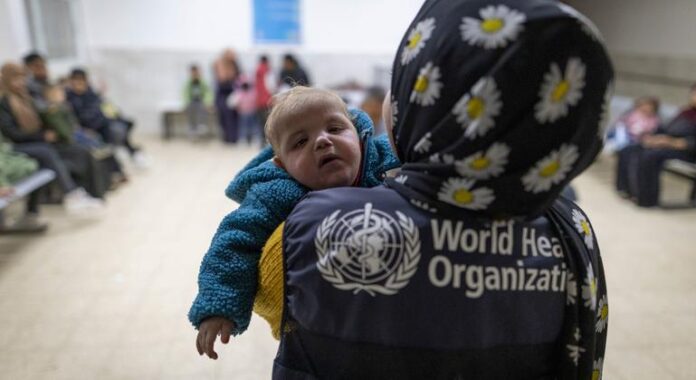
A team from the World Health Organization (WHO) was also inside the hospital at the time.
The hospital premises were hit again on Wednesday morning, reportedly leading to additional casualties.
A ‘decimated’ health system
“These attacks not only further degrade Gaza’s already decimated healthcare system, but also further traumatize patients and medical staff at these facilities,” OCHA said.
The UN Office has documented at least 686 attacks impacting healthcare in the Gaza Strip since war erupted in October 2023, following the deadly Hamas-led attacks on Israel.
OCHA said escalating military activities and increasing explosive ordnance contamination are heightening safety risks for civilians, including aid workers, before stressing once again that civilians and healthcare facilities must always be protected.
First responders in northern Gaza reported that at least 80 people had been killed in the past day following Israeli strikes, including around 50 who died when homes were struck in northern Jabalia.
More displacement orders
Meanwhile, Israel has issued two new displacement orders in North Gaza since Tuesday night, following Palestinian rocket fire.
Eight neighbourhoods have been affected and humanitarians have already observed some fleeing in search of relative safety.
More than 436,000 people are estimated to have been displaced to various areas of Gaza since 18 March.
“Whether they leave or stay, civilians must be able to access the essentials for their survival,” OCHA said.
The agency also continues to call for the immediate lifting of the blockade of Gaza. No cargo, including aid, has entered for more than 70 days.
The humanitarian situation is deteriorating, which has led to dwindling stocks in local markets and rising prices of the few supplies that remain available.
For example, during the first week of May, a single 25-kilogramme bag of wheat flour was being sold in Gaza City for the equivalent of around $415 – a more than 3,000 per cent increase when compared with the last week of February.
“The blockade is also hampering the provision of hot meals in Gaza, with only about 250,000 individual meals now being provided each day through some 65 community kitchens,” OCHA said.
“This is compared to 25 April – less than three weeks ago – when 180 community kitchens were producing nearly 1.1 million meals on a daily basis.”
Humanitarian partners have more than 171,000 metric tonnes of food in the region, ready for whenever the blockade is lifted.
This is enough to sustain Gaza’s entire population, roughly 2.1 million people, for up to four months.
At the request of the Belgian authorities, Eurojust has coordinated cross-border judicial support to investigations into alleged corruption regarding the purchase of military equipment for the North Atlantic Treaty Organisation (NATO). This allegedly took place via particular current and former employees of the NATO Support and Procurement Agency (NSPA).Since April of this year, Eurojust has organised a series of meetings to enable cooperation and the exchange of information. It also set up a coordination centre on Tuesday 13 May 2025, to support judicial and investigative measures taken in all countries concerned. As a result of these measures, various potential suspects have been identified.
KingNewsWire // Press release // The Entire Strøget (main pedestrian street in central Copenhagen) Was Swinging as British Jive Band Celebrated Dianetics’ Diamond Jubilee. Nytorv Square came alive Friday afternoon as Britain’s leading jive and swing band, The Jive Aces, delivered a high-energy performance celebrating authentic 1950s music — a lively musical journey back to the era when Dianetics: The Modern Science of Mental Health by L. Ron Hubbard was first published.
On May 9, 1950 — exactly 75 years ago — Dianetics was released, quickly becoming a bestseller. The book remains popular today, with over 20 million copies on hands of people worldwide and repeated appearances on bestseller lists. The Diamond Jubilee was fittingly marked by a vibrant celebration that drew a large, enthusiastic crowd to the square. Attendees danced and joined in the festivities, while many expressed curiosity about the enduring self-help book that has inspired millions and been translated into more than 50 languages.
Jiving a higher state of mind with Dianetics
To honor this milestone in such a dynamic and engaging way, what better choice than to pair the celebration with the high-energy rhythms of The Jive Aces — Britain’s premier swing and jive band — whose music perfectly captured the spirit of the era in which Dianetics first emerged.
The Jive Aces are internationally renowned for their upbeat performances and infectious swing sound, having performed in over 40 countries and earned acclaim for their musicianship and positive message. As Britain’s Got Talent semi-finalists and ambassadors of feel-good music, the band brought a unique blend of vintage style and modern showmanship to the heart of Copenhagen. Passersby were treated to an unforgettable experience as the band transformed the historic square into a joyful celebration of life, music, and personal growth.
The event was organized in part by New Era Publications International ApS, based in Glostrup, Copenhagen, and three authorized publishers of L. Ron Hubbard’s fiction and/or non-fiction works worldwide. To mark the occasion, New Era set up a large information stand where visitors where able to learn more about Dianetics, experience a free stress test, and enjoy the live music.
David Hostetler, President of New Era Publications, attended the event and shared in the excitement.
“There could be no more fitting way to mark the anniversary of this life-affirming and innovative book than to have The Jive Aces here,” he said. “Their infectious energy has helped introduce a lot of new people to Dianetics for the first time—a book that offers effective tools for improving lives.”
Dianetics explores the root causes of unwanted emotions, irrational fears, and psychosomatic illnesses, presenting practical methods for achieving greater self-understanding and mental clarity. Its themes resonate particularly well during Mental Health Awareness Month, offering tools that have helped millions find new ways to improve their lives.
One participant, encountering Dianetics for the first time, shared his personal experience during the event:
“I’ve been going through a tough time, and my wife has struggled with sleep issues. After taking the stress test, I finally felt like there was a way forward. It feels like the solution we’ve been looking for — understanding why certain things happen and how we can change them,” he said, visibly relieved and hopeful.
His words reflect a growing awareness that mental health involves more than just managing symptoms — it’s about uncovering root causes and finding meaningful, lasting solutions. This aligns with the evolving perspective of global institutions such as the World Health Organization (WHO) and the United Nations (UN) , which now recognize that true mental well-being includes not only emotional and social health, but also spiritual well-being . In this context, Dianetics offers a unique and effective approach to achieving lasting mental and spiritual wellness.
Developed by L. Ron Hubbard, Dianetics presents a model of the mind that goes beyond the biochemical — recognizing a spiritual dimension essential to true healing and personal empowerment. This perspective resonates with the WHO’s emphasis on holistic well-being and the UN’s acknowledgment of the importance of cultural and spiritual identity in health frameworks. Just as scholars are increasingly advocating for a new paradigm of care, “Dianetics has long provided practical tools to address the root causes of distress, helping individuals achieve greater self-awareness, emotional freedom, and spiritual clarity” says Ivan Arjona-Pelado, Scientology representative to the European institutions and the United Nations.
Applying Dianetics in times and places of crisis
By integrating spiritual health into its core methodology, Dianetics stands at the forefront of a paradigm shift in mental wellness — one that honors the full complexity of the human experience and supports every individual’s right to pursue a life of meaning, purpose, and inner peace. This vision is not limited to theory or philosophy; it has been actively applied in real-world settings, particularly through the humanitarian efforts of theScientology Volunteer Ministers and Dianetics practitioners.
For decades, these dedicated volunteers have travelled to areas of global crisis, bringing practical tools derived from Dianetics to help individuals cope with trauma and emotional distress. From natural disasters such as earthquakes, hurricanes, and wildfires to war zones and refugee camps, they offer immediate emotional relief through simple yet powerful techniques designed to restore calm, clarity, and resilience. Whether working alongside emergency responders or setting up community outreach centers, the Volunteer Ministers provide non-religious, non-denominational support grounded in the principles of human dignity and self-determination. Their work reflects the enduring relevance of Dianetics as a tool for real-world healing and empowerment, reaching those in need regardless of race, religion, or background.
Press briefing ahead of the upcoming Foreign Affairs Council will take place on 16 May 2025 at 14.30. Press briefing ahead of the Foreign Affairs (Defence) Council will take place on 19 May 2025 at 16.30. Source link
“There is no place for lethal autonomous weapon systems in our world,” Mr. Guterres said on Monday, during an informal UN meeting in New York focused on the use and impact of such weapons.
“Machines that have the power and discretion to take human lives without human control should be prohibited by international law.”
The two-day meeting in New York brought together Member States, academic experts and civil society representatives to examine the humanitarian and human rights risks posed by these systems.
The goal: to lay the groundwork for a legally binding agreement to regulate and ban their use.
Human control is vital
While there is no internationally accepted definition of autonomous weapon systems, they broadly refer to weapons such as advanced drones which select targets and apply force without human instruction.
The Secretary-General said in his message to the meeting that any regulations and prohibitions must make people accountable.
“Human control over the use of force is essential,” Mr. Guterres said. “We cannot delegate life-or-death decisions to machines.”
There are substantial concerns that autonomous weapon systems violate international humanitarian and human rights laws by removing human judgement from warfare.
The UN chief has called for Member States to set clear regulations and prohibitions on such systems by 2026.
Approaching a legally binding agreement
UN Member States have considered regulations for autonomous weapons systems since 2014 under the Convention on Certain Conventional Weapons (CCW) which deals with weapons that may violate humanitarian law.
Most recently, the Pact for the Future, adopted in September last year, included a call to avoid the weaponization and misuse of constantly evolving weapons technologies.
Stop Killer Robots – a coalition of approximately 270 civil society organizations – was one of the organizations speaking out during this week’s meeting.
Executive Director Nicole van Rooijen told UN News that consensus was beginning to emerge around a few key issues, something which she said was a “huge improvement.”
Specifically, there is consensus on what is known as a “two-tiered” approach, meaning that there should be both prohibitions on certain types of autonomous weapon systems and regulations on others.
However, there are still other sticking points. For example, it remains unclear what precisely characterizes an autonomous weapon system and what it would look like to legislate “meaningful human control.”
Talks so far have been consultations only and “we are not yet negotiating,” Ms. Rooijen told UN News: “That is a problem.”
‘Time is running out’
The Secretary-General has repeatedly called for a ban on autonomous weapon systems, saying that the fate of humanity cannot be left to a “black box.”
Recently, however, there has been increased urgency around this issue, in part due to the quickly evolving nature of artificial intelligence, algorithms and, therefore, autonomous systems overall.
“The cost of our inaction will be greater the longer we wait,” Ms. Rooijen told us.
Ms. Rooijen also noted that systems are becoming less expensive to develop, something which raises concerns about proliferation among both State and non-state actors.
The Secretary-General, in his comments Monday also underlined the “need for urgency” in establishing regulations around autonomous weapon systems.
“Time is running out to take preventative action,” Mr. Guterres said.