Wednesday, May 6, 2026
Home Blog Page 502

European Church of Scientology Engages in Global Religious Freedom Advocacy at IRF Summit 2025

0
European Church of Scientology Engages in Global Religious Freedom Advocacy at IRF Summit 2025

KINGNEWSWIRE// Washington, D.C. – February 6, 2025 – The International Religious Freedom (IRF) Summit 2025 brought together a diverse coalition of religious leaders, human rights advocates, and policymakers to discuss global religious freedom challenges. Among the participants were the European Office of the Church of Scientology for Public Affairs and Human Rights and other Scientology representatives, which actively engaged in discussions to build partnerships and advance religious liberty initiatives.

Circa 100 organizations participating

The summit, co-chaired by former Ambassador-at-Large for International Religious Freedom Sam Brownback and Dr. Katrina Lantos Swett, was described as “the largest religious freedom gathering in the world, ever.” Over 90 organizations and representatives of more than 30 faith traditions participated, underscoring the growing urgency to combat religious persecution and restrictions worldwide.

On February 5, the new USA Vice President delivered a keynote speech emphasizing the U.S. government’s commitment to protecting religious freedoms domestically and internationally, something that every US Administration is pushing since decades. He addressed ongoing global challenges, including religious persecution and government overreach restricting faith-based activities.

There were panel discussions and plenary sessions that examined religious persecution in Syria, Nigeria, Armenia and other countries. Experts and advocates highlighted the dire conditions many religious communities face, urging governments to take stronger action to prevent discrimination and violence against faith groups.

Additionally, the Religious Freedom Institute, in collaboration with Pepperdine University and the IRF Summit, announced the upcoming IRF Summit Africa, scheduled to take place in Kenya on June 16, 2025. The regional event aims to address religious freedom issues specific to Africa, where numerous countries grapple with sectarian violence and government-imposed restrictions on religious practices.

In a panel moderated by Will Dobson the focus was the increasing use of digital surveillance, censorship, and transnational repression by authoritarian regimes to limit religious freedoms. Panelists warned that oppressive governments are leveraging technology to silence dissent and restrict religious gatherings.

Church of Scientology’s Participation and Efforts Toward Collaboration

The summit saw participation from many religious organizations, and the organizing of it saw the relentless contributions of volunteers from as many civil society partners as Church of Scientology National Affairs Office (Washington DC), the Center for Religious Studies of the Catholic University of America, Baptist groups, Bahai’s. Uyghurs, Sikhs, Yezidies Rumi, Jewish, evangelists, Giselle Lima from the Church of Scientology of Panama and many others. Among the participants was also included the European Office of the Church of Scientology for Public Affairs and Human Rights, which engaged in discussions to build further partnerships with other organizations advocating for religious liberty. Representatives from the Church of Scientology, Ivan Arjona and Eric Roux, emphasized their commitment to promoting religious tolerance and expressed interest in working with human rights groups and governments to combat discrimination against minority faiths worldwide. During the Summit they met officials from different governments and organizations, such as US State Department, Parlacen, USCIRF Chair and Commissioners, and many others.

As the IRF Summit 2025 wrapped up, leaders and attendees reiterated the importance of continued advocacy and collaboration to uphold religious freedoms across all regions. Many expressed hope that the discussions would translate into concrete policy changes and international cooperation.

With the ongoing efforts EU and UN Scientology representative Ivan Arjona-Pelado paraphrased L. Ron Hubbard, insisting that it is time that “Human Rights are made into a fact and not just an idealistic dream”, and that “stakeholders must remain committed to amplifying the voices of persecuted religious communities and ensuring that faith-based freedoms are recognized and protected as a fundamental human right worldwide, including in Europe”.

13 children killed in the West Bank since year began: UNICEF

0
13 children killed in the West Bank since year began: UNICEF

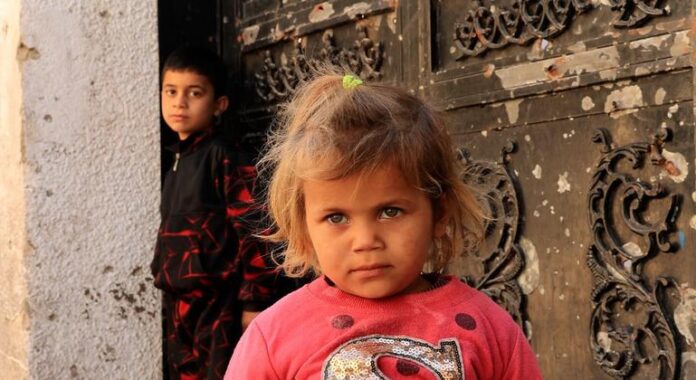
In a statement issued by Edouard Beigbeder, UNICEF’s Regional Director for the Middle East and North Africa, the agency called for “the immediate cessation of armed activity across the occupied West Bank”.

A 10-year-old Palestinian boy died from gunshot wounds last Friday and two days later, a woman who was eight months pregnant was reportedly shot and killed in Nur Shams camp, resulting in the loss of her unborn baby.

The violence, which has intensified in recent weeks, has left families in mourning and communities in distress.

Sharp increase in child fatalities

According to UNICEF, 13 Palestinian children have been killed in the West Bank since the beginning of 2025.

Seven of these deaths occurred after 19 January, following a large-scale military operation in the north of the territory. Among the casualties was a two-year-old whose pregnant mother was also injured in the shooting.

The numbers reflect a worrying trend. Since 7 October 2023, 195 Palestinian children and three Israeli children have been killed in the West Bank, including East Jerusalem.

“There has been a 200 per cent increase in the number of Palestinian children killed in the territory over the past 16 months as compared to the 16 months prior,” Mr. Beigbeder explained.

Devastation in refugee camps

The humanitarian situation has worsened in areas such as Jenin, Tulkarem and Tubas Governorates, where airstrikes, demolitions and the use of explosive weapons have severely damaged essential infrastructure.

Many communities, particularly in refugee camps, have been cut off from basic services, with water and electricity supplies disrupted.

Thousands of families have been displaced due to military operations, including in Jenin, Nur Shams, Tulkarem and al-Faraa Camps.

The deteriorating security situation has made daily life increasingly difficult, particularly for children.

Education under threat

The education of children has been severely disrupted, with nearly 100 schools affected.

Teachers and students in conflict-hit areas face significant risks in attending classes, heightening concerns over long-term psychological and social impacts.

Many children require urgent mental health and psychosocial support due to their exposure to violence, displacement and the loss of loved ones.

UNICEF has called for greater resources to address these growing needs.

Call for protection

“UNICEF condemns all acts of violence against children,” said Mr. Beigbeder. “All civilians, including every child without exception, must be protected.

“Humanitarian organizations must have safe and unfettered access to deliver life-saving assistance and protection services to children and their families,” he continued.

UNICEF emphasised the urgent need for a lasting political solution, backed by the international community, to secure a peaceful and stable future for all children in the region.

The agency “stands ready to work with partners to address both the immediate and long-term needs of affected children and families in the West Bank, including East Jerusalem,” Mr. Beigbeder concluded.

Source link

New measures to cut excessive packaging enter into force

0
New measures to cut excessive packaging enter into force

New rules to further tackle the environmental challenges caused by excessive packaging have entered into force. The rules will help to cut significantly greenhouse gas emissions, water use and environmental costs in the packaging industry.

Source link

US funding cuts threaten global health response, WHO chief warns

0
US funding cuts threaten global health response, WHO chief warns

In a media briefing on Tuesday, WHO Director-General Tedros Adhanom Ghebreyesus highlighted the consequences of funding suspensions, including disruptions to HIV treatment, setbacks in polio eradication and limited resources for responding to mpox epidemics in Africa.

“The suspension of funding to PEPFAR, the President’s Emergency Plan for AIDS Relief, caused an immediate stop to HIV treatment, testing and prevention services in the 50 countries,” Tedros said.

He noted that despite a waiver for life-saving services, prevention programmes for at-risk groups remain excluded, clinics have closed, and health workers have been put on leave.

Tedros urged the US Government to reconsider its funding approach, at least until alternative solutions can be found to maintain essential health services.

Ebola outbreak in Uganda

Turning to Uganda, Tedros provided updates on the recently reported Ebola outbreak, with nine confirmed cases, including one death.

WHO has deployed emergency teams to support surveillance, treatment and infection control measures.

A vaccine trial, launched just four days after the outbreak was declared, is now underway, while approval for a therapeutics trial is pending.

To sustain the response, WHO has allocated an additional $2 million from its Contingency Fund for Emergencies, supplementing the $1 million already provided.

Conflict in DR Congo

The humanitarian crisis in the Democratic Republic of the Congo is also straining health services, with more than 900 deaths and over 4,000 injuries reported amid escalating violence in the east.

Health workers wearing protective clothing in Uganda.

“At most, only one-third of people who need health services in North and South Kivu are able to receive them,” Tedros stated, emphasising the risks posed by infectious disease outbreaks such as mpox and cholera.

Supplies, including medicines and fuel, are running critically low, further complicating WHO’s ability to respond.

Advancing childhood cancer treatment

On a more positive note and as UN News reported on Tuesday, WHO announced progress in expanding access to childhood cancer medicines in low and middle-income countries.

“Yesterday, we began distributing childhood cancer medicines at no cost in the first two countries: Mongolia and Uzbekistan,” said Tedros, adding that shipments are planned for four more countries.

The programme is facilitated through the Global Initiative on Childhood Cancer, launched in partnership with St. Jude Children’s Research Hospital.

The initiative aims to reach 120,000 children across 50 countries over the next five to seven years, addressing stark disparities in survival rates between high-income and low-income nations.

Source link

Parliament green lights update of VAT rules to make them fit for digital times | News

0
Parliament green lights update of VAT rules to make them fit for digital times | News

On Wednesday, Parliament’s plenary approved the changes to the rules that member states indicated in November they wished to make to the VAT Directive. MEPs approved the rules with 589 votes in favour, 42 against and 10 abstentions.

These changes will require that by 2030 online platforms must pay VAT for services provided through them in most of the cases where the individual service providers do not charge VAT. This will put an end to a distortion of the market because similar services provided in the traditional economy are already subject to VAT. This distortion has been most significant in the short-term accommodation rental sector and the road passenger transport sector. Member states will have the possibility of exempting SMEs from this rule, an idea which Parliament had also pushed.

The update will also fully digitalise VAT reporting obligations for cross-border transactions by 2030 with businesses issuing e-invoices for cross-border business-to-business transactions and automatically reporting the data to their tax administration. With this, tax authorities should be in a better position to tackle VAT fraud.

To simplify the administrative burden for businesses, the rules beef-up online VAT one-stop-shops so that even more businesses with cross-border activity will be able to meet their VAT obligations through a single online portal and in one language.

Background

This update to the VAT rules has been over two years in the making. On 8 December 2022, the Commission presented the ‘VAT in the digital age’ package (ViDA package) which consisted of three proposals. One of these was the update to the VAT directive of 2006.

The Commission has calculated that Member States will recoup up to €11 billion in lost VAT

revenues every year for the next 10 years. Businesses will save €4.1 billion a year over the next 10 years in compliance costs, and €8.7 billion in registration and administrative costs over a ten year period.

Source link

Have your say on the next EU long-term budget

0
Have your say on the next EU long-term budget

You can give your views on the next EU long-term budget in a series of public consultations that are open for the next 12 weeks. You can also tune in to a citizens’ debate on the budget via an online platform. The long-term budget supports millions of people across the EU and beyond.

Source link

You can now take part in shaping the next EU long-term budget

0
You can now take part in shaping the next EU long-term budget


A Commission Communication outlining the key policy and budgetary challenges that will shape the the next EU long-term budget is now available. The long-term budget – known as the Multiannual Financial Framework – sets out the EU’s spending priorities for several years. It supports millions of people, farmers, researchers, businesses and regions across the EU and beyond. It is essential for improving our lives, helping us only recently to overcome a pandemic and energy crisis while saving millions of jobs during lockdown. 

EU countries, businesses and citizens need to reconsider the way the EU budget works to make it fit for the future. To continue to support a free, democratic, secure, prosperous and competitive Europe, the long-term budget needs to be simpler, more impactful, and more targeted

The new approach for a modern EU budget should include: 

– a plan for each country with key reforms and investments, designed in partnership with national, regional, and local authorities 

– a European Competitiveness Fund that will establish an investment capacity to support strategic sectors and critical technologies 

–  financing for external action that is more impactful, targeted and aligned with strategic interests 

–  additional safeguards protecting the rule of law 

The Commission is now inviting all Europeans to have their say on the next budget and the policies it should support, ahead of presenting a formal proposal in July 2025. It has started a series of public consultations that will remain open for the next 12 weeks. You can find the links to these consultations below.  

Some 150 Europeans will also have the chance to debate and make concrete recommendations for the next EU budget in a Citizens’ panel. This debate will be accompanied by an online platform offering everyone the opportunity to take part. 

Once agreed later this year, the next long-term budget will take effect in January 2028. 

For more information 

Public consultations 

European Citizens’ Panel on a new European Budget 

The long-term EU budget 

Press release: Shaping the future of the EU together: the Commission sets out the road to the next EU long-term budget 

Source link

Humanitarians uphold commitment to support civilians in eastern DR Congo

0
Humanitarians uphold commitment to support civilians in eastern DR Congo

Bruno Lemarquis, Deputy Special Representative and Humanitarian Coordinator for the DRC, updated journalists on latest developments and obstacles to aid delivery, which include loss of critical supplies to looting and the impact of the decision by the United States to suspend billions in foreign aid.

The DRC was the largest recipient of US humanitarian assistance in the world in 2024, and 70 per cent of the $1.3 billion in funding received that year came from Washington.

A wider problem

Mr. Lemarquis said the situation in the east remains extremely volatile, with escalating armed clashes, mass displacement and increasing insecurity in both North Kivu and South Kivu provinces.

Since January, the M23 have been on an unprecedented advance across the volatile mineral-rich region. 

The rebels captured the main city, Goma, on 27 January, leaving some 2,900 people dead and many more injured. They are continuing a march towards Bukavu, capital of South Kivu province.

“But there are more than the M23 in the DRC,” said Mr. Lemarquis, speaking from the capital, Kinshasa.  “For example, this morning we learned that at least 52 civilians were reportedly killed in Ituri by the armed group called CODECO.”

Clashes and consequences

He said the M23 and Rwandan forces are advancing towards the Kavumu Airport which is located close to Bukavu, home to roughly 1.3 million people.

“Clashes are ongoing, including today, and they’re likely to continue, and the M23 may use alternative routes to progress towards the town of Bukavu in the coming days, with again massive consequences on the civilian population,” he warned.

The M23, which is part of a political-military coalition called Alliance Fleuve Congo (AFC), is largely in control of Goma and they have appointed de facto authorities including a governor and mayor.  

The situation in the city “remains tense and far from normal” due to the ongoing occupation. Although security has improved in some areas, concerns persist. 

‘Mob justice’ and other threats

Mr. Lemarquis said the past few days have seen “recourse to mob justice in a context of proliferation of light weapons and ammunition, and the looting of court houses.” This presents a further challenge to “reinstating the rule of law in a zone with a tragic legacy of gross humanitarian gross human rights violations and impunity,” he added.

“Furthermore, several human rights defenders, in particular those working on issues of sexual and gender-based violence, as well as journalists, report persistent threats and incidents of forced disappearance and summary execution targeting them,” he continued.

© UNICEF/Jospin Benekire

A displaced family sit in front of their makeshift shelter in Goma, North Kivu province, DR Congo.

Lack of services

Meanwhile, many people in Goma are still facing difficult humanitarian conditions. Essential services, particularly water and electricity, are not yet fully operational.  As a result, many are using water directly from Lake Kivu, thus increasing the risk of contracting waterborne diseases. 

Mr. Lemarquis noted, however, that things have improved slightly as efforts are underway to restore electricity and to re-establish the water supply.  School activities have partially resumed after a two-week suspension due to the fighting, though many teachers remain uncertain about their status and pay under the new de facto authorities.

Public services also remain partially functional in Goma, with a limited number of civil servants having returned to work because of the uncertainty, but hospitals are still overwhelmed.

Mortuaries are saturated, and medical teams have to cope with an unprecedented number of war wounded, with a shortage of medicine and medical supplies,” he said.

“Risks of epidemics are high in the city, in particular cholera and mpox. Food prices have risen, and more and more people need food assistance every day.”

Commitment to stay

Against this complex backdrop, humanitarian partners remain on the ground working to prevent and alleviate suffering, he said. They are also moving to strengthen response now that the situation has stabilized, and several colleagues who were evacuated or relocated will be brought back.

However, some key challenges remain. Mr. Lemarquis said many facilities belonging to the UN and international aid agencies were looted during the height of the fighting in Goma, and millions of dollars in supplies were lost.

Getting aid to Goma is another major obstacle as the airport there remains closed and non-operational.

Without this airport we cannot evacuate the seriously injured, transport the necessary medical supplies or bring in humanitarian reinforcement,” he said. “All parties must act now to work together to re-open the airport and allow humanitarian flights to resume.”

A ‘new reality’

Humanitarians are also affected by the “new reality in Goma” as they navigate customs and border-related issues, while their final challenge concerns the Trump administration’s decision to temporarily suspend foreign aid.  

“This is a major source of concern with several UN agencies and international NGOs active on the ground having seen their operations at best severely impact, if not halted,” he said.

“Our humanitarian response is the most dependent in the world on US assistance. We were 70 per cent funded by US funding, so this is having major impact.”

US aid cuts

In response to a journalist’s question, Mr. Lemarquis explained that humanitarians required $2.5 billion for their operations in 2024 and garnered $1.3 billion – the highest amount ever received in the DRC for humanitarian response. Of the total, $910 million came from the US alone. 

The ultra-dependence on US funding means a lot of programmes had to shut down on everything we are doing. So, it’s emergency health, it’s emergency shelter…it’s coordination capacity,” he said. 

“The only exception so far, but we hope there will be more exceptions, was emergency food assistance.”

Appeal for international support

Yet “despite these challenges, we aim to stay and deliver,” said Mr. Lemarquis. 

On behalf of the humanitarian community, he reiterated the call for “all the parties to end hostilities and to return to the political process.”

He also urged the international community “to intensify its support for the humanitarian response in this complicated area.” 

Source link

Bangladesh protests probe reveals top leaders led brutal repression

0
Bangladesh protests probe reveals top leaders led brutal repression

In addition to those killed by the former government’s security and intelligence services alongside Awami League party associates, the OHCHR report into the alleged crimes indicated that thousands were injured, including one youngster who was shot in the hand at point-blank range for throwing stones.

“There are reasonable grounds to believe that officials of the former government, its security and intelligence apparatus, together with violent elements associated with the former ruling party, committed serious and systematic human rights violations,” the High Commissioner for Human Rights said.

Speaking in Geneva, Mr. Türk highlighted that some of the gravest violations detailed in the report may constitute international crimes that could be heard by the International Criminal Court (ICC), as Bangladesh is a State party to the Rome Statute which created the tribunal in The Hague. The ICC’s foundational Statute gives it jurisdiction over genocide, crimes against humanity, war crimes and the crime of aggression (following an amendment in 2010).

Read our ICC explainer here.

Alleged crimes in Bangladesh against the student-led protest included “hundreds of extrajudicial killings, extensive arbitrary arrest and detention and torture, and ill treatment, including of children, as well as gender based violence”, the UN rights chief said.

Iron grip on power

Furthermore, these violations “were carried out with the knowledge, coordination and direction of the former political leadership and senior security officials, with a specific goal of suppressing the protests and keep the former government’s grip on power”.

According to the OHCHR report, as many as 12 to 13 per cent of those killed were children. Bangladesh Police also reported that 44 of its officers were killed between 1 July and 15 August 2024.

Last summer’s protests that led Prime Minister Sheikh Hasina to step down after 15 years in power were triggered by the High Court’s decision to reinstate a deeply unpopular quota system in public service jobs. But broader grievances were already entrenched, arising from “destructive and corrupt politics and governance” that had entrenched inequalities, the UN human rights office report maintained.

“I went to one of the hospitals in in Bangladesh when I visited, and I could talk to some of the survivors and some of them will be disabled for their lives. Especially young people…some of them were children,” Mr. Türk told journalists in Geneva, recounting his visit to Dhaka in September.

State killings

“The brutal response was a calculated and well-coordinated strategy by the former Government to hold onto power in the face of mass opposition,” insisted UN Human Rights Chief Volker Turk.

“The testimonies and evidence we gathered paint a disturbing picture of rampant State violence and targeted killings, that are amongst the most serious violations of human rights, and which may also constitute international crimes. Accountability and justice are essential for national healing and for the future of Bangladesh,” he added.

The UN human rights office probe mission started work in Bangladesh on 16 of September 2024 with a team that included a forensic physician, a weapons expert, a gender expert and an open-source analyst. The investigators visited protest hotspots including universities and hospitals. Their work was complemented by more than 900 witness testimonies.


Source link

EU invests €200 billion in AI

0
EU invests €200 billion in AI

The EU has launched a new initiative to boost AI in Europe, InvestAI. This will mobilise €200 billion for investment in the sector, including in AI gigafactories. A large AI infrastructure will allow open, collaborative development of the most complex AI models and make Europe an AI continent.

Source link