
Wednesday, May 6, 2026
Home Blog Page 522

Why Venus has no moons, Earth has one, and Saturn has over 100

0

On Earth, you can look up at night and see the moon shining brightly from hundreds of thousands of kilometers away. But if someone were to find themselves on Venus, that wouldn’t be the case. Not every planet has a moon—so why do some planets have several moons while others have none? First, a moon is called a natural satellite. Astronomers call objects in space that orbit larger bodies moons. Since the moon is not man-made, it is a natural satellite.

There are currently two main theories as to why some planets have moons. Moons are either gravitationally captured, if they are within what is called the radius of the planet’s Hill sphere, or they formed along with the solar system.

The Hill Sphere

Objects exert a gravitational pull on other nearby objects. The larger the object, the greater the pull.

This gravitational force is what keeps us all grounded to Earth, instead of floating away.

The solar system is dominated by the Sun’s massive gravitational force, which keeps all the planets in orbit. The Sun is the most massive object in our solar system, which means it has the greatest gravitational influence on objects like planets.

In order for a satellite to orbit a planet, it must be close enough for the planet to exert enough force to keep it in orbit. The minimum distance for a planet to keep a satellite in orbit is called the Hill sphere radius.

The Hill sphere radius is based on the mass of both the larger and smaller objects. The Moon orbiting the Earth is a good example of how the Hill sphere radius works. The Earth orbits the Sun, but the Moon is close enough to the Earth that the Earth’s gravitational pull can capture it. The Moon orbits the Earth, not the Sun, because it is within the radius of Earth’s Hill sphere.

Smaller planets like Mercury have small Hill sphere radii because they cannot exert much gravitational pull. Any potential moons would likely be pulled by the Sun instead.

Many scientists are still looking into whether these planets may have had small moons in the past. During the formation of the Solar System, they may have had moons that were knocked off by collisions with other space objects.

Mars has two moons, Phobos and Deimos. Scientists are still debating whether they are asteroids that passed close to Mars’ Hill sphere radius and were captured by the planet, or whether they formed at the same time as the Solar System. More evidence supports the former theory because Mars is close to the Asteroid Belt.

Jupiter, Saturn, Uranus, and Neptune have larger Hill sphere radii because they are much larger than Earth, Mars, Mercury, and Venus and are farther from the Sun. Their gravitational attraction can capture and hold more natural satellites in orbit. For example, Jupiter has 95 moons, while Saturn has 146.

Moons that formed with their system

Another theory suggests that some moons formed at the same time as their star system.

Photo: The contours depict the effective gravitational potentials of a two-body system (in the figure, the Sun and Earth) and the centrifugal forces in a rotating frame of reference. Hill spheres are regions bounded by circles around the Sun and Earth. In celestial mechanics, Lagrangian points (also libration points; L-points) are equilibrium points for objects of low mass under the gravitational influence of two massive orbiting bodies. NASA / Xander89 / CC BY 3.0

Gaza: Humanitarians assist families impacted by recent airstrike in Deir Al-Balah

0
Gaza: Humanitarians assist families impacted by recent airstrike in Deir Al-Balah

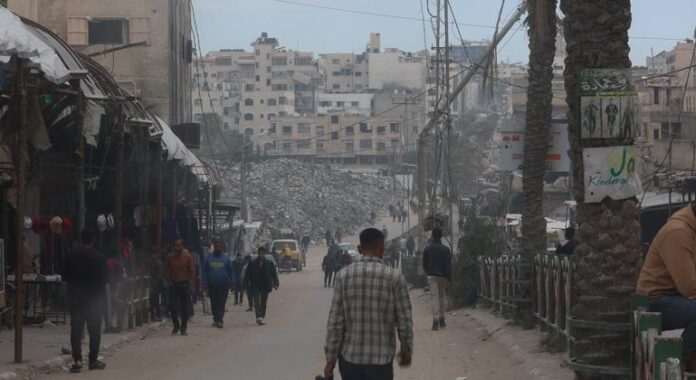
Personnel from the UN Office for the Coordination of Humanitarian Affairs (OCHA) and the UN Mine Action Service (UNMAS) conducted the assessment earlier this week in the Yaffa and Al Somud makeshift sites, home to more than 190 families.

Several people there were reportedly injured by an airstrike on Friday and the team witnessed dozens of tents destroyed at both sites, with many others damaged.

Essential infrastructure, including water, sewage and solar power systems were affected, and three learning spaces were damaged.

Protect civilians at all times

Humanitarian partners provided assistance to affected families, including emergency shelter materials, non-food items as well as food aid, while another partner has mobilized to provide water and sanitation services.  

“As hostilities continue across Gaza, we stress again that civilians must be protected at all times, and that essential needs for their survival must be met,” said Mr. Dujarric, speaking during his daily media briefing from New York.  

Humanitarian efforts at ‘breaking point’

The development comes as UN Humanitarian Coordinator Tom Fletcher warns that aid efforts in Gaza, which are already struggling, face mounting obstacles.

“The reality is that despite our determination to deliver food, water, and medicine to survivors, our efforts to save lives are at breaking point,” he said in a statement issued on Monday.

He noted that there is no meaningful civil order in the Gaza Strip, and that Israeli forces are unable or unwilling to ensure the safety of humanitarian convoys.   

Mr. Fletcher reiterated his call on UN Member States to insist that all civilians, and all humanitarian operations, are protected.  

Source link

US: UN rights expert welcomes court ruling reaffirming sex-based protections in education

0
US: UN rights expert welcomes court ruling reaffirming sex-based protections in education

Independent rights expert Reem Alsalem hailed the landmark 9 January decision by the Kentucky court declaring the US Department of Education’s regulations implementing the Title IX legislation as unlawful. The ruling extends nationwide. 

Title IX is a 1972 law to combat sex discrimination in education programmes or activities that receive federal funding. 

Last April, the Department of Education announced revisions that expand protection to include transgender and non-binary students, among others, on the basis of gender identity and sexual orientation.

‘A pivotal moment”

In the judgement, the court found that the regulations, which redefined the scope of sex discrimination under Title IX to include gender identity, exceeded its statutory authority and violated constitutional protections, Ms. Alsalem noted.

 “This is a pivotal moment in safeguarding the rights of women and girls to non-discrimination based on their sex and reasserting the obligations of the United States to protect this fundamental human right,” she said

 She further noted that the ruling clarified that “when Title IX is viewed in its entirety, it is abundantly clear that discrimination on the basis of sex means discrimination on the basis of being male and female.”

Safeguarding girls’ right to education

Ms. Alsalem said that Title IX has historically been the cornerstone for advancing gender equality in the US education system. 

She wrote to the Government last December, raising concerns about the human rights implications of the Department of Education’s then-proposed changes.

 “By preserving the original intent of Title IX, the Court has restored factual clarity and common sense to the design of policies that affect women and girls, reasserting their rights to access education under conditions of dignity, equality, and safety,” she said. 

 She urged the US Government to take careful note of the decision and reaffirm its commitment to protecting the rights of women and girls.

Special Rapporteurs are appointed by the UN Human Rights Council to monitor and report on specific country situations or thematic issues.

These experts are not UN staff and are independent of any government or organization. They serve in their individual capacity and do not receive payment for their work. 

Source link

MIDDLE EAST CRISIS: Security Council meets on Syria, plus Gaza and Lebanon updates

0
Health needs in Syria worsen amid winter conditions

MIDDLE EAST CRISIS: Security Council meets on Syria, plus Gaza and Lebanon updates

Source link

UN human rights chief hails ‘signs of new beginnings’ in Lebanon and Syria

0
UN human rights chief hails ‘signs of new beginnings’ in Lebanon and Syria

“I arrived, I have to say, with a heavy heart, given the compounded traumas over decades in both countries, but I see signs of new beginnings,” said Volker Türk – speaking in the Lebanese capital, Beirut.

On Wednesday, he was in Damascus for his first ever visit to Syria where he called for “urgent reconsideration” of sanctions following a constructive meeting with the head of the transitional authorities.

Hopes run high

Despite the immense challenges, he noted a sense of hope for Lebanon’s future. He highlighted the importance of the ongoing ceasefire between Lebanon and Israel, which continues to hold.

“The critically important ceasefire between Lebanon and Israel continues broadly to hold, albeit with worrying reports of continued demolitions by Israeli forces in towns and villages in southern Lebanon,” he remarked.

The recent election of a new President and Prime Minister in Lebanon has ended a two-year political stalemate, opening the door for much-needed reforms.

Time for reform and renewal

“With the election of this new leadership, there is momentum for political stability, economic recovery, and long-overdue implementation of critical reforms to address the multiple socio-economic crises and gaping inequalities facing Lebanon,” the High Commissioner emphasized.

Lebanon’s active civil society has underscored the need for full respect for freedom of expression and association, combating discrimination, improving participation and representation of women, guaranteeing full gender equality, recognizing and including people with disabilities, and ensuring human rights protections for the most marginalized and at risk.

“Respect for human rights requires specific and continuing investment in the rule of law,” he noted.

Reckoning with the past

The High Commissioner also called for a resumption of the independent investigation into the Beirut port explosion in August 2020, which killed over 218 people and rendered hundreds of thousands homeless.

“I repeat that those responsible for that tragedy must be held to account and offer the support of my office in this regard,” he stated.

Lebanon is currently experiencing one of the worst economic declines in modern history, with severe currency devaluation and triple-digit inflation affecting basic necessities.

According to the World Bank, 44 percent of the population lives below the poverty line, with 2.5 million people in need of food assistance. “There is a need for a renewal of the social contract that rebuilds the social fabric, that restores confidence in the institutions of the State,” the High Commissioner urged.

The recent months of fighting between Israeli forces and Hezbollah militants in the shadow of the Gaza war, have resulted in significant loss of life and displacement. More than 4,000 lives were reportedly lost, including over 1,100 women and children, and over 200 healthcare workers and journalists.

The ceasefire, which began in late November 2024, remains fragile but is holding despite violations.

“My office stands ready to strengthen our human rights work and to accompany the country as it moves forward,” the High Commissioner concluded, emphasizing the need for a durable peace and the safe return of civilians.

Source link

Domestic violence: a form of institutionalised torture?

0
Domestic violence: a form of institutionalised torture?

By Sarah Thierrée,

The socio-judicial treatment of domestic violence in France is a cause for concern. At a time when our country, the self-proclaimed defender of human rights, is struggling to protect children and their protective parents from domestic violence, it is crucial to highlight the serious malfunctioning of our institutions. These practices, which I describe in a file submitted to the UN Committee against Torture as a form of institutionalised torture, expose the victims to a double penalty: that of the violence suffered and that of the procedures that condemn them to injustice and create new traumas.

Alarming figures, a hidden reality

In 2023, the internal security services recorded 271,000 victims of domestic violence, 85% of whom were women. Many of these victims are protective mothers whose voices and those of their children are systematically discredited. Pseudo-scientific concepts such as “parental alienation syndrome” and others, still taught recently in magistrates’ schools, continue to bias judicial decisions. These institutionalised biases expose children to their aggressors under the guise of preserving a so-called “family bond”.

When the system becomes the executioner

The French judicial system is marked by an alarming level of institutional inertia when it comes to domestic violence. For example, nearly 76% of complaints of sexual violence against minors are dismissed, often without a thorough investigation. Protective mothers who seek to denounce abuse (sexual, physical, psychological) are subjected to reversals of accusations, arbitrary placements of their children, and regularly even accusations of manipulation or mental instability.

These practices, although insidious, meet several criteria defined by the United Nations Convention against Torture: severe suffering, perpetrated or condoned by a public authority, and inflicted intentionally or through systemic negligence. For more than 30 years, the UN has been calling France to account for these serious shortcomings. Yet our country remains deaf to repeated criticism, refusing to introduce the reforms needed to put an end to these institutional abuses.

Urgent reforms needed

In the dossier submitted to the Committee Against Torture, I stress the need for a thorough overhaul of socio-judicial practices in France to protect victims of domestic violence. For example, it is imperative to put an end to the use of pseudo-scientific concepts, such as parental alienation , which continue to have an influence on the treatment of victims of domestic violence.

judicial decisions, despite their lack of scientific basis. Judges and child welfare professionals need to be investigated and given an institutional diagnosis, and this is what we are asking the UN Committee against Torture to do.

In addition, standardised assessment protocols must be put in place to ensure a clear distinction parental conflicts acts of violence, thus avoiding inappropriate decisions that expose victims to further trauma. Institutional transparency must become a priority, particularly with regard to the dismissal of complaints, so that victims can understand and challenge decisions that affect them. These reforms aim to restore a balance between protecting the rights of the accused and those of victims, by placing the safety and dignity of children and their protective parents at the heart of judicial priorities.

Another crucial measure is the judicialisation of the socio-judicial players themselves. Abusive practices, biased reports and decisions that actively contribute to the revictimisation of mothers and children must be examined from the point of view of criminal responsibility. These actors, who by their choices tolerate or perpetuate acts that can be described as institutional torture, must be held accountable before the law. This approach is not only a question of justice for the victims, but also a necessary condition for restoring confidence in a deeply dysfunctional system.

An appeal to the international community

The Committee against Torture has the opportunity investigate these issues during France’s the 82nd session of the Committee review of these practices at , and to reiterate its commitment to respect fundamental rights. It is only facing up to this reality and reforming our institutions that we will be able to protect children, support protective mothers and restore confidence in our socio-judicial system. In just a few days, more than a hundred professionals directly involved in this issue have lent their support to the case.

EU to provide humanitarian aid worth €1.9 billion in 2025

0
EU to provide humanitarian aid worth €1.9 billion in 2025

With more than 300 million people estimated to need humanitarian assistance in 2025, the EU has announced a €1.9 billion humanitarian budget for 2025. The aid will broadly go to the Middle East, Ukraine, Africa, Latin America, the Caribbean, and Asia and the Pacific.

Source link

New €120 million EU humanitarian aid package for Gaza

0
EU to provide humanitarian aid worth €1.9 billion in 2025

The EU has announced a new €120 million aid package for Gaza as part of its long-standing commitment to support Palestinians in need. The aid package will include food, healthcare, sanitation, and shelter assistance. EU humanitarian aid to Gaza now totals over €450 million since 2023.

Source link

‘A Syrian-led future’: Security Council highlights priorities ahead

0
‘A Syrian-led future’: Security Council highlights priorities ahead

In his briefing, UN Special Envoy for Syria Geir Pedersen underscored the delicate nature of the transitional phase, describing it as a moment of “great opportunities and real dangers.”

He urged careful navigation to ensure that decisions taken now lead to long-term stability.

The humanitarian situation remains critical, with nearly 15 million Syrians requiring health services, 13 million facing acute food insecurity, and over 620,000 displaced amid winter conditions.

“We must seize the opportunity of this moment,” stressed UN Emergency Relief Coordinator Tom Fletcher, as he outlined urgent priorities for rebuilding Syria.

Mounting humanitarian needs

Mr. Fletcher highlighted three main priorities for humanitarian teams on the ground.

First, restoring the country’s services, shattered by 14 years of conflict, is essential amid widespread food insecurity, crippled health services and as the Tishreen Dam’s damage has restricted water and electricity for over 400,000 people.

Second, he outlined the importance of protecting displaced people as thousands are unable to return to their homes due to lack of infrastructure, services and the threat of unexploded ordnance.

Finally, Mr. Fletcher highlighted the resilience of Syrian women and girls, sharing stories of hope and determination and calling for their inclusion in rebuilding efforts.

Despite progress, the UN relief chief warned that much more is needed, including a comprehensive needs assessment and increased funding for humanitarian operations.

Persistent security challenges

Although law and order have improved in some regions, violence remains a significant concern. Mr. Pedersen reported incidents of unrest in the coastal regions, Homs and Hama.

Armed groups, including the ISIL terrorist network – and over 60 groups with conflicting agendas – also pose ongoing threats to Syria’s territorial integrity.

Key areas outside caretaker control, such as those held by the Syrian Democratic Forces (SDF) and People’s Protection Units (YPG), remain volatile.

Despite a US-brokered ceasefire near Manbij, clashes with Syrian National Army forces persist and Turkey has signalled potential military escalation.

Additionally, Israeli airstrikes and violations of the 1974 Disengagement Agreement over the Golan have further raised concerns about sovereignty.

Sanctions and economic recovery

Laying out the transitional authorities’ case for the first time in New York, Syrian Ambassador Koussay Aldahhak called for the immediate lifting of sanctions put against the past regime, arguing that they obstruct humanitarian and reconstruction efforts.

Ambassador Koussay Aldahhak of Syria addresses the Security Council meeting on the situation in the country.

He urged the UN and Council Members to “respect the will of the Syrian people and its national choices.”

Mr. Pedersen acknowledged the need for economic support, stating that “a smooth end to sanctions, appropriate action on designations too, and major funding” are required for feasible reconstruction.

US Ambassador Dorothy Shea countered that sanctions would not hinder humanitarian assistance and reiterated her country’s support for a “Syrian-led and Syrian-owned political

process.”

A path forward

Mr. Pedersen outlined priorities for a credible and inclusive transition, emphasising the need for broad representation in national dialogue, constitutional reforms, and free and fair elections.

Mr. Fletcher concluded by stressing the importance of a peaceful political transition to reduce humanitarian needs.

Stable peace will aid relief efforts

We need the peaceful political transition that will help us to reduce humanitarian needs,” he said, urging coordinated global efforts to support Syria during this critical phase.

Mr. Aldahhak explained that the country is currently preparing for a national dialogue conference to establish a transitional government to oversee national processes including the drafting of the constitution and the holding of elections.

He also outlined the de facto authorities’ vision for Syria’s future, as a “positive contributor to the promotion of international peace and security” and expressed their will “to build friendly relations based on mutual respect.”

As Syria rebuilds, the United Nations remains committed to facilitating dialogue, delivering humanitarian aid, and ensuring that the country’s future is guided by its people and supported by a united global effort. 

Source link

UN rights chief in historic meeting in Syria’s with caretaker authority in Damascus

0
UN rights chief in historic meeting in Syria’s with caretaker authority in Damascus

Speaking from Damascus after meeting the leader of the caretaker authorities, Ahmad Al-Sharaa, Mr. Türk said that he had been “assured…of the importance of respect for human rights for all Syrians and all different components of Syrian society”.

Syria’s de facto leader – who spearheaded the lightning overthrow of Bashar Al Assad on 8 December at the head of opposition fighters Hayat Tahrir Al Sham (HTS) –  also underscored “the pursuit of healing, trust building and social cohesion, and the reform of institutions”, the High Commissioner said

Staggering needs 

But the challenges are immense,” he continued, pointing to the “hundreds of thousands of lives” lost, the fact that much of the country lies in ruins”.

Today, nine in 10 Syrians are “mired in poverty, the health system is on its knees and many schools are closed,” Mr. Türk said. “Millions are still displaced both inside and outside the country. The rights to food, health, education and housing are fundamental human rights, and there must be prompt, collective and concerted efforts to guarantee them.”

Calling for “an urgent reconsideration” of ongoing sanctions on Syria “with a view to lifting them”, the UN rights chief said that considering their impact on the lives of the Syrian people was key. 

Sednaya horrors

Mr. Türk – whose visit to Syria is a first for any UN High Commissioner for Human Rights – said that he had heard harrowing testimony from numerous victims of torture. 

They included some jailed at the notorious Sednaya prison outside Damascus, where his Office documented violations “for years”.

The UN rights chief described prisoners telling him that “early in the morning, as they heard the guards at their door, trembling in fear, they retreated to the rear of the cell, fearing they would be hauled out again to be tortured, or even executed.”

Thousands died in prisons throughout Syria, the High Commissioner explained, as he went on to condemn the “apocalyptic wasteland” of the bombed-out residential neighbourhood of Jobar, in Damascus, which he visited.

Mass killing, destruction

“Not a single building in the area was spared bombardment in wave after wave of attacks,” Mr. Türk said, adding that it was “inconceivable that such mass killings and destruction” had happened. 

It was equally difficult to believe “that banned chemical weapons were used against civilians elsewhere in the country and not just once”, the UN rights chief said – a likely reference to several deadly chlorine gas attacks, including on two residential buldings in Douma in northeast Damascus by the Syrian air force on 7 April 2018.

It “says a lot about the extreme brutality of the tactics used by the former regime”, whose acts “constitute some of the most serious crimes under international humanitarian law.”

‘Real threats’ to Syria remain

Away from the immediate destruction and grief of war, the High Commissioner highlighted that the people of Syria “need every ounce of help they can get to rebuild a country that works for all Syrians”. 

The UN human rights office, OHCHR – which has had a dedicated Syria monitoring team since 2013 – “will continue to support inclusive, nationally owned and driven processes”, Mr. Türk said.

He warned of “very real threats” to Syria’s territorial integrity and independence. The country’s sovereignty “must be fully respected and rigorously upheld. The ongoing conflicts and hostilities must end,” the High Commissioner insisted, adding: “This is really a seminal moment for Syria after decades of repression. 

“My most fervent hope is for all Syrians to be able to thrive together, regardless of gender, religion or ethnicity and to build a common future.”  

Source link
