Monday, September 28, 2026
Home Blog Page 537

Sudan: 15 million children require humanitarian assistance after two years of war

0
Sudan: 15 million children require humanitarian assistance after two years of war

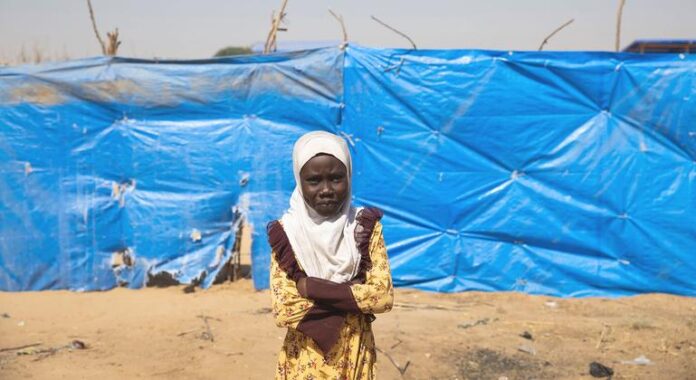
The UN Children’s Fund (UNICEF) reports that 15 million boys and girls require support, up from 7.8 million at the start of 2023 – the year fighting erupted between the Sudanese Armed Forces (SAF) and former ally the Rapid Support Forces (RSF).

UNICEF said violence by warring parties against children, hunger and disease are surging, while displacement continues to disrupt lives. This is happening as both humanitarian access and funding are shrinking and as the rainy season approaches in May. 

Step up support

“With the rainy season around the corner, children who are already reeling from malnutrition and disease will be harder to reach,” said UNICEF Executive Director Catherine Russell. 

She urged the international community “to seize this pivotal window for action and step up for Sudan’s children.”

Sudan is currently the world’s largest humanitarian and child displacement crises. More than 30 million people overall need humanitarian assistance this year.

Young lives uprooted

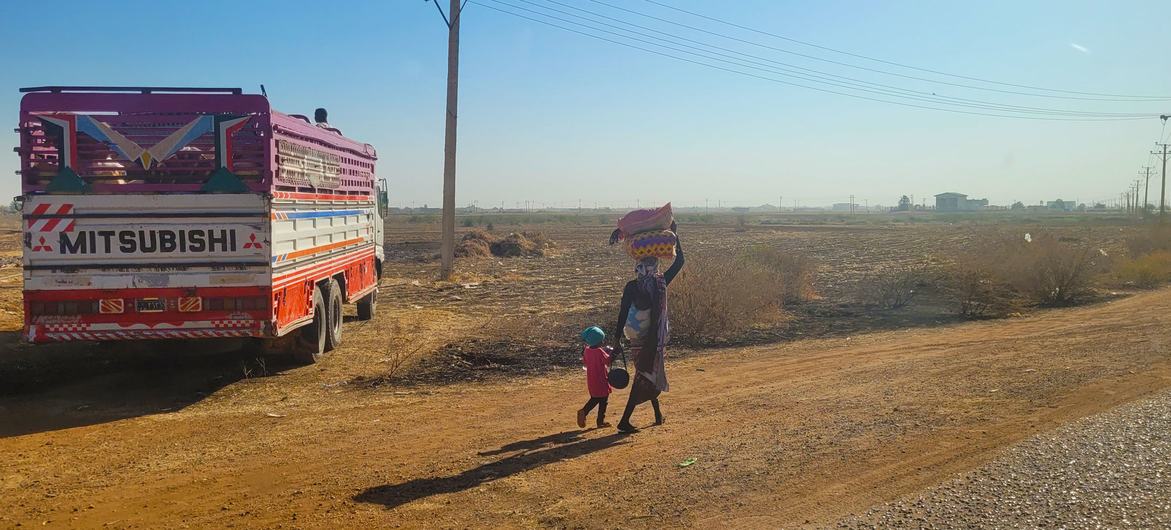
The conflict has forced 12.4 million people to flee their homes and seek safety either elsewhere in Sudan or across the border.  More than half are children, with nearly a third under the age of five. UNICEF noted that in areas where people can return, unexploded ordnance and limited access to essential services put children’s lives at heightened risk. Meanwhile, famine is spreading, vaccination rates are dropping, and about 90 per cent of children are out of school.

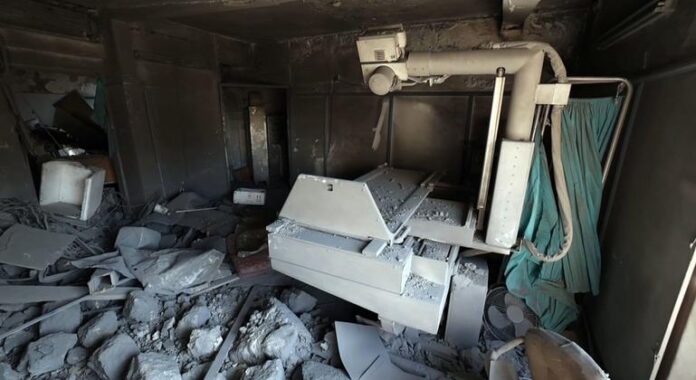
The situation is being compounded by a deadly combination of interlinked factors, such as a ten-fold surge in the number of grave violations against children, namely killing and maiming; abduction; recruitment and use in hostilities; rape and other forms of sexual violence; attacks on schools and hospitals; and the denial of humanitarian access.

While grave violations were previously confined to regions such as Darfur, Blue Nile and South Kordofan, incidents have now been verified in more than half of Sudan’s 18 states.

The most recurrent verified grave violations include killing and maiming, abductions and attacks on schools and hospitals, with the highest numbers reported in the Darfurs, Khartoum, Aljazeera and South Kordofan.

Famine and disease

Furthermore, famine has been confirmed in 10 locations, according to the UN World Food Programme (WFP), with more places at risk. With the rainy season looming, UNICEF warned that some localities are also vulnerable to flooding. 

The agency recalled that between 2022 and 2024, around 60 per cent of annual admissions for severe acute malnutrition occurred during the rainy season, meaning that up to 462,000 children could be affected this year if the trend holds.  

Disease outbreaks are also expected to surge. Last year, 49,000 cholera cases and more than 11,000 cases of dengue fever were reported, mainly affecting mothers and children. 

Outbreaks are worsened by the effects of the rainy season, including water contamination, poor sanitation, and increased displacement and population movement.

Funding shortfall fears

At the same time, humanitarian access to children in Sudan is deteriorating due to the intensity of the conflict and restrictions or bureaucratic impediments, whether by the Government authorities or other armed groups.

Funding for life-saving services is also critically low, putting essential health, nutrition, education and protection programmes at risk. 

UNICEF is appealing for $1 billion for its operations in Sudan in 2025, which works out to just $76 per person for the year, or 26 cents per day. Currently, $266.6 million is available, though most of the funding was rolled over from 2024 with just $12 million received this year.

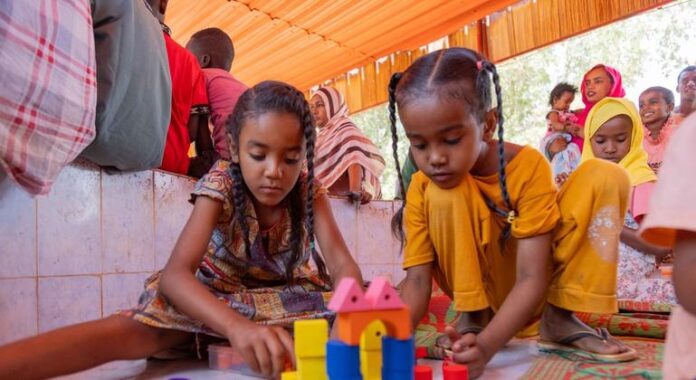
Last year, UNICEF and partners provided psychosocial counselling, education, and protection services to 2.7 million children and caregivers. They also reached nearly 10 million children and families with safe drinking water and screened 6.7 million youngsters for malnutrition, providing lifesaving treatment for 422,000 of them. 

“Sudan is the biggest humanitarian crisis in the world today, but it is not getting the world’s attention,” said Ms. Russell. 

“We cannot abandon the children of Sudan. We have the expertise and the resolve to scale up our support, but we need access and sustained funding. Most of all, children in Sudan need this horrific conflict to end.” 

Source link

European Commission publishes Fusion Expert Group opinion paper

0
European Commission publishes Fusion Expert Group opinion paper

The European Commission’s Directorate-General for Research and Innovation has published the Fusion Expert Group (FEG) Opinion Paper. The report is the result of recent discussions within the group, made up of independent experts representing EU Member States, with F4E as an observer.

The goal of the FEG paper is to provide recommendations for the European Fusion Strategy, coordinated by European Commission, in order to accelerate the way to commercial fusion energy and position Europe at the forefront.

The recommendations are structured around five pillars:

-Support and leverage ITER, a key step on the way to pilot fusion power plants.

-Driving innovation, building a competitive industry, and developing a skilled workforce.

-Ensuring a harmonised regulatory framework.

-Strengthening international collaboration.

-Developing a seamless EU governance for fusion energy.

The FEG mentions F4E in different parts of the report. Besides our role in ITER, the recommendations place F4E as a central actor in shaping the European supply chain, developing critical technologies, maximising knowledge transfer or establishing a fusion Public-Private Partnership.

Read the report here.

Source link

UN forum on People of African Descent examines reparations and AI challenge

0
UN forum on People of African Descent examines reparations and AI challenge

Organised by the UN human rights office, the week-long session “Africa and people of African descent: United for reparatory justice in the age of Artificial Intelligence,” will echo global calls for reparations for the historical legacies of enslavement and colonialism.

“Let us recommit to ending racism -everywhere, in all its forms- in defence of the dignity and equality of every human being,” said  Philemon Yang, President of the UN General Assembly during his opening remarks on Monday.

Reparatory justice

For centuries, Africa and its diaspora have suffered from the consequences of colonialism, enslavement apartheid and genocide.

“A critical objective is the need for reparatory justice frameworks grounded in international human rights law,” said UN Secretary-General António Guterres in a message delivered by his Chef de Cabinet, Courtenay Rattray.

As these historical injustices continue to undermine the development of African nations and hinder the full enjoyment of human rights for people of African descent, the first panel of the session, to be held on Tuesday, will emphasise the critical and urgent global priority of addressing such consequences.

Human rights of women and girls

The compounded effects of racism and sexism result in multiple and intersecting forms of discrimination against women and girls of African descent. As such, the second panel of the session, to be held on Tuesday, will focus on the impact of intersectional racial political violence on women and girls of African descent. 

“Women and adolescent girls of African descent […] are at a much higher risk of maternal mortality and adolescent pregnancy”, said Natalia Kanem, Executive Director of the UN Population Fund (UNFPA). Speaking at the opening ceremony, Ms. Kanem stated that the agency was taking actions in addressing disparities in reproductive health. 

Policymaking and systemic racism

The third panel of the session will be held on Wednesday and will focus on implementing human rights-based policymaking tools, based on promoting equality and non-discrimination, amidst a context of growing inequalities.

“We must continue to address racism in all its forms -particularly where it is embedded in laws, policies and institutions,” said Mr. Rattray, on behalf of the UN Secretary-General. 

Artificial Intelligence 

While Artificial Intelligence (AI) is increasingly shaping critical aspects of modern life, AI perpetuates stereotypes and deepens racial disparities by underrepresenting or misrepresenting African descents in the datasets that inform its systems.

Denouncing “algorithmic bias,” in a video message screened during the opening segment, Volker Türk, UN High Commissioner for Human Rights, said that “solutions to our greatest challenges lie in more unity and greater respect for human rights, not less.”

Consequently, the fourth panel of the session, to be held on Wednesday, will explore the dual role of AI as both a tool for advancing digital justice and a technology that can perpetuate and even deepen racial inequalities.

Haiti’s “independence debt”

Ultimately, the closing event on Thursday, will mark the bicentennial anniversary of Haiti’s “independence debt”, which acts as a stark reminder of the profound impact and legacy of colonisation and the institution of enslavement in the Caribbean.

The Republic of Haiti was established in 1804 after enslaved people rebelled against French colonial rule in 1791. In retaliation for this unprecedented act, Haiti was forced into an agreement to pay 150 million gold francs to France.

The crushing debt load from interest payments created a devastating cycle of entrenched poverty and debt, impeding Haiti’s economic progress and stability.

Marking the end of the First International Decade for People of African Descent, the event will be the opportunity to discuss the roots of Haiti’s current crisis and coordinate Haiti’s inclusion in the Second International Decade for People of African Descent.  

Source link

How is the Sudanese civil war destabilising neighbouring countries?

0
How is the Sudanese civil war destabilising neighbouring countries?

The conflict, between the Sudanese Armed Forces (SAF), and the paramilitary Rapid Support Forces (RSF), is the cause of a major humanitarian crisis, not only in the country itself, but also in neighbouring States. The crisis has proven to be particularly dangerous for people who have already been driven from their homes and, according to the UN refugee agency, UNHCR, thousands are fleeing the country every day.

The situation within the country is dire: attacks on Sudanese displacement camps in the North Darfur region, currently the hotspot of the conflict, have resulted in multiple civilian casualties, and the UN has made an urgent call for action to prevent widespread famine.

Out of a population of some 50 million, almost 25 million Sudanese face acute food insecurity, and the number is expected to grow. “With the rainy season starting soon, and flooding along key routes likely to compound access challenges, time is running out,” Stéphane Dujarric, the UN Spokesperson, warned

1. Over 3 million have fled the country

As of this year, Sudan is the largest displacement crisis in the world. “Today, one-third of Sudan’s entire population is displaced. The consequences of this horrific and senseless conflict spread far beyond Sudan’s borders,” said Filippo Grandi, UN High Commissioner for Refugees, in February.

In total, around 3.8 million refugees have crossed Sudan’s borders, creating a significant crisis: they are often extremely vulnerable, facing shortages of food, water, and medical care. The UN expects that number to rise by about one million in 2025.

The countries surrounding Sudan were already barely managing to cope with mass displacement before the war – just the latest in a series of conflicts and periods of instability stretching back to the 2003 Darfur crisis – erupted in April 2023.

These countries are already hosting large refugee and internally displaced populations and their humanitarian programmes are severely underfunded. Moreover, those leaving Sudan are arriving in remote locations, which makes it difficult to get access to them.

Chad and Egypt have received the biggest numbers: Egypt is currently hosting around 600,000 Sudanese and in Chad over 700,000 have been registered (the Chadian government has estimated that this number could rise to almost one million by the end of 2025).

2. Struggle to maintain basic services

Neighbouring countries are struggling to cope with the increased demand on healthcare, education and other basic services. According to the UN aid office, OCHA, the influx has overwhelmed health facilities in Chad, Egypt, Ethiopia and South Sudan, where medicines, supplies and personnel are in short supply.

The lack of clarity over the level of donor contributions this year has added an extra layer of uncertainty for those concerned. For example, it has forced UNHCR to suspend all medical treatment for refugees who crossed the northern border to enter Egypt. This means suspending procedures such as cancer surgery, heart operations and medication for chronic diseases, affecting some 20,000 patients.

3. Ideal conditions for the spread of disease

The World Health Organisation (WHO) warned in 2024 that the situation in Sudan was approaching a “perfect storm,” because of a barely functioning health system, large numbers of people sheltering in overcrowded areas lacking access to water and sanitation, food and the most basic services.

As expected, the collapse of healthcare infrastructure has led to the spread of diseases, which have crossed borders and affected neighbouring countries hosting large numbers of refugees, who have a greater vulnerability to preventable diseases, due to plummeting vaccination rates in Sudan. Humanitarian partners have reported increased disease cases and concerns for outbreaks, particularly in border areas and shelter sites.

4. Growing insecurity

The countries surrounding Sudan (Egypt, Libya, Chad, South Sudan, Ethiopia, Eritrea and the Central African Republic) were all grappling with their own domestic crises before the war, such as internal conflict, hunger and disease.

The conflict has led to increased violence and instability in border regions, and there have been reports of cross-border fighting. In Chad, the flow of weapons and the presence of armed groups have reportedly increased violence and insecurity, whilst a militia group in South Sudan is reported to have allied itself with the RSF in Sudan, one of the parties to the war.

5. Sexual violence – scars of Sudan’s war

Sexual violence is also being weaponised in Sudan’s conflict, putting millions of children at risk. The brutal reality of this violence, and the fear of falling victim to it, is pushing women and girls to leave their homes and families, only to face further dangers as they become internally displaced and cross borders requiring medical and psycho-social services..

UNICEF reported in March that girls often end up in informal displacement sites with scarce resources, where the risk of sexual violence is high. Of the reported child rape survivors, 66 per cent are girls.

Meanwhile, boys face their own difficulties. With deep-seated stigma, reporting sexual assault presents its challenges, making it harder to seek help and access services.

Shockingly, 16 of the survivors were under five years old, including four one-year-olds.

Gender violence is being used as a weapon of war in Sudan.

6. Economic disruption, rising regional poverty

The conflict has disrupted trade routes and economic activities, affecting the livelihoods of people in neighbouring countries, leading to increased poverty and economic hardship.

In Ethiopia and Egypt, border restrictions and insecurity along trade corridors has led to increased transportation costs and a big drop in cross-border economic activity, whilst in Chad and South Sudan, the massive influx of refugees has diverted resources from other critical areas of the economy.

Source link

Sudan war: ‘Darkest chapters’ ahead as Darfur massacre claims over 100 lives

0
Sudan war: ‘Darkest chapters’ ahead as Darfur massacre claims over 100 lives

The latest attacks, which began on 11 April, saw Rapid Support Forces (RSF)-affiliated forces launch coordinated assaults on Zamzam and Abu Shouk – two of the largest camps for internally displaced people (IDPs) in Darfur – as well as the regional capital, El Fasher.

Among those killed were 23 children as well as nine humanitarian workers who were operating one of the last remaining health posts.

No end in sight to suffering

The UN Independent International Fact-Finding Mission (FFM) for Sudan condemned the violence, warning that the situation is deteriorating as ethnically driven violence and hate speech escalate.

“The world has witnessed two years of ruthless conflict which has trapped millions of civilians in harrowing situations, subjecting them to violations and suffering with no end in sight,” Mohamed Chande Othman, FFM chair, said in a statement on Monday.

“Amid the rising tide of hate speech and ethnically driven violence and reprisals, we fear the darkest chapters of this conflict have yet to unfold.”

Bring perpetrators to justice

UN Secretary-General António Guterres also condemned the latest violence, stressing that attacks on civilians, humanitarian and medical personnel are strictly prohibited under international law.

“The perpetrators of these attacks must be brought to justice,” he said, calling for urgent, safe and sustained access to besieged areas like Zamzam camp, where famine conditions have already been identified.

Tens of millions in Sudan are in desperate need of humanitarian assistance and protection. (file photo)

Two years of atrocities

The Darfur attacks are the latest flashpoints in a conflict that erupted on 15 April 2023, when fighting broke out in Khartoum between the Sudanese Armed Forces (SAF) and the RSF.

The power struggle quickly descended into a nationwide civil war, killing thousands and displacing over 12.4 million people – more than 3.3 million as refugees into neighbouring countries.

According to the FFM, both sides have committed serious violations of international humanitarian law, including deliberate attacks on civilians, rape and sexual violence, starvation tactics, mass looting and destruction of civilian infrastructure.

Aid workers targeted

Clementine Nkweta-Salami, UN Humanitarian Coordinator in Sudan, described the escalation as “deadly and unacceptable,” and condemned the deliberate targeting of civilians and aid workers.

“These families – many of whom have already been displaced multiple times – are once again caught in the crossfire, with nowhere safe to go. This must end now,” she stressed.

Survivors from Zamzam camp – once home to over 750,000 people, half of them children – were reported as being placed under siege-like conditions, according to the FFM.

Humanitarian access inside the camp remains nearly impossible, while children are reported to be dying from hunger and the few remaining health outposts have been overrun or destroyed.

Protect children

The UN Children’s Fund (UNICEF) also sounded the alarm.

“These unconscionable acts of violence against civilians, children and aid workers must end immediately,” said Executive Director Catherine Russell.

“Children must be protected from this senseless violence, and humanitarian workers must never be targets.” 

Ms. Russell warned that with aid blocked and violence surging, famine is already “stalking children,” placing over one million people at high risk in and around El Fasher and Zamzam camp.

Clashes and insecurity in Sudan has forced millions to flee their homes in search of safety. (file photo)

© UNICEF/Proscovia Nakibuuka

Clashes and insecurity in Sudan has forced millions to flee their homes in search of safety. (file photo)

Situation beyond Darfur

Violations are not confined to Darfur.

The SAF and its allies have allegedly committed reprisal attacks in areas recently recaptured from the RSF, particularly in Sinja and Al-Dinder in Sennar state and Wad Madani in Al-Jazirah (also spelled Gezira).

Witnesses described arbitrary detentions, mass arrests and public executions, including in newly controlled areas of southern Khartoum, the FFM said. Many of those detained have reportedly disappeared.

“These acts highlight the urgent need to prevent further escalation and to protect civilians and the lifesaving systems they rely on,” said FFM member Mona Rishmawi.

Stop encouraging the war

In the midst of the violence, the Fact-Finding Mission alongside humanitarian agencies continue to call for international accountability and support.

As key regional and global actors set to meet this week in London to discuss humanitarian funding and strategies for civilian protection, the FFM reiterated the need for all States to “respect and ensure respect” for the Geneva Conventions – the core of international humanitarian law.

“This means that States should neither finance the war nor provide weapons, as this may encourage, aid and assist the warring parties in committing violations,” said Ms. Rishmawi.

The Human Rights Council – UN’s primary human rights forum – established the Independent International Fact-Finding Mission for Sudan in October 2023 and extended its mandate until October this year.

Its core task is to investigate all alleged human rights violations and violations of international humanitarian law linked to Sudan’s ongoing conflict since April 2023.

Source link

EU pauses countermeasures against US tariffs

0
EU pauses countermeasures against US tariffs

The EU has paused its countermeasures on unjustified US trade tariffs to allow time and space for EU-US negotiations. This puts on hold for up to 90 days the planned countermeasures against US tariffs on EU steel and aluminium imports, in response to the US delaying its so-called reciprocal tariffs.

Source link

Israeli attack puts Gaza City hospital out of service

0
Israeli attack puts Gaza City hospital out of service

“Al Ahli Hospital is out of service,” WHO spokesperson Dr Margaret Harris told UN News, after the airstrike early on Sunday morning. “The pharmacy was destroyed, many of the different buildings and services were destroyed.”

Some 40 patients whose condition is too critical to be moved from the health facility are continuing to receive care, while the 50 other remaining patients – including the child who died – were evacuated to other medical centres shortly before the attack began.

Supplies now critically low

The situation remains critical and medical supplies of all kinds are now “desperately low”, WHO’s Dr Harris said, before expressing deep concern for the safety of health personnel at the stricken hospital. Until Sunday’s strike, Al Ahli was the main hospital dealing with the casualties from Israeli airstrikes. Now, most casualties are sent to Al Shifa Hospital in Gaza City.

The UN health agency says that only 21 of Gaza’s 36 hospitals now remain partially functional. Almost all of them have been damaged in the war, sparked by Hamas-led terror attacks on Israel in October 2023 in which some 1,250 people were killed and more than 250 taken hostage.

Leading condemnation for the attack and repeating calls for a ceasefire, WHO chief Tedros Adhanom Ghebreyesus insisted that hospitals have special protection under international humanitarian law: “Attacks on health care must stop. Once again we repeat: patients, health workers and hospitals must be protected. The aid blockade must be lifted.”

Aid teams highlighted how the hospital strike has already put “an immense additional strain” on the war-shattered enclave’s remaining partially operational hospitals.

“Mass casualty events are now the norm and those hospitals that are treating trauma patients are doing so amid severe shortages of critical supplies, including critical medicine,” Olga Cherevko from the UN aid coordination office, OCHA, told UN News.

It has now been seven weeks since crossings were closed to all relief supplies meant for the people of Gaza, and nearly a month since Israeli bombardment resumed in the enclave amid disagreement between Israel and Hamas over the terms of a ceasefire extension that include the release of all hostages and the withdrawal of Israeli troops.

According to OCHA, more than 390,000 people have been displaced since Israeli bombing began again on 18 March.

In recent days, top UN officials have rebuffed Israeli assertions that there was enough food to feed all Palestinians, insisting that they were “far from the reality on the ground”. The global body’s top emergency relief official, Tom Fletcher, also stated that aid teams are “deliberately blocked from saving lives in Gaza”, leading to further civilian deaths.

According to the Gazan health authorities, well over 50,000 Palestinians have been killed and 115,688 Palestinians injured during the conflict. This includes 1,449 people killed and 3,647 injured since the escalation of hostilities on 18 March.

“Supplies that we had are rapidly running out and we’re running out of food of medicine, of shelter and every other life-critical item if the situation does not change immediately,” Ms. Cherevko stressed. “The catastrophe that is in Gaza will become worse and the needs of the people will become even higher. This cannot continue. Civilians must be protected and the crossings must be reopened immediately.”

Source link

EU project helps protect vulnerable communities in Eastern Europe from flash floods

0
EU project helps protect vulnerable communities in Eastern Europe from flash floods

Around 12% of Europe’s population live near rivers prone to flooding. Find out more about an EU project that is helping to protect communities in Slovakia and Poland from flash floods by installing smart sensors to monitor water levels, soil conditions and atmospheric factors in real time.

Source link

€1.6 billion EU programme to support Palestinians

0
EU pauses countermeasures against US tariffs

The EU has announced a €1.6 billion programme to help support the Palestinian people. Over 2 years, it will assist the Palestinian authority in continuing to provide services to the people, support economic recovery and resilience in the West Bank and Gaza, and invest in the private sector.

Source link

Pre-recorded info session: EU4Health call for tenders to develop point-of-care diagnostic medical devices for antimicrobial susceptibility testing

0

The European Health and Digital Executive Agency (HaDEA) and the Health Emergency Preparedness and Response (HERA) have prepared video guidelines for the EU4Health call for tenders to develop point-of-care diagnostic medical devices for antimicrobial susceptibility testing. 

The pre-recorded info session can be watched on YouTube: 

Interested parties are invited to apply on the Funding and Tenders Portal

The deadline to apply to the first step of the procedure is 12 May 2025, 16:00 CEST. Invitations to submit an offer for step 2 will be indicatively sent out at the beginning of June, with a deadline for step 2 indicatively in early September. 

Background

EU4Health is the fourth and largest of the EU health programmes. The EU4Health programme goes beyond an ambitious response to the COVID-19 crisis to address the resilience of European healthcare systems. The programme provides funding to national authorities, health organisations and other bodies through grants and public procurement, contributing to a healthier Europe.

HaDEA manages the vast majority of the total EU4Health budget and implements the programme by managing calls for proposals and tenders from 2021 to 2027.

Source link