
Before the start of their meeting of 14 April 2025, European Council President António Costa and Prime Minister of Albania Edi Rama addressed the press.
Sudan: Statement by the High Representative on behalf of the European Union marking two years of war

The EU issued a statement marking two years of war in Sudan, in which it reiterates its strong appeal to the warring parties for an immediate and lasting ceasefire, and to seek a peaceful resolution to the conflict.
Resilience in the face of thirst: Trucking water in war-ravaged Gaza
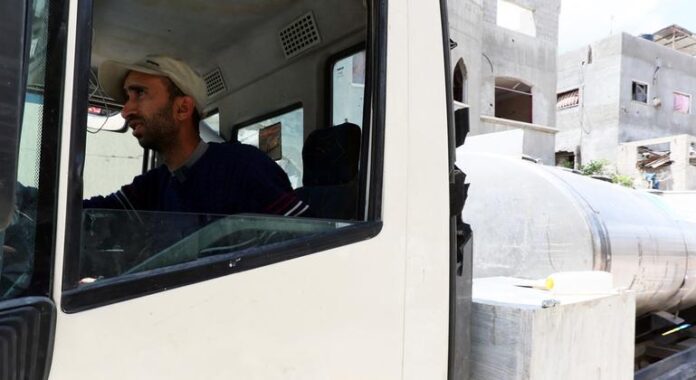
Every day, he drives his water truck through the Strip, filling up empty tanks and vessels.
Our camera accompanied Alloush on a recent arduous mission to provide a little water to the residents of Jabalia. UN News’ correspondent met Alloush in Jabalia’s desalination plant, where he spends hours waiting for water.
Like everywhere else in Gaza, the desalination plant is overcrowded. As Gaza is running out of fuel, Alloush explained that 35 to 40 liters of diesel is needed every hour for the plant just to operate.
Hours spent waiting
At the plant, Ibrahim has to be patient: “We come to the desalination plant and wait about five hours for our turn to fill up. Water prices are very high due to production costs. People here in Gaza cannot afford water unless it is distributed by organizations, institutions, or initiatives.
“The cost of one cubic metre is very high because of how expensive diesel is, which is needed to operate the generators. One cubic metre of water can cost between 90 to 100 shekels, this is about 20 Jordanian dinars.”
Gaza residents lining up near the water truck to fill their jugs.
After completing his task, Ibrahim Alloush gets into his old truck, starts its engine, and sets off on a challenging journey through the devastated neighborhoods of Jabalia.
For Alloush, the struggle does not stop at the water plant. Driving through Gaza is not easy, navigating destroyed streets and surrounded by rubble, Alloush needs to reach the people waiting for him – waiting for water.
There are always people waiting for him. It is almost impossible for trucks to reach certain areas, if it were not for Mr. Alloush, these areas would basically be lacking any supply.
No life without water
‘We are suffering from a major water crisis,” says Ayman Kamal, a Gaza Strip resident. While some can wait half a day to fill up five or ten gallons of water only, others may not even be able to get water, as they were too far behind in line.
“Without water, there is no life…We wait for potable water that comes from distant areas, and people crowd to get their share,” says another resident, Fathi al-Kahlout, as he fills his bucket.
“The blockade has caused us many problems. We hope that the world will look at us, even for one day, as it looks at other countries. Everyone in other countries lives in comfort. Why are we condemned to this fate?” asked Sameer Badr, explaining that his children spend their days going back and forth in search of water.
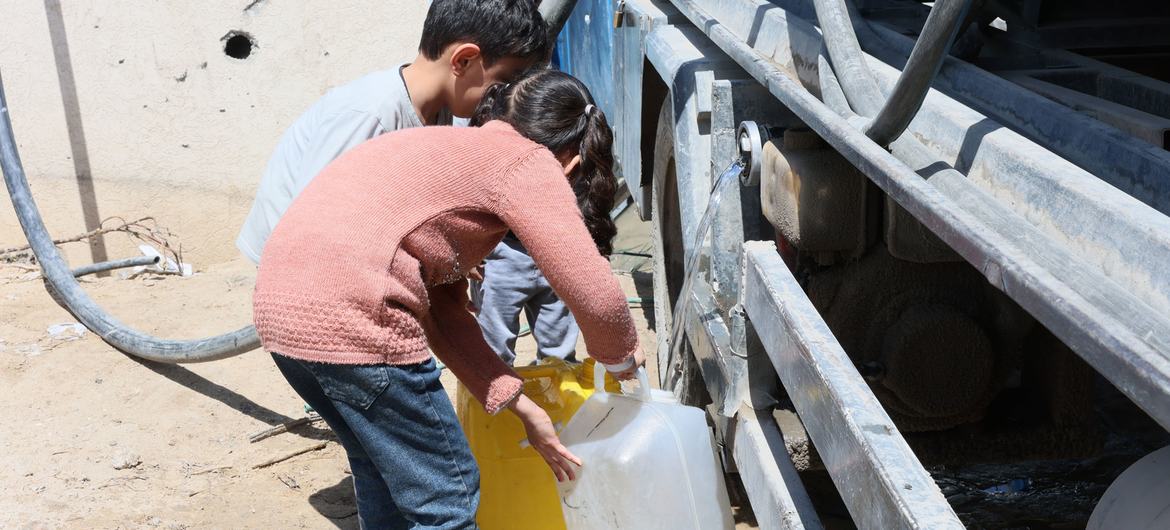
Two kids getting water from a truck.
Worsening water crisis
The continued closure of border crossings and the ban on fuel entry is paralysing desalination plants, the closure of the main water pipelines has also led to a sharp decrease in the amount of drinking water available to residents in Gaza. The water crisis is worsening, warns Children’s Fund UNICEF.
After the collapse of the ceasefire, the repair work that had been started on vital wells and water points came to a total halt, leaving many water sources either out of service or at risk of further damage.
According to UNICEF about one million people – including 400,000 children – are currently receiving a daily six-litre ration per person, a stark decrease from the previous average of 16 litres.
If fuel runs out, UNICEF warned that this amount could drop to less than four litres per day in the coming weeks, forcing families to rely on unsafe sources, significantly increasing the risk of disease outbreaks, especially among children.
Sudan war has created suffering of ‘industrial proportions’, aid agencies warn
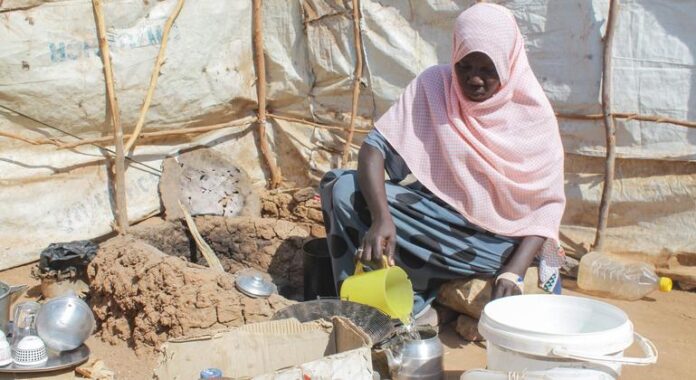
“With no viable peace in sight, the Sudanese are trapped in a humanitarian crisis of industrial proportions,” said Jens Laerke, spokesperson for the UN aid coordination office, OCHA.
“Two out of three people need aid, that’s 30 million people…This, of course, demands a massive ramp-up of international support; what we see instead is donors pulling back funding across the world.”
The war between rival militaries – the Sudanese Armed Forces (SAF) and the paramilitary Rapid Support Forces (RSF) – began on 15 April 2023 after a breakdown in transition to civilian rule, following the overthrow of long-time President Omar al-Bashir. Heavy fighting has levelled towns and cities and claimed tens of thousands of lives.
At least 12.4 million people have been uprooted from their homes, including more than 3.3 million refugees.
Rape as a weapon of war
Since the outset, relief workers and others including the UN human rights office, OHCHR, have repeatedly warned that sexual violence remains pervasive across Sudan.
“One survivor recounted that she was told, ‘We are your men now,’ before RSF fighters raped her in front of her children,” said Li Fung, OHCHR Representative in Sudan, speaking to journalists in Geneva via video link from Nairobi.
Meanwhile, the UN World Food Programme (WFP) reiterated deep concerns about the 25 million Sudanese facing famine. “Two years of war has turned Sudan into the world’s largest hunger catastrophe and famine is spreading,” said Leni Kinzli, WFP Communications Officer for Sudan, also speaking from the Kenyan capital.
Invaluable support
In an appeal for funding to support the UN agency’s work, she testified to the value of food assistance for internally displaced people (IDPs): “It means that a father who has been torn from his home in Khartoum can feed his family of four; it means that a mother in an IDP camp in Kassala can cook a simple meal for her young daughters and so that they don’t fall into malnutrition.”
Amid reports that the paramilitary RSF paramilitary had taken the key Darfur town of Um Kadadah from the SAF, the UN World Health Organization (WHO) warned that attacks on healthcare personnel and facilities “are on the rise”.
The past two years have seen 156 confirmed attacks on health “causing more than 300 deaths and over 270 injuries among either patients or healthcare workers”, said Dr. Shible Sahbani, WHO Representative in Sudan, speaking via video link from Cairo.
Echoing those concerns, gender equality agency, UN Women, reported that 80 per cent of hospitals in conflict areas are no longer functioning, with maternal deaths rising “alarmingly”.
A full eight in 10 displaced women and girls in Sudan now lack access to clean water, said Sofia Calltorp, UN Women Director in Geneva.
Funding cuts dilemma
“The latest global cuts in humanitarian funding have put critical programmes at risk, with teams forced to make unreasonable choices and refugees being left to resort to harmful strategies to meet their basic needs,” said UN refugee agency (UNHCR) spokesperson Olga Sarrado.
“Inside Sudan, reduced funding will cut access to clean water for at least half a million displaced people, significantly increasing risks of cholera and other waterborne diseases,” she added.
Gaza: UN rights office condemns Israeli buffer zone plan
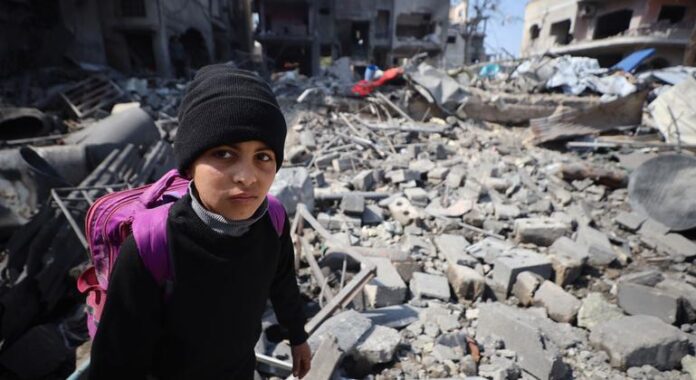
Hostilities in the Gaza Strip resumed mid-March following the collapse of the ceasefire and Israel’s border closure.
As it enters its sixth week, the denial of aid into the enclave has left more than 2.1 million Gazans trapped without access to food, drinking water, and basic services.
Israel in recent weeks has ramped up its attacks on civilian infrastructure such as residential buildings and camps, leaving many more dead or missing under the rubble.
Between March 18 and April 9, Israeli forces have struck housing and tents for internally displaced people (IDPs) on 224 occasions during 36 separate strikes, according to the UN rights office, OHCHR.
Vast new exclusion zones
Earlier on Friday, Israeli authorities issued two new displacement orders “covering vast areas in northern and southern Gaza,” UN Spokesperson Stéphane Dujarric said at the regular noon briefing in New York.
“Together, these areas span more than 24 square kilometres – roughly the size of everything south of Central Park here in Manhattan.”
Some medical facilities and storage sites containing critical supplies are located within the newly designated zones, prompting aid coordination office OCHA to warn that this could have life-threatening consequences for people in urgent need of care.
“This leaves Palestinians with less than a third of Gaza’s area to live in – and that remaining space is fragmented, it’s unsafe and it’s barely livable following 18 months of hostilities.”
‘Forcible transfer’
OHCHR spokesperson Ravina Shamdasani also highlighted the growing trend in attacks against media workers, reporting that at least 209 journalists have been killed in Gaza since the deadly Hamas-led terror attacks of October 2023, as Israel continues to deny international media entry into the Strip.
The OHCHR spokesperson acknowledged that the temporary evacuation of civilians in certain areas can be legal, under strict conditions.
But “the nature and scope of the evacuation orders raises serious concerns that Israel intends permanently to remove the civilian population from these areas in order to create a so-called buffer zone”, she said.
“Permanently displacing the civilian population within occupied territory amounts to forcible transfer, which is a grave breach of the Fourth Geneva Convention and a crime against humanity.”
War crimes
Combatants need to demonstrate compliance with the rules of war, particularly the principles of distinction – meaning defenceless civilians should not be targeted – as well as proportionality and precaution.
“Intentionally directing attacks against civilians not taking a direct part in hostilities constitutes a war crime, further compounding the desperate conditions for Palestinian civilians,” Ms. Shamdasani said.
OHCHR has also repeatedly warned that collective punishment and the use of starvation of the civilian population as a method of war, constitute crimes under international law.
Ms. Shamdasani also stressed that her office was “seriously concerned that Israel appears to be inflicting on Palestinians in Gaza, conditions of life increasingly incompatible with their continued existence as a group”.
Women wait to receive food at a distribution point in Gaza City.
Supplies pile up
With stocks of drugs sharply declining, medicines and other essential supplies have been piling up at the shuttered border crossings.
Almost 36 million tons of supplies in Dubai are on standby for entry into the enclave, according to Dr. Rik Peeperkorn, World Health Organization Representative (WHO) for the West Bank and Gaza.
Medical evacuations for patients in need of urgent treatment have slowed significantly. Likewise, the number of international emergency medical teams deployed has dropped, depriving hospitals of the help they crucially need, “because the caseload is immense”, Dr. Peeperkorn stressed.
“We urgently call for the immediate resumption of medical evacuation through all possible routes, particularly restoring the medical referral pathway to the West Bank and Jerusalem.”
Myanmar: Military strikes persist amid earthquake response efforts
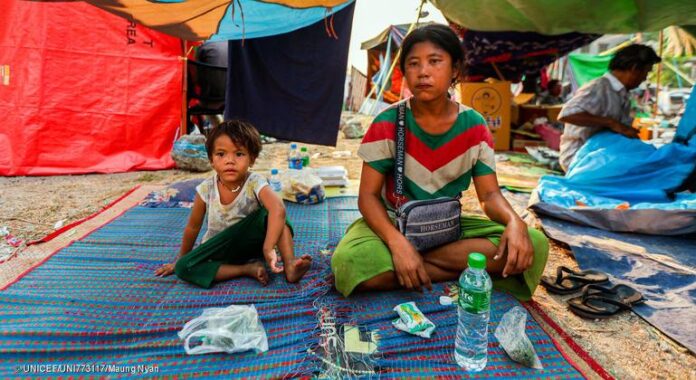
“At a moment when the sole focus should be on ensuring humanitarian aid gets to disaster zones, the military is instead launching attacks,” spokesperson Ravini Shamdasani told journalists in Geneva.
Since the 28 March disaster, military forces have reportedly carried out over 120 attacks, she said, and more than half occurred after a declared ceasefire was due to have gone into effect on 2 April.
Devastated areas hit
Most attacks involved aerial and artillery strikes, including in areas impacted by the quake.
“Numerous strikes have been reported in populated areas, with many appearing to amount to indiscriminate attacks and to breach the principle of proportionality in international humanitarian law,” she added.
Myanmar was already facing political, humanitarian, human rights and economic crisis before the earthquake struck.
The miliary seized power from the democratically elected government in February 2021 and has been engaged in a brutal civil war with opposition militias.
Aid obstacles, amnesty appeal
Ms. Shamdasani said UN human rights chief Volker Türk is calling on the military to remove any and all obstacles to aid delivery and to cease military operations.
She noted that areas at the epicentre of the quake in Sagaing, particularly those controlled by opponents of the military, have had to rely on local community responses for search and rescue, and to meet basic needs.
“As the traditionally festive season of Thingyan and the start of a new year begins on Sunday in Myanmar, we call for common efforts to assist those in greatest need,” she added.
In this regard, OHCHR called on the military to announce a full amnesty for detainees it has incarcerated since February 2021, including State Counsellor Aung San Suu Kyi and President U Win Myint.
‘Perfect storm’ for disease
Meanwhile, the UN Children’s Fund (UNICEF) is worried that the earthquake has created “a perfect storm for the emergence of infectious disease outbreaks.”
Eric Ribaira, UNICEF Myanmar’s chief of health said that even before the disaster, the country faced outbreaks of vaccine preventable and communicable diseases such as measles, malaria, dengue and cholera.
“The situation is so much more dangerous now for people, especially children, in these earthquake-affected areas,” he told UN News.
Mr. Ribaira explained that earthquakes spark population displacement which can lead to overcrowded areas, such as temporary shelters, while water and sanitation systems are disrupted causing contaminated water supplies and poor hygiene conditions.
Children may also get respiratory infections from dust and debris from collapsed buildings, he added.
UNICEF is helping to provide clean drinking water and sanitation, as well as necessary supplies so that pregnant women can deliver safely.
“So far, we have reached about 700 pregnant and lactating women with newborn and clean delivery kits. And we plan to reach much, much more in the coming days,” said Mr. Ribaira.
UNICEF and aid partners have also deployed general medical kits to cover approximately 250,000 people for the next three months, but he stressed that more support is critical.
“The needs are huge, and we must do everything we can to prevent these outbreaks and ensure that women can deliver their babies safely and the general population has urgent medical support when they need it,” he said.
UN mobilizing aid
This week, the UN and partners launched a $275 million appeal as an addendum to a humanitarian plan to reach some 1.1 people in Myanmar.
The earthquake has pushed two million people into reliance on aid. They join nearly 20 million others who already required humanitarian assistance.
UN agencies, partners and Member States have rapidly mobilized aid, including medical care, shelter, safe water, hygiene kits, and food.
To further strengthen efforts on the ground, the UN Central Emergency Response Fund (CERF) has allocated an additional $5 million for earthquake response, which follows an earlier disbursement of $5 million.
