
Of the seven Earth-sized worlds orbiting the red dwarf star TRAPPIST-1, one planet in particular has attracted the Source link
A new look at TRAPPIST-1e, an Earth-sized, habitable-zone exoplanet
Of the seven Earth-sized worlds orbiting the red dwarf star TRAPPIST-1, one planet in particular has attracted the
WFP warns Sudan food aid could run out in March
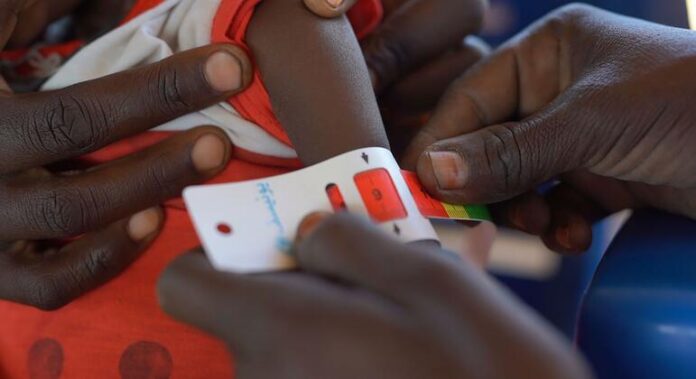
The UN agency has reached 10 million vulnerable people with food, cash and nutrition assistance since the conflict began and continues to deliver aid to an average of four million people monthly, including in previously hard to reach areas in the Darfur and the Kordofan regions as well as Khartoum and Al Jazira states.
However, “these hard-earned gains now risk being reversed,” said Ross Smith, Director of Emergency Preparedness and Response, as WFP has been forced to reduce rations to the absolute minimum.
“By the end of March, we will have depleted our food stocks in Sudan,” he warned.
Millions going hungry
The Sudanese Armed Forces (SAF) and military rivals the Rapid Support Forces (RSF) have been locked in a battle for power since mid-April 2023, creating the world’s largest hunger and displacement crisis.
More than 21 million people are not getting enough to eat, and famine has been confirmed in parts of the country where humanitarian access is practically impossible.
The fighting has forced nearly 12 million people to flee their homes and seek shelter whether elsewhere in Sudan, or across the border.
Furthermore, some 3.7 million children and pregnant and breastfeeding mothers are malnourished. Recent surveys have documented record levels of malnutrition in some locations of North Darfur, where up to more than half of all young children are affected.
‘We can turn the tide’
WFP has teams in Sudan and the access to scale up and save more lives, yet funding remains a challenge and $700 million is urgently needed to continue operations through June.
In the past six months, WFP has provided regular assistance to nearly 1.8 million people in famine areas or where the threat exists, which has helped to push back hunger in nine locations.
Recent breakthroughs have included a joint UN convoy into Kadugli in October – one of the areas where families have been cut off from aid for months.
“One thousand days of conflict is one thousand days too many. Every single day that fighting continues, families are falling deeper into hunger and communities are pushed further to the brink,” said Mr. Smith.
“We can turn the tide and avert famine conditions spreading further, but only if we have the funding to support these most vulnerable families.”
Novel breast cancer therapy reduces risk of recurrence for most common subtype of breast cancer
In an international study led by UCLA, researchers have shown that giredestrant, when given as an additional treatment Source link
Novel breast cancer therapy reduces risk of recurrence for most common subtype of breast cancer
In an international study led by UCLA, researchers have shown that giredestrant, when given as an additional treatment
In Gaza, 800,000 people now live in dangerous locations prone to flooding
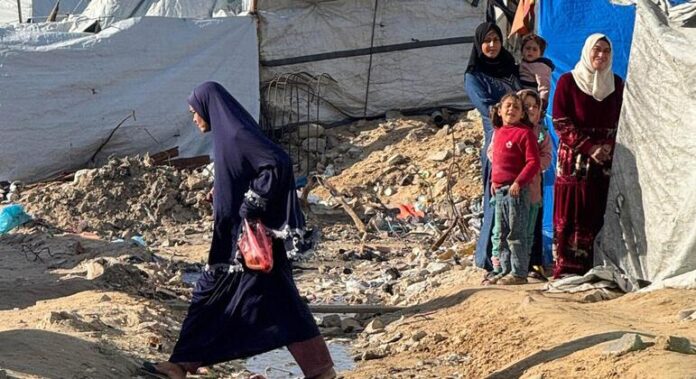
In her family’s shelter, the ground is soaked and her children cannot sleep.
“Our situation is extremely difficult, and we want someone to help us, at least by providing us with a tent that shelters us and is a proper tent,” Amina told the UN aid coordination office (OCHA) earlier this week.
Millions of others like Amina, who are threatened by rain, flooding and ongoing bombing need live-saving aid.
A recent Israeli ban of dozens of humanitarian groups, however, makes that assistance out of reach. A move which a group of independent UN human rights experts warned on Thursday is a violation of international law.
“This strategy will create conditions that force Palestinians into chronic deprivation, threatening their very survival as a group and further violating the Genocide Convention,” the experts said. “It must be stopped.”
Green light for US Gaza peace plan
Later on Thursday, in a statement released by his Spokesperson, Secretary-General António Guterres welcomed the launch of Phase Two of US President Donald Trump’s 20-point plan, announced Wednesday.
The plan includes the establishment of a transitional technocratic Palestinian administration in Gaza and the National Committee for the Administration of Gaza.
“Any initiative that contributes to alleviating the suffering of civilians, supporting recovery and reconstruction and advancing a credible political horizon is a positive development,” the statement read.
Mr. Guterres highlighted that the UN will continue to support all efforts to end the occupation and the conflict leading to the achievement of the two-State solution, in line with previous UN resolutions and international law.
‘Uninhabitable’ shelters
OCHA said that 800,000 people — nearly 40 per cent of the population — now live in sites prone to flooding, where winter storms and heavy rain have made shelters uninhabitable.
As of Tuesday, UN partners reported that hundreds of tents and makeshift shelters were blown away or severely damaged, leaving over 3,000 people exposed to severe weather, while more than 60 inhabited buildings in Gaza City could be at risk of collapse.
Prohibited waters
OCHA noted that the Israeli military is still deployed in more than half of the Gaza Strip, beyond the “Yellow Line”, where access is either restricted or banned to aid facilities, public infrastructure and agricultural land.
Detonations of residential buildings have continued, along with bulldozer activity, OCHA said, including near or east of the “Yellow Line”.
Additionally, access to the sea for Palestinians remains prohibited and there continue to be reports of Palestinian fishermen being killed or detained in the waters just off Gaza.
Millions worth of aid blocked
Announced as a national security measure on 30 December 2025, Israel’s new regulation bans 37 international non-governmental organizations (NGOs) from operating in Gaza and the West Bank.
As of 31 December, nearly $50 million in life-saving aid remained blocked amid repeated ceasefire violations, according to the group of Human Rights Council-appointed independent experts. They are not UN staff and receive no salary for their work.
In early December, UN agencies and NGOs were only able to deliver 14,600 tents for 85,000 people, leaving 1.3 million Palestinians without adequate winter shelter.
Several people, including six children have already died from hypothermia, drowning or cold-related injuries.
“There are no words left to describe what Gaza has become,” the experts said.
East Jerusalem: Forced shutdown of UN clinic signals escalating disregard for international law

Israeli forces stormed the UNRWA-operated health centre on Monday and ordered it to close for 30 days. They also demanded the removal of UN signage.
Furthermore, water and electricity supply to multiple UNRWA facilities are scheduled to be cut off in the coming weeks, affecting schools, health centres and other critical buildings.
Legislative campaign
The development marks “a new step in a pattern of deliberate disregard for international law and the United Nations,” UNRWA Commissioner-General Philippe Lazzarini tweeted.
“This is a direct result of legislation passed by the Israeli parliament in December, which stepped up existing anti-UNRWA laws adopted in 2024,” he added.
The UNRWA Jerusalem Health Centre serves hundreds of Palestine refugee patients every day, agency spokesperson Jonathan Fowler told UN News.
“For most of them, it’s their only possibility of having access to primary healthcare,” he said. “So, there’s a right to health involved in this.”
He stressed that UNRWA facilities are United Nations premises, which are protected under international law, and this applies across the globe.
‘An anti-humanitarian gesture’
Mr. Fowler described the impending water and power shutdown as “kind of an anti-humanitarian gesture in many ways,” saying “it’s particularly shocking.”
He recalled that in October, the International Court of Justice (ICJ) “restated in crystal clear fashion that the State of Israel is obliged under international law to facilitate UNRWA’s operations, not hinder or prevent them. And yet this continues.”
He also warned of the potential wider consequences.
“These are disgraceful moves. And it’s very, very important that there be global awareness about what’s going on, because this is much more than directly in East Jerusalem,” he said.
“It goes beyond even UNRWA. This is something which potentially has global implications because of this pattern of disregard for international law.”
The monster hiding in plain sight: JWST reveals cosmic shapeshifter in the early universe
In a glimpse of the early universe, astronomers have observed a galaxy as it appeared just 800 million Source link
The monster hiding in plain sight: JWST reveals cosmic shapeshifter in the early universe
In a glimpse of the early universe, astronomers have observed a galaxy as it appeared just 800 million
Yemen’s fragile calm unravels as hunger and aid restrictions deepen crisis
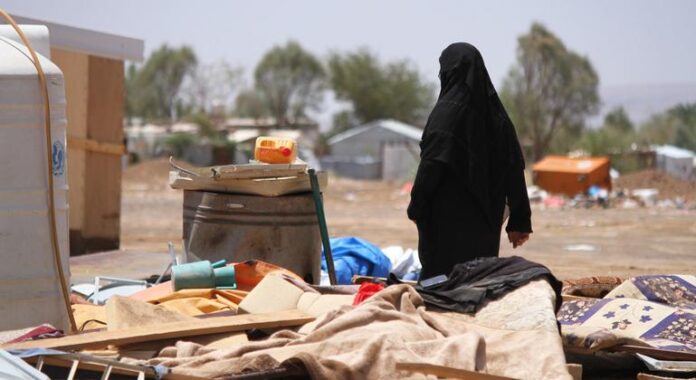
Briefing ambassadors, UN Special Envoy for Yemen Hans Grundberg said recent political and security developments – particularly in the south – underscored how quickly stability could unravel without a credible, inclusive political process.
“Absent a comprehensive approach that addresses Yemen’s many challenges in an integrated manner, rather than in isolation, the risk of recurrent and destabilising cycles will remain,” Mr. Grundberg said.
Tensions in the south
While military de-escalation has been achieved in recent days, he cautioned that the security situation remains fragile, especially following rival deployments in southern governorates.
In December, forces affiliated with the separatist Southern Transitional Council sought to expand their presence in Hadramout and Al Mahra, while government-aligned forces, backed by Saudi Arabia, moved in early January to reassert control over key infrastructure.
Mr. Grundberg said the future of southern Yemen could not be determined “by any single actor or through force,” urging Yemeni leaders to pursue dialogue.
He welcomed President Rashad al-Alimi’s proposal to convene talks with a broad range of leaders in the south, calling it a potential step toward rebuilding a Yemen-wide political process under UN auspices.
Years of conflict have left thousands across Yemen dependent on humanitarian assistance. Pictured here, a health volunteer walks in an IDP camp to check on malnourished children.
Instability preys on economy
Political uncertainty is being felt most sharply in Yemen’s economy, he added, with rising prices, unpaid salaries and faltering services eroding household resilience.
“Even short-lived political and security instability can trigger currency pressure, widen fiscal gaps, and stall reform efforts,” Mr. Grundberg warned.
The economic strain is being compounded by weak institutions and irregular salary payments, particularly for public sector workers.
Mr. Grundberg urged Yemeni authorities to shield economic institutions -including the Central Bank – from political disputes, warning that erosion of confidence could further destabilise the country.
Severe humanitarian consequences
Ramesh Rajasingham, Director of the Humanitarian Sector for the UN aid coordination office (OCHA), said Yemen’s crisis is worsening as needs rise, and humanitarian access has become more restricted amid funding shortfalls.
More than 18 million Yemenis – about half the population – will face acute food insecurity next month, while tens of thousands could fall into “catastrophic hunger,” facing famine-like conditions, he warned.
The health system is also collapsing. Over 450 facilities have already closed and thousands more are at risk of losing funding. Vaccination programmes are also under threat and only two thirds of Yemen’s children are fully immunised, largely due to lack of access in the north.
“As a result, millions of Yemeni children are vulnerable to deadly yet vaccine-preventable diseases, such as measles, diphtheria, cholera and polio,” Mr. Rajasingham said.
Aid efforts restricted
Humanitarian operations are further constrained by the continued detention of 73 UN staff by the Houthi de facto authorities, Mr. Rajasingham said, calling for their immediate release. The detentions have severely restricted aid delivery in areas home to around 70 per cent of humanitarian needs nationwide.
Despite the challenges, aid continues where access allows. UN partners reached 3.4 million people with food assistance late last year and delivered emergency support during floods and disease outbreaks. But gains are fragile.
“Humanitarian action saves lives,” Mr. Rajasingham said, “but when access is obstructed and funding falls away, those gains are quickly reversed.”
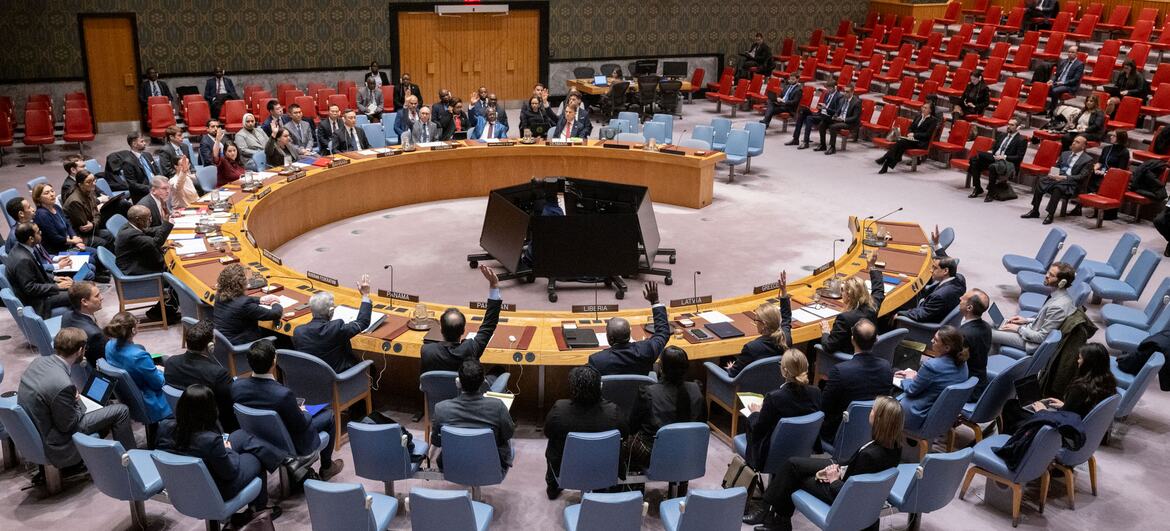
A wide view of Security Council as members vote on a draft resolution concerning the Red Sea reporting mandate established pursuant to resolution 2722 (2024).
Attacks in the Red Sea
Earlier on Wednesday, the Security Council also voted to extend for six months, the monthly reporting requirement on attacks by the Houthi armed group – which controls much of Yemen – against merchant and commercial vessels in the Red Sea.
The resolution was adopted with 13 votes in favour, while Russia and China abstained.
The mandate was established in January 2024 amid a surge in Houthi attacks on international shipping linked to the conflict in Gaza.
It tasked the UN Secretary-General to provide regular updates on maritime security incidents, their humanitarian and economic impact, and implications for regional stability.
