Wednesday, September 30, 2026
Home Blog Page 544

Dangers grow for Myanmar quake survivors, health system ‘overwhelmed’

0
Dangers grow for Myanmar quake survivors, health system ‘overwhelmed’

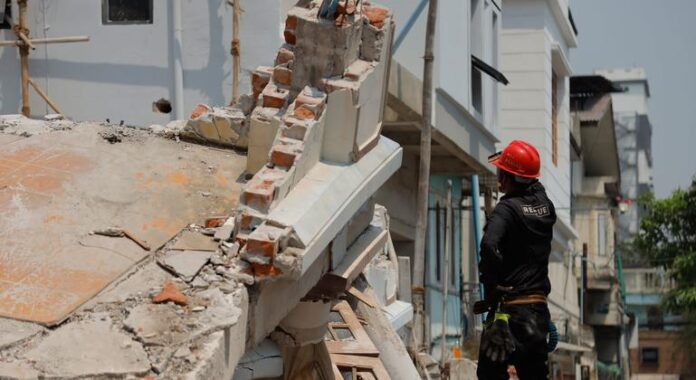
Ten days after a 7.7 magnitude quake levelled buildings and buckled bridges across central Myanmar, the latest death toll has passed 3,500 and is “likely to rise”, said Titon Mitra, UN Development Programme (UNDP) Regional Representative in the country, speaking from the devastated city of Mandalay.

He said that the response has moved into a “tragic phase” shifting from rescue to recovery efforts.

Well over 4,000 people have been injured in the quakes last week and more than 80 per cent of buildings have been damaged – especially in the major townships of Sagaing, Mandalay and Magway.

“The health system is completely overwhelmed, hospitals are unable to cope with the number of patients they’re dealing with,” Mr. Mitra said, adding that medicines and healthcare items are in “incredibly short supply”.

According to the UN humanitarian affairs coordination office (OCHA), more than 500,000 people across the country have been left without access to life-saving health care.

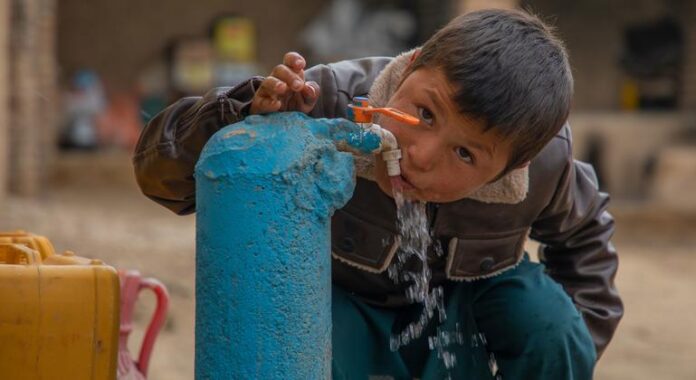
UNDP’s Mr. Mitra also stressed that the risk of waterborne diseases is very high because urban water pipe systems are broken and water storage facilities are damaged.

“Sanitation is now becoming a big issue as people who have been forced out of their homes are resorting to open defecation,” he warned.

The disaster has been compounded by intense rainfall which started earlier than expected last week in Mandalay, impacting the response and worsening the living conditions of homeless survivors.

Monsoon threat

Myanmar’s meteorology department forecasts rain and strong winds in large parts of the country through Friday.

Mr. Mitra said that shelter is a major issue. People are “fearful” to go back into their damaged homes and are sleeping on the streets at night, “often without any sort of cover”, he told journalists in Geneva via video link .

Food is also in huge demand as markets are “severely disrupted” in Sagaing and Magway, people don’t have incomes and there are “signs of hyperinflation in place”, he said.

Mr. Mitra said the UN system is mobilized and has conducted initial rapid needs assessments. UNDP is also evaluating the integrity of buildings to determine if they are safe to use.

This uncertainty has impacted a hospital in Sagaing where “all the patients are in the car park in 40°C heat”, he said. “If we consider the building can accommodate them, then we want to move them back as quickly as possible.”

Hostilities have not stopped entirely but he expressed optimism that aid can reach all those in need, following the ceasefire announced days after the disaster by the military and resistance groups.

Aid access plea

It remains the case that the military authorities control many affected areas and coordinate the provision of support.

“With an active civil war, we have to make sure that the aid, if it’s coordinated by military authorities, is going to areas which may be in resistance control,” he insisted.

The earthquake disaster – second only to Cylone Nargis in 2008 that killed more than 130,000 people – has compounded chronic and “very deep vulnerabilities” in Myanmar, the UNDP official said.

The country’s people have already suffered more than four years of fighting sparked by the military junta’s February 2021 coup d’état.

Prior to the earthquakes, nearly 20 per cent of the rice fields were already lost to conflict, more than 3.5 million people had been forced to flee their homes, over 15 million were facing hunger and an estimated 19.9 million were in need of assistance.

“I hope… when the cameras turn away from Myanmar, as they inevitably will and have in the past, that this doesn’t return to being a neglected crisis”, he concluded.

Source link

EIOPA follows a comprehensive and balanced approach to simplification amid push for competitiveness

0
EIOPA follows a comprehensive and balanced approach to simplification amid push for competitiveness

The European Insurance and Occupational Pensions Authority (EIOPA) published today its approach to supporting the objective of simplifying regulation and reducing administrative burdens for enhanced European competitiveness. To achieve a balanced and credible outcome, EIOPA calls for smarter, more harmonised regulation alongside more effective supervision at the EU level. This could create ideal conditions for European businesses to thrive in the Single Market while safeguarding consumer’ rights and maintaining financial stability.

Amid growing uncertainties and the emergence of a new geopolitical order, Europe must do more to foster a thriving and resilient economy while ensuring robust consumer protection and a level playing field for businesses. 

EIOPA believes that simplification and burden reduction could be a meaningful catalyst for growth. Importantly, regulatory streamlining should aim at creating a stronger and more cohesive framework across the EU by eliminating unnecessary divergence across Member States. Regulatory simplification must prioritise EU interests over national ones, preventing market fragmentation through a holistic, long-term approach. It should by no means result in a mere shift of the regulatory burden and lead to new national obligations springing up where EU requirements have been reduced.

However, regulatory simplification must also not come at the expense of effective supervision. Therefore, EIOPA will carefully evaluate what data is essential for supervisory work.

Balanced approach, broader focus

EIOPA supports regulatory initiatives that foster a more competitive EU economy in a balanced and sustainable way. Within its own remit and even prior to the Commission’s initiative, EIOPA has been advancing regulatory simplification in all areas of its work by: 

  • shortening Solvency II guidelines, 
  • streamlining reporting templates and reducing data points for Solvency II reporting,
  • introducing proportionality principles where possible,
  • permanently reducing the frequency of stress tests for insurers and IORPs, and
  • promoting the streamlining of requirements related to product disclosures, product design and sales processes.

On sustainability, EIOPA will support the Commission in simplifying Europe’s sustainability reporting while ensuring (re)insurers and pension funds access reliable and standardised data to manage climate risks.

Policymaking and supervision

Simplification should begin at the earliest stages of the EU legislative process as mandates defined in the regulation have real-life impacts in terms of industry obligations and supervisory responsibilities. Greater involvement from EIOPA during Level 1 negotiations, especially for horizontal legislation, would help to ensure solid technical input to co-legislators regarding the need for specific mandates. Certain areas could benefit from further harmonisation to eliminate the fragmentation and barriers to entry that minimum harmonisation regulation can give rise to. 

To ensure a well-functioning Single Market, strong supervisory convergence is essential. In this context, a stronger mandate at the EIOPA Board level would help reduce complexity and enhance efficiency. In specific areas, such as the supervision of cross-border undertakings more consistent enforcement across jurisdiction could strengthen the overall effectiveness of supervision, promote a level playing field and lower administrative burdens – ultimately boosting competitiveness.

Petra Hielkema, Chair of EIOPA said: “Regulatory simplification and burden reduction is important and possible. Yet, it should be viewed as a means to an end, not as the end itself. The ultimate goal, after all, is to create a more resilient and competitive European economy, where businesses can flourish, consumers are well protected and financial stability is maintained. Efforts to simplify regulation must, in our view, strike the right balance, ensuring that streamlining leads to a stronger, more cohesive framework, rather than introducing new gaps, inconsistencies or unintended burdens elsewhere.”

Go to the Note

Source link

EU trade ministers discuss US tariffs

0
EU trade ministers discuss US tariffs

Ministers supported a negotiated solution with the US, acceptable for both sides, and addressed the possibility of further proportionate countermeasures. They affirmed their unity and determination in defending the interests of citizens and businesses.

Source link

With aid blockade into its second month, misery deepens for Gazans

0
With aid blockade into its second month, misery deepens for Gazans

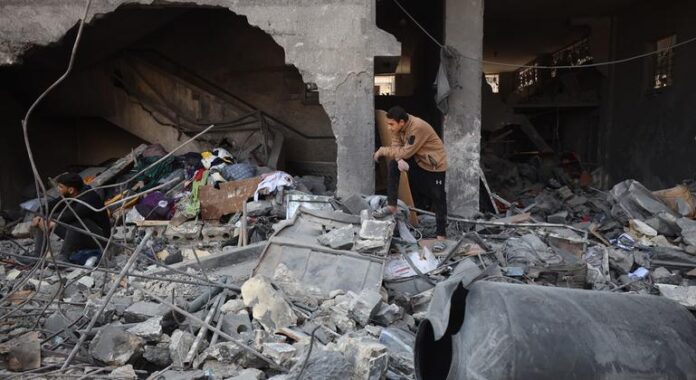
In a joint statement, the heads of the UN’s aid agencies warned that “we are witnessing acts of war in Gaza that show an utter disregard for human life,” with Israeli displacement orders forcing hundreds of thousands to flee – with nowhere safe to go.

“With the tightened Israeli blockade on Gaza now in its second month, we appeal to world leaders to act – firmly, urgently and decisively – to ensure the basic principles of international humanitarian law are upheld.

“Protect civilians, facilitate aid, release hostages – renew a ceasefire,” they urged.

Trapped, starved, bombed

More than 2.1 million Gazans are being “trapped, bombed and starved again,” top UN officials said.

Any assertions that there is sufficient food inside the Strip to feed everyone is far from the reality on the ground, they added.

Over the weekend the UN Children’s Fund (UNICEF) announced the closure of 21 malnutrition treatment centres in Gaza, owing to the resumption of hostilities and the recent evacuation orders issued for areas where the centres were operating.

The development came as the UN agency warned that more than one million children in Gaza have been impacted by the Israeli embargo.

Spokesperson Abu Khalaf condemned the blockade while confirming it has thousands of aid parcels waiting to be delivered to Gaza.

Milk supplies dwindle

Complementary food supplies for infants in Gaza have now run out, he said, with only enough ready-to-use milk left to feed 400 children for a month.

UNRWA, the UN agency for Palestine refugees and the largest in Gaza, highlighted the increasingly dire impact of Israel’s 2 April decision to stop allowing all humanitarian and commercial supplies into the enclave.

Media reports citing the Gazan health authorities on Sunday said that Israeli strikes killed at least 32 people, including over a dozen women and children.

In other reports, the Israeli military was alleged to have completely destroyed almost all homes in Rafah and isolated the southern city from the rest of the enclave.

“It’s been over a month since the State of Israel banned the entry of aid and commercial supplies into #Gaza,” UNRWA said. “Stocks are getting low and the situation is becoming desperate.”

Although the United Nations agency continues to provide assistance “with whatever supplies remain”, the UN World Food Programme (WFP) on Friday reported that its 25 subsidized bakeries have had to close.

Stocks are dwindling and prices of the few remaining items in shops have soared because no food aid nor cooking gas is entering Gaza.

“Poor kids are looking all day for food to eat, and they can’t find any,” said Jalila Abu Laila, at a camp for displaced Gazans in the north of the enclave. “Basically, nothing is available; they might only get some rice from the good people who give some out, but in general, we are unable to provide anything.”

Israeli cities also reportedly came under attack on Sunday – including the southern city of Ashkelon – after Palestinian fighters Hamas claimed responsibility for firing rockets at Israel.

Israel’s military said around 10 projectiles were fired, but most were successfully intercepted. 

Source link

Aid data critical to crisis response threatened by funding cuts

0
Aid data critical to crisis response threatened by funding cuts

“Data is central to humanitarian action,” OCHA said, as aid organizations look to “focus their response to reach the communities with the most severe needs.”

In its latest report on the State of Open Humanitarian Data OCHA said that “as the humanitarian system severely contracts due to unprecedented funding cuts and threats to principled humanitarian action, the data ecosystem that supports it will experience the same pressure.”

Budget cuts threatening aid as a whole have had a devastating impact on data gathering, impeding an effective humanitarian response.

The data gathered by the United Nations and its partners covers a broad range of issues including, for example, climate hazards such as droughts, floods and storms.

Information on rainfall, temperatures, the extent of floods and the impact on agriculture during those extreme weather events can provide important indicators including the number of people expected to be affected or displaced and ultimately help to save lives.

Cameroon floods

In 2024, ahead of the rainy season in Cameroon, the UN Central Emergency Response Fund (CERF) partnered with the OCHA Cameroon Office to estimate flood exposure and track it in near-real time.

The Centre predicted that about 350,000 people would be exposed to the flooding, as the season progressed, over 356,000 people were affected.

The analysis supported a timely allocation of $4 million from CERF which provided help to 176,500 affected people in the most vulnerable areas.

Humanitarian Data Exchange

In 2024, some 216 organizations shared around 2,500 data sets covering crises ranging from Afghanistan to Gaza and Sudan, information which is collected in the Humanitarian Data Exchange or HDX.

Over the last year, the HDX was consulted more than 1.4 million times by researchers in over 200 countries in territories.

Its almost 20,000 datasets were downloaded 3.5 million times – a 30 per cent increase from 2023.

The information, OCHA said, provides a “foundational set of data that is critical to understand a humanitarian context.”

Countries such as Colombia, Afghanistan and South Sudan had the highest percentage of timely data on HDX. On the other hand, Myanmar and the State of Palestine were the locations with the lowest availability level.

In light of recent aid cuts, “the year ahead promises to be challenging for data availability,” OCHA adding that it was calling on “governments and partners to continue investing in the data that underpins crisis response in what is surely a defining moment for the sector.” 

Source link

Montenegro: remarks by High Representative/vice-President Kaja Kallas at the presentation of the European Peace Facility equipment to Armed forces

0
Montenegro: remarks by High Representative/vice-President Kaja Kallas at the presentation of the European Peace Facility equipment to Armed forces

Montenegro: remarks by High Representative/vice-President Kaja Kallas at the presentation of the European Peace Facility equipment to Armed forces

Source link

World Health Day promotes healthy futures for mothers and babies

0
World Health Day promotes healthy futures for mothers and babies

This year’s World Health Day focuses on improving maternal and newborn health on a global scale. Learn about the EU’s efforts around the world to ensure mothers and babies receive optimum care by health professionals.

Source link

29 arrested and 26 tonnes of illegal plant protection products seized in France and Spain

0

The members of the gang were involved in environmental crime, money laundering and document fraud. They exploited business structures and coordinated a supply chain for illegal plant protection products based in Italy, Portugal and Spain since 2020.The investigation was led by Spain (Guardia Civil). Given the complexity of the criminal network, the police operation was carried out in two phases:…

Source link

EUDA and DEVIDA join forces to develop new toolkit for monitoring cocaine-related environmental impacts

0
Montenegro: remarks by High Representative/vice-President Kaja Kallas at the presentation of the European Peace Facility equipment to Armed forces

Representatives of the EUDA and the Peruvian organisation DEVIDA are meeting in Lima this week under a joint project to develop a monitoring framework to capture cocaine-related environmental impacts (1). Understanding and addressing environmental impacts associated with drug markets is a strategic priority at both European and international level (2).

The project is the first of the EUDA’s international targeted policy analyses (TPA), which are integral to the EUDA’s wider international cooperation framework and geostrategic analysis services. The underlying goal of this type of analysis is…

Source link

UN rights chief urges probe into Russian attack that killed nine children in Ukraine

0
UN rights chief urges probe into Russian attack that killed nine children in Ukraine

Volker Türk issued a statement expressing shock at the attack, which occurred on Friday evening in a residential area.

A team from the UN Human Rights Office in Ukraine visited the impact site the following day, documented the damage, and established the names and identity of the children who were killed.

‘An unimaginable horror’

The incident is the deadliest single strike harming children which the Office has verified since the start of Russia’s full-scale invasion of Ukraine in February 2022.

“It’s an unimaginable horror — nine children killed, most while playing in a park, as a military weapon exploded into shrapnel above them,” said Mr. Türk.

He added that “the use of an explosive weapon with wide area effects by the Russian Federation in a densely populated area —and without any apparent military presence — demonstrates a reckless disregard for civilian life.” 

Documenting the aftermath 

The attack took place just before 7 PM on Friday, local time. The missile detonated over a residential area with a playground, restaurant and multi-storey buildings.

Eighteen people were killed, including nine children, and 75 were wounded, including 12 children, according to local authorities. Many of the casualties occurred in the playground.

The UN Human Rights Office verified many of the casualties, including each of the children killed, and continues to collect information to verify the remaining cases. 

The team also documented damage from hundreds of pieces of shrapnel to buildings, playground swings and slides, trees, and on the ground.

The statement noted that while Russian authorities claimed a military group was targeted, local residents, a business association representative and staff of the restaurant told UN Human Rights that dozens of professional women and men in the beauty sector had been attending an industry forum hosted by the local business association in the restaurant, shortly before the attack.

The event was publicized online well in advance, and all witnesses conveyed that there had been no military presence at the restaurant or in the area at the time of the strike.

Uphold humanitarian law

“International humanitarian law requires parties to a conflict to use means or methods of combat that in the prevailing circumstances are not likely to strike military and civilians without distinction,” said Mr. Türk.

“It also requires the parties to take all feasible precautions to minimize harm to civilians, including by verifying that the objects targeted are not civilian but military objectives, and choosing tactics and weapons that would avoid or at the very least minimize incidental loss of civilian life.” 

The statement noted that even if the Russian authorities had information that military personnel could be present, the mode and circumstances of attack may constitute an indiscriminate attack.

Indiscriminate attacks are prohibited under international humanitarian law, and if they amount to attacks directed against civilians may constitute war crimes, Mr. Türk added.

The UN rights chief called for a prompt, thorough and independent investigation into the attack. 

Source link