Wednesday, September 30, 2026
Home Blog Page 545

Gaza: Paramedic still missing after aid worker killings, Palestinian Red Crescent Society calls for answers

0
Gaza: Paramedic still missing after aid worker killings, Palestinian Red Crescent Society calls for answers

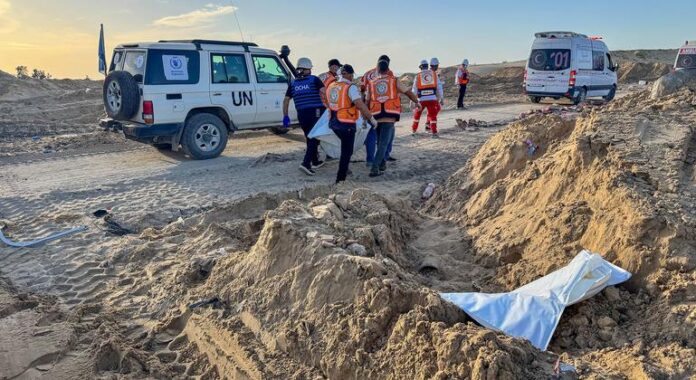
Last Sunday, a joint PRCS and UN humanitarian coordination office (OCHA) mission uncovered a shallow grave in Rafah. The bodies of eight PRCS paramedics, six civil defence workers, and one UN staff member were found.

They had been killed by the Israeli military while attempting to reach victims of shelling on 23 March.

“They were humanitarians. They wore emblems. They should have been protected,” the International Federation of Red Cross (IFRC)’s Permanent Observer, Dylan Winder, told journalists during a briefing at UN Headquarters on Friday.

Dr. Younes al-Khatib, PRCS President, confirmed that one of the team members – now identified as Assad – is still unaccounted for.

He explained that the incident was the “single most deadly attack” against Red Cross Red Crescent workers anywhere in the world since 2017.

Investigation in progress

PRCS officials said it remains unclear whether their colleague, Assad, had been killed at the scene or taken into detention.

A video recorded from one of the PRCS ambulances appears to show Israeli tanks firing on clearly marked emergency vehicles, refuting claims that the ambulances were unidentifiable or operating without sirens.

“It’s a trap,” one responder can be heard shouting in the footage, according to PRCS Vice President Marwan Jilani.

The final words of one PRCS paramedic, captured in an audio recording found on his phone, were also shared during the briefing.

“Forgive me, mom. I just wanted to help people. I wanted to save lives,” he said, moments before he was killed. His phone was discovered with his body.

Dr. al-Khatib noted that a forensic report is being prepared and will be released in due course.

PRCS officials reiterated calls for an international, independent investigation, challenging the “narrative” put forward by the Israeli Government and demanding justice for the victims and their families.

Humanitarian operations under siege

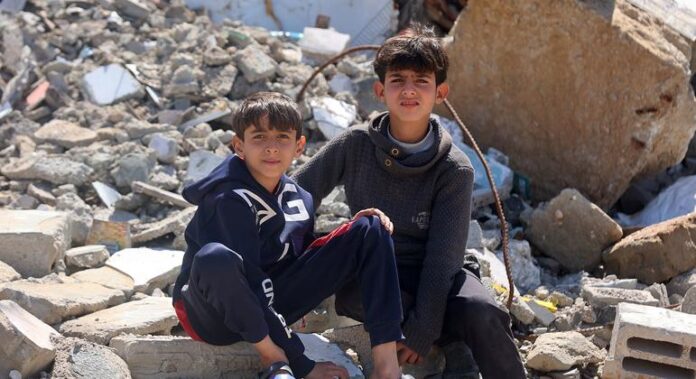
The grim discovery comes as Gaza’s humanitarian crisis deepens, with all crossings still closed.

Speaking to reporters on Thursday, UN Spokesperson Stéphane Dujarric warned that thousands more families have been forced to flee westward in the Gaza Strip, following new displacement orders issued by Israeli forces in parts of Gaza City.

“These displacement orders have left civilians exposed to hostilities and deprive them of access to essential services for their basic survival,” he said, citing information from OCHA.

According to the World Food Programme (WFP), food parcel distributions are expected to end soon. Hot meal distributions continue but supplies are running low.

Meanwhile, sanitation conditions are worsening. OCHA reports infestations of fleas and mites in three makeshift displacement sites in Al-Mawasi, causing rashes and other health issues.

Treatment is impossible without the chemicals and medical supplies that remain blocked at closed border crossings.

UN humanitarian partners also report a spike in criminal looting and insecurity – a food distribution centre from the Palestine refugee agency (UNRWA) and surrounding buildings were looted on Wednesday.

West Bank operations

In the West Bank, OCHA reports that tens of thousands of people remain displaced due to ongoing Israeli operations, particularly in Jenin and Tulkarm.

Mr. Dujarric noted that humanitarian partners are providing urgent assistance and psychosocial support to affected communities, but conditions continue to deteriorate.

‘Gaza cannot be left alone’

More than 220 PRCS staff have been killed over the last 50 years, noted Dr. al-Khatib, stressing: “We are looking for action.”

The PRCS leadership made five formal appeals to the international community, including an immediate ceasefire, unrestricted humanitarian access and an end to impunity for attacks on aid workers.

“Gaza cannot be left alone,” Dr. al-Khatib concluded. “This is a cry to our international community.”

Source link

Weekly schedule of President António Costa

0
Weekly schedule of President António Costa

Weekly schedule of President António Costa, 7-13 April 2025

Source link

More than one million children in Gaza deprived of aid for over a month: UNICEF

0
More than one million children in Gaza deprived of aid for over a month: UNICEF

No aid has been allowed into Gaza since 2 March, representing the longest period of aid blockage since the start of the war, resulting in shortages of food, safe water, shelter, and medical supplies.

UNICEF said that without these essentials, malnutrition, diseases and other preventable conditions will likely surge, leading to an increase in preventable child deaths.

The agency has thousands of pallets of aid waiting to enter the enclave, said Edouard Beigbeder, Regional Director for the Middle East and North Africa.

“Most of this aid is lifesaving – yet instead of saving lives, it is sitting in storage,” he said.

“It must be allowed in immediately. This is not a choice or charity; it is an obligation under international law.”

Young lives at risk

UNICEF warned that children receiving malnutrition treatment are at serious risk as 21 treatment centres, representing 15 per cent of total outpatient facilities, have closed due to displacement orders or bombardments.

Furthermore, only enough ready-to-use infant formula (RUIF) is currently available for 400 children for a month. Estimates indicate that nearly 10,000 infants under six months old require supplementary feeding, which could force families to use alternatives mixed with unsafe water.

Meanwhile, UNICEF has also had to scale back mental health and psychosocial support, mine education, and child protection case management due to the ongoing hostilities and displacement.

Water access plummets

During the ceasefire, UNICEF began repairing critical wells and waterpoints, but the collapse of the truce means that many remain unrepaired or at risk of further damage.

The agency further noted that drinking water access for one million people, including 400,000 children, has dropped from 16 litres per person per day to just six.

If fuel runs out, it could plunge to below four litres, forcing families to use unsafe water and increasing the risk of disease outbreaks, especially among children.

Ensure basic needs

“For the sake of more than one million children in the Gaza Strip, we urge the Israeli authorities to ensure, at a minimum, people’s basic needs are met, in line with its obligations under international humanitarian law,” said Mr. Beigbeder.

“This includes their legal responsibility to ensure that families are supplied with the food, medical and other essential supplies they need to survive.”

Meanwhile, UNICEF and partners are maintaining a critical presence in Gaza.

The agency continues to call on the parties to cease hostilities and reinstate the ceasefire, stressing that humanitarian aid and commercial goods mut be allowed to enter and move freely across the Gaza Strip.

Source link

Media advisory – Foreign Affairs Council (Trade) of 7 April 2025

0
Weekly schedule of President António Costa

Main agenda items, approximate timing, public sessions and press opportunities.

Source link

AI’s ‘Oppenheimer moment’: Why new thinking is needed on disarmament

0
AI’s ‘Oppenheimer moment’: Why new thinking is needed on disarmament

Engaging with the tech community is not “a nice to have” sideline for defence policymakers – it is “absolutely indispensable to have this community engaged from the outset in the design, development and use of the frameworks that will guide the safety and security of AI systems and capabilities”, said Gosia Loy, co-deputy head of the UN Institute for Disarmament Research (UNIDIR).

Speaking at the recent Global Conference on AI Security and Ethics hosted by UNIDIR in Geneva, she stressed the importance of erecting effective guardrails as the world navigates what is frequently called AI’s “Oppenheimer moment” – in reference to Robert Oppenheimer, the US nuclear physicist best known for his pivotal role in creating the atomic bomb.

Oversight is needed so that AI developments respect human rights, international law and ethics – particularly in the field of AI-guided weapons – to guarantee that these powerful technologies develop in a controlled, responsible manner, the UNIDIR official insisted.

Flawed tech

AI has already created a security dilemma for governments and militaries around the world.

The dual-use nature of AI technologies – where they can be used in civilian and military settings alike – means that developers could lose touch with the realities of battlefield conditions, where their programming could cost lives, warned Arnaud Valli, Head of Public Affairs at Comand AI.

The tools are still in their infancy but have long fuelled fears that they could be used to make life-or-death decisions in a war setting, removing the need for human decision-making and responsibility. Hence the growing calls for regulation, to ensure that mistakes are avoided that could lead to disastrous consequences.

“We see these systems fail all the time,” said David Sully, CEO of the London-based company Advai, adding that the technologies remain “very unrobust”.

“So, making them go wrong is not as difficult as people sometimes think,” he noted.

A shared responsibility

At Microsoft, teams are focusing on the core principles of safety, security, inclusiveness, fairness and accountability, said Michael Karimian, Director of Digital Diplomacy.

The US tech giant founded by Bill Gates places limitations on real-time facial recognition technology used by law enforcement that could cause mental or physical harm, Mr. Karimian explained.

Clear safeguards must be put in place and firms must collaborate to break down silos, he told the event at UN Geneva.

“Innovation isn’t something that just happens within one organization. There is a responsibility to share,” said Mr. Karimian, whose company partners with UNIDIR to ensure AI compliance with international human rights.

Oversight paradox

Part of the equation is that technologies are evolving at a pace so fast, countries are struggling to keep up.

“AI development is outpacing our ability to manage its many risks,” said Sulyna Nur Abdullah, who is strategic planning chief and Special Advisor to the Secretary-General at the International Telecommunication Union (ITU).

“We need to address the AI governance paradox, recognizing that regulations sometimes lag behind technology makes it a must for ongoing dialogue between policy and technical experts to develop tools for effective governance,” Ms. Abdullah said, adding that developing countries must also get a seat at the table.

Accountability gaps

More than a decade ago in 2013, renowned human rights expert Christof Heyns in a report on Lethal Autonomous Robotics (LARs) warned that “taking humans out of the loop also risks taking humanity out of the loop”.  

Today it is no less difficult to translate context-dependent legal judgments into a software programme and it is still crucial that “life and death” decisions are taken by humans and not robots, insisted Peggy Hicks, Director of the Right to Development Division of the UN Human Rights Office (OHCHR).

Mirroring society

While big tech and governance leaders largely see eye to eye on the guiding principles of AI defence systems, the ideals may be at odds with the companies’ bottom line.

“We are a private company – we look for profitability as well,” said Comand AI’s Mr. Valli.

“Reliability of the system is sometimes very hard to find,” he added. “But when you work in this sector, the responsibility could be enormous, absolutely enormous.”

Unanswered challenges

While many developers are committed to designing algorithms that are “fair, secure, robust” according to Mr. Sully – there is no road map for implementing these standards – and companies may not even know what exactly they are trying to achieve.  

These principles “all dictate how adoption should take place, but they don’t really explain how that should happen,” said Mr. Sully, reminding policymakers that “AI is still in the early stages”.

Big tech and policymakers need to zoom out and mull over the bigger picture.

“What is robustness for a system is an incredibly technical, really challenging objective to determine and it’s currently unanswered,” he continued.

No AI ‘fingerprint’

Mr. Sully, who described himself as a “big supporter of regulation” of AI systems, used to work for the UN-mandated Comprehensive Nuclear-Test-Ban Treaty Organization in Vienna, which monitors whether nuclear testing takes place.  

But identifying AI-guided weapons, he says, poses a whole new challenge which nuclear arms – bearing forensic signatures – do not.

“There is a practical problem in terms of how you police any sort of regulation at an international level,” the CEO said. “It’s the bit nobody wants to address. But until that’s addressed… I think that’s going to be a huge, huge obstacle.”

Future safeguarding

The UNIDIR conference delegates insisted on the need for strategic foresight, to understand the risks posed by the cutting-edge technologies now being born.

For Mozilla, which trains the new generation of technologists, future developers “should be aware of what they are doing with this powerful technology and what they are building”, the firm’s Mr. Elias insisted.

Academics like Moses B. Khanyile of Stellenbosch University in South Africa believe universities also bear a “supreme responsibility” to safeguard core ethical values.

The interests of the military – the intended users of these technologies – and governments as regulators must be “harmonised”, said Dr. Khanyile, Director of the Defence Artificial Intelligence Research Unit at Stellenbosch University.

“They must see AI tech as a tool for good, and therefore they must become a force for good.”

Countries engaged

Asked what single action they would take to build trust between countries, diplomats from China, the Netherlands, Pakistan, France, Italy and South Korea also weighed in.

“We need to define a line of national security in terms of export control of hi-tech technologies”, said Shen Jian, Ambassador Extraordinary and Plenipotentiary (Disarmament) and Deputy Permanent Representative of the People’s Republic of China.

Pathways for future AI research and development must also include other emergent fields such as physics and neuroscience.

“AI is complicated, but the real world is even more complicated,” said Robert in den Bosch, Disarmament Ambassador and Permanent Representative of the Netherlands to the Conference on Disarmament. “For that reason, I would say that it is also important to look at AI in convergence with other technologies and in particular cyber, quantum and space.”


Source link

Myanmar quake: Airstrikes persist as UN pushes aid efforts

0
Myanmar quake: Airstrikes persist as UN pushes aid efforts

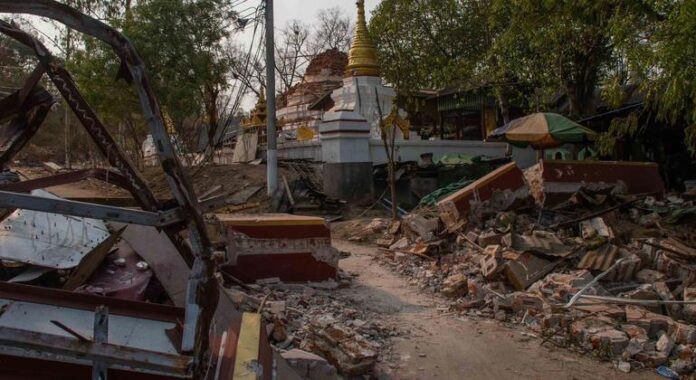
Despite the military’s announcement of a ceasefire, attacks have continued across the country, exacerbating an already dire situation, UN human rights chief Volker Türk warned on Friday.

“In the days following the deadly earthquake that tore through central Myanmar last week, the Myanmar military continued operations and attacks, including airstrikes – some of which were launched shortly after tremors subsided,” said Ravina Shamdasani, spokesperson for the High Commissioner for Human Rights.

“We urge a halt to all military operations and for the focus to be on assisting those impacted by the quake,” she told journalists in Geneva, reiterating Mr. Türk’s call for an “inclusive political solution” to end more than four years of fighting sparked by the junta’s February 2021 coup d’état.

Latest data from the UN human rights office, OHCHR, points to at least 61 reported attacks across Myanmar since the disaster happened, including 16 since the ceasefire announced by the military was supposed to take effect on 2 April.

A broad coalition of opposition armed groups has declared a temporary truce on offensive operations to facilitate emergency aid.

A broad coalition of opposition armed groups have declared a temporary truce on offensive operations to facilitate emergency aid.

The tactics of the military – known as the Tatmadaw in Myanmar – include using near-silent adapted paragliders to bomb communities, said James Rodehaver, Head of OHCHR’s Myanmar team:

“What those are is an individual military operative who uses a hang-glider with a backpack attached to his back or to his torso with a large fan on it and he uses that to essentially paraglide using the fan as a motor over areas and drop hand-held bombs or munitions onto targets below.”

UN relief chief arrives in Myanmar

Against this backdrop, the UN Emergency Relief Coordinator, Tom Fletcher, arrived in Myanmar on Friday to assess the scale of devastation and meet survivors and aid workers.

After briefings with humanitarian teams in Yangon, Mr. Fletcher travelled to Myanmar’s second largest city, Mandalay, near the epicentre of the quake, where 80 per cent of the buildings are estimated to have collapsed.

There, he met with frontline humanitarians and community organizations who have been leading earthquake response, applauding their “courage, skill and determination”.

“Many themselves lost everything and yet kept heading out to support survivors,” he said in a post on social media.

Security Council urges access

The UN Security Council issued a press statement on Friday reiterating the importance of a safe and conducive environment to ensure the timely and effective delivery of lifesaving assistance to all those in need, without disruption or discrimination.

“The members of the Security Council recognised the need to strengthen rescue, relief, and recovery efforts and to scale up immediate and rapid humanitarian assistance in response to the requests to help the people of Myanmar, supported by the international community,” the statement said.

They also expressed their gratitude and support for the work of the Association of South-East Asian Nations (ASEAN), UN agencies and the wider international community, including the swift provision of urgent life-saving assistance, rescue, and disaster relief.

UN emergency supplies for families affected by the Myanmar earthquake arrive at Yangon airport.

Humanitarian response ramps up

Immediately after the 28 March earthquake, which struck just before 1 PM local time, UN agencies deployed teams to affected areas, delivering critical aid to tens of thousands of families and assessing the damage.

More than 25 search-and-rescue teams are in the field, medical teams have been deployed, and essential aid – including water and shelter kits – is being distributed across impacted regions. On Thursday alone, 30 tons of medical supplies arrived in Myanmar, bringing the total delivered so far to 100 tons.

The UN refugee agency (UNHCR) has also provided plastic sheets and kitchen sets for 25,000 people and is mobilizing additional supplies for another 25,000 people from its existing stockpiles.

Massive needs

Meanwhile, the World Health Organization (WHO) has warned of escalating health risks in Myanmar, with hospitals overwhelmed by trauma cases, disrupted health services and growing fears of disease outbreaks in displacement camps.

No one could have foreseen the destruction, Elena Vuolo, WHO Deputy Representative in the country told UN News, in an exclusive interview from the stricken capital Nay Pyi Taw.

“I experienced this firsthand when a colleague was injured during the earthquake. We took her to two hospitals – both of which could not treat her, [a third] facility did not even have the supplies to give her stitches,” she said.

“It was two hours after the earthquake, but the hospitals ran out of supplies. Nobody could predict the scale of the disaster.”

Listen to the interview here:

The UN health agency has also received reports of increasing cases of acute watery diarrhoea (AWD) and fears loom over an outbreak of cholera in the worst affected areas.

Funding crisis hampers response

Alongside overwhelming needs, funds to ensure a response at scale are lacking.

To address the need for resources, the UN is leading the preparation of a new humanitarian appeal, aligned with the $1.1 billion Humanitarian Needs and Response Plan, which currently has about 5 per cent of required funding.

The funds will be used to manage displacement sites and support vulnerable people in six impacted regions until the end of the year.

Source link

Japan: High Representative/Vice-President Kallas holds second EU-Japan Strategic Dialogue with Foreign Minister Takeshi Iwaya

0
Weekly schedule of President António Costa

Japan: High Representative/Vice-President Kallas holds second EU-Japan Strategic Dialogue with Foreign Minister Takeshi Iwaya

Source link

Sudan: Suffering continues amid massive destruction across Khartoum

0
Sudan: Suffering continues amid massive destruction across Khartoum

Mohamed Refaat, IOM Chief of Mission in Sudan, was speaking to reporters after returning from previously inaccessible Khartoum state, which is now back under the control of the Sudanese Armed Forces (SAF).

War erupted between the SAF and former ally the Rapid Support Forces (RSF) in April 2023, and civilians continue to bear the brunt of the violence. 

Recent weeks have seen intense fighting around the capital city, Khartoum, which had mostly been under RSF control.

‘Unimaginable’ destruction

Mr. Refaat said that even he was shocked by the level of destruction in the city.

“Electricity stations have been looted; the water pipes have been destroyed. And I’m not talking about some areas. I’m talking about everywhere I went,” he said.

The veteran aid worker has served in other conflict situations, including Libya and Yemen, “and the level of destruction I have seen in Bahri, Khartoum, is unimaginable,” he remarked.

“There has been targeting of not only people’s houses, but administrative areas, not military areas, but all the basic infrastructure that can maintain lives for people.”

Massive re-investment is needed to help all those returning to the Sudanese capital after nearly two years of war, he said.

Horrors all around

Mr. Refaat described meeting Sarah, an elderly maths teacher, unable to flee the violence. Her days had been “filled with horror”, witnessing the loss of loved ones, seeing homes destroyed and being surrounded by the permanent threat of violence and sexual abuse.

“Sarah’s decision to stay was driven by necessity,” he explained. “As an elderly woman, it would be dangerous and challenging to go by foot, and she has no transportation.”

In the absence of funding, many non-government organizations (NGOs) have stopped working or reduced operations. Mr. Refaat insisted that there are many more people like Sarah who have received no assistance.

Funding crisis widespread

“Funding has dried (up) but not only from Member States, but also from diaspora and charity organizations,” he said.

He stressed that more humanitarian funding is urgently needed for medicine, shelter, drinking water, education, and healthcare.

IOM is seeking $250 million to assist some 1.7 million people in Sudan this year but less than 10 per cent of funding has been received. 

Families on the run 

The UN is gravely concerned by reports that civilians are fleeing Khartoum city due to violence and fears of extrajudicial killings after Government forces regained control of the capital, UN Spokesperson Stéphane Dujarric said on Friday in New York.

Over the past week, some 5,000 displaced people, mostly from Khartoum, arrived in Jabrat El Sheikh in North Kordofan state, according to UN aid coordination office OCHA. 

Partners on the ground said families urgently need food, clean water, proper shelter and healthcare 

“Reports also indicate that others have fled Khartoum and other areas towards Um Dukhun, which is located in Central Darfur,” said Mr. Dujarric. The UN and humanitarian partners are working to verify the reports.

A wider trend 

The latest movements are part of a broader trend of conflict-driven displacement impacting multiple regions in Sudan, including the Blue Nile and South Kordofan.   

The overall situation across the country “remains complex and challenging,” he said, with civilians fleeing for their safety in some locations and trying to return home in other locations where basic services often have been decimated.  

OCHA is working to reach people in the South Kordofan capital Kadugli by facilitating the dispatch of a humanitarian convoy carrying nutrition, health and water purification supplies.  

However, the convoy remains stalled in Al Obeid, the capital of North Kordofan, due to insecurity and bureaucratic impediments. 

Not a target 

On Thursday, UN humanitarian affairs chief Tom Fletcher expressed outrage over reports of escalating attacks against community kitchens and safe spaces run by volunteers. 

In a social media post, he stressed that the work of these frontline volunteers is vital to people’s survival after almost two years of war, underscoring that humanitarians must be protected and supported, not targeted. 

Mr. Dujarric reiterated his message. 

“At the risk of sounding like a broken record, we remind all parties that under international humanitarian law, they have a legal obligation to allow and facilitate rapid, unimpeded and impartial humanitarian relief for civilians in need, regardless of the location or the affiliation of these civilians,” he said. 

Source link

UN rolls out key initiative to combat antisemitism

0
UN rolls out key initiative to combat antisemitism

The action plan, spearheaded by the UN Alliance of Civilizations (UNAOC) and the Office of the Special Adviser on the Prevention of Genocide, was launched in January this year amid deepening political and social tensions and a resurgence of “insidious centuries-old myths”, said a joint statement from the top UN officials leading the effort.

The systematic approach builds upon past initiatives to address antisemitism and other forms of identity-based hatred, reinforcing the Organization’s commitment to promoting equality, justice and human dignity.

As one of the first concrete steps in implementation, the UN is developing an online learning module in partnership with the UN System Staff College. It’s designed to equip users with the knowledge and tools to recognise and respond to antisemitism.

Unwavering commitment

“The United Nations was created in the aftermath of the Holocaust. Our efforts to respond and combat antisemitism, as well as all other manifestations of extremism and incitement to any religious hatred and violence, remain unwavering and are needed more than ever before,” said Miguel Ángel Moratinos, High Representative for UNAOC.

“Our joint efforts in spearheading the implementation of the Action Plan will contribute to and build on the broader framework of the United Nations’ work in addressing identity-based hatred.”

A crucial aspect of responding to antisemitism lies in actively countering and debunking the harmful stereotypes that perpetuate it. These stereotypes, often rooted in centuries-old conspiracy theories and disinformation, create a climate of fear and distrust.

They foster collective blame towards Jewish communities, based on false narratives or perceived collective responsibility for various societal issues or actions. Alarmingly, they can also lead to denial or distortion of the Holocaust.

Reject stereotypes

Virginia Gamba, acting Special Adviser on the Prevention of Genocide, emphasised the importance of strengthening global awareness.

“Being able to better recognise manifestations of antisemitism and these harmful stereotypes, and to have more knowledge to counter it, will further strengthen the work of UN colleagues globally,” she said.

“We must also never forget that intolerance, discrimination and attacks against one religious community, lead to intolerance, discrimination and attacks on others as well.”

Source link

UN rights office calls for end to Israel’s ‘illegal presence’ in the Occupied Palestinian Territory

0
UN rights office calls for end to Israel’s ‘illegal presence’ in the Occupied Palestinian Territory

The Palestinian co-director of the documentary, Basel Adra, delivered remarks to the UN Committee on the Exercise of the Inalienable Rights of the Palestinian People. Ambassador Riyad Mansour of the Observer State of Palestine and Israeli Human Rights lawyer Netta Amar Schiff – who joined via videolink – also took part.

No Other Land, directed by Palestinian and Israeli filmmakers, sheds light on the lived reality of Palestinians under occupation in Masafer Yatta, a collection of 19 hamlets, in the occupied West Bank.

‘The same reality’

“I wanted the world to know that we exist in this land…But even after winning the Oscar we went back to the same reality,” said Mr. Adra at the beginning of his remarks.

James Turpin, Chief of Prevention and Sustaining Peace Section, UN Human Rights, speaks during the meeting of the Committee on Exercise of Inalienable Rights of Palestinian People.

Addressing the overall human rights situation, James Turpin, who heads the Prevention and Sustaining Peace Section at OHCHR, said that for 15 years his office “has monitored, recorded and warned about the human rights situation in the Occupied Palestinian Territory and the widespread violations resulting from Israel’s 57-year military occupation.”

“The documentary film, No Other Land, brings to life, in a compelling and accessible way, what the UN has documented in countless reports,” added Mr. Turpin.

As of 2022, approximately 20 per cent of the West Bank had been designated as “firing zones” by Israeli authorities – or military areas closed to civilians – affecting over 5,000 Palestinians from 38 communities.

Settlement expansion continues

“There are now over 737,000 Israeli settlers in the West Bank” and “steps are regularly taken to accelerate construction of additional housing units in new or existing Israeli settlements in East Jerusalem”, Mr. Turpin said.

Israel’s policies and practices in the OPT “undermines the territorial integrity essential to the Palestinian people’s right to self-determination and violates the prohibition against acquiring territory by force,” he added.

In October 2023, in Masafer Yatta, Basel Adra’s cousin was shot in the chest by an Israeli settler. The scene unfolded in front of an Israeli soldier, Mr. Adra told the committee.

“Israel systematically fails to prevent or punish settler attacks, with a reported policy of police non-enforcement in relation to settler violence, leaving Palestinians bereft of any hope of obtaining justice and accountability,” said Mr. Turpin.

Livelihoods lost

The OHCHR official added that settler violence “combined with arbitrary movement restrictions devastates Palestinian livelihoods,” highlighting also the use of unnecessary and disproportionate force against Palestinians, movement restrictions, and mass displacement.

“Israel’s illegal presence in the OPT must end, as confirmed by the International Court of Justice (ICJ)” said Mr. Turpin, referring to the July 2024 Advisory opinion from the ICJ.

“Almost every day there are settler attacks against Masafer Yatta,” added Basel Adra, co-director of No Other Land. 

Source link