
Philip R. Lane: Interest rate analytics
DR Congo: Record numbers face acute or emergency hunger
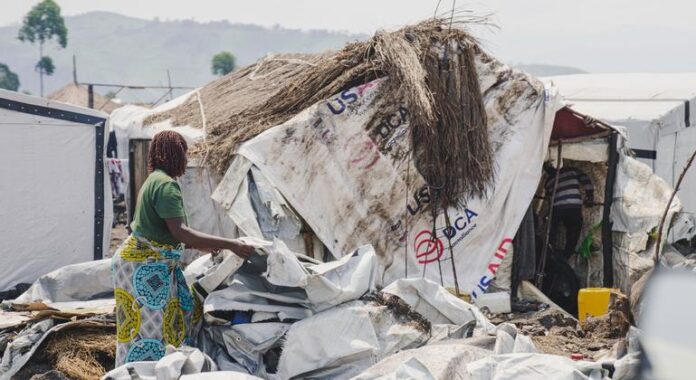
The situation represents one of the world’s worst food crises, according to the UN-partnered Integrated Food Security Phase Classification (IPC) platform.
“The humanitarian situation in the DRC is deteriorating at an alarming rate. Families who were already struggling to feed themselves are now facing an even harsher reality,” said Eric Perdison, WFP’s Regional Director for Southern Africa and ad interim WFP DRC Country Director.
On a scale of one to five – where five indicates famine – 3.9 million people in DRC are classified as IPC Phase 4, which indicates “emergency” levels of hunger – and a 23.8 million are enduring Phase 3 “crisis” levels.
Check out our explainer on how hunger and famine levels are classified, here.
Chaos in the east
The situation is worst in the conflict-affected eastern provinces of DRC – North Kivu, South Kivu, Ituri and Tanganyika – where families have lost access to their livestock and livelihoods.
Rebels from the Rwanda-backed M23 armed group have wrested control of the main cities of Goma and Bukavu since the year began, amid continued fighting, economic collapse and continuing efforts by regional mediators to agree ceasefire terms.
Mapping shows that the outbreak of violence in December in eastern DRC led by Rwanda-backed M23 rebels has pushed an additional 2.5 million people into acute food insecurity.
Situation worse for those uprooted
“Internally displaced people escaping violence remain among the most vulnerable, bearing the brunt of the worsening food crisis,” said the UN World Food Programme (WFP), in a joint statement with the UN Food and Agriculture Organization of the United Nations (FAO).
They are just two of the UN agencies committed to helping the most vulnerable communities in the war-torn east by providing life-saving food and nutrition assistance and strengthening resilience.
These include tens of thousands of people uprooted by M23 rebels from camps in North Kivu – and in particular six sites around Goma – and the territories of Kalehe and Uvira in South Kivu in February 2025, amid intensified conflict.
“All IDP sites in North Kivu, particularly in the Goma region, are now completely empty,” the IPC said, adding that of the 3.7 million internally displaced people formerly based in camps in eastern DRC, more than 2.2 million are in “crisis” and 738,000 face “emergency” levels of hunger.
In total, the DRC has more than 7.8 million displaced people, most live with host families in eastern regions.
“We have resumed operations in parts of North and South Kivu, and we are committed to do more to support those at risk, but we urgently need more resources,” WFP’s Mr. Perdison said.
“Armed clashes continue to disrupt food production and trade routes, while humanitarian access remains limited, as security risks hinder the ability to deliver essential assistance,” WFP added.
Inflationary pressures
The sharp depreciation of the Congolese franc, shuttered banks and lost incomes have also made it increasingly difficult for families to afford even the basics.
At the same time, inflation and disrupted supply chains have contributed to a rise in food prices. The price of basic foods such as maize flour, palm oil and cassava flour have increased by up to 37 per cent compared to pre-crisis levels in December 2024.
To date this year, 464,000 people have received WFP food, cash for food, and nutrition treatment in accessible areas of eastern DRC; WFP has managed to reach 237,000 people in Bunia alone.
Beyond emergency food assistance in eastern DRC, FAO and WFP have invested in skills-based training in North and South Kivu to help communities improve their long-term food security.
“The current situation is dire for the population, as harvests are lost, food prices soar, millions of people face acute food insecurity and are increasingly vulnerable,” said Athman Mravili, FAO Representative ad interim.
Urgent appeal
To help WFP reach 6.4 million people in DRC with food and nutrition assistance – and invest in long-term solutions – the UN agency needs $399 million to sustain operations amid growing humanitarian needs over the next six months.
“WFP and FAO call on the international community to step up funding and humanitarian access to prevent a full-scale catastrophe,” they said.
Sudan war: Displacement figures fall for first time
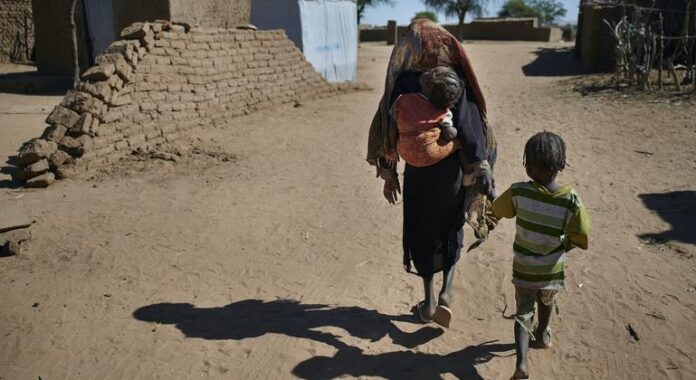
However, the country remains in the grip of one of the world’s worst humanitarian crises, with millions facing famine, disease and insecurity.
IOM data shows that between December last year and March, displacement fell by 2.4 per cent – with nearly 400,000 people returning to their places of origin in Aj Jazirah, Sennar and Khartoum states.
While the decrease signals a hopeful shift, it does not necessarily indicate improved conditions, IOM said.
Many are heading back to towns and villages devastated by months of war, where food, shelter and basic services are virtually non-existent.
Conditions not yet in place
Mohamed Refaat, who heads IOM’s country team in Sudan, warned that while many people are eager to return home, “the conditions for safe and sustainable return and integration are not yet in place.”
“Basic services including healthcare, protection, education, and food are scarce, and the lack of functional infrastructure and financial capacity will make it difficult for families to rebuild their lives.”
Fewer than a quarter of health facilities in the worst-affected areas remain functional – the rest have been destroyed, severely damaged or abandoned amid fighting between the Sudanese Armed Forces (SAF) and the paramilitary Rapid Support Forces (RSF) and their affiliated militias.
More than 30.4 million people – over half of Sudan’s population – require urgent assistance, according to the UN relief coordination office (OCHA).
Food insecurity is at catastrophic levels, with 24.6 million people facing acute hunger. Famine has already been confirmed in parts of North Darfur and the Nuba Mountains, and similar conditions are expected to spread in the coming months.
Across Sudan, there are an estimated 11.3 million IDPs – one of the largest displacement crises in the world, while nearly four million have fled to neighbouring countries – primarily Egypt, South Sudan and Chad.
An aerial view of Khartoum, the capital of Sudan. (file)
Situation in Khartoum
Meanwhile in Khartoum, OCHA is closely monitoring the latest shifts in control within the city, amid alarming reports of reprisals by armed groups against civilians, UN Spokesperson Stéphane Dujarric said on Thursday.
Sudan’s army retook the capital on Wednesday and reportedly drove RSF troops south.
Mr. Dujarric reiterated that civilians must never be targeted and called on all parties to adhere to their obligations under international humanitarian and human rights law.
“Serious violations must be investigated, with perpetrators held to account,” he said.
Rise in sexual violence
Women and children remain particularly vulnerable across the country, with UN agencies reporting an alarming rise in conflict-related sexual violence against women and girls.
Over half of all displaced persons are children, and nearly four million children under five – along with pregnant and breastfeeding women – are suffering from acute malnutrition.
Grave violations against children have also surged with an 83 per cent increase in child casualties since January, compared to the first quarter of 2024.
Furthermore, more than 17 million children are out of school, as the conflict has disrupted the education system nationwide.
Funding shortages
Amid staggering needs, the response from humanitarian agencies has been severely hampered by a drastic funding shortfall.
As of 26 March, only about $276 million (6.6 per cent) of the $4.2 billion required for the overall humanitarian response has been received.
Similarly, IOM’s Sudan response plan which aims to assist 1.7 million people, is only six per cent funded.
“Nearly two years of relentless conflict in Sudan have inflicted immense suffering, triggering the world’s largest and most devastating humanitarian crisis,” Mr. Refaat warned.
“Recent cuts in international humanitarian aid budgets are compounding the crisis and deepening the suffering.”
EU supports the EU wine sector to cope with market uncertainties

The EU has proposed a raft of measures to ensure Europe’s wine sector remains competitive and resilient in the face of shifting demographics, changing consumption patterns and climate change. The measures will unlock new market opportunities and help maintain the vitality of many rural areas.
Bologna wins European Mobility Week Award for making sustainable mobility more accessible

Bologna has won the European Mobility Week Award for its work in making sustainable mobility more accessible through Car-Free Days, information stands, and educational activities. Czech association Pěšky městem won the Mobility Action Award for promoting active mobility in 501 schools.
EU invests over €1 billion in artificial intelligence, cybersecurity and digital skills
The EU is investing €1.3 billion to roll out critical technologies that are strategically important for the future of Europe and the EU’s tech sovereignty. Work will focus on boosting the use of AI and its uptake by businesses and public administration, cyber resilience and digital skills.
Armed groups install ‘parallel administration’ in DR Congo, Security Council hears
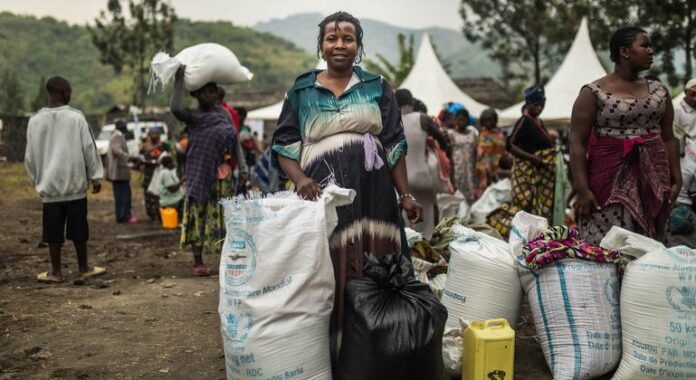
That’s according to the head of the UN stabilization mission in DR Congo (MONUSCO), Bintou Keita, who briefed the Security Council in New York on Thursday over escalating violence and displacement in the country since M23 overran the key cities of Goma and Bukavu last month.
These armed groups are not only seizing territory, she explained, but also attempting to install “a parallel administration”, recently appointing a governor and two-vice governors in Bukavu as well as financial and mining officials in North Kivu.
The MONUSCO peacekeepers have been in DRC since 2010 with a mandate to protect civilians and strengthen the Congolese Government’s efforts to quell violence and insecurity at the hands of multiple armed groups in the east.
MONUSCO had proceeded, at DRC’s request, to withdraw its troops from South Kivu in June 2024 but Kinshasa reversed course, asking the Security Council to extend MONUSCO’s mandate through the end of 2025.
Despite best efforts, armed groups have made major recent gains, chiefly the March 23 Movement which defends the interests of Congolese Tutsi – many exiled from Rwanda – and benefits from the support of Rwandan forces, and the extremist Allied Democratic Forces (ADF).
Rights violations
Ms. Keita described an alarming rise in human rights violations, including the summary execution of more than 100 civilians, forced child recruitment, abductions and cases of forced labour.
“Women and children remain the main victims,” she told the Council, noting a spike in sexual violence linked to mass displacement, conflict and the presence of escaped prisoners and new recruits in affected areas.
“Internally, displaced girls and boys are traumatised,” explained Charlotte Slente, from the Danish Refugee Council, also briefing Member States. “We have heard reports of girls engaging in survival sex,” she underscored.
Aid workers have documented rape cases involving girls as young as five, with nearly every child protection case involving sexual violence. From December 2024 to February 2025, 403 grave violations of children’s rights were verified.
In Ituri province – above North-Kivu – violence between CODECO and Zaïre armed groups has worsened, with civilians near mining zones and farmland bearing the brunt of the attacks.
Humanitarian aid hampered
The security situation has driven hundreds of thousands from their homes, with over 100,000 newly displaced since January in the city of Djugu in Ituri, alone.
However, humanitarian access remains severely constrained due to insecurity, roadblocks and the closure of key airports in Goma and Kavumu.
At the same time, the situation is being aggravated “in a global context of financial crisis”, Ms. Keita stressed. As of March, the 2025 Humanitarian Response Plan for the DR Congo was only 8.2 per cent funded.
Response and challenges
Despite these obstacles, MONUSCO continues to deliver on its mandate, she underlined, citing expanded patrols, civilian protection efforts and the facilitation of disarmament talks in Ituri.
These led to the surrender of over 2,200 fighters from the Zaïre group and the capture of weapons and ammunition.
Meanwhile, the deployment of a new Force Commander in North Kivu, has boosted coordination with Congolese forces. Still, MONUSCO faces movement restrictions imposed by M23 in and around Goma, including roadblocks and advance notice requirements.
Social cohesion at risk
Ms. Keita expressed deep concern over rising hate speech and ethnic targeting of Tutsi and Swahili-speaking Congolese, particularly as displaced populations move westward into DRC’s vast interior.
She called on the Government to adopt legislation to counter tribalism, racism and xenophobia, and reaffirm the nation’s diversity.
Regional diplomacy: fragile transitions
Efforts toward a ceasefire and political solution have so far stalled despite regional and international pressure – including resolution 2773 and mediation efforts led by Angola under the leadership of the African Union.
M23’s advance disrupted transition talks between MONUSCO and Congolese authorities, especially in South Kivu, where Bukavu is under rebel control.
Ms. Keita explained that the efforts to plan the mission’s disengagement from North Kivu and Ituri are “compromised”, with several planning assumptions now obsolete.
Nevertheless, she reiterated MONUSCO’s commitment to a coordinated withdrawal process when possible.
Call to action
In closing, the UN Special Representative called on the council to take “concrete measures” against those responsible for grave rights violations and to renew efforts to ensure a political resolution.
“We must direct all our efforts towards securing an unconditional ceasefire,” she said.
EU’s cohesion policy: Council sets out clear guidelines for the future

The Council approves conclusions setting out clear guidelines for the future of EU’s cohesion policy.
ECCC to finance EUR 390 million in cybersecurity projects under Digital Europe Programme for 2025-2027

Priorities for investment range from new technologies for cybersecurity, including on AI and post-quantum transition, to actions for improving EU cyber resilience and supporting SMEs.
The adoption of the DEP WP 2025-2027 constitutes a fundamental instrument for the implementation and advancement of the mission of the ECCC. The Centre aims to pool investment in cybersecurity research, technology, and industrial development, and ensure the efficient implementation of projects and initiatives in coordination with the Network of National Coordination Centres (NCCs).
During 2025-2027, the ECCC will continue to finance uptake and deployment actions in cybersecurity by the means of calls for proposals. The programme is structured as follows:
New technologies, AI and post-quantum transition
Dedicated actions will support entities in developing and deploying systems and tools for cybersecurity based on AI (including GenAI based technologies), reliable, secure and resilient AI models and algorithms or build the European testing infrastructure for the post quantum transition.
These enabling technologies should allow more effective creation and analysis of Cyber Threat Intelligence (CTI), automation of large-scale processes, as well as faster and scalable processing of CTI and identification of patterns that allow for rapid detection and decision making.
It will also include actions aimed at improving industrial and market readiness for the cybersecurity requirements for SMEs as specified in relevant EU cybersecurity legislation and to ensure the development and use of more secure hardware and software products.
Cyber Solidarity Act Implementation
The ECCC will contribute to the creation of the European Cybersecurity Alert System (ECAS) foreseen in the Cyber Solidarity Act, to build and enhance coordinated detection and common situational awareness capabilities at European level. In this regard, a pan-European network of national and cross-border Cyber Hubs will be established. The ECCC will support preparedness activities, part of the Cybersecurity Emergency Mechanism and the mutual assistance mechanisms foreseen in the Cyber Solidarity Act.
Additional actions improving EU cyber resilience
The ECCC will support the integration of relevant cybersecurity requirements deriving from several regulations and directives: NIS 2 directive, Cyber Resilience Act, CSA, DORA, GDPR, AI Act as required. It will contribute to the EC priorities, including to support the cybersecurity of hospitals and healthcare providers in alignment with the Action Plan. In addition, it is envisaged to provide support to improve the resilience and security of the infrastructure critical for global communications and solutions to cover the surveillance and protection of critical undersea infrastructure, such as submarine cables, as well as the detection of malicious activities around them.
ECCC Executive Director Luca Tagliaretti said: “The first ECCC Cybersecurity Work Programme is an important milestone in our establishment as key player in the EU cybersecurity landscape. The funding available will support innovation and deployment of technologies in Europe and contribute to the common goal of building a cyber resilient EU.”
Background
The ECCC implements the ‘Specific Objective 3: Cybersecurity and Trust’ from the DEP Regulation (EU) 2021/694. This is the first DEP Work Programme developed by ECCC following its financial autonomy reached in 2024. The Cybersecurity WP is meant to complement the main DEP WP and was written in close consultation with the ECCC Governing Board and the European Commission.
This document includes inputs from the ECCC strategic agenda and considers all the legal obligations stemming from the ECCC regulation, DEP regulation, Cyber Solidarity act, while supporting the implementation of other key legislative files including the Cyber Resilience Act, the Cybersecurity Act and NIS 2 Directive.
For more information: Digital Europe Cybersecurity Work Programme 2025-2027
Contact for media: communicationeccc [dot] europa [dot] eu (communication[at]eccc[dot]europa[dot]eu)
Gaza: UN humanitarians flag impact on children of return to war
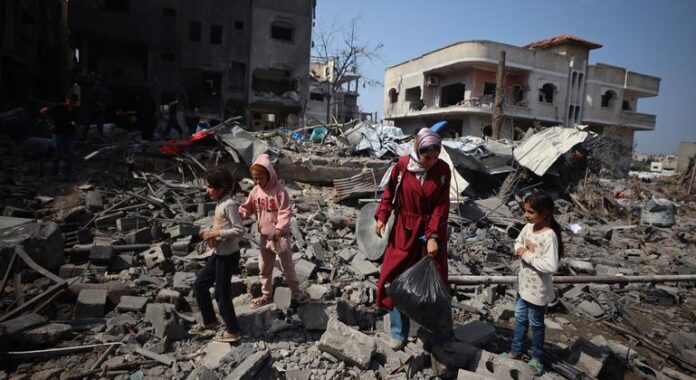
UNICEF’s Rosalia Bollen, who’s on the ground there, said that hundreds of children had been killed and injured – some with severe burns, shrapnel lodged in their bodies, fractures and amputations.
“Even on 18 March with that very heavy, intense bombing, children still kept hope because they thought maybe it’s a one-off, but it’s not,” she told UN News.
“The attacks continue, the airstrikes continue, tank shelling, shooting and displacement orders continue…people keep being pushed around with very few belongings.”
‘Inhumane ordeal’
The head of the UN’s Palestine refugee relief agency (UNRWA), which is now outlawed by Israel although continuing to operate inside the shattered enclave, said everyone feared the worst is yet to come in Gaza.
“For nearly three weeks now, the Israeli authorities continue to ban the entry of any humanitarian aid or basic commercial supplies,” Philippe Lazzarini said in a social media post.
“Under our daily watch, people in Gaza are again and again going through their worst nightmare. An endless unleashing of the most inhumane ordeals.”
Also on Thursday, the UN World Food Programme (WFP) warned that hundreds of thousands of Gazans risk severe hunger and malnutrition as food stocks dwindle and borders remain closed.
WFP now has approximately 5,700 tons of food stocks left in Gaza, which is enough to support operations “for a maximum of two weeks”, the agency said.
The agency has decided with the deteriorating security situation, rapid displacement of people, and growing needs, to distribute as much food as possible, as quickly as possible in Gaza:
Food parcels: WFP plans to distribute food parcels to half a million people; the reduced size parcel will feed a family for roughly one week.
Bakeries: Wheat flour supplies are sufficient to support bread production for 800,000 people for five days only. Currently 19 of 25 WFP-supported bakeries remain operational, and many struggle with severe crowd control issues as fear of bread shortages spreads throughout the Strip.
Hot meals: WFP has supplies to support 37 kitchens across Gaza cooking 500,000 hot meals per day for the next two weeks.
Fortified biscuits: WFP has emergency stocks of fortified biscuits – enough for 415,000 people – which can be used as a last resort if all other food stocks are exhausted.
WFP and partners have positioned more than 85,000 tons of food commodities outside Gaza, ready to be brought in if border crossings are opened.
UNRWA continues to provide healthcare and medical services in its health centers in Gaza.
Clear and present danger
Intensified hostilities continue across the Strip, killing and injuring people and severely constraining the ability of humanitarian workers to provide life-saving support, said UN Spokesperson Stéphane Dujarric, briefing journalists in New York.
Since Israel’s ground operation commenced in Rafah on Sunday, several ambulances belonging to the Palestinian Civil Defense – as well as the Palestine Red Crescent Society – were hit trying to rescue the wounded and their crews became trapped in the area.
“Contact with the teams was lost, but several casualties have been reported,” he added.
Yesterday, a UN humanitarian and Red Crescent team attempted to extract any casualties and recover the ambulances, but they were unable to reach the area.
“Health workers, including first responders, should never be targeted,” Mr. Dujarric said. “Civilians fleeing fighting must be allowed to do so safely, and they must be allowed to return voluntarily when the situation allows it.”
More people in Gaza are being forced to flee, and displacement orders now cover 18 per cent of Gaza’s territory again.
“The UN and our partners are responding to people’s deepening needs as the situation allows it, but the complete closure of the crossings for the entry of cargo, which includes humanitarian aid – coupled with the ongoing hostilities – is making all of this increasingly challenging,” the UN Spokesperson underscored.
Waiting at the border
Tens of thousands of tents and hundreds of thousands of shelter items are waiting to enter Gaza, and many families forced to flee are unable to bring any of their belongings, further intensifying the shelter crisis.
“Dwindling shelter stocks in Gaza are completely insufficient to meet the immense needs,” said Mr. Dujarric.
Meanwhile, the World Health Organization (WHO) warns that the health system in Gaza is in freefall.
Health partners report that essential supplies for mass casualty incidents need to be restocked due to the sharp increase in trauma cases and the severity of injuries.
WHO reports there are fewer than 500 units of blood available, when 8,000 are needed every month.
