

The Council imposed restrictive measures on an additional 25 persons and 7 entities responsible of undermining democracy and the rule of law in Belarus, as well as contributing to ongoing internal repression and human rights abuses.
Gaza: No aid has reached war-torn enclave for more than three weeks
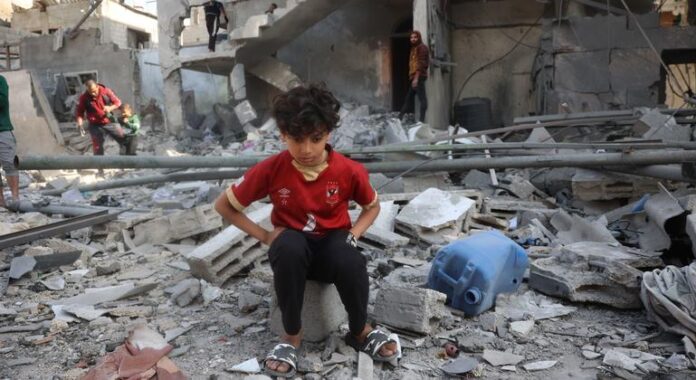
And as supplies of food, medicine and other supplies run low, aid teams are increasingly concerned about growing anxiety in bread lines outside the enclave’s remaining bakeries.
“Most attempts by humanitarian organizations to coordinate access with Israeli authorities within #Gaza result in #AccessDenied,” the UN aid coordination office, OCHA, said in an online post.
Five out of seven such attempts were denied on Monday and six out of nine were rejected on Tuesday, it explained.
Hospitals need protection
Medical teams in Gaza are also exhausted “and urgently need protection and reinforcement” from ongoing strikes across the Strip, the UN aid coordination office, OCHA, said on Wednesday.
It cited new reports of attacks against health workers, ambulances and hospitals and warned of “hundreds of casualties, a severe drop in medical stocks and a lack of equipment, blood units and personnel” since the ceasefire ended.
“No one is safe. The world must have zero tolerance for atrocities,” the UN agency insisted.
Nearly 800 Palestinians have been killed in Gaza in recent days following the resumption of Israeli bombardment on 18 March, according to the health authorities. This includes a reported 38 individuals killed in the last 24 hours.
In just the last week, eight aid workers have been killed in the enclave, bringing the total killed in Gaza to 399. That number includes at least 289 UN personnel, OCHA said, with staffers from the UN Office for Project Services (UNOPS) and the UN agency for Palestine refugees (UNRWA) killed last Wednesday in an apparent Israeli tank strike on a United Nations compound in Deir al-Balah that also seriously wounded six others. Israel denied responsibility for the attack.
Three of those injured worked in support of the UN Mine Action Service (UNMAS) which is involved in clearing unexploded ordnance in Gaza.
OCHA noted that on 20 March, the Israeli military re-deployed along the eastern and central part of the “Netzarim corridor” in Gaza. Movement between the north and south of Gaza was only allowed via the Al Rashid coast road.
Evacuation order misery
These military activities and new displacement orders issued by the Israeli military have triggered “new waves” of displacement across Gaza, with more than 142,000 people likely uprooted between 18 and 23 March, the UN aid office said.
“Israeli evacuation orders have covered 55 square kilometres across six areas of the #Gaza Strip – nearly the size of Manhattan,” OCHA said in an online post.
Around 15 per cent of the enclave has been impacted by evacuation orders – in addition to “no-go zones” that run along borders and in central Gaza.
The Israeli Government’s decision to ban the entry of humanitarian aid and any other supplies via all land crossings into Gaza is the longest such closure since October 2023, OCHA added, warning that gains made during the ceasefire to support survivors “have been reversed”.
To date, at least 50,000 Palestinians have been confirmed dead by local authorities with 113,828 wounded since the war erupted on 7 October 2023, in response to Hamas-led terror attacks on Israel that left more than 1,100 dead and more than 250 taken hostage.
UN rights body sounds the alarm over South Sudan crisis

The arrest of First Vice President and main opposition leader Riek Machar, alongside mounting military clashes and reported attacks on civilian populations, signals a severe unravelling of the peace process and a direct threat to millions, rights investigators said.
“At the heart of South Sudan’s crisis is a failure to protect civilians and uphold the commitments of the Revitalized Peace Agreement,” said Commission Chair Yasmin Sooka.
“The deliberate targeting of opposition leaders and civilians represents a reckless disregard for international law and the country’s future,” she added.
Uptick in violence
South Sudan is the world’s youngest nation, having gained independence in July 2011. However, war erupted in December 2013 between troops loyal to President Salva Kiir and opposition forces led by Mr. Machar, resulting in hundreds of thousands of deaths. The 2018 peace deal ended the fighting and established a unity government.
The Commission noted that violence has intensified in multiple regions of the country over the past month.
This includes Upper Nile state, where aerial assaults have displaced more than 60,000 people and targeted populated areas following an attack on a helicopter from the UN Mission in South Sudan (UNMISS) on 7 March.
Following reports of Mr. Machar’s arrest on Wednesday, UNMISS issued a statement urging the parties to exercise restraint and uphold the Revitalized Peace Agreement.
War fears, foreign intervention
The UN Commission warned that failure to uphold the protections enshrined in the accord – including freedom of movement, political participation, and the cessation of hostilities – will lead to a catastrophic return to war.
“The Peace Agreement is not optional – it is binding,” said Ms. Sooka. “Its systematic undermining by political and military actors is not only unlawful but a betrayal of the South Sudanese people who have already endured years of devastating conflict.”
The Commission noted that the situation is further exacerbated by the deployment of Ugandan troops and battle tanks into South Sudan following a request by the country’s President.
The development raises serious concerns over potential violations of the UN arms embargo and the growing partisan role of foreign forces, which further endangers civilians and risks regional escalation.
Although the protection of civilians must be the central priority, “instead, we are witnessing actions that increase civilian vulnerability – indiscriminate attacks, arbitrary detentions, and foreign intervention,” said Commissioner Carlos Castresana Fernández.
Recommit to peace deal
The Commission emphasized that all parties to the conflict – including State actors and militias – are bound by international humanitarian and human rights law. Furthermore, violations, including war crimes and crimes against humanity, may lead to individual criminal accountability before domestic or international courts.
“We must not allow South Sudan to repeat the mistakes of the past,” said Commissioner Barney Afako, warning that “failure to de-escalate the ongoing political and military tension will be cataclysmic” for the country.
“The way forward is clear: an immediate recommitment to the Revitalized Agreement, the release of political detainees, the cessation of hostilities, and above all – protection of civilians,” he said.
The Commission is calling on regional and international partners, including the African Union (AU), East African bloc IGAD and the UN, to urgently intensify diplomatic pressure, support de-escalation, and ensure full implementation of the provisions of the peace agreement.
EU pledges €3.4 billion to combat global malnutrition

Today, at the Nutrition for Growth (N4G) Summit in Paris, the European Commission announced a new pledge of €3.4 billion until 2027 to combat malnutrition globally. This commitment builds on the EU’s ongoing efforts to reduce all forms of malnutrition and drive progress in nutrition-related interventions worldwide.
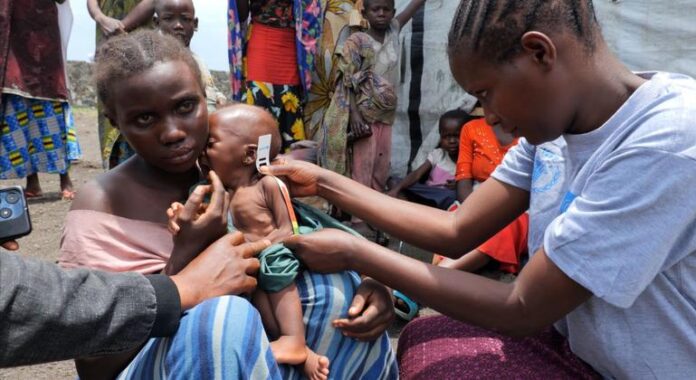
The EU’s investment will focus on supporting partner countries facing high levels of child malnutrition, particularly in Sub-Saharan Africa. It will target children under five and young pregnant and lactating mothers suffering from severe acute malnutrition. The support will be tailored to address the specific needs of each country, with a strong emphasis on the most vulnerable populations in least developed and fragile settings.
The EU’s engagement will also continue at global and regional levels, where the EU is successfully promoting initiatives to strengthen nutrition governance and international collaboration on research and development.
Today’s pledge follows the EU’s previous commitment of €2.5 billion for 2021-2023, announced at the N4G Summit in Tokyo. The EU even exceeded its initial pledge by nearly €1.9 billion, ultimately contributing a total of €4.4 billion for 2021-2023.
To maximise its impact, the EU invests through its Global Gateway strategy in essential infrastructure, improving access to public services, supporting local agri-food value chains, and promoting sustainable economic growth.
Commissioner for Preparedness, Crisis Management and Equality, Hadja Lahbib, said: “Since the first Nutrition for Growth Summit in 2013, the EU has turned bold pledges into bold action, leading the fight against malnutrition. Today’s pledge is a renewed testament to our unwavering commitment to ensure better nutrition for mothers and children, stronger food systems, and better health and social protection where they are needed most. The European Union will continue to lead by example, leaving no one behind. We will work with partners to move closer to a world where every child wakes up nourished, grows strong, and dreams without limits.”
Background
The European Union supports global, regional, and country-level initiatives that strengthen nutrition governance, foster international collaboration on data, and advance nutrition research and technology development. Additionally, the EU provides humanitarian assistance to address severe acute malnutrition, delivering life-saving treatment to hundreds of thousands of vulnerable children in remote, fragile or country-affected areas.
By integrating nutrition into its programming, the EU reinforces the link between humanitarian and development actions, recognising that multi-sectoral approaches are essential to tackle the root causes of malnutrition.
Results on the ground are promising: EU investments have significantly improved maternal and child nutrition, with partner countries on track to reduce the number of stunted children under five by at least 7 million by 2025.
The Nutrition for Growth (N4G) summits have been instrumental in accelerating progress towards a malnutrition-free world. Since 2013, host countries, including the United Kingdom, Brazil, Japan and now France, have leveraged these global events to mobilise commitments and coordinate efforts with governments, donors, civil society, and the private sector, yielding impactful results and improved global nutrition outcomes.
Further information
2025 Nutrition for Growth Summit
Many Pieces, One Goal – A Team Europe Compendium of External Nutrition Action
EU Action plan on nutrition – 8th progress report
Council Conclusions on stepping up Team Europe’s support to global food security and nutrition
Yemen: Ten Years of War, a Lifetime of Loss
Ten years. That’s how long Yemenis have been putting their lives on hold – through airstrikes, through hunger, through loss. A decade of war has left Yemen’s infrastructure in ruins and its people exhausted. And yet, as the eleventh year begins, the world seems not to notice Yemen’s plight.
Today, close to 20 million people in Yemen depend on aid to survive. Nearly five million remain displaced, pushed from one place to another by violence or disaster. The international community, once moved by the staggering images of war and suffering, has switched its focus to new emergencies. But for those who work in Yemen – and for those who live this crisis every day – the story is far from over.
Ten years. That’s how long Yemenis have been putting their lives on hold – through airstrikes, through hunger, through loss. And yet, as the eleventh year begins, the world seems not to notice Yemen’s plight.
No one feels this reality more deeply than our Yemeni colleagues, who have remained at their posts through it all to help their own people. Many have worked through airstrikes, instability, and loss, all while worrying about the safety of their families. Now, with rising tensions and deepening funding cuts, they fear for their jobs too. Unlike most of us, they don’t have the option to simply start over. They can’t rely on savings or opportunities elsewhere – their passport alone often determines how far their future can stretch.
This is the daily reality in a country that, too often, is reduced to headlines about war. But Yemen is so much more than a crisis zone. It is a place of stunning landscapes, ancient cities, rich traditions, warm hospitality and the kind of food that stays in your memory long after you’ve left. But these aren’t the stories that make headlines. Instead, Yemenis are seen only through the lens of conflict and poverty. It’s time we remember the people behind the statistics.
Like Basma, a mother from Al Hodeidah who was forced to flee with her children to Al Makha in search of safety and water. She used to walk for hours every day just to fill a few jerrycans. Her youngest child once fainted from thirst while waiting in the heat. For years, clean water was a dream until a recently completed water project finally brought some relief to her village.
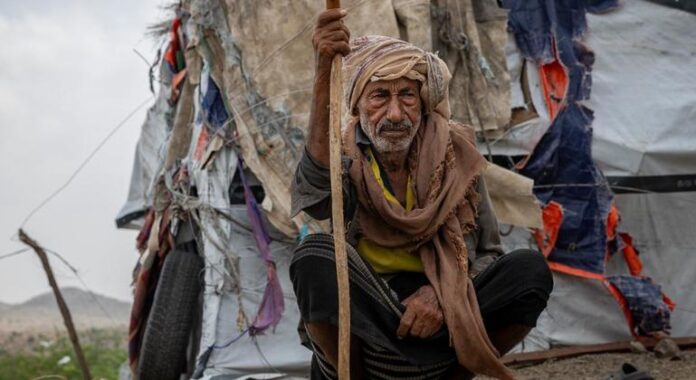
Or Ibrahim, a 70-year-old man displaced by heavy floods in Ma’rib. When the waters swept through the settlement, he carried his adult son, who lives with a disability, on his back to safety. They lost everything – their shelter, belongings, and sense of stability – but Ibrahim never complained. He focused only on finding help for his son. Now, they live in a temporary tent exposed to the elements, dependent on aid that may not arrive in time or at all.
Or Mohammed, a young man from Ethiopia who crossed deserts and conflict zones with nothing but the hope of reaching a better life. He never made it to the Gulf. Instead, he found himself stranded in Yemen – detained, beaten, and left without food or shelter. By the time he reached IOM’s Migrant Response Point, he was weak, traumatized, and desperate to go home. The only option left was to register for voluntary return – a journey home that many others never get to take.
Yemenis are not just victims, They are survivors, caregivers, builders, teachers, mothers, fathers, and children with hopes and ambitions like anyone else.
These are just three among millions of lives caught in the margins of this protracted crisis. One of the poorest countries in the Arab world is getting poorer – not because of its people, but because the world is slowly turning its back. This war didn’t start yesterday, but its consequences grow heavier by the day. Yemenis are not to blame for what is happening in the world, and yet, they bear the weight of it all. They don’t need our pity – they need our solidarity. Let this be the year we turn empathy into action.
As the international community gathers in conferences, makes pledges, and sets priorities, Yemen must not be left behind. Yemenis are not just victims. They are survivors, caregivers, builders, teachers, mothers, fathers, and children with hopes and ambitions like anyone else. But words alone will not keep people safe, fed, or sheltered. Don’t let these conversations remain just talk – Yemen needs action. To look away now would not just be a failure of diplomacy – it would be a failure of humanity.
Originally published on IOM Blogs on 26 March 2025.
EIOPA proposes one-to-one capital requirements for EU insurers’ crypto asset holdings

The European Insurance and Occupational Pensions Authority (EIOPA) published today its technical advice to the European Commission, recommending that a one-to-one capital requirement be applied consistently to all crypto holdings of EU (re)insurers. EIOPA considers a 100% haircut in the standard formula prudent and appropriate for these assets in view of their inherent risks and high volatility.
Crypto assets are a relatively new assets class in finance and their regulatory treatment is still evolving. While the Capital Requirements Regulation (CRR) and the Markets in Crypto-Assets Regulation (MiCAR) include transitional prudential measures for crypto assets, the EU’s regulatory framework for (re)insurers so far has lacked specific provisions on crypto assets. As a result, (re)insurers currently classify their crypto assets without a consistent approach. This raises concerns about the risk sensitivity of these practices and the level of prudence associated with them.
EIOPA’s empirical analysis of historical crypto asset data suggests that current capital weight options – such as the 80% stress level applied to intangible assets – in fact underestimate the risks associated with crypto exposures.
Policy proposal
To promote a harmonized, prudent and proportionate treatment of crypto assets, EIOPA is proposing the introduction of a blanket 100% capital requirement across all crypto holdings, regardless of their balance sheet treatment or whether the exposure is direct or indirect.
The uniform treatment EIOPA proposes would adequately reflect the high risks associated with crypto investments without creating unnecessary complexity or imposing additional reporting requirements on (re)insurers at a time when their investments in crypto assets are still modest in size.
A possible broader adoption of crypto assets may, however, require a more differentiated approach down the line. The treatment of crypto holdings under Solvency II should therefore be reviewed in the future in light of market developments and regulatory approaches in other sectors.
Background and next steps
This publication comes in response to the European Commission’s Call for Advice and follows a public consultation on the topic with stakeholders. The Commission will now consider EIOPA’s technical advice in the review of level 2 provisions of Solvency II.
UN welcomes Black Sea talks, warns of worsening humanitarian crisis in Ukraine
In a statement, Stéphane Dujarric, Spokesperson for Secretary-General António Guterres, said the UN chief’s good offices remain available to support all efforts towards a lasting peace in Ukraine.
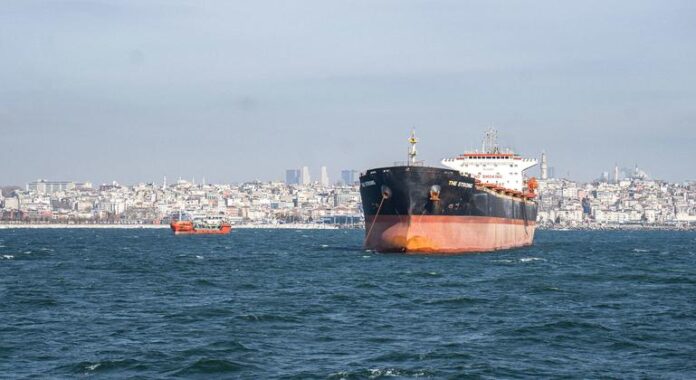
“Reaching an agreement on freedom of navigation in the Black Sea to ensure the protection of civilian vessels and port infrastructure, will be a crucial contribution to global food security and supply chains, reflecting the importance of trade routes from both Ukraine and the Russian Federation to global markets,” Mr. Dujarric said.
“The Secretary-General reiterates his hope that such efforts will pave the way for a durable ceasefire and contribute to achieving a just, comprehensive and lasting peace in Ukraine, in line with the UN Charter, international law and relevant UN resolutions and in full respect of Ukraine’s independence, sovereignty and territorial integrity,” he added.
Humanitarian crisis worsening
The humanitarian crisis in Ukraine continues to worsen with nearly 13 million people in need of assistance – but funds are dwindling, a top UN relief official warned ambassadors in the Security Council.
Joyce Msuya, UN Deputy Emergency Relief Coordinator, added that critical aid programmes are at risk due to recent funding cuts.
The shortfall is already having dire consequences, particularly for women and girls, and UN agencies fear that at least 640,000 could lose access to protection against gender-based violence, psychosocial support and safe spaces.
“Recent funding cuts have led to a reprioritization of Ukraine response efforts that will be announced in the coming weeks. Continued financial support will be essential to maintain operations,” Ms. Msuya said.
The $2.6 billion Ukraine humanitarian needs and response plan for 2025, which aims to reach six million people in need, is only 17 per cent funded.
Mounting civilian casualties
Ms. Msuya also highlighted the impact of the fighting on civilians.
“Since 1 March, not a day has passed without an attack harming civilians,” she said, noting civilian deaths and injuries, and damage to infrastructure across northern, central, eastern and southern Ukraine.
“In frontline communities, civilians are confronted with relentless shelling and face impossible choices: flee under dangerous conditions, leaving behind everything they own, or stay and risk injury, death and limited access to essential services,” she warned.
The UN Human Rights Monitoring Mission in Ukraine (UNHRMMU) has verified at least 12,881 civilian deaths since the start of Russia’s full-scale invasion in February 2022, though the actual toll is feared to be much higher.
Assistant Secretary-General Joyce Msuya (seated at the left end of the table) briefs the Security Council on the humanitarian situation in Ukraine
Humanitarian challenges
Meanwhile, humanitarians struggle to deliver aid, Ms. Msuya continued, stating that an estimated 1.5 million people in Russian-occupied areas of Donetsk, Kherson, Luhansk and Zaporizhzhya are in urgent need of assistance, but aid workers are unable to reach them “at any adequate scale”.
Humanitarian workers themselves are increasingly coming under attack, she said. Since the start of the year, seven aid workers have been injured and humanitarian assets damaged in several locations, further hampering relief efforts.
The destruction of energy infrastructure is compounding the crisis. Despite recent announcements of a ceasefire on energy targets, past attacks have left millions without reliable access to electricity, heating and water as cold weather persists.
Call for international support
Concluding her briefing, Ms. Msuya outlined three key asks for the international community: adherence to international humanitarian law to protect civilians, sustained funding to keep aid operations running and renewed efforts to push for a lasting end to the conflict.
The war must end, she underlined, and humanitarian needs must be central to discussions on a pause in fighting or longer-term agreement.
Sudan: Rights chief deplores deadly army strikes on North Darfur market

Volker Türk issued a statement on Wednesday saying he was deeply shocked by reports that hundreds of civilians were killed, and scores injured, in the 24 March strikes on a busy market in Tora Village.
The Sudanese Armed Forces (SAF) and a rival military known as the Rapid Support Forces (RSF) have been at war for nearly two years.
On Wednesday, international media reported that the army had recaptured the capital, Khartoum, which had mostly been under RSF control since fighting erupted in April 2023.
The army recaptured the presidential palace last Friday and is now reportedly in control of all the bridges across the River Nile which connect the different areas of the capital area.
Indiscriminate killings continue
The UN rights chief said his Office, OHCHR, learned that 13 of those killed in Monday’s airstrikes belonged to a single family, and that some of the injured are also reportedly dying due to the extremely limited access to healthcare.
OHCHR have also received reports that in the aftermath of the attack, members of the RSF arbitrarily arrested and detained civilians in Tora.
Both the RSF and Government forces have been accused of indiscriminately shelling civilian areas during the brutal conflict.
“Despite my repeated warnings and appeals to both the Sudanese Armed Forces and the Rapid Support Forces to protect civilians in line with international humanitarian law, civilians continue to be killed indiscriminately, maimed and mistreated on a near daily basis, while civilian objects remain an all-too-frequent target,” said Mr. Türk.
He once again urged both parties to take all measures to avoid harming civilians and attacking civilian objects.
The High Commissioner warned that Indiscriminate attacks and attacks against civilians, and civilian objects, are unacceptable and may constitute war crimes.
“There must be full accountability for violations committed in this latest attack, and the many other attacks against civilians that have preceded it. Such conduct must never become normalized,” he said.
