Monday, September 28, 2026
Home Blog Page 578

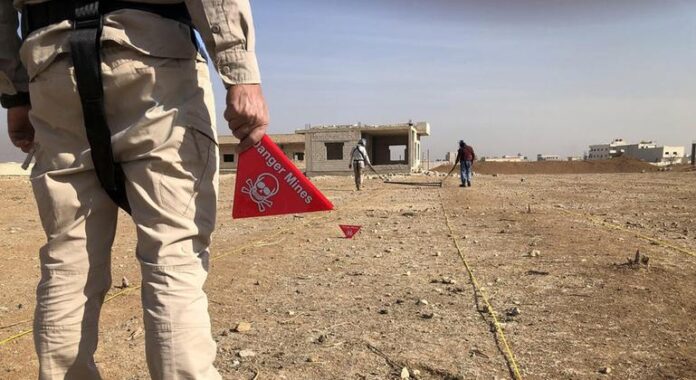
Syria: Mine casualties persist as UN partners scale up clearance operations

0
Syria: Mine casualties persist as UN partners scale up clearance operations

“Mine action partners continue to report casualties due to explosive ordnance, and that is happening sadly on an almost daily basis,” Mr. Dujarric explained in a press briefing on Monday in New York.

Farmers and shepherds are particularly vulnerable. Since January, more than 60 people have been killed and over 90 injured, many while tending to their land or grazing animals. 

Clearance efforts underway 

With hostilities subsiding in some areas, humanitarian partners have been expanding mine action work in newly accessible regions.

Since December, over 1,400 unexploded ordnance items have been safely disposed of, and 138 minefields and contaminated areas identified in Idleb, Aleppo, Hama, Deir-ez-Zor and Lattakia.

On Monday, UN partners visited a farm in Darayya, Rural Damascus, that had been cleared with support from the Syria Humanitarian Fund. This work is critical to enabling farmers to safely return to their land.

Aid and diplomacy continue 

Meanwhile, humanitarian aid operations remain uninterrupted.

Over the weekend, 40 trucks carrying nearly 1,000 metric tonnes of food from the World Food Programme (WFP) crossed from Türkiye into northwest Syria through the Bab Al-Hawa border crossing – assistance sufficient for more than 270,000 people.

UN partners have also increased the import of food and other aid from Jordan since the start of the year.

On the diplomatic front, UN Special Envoy for Syria Geir Pedersen is set to visit Damascus this week following meetings at the Munich Security Conference. 

There, he stressed the need for an inclusive, Syrian-led political process and urged all parties to uphold their commitments on women’s rights. 

“[The UN] calls on all parties in Syria to uphold their international commitments, respect the rights and dignity of women, and to ensure their full participation in shaping the country’s future,” Mr. Dujarric said.  

This includes ensuring access to education, freedom of movement, political representation and protection from violence and exploitation. 

Source link

Remarks by Paschal Donohoe following the Eurogroup meeting of 17 February 2025

0
Remarks by Paschal Donohoe following the Eurogroup meeting of 17 February 2025

Remarks by Eurogroup President Paschal Donohoe after the Eurogroup meeting on Bulgaria’s progress toward euro adoption, economic developments and recommendation on the economic policy of the euro area for 2025, and Eurogroup’s work programme.

Source link

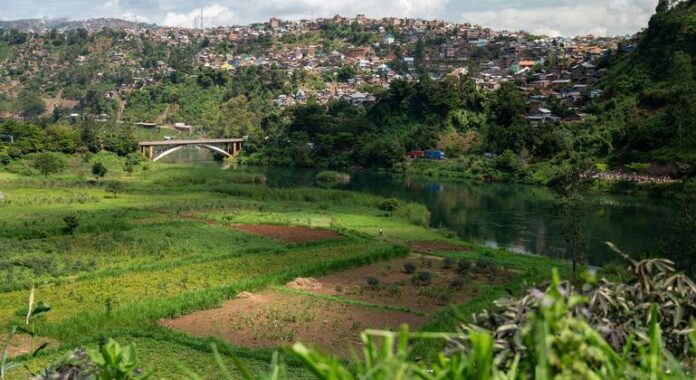
DR Congo crisis: WFP condemns looting in Bukavu after M23 rebels take key city

0
DR Congo crisis: WFP condemns looting in Bukavu after M23 rebels take key city

In an online message on Monday, the WFP said that it “condemns the pillage of its warehouses in Bukavu in South Kivu…the food supplies kept there were meant to provide vital support to the most vulnerable families who now face a growing humanitarian crisis”.

Looters made off with 7,000 tonnes of humanitarian food supplies, the UN agency said, adding that as violence spreads and access to food becomes increasingly difficult, “WFP stands ready to resume essential food aid to the most vulnerable as soon as it is safe to do so”.

The UN agency also urged all parties to the conflict “to respect their obligations vis-à-vis international humanitarian law”, which includes the protection of civilians and humanitarian workers.

The development came as M23 fighters made continuing gains in eastern DRC, after taking control of Goma – capital of North Kivu province – at the end of January. Hostilities have continued in this mineral-rich region for decades amid a proliferation of armed groups, forcing hundreds of thousands to flee their homes.

Aid routes blocked

In an alert, the top UN aid official in the country, Bruno Lemarquis, warned last Thursday that a shortage of humanitarian routes was threatening the aid operation in the mineral-rich region.

Before the M23’s latest offensive at the beginning of the year, Mr. Lemarquis recalled that the humanitarian situation in South Kivu was already dire.

Roughly 1.65 million people, or just over 20 per cent of the province’s population, had been displaced for a wide range of reasons.

On Saturday, the UN Secretary-General warned of the potential for the conflict to spark a regional war, before calling for “African diplomacy to solve the problem”.

Speaking on the sidelines of the African Union Summit, António Guterres told journalists that it was “time to silence the guns, it’s time for diplomacy and dialogue. The sovereignty and territorial integrity of the DRC must be respected.”

MONUSCO, the international UN peacekeeping force in DRC, will continue to provide support, the UN chief continued, although he cautioned that “a peacekeeping force can’t solve the problem because there is no peace to keep”.

He insisted, on the other hand that the conflict “will be solved if there is an effective African unit and African diplomacy to solve the problem”.

Mr. Guterres pointed to the crucial importance of efforts such as the recently held joint summit by the South African Development Community in Tanzania, which resulted in a clear pathway for an immediate ceasefire. 

Source link

Cost of living and environment are the main concerns of young people in the EU | News

0
Cost of living and environment are the main concerns of young people in the EU | News

Rising prices and the cost of living are a concern for 40% of the 16-30 year-olds who took part in the latest Eurobarometer Youth Survey published on Monday. One third of respondents said they believed the EU should focus its attention on the environment and climate change over the next five years, while 31% believe the economic situation and job creation should be a priority.

Almost three in ten (29%) want the EU to prioritise social protection, welfare and access to healthcare. More than one in five respondents highlighted education and training (27%), housing (23%) and the EU’s defence and security (21%) as important priorities for the EU. European defence is of particular concern for young people in Czechia (36%), Poland (33%), and Estonia (32%).

Roberta Metsola said: “Listening to young Europeans and their concerns is vital for politicians, policy-makers and European democracy. Young people today are worried about rising prices, climate change, security and their chances of finding a good job. These are concerns that we must address in every decision we take and every law that we pass. Otherwise, we risk losing a generation to disillusionment.”


Social media outrun TV as main source of information

Social media is the top source of information on political and social issues for 42% of respondents aged 16-30, with television being the second most-popular source (39%). The preference for TV is particularly noticeable among those aged 25-30. This age bracket is also more likely to use online news platforms and radio than 16-18 year-olds. Younger participants (16-18) rely more on social media (45%) than 25-30 year-olds (39%), and trust friends, family or colleagues for information (29% compared to 23%).

“The information landscape is rapidly changing. With most young people predominantly getting their news from social media, politicians and social media platforms have a particular responsibility to fight increasing disinformation,” President Metsola added.

TV also remains the leading source of information for young people in Portugal (53%), Italy (52%), Slovenia (45%), and France (43%). Online press and/or news platforms and radio are sources of information for 26% of the younger participants and 16% of their older counterparts. In the 2021 edition of the survey, the main sources of news were social media and news websites (each of which was mentioned by 41% of respondents).


Instagram and TikTok are the most used social media for news

Instagram is the top platform for obtaining political and social news among young people (47%), followed by TikTok (39%). X (formerly Twitter) is only used by 21% of young people, the survey shows.


Young people are aware of their exposure to disinformation

A significant majority (76%) of young people believed they had previously been exposed to disinformation and fake news.

In nine EU countries, more than half of respondents report having been exposed to disinformation ‘often’ or ‘very often’, with the highest proportions from Malta (59%), Hungary (58%), Greece (57%), Luxembourg (55%), and Belgium (54%). By contrast, the share of those who believe they have never been exposed to disinformation and fake news is the highest in Romania (19%) followed by Bulgaria (11%).

70% of the participants in the survey were confident they could recognise disinformation. Respondents from Malta and Croatia were the most confident in their ability to recognise disinformation, while those from Austria, Germany and Slovenia felt the least confident.

Background

The Eurobarometer Youth Survey was carried out by Ipsos between 25 September and 3 October 2024 in all 27 EU member states. A total of 25,863 young people aged 16-30 were surveyed via Computer-Assisted Web Interviewing (CAWI) using online panels. The results were weighted according to the proportion of this age group within each EU country.

The full results can be found here.


Young people discuss EU action at EYE2025

Insights from the Eurobarometer Youth Survey provide a detailed understanding of the political participation of young Europeans and their needs and concerns. These findings will help ensure that Parliament’s flagship youth event,EYE2025, addresses topics that matter most to the EU’s young generation.

Registration for EYE2025 is open until 21 February. From 13-14 June 2025, the EYE will bring together thousands of young people from across the EU and beyond to debate, exchange views, and contribute to shaping Europe’s future in Parliament’s Strasbourg premises.

Source link

#RTR2025: Advancing European road transport towards a more competitive and sustainable future

0
#RTR2025: Advancing European road transport towards a more competitive and sustainable future

Held in Brussels on 11 to 13 February, the Road Transport Research (RTR) results conference attracted its largest audience to date, with more than 500 participants on-site and 400 participants joining online. 

The annual event is organised jointly by DG RTD, the co-programmed partnerships – Towards Zero Emissions Road Transport (2Zero), the Connected, Cooperative and Automated Mobility Association (CCAM), Batteries European Partnership (BATT4EU) and the European Road Transport Research Advisory Council (ERTRAC)

The high level of participation is a testimony of the RTR conference’s pivotal role in supporting the European research and innovation (R&I) ecosystem in all fields of road transport: infrastructure, road safety, decarbonisation, digitalisation, urban mobility, as well freight and logistics.

Over the three days and across 26 sessions, attendees heard first-hand from over 90 projects about their most promising results, innovations and challenges. The participating projects are mostly funded under EU research programmes, Horizon 2020 and Horizon Europe, but some examples of infrastructure projects supported by the Connecting Europe Facility (CEF) were also included.

From inception of ideas to market implementation

Speaking in the opening session, Deputy Head of Unit for Transport Research at the European Climate, Infrastructure and Environment Executive Agency (CINEA), Pablo Perez- Illana, highlighted how the Agency facilitates such synergies between programmes and the value this brings: 

“In CINEA we accompany projects through all phases of the innovation cycle – from incubating transport research under Horizon Europe to scaling up industrial manufacturing and deployment of clean tech systems, vehicles and infrastructure through the Innovation Fund and the Connecting Europe Facility.”

“Move faster, act smarter, innovative boldly”

The conference delivered a holistic view of how the European research scene is driving technology forward in these fields, and bringing benefits for the economy, the environment, and wider society. 

Rosalinde van der Vlies, Clean Planet Director in DG RTD spoke of the critical role of R&I for driving competitiveness and the green and digital transition: 

“We need to move faster, act smarter and innovate boldly. That means a laser sharp focus on competitiveness, affordability, circularity and inclusiveness as key to a sustainable and resilient future.” 

She also called for a greater focus on communication and showcasing tangible results. 

Collaboration for innovation

The value of communication and collaboration was echoed by many of the speakers who emphasised the importance of such events for engaging with key stakeholders, and sharing ideas, methodologies and results. They stressed how vital EU research funding has been to enabling collaboration for innovation, pointing to the value of working in consortiums and within clusters of similar projects to draw on complementary expertise, learn from different cultures and perspectives and bring a combined message to policymakers. 

As CCAM Association Chair, Christian Merkt, highlighted: “In Europe we are balancing the societal needs and the pioneering spirit of innovation to unlock systemic benefits of new mobility services for people. We need conferences like this to better connect the dots.”

You can find the list of all projects present at the event here.

MORE

  • Event website (official event report and recordings available soon)
  • Check out our new Infographic on contribution of EU R&I projects to a climate-neutral and competitive road transport system


Source link

Russia: Statement by the High Representative marking one year since the death of Alexei Navalny in a Russian strict penal colony

0
Remarks by Paschal Donohoe following the Eurogroup meeting of 17 February 2025

Russia: Statement by the High Representative marking one year since the death of Alexei Navalny in a Russian strict penal colony

Source link

Weekly schedule of President António Costa

0
Remarks by Paschal Donohoe following the Eurogroup meeting of 17 February 2025

Weekly schedule of President António Costa, 17–23 February 2025

Source link

Munich Security Conference: Speech by the High Representative Kaja Kallas receiving the Ewald von Kleist Award

0
Remarks by Paschal Donohoe following the Eurogroup meeting of 17 February 2025

Munich Security Conference: Speech by the High Representative Kaja Kallas receiving the Ewald von Kleist Award

Source link

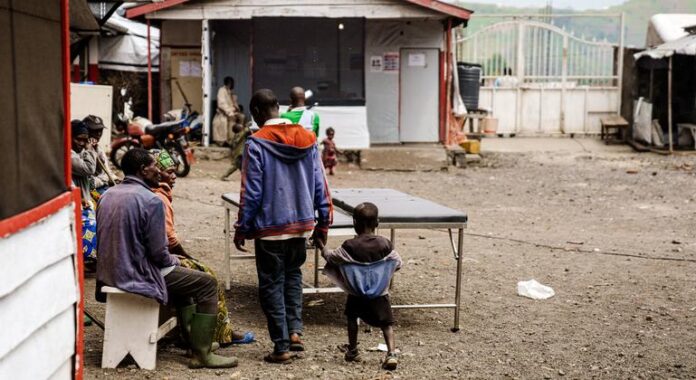
DR Congo displacement, health crisis worsens amid dwindling aid access

0
DR Congo displacement, health crisis worsens amid dwindling aid access

“The crisis is worsening as people flee to areas where humanitarian aid cannot reach due to insecurity,” UN refugee agency (UNHCR) spokesperson Eujin Byun told reporters in Geneva.

The development comes a day after the top UN aid official in the country Bruno Lemarquis warned that a shortage of humanitarian routes was threatening the aid operation in the region.

Advance on Bukavu

The rebels, who seized North Kivu province’s capital Goma late last month, are advancing towards Bukavu, the capital of South Kivu, following a short-lived lull in fighting.

Ms. Byun said that in South Kivu, more than half of the aid groups providing critical support to survivors of sexual violence “report being unable to reach those in need due to insecurity and continuous displacement”.

Meanwhile, in North Kivu, “the destruction of health facilities, including mortuaries, and overcrowded hospitals increase the risk of spreading infectious diseases, including cholera, malaria, and measles,” she said.

The UNHCR spokesperson also highlighted the fact that “heavy artillery shelling and looting” have destroyed 70,000 emergency shelters around Goma and Minova in North and South Kivu provinces, leaving some 350,000 internally displaced people (IDPs) “once again without a roof over their heads”.

While some 100,000 displaced people have attempted to return to their home areas – where they are met with damage to their homes and a lack of essential services – many remain stranded, Ms. Byun said.

Deadly remnants

Unexploded ordnance left over from the fighting is another obstacle to their safe return.

Ms. Byun warned of the possibility that those people “will be displaced once again”.

The UNHCR spokesperson stressed that most of the 28 IDP sites around Goma are now destroyed. The agency’s concern in terms of aid access is that the road from Goma to Bukavu has been cut off, she said.

Ms. Byun also recalled that the airport in Goma is “still not functioning for humanitarian aid”.

“Since violence has spread to South Kivu, this supply line is our biggest concern,” she added.

With the rebels pushing towards Bukavu, the UN’s Mr. Lemarquis expressed worry on Thursday about the fate of South Kivu’s main airport some 20 miles from the province’s capital, which until recently was the “main lifeline” for bringing in humanitarian personnel.

Mpox spread

Meanwhile, the spokesperson for the UN World Health Organization (WHO), Christian Lindmeier, highlighted the “heavy” impact of the hostilities on the mpox response, “particularly in Goma and the adjacent area” as the fighting spread southwards.

He stressed that the DRC is “the worst-affected country for mpox”, with Kivu being the epicentre of the highly infectious clade 1b outbreak.

Due to the rapid spread of the clade 1b strain, in August last year WHO moved to declare mpox once again a “public health emergency of international concern”, for the second time after a global outbreak of the virus made headlines in 2022.  

Earlier this month, WHO Director-General Tedros Adhanom Ghebreyesus said that before the latest violence in eastern DRC, mpox cases had been stabilizing. But the recent fighting has forced patients to flee treatment centres, increasing transmission risks.

“Out of 143 confirmed mpox patients in isolation units in Goma and around, 128 fled in fear for their lives,” Mr. Lindmeier said, stressing that only 15 patients remain in isolation.

“That’s of course dangerous for everybody around,” he insisted.

Mr. Lindmeier added that some health facilities in the area had been looted, health workers had fled, and people were unable to access healthcare because of the security situation.

Source link

Munich Security Conference: press remarks by High Representative/Vice-President Kaja Kallas upon arrival

0
Remarks by Paschal Donohoe following the Eurogroup meeting of 17 February 2025

Munich Security Conference: press remarks by High Representative/Vice-President Kaja Kallas upon arrival

Source link