Monday, September 28, 2026
Home Blog Page 589

West Bank violence undermining Gaza ceasefire: UNRWA

0
West Bank violence undermining Gaza ceasefire: UNRWA

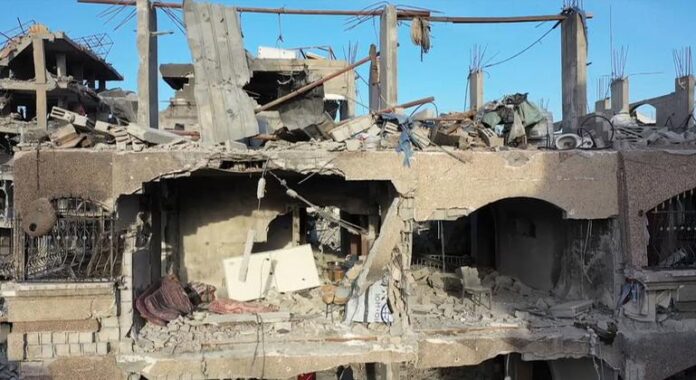
It comes a day after Israeli Security Forces (ISF) carried out a series of controlled detonations at the Jenin refugee camp, located in the northern West Bank, destroying large areas there “in a split second”.

UNRWA said it received no prior warning of the explosions “as contact between staff and Israeli authorities is no longer permitted – putting civilian lives at risk.”  

‘A ghost town’

The agency said residents of the camp “have endured the impossible, facing nearly two months of unceasing and escalating violence,” adding that Jenin “has been rendered a ghost town” in the past months. 

“The operations conducted both by Israeli and Palestinian security forces have led to the forced displacement of thousands of camp residents, many of whom will now have nowhere to return to,” it said. “The basics of life are gone.”

UNRWA noted that “on a day that was supposed to mark the beginning of the new school semester for thousands of children, 13 schools in the northern West Bank remained closed due to ISF operations in the area.”

Ceasefire undermined

Furthermore, its services inside Jenin camp have been interrupted for months and stopped completely in early December.

“Today’s shocking scenes in the West Bank undermine the fragile ceasefire reached in Gaza, and risk a new escalation,” the agency said.

The first phase of the temporary truce and hostage release deal came into effect two weeks ago, following 15 months of war which killed some 46,000 Palestinians, according to the Gaza health authorities.

The conflict was sparked by the 7 October 2023 Hamas-led attacks on Israel. Some 1,200 people were killed and 250 were taken as hostages.

In October 2024, the Israeli parliament adopted two laws banning UNRWA’s operations in its territory and prohibiting Israeli authorities from having any contact with the agency, which went into force last Thursday. 

Source link

9/2025 : 3 February 2025 – Order of the General Court in case T-1126/23

0
9/2025 : 3 February 2025 – Order of the General Court in case T-1126/23

Asociația Inițiativa pentru Justiție v Commission

New accessions

Rule of law: action brought by a professional association of Romanian prosecutors against the Commission decision repealing the decision establishing the mechanism for cooperation and verification is dismissed as inadmissible

Source link

Haiti: ‘I was deported to a country I never lived in’

0
Haiti: ‘I was deported to a country I never lived in’

Mireille

Pregnant and exhausted and clutching a small bag with all that was left of her belongings, Mireille* stood under the relentless Haitian sun, not sure what to do next.

She had just been deported from the Dominican Republic, a country she had called home since she was eight years old.

Over the years she has seen Haiti, the land of her birth, overcome by gang violence as well as humanitarian, political and economic crises.

Mireille gazes through the protective bars at the GARR facility, reflecting on her journey back to Haiti.

“I was deported to a country I never lived in,” she said, filled with a mix of anger and despair.

The Dominican Republic had been her home for nearly three decades. It was where she built her life, forged relationships and created memories. But overnight, she became an outsider, stripped of her dignity and forced to return to a country she didn’t know.

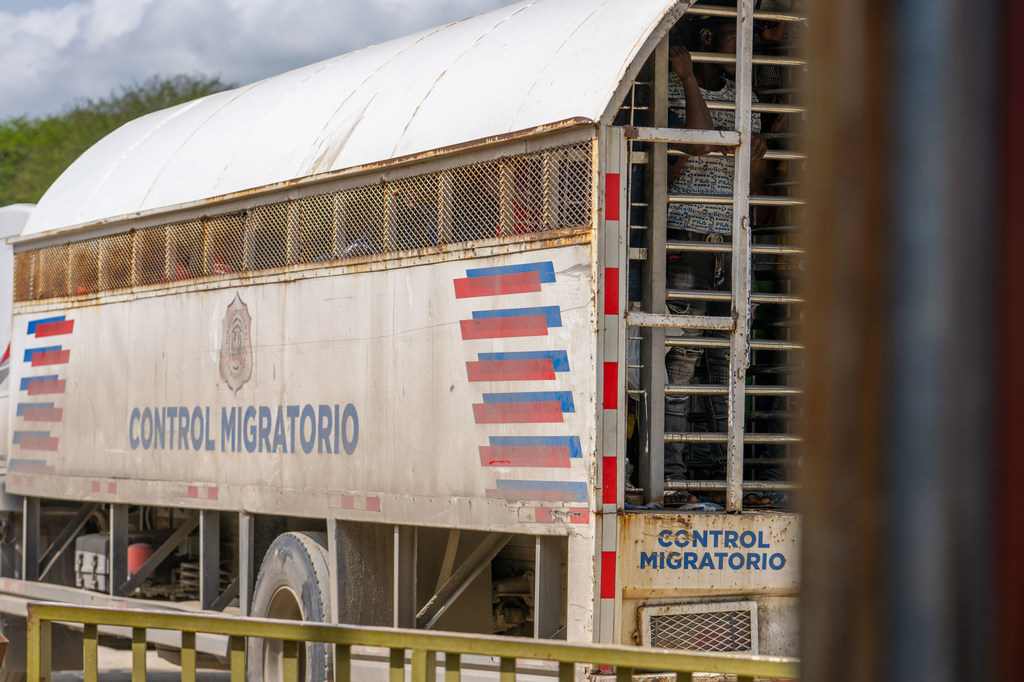
Mireille’s ordeal began in the early hours of the morning, five days before she crossed the border into Haiti when she was taken to a crowded and uncomfortable detention center, where she stayed for several days before being transported to the border.

A deportation truck arrives at the Belladère border crossing between the Dominican Republic and Haiti.

A deportation truck arrives at the Belladère border crossing between the Dominican Republic and Haiti.

“I arrived in Haiti feeling scared and unsure of what to do,” Mireille said. “I barely know this country, and I’m struggling to figure out where to start. It’s disorienting and difficult.”

Guerson and Roselène

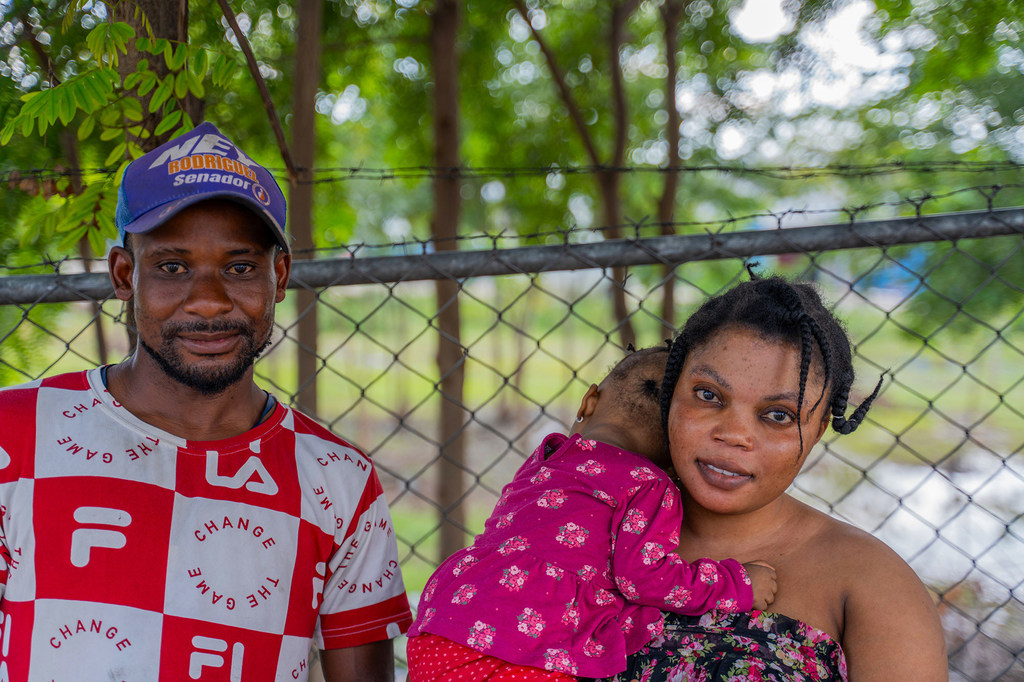
Guerson and Roselène* had spent over a decade in the Dominican Republic, building their lives in Loma de Cabrera, not far from the border with Haiti.

Guerson worked as a mechanic at a small garage fixing cars, motorbikes, and agricultural equipment. His hands, often smeared with grease, were a source of pride. “People trusted me with their vehicles,” he said. “It was hard work, but I could provide for my family.”

Roselène, meanwhile, managed their modest home. She prepared meals and supplemented the family income by selling patés and fried plantains to neighbours.

A simple life

Their daily life was simple but stable. Their son Kenson attended a local preschool, and Roselène spoke of her pride seeing him learn to write his name.

Then the Dominican authorities arrived. “My children didn’t understand,” said Guerson. “Kenson asked if we were going on a trip. I didn’t know how to answer him.”

The family was herded onto a truck “I held my baby so tightly. I was afraid we wouldn’t survive the journey,” Guerson recalled.

Crossing the border into Haiti felt like stepping into chaos.

The town of Ouanaminthe, already struggling with a sharp increase in deportations, lacked the capacity to respond to the growing crisis.

Families stood on dusty roads, clutching bags and children, unsure of where to go.

“We stood there for hours, lost,” Roselène said. “The children were hungry. I didn’t know how to comfort them because I had nothing left to give.”

Crisis country

Mireille, Guerson and Roselène are just three of the more than 200,000 Haitians who were forcibly repatriated to their homeland in 2024, some 97 per cent of them from the Dominican Republic.

Nearly 15,000 people were returned from across the border in the first two weeks of January alone.

They returned to a country in crisis.

Guerson (left) and Roselène are beginning a new life in Haiti.

Guerson (left) and Roselène are beginning a new life in Haiti.

Armed groups now control large parts of the country, including key roads in and out of the capital, Port-au-Prince.

The years of violence have displaced over 700,000 people, forcing families into precarious shelters including abandoned schools and churches. In these places, access to food, water and healthcare is limited, leaving many extremely vulnerable.

Nearly 5.5 million people, half of Haiti’s population, require humanitarian aid to survive.

Safety net across the border

Fortunately, when migrants cross over the border into Haiti, they are not alone.

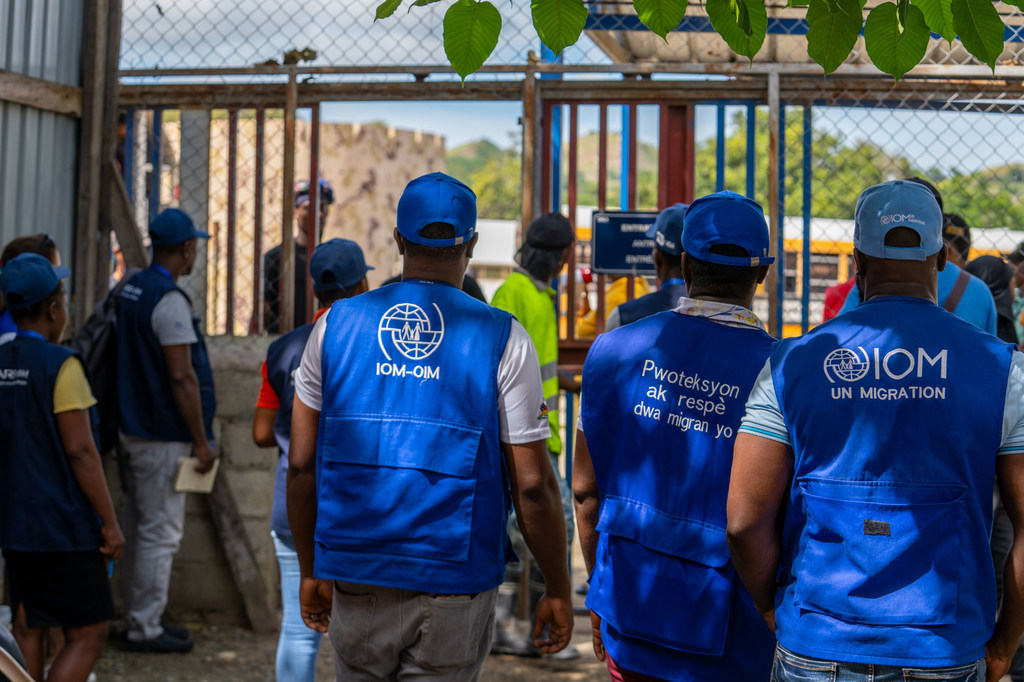
The UN’s International Organization for Migration (IOM) works with the Support Group for the Repatriated and Refugees (Groupe d’Appui aux Rapatriés et Réfugiés, GARR) to ensure the returnees have access to a range of services to meet their immediate needs, including psychosocial support, health referrals, for example pre-natal care, and the distribution of basic items such as clothing, hygiene products, and toiletries.

Temporary accommodation is also available for the most vulnerable, so they can rest and take stock before moving forward with their lives.

IOM staff prepare to assist deported Haitians as they re-enter their home country.

IOM staff prepare to assist deported Haitians as they re-enter their home country.

For unaccompanied children, family reunifications are organised and in cases of gender-based violence, survivors are provided with specialised care.

IOM also works with the Office National de la Migration (ONM), Haiti’s government agency for migration.

ONM leads the registration process, ensuring that each individual is accounted for and works with IOM to assess vulnerabilities and provide individual assistance.

The future remains unclear for many returnees in a country where the vast majority of people struggle to get by on a daily basis.

Guerson and Roselène remain somewhat hopeful that they will return to the Dominican Republic someday. “In the meantime, I will find a way to work,” Guerson said softly, his words conveying uncertainty. “I do this for my children.”

*Names have been changed for their safety

Fact Box:

The work of IOM as well as GARR and ONM is supported by international donors, including the European Union’s Civil Protection and Humanitarian Aid Operations (ECHO), Global Affairs Canada (GAC), and the Korea International Cooperation Agency (KOICA).

Source link

Remarks by President António Costa ahead of the Informal EU leaders' retreat.

0
Remarks by President António Costa ahead of the Informal EU leaders' retreat.

European Council President António Costa will chair the Informal EU leaders’ retreat in Palais d’Egmont, Brussels. Upon arrival he hi

Source link

The European Maritime Transport Environmental Report (EMTER) – Now available : EMTER facts & figures in 24 EU languages – EMSA

0
The European Maritime Transport Environmental Report (EMTER) – Now available : EMTER facts & figures in 24 EU languages – EMSA

The second edition of European Maritime Transport Environmental Report (EMTER), jointly produced by EMSA and the European Environment Agency (EEA) provides a fully up to date and comprehensive overview of the environmental impact of the maritime transport sector in the EU across a wide range of indicators.

A summary version of the report’s highlights (the EMTER facts & figures) is available in 24 EU languages.

With fully updated facts and data, the report provides a factual analysis of the environmental pressures exerted by the maritime transport sector in areas like greenhouse gas emissions, air emissions, underwater noise, biodiversity, pollution, and marine litter.

EMTER also analyses current and future actions to reduce the maritime sector’s impact on our environment, including in the context of new legislation on maritime decarbonisation supporting the European Green Deal.

Download the EMTER 2025:

emter download graphic

Access the summaries below:

Source link

Israel/Palestine: Statement by the High Representative Kaja Kallas on the entry into force of the UNRWA legislation

0
Remarks by President António Costa ahead of the Informal EU leaders' retreat.

Israel/Palestine: Statement by the High Representative Kaja Kallas on the entry into force of the UNRWA legislation

Source link

EU Ambassadors Conference 2025: Annual Conference of EU Ambassadors starts in Brussels on Monday 3 February

0
Remarks by President António Costa ahead of the Informal EU leaders' retreat.

EU Ambassadors Conference 2025: Annual Conference of EU Ambassadors starts in Brussels on Monday 3 February

Source link

From collaborative R&I to scaled up impact in waterborne: building on EU research excellence

0
From collaborative R&I to scaled up impact in waterborne: building on EU research excellence

The European Union’s commitment to collaborative research and innovation is making its mark.

Technologies developed through Horizon 2020 and Horizon Europe programmes are now scaling up with support from the Innovation Fund, ensuring Europe leads the way in tackling climate challenges and laying the foundation for a greener, more sustainable future.

Transformative waterborne projects supported by EU R&I

  1. SUSTAINSEA – Reducing maritime transport CO2 emissions using wind

Spanish startup Bound 4 Blue, incubated by the European Space Agency and supported by the EIT Climate-KIC Accelerator programme, developed wind-assisted propulsion systems to reduce greenhouse gas emissions in maritime transport. The company secured further funding through Horizon Europe, including participation in the collaborative research project RETROFIT55, which advanced wind-assisted ship propulsion, and the ZHENIT project, focusing on wingsail propulsion for zero-waste heat vessels. The company is also involved in the SeaStars project, which demonstrates greenhouse gas emissions reduction and energy efficiency improvements across eight market-ready vessel designs. In addition, it is also participating in the TwinShip project, which aims to accelerate the maritime industry’s digital and environmental transformation toward achieving net-zero emissions by 2045. The wind-assisted propulsion technology is now being deployed in five large cargo vessels under the Innovation Fund-supported SUSTAINSEA project. This initiative will help reduce emissions by up to 91% while lowering dependence on fossil fuels.

2. SOL – Sugar Oil as sustainable marine fueLs

Vertoro BV, a pioneer in sustainable biofuels, created a fuel called Crude Sugar Oil (CSO™) using cellulose. In its journey the company was supported by various EU research programmes in the following three collaborative research projects. Under Horizon 2020, the IDEALFUEL project studied how lignin, a byproduct of biomass, could be converted into renewable bio-HFO fuel for use in maritime fleets. The EHLCATHOL project worked on innovative methods to transform lignin waste into high-quality liquid fuels. Under Horizon Europe, the CARBIOW project explored advanced approaches to utilizing bioenergy sources for fuel production. These projects have contributed to a broader understanding of renewable fuel technologies. Today, with Innovation Fund backing, the SOL project is validating and scaling this fuel for use in shipping, achieving more than an 80% reduction in greenhouse gas emissions compared to traditional fuels.

3. GREENMOTRIL – Development and operation of a GREEN energy community in the port of MOTRIL

Cuerva is an energy company playing a key role in advancing smart renewable energy solutions with the support of several EU-funded programs by participating in the following five collaborative research projects. Through Horizon 2020, the SYNERGY project developed a Big Energy Data Platform and AI Analytics Marketplace, while the BEYOND project worked on a data management platform with advanced AI tools. Under Horizon Europe, Cuerva continued exploring energy innovation with the COCOON project, which focuses on creating adaptive cyber-physical protection strategies, and the ODEON project, introducing a federated framework for transforming the energy landscape. Additionally, the TwinEU project is delivering a digital replica of energy infrastructure, further supporting smart energy management.

These diverse projects set the stage for GREENMOTRIL, funded by the Innovation Fund, which is transforming the Port of Motril into Europe’s first off-grid seaport powered entirely by renewable energy.

4. IRIS – Innovative low caRbon hydrogen and methanol productIon by large Scale carbon capture

Motor Oil (Hellas) has been actively engaged in driving innovation in carbon capture and sustainable fuels, supported by EU funding in the following four collaborative research projects. Under Horizon 2020, the CARMOF project focused on developing a new, efficient process for CO₂ capture. Following this, Horizon Europe funded the AURORA project, which accelerated the deployment of integrated carbon capture, utilization, and storage (CCUS) chains using solvent-based technology. In 2023, the COREU project worked on establishing open-access networks to connect CO₂ emitters with storage sites, while the SAFeCRAFT project showcased the safety and efficiency of sustainable alternative fuels for maritime transport. These efforts paved the way for the IRIS project, now supported by the Innovation Fund. This initiative is scaling up carbon capture at an industrial facility in Greece, with plans to produce 10,000 tonnes of e-methanol annually for use as an energy carrier in mobility and industrial applications. 

These projects demonstrate the tangible impact of EU research investments in creating meaningful change. The collaborative research parts of Horizon 2020 and Horizon Europe have built a bridge from innovative ideas to large-scale action. From clean fuels to off-grid ports, these solutions tackle some of today’s toughest environmental challenges.

READ MORE

DG Research and Innovation: Waterborne Transport Research 

CORDIS Synergies Results Pack on Waterborne Transport for a Greener Future

Source link

EUBAM Rafah: Statement by the Spokesperson on the redeployment of the mission at the Rafah Crossing Point

0
Remarks by President António Costa ahead of the Informal EU leaders' retreat.

EUBAM Rafah: Statement by the Spokesperson on the redeployment of the mission at the Rafah Crossing Point

Source link

Gazans depend on us for ‘sheer survival’ insists UNRWA

0
Gazans depend on us for ‘sheer survival’ insists UNRWA

The development came as more than 462,000 people are estimated to have crossed from south Gaza to the north since the opening of the Salah ad Din and Al Rashid roads on Monday.

The UN and humanitarian partners are assisting those on the move by providing water, high-energy biscuits and medical care along these two routes.

Once back in the north, UN aid workers have reported seeing Gazans using shovels to remove rubble and setting up makeshift shelters or tents where their homes used to be.

Impending catastrophe

Any disruption to UNRWA’s work will have “catastrophic consequences on the lives and futures of Palestine refugees”, insisted Juliette Touma, Director of Communications for the UN Relief and Works Agency, pointing to the agency’s massive reach into the communities where it has provided free healthcare and education for decades.

Last October, the Israeli parliament – the Knesset – passed two laws that called for ending UNRWA’s operations in its territory and prohibiting Israeli authorities from having any contact with the agency.

That developed followed Israeli accusations that UNRWA workers were involved in the 7 October attacks that sparked the war in Gaza. Nine staff were sacked after an internal UN investigation for possible involvement.

Under the Knesset ban, UNRWA was ordered to vacate all premises in occupied East Jerusalem and cease operations in them by 30 January.

“Our teams continue to serve, even though they themselves in Gaza as an example, they themselves are impacted, they themselves have been forced to flee their homes,” Ms. Touma explained.

“They continue to serve and we are committed as UNRWA to stay and deliver across the Occupied Palestinian Territory. That includes the Gaza Strip, it includes the occupied West Bank, including East Jerusalem.”

She noted that no official communication has been received from the Israeli authorities on how the Knesset ban will be implemented across the Occupied Palestinian Territory.

No alternative

“In the absence of any durable solution, Palestine refugees will continue to depend on UNRWA for basic services including health and education; and in Gaza, in the aftermath of the devastation caused by the war, for their sheer survival,” Ms. Touma maintained.

She noted that UNRWA’s health centres continued to receive patients in East Jerusalem in the West Bank on Thursday, while schools were expecting to reopen on Sunday after a scheduled break.

“Our teams…will continue to provide learning for children. We have around 50,000 boys and girls across the West Bank, including East Jerusalem, who go to UNRWA’s schools,” Ms. Touma said.

Aid boost continues

As the UN-wide effort to flood Gaza with aid continues, the World Food Programme (WFP) announced plans to set up more aid distribution points this week in the north, where all of its bakeries are now running once again.

The UN agency reported that together with UNRWA it has resumed “fully-fledged” food parcel distribution and reached 350,000 people since the ceasefire took effect on 19 January.

Some 20,000 hot meals are also being distributed daily in Beit Lahia, in the far north, said Antoine Renard, WFP’s Country Director in Palestine, who underscored the need for non-food supplies – so-called dual use items – to be allowed into the war-shattered enclave also.

Medical emergency

Echoing that message, the UN World Health Organization (WHO) said that only 18 of Gaza’s 36 hospitals are even partly functional, with just one-third – 57 of the 142 primary healthcare centres and 11 field hospitals – also partly functional.

“The ceasefire is good news for our scale up of aid,” said  Dr Rik Peeperkorn, WHO representative in OPT. “As we know, the influx in the north has increased health needs. So 450,000 people have crossed into northern Gaza [and] there’s only there 10 partially functional hospitals in Gaza City and one minimally functional hospital in north Gaza.”

Amid reports that 2,500 children at risk of imminent death in Gaza need immediate medical evacuation, Dr Peeperkorn said that between 12,000 and 14,000 people need specialized care outside the enclave.

“So, what we have been asking for all the time…is first and foremost a restoration of the referrals, the traditional referral pathway to West Bank and East Jerusalem. The East Jerusalem hospitals and the West Bank hospitals are ready to receive Gazan and Palestinian critical patients,” he said.

Briefing journalists in New York on Friday, UN Spokesperson Stéphane Dujarric said UN aid coordination office, OCHA, remained “deeply alarmed” by the worsening conditions for residents in norther areas of the occupied West Bank, as Israeli counter-terrorism operations continued for an 11th day.

“Nearly all of the Jenin refugee camp’s 20,000 residents have been displaced over the past two month in the context of operations by both the Palestinian Authority and Israeli security forces.

A further Israeli operation is occurring in Tulkarm where aid partners report that over 110 families have been displaced from the refugee camp there.

Freed hostage says she was held in UNRWA facility

One of the hostages freed from captivity in Gaza reportedly told the UK Prime Minister in a phone call on Friday that she had been held by Hamas for some time in facilities belonging to UNRWA, according to her mother.

Emily Damari was freed 12 days ago and is missing two fingers following her 15-month ordeal. She told Keir Starmer that Hamas had twice denied her access to medical treatment after being shot twice, in the hand and the leg.

Responding to Ms. Damari’s statement that she had been held inside an UNRWA facility, the UN Palestine refugee agency’s spokesperson Juliette Touma told the BBC that most UNRWA buildings were turned into shelters as soon as the war began and claims that any hostage had been held in one of their facilities was extremely serious.

Ms. Touma said the agency had repeatedly called for independent investigations into these claims, including the misuse and disregard of UNRWA premises by Palestinian armed groups, including Hamas.

Source link