Monday, September 28, 2026
Home Blog Page 590

UN agencies warn of worsening humanitarian and human rights crisis in eastern DR Congo

0
UN agencies warn of worsening humanitarian and human rights crisis in eastern DR Congo

The rebels have already seized the provincial capital, Goma, and reports indicate that they are closing in on the key city of Bukavu, capital of South Kivu province.

The hostilities are occurring in a mineral-rich region that has been volatile for decades amid a proliferation of armed groups, which has forced hundreds of thousands to flee their homes over the years and seek safety in displacement camps.

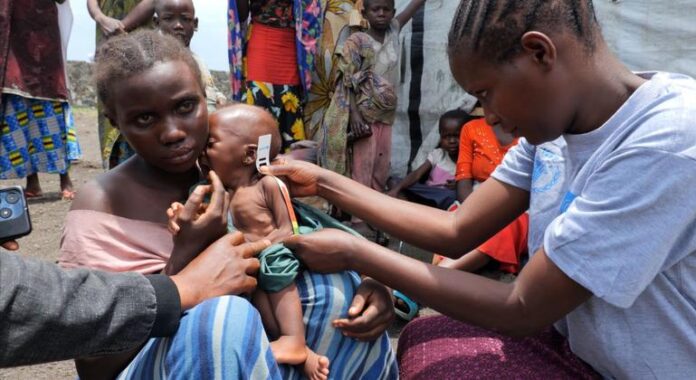
A camp in eastern DR Congo provides security for some of the seven million displaced people in the country.

Critical supplies dwindling

UN humanitarians warn that the situation continue to worsen for civilians likely trapped by days of intense fighting in and around Goma, which has a population of over one million.

Displacement camps on the city’s outskirts, previously hosting more than 300,000 people, are emptying out as people flee the violence. Medical services are overwhelmed by the number of injured, both civilians and military personnel.

The World Food Programme (WFP) said water and food are running low, and the next 24 hours are crucial.

“People are really running out of food, clean water, medical supplies and that’s a big concern. So, the supply chain has really been strangled at the moment,” said WFP Spokesperson Shelley Thakral.

Several WFP warehouses have been looted and teams are taking stock of what they will need to procure locally and transfer by road to ensure they have provisions once operations resume in the critically affected areas.

WFP’s priority is keeping its staff and their dependents safe, and only critical staff remain in the area who are getting ready to resume operations as soon security permits.

Summary executions and sexual violence

Meanwhile, the human rights crisis also continues to deepen in the east.  

At least two sites for internally displaced persons (IDPs) have been bombed, causing civilian casualties, the UN human rights office, OHCHR, reported.

Spokesperson Jeremy Laurence said OHCHR has documented summary executions of at least 12 people by the M23 between 26 and 28 January.

The Office has also documented cases of conflict-related sexual violence by the army and allied Wazalendo fighters in Kalehe territory, located in South Kivu.  

It is also verifying reports that 52 women were raped by Congolese troops in South Kivu, including alleged reports of gangrape.

Violations could worsen

Meanwhile, in other areas under M23 control in South Kivu, such as Minova, fighters have occupied schools and hospitals, forced IDPs out of camps and subjected the civilian population to forced conscription and forced labour.

Additionally, DRC officials report that at least 165 women were raped by male inmates during the mass prison break from Goma’s Muzenze prison on 27 January, as M23 began its assault on the town.

Mr. Laurence recalled that conflict-related sexual violence has been an appalling feature of armed conflict in eastern DRC for decades, and the UN High Commissioner for Human Rights, Volker Türk, “is particularly concerned that this latest escalation risks deepening the risk of conflict-related sexual violence much further.“

End the violence

He said OHCHR continues to receive urgent requests from civilians for protection and is working with UN colleagues and other partners to ensure their safety. 

“As M23 reportedly advances towards Bukavu, the capital of South Kivu, the High Commissioner calls for an end to the violence and for all parties to uphold their obligations under international human rights law and international humanitarian law,” he said.

Recognize the crisis

The International Organization for Migration (IOM) also voiced deep concern over the hundreds of thousands of civilians uprooted by the heavy fighting and violence in Goma, some of whom were already previously displaced.

IOM appealed to the international community to recognize the staggering scale of the crisis and support the humanitarian response. 

“With the current alarming upsurge in fighting, an already dire situation is rapidly becoming very much worse,” said Director General Amy Pope. 

“IOM joins the UN Secretary-General’s call for an immediate cessation of hostilities and full humanitarian access, so that we can rapidly scale up our response and ensure that life-saving aid reaches those in need.”   

Appeal for support

The UN agency has been supporting displaced and host communities in Goma and surrounding areas by providing emergency shelter, water, sanitation, and hygiene assistance, among other aid.

IOM warned, however, that both the agency and humanitarian partners are struggling to meet the urgent needs in the DRC.

This year, humanitarians are seeking $2.5 billion for the country, with at least $50 million urgently needed to address the latest displacement, scale-up life-saving assistance, and prevent further suffering.


Death and disease

Humanitarian organizations in Goma continue to assess the impact of the crisis, including the widespread looting of warehouses and the offices of aid organizations, the UN said on Friday.

The World Health Organization (WHO) and partners conducted an assessment with the Government over the past five days.

They report that 700 people have been killed and 2,800 injured are receiving treatment in health facilities, though numbers are expected rise as more information becomes available. 

On Friday, the UN aid coordination office, OCHA, and partners visited sites for internally displaced people in the areas of Bulengo and Lushagala, located on the outskirts of Goma.

They found that water and healthcare services are still operational, but conditions remain dire. However, cholera cases have been reported and there are risks of an Mpox outbreak among displaced people.

OCHA warned that without urgent action, the risk of waterborne disease outbreaks will continue to increase. 
Source link

‘Robbed’ of their childhood: UNICEF warns of crisis facing Haiti’s youth

0
‘Robbed’ of their childhood: UNICEF warns of crisis facing Haiti’s youth

In a briefing on Friday, UN Spokesperson Stéphane Dujarric reported that more than 1,600 men, women and children have fled. 

Two-thirds are seeking refuge with host families and over 500 sheltering in three newly established displacement sites, according to the International Organization for Migration (IOM).

Children at risk

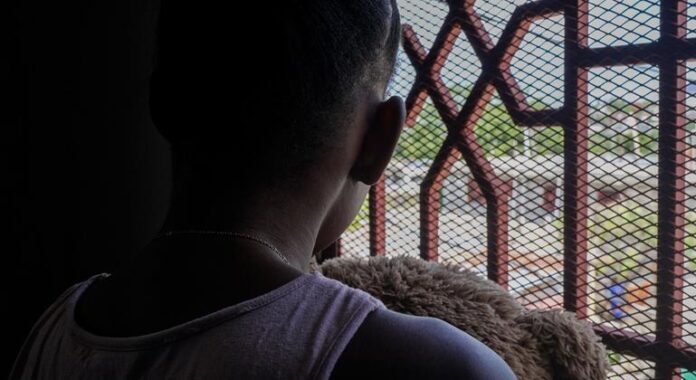
The situation for children remains particularly dire. The number of internally displaced children in Haiti has increased by nearly 50 per cent since September, now exceeding half a million. 

UNICEF reports that approximately one in eight children in the country is now displaced.

The agency also warns of a 70 per cent rise in child recruitment by gangs over the past year, with up to half of gang members in Haiti now estimated to be children.

‘Childhood is a right’

Speaking from a prison in Port-au-Prince where dozens of children are being held, UNICEF spokesperson James Elder described the growing desperation:

“I’m in a prison in Port-au-Prince where dozens of children are being held,” he said, explaining that 85 per cent of this capital city is controlled by armed groups.

“So, child recruitment into armed groups is rampant. Children get recruited. It’s out of desperation. It’s out of manipulation, out of being engulfed in violence,” he emphasised.

Mentioning a 16-year-old girl who dreamt of being a paediatrician, but was caught up in a raid, he said: “The point of this is that childhood should not be a gift. Childhood is a right.”

Humanitarian needs grow

The crisis is further aggravated by forced returns from neighbouring countries. 

In the first two weeks of January alone, nearly 15,000 Haitians were returned from the Dominican Republic, adding to the 200,000 people deported across the region last year.

Meanwhile, natural disasters have worsened conditions across the country. 

Since November, nearly 330,000 people have been affected by floods in six of Haiti’s departments, leaving dozens dead and damaging or destroying nearly 50,000 homes.

UN appeals 

The UN has launched a $908 million humanitarian appeal to assist 3.9 million people in Haiti this year.

“We urge the international community to scale up its support so that we and our humanitarian partners can support the people of Haiti who need it,” said Mr. Dujarric. 

As conditions deteriorate, UN agencies and humanitarian organizations stress the need for urgent international action to protect Haiti’s most vulnerable, particularly its children – trapped in a cycle of violence, displacement and deprivation.

“For those of us with freedom, those with safety, those who have an opportunity – we also have a responsibility. We have a responsibility to raise our voices for those who simply do not have one,” Mr. Elder said.  

Source link

Myanmar/Burma: statement by the High Representative on behalf of the EU on the Fourth Anniversary of the Coup

0
Myanmar/Burma: statement by the High Representative on behalf of the EU on the Fourth Anniversary of the Coup

On the fourth anniversary of the military coup in Myanmar, the European Union (EU) reiterates its strongest condemnation of the actions taken by the Myanmar military since 1 February 2021 and calls…

Source link

UNOPS: the UN agency turning commitments into reality

0
UNOPS: the UN agency turning commitments into reality

Despite immense security risks and logistical challenges, the agency worked with international partners to transport and eliminate hundreds of tonnes of chemical materials under strict deadlines. This mission drew praise from global leaders, illustrating how a UN body with the right expertise can help neutralize threats to international peace and security.

The devastating 2004 tsunami left Indonesian provinces Aceh and Nias in ruins. Amid overwhelming damage, UNOPS constructed 225 earthquake-resistant schools in the region, providing children with secure, modern learning environments. By combining engineering expertise, local labor, and a rapid implementation timeline, education was revitalized for communities that had lost so much.

UNOPS commitment to helping protect the environment was also highlighted through its work on the Montreal Protocol, the international treaty that led to the healing of the ozone layer. By providing technical guidance and project support, UNOPS helped countries transition to safer alternatives for nearly 100 chemicals that harm the ozone layer.

A newly installed tap in Mirtala Village, India provides a clean water supply

Bridging the gap between ambition and action

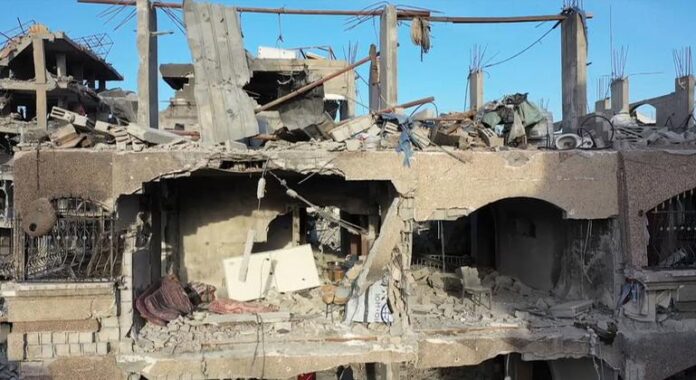
In any country coming out of conflict, rebuilding essential infrastructure can make the biggest difference. UNOPS remains committed to supporting countries in conflict – building on its recent work in Ukraine, Syria and Gaza, which has been practically reduced to rubble. The ceasefire between Israel and Hamas is still in its early stages, but UNOPS stands ready to support a coordinated UN reconstruction response.

From its beginnings as a small department to its evolution into a driving force for concrete action, the UNOPS journey is a testament to the power of resilience, innovation, and partnership. As global challenges multiply, the agency’s role in bridging the gap between humanitarian, developmental and environmental needs is an example of what the UN can achieve through determination, expertise, and a global commitment to improving lives worldwide.

Today, the office is committed to bridging the gap between ambitions and tangible action, building foundations for countries to recover and thrive, from constructing schools and hospitals, building roads that connect communities in remote areas, and strengthening health systems.

In 2025, as it marks its 30th anniversary, UNOPS is planning for the future, to ensure that it provides solutions where needs are greatest, with a focus on serving some of the world’s most vulnerable communities. 

Source link

Myanmar/Burma: statement by the High Representative on behalf of the EU on the Fourth Anniversary of the Coup

0
Myanmar/Burma: statement by the High Representative on behalf of the EU on the Fourth Anniversary of the Coup

EU issued a statement on the fourth anniversary of the military coup in Myanmar reiterating its strongest condemnation of the regime’s violence and calling for an end to all atrocities.

Source link

Four years on from the Military Coup in Myanmar: joint statement by Australia, Canada, the European Union, the Republic of Korea, New Zealand, Norway, Switzerland, the United Kingdom and the United States

0
Myanmar/Burma: statement by the High Representative on behalf of the EU on the Fourth Anniversary of the Coup

Four years on from the Military Coup in Myanmar: joint statement by Australia, Canada, the European Union, the Republic of Korea, New Zealand, Norway, Switzerland, the United Kingdom and the United States

Source link

Sudan: UN rights chief ‘alarmed’ by summary executions, attacks on civilians

0
Sudan: UN rights chief ‘alarmed’ by summary executions, attacks on civilians

Government forces and a rival military – the Rapid Support Forces (RSF) – have been battling for control of the country since April 2023 in what Mr. Türk called a “senseless war”, which has recently taken an “even more dangerous turn for civilians” as reports of people brutally killed in ethnically targeted attacks mount.

In a statement released on Friday, the High Commissioner reported that at least 18 civilians, including one woman, were killed in seven separate incidents after SAF forces regained control of the area around Khartoum North – Sudan’s third largest city – on 25 January, according to verified information from the rights chief’s office (OHCHR).

Many of the victims were originally from the Darfur and Kordofan regions, raising concerns about targeted violence.

“These reports of summary executions, following similar incidents earlier this month in Al Jazirah State, are deeply disturbing,” said Mr. Türk.

“Such killings must not become normalised. Deliberately taking the life of a civilian or anyone not or no longer directly taking part in hostilities is a war crime,” he emphasised.

Disturbing threats circulate online

OHCHR is also investigating disturbing video footage that surfaced on 30 January, in which men in SAF uniforms and members of the Al Baraa Bin Malik Brigade in Khartoum North appear to read out a list of alleged RSF collaborators, saying “Zaili,” which is Arabic for “killed”, after each name.

Meanwhile, further threats of violence have emerged, with a video showing a member of the same brigade threatening to slaughter residents of El Hadj Yusif in East Nile, another area of Khartoum North mainly inhabited by people from Darfur and Kordofan.

Mr. Türk urged all parties to the conflict to protect civilians and respect international humanitarian and human rights law.

“Independent investigations must be held into these incidents in line with relevant international standards,” he underscored.

Civilians under fire

Meanwhile, attacks on civilians by the RSF continue across Sudan.

In El Fasher, North Darfur, the Abu Shouk camp for internally displaced people (IDPs) was shelled again on 29 January, killing nine civilians, including two women and a child, and injuring at least 12 others.

Hospitals have also been targeted. On 24 January, a drone attack attributed to the RSF killed at least 67 people and injured 19 at Al-Saudi Maternity Hospital in El Fasher. The attack severely damaged the emergency unit, rendering it inoperable.

The hospital – the only facility providing specialised maternal care in the area – has now been struck twice this month and was shelled at least 13 times in 2024.

“Deliberate attacks on civilians and civilian objects are abhorrent,” Mr. Türk stated. “They must end immediately and so must incitement to violence against civilians,” he emphasised.

As violence escalates, Mr. Türk reiterated the urgent need for all parties to uphold their legal obligations and ensure the protection of civilians. 

Source link

Aid efforts in Gaza escalate, as risk from deadly unexploded ordnance grows

0
Aid efforts in Gaza escalate, as risk from deadly unexploded ordnance grows

“Hope returns to Gaza, but it’s fragile,” said Corinne Fleischer, World Food Programme (WFP) Regional Director for the Middle East and North Africa. “With open crossings and sustained efforts, Gaza’s recovery can take root,” she emphasised.

The WFP has doubled its aid deliveries, bringing in 22,000 metric tons of food in the past six days – more than the entire supply that entered Gaza in November.

Scaling up essential services

UN Spokesperson Stéphane Dujarric highlighted further relief efforts, noting that six fuel tankers were delivered to northern Gaza on Wednesday.

Aid workers stationed along the Salah ad Din and Al Rashid roads continue to assist people making their way back north to shattered homes, providing food, water, and hygiene kits, with the UN Children’s fund (UNICEF) distributing identification bracelets for children to help families stay connected.

To support vulnerable groups, the World Health Organization (WHO) has supplied fuel, tents and equipment to establish trauma stabilization points along Al Rashid Road in collaboration with the Palestine Red Crescent Society.

Meanwhile, efforts to provide emergency nutrition continue, with high-energy biscuits distributed to 19,000 people south of Wadi Gaza and 10,000 in the north.

Shelter assistance is also being scaled up, with humanitarian partners distributing tents to families – many of whom are returning to homes that have been completely destroyed.

Water remains a critical concern and aid workers are ramping up water trucking operations. In Rafah alone, 300 cubic meters of potable water – enough for 50,000 people – is being distributed daily.

Danger underfoot

Despite the increasing humanitarian response, returning residents face significant risks from UXO contamination.

The UN Mine Action Service (UNMAS) has warned that between 5 to 10 percent of weapons fired into Gaza have failed to detonate, leaving behind deadly hazards.

Since October 2023, at least 92 people have been killed or injured by explosive ordnance. Informal reports suggest 24 victims since the ceasefire began, according to Luke Irving, Chief of the UN Mine Action Programme (UNMAS) in the occupied Palestinian territories, briefing the press on Wednesday from the enclave.

“Humanitarian convoys are finding items more and more, as we reach new areas which we previously could not get to, including large aircraft bombs, mortars, anti-tank weapons, rockets and rifle grenades,” he explained.

An area of Rafah in the southern Gaza Strip lies in ruins.

Rubble removal

To mitigate risks, UNMAS and its partners are conducting awareness sessions, distributing safety leaflets and escorting humanitarian convoys along high-risk routes.

A newly established UN-led Gaza Debris Management Framework aims to ensure the safe removal of rubble, but progress is being hindered by UXO contamination, exposure to hazardous materials and complex property disputes.

Several UN agencies are collaborating to address both the environmental and housing concerns associated with these issues.

Deteriorating situation in West Bank

Meanwhile, in the occupied West Bank, violence and military operations continue to escalate.

The UN Office for the Coordination of Humanitarian Affairs (OCHA) has reported a drastic deterioration in the humanitarian situation, particularly in the governorates of Jenin and Tulkarm.

“We’ve repeatedly expressed our concern over the use of lethal, war-like tactics in law enforcement operations,” Mr. Dujarric said.

Israeli military operations in these areas have led to significant destruction of civilian infrastructure.

In Tulkarm, access to water and electricity has been disrupted and initial estimates suggest that nearly 1,000 people have been displaced in recent days.

Sustained humanitarian access

With humanitarian efforts scaling up, UN agencies are calling for unhindered access to deliver aid safely and ensure the protection of both civilians and humanitarian workers.

Mr. Dujarric reiterated the urgent need for safe passage for humanitarian workers, the protection of civilians and the acceleration of reconstruction efforts to support those returning home. 

Source link

New “superglue” brings hope to cancer patients

0
New “superglue” brings hope to cancer patients

We all know someone touched by cancer. And although science is all about facts and evidence, it can also be about our personal stories and emotions.  

Erika Pineda Ramírez lost her dad to cancer. Alba García-Fernández lost her grandmother and aunt, also to cancer. They are now doing research with the goal of finding more effective treatments for cancer patients.   

In 2024, Alba and Erika started working on NanoGlue, a new approach to help the immune system fight cancer more effectively. Their project is funded by the Marie Skłodowska-Curie Actions (MSCA), through the ARISTOS Postdoctoral Program in Biomedicine and Health Sciences and it is developed at CIBER-BBN, Centro de Investigación Principe Felipe, and Universitat Politècnica de València. 

To mark World Cancer Day, they joined our European Research Executive Agency colleague and breast cancer survivor, Sofia Pereira Sá, for a conversation on the cancer cells’ ability to hide from the immune system, the heavy side effects of treatments and the hope NanoGlue can bring to millions of patients. 

More effective treatments with less heavy side effects 

Sofia Pereira Sá: Let’s first talk about your MSCA-funded project. What is NanoGlue and what can its results and findings mean for patients like me? 

Alba García-Fernández: Our ultimate goal is to provide more effective treatments with less side effects to improve patients’ quality of life. We do this by designing new nanoparticles and then activate the immune system of the patients to attack the tumour.  

This kind of immunotherapy would be more effective and would help avoid and limit undesirable side effects, that we see with current treatments.  

Erika Pineda Ramirez: We also want to study the interaction between the cancer cells and the immune cells in a metabolic level. We would then be able to propose novel and more efficient therapies.  

Recent reports in Spanish news outlets have referred to the NanoGlue innovative treatment as a “superglue” for triple negative breast cancer, a notoriously aggressive form of the disease. 

Sofia: Can the project’s approach have broader applications, benefiting patients with other types of cancer?  

Erika: First, I want to explain why we called it a “superglue”; it is because our nanoparticles will enhance the immune system’s ability to detect and respond to cancer, helping the body to attack the cancer and kill it.  

Alba: The nanoparticles are a versatile platform, and we can select and modify them depending on our needs. We chose to test it with triple negative breast cancer because it represents a major health challenge. It’s a good starting point for validating our nanoparticles.  

Sofia: How are you combining different scientific areas and how can that be crucial to achieve better scientific results? 

Erika: We work with experts in nanotechnology, biotechnology, biology, metabolomics, and oncology. Having all these people with different expertise helps us see the problems from different angles and find better solutions. 

The future of cancer research – a patient’s perspective 

Erika: What was the biggest challenge for you as a patient?  

Sofia: The side effects played a big role when it came to my physical and mental wellbeing. Especially because all these side effects prevented me from being the mum I wanted to be for my one and half-year-old son. I couldn’t play with him, I couldn’t bathe him, I couldn’t take him to school. This was the hardest part of the whole treatment. It was heartbreaking.  

My diagnosis was made in summer 2023 and after 20 rounds of chemotherapy I still feel some side effects, such as the so called “chemo brain”. I’d love to see therapies advance in a way that gives patients a better quality of life. 

Erika: Besides reducing side effects, what do you think researchers should be aware of doing cancer research?  

Sofia: Being only 34 years old and seeing the chemotherapy medication going into my bloodstream and knowing that I was somehow “poisoning” myself to get treated was a very traumatic experience. Thankfully, you and other cancer researchers are already tackling that by trying to find more targeted therapies.  

A second thing I think is important is fertility. More and more young women are being diagnosed with hormonal breast cancer exactly when they are planning to have children. I wish researchers could find a way to preserve breast cancer patients’ possibilities of still becoming mothers. 

The future of cancer research – a scientist’s perspective 

Sofia: What do you think cancer researchers will be focusing on in the next years?  

Alba: My immediate thought is personalised medicines for both treatment and diagnosis. 

Erika: I totally agree with Alba – personalised medicine is the future but also having more multidisciplinary because we need expertise from different areas. 

Sofia: What is your experience with EU funding, and how do you think it will be relevant for your work on NanoGlue? 

Alba: I have had previous experience with EU funding, as I was part of a project funded by the EIC Pathfinder programme for cancer therapy. It is thanks to EU funding that us researchers can work on innovative ideas like this and explore different paths. I believe NanoGlue is a next level initiative for our future.  

Erika: EU funding helps us take ideas and turn them into actions. I wanted to do cancer research for years, but in Mexico, my home country, I didn’t have much support to do it. The MSCA funding gave me this great opportunity of working in this field with top researchers, and to use equipment I didn’t have the opportunity to use before. For me, it was a dream come true. 

Discover more

Check out what the European Commission is doing to improving the lives of more than 3 million people by 2030 through cancer prevention and cure – EU Mission: Cancer. For more MSCA news and funding opportunities, visit out our dedicated page.

Curious to find out more about Alba and Erika’s research? You can check out ARISTOS’s website and follow them on social media:

Alba García-Fernández: LinkedIn

Erika Pineda Ramírez: LinkedIn, X

ARISTOS Program: LinkedIn, X

Source link

Syria: Hostilities and aid challenges persist across devastated country

0
Syria: Hostilities and aid challenges persist across devastated country

In an update, the UN aid coordination office, OCHA, said more than 25,000 people have been newly uprooted from the northeastern city of Manbij where shelling and airstrikes have been reported.

OCHA noted that hostilities have been intensifying over the past week, particularly in eastern Aleppo and around the Tishreen Dam.

The dam is a key target for different groups of Syrian fighters vying for control of northern Syria. These include the Turkish-backed Syrian National Army (SNA) and the mainly Kurdish Syrian Democratic Forces (SDF) fighting alongside the PKK/YPG – the Kurdish Workers’ Party or People’s Protection Units. 

Hundreds of thousands fleeing

As a result of the escalating violence, the number of newly displaced people has increased to 652,000 as of 27 January, OCHA said.

The deadly incidents reported in Syria’s northeast include shelling that struck a town in the Manbij countryside on 25 January, injuring an unverified number of children.

On Saturday, clashes affected a displacement camp in Jarablus north of Manbij, injuring seven including two children and destroying five shelters. 

On the same day, a car bomb detonated in front of a hospital and school in Manbij city, reportedly killing one civilian and injuring seven others.

In the past week, OCHA, has also reported clashes in coastal areas  with “increased criminal activities, including looting and vandalism, constraining the movements of civilians during night hours”.

The UN agency also noted continuing Israeli incursions into Quneitra in southern Syria, near the Golan Heights buffer zone that the Israeli military moved into – forces said temporarily – following the ouster of President Assad.

Massive aid needs

More widely across Syria’s governorates, the UN agency warned that a “lack of public services and liquidity constraints” have severely affected communities and the humanitarian response. In Homs and Hama, for instance, electricity is available for only 45 to 60 minutes every eight hours.

In northwest Syria, 102 health facilities have already run out of funds since the start of 2025. The UN and its humanitarian partners are appealing for $1.2 billion to help the most vulnerable 6.7 million people in Syria until March.

The developments came ahead of a UN Security Council meeting later on Thursday behind closed doors on Syria – and the reported declaration that head of Hayat Tahrir Al Sham and the caretaker authority in Damascus, Ahmed al-Sharaa, has been declared transitional president.

 It was also reported that the new caretaker authority has decided to suspend the Syrian constitution.

Source link