Sunday, September 20, 2026
Home Blog Page 65

New Resource Highlights Stories of Northwestern Shoshone Latter-day Saints

0

Working with the Northwestern Band of the Shoshone Nation (NWBSN), The Church of Jesus Christ of Latter-day Saints has published a new digital history resource, “Native Saints: The Washakie Ward” from the Church Historian’s Press.

“The collaboration is something we’ve always wanted,” said Brad Parry, vice chairman of the NWBSN. “I think this is something that our ancestors have wanted.”

Downloadable B-roll & SOTs

“Native Saints: The Washakie Ward” highlights stories from one of the first Indigenous congregations in the Church’s history. This project builds on earlier work, including “Saints: The Story of the Church of Jesus Christ in the Latter Days,” which also includes experiences of Northwestern Shoshone Latter-day Saints.

The Church Historian’s Press website includes historical essays, biographies, maps of Washakie and the Northwestern Shoshone homelands, historical photographs and other materials that cover the history of the Washakie Ward through the unit’s closure in 1966. Wards are geographically organized congregations of the Church of Jesus Christ.

The Washakie Ward was founded in 1880, just four miles south of the Utah-Idaho border. Washakie became both a physical and spiritual home for Northwestern Shoshone Latter-day Saints.

“The Washakie Ward was where the Northwestern Shoshone became Indigenous Latter-day Saints and where they passed on their history, culture and language to subsequent generations,” said David W. Grua, a senior historian in the Church History Department and lead historian of the Native Saints project. “This work of cultural preservation laid a foundation for their perseverance as a people and as a nation today.”

In December 2023, Church historians began working closely with Tribal Elders to conceptualize the project, share research on the Washakie Ward and its members, and review written materials. “Working closely with the descendants of the Washakie Ward members to tell their story has been tremendously gratifying,” Grua said.

“These are my grandmother’s stories coming back to life,” Parry said. He grew up hearing stories about Washakie from his father and grandmother, Mae Timbimboo Parry, the great-granddaughter of Sagwitch Timbimboo.

Sagwitch Timbimboo, a chief and survivor of the Bear River Massacre of 1863, is one of many prominent individuals profiled in the dataset’s biographical essays. His biography details some of the spiritual manifestations that persuaded hundreds of tribal members to accept baptism into the Church in the 1870s.

“The Washakie Ward” also features approximately 1,600 profiles of Northwestern Shoshone individuals whose names appear in Church records. The profiles are primarily based on the efforts of volunteer missionaries at the Church History Library and FamilySearch who spent two years indexing the Washakie Ward records.

Rios Pacheco, a Tribal Elder and cultural advisor for the NWBSN, was involved in this project and believes that this publication captures an important part of the tribe’s culture and history.

“It’s important because we can see that they survived a great tragedy, yet they continually called upon our Father in Heaven through prayer to help guide them and to help take care of their families and to search for a place that they would be able to gather and meet as a family and as a community,” he shared.

Pacheco hopes that these stories, once passed down orally, will continue to be read for generations to come.

I can’t talk to every youth, but those words will talk for me,” he said. “Those stories of our people will talk.”

About 

The Church Historian’s Press was announced by the Church History Department of The Church of Jesus Christ of Latter-day Saints in 2008. “The Joseph Smith Papers” was the first publication to bear the imprint. The press publishes works of Latter-day Saint history that meet high standards of scholarship.

NWBSN is a federally recognized tribe. Members of the NWBSN are the direct descendants of the survivors of the Bear River Massacre.

Source link

What to Do If You Have No Written Work Contract in Europe

0
What to Do If You Have No Written Work Contract in Europe

You start the job because you need the income. The manager says the paperwork will come “next week”. Then your shifts change, your pay is unclear, overtime is not recorded, and when you ask for something in writing, the answer is vague: “Don’t worry, we’ll sort it out.”

For many workers in Europe — especially young people, migrants, seasonal staff, platform workers, hospitality employees, care workers and people in short-term jobs — the absence of a written contract can feel like a trap. You may be working, following orders and depending on the wages, but without clear written terms you may not know your rights, your notice period, your holiday entitlement or even the exact identity of your employer.

In the EU, this is not simply a private misunderstanding. Workers have rights to clear information about their job. National rules differ, but European labour law sets minimum standards designed to make work more transparent and predictable.

1. Do not assume “no contract” means “no rights”

A common fear is that without a signed contract, the worker has no protection. That is usually wrong. In many European countries, an employment relationship can exist even if nothing was signed, especially where you perform work personally, under someone else’s direction, for pay.

What matters is the reality of the work: who gives instructions, who sets the schedule, who pays you, whether you use the employer’s tools or premises, and whether you are economically dependent on the job. If those facts show employment, rights may apply even if the paperwork is missing.

The European Commission explains that EU labour law sets minimum standards on working conditions, including working time, part-time work, fixed-term work and information for workers. It also notes that national labour inspectorates and courts are responsible for enforcing these rules in practice through EU labour law and national implementation.

2. Ask for your written terms immediately

Do not wait until the relationship breaks down. Ask your employer, in writing, for your basic employment information. Keep the message polite and factual.

You can write:

Hello, could you please send me my written employment terms, including my job title, employer details, start date, pay, working hours, holiday entitlement, probation period, notice period and place of work? I would like to keep my records complete. Thank you.

Send it by email, messaging app or another channel that creates a record. If you ask only verbally, it may later be denied.

3. Know what information you should receive

Under the EU Directive on transparent and predictable working conditions, workers should receive key information about their employment relationship. The exact national form varies, but the basic idea is simple: workers should not be left guessing about essential terms.

The EU’s Directive 2019/1152 on transparent and predictable working conditions includes information rights on matters such as the identity of the employer, place of work, job description, start date, pay, working time, paid leave, notice periods, probation and training rights.

As a practical checklist, ask for written confirmation of:

  • the legal name and address of the employer;
  • your job title or description of work;
  • your start date;
  • whether the job is permanent, temporary, seasonal or fixed-term;
  • your pay rate, payment date and method of payment;
  • normal working hours and rules on overtime;
  • holiday and paid leave entitlement;
  • probation period, if any;
  • notice period and dismissal rules;
  • the place of work, including remote or changing locations;
  • collective agreement or sector rules, where applicable.

4. Start building your own evidence file

If your employer delays or refuses written terms, begin collecting evidence. This is not about creating conflict. It is about protecting yourself if wages, hours or dismissal later become disputed.

Keep:

  • screenshots of shift schedules and rota changes;
  • messages assigning tasks or confirming hours;
  • photos of timesheets, clock-in records or work calendars;
  • bank statements showing wage payments;
  • payslips, if provided;
  • emails or messages from managers;
  • uniform, badge or workplace access records;
  • names of supervisors and colleagues who can confirm your work;
  • a simple diary of days worked, start and finish times, breaks and tasks.

Write down facts while they are fresh. A short daily record can be more useful than trying to reconstruct months of work later.

5. Check whether your hours are lawful

Unclear contracts often come with unclear hours. You may be told to stay late, accept last-minute shifts, work without breaks or remain “available” without knowing whether you will be paid.

EU working-time rules set minimum health and safety protections. The European Commission states that the Working Time Directive includes rights such as a limit to weekly working time, daily and weekly rest, breaks, and paid annual leave through EU working time rules.

As a practical step, compare your real hours with what you are paid. If you regularly work before or after scheduled shifts, during unpaid “training”, through breaks, or while waiting on call, record it.

6. Be careful with “trial shifts” and unpaid training

Some employers use “trial shifts”, “training days” or “assessment periods” to obtain unpaid labour. National rules differ, but if you are performing real work that benefits the business, you may have a claim to pay.

Before accepting a trial shift, ask:

  • Will this shift be paid?
  • How many hours will it last?
  • What tasks will I perform?
  • Who will supervise me?
  • When will I receive the written result or job offer?

If the answer is vague, send a message confirming your understanding. For example: “Please confirm whether tomorrow’s four-hour trial shift will be paid and at what rate.”

7. If you are called “self-employed”, check the reality

Some workers are told they are freelancers or independent contractors even though the employer controls their schedule, tasks, prices, uniform, platform access or working method. This can affect tax, social security, holiday pay, sick pay, dismissal rights and accident protection.

The label in a contract is important, but it is not always decisive. Labour authorities and courts often look at the facts. If you cannot freely choose clients, negotiate price, send a substitute, decide your working method or refuse tasks without penalty, ask for advice.

This is especially relevant for platform work, delivery, cleaning, care, construction, events, hospitality and media production, where dependent work may be presented as self-employment.

8. Ask a labour inspectorate, union or advice centre before resigning

If the situation becomes stressful, the instinct may be to leave immediately. But resigning can affect claims, unemployment benefits and evidence. Before making a decision, seek advice from a labour inspectorate, trade union, workers’ centre, legal aid office or employment lawyer.

Ask specifically:

  • Do I have an employment relationship even without a written contract?
  • Can I claim unpaid wages or overtime?
  • What is the deadline for filing a complaint?
  • Can I complain anonymously or confidentially?
  • Could my immigration, residence or social security status be affected?
  • What documents should I gather before taking action?

For wider context on workplace rights, The European Times has previously explained how workers can respond when employment ends suddenly in What to Do If You’re Fired Unfairly in the EU, part of its EU Rights Guide series.

9. Put wage and contract complaints in writing

If pay is missing, hours are disputed or the employer still refuses written terms, make a written complaint. Keep it short and factual.

Include:

  • your name and role;
  • the date you started work;
  • the hours or shifts worked;
  • the amount paid and the amount you believe is missing;
  • the written terms you requested;
  • the documents you are attaching;
  • a clear request for correction by a specific date.

Avoid insults or threats. The aim is to create a clear record that can be shown to an authority if needed.

10. Escalate to the correct national body

If the employer does not respond, contact the relevant national body. Depending on the country, this may be a labour inspectorate, employment tribunal, workplace relations commission, social security authority, tax authority, equality body or civil court.

Use official websites. Search for your country’s labour inspectorate or employment rights authority. If discrimination is involved — for example because of sex, age, disability, religion, ethnic origin, nationality or pregnancy — contact the national equality body as well.

The European Union Agency for Fundamental Rights provides information on equality and non-discrimination across the EU, including the role of national equality bodies and rights protections in employment through EU equality and non-discrimination resources.

Data box: written work rights in Europe

Workers covered by EU labour law The European Commission states that EU labour law rights benefit over 240 million workers in the European Union.
Core EU rule Directive 2019/1152 requires workers to receive information on essential aspects of the employment relationship, including pay, working time, probation and notice rules.
Working time protection EU working-time rules include minimum daily and weekly rest, breaks, paid annual leave and limits on weekly working time.
Enforcement The Commission notes that national authorities — such as labour inspectorates and courts — enforce EU labour rules as implemented in national law.

Practical checklist: what to do this week

  • Ask your employer in writing for your written terms.
  • Save your rota, messages, payslips and payment records.
  • Keep a daily record of hours worked and breaks taken.
  • Check whether trial shifts or training were paid.
  • Compare your actual hours with your pay.
  • Ask whether you are correctly classified as employed or self-employed.
  • Contact a union, labour inspectorate or advice centre before resigning.
  • Submit a written complaint if pay or contract information is missing.
  • Escalate to the national employment authority if the employer does not respond.

The rights-based bottom line

A written contract is not a luxury. It is the basic map of a working life: who employs you, what you are paid, when you work, how you can rest, and what happens if the job ends. Without it, the imbalance between worker and employer becomes sharper.

But the absence of paperwork does not erase the reality of work. If you are doing the job, following instructions and depending on the wage, you may already have rights. The safest response is practical: ask in writing, document everything, seek advice early and use the national enforcement route before the problem becomes harder to prove.

.

Source link

Scientologists in Germany Highlight Community Work Through Volunteerism in different fields

0
Scientologists in Germany Highlight Community Work Through Volunteerism in different fields

Scientologists in Germany carried out community initiatives in Hamburg, Munich, Berlin, Stuttgart and Bavaria, focusing on drug-prevention education, human-rights awareness, peacebuilding and volunteer service.

KINGNEWSWIRE // PRESS RELEASE // BERLIN, Germany – 28 May 2026 – Scientologists in Germany carried out a series of community-based social and constitutional initiatives in 2025 and 2026, with activities focused on drug prevention, human-rights education, peacebuilding and volunteer service. The work reflects a broader pattern of public outreach by Churches of Scientology, missions and volunteers in German cities including Hamburg, Munich, Berlin and Stuttgart.

The activities are part of international social betterment programmes supported by the Church of Scientology and inspired by its founder, L. Ron Hubbard. In Germany, they have taken the form of public information stands, open houses, educational events, interreligious discussions, volunteer assistance and the distribution of prevention materials in response to local and national concerns.

In Hamburg, volunteers connected with the Church of Scientology Hamburg held a public information stand at the end of February 2026 for the initiative “Sag Nein zu Drogen, Sag Ja zum Leben” – “Say No to Drugs, Say Yes to Life.” The volunteers distributed over a thousand drug-education booklets and recorded dozens of drug-free pledges. On 1 March, the church also held an open house presenting the work of Scientology Volunteer Ministers and recognising two Hamburg volunteers for their service in humanitarian programmes.

The activity took place against a serious public-health background. Federal figures for 2024 recorded 2,137 deaths in Germany as a result of illegal drug use. They also pointed to a 14 percent increase in drug-related deaths among people under 30, a rise in deaths involving synthetic opioids and new psychoactive substances, and growing concern over mixed consumption. In that context, the Hamburg initiative placed emphasis on prevention through accessible educational materials and direct contact with the public.

Hamburg was also the setting for two related human-rights and peace events in late 2025. On 19 September, the Church of Scientology Hamburg held an open house for the International Day of Peace. The programme focused on the connection between peace, human rights and civic education, with information on Youth for Human Rights and United for Human Rights. An evening discussion brought together representatives of different religious communities to exchange views on the contribution of faith communities to peace, respect and social cohesion.

On 12 December 2025, Hamburg Scientologists marked Human Rights Day with an open house and charity concert. The event presented the 30 articles of the Universal Declaration of Human Rights through displays and short educational films. It also connected the theme of human dignity with Article 25 of the Declaration, which addresses the right to an adequate standard of living, including access to basic necessities. Donations collected through the concert were intended to support the construction of a well in Guinea-Bissau, linking human-rights education with practical humanitarian support.

Munich provides another local example of the same prevention work in Bavaria. Volunteers with the “Sag Nein zu Drogen, Sag Ja zum Leben” initiative carried out drug-prevention outreach in Munich, including information activity near Sendlinger Tor, and held a seminar on drug education. A further March activity focused on encouraging young people to live drug-free. Together with the Hamburg activities, the Munich examples show how the campaign has been carried out in different German cities.

The same prevention message was visible during the UEFA European Championship in Germany, held from 14 June to 14 July 2024. Volunteers from Scientology Churches and Missions across Germany and their partners reached football supporters and the wider public around championship locations. They distributed drug-education materials from Foundation for a Drug-Free World, set up stands and mobile exhibits, and encouraged people to learn more about the effects of commonly abused substances.

Human-rights education has also been part of Scientology social activity in Germany. In January 2024, the Church of Scientology Berlin marked the 75th anniversary of the Universal Declaration of Human Rights with an art exhibition and poetry reading at its Public Information Centre on Otto-Suhr-Allee. The programme focused on freedom of expression and used paintings and poetry to present the language of human rights in a cultural setting.

Volunteer service has also been visible in moments of public need. During the COVID-19 pandemic, Scientology Volunteer Ministers in Germany distributed “Stay Well” booklets in cities including Berlin, Frankfurt, Hamburg, Hanover, Stuttgart, Dusseldorf, Karlsruhe, Munich and Ulm, helping neighbours, local businesses and community spaces understand basic prevention measures. In Stuttgart, Volunteer Ministers handed out thousands of “Stay Well” booklets to businesses and residents and provided sanitisation assistance to a local mosque during the pandemic period.

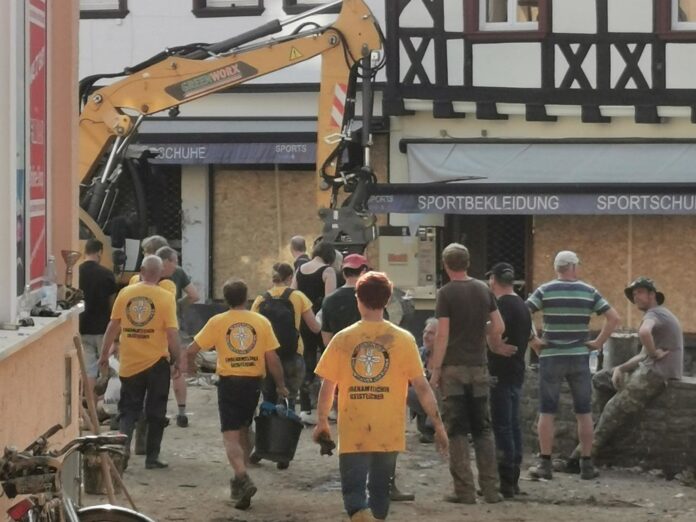
In 2021, after severe flooding affected parts of Germany, Volunteer Ministers from the Church of Scientology Munich travelled to a community in the Bavarian Alps, coordinated with the fire brigade, cleaned homes, helped residents salvage belongings and delivered clothing, shoes and toys to a family that had lost nearly everything.

“These examples reflect the social value of steady, practical help,” said Ivan Arjona, representative of the Church of Scientology to the European Union, the OSCE, the Council of Europe and the United Nations. “Drug-prevention education, human-rights awareness and volunteer assistance are not abstract ideas. They are ways in which citizens contribute to dignity, responsibility and solidarity – values deeply rooted in Europe’s democratic and human-rights traditions.”

The campaigns supported by Scientologists in Germany are linked to international initiatives backed by the Church of Scientology. Foundation for a Drug-Free World provides drug-education materials used by volunteers in many countries. Youth for Human Rights and United for Human Rights promote public understanding of the Universal Declaration of Human Rights. The Scientology Volunteer Ministers programme, developed from the writings of L. Ron Hubbard, is based on the principle that individuals can be trained and organised to provide practical help in times of need.

For European observers, the German examples are significant because they show a religious community contributing to civic life through education and service in areas of shared public concern. The activities are local in form but broader in meaning: they touch on youth prevention, public understanding of rights, interreligious dialogue, emergency assistance and the place of minority communities within democratic society.

The Church of Scientology, its churches, missions, groups and members are present across the European continent. Scientology Europe reports a continent-wide presence through more than 140 churches, missions and affiliated groups in at least 27 European nations, alongside thousands of community-based social betterment and reform initiatives focused on education, prevention and neighbourhood-level support, inspired by the work of Scientology founder L. Ron Hubbard.

Within Europe’s diverse national frameworks for religion, the Church’s recognitions continue to expand, with administrative and judicial authorities in Spain, Portugal, Sweden, the Netherlands, Italy, Germany, Slovakia and others, as well as the European Court of Human Rights, having addressed and acknowledged Scientology communities as protected by the national and international provisions of Freedom of Religion or belief.

Source link

Natural Health in Europe: What It Really Means Today

0
Natural Health in Europe: What It Really Means Today

Natural health is becoming one of Europe’s most important public conversations. But the term is often misunderstood. It can refer to healthy eating, exercise, sleep, herbal medicine, supplements, stress reduction, prevention, or integrative care. The real question is not whether health should be “natural” or “medical”, but whether people can make informed, safe and science-based choices that improve their lives.

Across Europe, more people are asking a simple question: how can I stay well before I become ill?

That question is reshaping the world of health. It is visible in the rise of nutrition advice, herbal products, food supplements, mindfulness, sleep tracking, fitness culture, nature-based wellbeing, preventive medicine and integrative health clinics. It is also visible in the growing public frustration with health systems that often intervene late, when chronic illness is already established.

But “natural health” is not a single field. It is a wide and sometimes confusing landscape. At its best, it helps people understand prevention, lifestyle and wellbeing. At its worst, it becomes a marketing label used to sell exaggerated promises.

Europe now needs a more mature conversation: one that values prevention, respects traditional knowledge, protects consumers, and keeps science at the centre.

Natural health is not the opposite of medicine

One of the most common misunderstandings is that natural health means rejecting conventional medicine. That is a mistake.

Modern medicine is essential for diagnosis, emergency care, surgery, infectious disease, cancer treatment, chronic disease management and many other areas. Natural health should not be presented as a substitute for medical care. Rather, it is most useful when it supports prevention, resilience and daily wellbeing.

In practical terms, this means asking how food, movement, sleep, stress, social connection and safe traditional practices can help reduce risk and improve quality of life. This approach is close to the priorities already promoted by major public-health institutions. The European Commission’s “Healthier Together” initiative, for example, focuses on reducing the burden of non-communicable diseases such as cardiovascular disease, diabetes, chronic respiratory disease and mental-health conditions.

That matters because many of Europe’s biggest health challenges are not caused by a single infection or one sudden event. They are linked to long-term patterns: poor diet, inactivity, tobacco, alcohol, stress, pollution, loneliness and unequal access to healthy living conditions.

As The European Times recently noted in its coverage of Europe’s public-health blind spot, diet-related disease, obesity and metabolic disorders are now central to the continent’s health future. Natural health, when properly understood, belongs inside that larger discussion.

What people usually mean by “natural health”

The phrase can mean different things depending on who uses it. For some people, it means eating more whole foods and fewer ultra-processed products. For others, it means using herbal teas, vitamins, probiotics or traditional remedies. For others still, it means yoga, meditation, walking in nature, reducing stress or avoiding unnecessary medication.

These are not all the same. A Mediterranean-style meal, a vitamin D supplement, an herbal extract, a breathing exercise and an unregulated online “detox” programme belong to very different categories.

A helpful way to understand natural health is to divide it into five areas:

  • Lifestyle health: food, movement, sleep, stress management and social connection.
  • Preventive health: reducing the risk of chronic disease before it develops.
  • Traditional and herbal practices: remedies and systems of care with historical or cultural roots.
  • Supplements and functional products: vitamins, minerals, probiotics, botanical extracts and other products sold for health support.
  • Integrative care: approaches that combine conventional medicine with evidence-informed complementary practices.

This distinction is important because each area has a different level of evidence, a different risk profile and a different regulatory framework.

The strongest evidence is often the least exotic

The most reliable natural-health advice is not usually the most glamorous. It is also not new.

The World Health Organization’s guidance on healthy diets continues to emphasise basic principles: eat a variety of foods, include vegetables, fruits, legumes, nuts and whole grains, and limit excess salt, free sugars, saturated fats and industrial trans fats.

Similarly, WHO recommends that adults do at least 150 minutes of moderate-intensity physical activity per week, or an equivalent amount of vigorous activity, with muscle-strengthening activities on at least two days per week.

This may sound simple, but it is powerful. A daily walk, regular strength training, better sleep, less alcohol, more fibre and a calmer nervous system can do more for long-term health than many expensive wellness products.

That does not mean supplements or herbal remedies are useless. Some can be helpful in specific situations. But the foundation remains lifestyle. A supplement cannot compensate for a permanently poor diet, chronic sleep deprivation, inactivity or unmanaged stress.

The supplement question: useful tool or wellness trap?

Europe has a large and growing market for food supplements. Many people use vitamin D, magnesium, omega-3, probiotics, collagen, iron, zinc or botanical products. Some do so because of a diagnosed deficiency. Others take them “just in case”.

The difficulty is that supplements sit in a space between food, health and commerce. They can be useful, but they are also easy to oversell.

At EU level, food supplements are regulated under Directive 2002/46/EC, which covers vitamins, minerals and labelling requirements. Health claims made on foods are also governed by EU rules on nutrition and health claims.

In plain language, this means companies should not be free to claim that a product cures, prevents or treats disease unless such a claim is legally authorised and scientifically supported.

Consumers, however, often see attractive language rather than regulatory nuance. Words such as “immune support”, “detox”, “balance”, “vitality” or “natural energy” can sound scientific without always telling the full story. One of the most useful skills for European consumers is learning to ask: what exactly is being claimed, and has that claim been properly assessed?

Herbal medicine: tradition deserves respect, but not blind trust

Herbal medicine is one of the oldest parts of natural health. Europe has a long tradition of using plants such as chamomile, valerian, peppermint, St John’s wort, sage, thyme and many others.

But “herbal” does not automatically mean safe. Plants contain active compounds. They can have effects, side effects and interactions with medicines. St John’s wort, for example, is well known for interacting with several prescription drugs.

The European regulatory system recognises this complexity. The European Medicines Agency provides a framework for herbal medicinal products, including traditional-use registration and herbal monographs.

This is the right kind of balance. Traditional knowledge should not be dismissed simply because it is old. But neither should it be accepted without evidence, quality control and safety checks.

The same balance appears in the WHO Global Traditional Medicine Strategy 2025–2034, which calls for stronger evidence, safety, regulation and appropriate integration of traditional, complementary and integrative medicine into health systems.

That message is important: the future is not superstition versus science. The future is evidence, safety and respect for people’s choices.

Why natural health is becoming more important in Europe

Several forces are driving interest in natural health.

First, Europe is ageing. Older populations are more likely to live with chronic conditions, mobility challenges, medication use and concerns about cognitive health. Prevention and healthy ageing are becoming public priorities.

Second, health systems are under pressure. Waiting lists, workforce shortages and rising costs make prevention more attractive. Keeping people healthier for longer is not only good for individuals; it is necessary for the sustainability of health systems.

Third, people want more control over their health. Many do not want to wait until illness appears. They want to understand food, sleep, stress, inflammation, hormones, digestion and energy. This curiosity can be positive when guided by reliable information.

Fourth, the pandemic years changed public awareness. Immunity, vitamin D, mental health, outdoor activity and resilience became everyday topics. Some of that interest was constructive. Some of it also opened the door to misinformation.

Finally, climate and environment are changing the health conversation. Heat, air pollution, urban design, green spaces and food systems are now part of public health. Walking, cycling, access to parks and healthier cities are natural-health issues as much as environmental ones.

The main danger: replacing evidence with identity

The greatest risk in natural health is not that people drink herbal tea or take magnesium. The greatest risk is when health choices become identity battles.

Some people are told that “natural” always means good and “synthetic” always means bad. Others are told that every complementary practice is irrational. Both positions are too simplistic.

The serious approach is more demanding. It asks:

  • What is the health problem?
  • Is there a diagnosis?
  • What is the evidence for this intervention?
  • What are the possible risks or interactions?
  • Is the product properly labelled and regulated?
  • Is the claim realistic?
  • Could delaying medical care cause harm?

These questions do not destroy natural health. They make it safer and more credible.

A practical rule for readers

A good rule is this: the more serious the health condition, the more important it is to involve a qualified health professional.

Natural health can be very useful for general wellbeing, prevention and daily habits. But unexplained weight loss, chest pain, severe fatigue, persistent pain, bleeding, depression, neurological symptoms, suspected infection or any sudden change in health should not be managed through online wellness advice.

Likewise, pregnant women, children, older people, people with chronic diseases and those taking prescription medication should be especially careful with supplements and herbal products.

Natural health should empower people, not isolate them from proper care.

The European opportunity

Europe has an opportunity to define a more trustworthy model of natural health.

That model should be neither cynical nor naïve. It should recognise that many people are looking for prevention, meaning, vitality and more personal responsibility. It should also recognise that the wellness market can exploit fear, insecurity and confusion.

A European approach should be built on five principles:

  • Prevention first: food, movement, sleep, stress and social connection should be treated as core health issues.
  • Evidence matters: claims should be tested, not merely repeated.
  • Safety is essential: natural products can still cause harm or interact with medicines.
  • Consumers need clarity: labels and health claims must be understandable.
  • Integration should be responsible: complementary practices should support, not replace, appropriate medical care.

This is where natural health can become a serious public-health ally rather than a confusing marketplace.

Natural health needs trust

Natural health is not a trend that can be dismissed. It reflects real concerns: chronic disease, stress, ageing, overmedication, unhealthy food environments, loneliness and the desire to live better for longer.

But the future of natural health in Europe depends on trust.

Trust requires honesty about what works, what might work, what is unproven and what is unsafe. It requires respect for tradition without abandoning science. It requires health professionals who listen, regulators who protect consumers, and citizens who are not treated as passive patients or easy customers.

The best version of natural health is not anti-science. It is not anti-medicine. It is the everyday science of living well — with food, movement, rest, nature, community and careful use of products that are safe, necessary and properly understood.

That is the conversation Europe now needs.

Source link

What to Expect During a Free Personal Injury Consultation Today

0


Understanding what happens during a free consultation after an accident can make the first step toward legal help

Source link

How Data-Driven Customer Feedback Tools Are Influencing Service Business Growth Strategies

0
laptop computer on glass-top table
Photo by Carlos Muza on Unsplash

Data-driven decision making is part of an $800 billion global market, so it’s no longer exclusive to enterprise software giants. Today, local service businesses are using real-time customer insights to entirely reshape how they manage field technicians, retain clients, and plan for long-term regional expansion.

The Shift to Review Intelligence in Field Services

Modern growth strategies require moving beyond basic star ratings and acknowledging the broader impact of tech. Service companies now leverage specialized platforms that unify the review lifecycle, using automated features such as review intelligence and instant sentiment summaries to drive operational improvements. This shift allows owners to instantly see which technicians excel at customer care and which ones require more training.

Instead of waiting for quarterly performance reviews, management can address issues immediately after a job is completed. Customer feedback software has evolved into a vital tool for real-time frontline experience management.

High-performing service teams are using outcome-oriented KPIs and role-based scorecards to link field performance directly with long-term retention. This means every review left by a homeowner becomes a direct data point for employee coaching.

Scaling Operations Through Predictive Churn Analytics

Customer acquisition in the home services sector is more expensive than ever. Forward-thinking companies use predictive analytics within customer feedback tools to identify churn risks and automate feedback loops directly after a service interaction. By tracking subtle drops in sentiment score across multiple visits, companies can flag a customer who is about to leave before they ever look for a competitor.

A 2026 Gartner survey indicates that 75% of organizations are increasing their technology budgets, with positive ROI from customer support investments a prime motivator. This investment allows businesses to catch negative experiences early. For instance, when an HVAC technician leaves a mess, an automated tool flags the low post-visit score, prompting a manager to call the homeowner and resolve the issue within an hour.

Implementing a dedicated customer experience platform, such as PulseM customer feedback software, allows home service businesses to seamlessly automate the entire loop from the moment a technician completes a job. It’s evidence that soliciting feedback needn’t be an administrative burden.

Enhancing Employee Performance and Field Quality

The customer feedback software market is valued at $2.3 billion in 2026, growing at a 13.2% annual rate as businesses shift toward qualitative insight models. This growth is fueled by service business owners realizing that qualitative data helps build better internal teams. When technicians know their feedback is tied to performance bonuses, service quality rises naturally.

Routing localized feedback to specific staff members provides immediate visibility into daily field operations. This data helps business owners identify specific trends that affect their bottom line.

Data-driven customer feedback tools help local service operations optimize three main areas:

  • Real-time text alerts sent to managers when a field tech receives a low sentiment score
  • Automated review requests dispatched via SMS immediately following a service call
  • Leaderboards that rank technicians based on positive customer mentions and star ratings

Mapping Local Revenue Expansion with Sentiment Data

Long-term business planning becomes significantly more accurate when backed by localized customer sentiment data. Service companies can review aggregate feedback to see which specific zip codes or service lines generate the highest customer satisfaction and the lowest friction.

If the data show a high concentration of five-star reviews for plumbing repairs in a specific suburb, the business can confidently allocate its marketing budget to target that neighborhood. This eliminates guesswork in marketing spend and service territory expansion.

For more insights on tech and its influence over all aspects of business across every imaginable industry niche, read more of our posts before you go.

Source link

Germany’s Security Labels Need a Reset

0
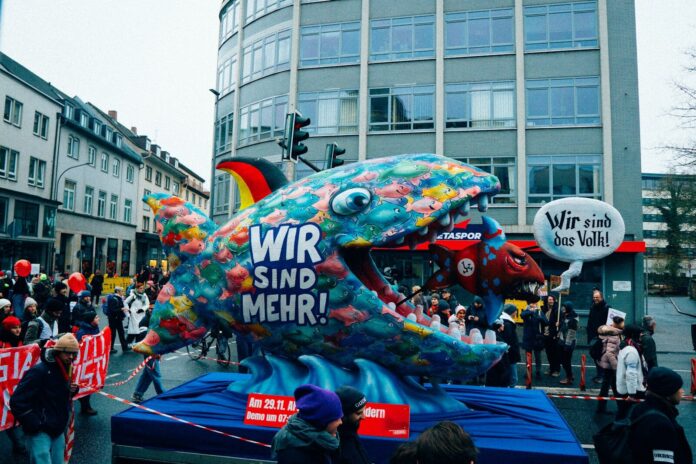
Colorful shark float with german flag and text
Photo by Christian Lue on Unsplash

Germany’s domestic intelligence system was created to protect democracy. But democracy is not protected when public authorities confuse labels with evidence. A warning made in 2017 by Süddeutsche Zeitung remains urgent today: the German Office for the Protection of the Constitution — the Verfassungsschutz — has too often relied on political categories that can obscure real danger.

Writing after the G20 unrest in Hamburg, Jens Bisky argued in Süddeutsche Zeitung that Germany’s old language of “left,” “right,” “centre” and “extreme” had become too crude to explain political reality. His criticism went further than vocabulary. He warned that such categories can become institutional habits.

The article gave a sharp example:

“Scientologists in Hamburg have been observed overlooking the Hamburg terrorist cell around Mohammed Atta, one of the September 11 attackers. The NSU trio remained undetected for a long time, but they dutifully monitored the Left Party politician Bodo Ramelow, who is now Minister-President of Thuringia. Disorientation can hardly be demonstrated more clearly.”

Jens Bisky, for Süddeutsche Zeitung at “Warum “links” und “rechts” längst verbrannte Begriffe sind” 21 July 2017

This concern is not limited to one newspaper essay. Moritz Fischer, writing for the Friedrich-Ebert-Stiftung, has described the Verfassungsschutz assessment itself as often part of the democratic problem, because classification by the agency can shape political competition, media treatment and public legitimacy. Once the state places a movement under suspicion, the label does not remain neutral. It becomes politically powerful.

A similar warning appears in recent political science analysis. Henning Schäckelhoff, writing in ECPR’s The Loop, asks whether Germany’s militant democracy is always protecting the constitution — or whether extremist labels may also shape political competition. His analysis of AfD classifications raises a difficult question: what happens when security categories appear to follow political dynamics rather than only concrete threat evidence?

The issue is not whether Germany faces real threats. It does. Violent extremism, terrorism, antisemitism, foreign interference, intimidation of public officials and anti-democratic networks all require serious attention. But precisely because these threats are real, the state must use accurate categories. A security service that watches the wrong targets risks missing the right ones.

The debate became current again in 2026, when German media reported that the Federal Office for the Protection of the Constitution would no longer treat Scientology as a separate nationwide field of observation. The same reporting noted that the category “constitutionally relevant delegitimisation of the state,” introduced during the pandemic period, had also been withdrawn as an independent federal category. These decisions do not prove that no risks ever existed. But they do show that intelligence categories can be created, maintained and then quietly abandoned, often without enough public explanation of their cost, accuracy or consequences.

This is the rule-of-law question: when the state classifies a group, movement or milieu as suspicious, what evidence is required, how often is the classification reviewed, and what happens when the label later proves too broad, outdated or poorly targeted?

Germany does not need a weaker defence of democracy. It needs a more precise one. The Verfassungsschutz should monitor conduct before identity, evidence before reputation, and concrete threats before unpopular opinions. Every long-running category should face regular review. Every discontinued category should trigger public questions: what was found, what was missed, who was affected, and why did the label last as long as it did? What reparations should the state apparatus perform on those who were directly affected by the wrong or biased targeting?

The lesson from Bisky, Fischer and Schäckelhoff is clear: security labels are never just technical. They shape public reality. When rhetoric chooses the target, evidence can arrive too late — if it arrives at all.

Germany’s constitutional order deserves protection. But that protection must be guided by facts, proportionality and the rule of law — not by inherited categories that mistake controversy for danger.

Scientologists in Germany Highlight Community Work Through Volunteerism in different fields

0
Scientologists in Germany Highlight Community Work Through Volunteerism in different fields

Scientologists in Germany carried out community initiatives in Hamburg, Munich, Berlin, Stuttgart and Bavaria, focusing on drug-prevention education, human-rights awareness, peacebuilding and volunteer service.

KINGNEWSWIRE // PRESS RELEASE // BERLIN, Germany – 28 May 2026 – Scientologists in Germany carried out a series of community-based social and constitutional initiatives in 2025 and 2026, with activities focused on drug prevention, human-rights education, peacebuilding and volunteer service. The work reflects a broader pattern of public outreach by Churches of Scientology, missions and volunteers in German cities including Hamburg, Munich, Berlin and Stuttgart.

The activities are part of international social betterment programmes supported by the Church of Scientology and inspired by its founder, L. Ron Hubbard. In Germany, they have taken the form of public information stands, open houses, educational events, interreligious discussions, volunteer assistance and the distribution of prevention materials in response to local and national concerns.

In Hamburg, volunteers connected with the Church of Scientology Hamburg held a public information stand at the end of February 2026 for the initiative “Sag Nein zu Drogen, Sag Ja zum Leben” – “Say No to Drugs, Say Yes to Life.” The volunteers distributed over a thousand drug-education booklets and recorded dozens of drug-free pledges. On 1 March, the church also held an open house presenting the work of Scientology Volunteer Ministers and recognising two Hamburg volunteers for their service in humanitarian programmes.

The activity took place against a serious public-health background. Federal figures for 2024 recorded 2,137 deaths in Germany as a result of illegal drug use. They also pointed to a 14 percent increase in drug-related deaths among people under 30, a rise in deaths involving synthetic opioids and new psychoactive substances, and growing concern over mixed consumption. In that context, the Hamburg initiative placed emphasis on prevention through accessible educational materials and direct contact with the public.

Hamburg was also the setting for two related human-rights and peace events in late 2025. On 19 September, the Church of Scientology Hamburg held an open house for the International Day of Peace. The programme focused on the connection between peace, human rights and civic education, with information on Youth for Human Rights and United for Human Rights. An evening discussion brought together representatives of different religious communities to exchange views on the contribution of faith communities to peace, respect and social cohesion.

On 12 December 2025, Hamburg Scientologists marked Human Rights Day with an open house and charity concert. The event presented the 30 articles of the Universal Declaration of Human Rights through displays and short educational films. It also connected the theme of human dignity with Article 25 of the Declaration, which addresses the right to an adequate standard of living, including access to basic necessities. Donations collected through the concert were intended to support the construction of a well in Guinea-Bissau, linking human-rights education with practical humanitarian support.

Munich provides another local example of the same prevention work in Bavaria. Volunteers with the “Sag Nein zu Drogen, Sag Ja zum Leben” initiative carried out drug-prevention outreach in Munich, including information activity near Sendlinger Tor, and held a seminar on drug education. A further March activity focused on encouraging young people to live drug-free. Together with the Hamburg activities, the Munich examples show how the campaign has been carried out in different German cities.

The same prevention message was visible during the UEFA European Championship in Germany, held from 14 June to 14 July 2024. Volunteers from Scientology Churches and Missions across Germany and their partners reached football supporters and the wider public around championship locations. They distributed drug-education materials from Foundation for a Drug-Free World, set up stands and mobile exhibits, and encouraged people to learn more about the effects of commonly abused substances.

Human-rights education has also been part of Scientology social activity in Germany. In January 2024, the Church of Scientology Berlin marked the 75th anniversary of the Universal Declaration of Human Rights with an art exhibition and poetry reading at its Public Information Centre on Otto-Suhr-Allee. The programme focused on freedom of expression and used paintings and poetry to present the language of human rights in a cultural setting.

Volunteer service has also been visible in moments of public need. During the COVID-19 pandemic, Scientology Volunteer Ministers in Germany distributed “Stay Well” booklets in cities including Berlin, Frankfurt, Hamburg, Hanover, Stuttgart, Dusseldorf, Karlsruhe, Munich and Ulm, helping neighbours, local businesses and community spaces understand basic prevention measures. In Stuttgart, Volunteer Ministers handed out thousands of “Stay Well” booklets to businesses and residents and provided sanitisation assistance to a local mosque during the pandemic period.

In 2021, after severe flooding affected parts of Germany, Volunteer Ministers from the Church of Scientology Munich travelled to a community in the Bavarian Alps, coordinated with the fire brigade, cleaned homes, helped residents salvage belongings and delivered clothing, shoes and toys to a family that had lost nearly everything.

“These examples reflect the social value of steady, practical help,” said Ivan Arjona, representative of the Church of Scientology to the European Union, the OSCE, the Council of Europe and the United Nations. “Drug-prevention education, human-rights awareness and volunteer assistance are not abstract ideas. They are ways in which citizens contribute to dignity, responsibility and solidarity – values deeply rooted in Europe’s democratic and human-rights traditions.”

The campaigns supported by Scientologists in Germany are linked to international initiatives backed by the Church of Scientology. Foundation for a Drug-Free World provides drug-education materials used by volunteers in many countries. Youth for Human Rights and United for Human Rights promote public understanding of the Universal Declaration of Human Rights. The Scientology Volunteer Ministers programme, developed from the writings of L. Ron Hubbard, is based on the principle that individuals can be trained and organised to provide practical help in times of need.

For European observers, the German examples are significant because they show a religious community contributing to civic life through education and service in areas of shared public concern. The activities are local in form but broader in meaning: they touch on youth prevention, public understanding of rights, interreligious dialogue, emergency assistance and the place of minority communities within democratic society.

The Church of Scientology, its churches, missions, groups and members are present across the European continent. Scientology Europe reports a continent-wide presence through more than 140 churches, missions and affiliated groups in at least 27 European nations, alongside thousands of community-based social betterment and reform initiatives focused on education, prevention and neighbourhood-level support, inspired by the work of Scientology founder L. Ron Hubbard.

Within Europe’s diverse national frameworks for religion, the Church’s recognitions continue to expand, with administrative and judicial authorities in Spain, Portugal, Sweden, the Netherlands, Italy, Germany, Slovakia and others, as well as the European Court of Human Rights, having addressed and acknowledged Scientology communities as protected by the national and international provisions of Freedom of Religion or belief.

Heatwave: SNCF cancels trains running Thursday and Friday on its Intercity lines

0
Heatwave: SNCF cancels trains running Thursday and Friday on its Intercity lines

Intercity trains running during the hottest hours of the day are canceled for the days of Thursday May 28 and Friday May 29 in France due to the heatwave, the SCNF informed several ICI editorial staff on Wednesday.

“These measures aim to prevent potential air conditioning breakdowns linked to high temperatures”, details the SNCF, which mentions in particular the “Corail fleet of cars”, which, although it “is subject to regular maintenance”, does not have “the same robustness” as more recent trains.

In Occitanie, ICI Occitanie and ICI Gard Lozère note for Thursday seven train cancellations on the Paris-Limoges-Toulouse (Polt) line and six cancellations on the Bordeaux-Marseille line. For Friday, seven cancellations (Polt) and five on the Bordeaux-Marseille line are planned. Several trains will not run on the Clermont-Paris line in the coming days, with in particular two round trips canceled this Friday, according to ICI pays d’Auvergne.

As compensation, some trains that will run will be reinforced with additional cars. SNCF Voyageurs specifies that a refund or exchange free of charge is planned for affected customers.

Originally published at Almouwatin.com

“Accelerated minimum wage”: after the revaluation of the minimum wage on June 1, 70% of professional sectors will have lower minimums

0
“Accelerated minimum wage”: after the revaluation of the minimum wage on June 1, 70% of professional sectors will have lower minimums

Of the 179 professional branches monitored by the Ministry of Labor, 126 will have a minimum lower than the minimum wage on June 1. Please note, this does not mean that employees will be paid below the minimum wage (that would be illegal) but that their remuneration will not increase. The unions denounce an “accelerated minimum wage”.

Once the increase in the minimum wage comes into force on Monday, 70% of professional sectors will have a salary scale starting below the minimum wage, the Ministry of Labor said on Wednesday, with unions calling for rapid salary increases. Of the 179 professional branches monitored by the ministry, 126 will have a minimum lower than the minimum wage on June 1, the ministry indicated, during a meeting of the national salary monitoring committee with trade union and employer organizations. The branches concerned are supposed to launch negotiations with social partners within 45 days to comply.

The only salary indexed to inflation, which exceeded 2% in April due to rising energy costs, the minimum wage will increase on Monday by 2.41%, or a little less than 35 euros net per month. It is prohibited in France to pay an employee below the minimum wage, but in sectors in which one or more levels of the salary scale fall below its amount, employees can see their remuneration stagnate for years at the minimum wage, despite their progress in seniority or qualification.

“Accelerated minimum wage”

According to its own count (including additional branches notably in agriculture, construction and the maritime sector), the CGT counts almost 80% of 230 professional branches now with minimums below the minimum wage. “A scandalous proportion,” denounced Thomas Vacheron, confederal secretary of the CGT.

“When prices rise, wages must rise too. This is the case of the inter-professional minimum wage. This must be the case for all salaries,” he said, asking for indexation to inflation of all salaries.

The CGT demands, like the CFDT, the leading French trade union centre, that the branches concerned be obliged to comply quickly and that salary negotiations by branch be reopened. “We have the impression that the situation is getting worse from year to year and that we are generally experiencing an accelerated minimum wage rate,” said the national secretary of the CFDT Luc Mathieu, present at the meeting.

Originally published at Almouwatin.com