Monday, March 23, 2026
Home Blog Page 67

Christmas in Europe: Traditions, Origins and 2025 News

0
Christmas in Europe: Traditions, Origins and 2025 News

Across the continent, one holiday carries many languages, calendars, and meanings.

From candlelit church services to winter swims and family feasts that stretch into early January, Christmas in Europe is less a single tradition than a mosaic. The holiday’s roots are Christian, but many customs draw on older midwinter practices, local folklore, and modern civic life. This guide looks at where Christmas comes from, how Europeans celebrate it in very different ways, and what made headlines on 25 December 2025.

Where Christmas comes from—and why it’s on 25 December

Christmas marks the birth of Jesus Christ in the Christian tradition. Yet the New Testament does not give a date, and early Christian communities did not initially celebrate a birthday feast in the way many do today. By the fourth century, Western Christianity had fixed Christmas on 25 December—a choice that historians link to a mix of theology, calendar calculation, and the symbolic pull of the winter solstice period in the Roman world.

One long-standing explanation is “calendar math”: some early Christian writers placed the conception of Jesus on 25 March (later associated with the Annunciation), which would place a birth nine months later on 25 December. Another explanation points to the cultural landscape of late antiquity, when the weeks around the solstice were filled with public festivals and “return of the light” symbolism. The historical picture is not a simple one-to-one replacement of “pagan” festivals, but it is clear that midwinter timing made theological and social sense in a Roman Empire where religion and public life overlapped.

One continent, many Christmases

Across Europe, the “main moment” of Christmas varies. In many countries, the most important family meal happens on 24 December (Christmas Eve), with 25 December reserved for rest, visiting relatives, and religious services. In others—especially where British influence is strong—25 December is the central day. And for many Orthodox Christians who follow an older liturgical calendar, Christmas may fall in early January.

Northern Europe: light in the darkest season

  • Sweden: The season famously begins early with Saint Lucia on 13 December—white gowns, candle crowns, and saffron buns—before families gather for a generous julbord (Christmas table).
  • Finland: Christmas Eve often starts with a sauna, followed by a quiet family meal and visits to cemeteries where candles glow against the snow.
  • Denmark & Norway: Advent and “hygge” traditions dominate—warm homes, strong candle culture, and long meals with regional dishes.

Central Europe: Advent, markets, and the Christ Child

  • Germany & Austria: For many families, the gift-bringer is not Santa but the Christkind (the “Christ Child”). Advent is marked by calendars, wreaths, and some of Europe’s best-known Christmas markets, a tradition that reaches back to medieval trading towns.
  • Czechia & Slovakia: Christmas Eve is often the centrepiece. In Czech tradition, carp commonly appears on the table, and folk customs about luck and love linger alongside modern celebrations.
  • Switzerland: Celebrations vary by canton and language region, but Advent culture—markets, carols, and church services—runs deep across the country.

The Benelux: markets, family tables, and multiple gift seasons

  • Belgium: In many households, Christmas is a family meal built around local cuisine (often with both French- and Dutch-language traditions), with city centres drawing crowds for seasonal lights and markets.
  • The Netherlands: Many families experience a “two-peak” season—Sinterklaas earlier in December, and then Christmas with church services, family gatherings, and festive meals.

Western and Southern Europe: the long Christmas that runs to Epiphany

  • France: The réveillon meal and the bûche de Noël are iconic, while many towns blend religious traditions with a strongly civic, public-season atmosphere.
  • Spain: Christmas is often a season rather than a single day. Nativity scenes (belén) are widespread, and for many children the big gift moment comes later with the Cabalgata de Reyes (Three Kings parade) on 5 January and gifts on 6 January.
  • Italy: Alongside midnight Mass and elaborate nativity displays, the gift season can stretch to Epiphany (6 January), when La Befana—a folklore figure—brings treats (or coal) to children in many traditions.
  • Portugal: Christmas Eve supper and late-night services remain important in many areas, with a strong emphasis on family meals and local desserts.

Eastern and Orthodox traditions: Christmas on a different date

In parts of Eastern and South-Eastern Europe, some Christian communities celebrate Christmas on a different date—often 7 January—because their churches follow the Julian liturgical calendar. That means Europe’s “Christmas season” can feel extended well beyond 25 December, with overlapping celebrations across borders and diasporas.

Christmas in the public square—and in a diverse Europe

In today’s Europe, Christmas is both a religious celebration and a major cultural season. Debates sometimes flare over public nativity scenes, school festivities, and what “tradition” means in plural societies. The European Times previously explored how these discussions play out across different countries and communities—often reflecting wider questions about identity, inclusion, and freedom of belief.

What made headlines on 25 December 2025

Even on Christmas Day, Europe’s news agenda did not pause. Here are several developments reported on 25 December 2025 that stood out for their political, humanitarian, or public-safety impact:

  • Vatican: In his Christmas Day sermon, Reuters reported that Pope Leo addressed the suffering of Palestinians in Gaza and urged attention to wars and humanitarian crises, including Ukraine—an appeal that resonated with Europe’s ongoing debates about solidarity, refugees, and civilian protection.
  • War in Ukraine: Reuters reported that Ukraine used Storm Shadow missiles and drones to strike Russian energy infrastructure, underlining how the conflict continues to shape Europe’s security, energy concerns, and diplomacy—even on a major public holiday.
  • United Kingdom: In a Christmas broadcast framed around social cohesion, Euronews reported that King Charles III called for reconciliation and unity after a year he described as marked by deepening division—language that echoed broader European anxieties about polarisation and social trust.
  • Public safety: In England, The Guardian reported that two men went missing during a Christmas Day sea swim off the Devon coast, as emergency services responded to multiple people in difficulty in hazardous conditions—prompting renewed warnings about winter sea swimming.

A shared season—without a single story

What Europe shows each December is not uniformity, but layering: Christian worship and secular rest days, medieval markets and modern travel, local folklore and global pop culture. For some, Christmas is primarily spiritual; for others, it is cultural, family-centred, or simply a time off work. That mix—sometimes harmonious, sometimes contested—is also a snapshot of Europe itself.

Source link

Test Farms Startups Call | EIT

0
Test Farms Startups Call | EIT

This call aims to attract startups that are ready to demonstrate the value of their technologies and scale their impact!

Through Test Farms, selected startups will gain access to farmers, agronomists, testing sites, and visibility opportunities. EIT Food is looking for startups that want to: 

  • Participate in real-world testing and validation of their agritech or aquatech solutions on European farms or aquaculture sites.
  • Engage directly with farmers and agronomists to refine their products based on practical needs and field performance.
  • Generate evidence, data, and validation results that strengthen their commercial readiness and investor attractiveness.
  • Showcase their solutions to potential clients, partners, and funding sources through visibility and promotional activities.
  • Contribute to a more sustainable and efficient agrifood system, bringing digital, biotech, circular, regenerative, or aquatech innovations to market.
  • Deliver strong business KPIs, including sales growth, funding attraction, and measurable validation metrics aligned with the programme’s objectives. 

Who is EIT Food looking for?

The Test Farms programme seeks European-based innovative startups that are developing solutions with strong potential to transform agriculture or aquaculture. 

The ideal organisational profile includes: 

  • Type of Organisation: Incorporated startup or early-scale-up operating in agri-tech and aqua-tech industry.
  • Technology Readiness: Solutions at TRL 6–9, meaning the innovation has been validated in a relevant environment and is ready for real-world testing with end users.
  • Innovation Quality: Technologies that demonstrate clear novelty, strong potential for positive environmental or economic impact, and alignment with Test Farms focus themes (e.g., regenerative agriculture, decarbonisation, digital farming, sustainable feed, circular systems).
  • Operational Capacity: The ability to deploy and support their solution in the field, including sufficient staffing, technical expertise, and resources to carry out the pilot in collaboration with farmers.
  • Data and Learning Orientation: Readiness to collect, analyse, and share performance data to support programme KPIs, contribute to impact measurement, and refine the solution after field validation.
  • Scalability & Market Potential: Solutions that have a clear pathway to commercialisation and scaling across European farming or aquaculture systems.
  • Collaboration & Communication Skills: Willingness to work closely with farmers, technical partners, and EIT Food teams in a transparent, cooperative manner. 

Eligibility Criteria

This call is open to eligible legally incorporated entities, startups, SMEs. Each implementing participant must be a legally incorporated entity registered in or after 2016 in one of the following countries:

  • EU Member States: Bulgaria, Croatia, Cyprus, Czech Republic, Denmark, Estonia, Finland, Greece, Hungary, Italy, Latvia, Lithuania, Malta, Poland, Portugal, Romania, Slovakia, Slovenia, Spain, Sweden.
  • Horizon Europe Associated Countries: Albania, Bosnia and Herzegovina, Israel, Montenegro, Republic of North Macedonia, Norway, Serbia, Turkey, Ukraine.
  • Outermost Regions: Guadeloupe, French Guiana, Réunion, Martinique, Mayotte and Saint-Martin (France), the Azores and Madeira (Portugal), and the Canary Islands (Spain).
  • Entities from Western Europe: incorporated companies (SMEs registered in or after 2016) from the following countries: Belgium, France, Germany, Iceland, Ireland, Luxembourg, Netherlands, Switzerland, United Kingdom.

Participants need to provide a PIC Number and they need to have developed an innovative solution in aquaculture and/or agriculture/animal husbandry, having a product with TRL 6-9 ready to be tested in real environment. In addition, they must not have participated in previous editions of the Test Farms.

Each application must:

  • Be complete, with all mandatory application documents uploaded.  Please, note that the pitch deck is required to be uploaded.
  • Be submitted on time via our submission template.  
  • Be fully written in English.

Timeline, Funding and Results Communication

The project runs from March 2026 to November 2026. The maximum funding available for that period per application is € 4 000 (lump sum). The lump sum is intended to support a broad set of activities aligned with Horizon Europe and EIT Food priorities. 

The communication of the results is scheduled for 18 of February 2026.

Apply here!

Source link

Subverting Plasmids To Combat Antibiotic Resistance

0
Subverting Plasmids To Combat Antibiotic Resistance


Researchers in the Blavatnik Institute at Harvard Medical School have just opened a new window into understanding the development of antibiotic resistance in bacteria.

Two types of plasmids, colored red and blue, form intricate patterns as they compete for dominance in a bacterial colony.

Two types of plasmids, colored red and blue, form intricate patterns as they compete for dominance in a bacterial colony. Image credit: Fernando Rossine / HMS

The work not only reveals principles of evolutionary biology but also suggests a new strategy to combat the antibiotic resistance crisis, which kills an estimated 1.3 million people per year worldwide.

Findings, supported in part by federal funding, are published in Science.

Members of the labs of Michael Baym, associate professor of biomedical informatics, and Johan Paulsson, professor of systems biology, devised a way to track the evolution and spread of antibiotic resistance in individual bacteria by measuring competition among plasmids.

Plasmids are self-replicating genetic elements that float separately from a bacterium’s own chromosomes. Plasmids evolve independently but also help drive bacterial evolution, including the development of resistance to antimicrobial compounds. In fact, they are the primary way that resistance can jump from one type of bacteria to another.

Scientists have suspected that competition among plasmids within bacterial cells is key to propelling plasmid evolution, but until now they hadn’t found a way to study it. First author Fernando Rossine, research fellow in biomedical informatics in the Baym Lab, and colleagues did so by solving two challenges.

First, they created starting conditions in which each bacterial cell contained equal proportions of two plasmids that would compete with each other. Second, they used microfluidic devices to isolate single cells and better distinguish the effects of the intracellular plasmid competition.

The system allowed the team to discover basic properties of — and constraints on — plasmid and bacteria fitness and evolution. These constraints could inform new strategies that interfere with plasmid evolution and thus curb plasmids’ ability to learn to withstand antibiotics — potentially leading to treatments for life-threatening bacterial infections.

“The study provides us with new tools to fight and prevent antibiotic resistance by weaponizing the intracellular competition between mobile genetic elements themselves,” Rossine said.

From a more philosophical perspective, he added, the study illuminates how evolution operates at multiple, sometimes conflicting, levels, “which is fundamental for our understanding of complex life.”

Source: HMS


Source link

Subverting Plasmids To Combat Antibiotic Resistance

0
Subverting Plasmids To Combat Antibiotic Resistance

Researchers in the Blavatnik Institute at Harvard Medical School have just opened a new window into understanding the development of antibiotic resistance in bacteria.

Two types of plasmids, colored red and blue, form intricate patterns as they compete for dominance in a bacterial colony. Image credit: Fernando Rossine / HMS

The work not only reveals principles of evolutionary biology but also suggests a new strategy to combat the antibiotic resistance crisis, which kills an estimated 1.3 million people per year worldwide.

Findings, supported in part by federal funding, are published in Science.

Members of the labs of Michael Baym, associate professor of biomedical informatics, and Johan Paulsson, professor of systems biology, devised a way to track the evolution and spread of antibiotic resistance in individual bacteria by measuring competition among plasmids.

Plasmids are self-replicating genetic elements that float separately from a bacterium’s own chromosomes. Plasmids evolve independently but also help drive bacterial evolution, including the development of resistance to antimicrobial compounds. In fact, they are the primary way that resistance can jump from one type of bacteria to another.

Scientists have suspected that competition among plasmids within bacterial cells is key to propelling plasmid evolution, but until now they hadn’t found a way to study it. First author Fernando Rossine, research fellow in biomedical informatics in the Baym Lab, and colleagues did so by solving two challenges.

First, they created starting conditions in which each bacterial cell contained equal proportions of two plasmids that would compete with each other. Second, they used microfluidic devices to isolate single cells and better distinguish the effects of the intracellular plasmid competition.

The system allowed the team to discover basic properties of — and constraints on — plasmid and bacteria fitness and evolution. These constraints could inform new strategies that interfere with plasmid evolution and thus curb plasmids’ ability to learn to withstand antibiotics — potentially leading to treatments for life-threatening bacterial infections.

“The study provides us with new tools to fight and prevent antibiotic resistance by weaponizing the intracellular competition between mobile genetic elements themselves,” Rossine said.

From a more philosophical perspective, he added, the study illuminates how evolution operates at multiple, sometimes conflicting, levels, “which is fundamental for our understanding of complex life.”

Source link

Bigger datasets aren’t always better

0
Bigger datasets aren’t always better

MIT researchers developed a way to identify the smallest dataset that guarantees optimal solutions to complex problems.

Data analysis – artistic impression. Image credit: Alius Noreika / AI

Determining the least expensive path for a new subway line underneath a metropolis like New York City is a colossal planning challenge — involving thousands of potential routes through hundreds of city blocks, each with uncertain construction costs. Conventional wisdom suggests extensive field studies across many locations would be needed to determine the costs associated with digging below certain city blocks.

Because these studies are costly to conduct, a city planner would want to perform as few as possible while still gathering the most useful data for making an optimal decision.

With almost countless possibilities, how would they know where to start?

A new algorithmic method developed by MIT researchers could help. Their mathematical framework provably identifies the smallest dataset that guarantees finding the optimal solution to a problem, often requiring fewer measurements than traditional approaches suggest.

In the case of the subway route, this method considers the structure of the problem (the network of city blocks, construction constraints, and budget limits) and the uncertainty surrounding costs. The algorithm then identifies the minimum set of locations where field studies would guarantee finding the least expensive route. The method also identifies how to use this strategically collected data to find the optimal decision.

This framework applies to a broad class of structured decision-making problems under uncertainty, such as supply chain management or electricity network optimization.

“Data are one of the most important aspects of the AI economy. Models are trained on more and more data, consuming enormous computational resources. But most real-world problems have structure that can be exploited. We’ve shown that with careful selection, you can guarantee optimal solutions with a small dataset, and we provide a method to identify exactly which data you need,” says Asu Ozdaglar, Mathworks Professor and head of the MIT Department of Electrical Engineering and Computer Science (EECS), deputy dean of the MIT Schwarzman College of Computing, and a principal investigator in the Laboratory for Information and Decision Systems (LIDS).

Ozdaglar, co-senior author of a paper on this research, is joined by co-lead authors Omar Bennouna, an EECS graduate student, and his brother Amine Bennouna, a former MIT postdoc who is now an assistant professor at Northwestern University; and co-senior author Saurabh Amin, co-director of Operations Research Center, a professor in the MIT Department of Civil and Environmental Engineering, and a principal investigator in LIDS. The research will be presented at the Conference on Neural Information Processing Systems.

An optimality guarantee

Much of the recent work in operations research focuses on how to best use data to make decisions, but this assumes these data already exist.

The MIT researchers started by asking a different question — what are the minimum data needed to optimally solve a problem? With this knowledge, one could collect far fewer data to find the best solution, spending less time, money, and energy conducting experiments and training AI models.

The researchers first developed a precise geometric and mathematical characterization of what it means for a dataset to be sufficient. Every possible set of costs (travel times, construction expenses, energy prices) makes some particular decision optimal. These “optimality regions” partition the decision space. A dataset is sufficient if it can determine which region contains the true cost.

This characterization offers the foundation of the practical algorithm they developed that identifies datasets that guarantee finding the optimal solution.

Their theoretical exploration revealed that a small, carefully selected dataset is often all one needs.

“When we say a dataset is sufficient, we mean that it contains exactly the information needed to solve the problem. You don’t need to estimate all the parameters accurately; you just need data that can discriminate between competing optimal solutions,” says Amine Bennouna.

Building on these mathematical foundations, the researchers developed an algorithm that finds the smallest sufficient dataset.

Capturing the right data

To use this tool, one inputs the structure of the task, such as the objective and constraints, along with the information they know about the problem.

For instance, in supply chain management, the task might be to reduce operational costs across a network of dozens of potential routes. The company may already know that some shipment routes are especially costly, but lack complete information on others.

The researchers’ iterative algorithm works by repeatedly asking, “Is there any scenario that would change the optimal decision in a way my current data can’t detect?” If yes, it adds a measurement that captures that difference. If no, the dataset is provably sufficient.

This algorithm pinpoints the subset of locations that need to be explored to guarantee finding the minimum-cost solution.

Then, after collecting those data, the user can feed them to another algorithm the researchers developed which finds that optimal solution. In this case, that would be the shipment routes to include in a cost-optimal supply chain.

“The algorithm guarantees that, for whatever scenario could occur within your uncertainty, you’ll identify the best decision,” Omar Bennouna says.

The researchers’ evaluations revealed that, using this method, it is possible to guarantee an optimal decision with a much smaller dataset than would typically be collected.

“We challenge this misconception that small data means approximate solutions. These are exact sufficiency results with mathematical proofs. We’ve identified when you’re guaranteed to get the optimal solution with very little data — not probably, but with certainty,” Amin says.

In the future, the researchers want to extend their framework to other types of problems and more complex situations. They also want to study how noisy observations could affect dataset optimality.

“I was impressed by the work’s originality, clarity, and elegant geometric characterization. Their framework offers a fresh optimization perspective on data efficiency in decision-making,” says Yao Xie, the Coca-Cola Foundation Chair and Professor at Georgia Tech, who was not involved with this work.

Written by Adam Zewe

Source: Massachusetts Institute of Technology

Source link

First person: Felipe Paullier, the youngest senior UN official, responsible for giving a voice to young people around the world

0

“When you study history in high school, you learn about the origins of the United Nations, and it’s always been the organization I’ve been exposed to, in terms of the values ​​it promotes. However, I never thought I would have a direct role in the organization.

During my time working with the Uruguayan government, I had extensive contact with the United Nations system in the country, including agencies such as the United Nations Population Fund (UNFPA), United Nations children’s agency (UNICEF), and the United Nations Development Program (UNDP). We had quite a few initiatives in common, including a national project on issues related to the mental health and well-being of adolescents and young people. It was through these lines of cooperation that I began to understand how the UN works.

I was still studying a master’s degree in administration at the University of Florida when I ran to lead the first United Nations Youth Office. My goal was to help the organization maintain the best possible connection with young people, not only by listening to them but also by involving them in collaboration and participation. Eight months later, I received a call from Amina Mohamedthe Deputy Secretary General of the UN, telling me that I had been selected for this position and that I would start in 15 days!

Secretary-General meets Assistant Secretary-General for Youth Affairs

The first year focused on understanding the challenges, building the team, identifying how to add value to the work of youth organizations and states, positioning the office as a space to raise awareness on various issues. I believe the purpose of the Youth Bureau is to collaborate, disseminate information and raise awareness of the interests and concerns of all young people around the world.

The three youth agendas of the United Nations Youth Office

Talking about the youth agenda means understanding and supporting a very broad movement that we approach from three central dimensions.

The first is the participation program. It is urgent that new generations be taken into account in decision-making spheres. We are linked to the various efforts being made to connect civil society with the United Nations, creating innovative scenarios in which young people feel represented, part of spaces of power, and where their concerns are taken into account and taken into account.

The second is the peace and security program. In the current global situation, with the highest number of active conflicts since World War II, we have seen young people taking the lead in promoting the peace agenda and demanding that governments end wars.

Felipe Paullier, Under-Secretary-General for Youth, with a group of young activists in Thailand.

The third issue that stands out among the priorities is mental health and well-being. Millions of young people around the world face a silent crisis that affects every dimension of their lives: despair about the future; a digital culture marked by hate speech; lack of education, employment and housing opportunities; the climate crisis; and the absence of spaces for care and connection. All this generates anxiety, depression and, in the most severe cases, loss of meaning and suicide.

This is why we are promoting a Global Initiative for Youth Mental Health and Well-being, which has already brought together in just a few months more than 600 youth-led organizations in more than 80 countries, reaching more than 13 million people (81% of whom are young people).

This initiative combines youth empowerment with links to international mental health networks and international organizations working in the field, such as the World Health Organization (WHO), UNICEF and the United Nations agency for education, science and culture (UNESCO). At the same time, it advances policy advocacy so that more states recognize youth mental health as a priority and develop policies that address this urgent need.

© UN India/Shachi Chaturvedi

Young participants reflected on their personal journeys, challenges and motivations as changemakers, entrepreneurs and advocates.

Mental health in the age of social media

The focus is on how we interact with technology in a rapidly changing world. What can we do in a world where we are more interconnected than ever but at the same time much more isolated? This is the dichotomy we experience in our time. Social media poses a huge challenge because it ends up creating bubbles in which people only connect with other like-minded people.

The way these networks’ algorithms are designed often leads to more polarized discourse, but also allows people to benefit from anonymity when spreading aggressive messages. Hence the need for more meeting spaces to promote dialogue between people, because in these digital spaces, dialogue does not exist; there are only positions, and people do not listen to each other; they confront each other.

When we look for answers, we will surely find them by returning to the Charter of the United Nations, which describes the essence of the organization: dialogue, the celebration of diversity and international cooperation. Young people are already doing their part. Small individual changes, when added together, are what ultimately determine global agendas. »

Originally published at Almouwatin.com

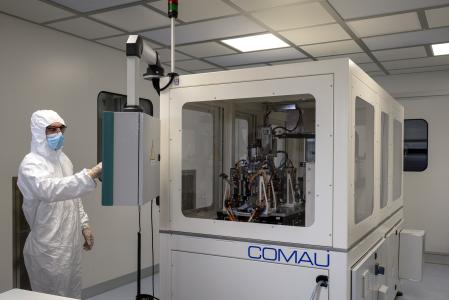
€50 million to Comau for research and development in robotics, advanced automation and digital technologies for various industrial sectors

0
€50 million to Comau for research and development in robotics, advanced automation and digital technologies for various industrial sectors

Comau
  • Financing in support of Comau’s R&D activities
  • Investments in Italy at Comau’s facilities in Turin and Bari, to boost Europe’s industrial competitiveness
  • The operation is being backed by InvestEU and is in line with TechEU, the EIB Group’s initiative aiming to mobilise €250 billion over the next three years to foster innovation in Europe.

The European Investment Bank (EIB) and Comau have signed a €50 million finance contract to support the Turin company’s research, development and innovation activities in the fields of robotics, advanced automation solutions, machine tools development, and digitalisation for various industrial sectors: from batteries, both automotive and stationary, to aerospace, construction, renewable energy and logistics. The agreement was announced today by EIB Vice-President Gelsomina Vigliotti and Comau CEO Pietro Gorlier.

The operation is supported by InvestEU, the European Union’s investment programme, through which the EIB has already unlocked more than €4 billion in Italy under the umbrella of TechEU, the EIB Group’s €70 billion programme to accelerate innovation in Europe through equity, quasi-equity, loan and guarantee investments.

“Supporting Europe’s industrial innovation and transition to a more digital, sustainable and competitive production model is a priority at the heart of the InvestEU programme, of which the EIB Group is the main implementing partner. Investing in advanced robotics, automation and e-mobility will boost Europe’s leadership in technology, contribute to the creation of skilled jobs and support European companies in the major industrial transformations currently taking place,” said EIB Vice-President Gelsomina Vigliotti.

The interventions will be concentrated mainly in Italy (Turin and Bari),. The investments are designed to develop automation solutions for various industrial sectors, strengthening the know-how of one of Europe’s leading advanced industrial automation and robotics companies and supporting the competitiveness of Europe’s value chain in advanced manufacturing technologies.

“Comau constantly invests in the development of innovative competencies and technologies. These are a key driver for the growth of the European manufacturing system, enabling companies to compete globally in sectors of particular importance to the present and future of industry, such as batteries, aerospace, construction, logistics and renewable energy,” noted Pietro Gorlier, CEO of Comau. “The support of the European Investment Bank gives us greater strength to pursue our sustainable development strategy, aimed at designing and producing advanced automation solutions that enable us to meet the challenges of a market marked by profound uncertainty and rapid technological transformation.”

A key element of the investments is the expansion of Comau’s applications in the renewable energy and hydrogen fuel cell sectors. In parallel, the funds made available by the EIB are intended to support the reorientation of activities in the automotive sector towards advanced manufacturing automation solutions for batteries and battery recycling.

Thanks to this EIB financing, Comau will also benefit from greater diversification of funding sources, longer maturities, thus speeding up implementation of the business plan.

Background information

The European Investment Bank (ElB) is the long-term lending institution of the European Union, owned by its Member States. Built around eight key priorities, we finance investments that contribute to EU policy objectives by bolstering climate action and the environment, digitalisation and technological innovation, security and defence, cohesion, agriculture and bioeconomy, social infrastructure, the capital markets union, and a stronger Europe in a more peaceful and prosperous world.  The EIB Group, which also includes the European Investment Fund (EIF), signed nearly €89 billion in new financing for over 900 high-impact projects in 2024, boosting Europe’s competitiveness and security. All projects financed by the EIB Group are in line with the Paris Climate Agreement, as pledged in our Climate Bank Roadmap. Almost 60% of the EIB Group’s annual financing supports projects directly contributing to climate change mitigation, adaptation, and a healthier environment. Fostering market integration and mobilising investment, the funds made available by the Group unlocked over €100 billion in new investment for Europe’s energy security in 2024 and mobilised a further €110 billion for startups and scale-ups. Around half of the EIB’s financing within the European Union is directed towards cohesion regions, where per capita income is lower than the EU average.

High-quality, up-to-date photos of EIB headquarters for media use are available here.

The InvestEU programme provides the European Union with long-term funding by leveraging substantial private and public funds in support of a sustainable recovery. It also helps to crowd in private investment for the European Union’s strategic priorities such as the European Green Deal and the digital transition. InvestEU brings all EU financial instruments previously available for supporting investments within the European Union together under one roof, making funding for investment projects in Europe simpler, more efficient and more flexible. The programme consists of three components: the InvestEU Fund, the InvestEU Advisory Hub, and the InvestEU Portal. The InvestEU Fund is deployed through implementing partners that will invest in projects using the EU budget guarantee of €26.2 billion. The entire budget guarantee will back the investment projects of the implementing partners, increase their risk-bearing capacity and thus mobilise at least €372 billion in additional investment.

Comau is a worldwide leader in delivering advanced automation solutions across diverse industries. Together with Automha, a fully owned company specializing in global intralogistics and warehousing automation, Comau is enabling companies of all sizes in almost any industry to unlock the full potential of automation, robotics, and digital technologies – and to increase their efficiency, flexibility, and competitiveness in rapidly growing markets. 

Comau’s portfolio includes products and systems for vehicle manufacturing, with a strong presence in e-Mobility, as well as cutting-edge  robotics and digital solutions for a variety of industrial sectors, such as shipyards, food&beverage, logistics, pharma, and renewable energies. Comau also offers project management and consultancy services and has an internationally recognized training Academy. Automha develops intelligent, high-performance automated storage and retrieval handling systems that optimize efficiency and reliability across diverse industries. Headquartered in Turin, Italy, Comau has an international network of 7 innovation centers and 11 manufacturing plants that span 11 countries and employ 3,800 people. Automha, headquartered in Bergamo, Italy, has 4 subsidiaries and manufacturing facilities in both Italy and China, which employ a total of 280 people.

www.comau.com | www.automha.com

Source link

Viva la Faba: from lockdown experiment to award-winning vegan cheese

0
Test Farms Startups Call | EIT

Forget everything you know about vegan cheese!

Viva la Faba is transforming plant-based dairy with Europe’s first organic faba bean cheese, combining bold sustainability credentials with authentic taste, and a melt to please even the most hardcore cheese enthusiast.

Curd Your Emissions with Viva la Faba

In the middle of a pandemic lockdown, two bioeconomy students turned their shared kitchen flat into a test lab, armed with nothing but curiosity, corn by-products, and a stubborn belief that sustainable food should and could taste better.  

That late-night experiment became Viva la Faba, a German startup now leading the charge on plant-based dairy innovation. With a proprietary process that unlocked the full potential of regeneratively grown faba beans, they’ve created an award-winning brand, is proving that small ideas can have a big impact. 

From Pitch to Pulse

Since its founding in 2021, Viva la Faba has moved fast and made it count. They have developed Europe’s first organic certified vegan cheese made from regeneratively grown faba beans, tackling one of the most environmentally intensive foods in the modern diet. In partnership with the University of Hohenheim, a 2024 study confirmed that their cheese-cut submissions reduced emissions by up to 75% compared to traditional dairy, a massive reduction with the potential to reshape the carbon footprint of cheese lovers’ diets across Europe.

They’ve already been recognised with major prizes, including the PETA Vegan Food Award for Best Vegan Cheese, and the 2024 Baden-Württemberg Bioeconomy Prize. 

No Whey, Just Results

At the heart of the company’s mission is a belief that sustainability must be local, inclusive, and rooted in real relationships. That’s why they partnered with former dairy farmers in southern Germany to help convert land for organic faba bean production, ensuring their work is not about replacing farmers but giving them a future in a changing food economy. The shift is already tangible: beans now grow where cows once grazed, and new supply chains are being built to prioritise biodiversity, fair pay and regional resilience. 

Every decision the team makes, from using organic ingredients to investing in local suppliers, feeds into a bigger goal: helping consumers eat better without putting more pressure on the planet or the people who grow their food. In doing so, Viva la Faba is building a community around their renovation, one that connects farmers to consumers, science to flavour, and sustainability to something you actually want to put on toast. 

At their current capacity, Viva la Faba could help mitigate up to 8 850 tonnes of CO2 equivalent per year, which is the same as taking over 4 000 petrol cars off the road or powering nearly 1 800 homes. For every kilo sold, the climate wins, and for a product as culturally beloved and nutritionally dense as cheese, that’s a rare and powerful kind of impact. 

EIT Community Support

From the outset, Viva la Faba’s Journey is closely connected with the EIT Food ecosystem. The founders entered the 2020 Food Solutions programme which proved to be the springboard for late-night lockdown innovations. The programme offered funding, industry mentoring, R&D support, and access to the EIT Food Network, all of which Viva la Faba points to as indispensable in turning their prototype into a launch-ready product. 

Alumni ventures like Viva la Faba are examples of how EIT Food’s education and entrepreneurship pathways (including master’s and PhD programmes, upskilling academies, venture coaching) help startups scale. 

The Food Solutions programme opened so many doors for us. It gave us access to funding, industry connections, R&D support, and, most importantly, an amazing network through EIT Food. That network really helped turn our idea into something tangible.

Ariana Alva Ferrari, Co-Founder of Viva la Faba

Discover more!

Source link

Honduras: Statement by the Spokesperson on the general elections

0
Honduras:  Statement by the Spokesperson on the general elections

Honduras: Statement by the Spokesperson on the general elections

Source link

Honduras: Statement by the Spokesperson on the general elections

0
Honduras:  Statement by the Spokesperson on the general elections

Honduras: Statement by the Spokesperson on the general elections Source link

Source link