
Researchers used the world’s fastest supercomputer for open science to train an artificial intelligence model that captures magnetic
Tag-teaming turbulence: Frontier Supercomputer trains AI to model cosmic storms
Hot metal, cool science: Testing alloys in molten lead for future reactors
As the U.S. reimagines its nuclear future, researchers at Oak Ridge National Laboratory are experimenting with molten lead
DeepAFM: A Deep Learning Method to Decode Protein Motion
In 2018, an artificial intelligence (AI) program called AlphaFold achieved a major breakthrough by placing first in the
Elder Renlund Reunites with Archbishop Del Rio in Peru

On Thursday, May 21, 2026, Elder Dale G. Renlund of the Quorum of the Twelve Apostles of The Church of Jesus Christ of Latter-day Saints met with Monsignor Javier Del Río Alba, archbishop of Arequipa. During their meeting, Elder Renlund reflected on a previous visit to Arequipa and an earlier meeting with Monsignor Del Río, with whom he shares a friendship and deep respect for the archbishop’s humanitarian work in the city.
“He is a great friend to me and to the Church, helping us in many ways, and he is a great example of being a disciple of Jesus Christ. It is a joy for me that he has taken time to visit me today,” Elder Renlund said.
Elder-Renlund-recibe-a-Monsenor-Del-Rio
Elder Dale G. Renlund of the Quorum of the Twelve Apostles of The Church of Jesus Christ of Latter-day Saints meets with Monsignor Javier Del Río Alba, archbishop of Arequipa, in Lima, Peru, on Thursday, May 21, 2026.2026 by Intellectual Reserve, Inc. All rights reserved.
Also present were Elder Renlund’s wife, Ruth, and Elder Sandino Román of the South America Northwest Area Presidency and his wife, Lupita.
The Church of Jesus Christ has carried out various humanitarian aid projects in Arequipa in collaboration with Caritas, assisting many low-income families by establishing schools and programs to promote self-reliance and skill development.
Monsignor Del Río said of the reunion, “It has been a great joy to be here with him and his wife and to share such a pleasant moment of fraternity. We are brothers, and for me, being with them is truly to feel that love of God that is manifested among brothers.”
|
Temple Square is always beautiful in the springtime. Gardeners work to prepare the ground for General Conference. © 2012 Intellectual Reserve, Inc. All rights reserved. |
1 / 2 |
Download Photos
He continued, “We have worked together and cooperated for several years now between the Catholic Church and the Church of Jesus Christ, and these meetings strengthen our mutual efforts on behalf of those most in need.”
At the beginning of the meeting, Elder Renlund presented Monsignor Del Río with a framed copy of “The Living Christ.”
In 2019, the Interreligious Council of Peru – Religions for Peace, of which The Church of Jesus Christ of Latter-day Saints is a part, awarded Del Río the 2019 Family Values Award in recognition of his efforts to defend family values.
Gaza: Life-saving medicines blocked as killing continues, disease gains ground

Recently returned from a visit to the devastated enclave, Dr. Renee Van de Weerdt, the World Health Organization (WHO)’s representative in the Occupied Palestinian Territory, told reporters in Geneva, “Nothing prepares you for Gaza.”
“I thought going in the second time would make things easier. But it just doesn’t,” she said.
Dr. Van de Weerdt underscored that since the October 2025 ceasefire between Israel and Hamas, at least 880 people have been killed in the Strip and more than 2,600 injured.
“There is perhaps less fire, but the violence continues,” she said. “We hear bombs nearby. There is gunfire every day.”
Half of hospitals ‘partially functional’
The WHO representative painted a dark picture of the health situation in the enclave, noting that some 22 attacks on health have been reported in Gaza this year and that barely half of the hospitals are “partially functional”, while not a single hospital can be considered fully operational.
“One of the key reasons these facilities are not functioning is because they are struggling with critical shortages of medical supplies,” she explained.
Vital supplies and equipment are blocked on the other side of the Strip’s borders, Dr. Van de Weerdt said, with devastating effects for the health of the population.
“In Jordan, there is a prefabricated hospital waiting for months to enter Gaza,” she said. “Laboratory equipment, reagents, oxygen concentrators, orthopedic items, not luxury items. These are essential items…needed to make health facilities and the health system work.”
Without laboratory equipment and reagents, “we cannot diagnose diseases and detect potential disease outbreaks,” the WHO representative insisted.
Blind to outbreaks
“We’re talking about hantavirus, we’re talking about Ebola virus. This is not luxury. This is equipment that we need to save lives, to detect diseases, to alert the world about potential outbreaks and make sure that people don’t die.”
“You can only imagine with the horrific living conditions, overcrowding, rodents, lack of water and sanitation, that this is urgently, urgently needed,” she stressed.
Dr. Van de Weerdt explained that some items are banned under Israeli regulations as “dual use” items, which are considered to have potential military uses. She pushed back on applying the qualification to internationally recognised lists of essential medicines.
Prosthetic limbs considered suspect
Prosthetic limbs, for instance, are considered dual-use. Some 5,000 amputees in Gaza are waiting not only for prosthetics but also for corrective surgery to make sure that that limb can be fitted appropriately.
“That surgery for the moment can’t take place in Gaza,” she said. “So, these unfortunate people need to be on a waiting list to leave.”
WHO has supported the health authorities on organizing medical evacuations for thousands of patients to more than 30 countries.
Since its February reopening the Rafah crossing has been a key gateway through which patients can leave the Strip to Egypt, Dr. Van de Weerdt said, while from the Kerem Shalom crossing, which can be used up to once a week, patients can go “through a very long and complicated pathway to Jordan.”
The WHO representative said there are extreme difficulties associated with medical evacuations for patients and their families.
“Often only one or two family members can leave and conditions for return are not always there,” she said. “We keep advocating for medical evacuations for very specialised cases. But we also want to make sure that an increasing number of the thousands and thousands of people that need specialized care in Gaza today… can be treated in Gaza.”
A key provider of health services in Gaza is the UN agency for Palestine refugees, UNRWA, although Israeli parliamentary bans on its activity have largely complicated its operations.
UNRWA’s Director of Health Dr Akihiro Seita told reporters in Geneva that last year, the agency provided 4.5 million medical consultations in the enclave, or some 40 per cent of the total volume of medical consultations.
UNRWA irreplacable
WHO’s Dr Van de Weerdt insisted that “Nobody can replace what UNRWA is doing.”
Dr Seita deplored the fact that “because of the Knesset bills against UNRWA” the agency is unable to bring medicines inside Gaza and the West Bank and lost two of its East Jerusalem health centres earlier this year, which used to serve 11,000 patients annually.
The UNRWA official underscored the fact that almost 400 of the agency’s staff were killed in the Gaza war. Thousands continue to assist desperate Gazans and face horrific conditions on the ground.
“Many of our staff still live in tents,” he said. “One of the staff told me, which I[‘ll] never forget… ‘I feel like I’ve become an orphan of the world. No one’s taking care of us. They forgot us.’”
11 Best AI Voice Agents for B2B SaaS Support Teams (2026)

Discover the 11 best AI voice agents for B2B SaaS support teams in 2026. Compare CloudTalk, Synthflow, Retell AI, and top tools for small teams.
TL;DR:
AI voice agents are software programs that use artificial intelligence to handle phone calls autonomously. They answer complex technical questions, troubleshoot software bugs, qualify inbound tickets, and route escalations without human intervention. With SaaS companies reporting massive reductions in first-response times and significant decreases in tier-one support costs after implementation, these tools are now essential for small teams looking to scale 24/7 technical communication without increasing headcount.
Here are the 11 best AI voice agents for B2B SaaS support teams in 2026:
-
CloudTalk: An AI communication hub with an AI Voice Agent built for growing SaaS support teams.
-
Synthflow: A no-code visual builder for rapid voice automation setup.
-
PolyAI: An enterprise platform for highly accurate multilingual customer support.
-
Bland AI: A developer-focused infrastructure for programmable voice pathways.
-
Retell AI: A low-latency conversational engine for highly technical teams.
-
Vapi AI: A voice orchestration platform connecting disparate large language models.
-
Voiceflow: A collaborative design canvas for multichannel support bots.
-
Cognigy: A highly regulated automation platform for enterprise-grade support.
-
Lindy: An action-oriented AI assistant for multi-step backend task execution.
-
VOCALLS: A European regional compliance specialist for localized support desks.
-
Air AI: A long-form conversational platform for proactive outreach and user onboarding.
What Is an AI Voice Agent?
An AI voice agent is software that uses artificial intelligence to comprehend and reply to spoken language in real time. It listens to a customer’s problem, interprets the technical intent using natural language processing, and executes resolutions (like resetting a user password, answering software FAQs, or routing a complex ticket) without requiring human intervention.
These systems rely on machine learning, speech recognition, and large language models to maintain natural, human-like dialogue over the phone. Unlike traditional interactive voice response systems that force frustrated SaaS users through rigid numerical menus, AI voice agents hold fluid, two-way conversations that adapt to the caller’s specific technical context.
For B2B SaaS companies, this ensures round-the-clock technical support availability, consistent troubleshooting experiences, and the capacity to manage sudden ticket spikes without hiring more engineers. Support teams deploying conversational AI routinely report up to a 30 percent reduction in operational costs while automating nearly 80 percent of routine tier-one software inquiries autonomously.
Quick Comparison: Best AI Voice Agents for B2B SaaS Support Teams in 2026
|
Provider |
Starting Price |
Key Features |
Best For |
G2 Rating |
|
CloudTalk |
$25/user/month |
AI Voice Agent, AI Receptionist, IVR, Skills-based Routing |
Growing SaaS support teams |
4.4/5 |
|
Synthflow |
$29/month |
No-code builder, Voice cloning, Live transfer |
No-code voice automation |
4.8/5 |
|
PolyAI |
Custom pricing |
Pre-trained NLU, 24+ languages, Agent Studio |
Enterprise contact centers |
5.0/5 |
|
Bland AI |
$0.09/minute |
API-first design, High-volume concurrency, Function calling |
High-volume outbound calling |
3.5/5 |
|
Retell AI |
$0.07/minute |
Sub-600ms latency, Custom LLMs, Interruption handling |
Developer-focused API teams |
4.8/5 |
|
Vapi AI |
$0.05/minute |
LLM orchestration, Edge case handling, WebRTC |
Low-latency technical builds |
4.0/5 |
|
Voiceflow |
$60/month |
Visual logic canvas, Knowledge base sync, Prototyping |
Multi-channel conversation design |
4.4/5 |
|
Cognigy |
Custom pricing |
Generative AI guardrails, Live agent assist, Backend sync |
Large-scale support operations |
4.6/5 |
|
Lindy |
$49.99/month |
Workflow automation, Autonomous research, Action execution |
Multi-step agent workflows |
4.5/5 |
|
VOCALLS |
Custom pricing |
Multilingual intent recognition, CRM sync, GDPR compliance |
European regional compliance |
4.5/5 |
|
Air AI |
Custom pricing |
Human-like cadence, Long-form context, Objection handling |
Long-form customer interactions |
3.5/5 |
How We Evaluated the Best AI Voice Agents for Small B2B SaaS Support Teams
To compile this guide, we analyzed over 30 AI voice agent platforms, drawing on verified reviews from G2, Capterra, and TrustRadius, along with hands-on testing of key features. Our evaluation criteria focused on what actually matters for small B2B SaaS support teams:
-
Helpdesk & CRM Integration Depth: Native integrations with Zendesk, HubSpot, Salesforce, and Intercom matter more than simple Zapier connections. We prioritized platforms that sync call data, trigger support workflows, and log interaction transcripts automatically.
-
Voice Quality & Latency: Response times under 500ms feel natural during technical troubleshooting. We tested real calls to evaluate how platforms handle complex SaaS terminology, interruptions, and mid-sentence changes.
-
Setup Complexity: No-code deployment versus developer-required customization significantly impacts time-to-value. We evaluated how quickly non-technical support managers can launch functional tier-one voice agents.
-
Pricing Transparency: Per-minute billing, platform fees, and hidden add-ons vary dramatically. We calculated the total cost of ownership for realistic high-volume B2B support scenarios, prioritizing clear structures like per-user models.
-
Compliance & Security: SOC 2 and GDPR certifications matter heavily for regulated industries and B2B SaaS providers protecting sensitive client data.
-
Scalability & Fallback: How well platforms handle growing ticket volumes and how smoothly they transfer frustrated callers to human engineers without dropping context.
Not all “AI voice agent” platforms are the same. The evaluation criteria above, especially Helpdesk integration depth, setup complexity, and pricing transparency, are where most small B2B SaaS teams get burned by the wrong choice.
The Best AI Voice Agents for B2B SaaS Companies With a Small Support Team:
1. CloudTalk: Best for SMB and SaaS Phone Support Teams
What is CloudTalk?
CloudTalk is an AI-powered cloud phone and customer communication platform designed for sales and support teams that need reliable calling infrastructure, AI-assisted workflows, and deep CRM connectivity in one system. It combines VoIP telephony, intelligent call routing, analytics, AI call summaries, and automation features with strong operational tooling, making it especially well-suited for B2B SaaS companies with small or growing support teams that want to improve efficiency without building a custom AI voice stack.
What are CloudTalk’s Key Features?
-
AI Call Summaries & Transcriptions: Automatically generates notes, transcripts, and summaries after calls to reduce manual admin work.
-
Smart Call Routing & IVR: Routes calls based on skills, business hours, teams, or custom workflows to improve support efficiency.
-
CRM Synchronization: Automatically logs calls and customer interactions into connected CRM and helpdesk platforms.
-
Outbound Dialers: Includes power dialers and smart dialing tools for outbound sales and customer success workflows.
-
Analytics & Sentiment Tracking: Provides reporting dashboards, call analytics, and AI-powered conversation insights.
-
Global Calling Infrastructure: Offers local and international phone numbers in 160+ countries for distributed SaaS teams.
-
Call Center Operations Tools: Includes queues, recordings, monitoring, transfers, and collaboration features for support teams.
-
Fast Deployment: Cloud-based setup minimizes engineering overhead and eliminates the need for on-premise telecom infrastructure.
What are CloudTalk’s Best Integrations?
CloudTalk’s best integrations include HubSpot, Salesforce, Zendesk Support, Intercom, and Zapier, and another 100+ integrations.
Who is CloudTalk Best For?
CloudTalk is best for B2B SaaS companies and SMB support or sales teams that want AI-enhanced calling, strong CRM integrations, and mature cloud telephony infrastructure without requiring a heavily customized engineering setup.
How Much Does CloudTalk Cost?
CloudTalk Pricing uses a per-user subscription model with multiple tiers for different team sizes and feature requirements. Pricing generally starts around $19–$27 per user/month for smaller teams and scales to higher-tier plans with advanced analytics, dialers, AI features, and enterprise integrations. Annual billing typically offers discounts compared to monthly plans.
CloudTalk G2 Rating
CloudTalk on G2 currently holds a 4.4/5 rating based on more than 1,000 verified user reviews on G2. Reviewers frequently highlight its ease of use, CRM integrations, call quality, and fast onboarding experience for support and sales teams.
2. Synthflow: Best for No-Code Voice Automation
What is Synthflow?
Synthflow is a no-code conversational AI builder designed to help small businesses launch voice agents quickly. It provides a visual drag-and-drop interface, eliminating the need for developer resources when setting up support flows. Small SaaS teams use Synthflow to build FAQ bots and tier-one support agents within days instead of months.
What are Synthflow’s Key Features?
-
AI Support Receptionist: Answers routine software usage questions automatically using custom knowledge bases.
-
No-Code Builder: Allows support managers to design call flows visually without writing code.
-
Live Call Transfer: Hands off complex technical issues smoothly to human support representatives.
-
Voice Cloning: Creates branded, natural-sounding voices for consistent customer experiences.
-
Automated Transcription: Records and transcribes all support interactions for ticket logging.
-
Real-Time Latency Control: Maintains sub-500ms response times to ensure natural technical conversations.
What are Synthflow’s Best Integrations?
Synthflow’s best integrations include Zapier, Make, HubSpot, Cal.com, and GoHighLevel.
Who is Synthflow Best For?
Synthflow is best for non-technical support managers who want to build custom voice agents quickly.
How Much Does Synthflow Cost?
Synthflow’s pricing starts at $29/month.
Synthflow G2 Rating
Synthflow has a G2 rating of 4.8/5.
3. PolyAI: Best for Enterprise Contact Centers
What is PolyAI?
PolyAI is an enterprise-grade conversational platform that builds highly advanced voice-first AI agents for contact centers. It specializes in natural language understanding, allowing callers to speak conversationally rather than following rigid menus. SaaS companies with larger, more complex customer bases use it to deploy highly accurate, multilingual support agents.
What are PolyAI’s Key Features?
-
Enterprise AI Voice Agent: Handles complex, multi-intent SaaS support queries accurately.
-
Pre-Trained NLU Models: Understands diverse accents and conversational phrasing naturally.
-
Multilingual Support: Converses fluently in over 24 languages for global SaaS operations.
-
Agent Studio: Provides an environment to draft, test, and sandbox support workflows.
-
Call Data Analytics: Extracts actionable insights from thousands of recorded interactions.
-
Custom Call Routing: Directs escalations precisely based on the technical context of the conversation.
What are PolyAI’s Best Integrations?
PolyAI’s best integrations include Salesforce, Zendesk, ServiceNow, Genesys, and Twilio.
Who is PolyAI Best For?
PolyAI is best for large SaaS enterprises needing robust, multilingual support automation at scale.
How Much Does PolyAI Cost?
PolyAI’s pricing requires custom quotes based on deployment volume.
PolyAI G2 Rating
PolyAI has a G2 rating of 5.0/5 based on verified B2B user reviews.
4. Bland AI: Best for High-Volume Outbound Calling
What is Bland AI?
Bland AI is a developer-focused infrastructure platform built to power high-volume voice AI interactions. It offers an API-first approach that allows engineering teams to program deep conversational pathways. SaaS teams utilize Bland AI when they want to build custom voice applications that require granular control over call logic and data extraction.
What are Bland AI’s Key Features?
-
Programmable AI Agent: Executes highly customized technical troubleshooting pathways via code.
-
High-Volume Concurrency: Handles thousands of simultaneous support calls without dropping quality.
-
Real-Time Function Calling: Triggers API requests mid-conversation to check SaaS account statuses.
-
Dynamic Voice Synthesis: Adjusts tone and pacing to sound natural during technical explanations.
-
Call Analytics APIs: Exports raw conversation data directly into custom business intelligence tools.
-
Automated Outbound Calling: Follows up proactively on resolved support tickets to ensure satisfaction.
What are Bland AI’s Best Integrations?
Bland AI’s best integrations include Twilio, Zapier, Make, Salesforce, and custom REST APIs.
Who is Bland AI Best For?
Bland AI is best for technical engineering teams building custom voice applications from scratch.
How Much Does Bland AI Cost?
Bland AI’s pricing starts at $0.09/minute for standard calls.
Bland AI G2 Rating
Bland AI has a G2 rating of 3.5/5.
5. Retell AI: Best for Developer-Focused API Teams
What is Retell AI?
Retell AI is a low-latency conversational AI engine designed specifically for developers who need to build responsive voice agents. It focuses heavily on reducing the lag time between the human speaking and the AI responding. SaaS support teams rely on Retell AI to create agents that can handle fast-paced, back-and-forth technical troubleshooting effectively.
What are Retell AI’s Key Features?
-
Low-Latency AI Agent: Responds to support queries with sub-600ms latency for natural flow.
-
Bring-Your-Own LLM: Allows teams to connect custom or specialized models like Claude or GPT-4o.
-
Interruption Handling: Stops speaking gracefully when a frustrated customer interrupts with more details.
-
Dynamic Variables: Injects real-time account data into the spoken response securely.
-
Custom Telephony Support: Connects directly to existing SIP trunks or third-party telephony providers.
-
Conversation Editor: Blends visual flow building with raw code nodes for deep customization.
What are Retell AI’s Best Integrations?
Retell AI’s best integrations include Twilio, Telnyx, OpenAI, Anthropic, and ElevenLabs.
Who is Retell AI Best For?
Retell AI is best for technical teams requiring ultra-low latency and total architectural control.
How Much Does Retell AI Cost?
Retell AI’s pricing starts at $0.07/minute on a pay-as-you-go model.
Retell AI G2 Rating
Retell AI has a G2 rating of 4.8/5.
6. Vapi AI: Best for Low-Latency Technical Builds
What is Vapi AI?
Vapi AI is a voice orchestration platform that allows developers to assemble custom AI agents by connecting disparate models, voices, and telephony. It acts as the connective tissue between large language models and text-to-speech providers. B2B SaaS companies use Vapi to construct highly specialized support agents tailored to unique proprietary software logic.
What are Vapi AI’s Key Features?
-
Modular AI Voice Agent: Connects various LLMs and voice engines to handle support workflows.
-
Advanced Turn-Taking: Manages conversational cadence to avoid speaking over the customer.
-
Edge Case Handling: Allows developers to write specific prompts to manage unexpected technical errors.
-
WebRTC Streaming: Delivers high-quality audio feeds directly to the end user.
-
Multi-Language Configuration: Supports over 100 languages depending on the chosen synthesis provider.
-
Call Insight Logging: Inspects raw packet data and logs for deep conversational debugging.
What are Vapi AI’s Best Integrations?
Vapi AI’s best integrations include OpenAI, Deepgram, PlayHT, Twilio, and Vonage.
Who is Vapi AI Best For?
Vapi AI is best for highly skilled developers looking to orchestrate multiple AI services into one pipeline.
How Much Does Vapi AI Cost?
Vapi AI’s pricing starts at $0.05/minute for platform orchestration alone.
Vapi AI G2 Rating
Vapi AI has a G2 rating of 4.0/5 based on verified industry reviews.
7. Voiceflow: Best for Multi-Channel Conversation Design
What is Voiceflow?
Voiceflow is a collaborative conversational design platform used to build, test, and deploy AI agents across multiple channels. It offers a highly visual canvas that allows product and support teams to map out complex logic trees together. SaaS teams leverage Voiceflow to ensure their voice agent logic aligns perfectly with their chat and email automation rules.
What are Voiceflow’s Key Features?
-
Omnichannel AI Agent: Designs support flows that deploy equally well to voice, chat, and SMS.
-
Visual Logic Canvas: Maps out technical troubleshooting steps visually for team alignment.
-
Prototyping Tools: Simulates the support call experience before deploying it to production.
-
Knowledge Base Sync: Imports helpdesk documentation directly to train the AI agent safely.
-
Variable State Tracking: Remembers previous steps in the troubleshooting process during the call.
-
API Step Integration: Fetches live data from external databases to answer user queries accurately.
What are Voiceflow’s Best Integrations?
Voiceflow’s best integrations include Dialogflow, Zendesk, Microsoft Teams, Slack, and Twilio.
Who is Voiceflow Best For?
Voiceflow is best for cross-functional teams wanting a visual, collaborative canvas for conversation design.
How Much Does Voiceflow Cost?
Voiceflow’s pricing starts at $60/month for the Pro plan.
Voiceflow G2 Rating
Voiceflow has a G2 rating of 4.4/5.
8. Cognigy: Best for Large-Scale Support Operations
What is Cognigy?
Cognigy is an enterprise AI platform that automates customer service through a blend of generative AI and traditional workflow automation. It is built for massive scale, prioritizing strict compliance, security, and deep backend connectivity. Large SaaS organizations deploy Cognigy to automate thousands of daily tier-one support calls securely.
What are Cognigy’s Key Features?
-
Enterprise Support Agent: Manages high-volume, highly regulated technical support interactions globally.
-
Cognigy.AI Studio: Provides a robust low-code environment for building strict conversational pathways.
-
Generative AI Guardrails: Prevents the AI from hallucinating answers to critical technical questions.
-
Live Agent Assist: Transcribes calls and suggests troubleshooting steps to human agents in real time.
-
Backend System Integration: Connects deeply with legacy databases and complex enterprise resource planners.
-
Advanced Sentiment Analysis: Detects user frustration and escalates the call immediately.
What are Cognigy’s Best Integrations?
Cognigy’s best integrations include Genesys, Salesforce, ServiceNow, Avaya, and Microsoft Dynamics 365.
Who is Cognigy Best For?
Cognigy is best for massive enterprise contact centers requiring stringent compliance and security protocols.
How Much Does Cognigy Cost?
Cognigy’s pricing is fully custom and requires speaking with their sales team.
Cognigy G2 Rating
Cognigy has a G2 rating of 4.6/5.
9. Lindy: Best for Multi-Step Agent Workflows
What is Lindy?
Lindy is an AI assistant builder focused on automating multi-step workflows across various applications, including voice. It excels at taking actions based on conversations, rather than just answering questions passively. Small SaaS teams use Lindy to build agents that can answer a support call, diagnose the issue, and actively execute a fix in the software backend.
What are Lindy’s Key Features?
-
Action-Oriented AI Agent: Executes multi-step technical resolutions based on verbal commands.
-
Workflow Automation: Connects conversational triggers to backend processes and database updates.
-
Calendar & Meeting Sync: Schedules technical support follow-ups seamlessly during the call.
-
Autonomous Research: Scans internal documentation rapidly to find niche software solutions.
-
Self-Serve Builder: Allows operations teams to configure the agent without writing custom code.
-
Credit-Based Execution: Manages usage limits dynamically based on the complexity of the tasks.
What are Lindy’s Best Integrations?
Lindy’s best integrations include Google Workspace, Notion, Slack, Airtable, and Zapier.
Who is Lindy Best For?
Lindy is best for small teams wanting an AI agent that actively executes tasks across multiple tools.
How Much Does Lindy Cost?
Lindy’s pricing starts at $49.99/month for the Plus plan.
Lindy G2 Rating
Lindy has a G2 rating of 4.5/5.
10. VOCALLS: Best for European Regional Compliance
What is VOCALLS?
VOCALLS is a European-based conversational AI platform specializing in voice automation with strict adherence to regional compliance and localized languages. It is tailored to handle diverse European dialects and regulatory requirements effectively. European B2B SaaS companies use VOCALLS to manage multilingual support desks while strictly maintaining GDPR compliance.
What are VOCALLS’s Key Features?
-
Multilingual AI Agent: Processes diverse European languages and dialects with high accuracy.
-
Strict Data Localization: Ensures all support interactions comply fully with strict EU data laws.
-
Intent Recognition Engine: Categorizes incoming technical queries accurately to route them correctly.
-
Voice and Text Parity: Manages both phone calls and web chat through a unified automation engine.
-
CRM Data Syncing: Updates customer records automatically based on the spoken conversation outcomes.
-
Live Dashboard Analytics: Tracks resolution rates and caller satisfaction metrics in real time.
What are VOCALLS’s Best Integrations?
VOCALLS’s best integrations include Daktela, Salesforce, Zendesk, Microsoft Teams, and HubSpot.
Who is VOCALLS Best For?
VOCALLS is best for European SaaS companies prioritizing native language support and strict GDPR compliance.
How Much Does VOCALLS Cost?
VOCALLS’s pricing is entirely custom-based on usage and implementation needs.
VOCALLS G2 Rating
VOCALLS has a G2 rating of 4.5/5.
11. Air AI: Best for Long-Form Customer Interactions
What is Air AI?
Air AI is an automated voice platform engineered to hold long-form, human-like conversations primarily for outbound sales, but adaptable to customer support. It aims to replicate the cadence and tone of a human representative closely. B2B SaaS teams use Air AI to follow up on support tickets proactively or guide users through lengthy software onboarding processes verbally.
What are Air AI’s Key Features?
-
Long-Form AI Agent: Sustains conversational context over extended troubleshooting sessions.
-
Human-Like Cadence: Mimics natural pauses and vocal inflections to keep the caller engaged.
-
Outbound Campaign Automation: Dials lists of users automatically for proactive support checks.
-
Objection Handling Protocol: Navigates caller frustration smoothly and attempts to resolve issues locally.
-
Call Recording & Auditing: Stores interactions securely for review by the quality assurance team.
-
Real-Time Data Extraction: Pulls key customer details mentioned during the call into the CRM.
What are Air AI’s Best Integrations?
Air AI’s best integrations include GoHighLevel, Zapier, Make, and various custom CRM APIs.
Who is Air AI Best For?
Air AI is best for teams needing long-form conversational agents for proactive outreach and onboarding.
How Much Does Air AI Cost?
Air AI’s pricing requires custom quoting and enterprise volume agreements.
Air AI G2 Rating
Air AI has a G2 rating of 3.5/5 based on verified industry reviews.
Key Benefits of AI Voice Agents for B2B SaaS Support Teams
Eliminating Call Queues Completely
AI voice agents act as an immediate first line of defense during unexpected volume spikes. They can answer hundreds of callers simultaneously without breaking a sweat, ensuring no customer ever waits on hold during peak support hours. This immediate response time drastically improves customer satisfaction scores, as frustrated users get their questions acknowledged the second they dial in. It completely removes the bottleneck of relying on a limited number of human dispatchers.
Reducing Tier-One Operational Costs
Automating repetitive inquiries like password resets, user provisioning questions, and basic billing updates lowers overall support costs significantly. Small B2B SaaS teams can scale their ticket capacity massively without needing to hire additional entry-level support staff. The software essentially acts as a highly efficient triage unit that works around the clock for a fraction of the cost of expanding the human workforce.
Shielding Engineers From Burnout
Human engineers stay protected from fielding redundant, low-level product queries day after day. When the AI handles the repetitive noise, the human team can focus entirely on investigating critical software bugs, handling advanced technical troubleshooting, and driving high-value client retention. This targeted focus not only improves the speed of complex resolutions but also keeps the support staff engaged and motivated by challenging work.
Ensuring 24/7 Global Availability
Small teams naturally struggle to cover multiple time zones without resorting to expensive overnight shifts. Voice AI solves this by handling off-hours support seamlessly, providing immediate, interactive assistance to global clients at any time of day or night. It ensures that international customers always feel supported and heard, regardless of when their local business hours fall.
Top Use Cases of AI Voice Agents in B2B SaaS Companies
Intelligent Ticket Routing
When a customer calls in with a complex issue, the AI voice agent listens to their technical problem and accurately categorizes their intent. Instead of forcing the user through a frustrating numerical menu, the agent transfers the call directly to the correct specialized engineering pod automatically. It also passes along the full context and transcript of the conversation, so the human engineer knows exactly what the problem is before even picking up the phone.
Off-Hours Technical Troubleshooting
SaaS platforms operate continuously, meaning software issues can happen at any hour. Voice AI provides immediate, interactive troubleshooting for clients experiencing critical issues outside of the main support team’s standard working hours. By syncing with internal knowledge bases, the agent can guide a user through basic debugging steps or server restarts autonomously, preventing minor glitches from turning into major morning emergencies.
Proactive Billing Outreach
Failed credit card payments directly cause unintentional customer churn. Instead of relying solely on automated emails that often go unread, AI agents can call accounts proactively to resolve credit card failures. The agent can inform the user of the billing error and guide them through the payment update process verbally before the system automatically suspends their software access.
Managing Outage Call Spikes
When a server goes down or a major bug deploys, support phone lines instantly flood with panicked customers. AI agents can intercept these massive inbound call spikes to inform users of the known outage proactively. They provide the caller with estimated resolution times and log the user’s details for an automatic callback once the system is restored, preventing the human support desk from completely collapsing under the volume.
How to Choose the Right AI Voice Agent for a Small B2B SaaS Support Team
-
Assess technical bandwidth: Determine if your team requires a no-code visual builder or if you have developers ready to program custom API pathways.
-
Verify native integrations: Ensure the platform connects directly to your existing helpdesk and CRM to log transcripts automatically.
-
Test response latency: Prioritize engines that maintain sub-500ms delay times to prevent unnatural pauses during technical conversations.
-
Confirm data compliance: Mandate strict security verification, checking for active SOC 2 and GDPR certifications to protect sensitive B2B client data.
-
Analyze pricing models: Calculate the total cost of ownership by checking if telephony, voice synthesis, and LLM usage are billed separately.
-
Evaluate fallback mechanisms: Check how smoothly the AI transfers frustrated callers and their session context to a human engineer.
Limitations and Challenges of AI Voice Agents in SaaS Support Workflows
-
Undocumented edge cases: Agents cannot resolve software glitches that do not exist within their synced knowledge base.
-
Cost unpredictability: Multi-vendor platforms often charge separate fees per minute for different processing layers, causing bills to spike unexpectedly.
-
Complex accent recognition: Some automated systems still struggle to parse heavy regional dialects during highly technical explanations.
-
Frustration management: Highly agitated callers often bypass the troubleshooting steps entirely, demanding a human representative immediately.
-
Hallucination risks: Without strict generative AI guardrails, bots might invent incorrect workarounds for software issues.
-
Maintenance overhead: The agent’s knowledge base requires constant updates every time the SaaS company pushes a new product feature or interface change.
Final Take: Best AI Voice Agent for B2B SaaS Companies With Small Support Teams in 2026
The AI voice landscape offers powerful tools to scale small operations without drastically increasing headcount. The optimal choice depends entirely on internal resources and the complexity of the specific product. CloudTalk provides a comprehensive, native communication hub for teams needing immediate functionality, while Synthflow offers rapid visual building. Conversely, tools like Retell AI and Vapi serve engineering teams looking to architect highly customized pipelines. Prioritize the platform that aligns closest with your technical capabilities and compliance needs.
Frequently Asked Questions About AI Voice Agents for Support Teams
What is the difference between an IVR and an AI voice agent?
An IVR uses rigid numerical menus to route calls, whereas an AI voice agent uses natural language processing to understand spoken sentences and hold a two-way conversation.
Do AI voice agents integrate directly with Zendesk?
Yes, top platforms integrate natively with Zendesk to read existing customer tickets and log new call transcripts automatically upon completion.
Are AI voice agents secure enough for enterprise B2B data?
Security varies by provider, but reputable platforms maintain SOC 2 certification, GDPR compliance, and strict data processing agreements to protect sensitive information.
How much does an AI voice agent cost per minute?
Costs typically range from $0.05 to $0.30 per minute depending on the platform, the language model used, and additional telephony fees.
Flak jackets and final goodbyes: Lebanon’s first responders under fire

Recent attacks killed two Lebanese Red Cross volunteers: Youssef Assaf, who died during a rescue operation on 9 March, and Hassan Badawi, killed in a drone strike on 12 April.
According to the UN World Health Organization (WHO), there have been 169 confirmed attacks on healthcare workers and facilities in Lebanon, resulting in 116 deaths.
Lebanese authorities say more than 3,000 people have been killed since hostilities escalated in March, with violence continuing despite the ceasefire. Hezbollah fighters based in Lebanon began shelling Israeli communities shortly after the Israeli-US bombing of Iran began; exchanges of fire continue today, with media reports indicating that 21 Israeli soldiers have been killed since 2 March.
UN News spoke with Thameen Al-Kheetan, spokesperson for the UN human rights office, OHCHR; Tommaso Della Longa, spokesperson for the International Federation of Red Cross and Red Crescent Societies (IFRC); and Ali Saad from the Lebanese Red Cross. All of them agree on one thing: that first responders should never be targets.
Aid workers caught in the crossfire
From a human rights perspective, deliberately targeting medical personnel constitutes a war crime. According to OHCHR’s Mr. Al-Kheetan, the international community must do more to ensure the protection of healthcare workers in all conflicts.
The office “has documented cases where Israeli forces launched attacks involving direct strikes on civilians, including medical personnel,” he maintained, stressing that such attacks are not unprecedented, pointing to similar patterns previously documented in Gaza and in other conflicts around the world.
A residential neighbourhood in Beirut, Lebanon shows the signs of missile attacks. (file)
A ‘shocking’ sight
Describing a recent visit to Lebanon, IFRC’s Mr. Della Longa recalled the jarring sight of Red Cross volunteers putting on flak jackets and helmets before heading out to save lives.
“What shocked me most,” he said, “was seeing Lebanon lose people who are committed to humanity and to serving others.”
Mr. Della Longa explained that the details and location of Youssef Assaf and Hassan Badawi’s mission had been shared with the warring parties. They were also travelling in ambulances clearly marked with the Red Cross insignia when they were killed.
‘They are not just numbers’
“Behind every paramedic or volunteer killed, there is a family – they are not just numbers,” he said. “Hassan had a pregnant wife and a son waiting for him at home.”
For Mr. Della Longa, “hitting an ambulance and killing a humanitarian worker means weakening entire communities.”
He renewed the call for the international community to respect and protect civilians, humanitarian workers, and medical transports in accordance with international law.
Rescue workers desal with the aftermath of a missile attack on a neighbourhood in Beirut. (file)
Deconfliction failing on the ground
To help protect rescue teams, the Lebanese Red Cross works with the UN Interim Force in Lebanon (UNIFIL), sharing coordinates and ensuring that all belligerents are informed of the paramedics’ whereabouts. This vital work is known as deconfliction, explained Mr. Saad, a liaison coordinator with the Lebanese Red Cross.
But even with all these measures in place, rescuers have still been targeted.
“This is why the Red Cross volunteers hug each other and say goodbye before every mission,” he explained.
The killing of Youssef Assaf and Hassan Badawi still haunts their volunteer colleagues who have had no explanation why they were targeted. Such attacks – and the killing of Lebanese journalist Amal Khalil on 22 April – are evidence of a “double tap” trend which is increasing, insisted Mr. Saad.
Killed carrying a stretcher
Hassan Badawi was killed in a strike while stepping out of an ambulance with a stretcher during a rescue mission in southern Lebanon, Mr. Saad said, “a drone attacked him directly leaving 300 pieces of shrapnel in his body.”
Given UNIFIL’s key deconfliction role, their impending drawdown and withdrawal from Lebanon next year is unthinkable, the Red Cross worker says: “I don’t know who will support us, but UNIFIL truly, they were international witnesses on what is going on. They might not stop the war or provide a security umbrella, but they were the only true witness to this situation.”
In the meantime, the 5,000 Red Cross volunteers will continue to go on mission and risk their lives. They can access zones located in the so-called “yellow line” – a no-go zone inside southern Lebanon created by the Israeli military last month – but cannot enter battlefield zones near the border, not even to pick up dead bodies.
“They are not military people, their only weapon is a bandage and helping people,” which should be good enough reason to protect them, Mr. Saad insists.
When Workday Isn’t Enough: The Benefits Reconciliation Gap That HR Leaders Underestimate

Workday has become the operational backbone of HR at thousands of mid-size and enterprise organizations. Its reach across payroll, talent management, and benefits administration is genuinely impressive — and that reach creates a dangerous assumption. Because Workday touches benefits data, many organizations conclude that Workday manages benefits data. Those are not the same thing.
Effective Workday integration for benefits administration is more architecturally complex than most HR leaders anticipate. Data doesn’t simply move from Workday to a carrier and arrive intact. It is translated, reformatted, and validated against rules that vary by carrier, by plan type, and by transaction category. Each of those steps introduces risk that the platform itself has no mechanism to detect or correct.
The distinction matters most at the point where employer records meet carrier records. Benefits enrollment data doesn’t live in one system. It originates in Workday, travels through middleware or direct feeds, and lands inside carrier platforms that operate on entirely different data models, validation rules, and update cycles. The accuracy of what arrives — and whether it matches what was sent — depends on integration architecture that Workday alone does not control. Organizations that have invested in connecting these systems often discover, too late, that connection and accuracy are not the same guarantee.
The Architectural Reality Behind Benefits Data Flows
Workday’s benefits module is designed to manage enrollment events, eligibility rules, and plan configurations within its own environment. It does this well. What it cannot do — by design — is guarantee that data transmitted to external carrier systems arrives accurately, is interpreted correctly, or is reflected in the carrier’s membership records without error.
Most large organizations transmit benefits enrollment data via EDI 834 files, either generated directly from Workday or produced by a benefits administration platform that sits downstream. Either path introduces translation risk. Workday stores data in its own schema. Carriers consume data according to their own implementation guides. Between those two endpoints, data is mapped, transformed, and reformatted — and every transformation is an opportunity for misalignment.
The problem compounds when organizations run multiple carriers across medical, dental, vision, and supplemental lines. Each carrier operates its own validation logic. A field that satisfies one carrier’s requirements may fail silently at another. Workday has no visibility into those downstream validation outcomes. It records the transaction as complete when the file leaves its environment — regardless of what happens next.
What “Integration” Actually Means in Practice
The word integration carries an implicit promise of seamlessness. In benefits administration, seamlessness is rare. What most organizations have is a connection — data moves from point A to point B — but connection and accuracy are fundamentally different dimensions of the same problem.
A functional Workday-to-carrier integration means that enrollment files transmit on schedule. It does not mean that every member record in Workday has a corresponding, accurate record at the carrier. It does not mean that plan codes, dependent relationships, and effective dates are interpreted identically by both parties. And it does not mean that terminations and life event changes are processed within the window that governs coverage continuity.
The gap between transmission and accuracy is precisely where reconciliation should operate. Most organizations understand this in principle. Fewer have built the infrastructure to act on it consistently, and fewer still have defined clear accountability for what happens when the two sides of that gap don’t align.
The Reconciliation Problem Workday Doesn’t Solve
Reconciliation — the systematic comparison of employer records against carrier records — is the discipline that closes the loop. It surfaces discrepancies before they become claims denials, billing overcharges, or compliance findings. It is also a discipline that Workday’s native functionality does not perform.
Workday can report on what it has recorded. It cannot independently query carrier systems, ingest carrier membership files, match records across different identifier structures, and surface the delta between what was sent and what was confirmed. That capability requires purpose-built reconciliation infrastructure — either through a dedicated platform, a benefits administration layer with reconciliation functionality, or a managed service that performs this work on behalf of the employer.
The consequences of skipping this step are predictable. Premium billing discrepancies emerge as carriers charge for members whose terminations weren’t processed, or omit members whose enrollments weren’t accepted. Coverage gaps appear when enrollment files fail validation and employees assume they’re covered when they are not. Dependent audit exposure grows as carrier records diverge from what plan documents actually authorize.
Where Discrepancies Hide and How They Compound
Benefits data discrepancies don’t announce themselves. They accumulate. A single failed enrollment during onboarding creates a member who exists in Workday but not at the carrier. If that failure isn’t surfaced and corrected promptly, every subsequent change transaction for that member — a plan switch, a dependent addition, a salary-based tier change — operates on a carrier record that doesn’t exist. The error doesn’t resolve; it deepens with each passing cycle.
Open enrollment periods accelerate this dynamic considerably. High transaction volumes, compressed processing windows, and manual overrides create conditions where validation gaps multiply faster than they can be reviewed. Organizations that emerge from open enrollment without a structured reconciliation process routinely carry discrepancy rates that would surprise their leadership — and that will surface eventually, typically at the worst possible moment, when a claim is denied or an audit is initiated.
The compounding effect extends to billing. Many employers reconcile carrier invoices against Workday records manually, using spreadsheet comparisons that are labor-intensive, error-prone, and always retrospective. By the time a billing discrepancy is identified, several invoice cycles may have passed. Recovery is possible but expensive, and the root cause — the original enrollment failure — often remains unaddressed while the downstream consequences continue to grow.
The Compliance Dimension Most Organizations Underweight
Benefits eligibility errors are not purely operational problems. They carry regulatory weight that escalates quickly. Under ERISA, plan administrators have fiduciary obligations to ensure that eligible employees receive the benefits they are entitled to under plan documents. Coverage gaps caused by integration failures do not exempt employers from those obligations — they create potential breach exposure that can follow an organization through litigation or regulatory review.
ACA compliance adds a second layer of risk. Applicable large employers must offer minimum essential coverage to eligible employees within mandated timeframes. If an enrollment transaction fails between Workday and a carrier and coverage isn’t activated, the employer may face excise tax liability regardless of whether the failure was technical or administrative in origin. The regulatory framework does not distinguish between intent and outcome.
HIPAA’s accuracy requirements for protected health information introduce a third dimension. Enrollment data is health data. Transmitting inaccurate enrollment records, maintaining mismatched member files, or failing to process timely terminations all carry PHI compliance implications that benefits technology teams sometimes underestimate relative to the attention given to cybersecurity controls.
Conclusion
Workday is a powerful platform. It is not a complete benefits data management system — and treating it as one creates risk that accumulates quietly before it surfaces loudly. The organizations that manage benefits data well understand the distinction between having a system of record and having a continuously accurate, reconciled data environment that extends to every carrier and every plan.
The forward-looking posture is clear: invest in reconciliation infrastructure that operates independently of the enrollment system, establish carrier-level visibility into how transmitted data is received and processed, and build governance workflows that treat discrepancy resolution as a standing operational discipline — not a reactive response to audit findings or employee complaints. The technology to support this approach exists and is increasingly accessible to organizations of varying scale. The gap, more often than not, is organizational. It is a matter of recognizing that benefits data accuracy requires more than a connection between systems. It requires accountability for what happens inside that connection, at every step, across every plan year.
Scientologists Speak Out After Germany Surveillance
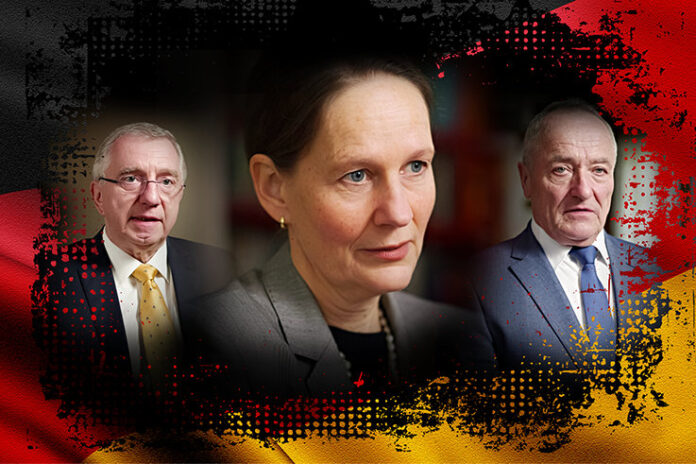
As Germany ends nearly three decades of surveillance of Scientology without proving the threat once alleged, Scientologists are speaking publicly about the personal cost: damaged careers, public hostility, family intimidation and years of social exclusion.
For nearly 30 years, Scientologists in Germany lived under the shadow of state suspicion. Now, as Germany’s Office for the Protection of the Constitution ends its long-running observation of Scientology, a new report by STAND, Scientologists Taking Action Against Discrimination, places the focus not on political theory, but on people.
The article argues that the surveillance campaign did not establish the threat it had long suggested existed. Yet, according to the Scientologists who spoke out, the consequences were deeply personal and concrete.
They describe a climate in which members of a minority religion were portrayed as suspected enemies of democracy, despite what STAND describes as an absence of terrorist acts, violent conspiracies or criminal campaigns tied to the Church of Scientology.
Careers, families and reputations affected
Among those cited is former political reporter Hans Bschorr, who describes losing professional standing and livelihood after rumours spread about his Scientology faith.
Former local parliament member Thomas Röder recounts public attacks, media targeting and even death threats directed at his family because he was a Scientologist.
Billie Wegmann tells of hostility surrounding her child’s school, which STAND says escalated into physical aggression and threats of police removal after other parents discovered her affiliation with Scientology.
Taken together, the accounts present a wider picture of the human cost of government suspicion when it becomes part of public life. For those affected, the harm was not abstract. It touched employment, family security, public dignity and the ability to take part in ordinary civic life without fear of being marked by one’s religion.
A campaign without the threat it claimed
The central issue raised by STAND is that, after decades of surveillance, the German government is ending the campaign without having proved the danger used to justify it.
For Scientologists, that outcome raises serious questions about proportionality, accountability and the protection of minority beliefs in democratic societies.
The article describes the experience as part of a broader climate of institutionalized discrimination, fueled by official suspicion, “sect filters” and public campaigns that portrayed Scientologists as dangerous despite the absence of evidence supporting those claims.
In that sense, the end of surveillance is not only an administrative development. It also opens a wider debate about how democratic states should treat unpopular or misunderstood religious minorities, and what safeguards are needed when public authorities help shape suspicion against them.
The human question behind the legal one
The end of the surveillance campaign may close one chapter. But for the individuals who say they lost careers, reputations or peace within their own families, the deeper question remains unresolved.
What happens when a state spends decades watching a religious community, only to end that watch without proving the alleged threat?
For the Scientologists quoted by STAND, the answer is clear: the most lasting damage was not what the government found. It was what the campaign did to people along the way.
Mobile Exhibition Brings “Truth About Drugs” Prevention to Dublin

KINGNEWSWIRE // PRESS RELEASE // Drug education initiative supported by the Church of Scientology opens its 2026 Dublin activities at the Connect Multicultural Festival in Blanchardstown
DUBLIN, Ireland — A mobile exhibition dedicated to drug education and prevention was launched in Dublin as part of the 2026 activities of The Truth About Drugs, a secular educational campaign supported by the Church of Scientology and Scientologists.
The exhibition, first reported by GNN24x7 Ireland, opened during the Connect Multicultural Festival, held at Millennium Park in Blanchardstown. The Fingal community celebration brought together families, cultural groups and residents through music, food, art and public activities, offering a visible setting for the prevention message.
The mobile exhibit presented simple, factual information on the effects of drugs, with free educational materials intended to help people make informed decisions. Volunteers provided booklets and answered questions from visitors, many of whom stopped to learn more about drug prevention in a public and accessible format.
The Dublin initiative forms part of the international Truth About Drugs campaign, supported by the Church of Scientology and inspired by the words of Scientology founder L. Ron Hubbard: “The single most destructive element present in our culture is drugs.” Through the Foundation for a Drug-Free World, the campaign makes educational booklets, audiovisual materials and prevention resources available to schools, community organisations and public groups.
The Church of Scientology describes the campaign as part of its wider social betterment work, with drug prevention education presented as a practical contribution to communities. Its background is also set out in the Church’s information on Creating a Drug-Free World, which links the initiative to decades of educational activity by Scientologists.
The subject remains of clear public relevance in Ireland. The Health Research Board reported that 354 drug poisoning deaths were recorded in Ireland in 2021. Its findings identified opioids, benzodiazepines and antidepressants as the most common drug groups implicated in poisoning deaths overall, while cocaine and heroin were among the most common illicit drugs involved.
Against that background, local volunteers said the Dublin exhibition was designed to contribute to prevention through education, not alarmism. Its emphasis was on understandable information, early awareness and personal responsibility, particularly in communities where families and young people are seeking clear, non-technical resources.
Ivan Arjona, representative of the Church of Scientology to the European Union, the OSCE, the Council of Europe and the United Nations, said the Dublin event reflected a practical approach to civic responsibility:
“Drug prevention is not only a health question; it is also a question of human dignity, education and community resilience,” said Arjona. “Across Europe, societies are strongest when citizens, families, schools and community groups work together to give young people truthful information before harm occurs. This is the spirit behind the Church of Scientology’s support for The Truth About Drugs campaign.”
The Church of Scientology & Community Centre of Dublin has previously supported community-based educational and social betterment initiatives, including drug prevention, human rights education and volunteer activities. The Dublin mobile exhibition continues that local work by placing educational material directly in public spaces where people naturally gather.
The Truth About Drugs campaign is presented as a secular initiative. Its materials are used internationally by volunteers and community partners seeking to address drug abuse through prevention and factual education. The campaign’s public materials describe its purpose as empowering young people and adults with factual information about drugs so they can make informed choices.
The Dublin exhibition also connected with the broader civic spirit of the Connect Multicultural Festival. In a setting designed to celebrate diversity and shared community life, the prevention message was framed as a contribution to safer neighbourhoods and stronger social cooperation.
Organisers said the mobile exhibition will continue to serve as a practical platform for public education during 2026, bringing materials to locations where community engagement can help make prevention more visible, accessible and personal.
The Church of Scientology, its churches, missions, groups and members are present across the European continent. Scientology Europe reports a continent-wide presence through more than 140 churches, missions and affiliated groups in at least 27 European nations, alongside thousands of community-based social betterment and reform initiatives focused on education, prevention and neighbourhood-level support, inspired by the work of Scientology founder L. Ron Hubbard.
Within Europe’s diverse national frameworks for religion, the Church’s recognitions continue to expand, with administrative and judicial authorities in Spain, Portugal, Sweden, the Netherlands, Italy, Germany Slovakia and others, as well as the European Court of Human Rights, having addressed and acknowledged Scientology communities as protected by the national and international provisions of Freedom of Religion or belief.
