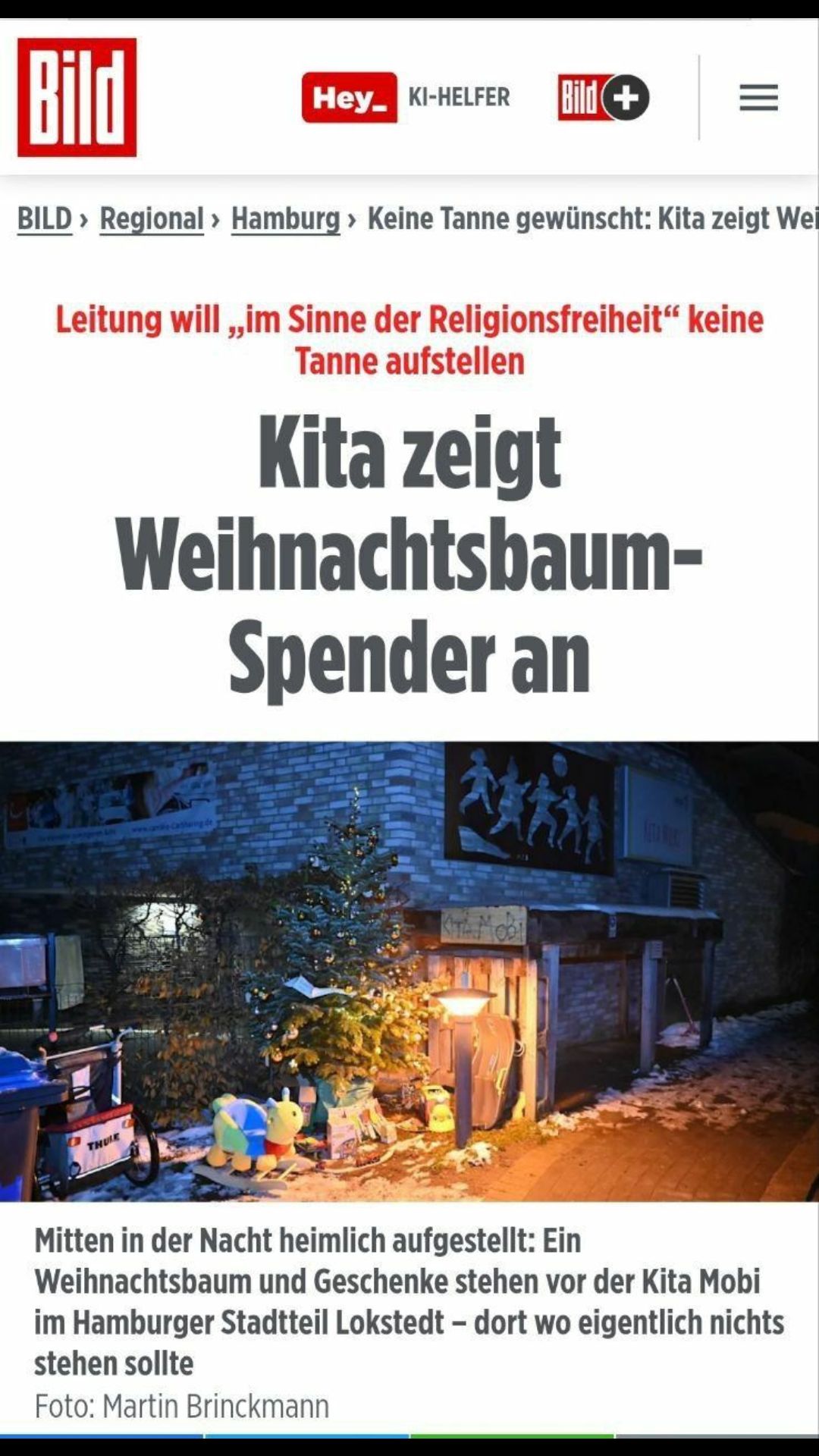
The management does not want to plant a tree “in a spirit of religious freedom”, headlines the regional newspaper BILD. Secretly set up in the middle of the night: A
Christmas tree and presents stand in front of the Mobi daycare center in the Lokstedt district of Hamburg - where there is actually nothing
The management does not want to put up a Christmas tree “in a spirit of religious freedom”, headlines the regional newspaper BILD
By Ivan Dimitrov
A decision by a kindergarten in the Lockstedt district of the large northern German city of Hamburg not to put up a Christmas tree this year “so that no child feels left out” was reported in a major German daily and quickly became a national topic of comments. It caused a wave of protests and negative comments towards the management of the children’s center, which was forced to defend itself. According to the private school, they have only put up a Christmas tree three times in the past ten years because they “don’t want to be confined to one religious tradition”, but this didn’t cause any backlash until this year, when there was a “wave of backlash” against them. of hatred’, as they put it.
As a sign of protest, near the kindergarten in Lokstedt district, unknown persons have secretly placed a Christmas tree in a place accessible to people. Although the management of the neighborhood kindergarten decided that, out of “respect for religious freedom”, the traditional Christmas tree would not be placed in a prominent place, some Christians violated the order and put up the Christmas tree at night, decorated it and even put presents under it. Also as a protest, shopping centers for Christmas decorations have sent Christmas trees to the children’s institution.
The case was also commented on by public figures and politicians. The former Minister of Agriculture Julia Klöckner wrote that the children’s institution in question should be consistent in its policy and continue to work during the Christmas holidays. Bavarian Prime Minister Markus Söder also commented on the scandal: “This is absurd! Don’t we have other problems? There should be a Christmas tree at Christmas!”.
It is noted that this and similar decisions are part of the so-called “cancel culture”, that they are unacceptable for a multicultural city like Hamburg, which claims to include and represent the most diverse cultural traditions. “The Christmas tree is part of the secular Christmas, not so much a religious symbol,” says one of the comments. “Religious people will celebrate Christmas without Christmas decorations, but the secular Christmas that is part of our culture is unthinkable without this symbolism.”
There is no information whether the city authorities will leave the Christmas tree or remove it so as not to annoy other believers and non-believers. According to some media, the matter would be discussed in the municipal council.
Short address of the original publication: https://dveri.bg/d84ua, December 11, 2023.
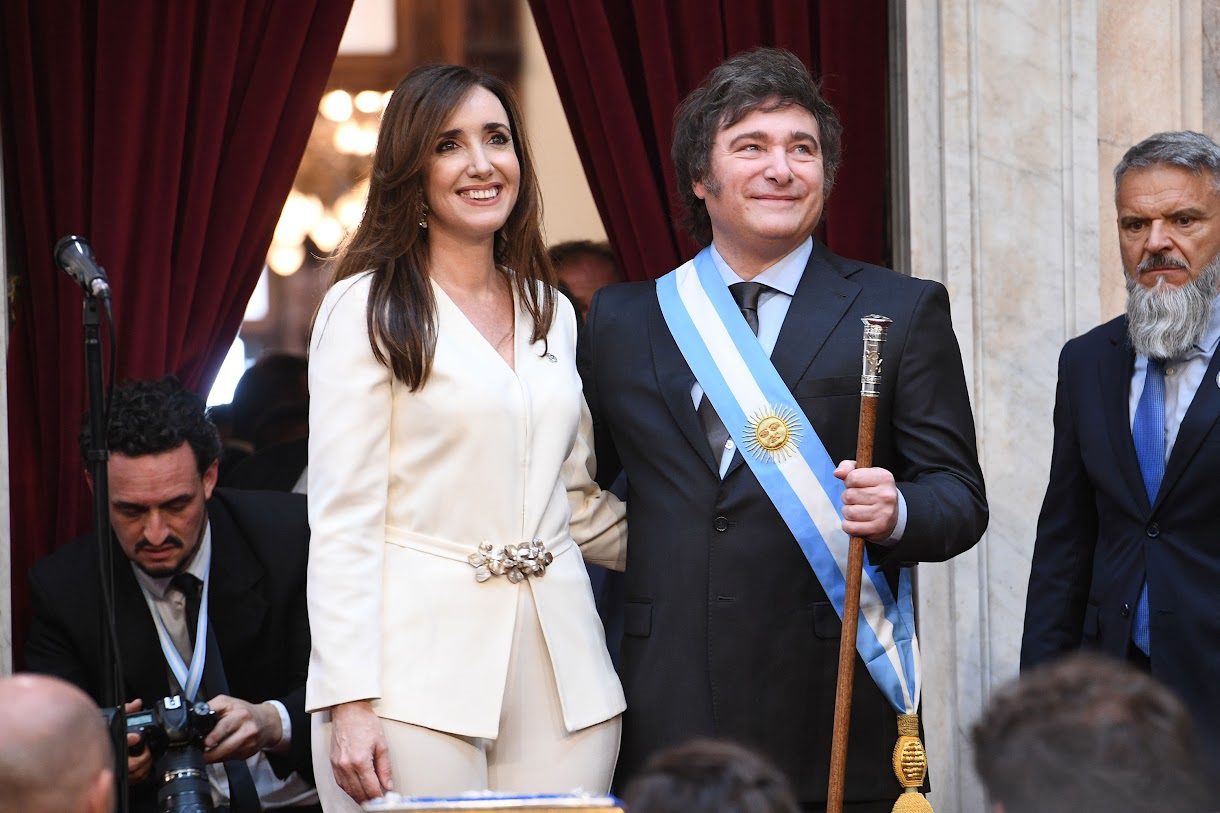
The presidents were sworn in at the Congress of the Nation where the oath and ceremony of transfer of power to Milei took place, with the presentation of the Presidential Sash and Baton by the former President, Alberto Fernández.
The Legislative Assembly began at 11:14 a.m., with the customary ringing of the bell, and was presided over by the outgoing Vice-President Cristina Fernández de Kirchner, who, accompanied by the President of the Chamber of Deputies, Martín Menem, and the outgoing Parliamentary Secretary of the Senate, Marcelo Fuentes, welcomed the presidents and former presidents of Argentina, legislators, governors, foreign delegations and guests to the Chamber of Deputies.
At the beginning, the interior and exterior reception committees were formed to receive the president-elect on his arrival in Parliament, and a fourth intermission was held until Milei and Villarruel entered the chamber.
The Foreign Affairs Commission was composed of the following senators: José Emilio Neder, Alfredo Luis De Angeli, Gabriela Valenzuela, Ezequiel Atauche, Enrique De Vedia and deputies: María Graciela Parola, Julio Pereyra, Marcela Pagano, Gabriel Bornoroni, and Francisco Monti.
The Interior Committee was made up of the following senators: Marcelo Lewandowski, Eugenia Duré, Victor Zimmermann, Lucila Crexell, Juliana Di Tullio, and deputies: Gladys Medina, Andrea Freites, Javier Santurio Rodríguez, Lorena Villaverde and Cristian Ritondo.
Javier Milei arrived at Congress at 11:46 a.m. and was received by Cristina Fernández de Kirchner, the President of the Chamber of Deputies Martín Menem together with the legislators of the commissions.
Milei and Villarruel proceeded to sign the Books of Honour of the Honourable Senate of the Nation and the Chamber of Deputies of the Nation, in the “Salón Azul”.
Then, Milei and Villarruel looked at the original copy of the National Constitution and went to the Chamber of Deputies to take the oath, as is customary, before the Legislative Assembly.
The outgoing vice-president invited Milei to take his oath in front of the senators and deputies of the Nation. From the centre of the podium, he read out his oath. The President did it for God, the Fatherland and the Holy Gospels”.
Subsequently, the outgoing President Alberto Fernández entered and proceeded to hand over to his successor the presidential attributes, the sash and the baton. He then left the room.
Afterwards, Fernández and Milei signed the corresponding act together with the Notary General of the Nation.
The Vice-President of the Nation was then sworn in “by God, the Fatherland, the Holy Gospels”, and ended by saying that “God, the Fatherland, demand it of me”.
Finally, the new vice-president Victoria Eugenia Villarruel took the floor and expressed that “on behalf of the president Javier Milei and myself, I would like to thank each one of you for your presence, for accompanying us on this historic day. It is a moment that will remain in our hearts and we want to thank you for this gesture of accompanying us from all countries and provinces”. And he closed the Assembly.
After the swearing-in, Milei, who became the eighth elected president since the restoration of democracy in 1983, went to the steps of Congress to deliver his first speech.
National and international leaders and former leaders took part. Among those present were Felipe VI (King of Spain); Jair Bolsonaro (former President of Brazil); Viktor Orbán (Prime Minister of Hungary); Volodímir Zelensky (President of Ukraine); Gabriel Boric (President of Chile); Luis Lacalle Pou (President of Uruguay); Daniel Noboa (President of Ecuador); Santiago Peña (President of Paraguay); Luis Arce Catacora (President of Bolivia); Vahagn Kachaturyan (President of Armenia); Santiago Abascal (leader of VOX, Spanish political party); Jennifer M. Granholm (Secretary of the US Department of Energy); Weihua Wu (Vice-Chairman of the Standing Committee of the National People’s Congress of China) and David Rutley (British Minister in charge of the Americas).
Also in attendance were the head of the Buenos Aires government, Jorge Macri; the governors of Entre Ríos, Rogelio Frigerio; of Mendoza, Alfredo Cornejo; and of Buenos Aires, Axel Kicillof; former presidents Eduardo Duhalde and Mauricio Macri. Also, the president of the Supreme Court of Justice, Horacio Rosatti, together with his colleagues Ricardo Lorenzetti and Juan Carlos Maqueda.
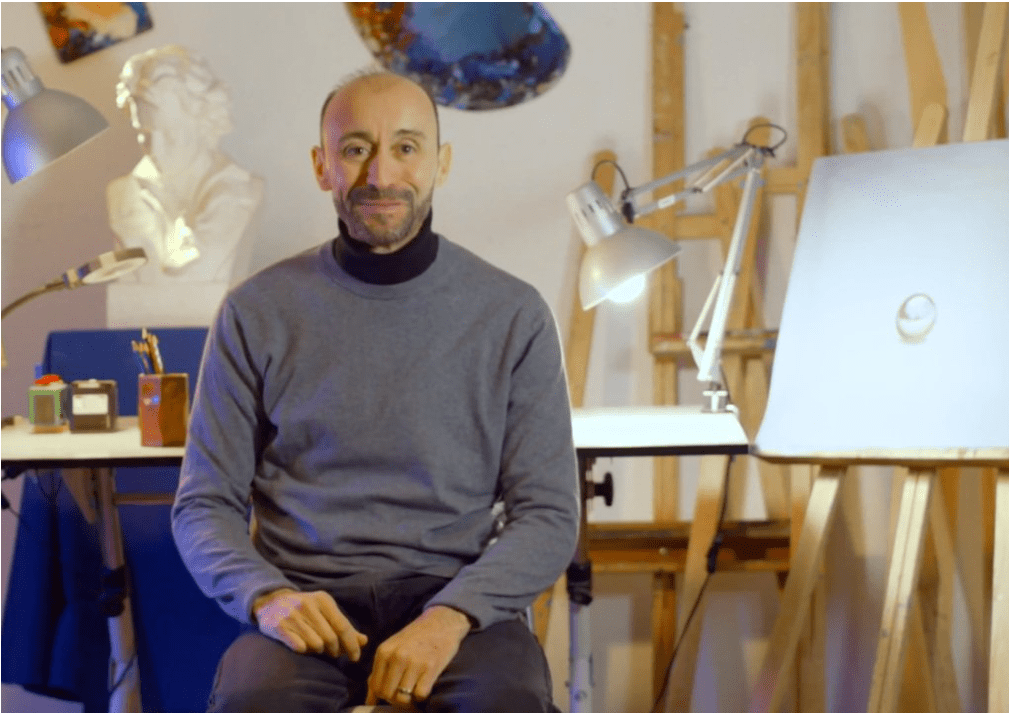
Leonardo Pereznieto in a studio, for a video interview https://www.youtube.com/watch?v=WeVlJh61M_0
In a world where abstract art often dominates gallery walls and news headlines, the hyperrealist visions of Leonardo Pereznieto stand out for their technical mastery and emotional resonance. Since picking up his first pencil as a child in Spain, Pereznieto has dedicated his life to perfectly capturing the beauty of the world around him and sharing his craft with budding artists across the globe.
Born To Draw
Pereznieto showed artistic talent from a very young age, filling sketchbooks with observational drawings of people and places. As a teenager, he began formal art training, honing his skills in drawing, painting, and sculpture at Madrid’s prestigious Art Center. Pereznieto then continued his studies at the Florence Academy of Art, widely considered one of the world’s top programs for representational fine art.
Throughout his student years, Leonardo Pereznieto challenged himself to translate three-dimensional reality onto the two-dimensional picture plane with exacting realism. His tireless studies of human anatomy, plant life, landscapes, still lifes, and architecture all furthered his ability to recreate visual phenomena down to the most precise detail. Light, shadow, texture, movement — every component had to be perfect.
Pereznieto’s diligence soon paid off with illustrations and paintings that seem to leap off the page, depicting their subjects with a level of realism bordering on photographic. And yet, his work moves beyond technical precision to activate the imagination and touch the soul. Subtle symbols and provocative themes inspire viewers to forge their own connections and interpretations.
Global Exhibitions of Leonardo Pereznieto
Since completing his studies, Pereznieto’s hauntingly lifelike drawings, paintings and sculptures have been displayed in exhibitions across Europe and the Americas. Last year, his solo show at the ABLE Fine Art Gallery in New York was met with critical acclaim, solidifying his status as one of today’s preeminent hyperrealist artists.
Highlights of Leonardo Pereznieto’s body of work include monumental graphite drawings like “The Journey,” depicting refugees in a boat gazing ahead with hope; emotionally charged paintings such as “Young Harmony,” featuring children of diverse backgrounds playing music together; and imaginative bronzes including “Window of Hope,” in which a young girl looks longingly through a stone aperture.
While varied in subject matter, Leonardo Pereznieto’s art uniformly marries technical excellence with symbolic resonance. He often incorporates themes of human rights, environmentalism and social justice, allowing the viewer to extract deeper meaning from the breathtaking aesthetics of his work.
Master Mentor
In addition to creating award-worthy drawings, paintings and sculptures, Pereznieto strives to pass on his skills to new generations of artists. He teaches in-person workshops around the world and also shares his expertise in bestselling books and popular YouTube tutorials.
Published in 2020, Pereznieto’s book You Can Draw! takes artists through key techniques via step-by-step demonstrations.
Enthusiastic readers praise the text for unlocking realistic renderings in graphite, colored pencil and charcoal through straightforward explanations of lighting, proportion, texture and more.
His 2022 follow up, Basics of Drawing, cements core competencies like sketching frameworks, geometric forms and one-point perspective for absolute beginners.
Meanwhile, over 1 million subscribers tune in to Pereznieto’s eponymous YouTube channel to pick up tips for recreating metals, glass, water, gemstones and other tricky substances. Pereznieto breaks down each element in digestible videos aimed at self-learners.
Through these varied learning tools, the soft-spoken Pereznieto acts as a nurturing mentor rather than strict taskmaster. Aspiring artists around the globe consider him an inspiring guide into the foundations of classical representational technique as well as contemporary hyperrealism.
In his own words
Art is my life, and creating for me is like breathing. I express myself through drawing, painting, sculpture, and digital media. I seek to capture the splendor of the human spirit, the beauty, and the sensuality of the female figure and nature in a way that mirrors and, at the same time, idealizes visual reality. I strive to capture unforgettable moments and dreams in many of my works. I create contrast by combining different types of mark-making. I finish the faces, hands, and subjects I want to emphasize with great detail, color, and contrast. At the same time, the rest of the figures and the background are often made with bolder strokes, making them subdued or blurry, inviting the viewer to spend more time on the key areas. I intend to preserve the best of visual tradition by emphasizing technical skill, beauty, and passion while keeping up with the times by using new media, being sensitive to our contemporary public, and creating original forms.
Continuing to Inspire
Now entering his mid-40s, Pereznieto continues to perfect his craft while uplifting the next wave of artistic talent.
Fans can gain insight into his creative process and view new works in progress via Instagram updates from his home studio in Madrid. He engages with commenters and offers words of wisdom to those seeking feedback.
As accolades and auction prices continue rising for Pereznieto’s drawings, paintings and sculpture, he remains committed to keeping excellence in representational art accessible through open discourse with his devoted followers.
Standing apart from fleeting fads, Pereznieto’s sublime illusions have cemented his legacy as a contemporary master. And through his far-reaching educational initiatives, realism itself now looks more durable than ever.
En ce moment crucial de relance, de réforme et de réimagination de l’Europe, les valeurs de paix, de justice, de liberté et de dignité humaine resteront fermement ancrées au fondement de tout ce que nous avons construit et de tout ce que nous continuerons de faire. C’est ce qui nous distingue en tant qu’Européens
Pour tracer une voie véritablement équitable et juste, des efforts bien plus importants doivent être déployés pour transformer ces valeurs en avantages concrets pour nos peuples. Qu’il s’agisse de la transition verte ou de la transition numérique, notre travail consiste à veiller à ce que nos politiques soient suffisamment ambitieuses pour relever les défis auxquels nous sommes confrontés. Cela signifie qu’ils doivent travailler pour les gens.
We are at an inflection point that will determine the path we are to take. There are no easy solutions, but they are decisions that we must take. Europe must meet this moment.
My fear is that if we get this wrong, if we ignore when people are telling us that they are worried, we will see a re-rise of the extremes.
My appeal to you today is to join me in this critical moment of reimagining and reforming our Europe. To reject the temptation of easy cynicism that takes over so quickly. Have your say on how you want our Europe to look like.
On Israel:
The reality on the ground is horrific, tragic and desperate.
I visited the sites of the atrocities and met with grieving survivors. I expressed Europe’s solidarity, urged for the release of hostages and reiterated our rejection of terrorism.
I underlined that how Israel responds matters, how Hamas is stopped matters, and that we must work together to mitigate the humanitarian consequences to innocent people in Gaza.
Europe stands against hate. We stand against terrorism. It is absolutely condemnable. Hamas must be stopped. Full stop.
It is also entirely correct to voice our concerns and desperation at the unfolding crisis in Gaza, that has seen too many innocent lives lost.
Standing proudly and strongly against terror and doing everything possible to alleviate the humanitarian crisis in Gaza are not mutually exclusive. That’s why we insist on respect for international law. Why we do everything we can to protect innocent lives.
On the EU´s role in the world:
We must reinforce our role in the world by becoming stronger and more united on the global stage.
To do this we need to work on building-up a global democratic alliance of trusted partners and friends.
That entails a continued commitment to stand firmly alongside Ukraine. With the situation in the Middle East dominating the headlines, Putin is expecting our political, humanitarian and military support to waiver. We cannot allow fatigue to set-in. This remains as much about Ukraine’s security as it is about ours.
Security, defence and migration should be high on our reform agenda. Work must start immediately to build a real security and defence Union. One that complements NATO without competing with it. Member States must continue with efforts to increase defence spending.
If we want to ensure the longevity of our project and the security of our way of life, we simply need the resources to back it up. The current geopolitical climate is proof of that.
On migration:
After a decade of deadlock, we are now at a point where we can charter a way forward.
More work needs to be done to close loopholes between a negative asylum decision and a return decision especially after what we have seen a few days ago in the heart of Brussels.
We are closer than ever. So let me assure you of the European Parliament’s unwavering commitment to finalise this legislative package by the end of our mandate.
You can find the full speech of President Metsola here.
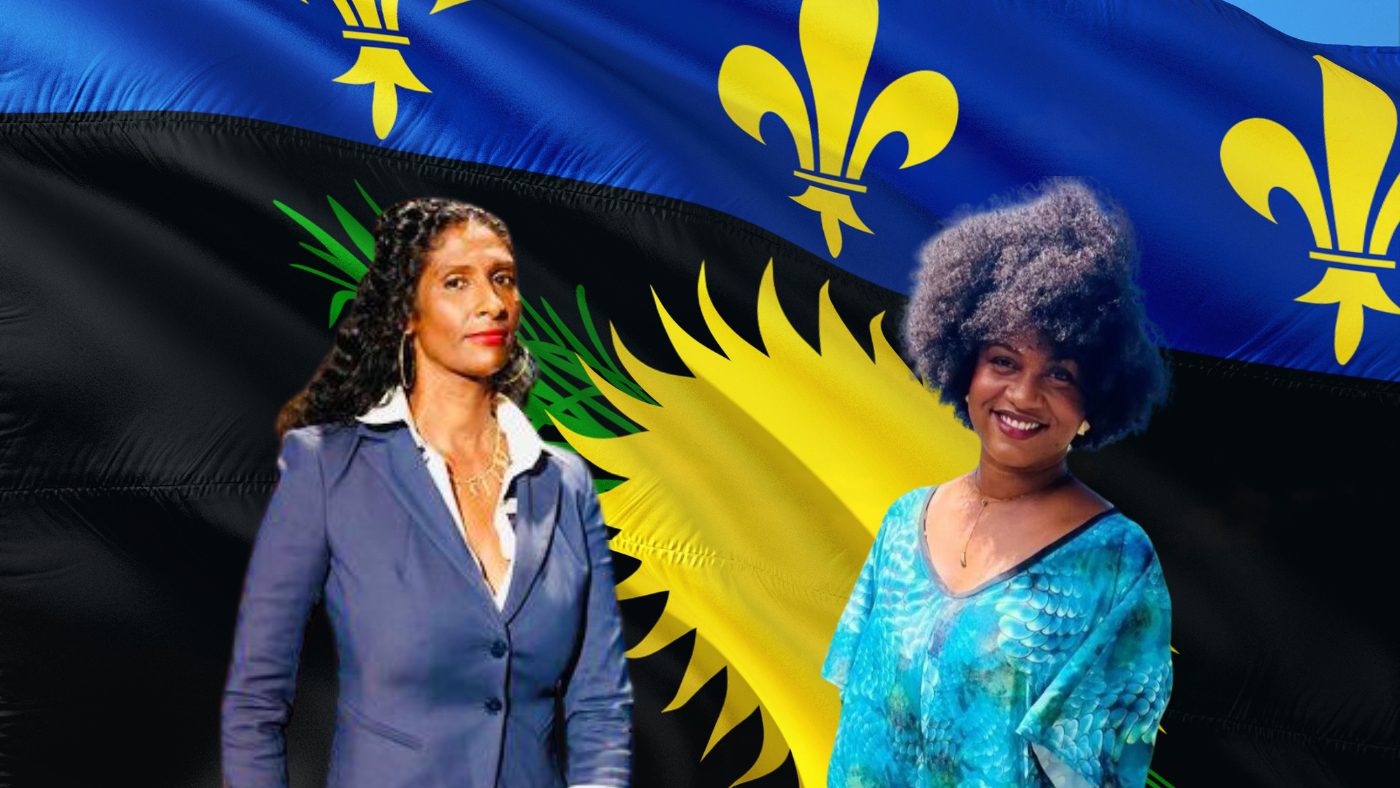
MEP Maxette Pirbakas condemns the treatment of a journalist by RCI Guadeloupe. In a press release issued on 11 December, Maxette Pirbakas, Member of the European Parliament, expressed her outrage at the removal of journalist Barbara OLIVIER-ZANDRONIS from the airwaves of RCI Guadeloupe.
According to Ms Pirbakas, the decision follows an interview she conducted on 8 December with a candidate on the election campaign trail. She believes that Barbara OLIVIER-ZANDRONIS was dismissed by her superiors “for her professionalism and the quality of her contributions” during the interview.
The MP condemned the “brutal treatment” meted out to the journalist as well as an “arbitrary act of authority that defies press freedom” by RCI Guadeloupe. She also found the radio station’s justification for removing the journalist from the airwaves to be “clumsy” and “unfounded”.
As a Member of the European Parliament for Overseas France and national president of the RPFOM, Pirbakas condemns the “dismissal without serious reason” of Barbara OLIVIER-ZANDRONIS. She is calling for her “immediate reinstatement” on RCI Guadeloupe.
For the time being, the management of the public radio station has not officially reacted to this scathing statement by a leading political figure.
Full statement by Maxette Pirbakas:
I am stunned by the brutal treatment inflicted on journalist Barbara OLIVIER-ZANDRONIS, on RCI Guadeloupe, following an interview with a candidate on the election campaign trail on 8 December. Faced with the pugnacity of the journalist, who appears to have taken her interviewer at his word, the management of RCI unfortunately chose the path of “gratuitous repression” by removing from the air a presenter of RCI’s 13h programme who is appreciated by the public and her colleagues for her professionalism and the quality of her contributions.
The clumsy, unjustified and unfounded response by the media’s management to justify an arbitrary act of authority that defies press freedom seems to make RCI, contrary to what its deputy director Hervé de Haro claims to AFP, not an “opinion radio station” but a “politicised and biased radio station” that defies journalistic ethics.
In my capacity as Member of the European Parliament for Overseas France and National President of the RPFOM, I denounce the dismissal of Mrs Barbara OLIVIER-ZANDRONIS for no serious reason, and I add my voice to all those who have spoken out to demand her immediate reinstatement.
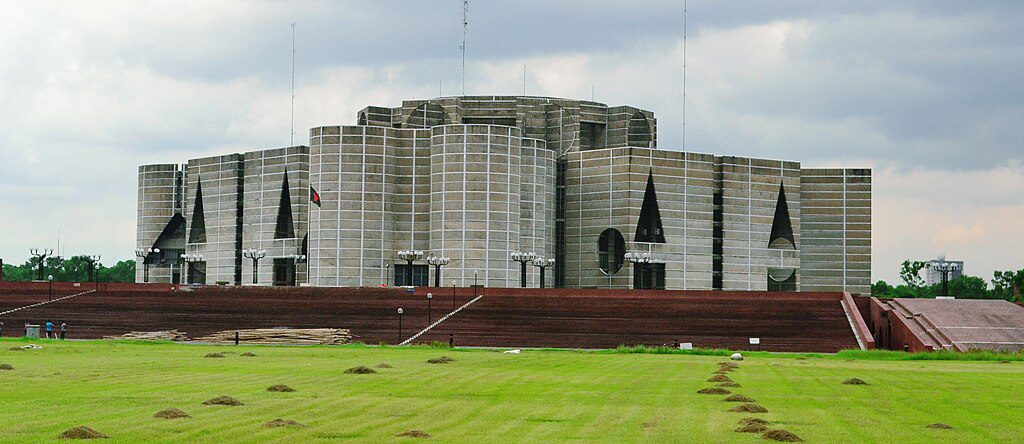
Mamun Ismail, CC BY-SA 4.0 , via Wikimedia Commons
The government led by the Awami League is claiming to commit to free and fair general elections due to take place on 7 January 2024 while simultaneously the state authorities are filling prisons with members of the political opposition and are responsible for using excessive force, enforced disappearances, torture and extra-judicial killings.
The country’s main opposition Bangladesh Nationalist Party (BNP) and its allies have decided to boycott the election saying it will be rigged by the ruling Awami League (AL).
The opposition demands that the government resigns and transfers power to a neutral caretaker administration to oversee the polls, but it has been strongly rejected by the Awami League.
Massive repression during the election campaign
Since the mass political rally organized by the BNP on 28 October against the ruling government, led by Prime minister Sheikh Hasina, at least 10,000 opposition activists have been arrested. Many others have fled their homes to avoid arrest and have gone into hiding. There is no more room left in the prisons, according to Human Rights Watch, which says that at least 16 people have been killed and over 5,500 people have been injured.
At the end of November, Nahid Hasan, a reporter for the news website Jagonews24.com was attacked in the capital Dakha while he was reporting on a clash involving students of the ruling Awami League. The aggressors were Tamzeed Rahman, a local leader of the Awami League’s Youth Wing with about 20-25 men. They grabbed him by the collar, slapped and beat him until he fell to the ground where they continued to kick and stomp on him. This was the latest episode so far of a series of attacks on media people by supporters of the 14-party alliance led by Awadi League.
Attacks, surveillance, intimidation and judicial harassment of the press over the past several years have led to widespread self-censorship in the media.
Over 5,600 cases related to freedom of expression, including those of prominent journalists and editors, are still pending under the much-criticised draconian Digital Services Act, according to the United Nations.
The statement of the UN Special Rapporteurs was in line with another UN declaration on 4 August 2023 denouncing pre-election violence, calling for police “to refrain from excessive use of force amid recurring violence and mass arrests ahead of general elections.” According to a UN spokesperson, “Police, alongside men in plain clothes, have been seen using hammers, sticks, bats and iron rods, among other objects, to beat protestors.”
Concerns of the United States
In September 2023, the United States began imposing visa restrictions on Bangladeshi officials found responsible for “undermining the democratic election process in Bangladesh.” The US could also consider additional sanctions against those with command responsibility for the abuses being carried out now. The principal target of these sanctions is the ruling Awadi League party, the law enforcement forces, the judiciary and security services.
With this measure, the Biden administration remains consistent with its policy towards the Awami-led ruling government. In 2021 and 2023, it left Bangladesh out of the two “Summit for Democracy” events, although it had invited Pakistan (ranking lower than Bangladesh on various democracy indexes, including Freedom House’s Freedom in the World Index and the Economist Intelligence Unit’s Democracy Index).
On 31 October, US Ambassador Peter Haas declared “Any action that undermines the democratic elections process – including violence, preventing people from exercising their right to peaceful assembly, and internet access – calls into question the ability to conduct free and fair elections.”
In early November, Awami League leaders repeatedly threatened to beat or kill Haas.
Concerns of the European Union about the elections
On 13 September, Commissioner for Cohesion and Reforms, Elisa Ferreira, delivered a speech on behalf of High Representative/Vice-President Josep Borrell about the human rights situation in Bangladesh stressing that “the EU remains concerned over the reports on extrajudicial killings and enforced disappearances in Bangladesh.”
She stressed that the EU joins the United Nations’s calls for an independent mechanism to investigate enforced disappearances and extrajudicial killings. Bangladesh should also allow a visit by the United Nations Working Group on Enforced Disappearances.
On 21 September, the European Union decided not to send a full team of observers during Bangladesh’s upcoming national elections citing budgetary constraints.
On 19 October, the EU officially informed the Election Commission (EC) of Bangladesh that it will send a four-member team to observe the upcoming national election, according to The Business Standard.According to the letter sent through the Ministry of Foreign Affairs, the team will visit Bangladesh from 21 November 2023 to 21 January 2024 to observe the polls.
The EU did not send any observers in the last two national elections in 2014 and 2018 won by the Awadi League. In 2014, the Bangladesh Nationalist Party, the largest opposition party, boycotted and will do it again in January 2024.
The EU had sent a full-fledged mission in the 2008 elections when it deployed the largest international observation mission in Bangladesh with 150 observers from 25 EU Member States, plus Norway and Switzerland.
Several foreign governments have repeatedly called for free and fair elections in Bangladesh.
Trade relations between the EU and Bangladesh as a tool of possible soft power
Due to the commercial privileges granted to Bangladesh, the EU has the capacity, beyond its formal hopes and wishes, to urge its government to guarantee free and fair elections.
The EU works closely with Bangladesh in the framework of the EU-Bangladesh Cooperation Agreement, concluded in 2001. This agreement provides broad scope for cooperation, including human rights.
The EU is Bangladesh’s main trading partner, accounting for around 19.5% of the country’s total trade in 2020.
The EU imports from Bangladesh are dominated by clothing, accounting for over 90% of the EU’s total imports from the country.
The EU exports to Bangladesh are dominated by machinery and transport equipment.
Between 2017 and 2020, EU-28 imports from Bangladesh reached on average €14.8 billion per year, which represents half of Bangladesh’s total exports.
As a Least Developed Country (LDC), Bangladesh benefits from the most favourable regime available under the EU’s Generalised Scheme of Preferences (GSP), namely the Everything But Arms (EBA) arrangement. EBA grants the 46 LDCs – including Bangladesh – duty-free, quota-free access to the EU for exports of all products, except arms and ammunition. Human Rights Without Frontiers urges the EU to energetically use its soft power to put in balance Bangladesh’s respect of human rights ahead of the elections and its commercial privileges.
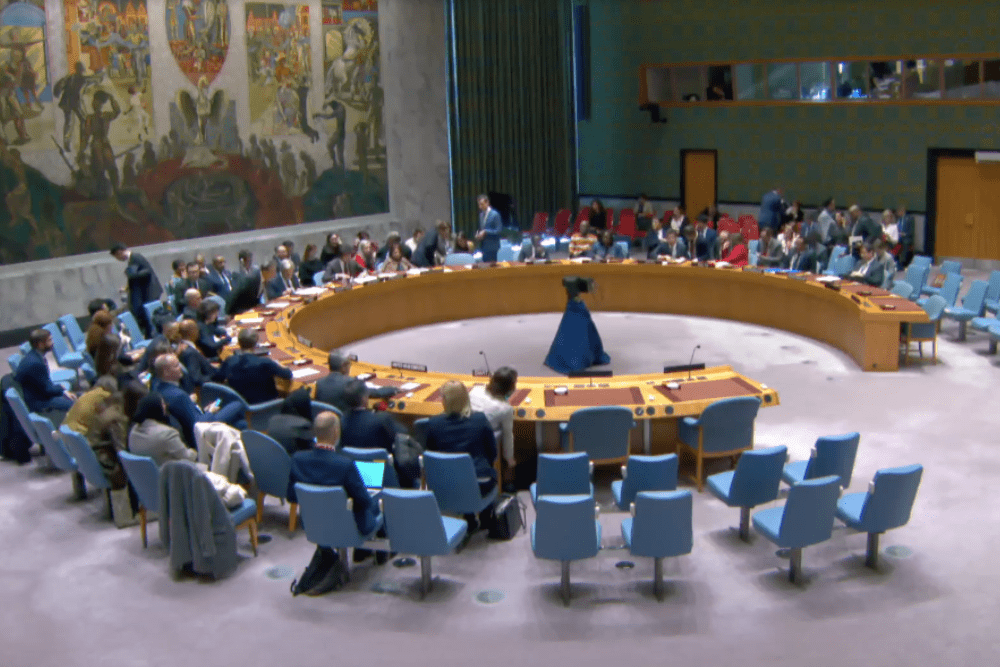
The United States on Friday once again vetoed a United Nations Security Council resolution calling for an immediate humanitarian ceasefire in the conflict between Israel and Hamas.
On Friday 8 December, for the second time, the United States vetoed a United Nations Security Council resolution calling for an “immediate humanitarian ceasefire” in Gaza, “as civilian casualties mount in Israel’s military campaign against Hamas”.
Thirteen of the fifteen members of the Security Council voted in favour of the resolution, with the United Kingdom abstaining. The draft resolution had been co-sponsored by 97 UN member states.
Robert Wood, the US deputy ambassador to the UN, said after the vote: “We do not support a resolution that calls for an unsustainable ceasefire that will simply sow the seeds of the next war”, he explained, also denouncing the “moral failure” represented by the absence in the text of any condemnation of the Hamas
UN Secretary-General António Guterres thanked ambassadors for their response to his invocation of Article 99 following his urgent letter – one of the most powerful tools at his disposal – saying he had written because “we are at breaking point” in the war between Israel and Hamas.
Article 99, contained in Chapter XV of the Charter: says that the UN chief “may bring to attention of the Security Council any matter which in his opinion, may threaten the maintenance of international peace and security.”
It was the first time ever that Mr. Guterres had used the rarely invoked clause.
“Facing a severe risk of collapse of the humanitarian system in Gaza, I urge the Council to help avert a humanitarian catastrophe & appeal for a humanitarian ceasefire to be declared,” Mr. Guterres wrote on X, formerly Twitter, after dispatching the letter.
He urging the body to help end carnage in the war-battered enclave through a lasting humanitarian ceasefire.
“I fear the consequences could be devastating for the security of the entire region”, he said, adding that the Occupied West Bank, Lebanon, Syria, Iraq and Yemen, had already been drawn in to the conflict to varying degrees.
There is clearly, in my view, a serious risk of aggravating existing threats to the maintenance of international peace and security”.
The Secretary-General also reiterated his “unreservedly condemnation” of Hamas’ brutal attacks on Israel on 7 October, stressing that he is “appalled” by the reports of sexual violence.
“There is no possible justification for deliberately killing some 1,200 people, including 33 children, injuring thousands more, and taking hundreds of hostages,” he said, adding “at the same time, the brutality perpetrated by Hamas can never justify the collective punishment of the Palestinian people.”
“While indiscriminate rocket fire by Hamas into Israel, and the use of civilians as human shields, are in contravention of the laws of war, such conduct does not absolve Israel of its own violations,” Mr. Guterres said.
“This is a sad day in the history of the Security Council”, but “we will not give up”, lamented the Palestinian ambassador to the UN, Riyad Mansour.
The Israeli ambassador to the UN, Gilad Erdan, thanked the United States “for standing firmly by our side”.
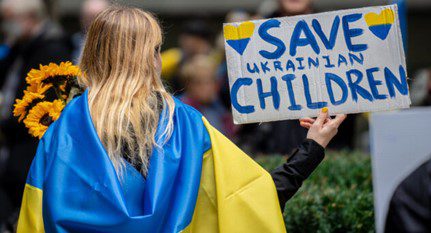
On UN Human Rights Day, 10 December, thousands of Ukrainian children kidnapped and deported by Russia, whose parents are desperately searching for a way to get them home should not be forgotten by the international community, said the Brussels-based NGO, Human Rights Without Frontiers, in a press release issued today.
On 6 December, President Zelensky announced in his daily address that 6 children deported to Russia from Ukraine’s Occupied Territories had been released with the mediation of Qatar.
All in all, less than 400 Ukrainian minors have been rescued in various separate and individually designed special operations, according to The platform “Children of War” created on behalf of the Office of the President of Ukraine by various official Ukrainian institutions.
The same platform has posted the pictures, names and dates of birth with the place of disappearance of 19,546 deported children and their number continues to grow.
Statistics: 20,000? 300,000? 700,000?
It is impossible to establish the exact number of deported children given the ongoing full-scale aggression, difficult access to the temporarily occupied territories, and the failure of the Russian side to provide reliable information on this matter.
Daria Herasymchuk, Adviser to the President of Ukraine on Children’s Rights and Children’s Rehabilitation, notes that the aggressor country, Russia, could have illegally deported up to 300,000 children from Ukraine during the war.
As of June 2023, the Interdepartmental Coordination Headquarters of the Russian Federation for Humanitarian Response indicated in its statement that since 24 February 2022, 307,423 children have been taken from Ukraine to the territory of Russia.
Russia’s Commissioner for Children’s Rights Maria Lvova-Belova said that the number of such Ukrainian children is more than 700,000.
Russia cynically calls the illegal transfer of Ukrainian children an “evacuation,” but the UN panel of inquiry concluded that none of the cases it examined was justified on safety or health grounds, nor did they meet the requirements of international humanitarian law.”
Russian authorities are creating obstacles to prevent Ukrainian children from being reunited with their families.
In its report on the issue, the OSCE notes that the Russian authorities began working on the “transfer” of Ukrainian children for adoption or care by Russian families since 2014, after the occupation of Crimea.
According to the Russian program “Train of Hope“, anyone from any part of the country could adopt Ukrainian children from Crimea, who were then granted Russian citizenship.
At the end of September 2022, Russian President Vladimir Putin signed a decree on the “accession” to the Russian Federation of the partially occupied regions of Zaporizhzhia, Kherson, Donetsk and the occupied region of Luhansk in Ukraine. After that, children from these newly occupied regions also began to be enrolled as citizens of the Russian Federation and forcefully adopted.
On 17 March 2023, the International Criminal Court issued an arrest warrant for Russian President Vladimir Putin and Russian Presidential Commissioner for Children’s Rights Maria Lvova-Belova for the war crime of unlawful deportation of population and unlawful transfer of population from occupied areas of Ukraine to the Russian Federation, in prejudice of Ukrainian children.
Recommendations
Human Rights Without Frontiers supports the recommendations of the UN Secretary-General, who urges
Russia to ensure that no changes are made to the personal status of Ukrainian children, including their citizenship;
all parties to continue to ensure that the best interests of all children are respected, including by facilitating family tracing and reunification of unaccompanied and/or separated children who find themselves outside borders or control lines without their families or guardians;
parties to the conflict to grant child protection authorities access to these children to facilitate family reunification;
his Special Representative on “Children and Armed Conflicts’, together with United Nations agencies and partners, to consider ways to facilitate such processes.
Human Rights Without Frontiers, Avenue d’Auderghem 61/, B – 1040 Brussels
Liège, a green city: parks and natural spaces to recharge your batteries in the great outdoors
Located in the heart of Belgium, Liège is a city full of parks and natural spaces, offering many opportunities to recharge your batteries in the great outdoors. Whether you are a lover of green spaces or simply looking for a quiet place to relax, Liège offers a variety of choices to satisfy all tastes.
One of the most emblematic parks in the city is undoubtedly the Parc de la Boverie. Located on the banks of the Meuse, this park offers a magnificent view of the river and the surrounding landscape. With its vast green spaces, walking trails and play areas, Boverie Park is an ideal place for a family walk or a picnic with friends. In addition, the park also houses the Liège Museum of Modern and Contemporary Art, offering the possibility of combining a cultural visit with a walk in the great outdoors.
If you’re looking for a wilder place, head to Citadelle Park. Perched on a hill, this ancient fortress not only offers breathtaking views of the city, but also vast wooded spaces ideal for relaxation and contemplation. The Citadel Park is also known for its terraced gardens, fountains and statues, providing a romantic and peaceful ambiance. Additionally, the park is also home to a zoo, where you can admire a wide variety of animals, from pandas to lions to giraffes.
If you are a sports and outdoor enthusiast, don’t miss the Sauvenière park. Located in the heart of the city, this park offers many sports activities such as tennis, football and basketball. Additionally, the park also has an artificial lake where you can go pedal boating or simply relax by the water. With its vast lawns and century-old trees, the Sauvenière park is also an ideal place for a leisurely walk or a family picnic.
Apart from parks, Liège also offers many natural spaces for hiking and nature lovers. Along the Meuse, you will find numerous hiking trails that will allow you to discover the beauty of the river landscapes. Additionally, the surrounding region of Liège is full of hills and valleys, offering plenty of opportunities for nature hikes. Whether you prefer a leisurely stroll along the rivers or a more intense hike in the mountains, you will surely find what you are looking for in Liège.
In conclusion, Liège is a green city which offers numerous parks and natural spaces to recharge your batteries in the great outdoors. Whether you are looking for a quiet place to relax or a sports field to exercise, Liège has everything you need. In addition, the proximity of the Meuse and the surrounding landscapes offers numerous opportunities for hiking and discoveries in the great outdoors. So, don’t hesitate any longer and come and enjoy nature in Liège!
A symbol of the exhibition is a muslin dress decorated with silk roses and taffeta by designer Anne Lou (1898-1981), who pioneered fashion created by African-American women.
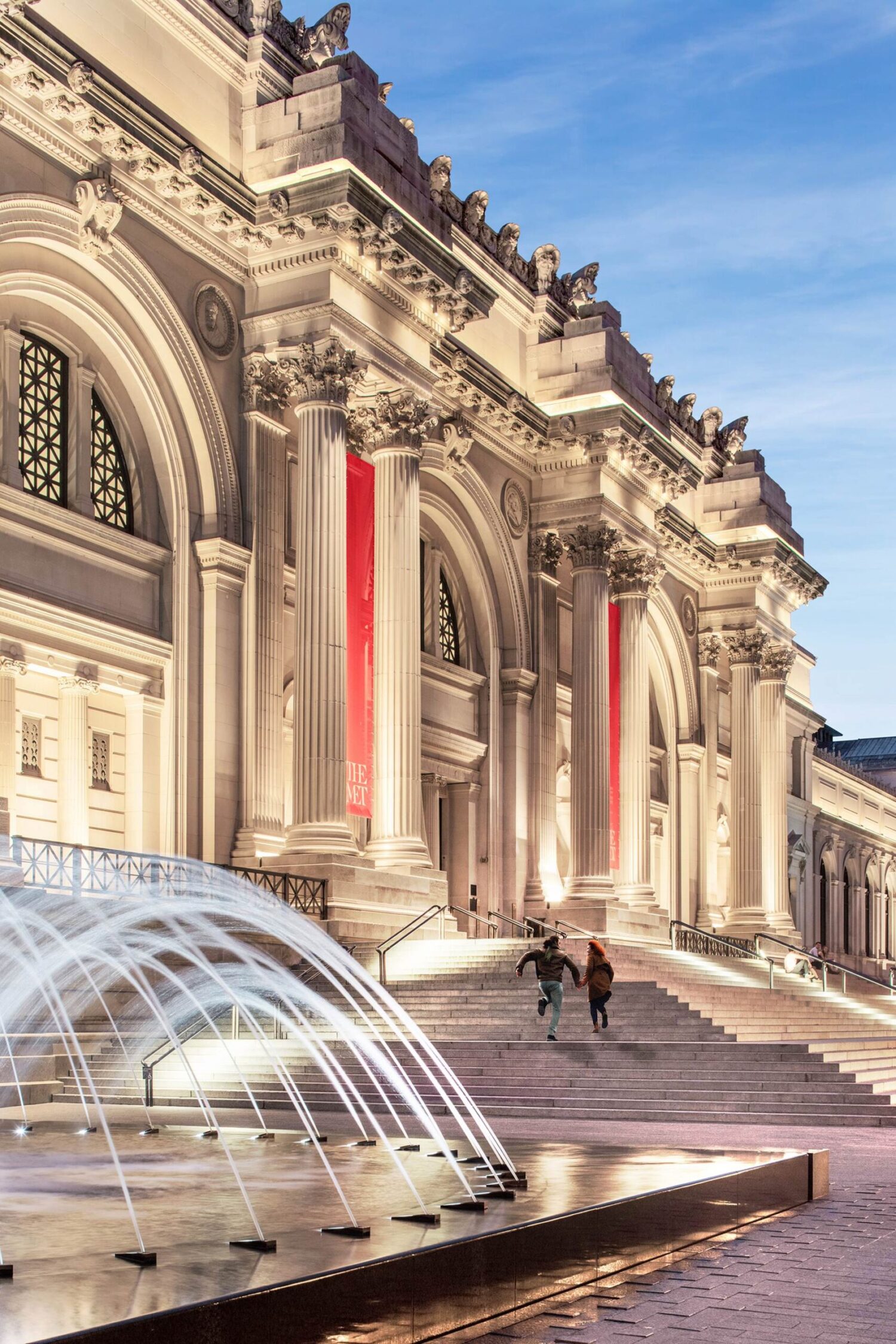
The Metropolitan Museum of Art – the largest institution in the United States for the presentation and study of all types of art – is dedicating an exhibition to fashion created by women for women, reported AFP.
The exhibition is entitled “Women dress women”. A symbol of the exhibition is a muslin dress decorated with silk roses and taffeta by designer Anne Lowe (1898-1981), who pioneered fashion created by African-American women. Lowe is often ignored as a designer, although the pattern for Jackie Kennedy’s wedding dress (1953) was her work.
Three decades earlier, a now forgotten French fashion house – “Premet” – launched the “La garconne” dress. The success of this model preceded by three years the similar fashion idea of Gabrielle Chanel.
The museum has collected 80 outfits by 70 designers from the beginning of the 20th century to the present day. Gabriela Hearst’s clothes are featured, using contemporary fashion to send environmental messages.
The history of women in fashion begins with sewing work in fashion ateliers. Most designers in France appeared at the beginning of the 20th century – Madeleine Bionne, Jean Lanvin, Gabrielle Chanel. Between the two world wars, women in fashion now outnumbered men.
To be able to present the designer creations of Elsa Schiaparelli, Nina Ricci or Vivienne Westwood, the Metropolitan Costume Institute searches among its collections containing 33,000 models from the entire history of seven centuries of clothing.
The exhibition was originally slated for 2020 to commemorate the 100th anniversary of the suffragette movement in the United States. Its delay is a consequence of the COVID-19 pandemic.
The Costume Institute’s next major exhibition will be in 2024 under the title Sleeping Beauties: Reawakening Fashion.