Saturday, September 26, 2026
Home Blog Page 797

Artificial Intelligence Development: Pros and Cons for Education in 2023

0
professional writers

Artificial Intelligence (AI) tools have been on the rise, particularly following a significant breakthrough in training Large Language Models (LLMs). These models can self-learn from vast data sets, continually enhancing their creative prowess.

In 2023, artificial intelligence has made significant strides in the education industry, promising to reshape how humans learn and teach. But, like any profound technological advancement, it demands a closer look at the advantages and disadvantages of AI.

Can AI Perform As Well As Humans In Writing Services?

Studies proved that AI algorithms need to improve in tasks that demand niche-specific expertise, such as writing research papers. This is why many students prefer to pay professional writers to do research papers online instead of making university libraries their second home. Professional writers offer these services with years of expertise across subjects and domains.

AI In Education: How Does It Help Your Studies?

The development of modern technologies leveraging AI benefits student performance in several ways. Here are some of the major benefits:

#1: Personalized Learning Experiences

Imagine a study plan ideally suited to the student’s speed and style. AI analyzes their learning and makes lesson plans to match their strengths and weaknesses. For example, someone who is weak in algebra, but adept in geometry, needs to practice algebraic concepts more. The learner gets to balance their skills uniformly and finds that geometry takes relatively less time to complete. The personal approach doesn’t make learning easier. It also cuts exasperation and elevates academic performance in tasks such as writing research papers.

#2: Educators Get to Up Their Game

AI has astonishing abilities to automate binary tasks for educators. It helps with tedious work like keeping track of attendance, grading, and even making teaching plans. This means teachers can spend more time trying new methods of teaching and making learning more exciting for learners.

#3: Quick and Personalized Feedback

The capabilities of advanced AI technology continue beyond teaching. It gives instant feedback on assignments. When students know what they did wrong, they can fix it and learn better. Learning through repeated assessments is the key pillar of active learning. It is regarded as one of the most high-yield study techniques.

#4: Easier Access to Resources

AI in education opens up a world of knowledge beyond classrooms. Students get to access educational courses, research papers, and content created by skilled writers from anywhere, anytime.

Bonus tip for students: Use artificial intelligence tools like ChatGPT or Google Bard to summarize or simplify complex concepts or research theories. It aids in gaining a better understanding and overview of the subject before delving into its deeper aspects.

#5: A Brainstorming Buddy

Whether it’s while taking a shower or commuting to work, your brain often comes up with unique, innovative ideas. Sometimes, you disregard them due to a lack of clarity regarding their execution and feasibility. AI technology has the ability to objectively analyze an idea and bring forward latent challenges and opportunities. It enables informed decision-making and action in the right direction.

Artificial Intelligence in Education Disadvantages

Just like a coin has two sides, the use of AI in higher education has several adverse effects. As artificial intelligence continues to find its place in the realm of education, it is imperative to assess both its advantages and drawbacks. While AI has demonstrated its potential to revolutionize educational approaches, it is essential to consider the potential disadvantages it brings to the forefront.

#1: Lack of Humane Touch

While personalized learning is excellent, too much of it takes away the human touch from learning. Knowledge isn’t about facts; it’s also about online research, critical thinking, caring, and working together. If AI does too much, it leads to:

  • Loss of soft skills such as effective communication and empathy
  • Bad body posture at the workplace
  • Impaired ability to think outside the box or to put forward breakthrough ideas
  • An unwanted dependence on AI for simple, daily chores
  • Weaker memory and cognitive skills
  • Lack of self-confidence and self-esteem

#2: Handling Bias and Privacy

Artificial intelligence learns from data, which means it picks up deep-rooted biases from that data. It is a concern, especially in places with diverse students and workforces. Fair-use policies and data safety associated with AI systems are also aspects to focus on.

#3: Change in Research Writing Style

More computer-generated content will change how professional writers fit into the education industry. Their originality, tone, and unique voice reflected through their work will set them apart. Also, intelligent computing could change how humans perform online research and online paperwork. AI’s generative capabilities challenge traditional ways of doing things.

#4: Balancing Between Tests and Learning

AI generates much data, which might be redundant or low-yield in context. Further, it could push schools and colleges to emphasize tests more. It hurts the fundamental goal of online education – learning and evolving together.

#5: Thinking on Your Own

Relying too much on computer algorithms may stop you from thinking for yourself. It also leads to losing empathy for the people around you. Critical thinking and problem-solving are integral life skills. If a machine does everything, you may feel free to learn it. It dents your personality in the process.

Comparison: Pros and Cons of AI

Pros:Cons:
It analyzes how each student learns and creates study sessions that match their preferences.It takes away the human touch from education, making it robotic.
It automates binary tasks, so educators can focus on spending more time trying new teaching methods.It picks up deep-rooted biases from the data, raising concerns about fair-use policies and data safety.
It provides instant feedback on assignments, telling students what they did wrong. So they can fix it and learn better.AI-made content will change how professional writers fit into the content creation world.
It provides users access to a vast amount of resources and writing services.It generates redundant or low-yield content, pushing educational institutions to prioritize tests.
It enables informed decision-making and action in the right direction.It leads to losing empathy for the people around you and critical thinking skills.

Final Thoughts

The penetration of AI and the rise of Edtech companies mark a promising future. Its potential to personalize learning and writing improvement is remarkable. But, the potential dilution of human interaction and artificial intelligence dependence are real concerns. Navigating this dynamic terrain requires a holistic approach – harnessing intelligent systems while mitigating its drawbacks.

For example, students should focus on acquiring skills machine learning can’t replace, like critical thinking and creativity for research papers. These skills help people adapt and thrive in a world influenced by computer algorithms. Furthermore, artificial intelligence creators and instructors should work together to make sure it is fair, and that personal data is safe.

Education should be transformative. It should welcome new ideas and changes. AI ought to be used to create exciting ways of teaching and learning while preserving the profound essence of human engagement.

Ukraine: President Zelensky Salutes the Spirit of a Free Nation on Independence Day

0
Zelensky Salutes the Spirit of a Free Nation on Independence Day
President Zelensky salutes the spirit of a free nation on Independence Day

On the event of Ukraine’s Independence Day, President Volodymyr Zelensky took a second to increase his needs to the individuals of Ukraine.

In a assertion, he expressed, “Today is a special day for the great people of Ukraine as we celebrate our Independence Day! It is an occasion that represents our freedom, strength, dignity, and equality.”

https://twitter.com/ZelenskyyUa/status/1694591171786424547?ref_src=twsrc%5Etfw%7Ctwcamp%5Etweetembed%7Ctwterm%5E1694591171786424547%7Ctwgr%5E%7Ctwcon%5Es1_c10&ref_url=

President Zelensky’s heartfelt message deeply resonated with the significance of this present day as he honored “the people of Ukraine who are celebrating this grand day; Independence Day! It is a celebration of our spirit and unwavering determination.” Thursday, August twenty fourth marked the commemoration of Ukraine’s Independence Day. Through his assertion, President Zelensky paid tribute to the indomitable spirit of his nation.

In his tackle the Ukrainian president expressed gratitude in direction of segments of society together with troopers and their households. He additionally acknowledged educators, docs, nurses and all those that contribute to “Ukraines defense” in gentle of aggression. Furthermore President Zelensky emphasised the significance of those that have proven resilience amidst occupation by acknowledging that 20% of Ukrainian territory stays underneath Moscows management ” regardless of Kievs steadfast resolve to regain management, over these jap and southern areas.

Ukrainian Army Commander in Chief Valery Zaloujny joined in expressing admiration praising Ukraine as “a land of heroic and courageous individuals.”

At the time Ukrainian Military Intelligence Chief Kyrylo Boudanov communicated a message of unity on Telegram stating that their frequent goal is to attain victory and their shared dream is to determine an unbiased peaceable, safe and affluent future.

Vassyl Maliouk, the head of the Ukrainian Security Service echoed the nations resilience by asserting that Ukraine stays robust regardless of the invasion in February 2022.

As Maliouk aptly put it Independence Day has developed into greater than a celebration of our proper to life and freedom; it has develop into a image of heroism and bravado that signifies our unwavering willpower in the face of adversity.

This years Independence Day celebration coincides with Kievs counter offensive since June as they try to reclaim territories nonetheless occupied by Russia. The Ukrainian individuals stay steadfast of their dedication, to liberation and progress.

As Ukraine commemorates its Independence Day President Zelensky’s phrases replicate the nations enduring spirit. Unwavering dedication to overcoming challenges forging forward and securing a brighter future of freedom.

learn extra:

Ukraine: War intensifies and so do the needs, says UN relief official

Ugandan communities ask the French court to order TotalEnergies to compensate them for EACOP violations

0
Ugandan communities ask the French court to order TotalEnergies to compensate them for EACOP violations

Twenty-six members of communities affected by TotalEnergies’ mega-oil projects in East Africa have filed a fresh lawsuit in France against the French oil multinational company demanding reparations for human rights violations.

The communities have jointly sued the oil giant along with human rights defender Maxwell Atuhura, and five French and Ugandan civil society organizations (CSOs).

In the suit, the communities are demanding reparations for human rights violations associated with Tilenga and EACOP oil drilling projects.

While an initial lawsuit filed in 2019 sought to prevent such violations, the company has since been accused of failure to comply with its Duty of Vigilance, causing serious harm to plaintiffs, particularly concerning their land and food rights.

The plaintiffs have consequently asked the court to order the company to compensate members of the affected communities.

The CSOs, AFIEGO, Friends of the Earth France, NAPE/Friends of the Earth Uganda, Survie and TASHA Research Institute, as well as Atuhura, are demanding compensation from TotalEnergies on the basis of the second legal mechanism of the French law on Duty of Vigilance.

France’s Corporate Duty of Vigilance law (Loi de Vigilance) requires large corporations in the country to effectively manage their human rights and environmental risks, both within the company itself, but also within subsidiaries, subcontractors and suppliers.

In 2017, France was the first country in the world to adopt a law making it mandatory for large companies to carry out human rights and environmental due diligence (HREDD) and publish a Vigilance Plan annually.

The law, known as The French Corporate Duty of Vigilance Law, or The French Loi de Vigilance, was adopted to ensure companies take the necessary measures required to identify and prevent human rights and environmental violations in their supply chains.

The legislation requires companies to comply if they are established in France. At the end of two consecutive financial years, companies are required by law to employ at least 5000 workers in the firm and its France-based subsidiaries.

They are alternatively required to have at least 10000 employees in the company payroll and its subsidiaries in France and other countries.

Dickens Kamugisha, CEO of AFIEGO, says injustices committed against Tilenga and EACOP-affected communities nearly on a weekly basis include under-compensation, delayed compensation to the construction of small, inappropriate replacement houses that were not suitable for family sizes of affected households.

Other violations include young people being forced to live a few metres from EACOP. “The injustices are too many and have caused real grief. We hope that the Paris civil court will

reign in TotalEnergies and provide justice for the people,” says Kamugisha.

In the latest lawsuit, filed at the Paris Civil Court, the communities have asked the court to hold TotalEnergies civilly liable and pay compensation for human rights violations committed against communities affected by Tilenga and other EACOP-affected communities within Ugandan territory in the past 6 years.

The summons clearly demonstrate a causal link between the failure to elaborate and effectively implement TotalEnergies’ Vigilance Plan, “and the damage suffered as a result.”

The communities accuse TotalEnergies of failure to identify risks of serious harm associated with its mega-project and act when alerted to their existence, nor did it implement corrective measures once the human rights violations had occurred. No measures relating to displacements of populations, restricted access to livelihoods or threats to human rights defenders appear in TotalEnergies’ 2018-2023 vigilance plans.

Maxwell Atuhura, director of TASHA says: “We have had interaction with the affected people and environmental human rights defenders intimidated and harassed in their home regions, including myself, due to Total’s oil projects in Uganda. Now we say enough is enough we need to defend absolutely the freedom of speech and opinion. Our voices matter for a better future.”

Yet the risks could have easily been identified in advance, as the company chose to locate the projects involving massive evictions in countries where civil liberties are often violated.

Frank Muramuzi, NAPE Executive Director says: “It’s a shame that foreign oil corporates continue to make supernormal profits while Ugandan oil host communities reap harassment, displacements, poor compensations and abject poverty on their own land.”

And contrary to TotalEnergies’ claims that its multi-billion oil projects were a major contributor to the development of local communities, it has become a threat to the future of poor families.

Pauline Tétillon, co-president of Survie, says: The company has only threatened the future of tens of thousands of people in a country where any protest is stifled or even repressed. Although the Duty of Vigilance Law forces communities to fight a David vs. Goliath battle by making them bear the burden of proof, it does offer them the opportunity to seek justice in France and finally have Total condemned for its repeated human rights violations.”

The law’s ambition is to prevent corporate abuses by obligating companies to set out effective measures of vigilance by establishing, implementing and publishing a Vigilance Plan in line with the UN’s human rights due diligence procedure.

The Vigilance Plan should explain what measures the company has implemented to identify and prevent human rights and environmental violations associated with a company’s activities. The activities include the company’s own activities of the company’s subsidiaries and suppliers and subcontractors’ activities which are directly and indirectly linked to the company through their commercial relationship/agreement.

The Vigilance Plan includes risk mapping, identification, analysis and ranking of potential risks as well as steps implemented to address, mitigate and prevent risks and violations.

The company is required to outline procedures implemented for periodically assessing the company’s subsidiaries, subcontractors and supplier’s compliance and a method for identifying existing or potential risks in cooperation with relevant trade unions.

Should a company covered by the law fail to comply by, for example, failing to implement and publish their Vigilance Plan, any concerned party, including victims of corporate abuses, may file a complaint with the relevant jurisdiction.

A company that fails to publish plans can be fined up to 10 million EUR which may rise to 30 Million EUR if failure to act results in damages that would otherwise have been prevented.

The scale of violations associated with Tilenga and EACOP projects has been widely documented by different actors, including civil society groups and UN Special Rapporteurs.

People affected by Tilenga and EACOP projects were deprived of free use of their land even before they had received compensation, for between three to even four years, in violation of their property rights.

Juliette Renaud, Senior campaigner for Friends of the Earth France claims TotaEnergies Tilenga and EACOP projects “have become emblematic, worldwide, of ravages of oil on human rights and the environment.

The affected communities must obtain justice for the violations committed by Total! This new battle is the battle of those whose lives and rights have been trampled upon by Total.”

“We salute members of affected communities for their courage in standing up to this powerful transnational corporation despite the threats they face, and call on the French justice system to repair this damage and thus put an end to Total’s impunity.”

Communities had also suffered severe food shortages because members had been deprived of their livelihoods, resulting in a violation of the right to adequate food.

Farmlands in some villages have been heavily affected by heavy flooding caused by the construction of the Tilenga Central Processing Facility (CPF) while only a minority of people benefited from compensation in kind, including land to land » i.e. replacement house and land, while for others, financial compensation was largely insufficient.

Scores of villagers say they have been threatened, harassed or arrested for criticising the oil projects in Uganda and Tanzania and defending the rights of the affected communities.

Friends of the Earth France and Survie have just released a new report concerning TotalEnergie’s EACOP project. “EACOP, a disaster in the making” is the result of a ground-breaking field investigation into Total’s giant oil pipeline project in Tanzania.

Fresh testimonies from families show human rights violations by the French oil giant in Uganda. “From the shores of Lake Victoria to the Indian Ocean, in all the regions affected by the pipeline, affected communities are expressing their feelings of powerlessness and injustice in the face of practices of the oil developers, who are flouting their most fundamental rights,” says Kamugisha.

Ever since France implemented their HREDD law, governments adopting human rights and environmental due diligence legislation have skyrocketed, especially on the European continent.

The European Commission announced in 2021 that they would adopt their own directive on mandatory supply chain due diligence for all companies operating within the EU which is likely to be enforced in 2024.

The best rooftop bars in Europe

0

Spanish bars occupy three of the top ten places!

Nothing recreates the holiday feeling like heading to a lovely bar to enjoy a drink after leaving your luggage at the hotel. Whether it’s an Aperol on a terrace in Italy, a gin and tonic overlooking Porto or a glass of sangria overlooking stunning Spanish cityscapes, the rooftop bar is the epitome of holiday sophistication.

Fortunately, Enjoy Travel knows how important these coveted spots are, so they’ve compiled a list of the best rooftop bars in Europe. Their recommendations are based on aggregated ratings of social media performance as well as insights from their editorial team.

Frank’s Café in London is considered the best. Perched atop a car park, this South London venue offers cocktails, nibbles and stunning views of the capital’s skyline.

In second place is Azotea del Circulo, an icon of the Madrid bar scene that can be enjoyed season after season thanks to its retractable roof. It is within walking distance of El Retiro Park and Plaza Mayor – the perfect place for a glass of wine between sightseeing.

In third place is The Roof in Reykjavík – offering panoramic views and an amazing cocktail list. The Veni, Vidi, Kiwi cocktail with Icelandic basil sounds particularly refreshing.

Schweizerhof Flims in Switzerland is fourth and Oroya in Madrid is fifth. Spain clearly knows what it’s doing when it comes to a good rooftop venue, as it takes three of the top 10 spots – Ibiza’s Patchwork comes in at number eight.

Here is the full list of the ten best bars in Europe according to Enjoy Travel

Frank’s Cafe at Bold Tendencies, London, UK

Azotea del Circulo, Madrid, Spain

Reykjavik Edition, Reykjavik, Iceland

Schweizerhof Flims, Flims, Switzerland

Oroya, Madrid, Spain

16 Roof, Istanbul, Turkey

Sky Bar by Seen, Lisbon, Portugal

Patchwork in Sa Punta, Ibiza, Spain

Skyline Bar 20up, Hamburg, Germany

Mama Shelter, Bordeaux, France

Photo: Azotea del Círculo (@azoteadelcirculo)

Founder of Wagner Group, Yevgeny Prigozhin, Dies in Plane Crash Two Months Sparking Speculation of His Fate

0
Government of the Russian Federation, CC BY 3.0, via Wikimedia Commons

In a shocking turn of events, Yevgeny Prigozhin, the founder of the paramilitary group Wagner, has met an untimely demise in a private plane crash. This crash comes merely two months after Prigozhin’s bold confrontation with Russian authorities, during which he openly challenged top military figures and accused them of corruption and unpatriotic behaviour. While reports inform of his death, some sources still have doubts, fueling speculation about whether his demise was genuine or if it was a strategic ruse to escape the grasp of Putin’s regime.

After an intense period of openly clashing with the upper echelons of the Russian military establishment, where he unabashedly criticized the Minister of Defense and the Chief of the General Staff, Yevgeny Prigozhin, the leader of the Wagner Group, faced an abrupt end on Wednesday.

Although there has been no official confirmation of his death, Prigozhin’s name has appeared on the passenger list of a private plane that tragically crashed in the Tver Oblast, north of Moscow, yesterday. However, given Prigozhin’s history of strategic manoeuvring, some sceptics have raised doubts about the authenticity of the list of passengers.

The Russian Civil Aviation Agency, Rosaviatsia, has reported that the plane was carrying a total of ten individuals, including a crew of three. Tragically, all aboard are presumed deceased. A statement from this agency indicated that among the passengers was the prominent mercenary, Yevgeny Prigozhin.

Prigozhin’s journey from the shadows of misinformation to the forefront began in 2022 when he stepped into an active role amid the conflict in Ukraine. He acknowledged his role as the mastermind behind the Wagner Group, and over the months, his contingent of mercenaries gained prominence on the battlefield.

However, Prigozhin also amassed adversaries within Russia. He demanded greater resources for the Russian military and found himself in direct opposition to the top ranks of the Armed Forces. In a notable incident last June, he led an armed rebellion against the Kremlin, sending tremors through Russia amidst the ongoing war with its neighbouring country.

Following the quelling of the uprising through negotiations with Russian President Vladimir Putin, mediated by Belarusian leader Alexander Lukashenko, Prigozhin took a step back. He agreed to exile himself and his men to Belarus, and it appeared that Wagner’s activities would shift their focus to this neighbouring ally of Russia and also Africa.

After months of silence, Prigozhin reemerged in a video this Monday, claiming to be in Africa without specifying the exact location. “We’re battling in 50-degree temperatures to elevate Russia’s influence across continents. Our fight is against the Islamic State, Al Qaeda, and other rogue elements,” were his final public words.

Rosaviatsia has initiated an investigation into the crash, while the governor of Tver Oblast, Igor Rudenia, has personally taken control of the inquiry. As the investigation unfolds, some observers cannot help but wonder whether Prigozhin’s reported demise is indeed true, or if it is part of a complex stratagem to elude the grasp of Putin’s regime.

The ill-fated aircraft, an Embraer Legacy business jet, was en route from Moscow to St. Petersburg when it tragically crashed near the village of Kuzhenkino in the Bologovsky district of the northwestern Tver region.

Notable figures such as Ksenia Sobchak, a former presidential candidate, and the Telegram channel Baza have revealed the registration number of the downed aircraft, RA-01795, which belongs to Yevgeny Prigozhin.

Breaking Barriers to Peace, Multi-Faith Organizations Unite Against Religiously Motivated Violence

0
religiously motivated violence

In a joint statement shared today in honour of the International Day Commemorating the Victims of Violence Based on Religion or Beliefs, leading global multi-religious organizations, Religions for Peace and United Religions Initiative (URI), announced they are “deepening their collaboration on the prevention of religiously motivated violence across the globe. This multi-religious partnership will galvanize other multi-faith groups and peacebuilding allies into common action for our shared goal of positive and lasting peace. We urge others to join us in this effort” said their statement

The need to advance multi-religious collaboration and action against religiously motivated violence

Since signing a Memorandum of Understanding in 2021, both Religions for Peace and United Religions Initiative have been leveraging their resources and networks to advance multi-religious collaboration and action.

“Today, we announce a new initiative under this partnership, aimed at bringing together the world’s religious, faith, and Indigenous leaders and communities in strengthening efforts and capacities to stop the spread of religiously motivated violence. Together, we serve to cultivate a culture of positive and lasting peace, justice, and healing worldwide” reads the joint statement.

To this day, religious and faith communities continue to face harassment and persecution by governments and private groups in various parts of the globe. Religious, spiritual, and Indigenous leaders and actors play a pivotal role in preventing this violence and establishing positive behaviours and actions to counter it.

It is with this understanding, says the declaration, that United Religions Initiative and Religions for Peace commit to build on the strengths and experiences of their respective networks, in a joint effort to call attention to and address religiously motivated violence.

With a focus on evidence-based approaches to stopping the spread of violence, this partnership will strengthen the capacities of religious and faith leaders at the grassroots, national, regional, and global levels.

Together, United Religions Initiative and Religions for Peace will provide additional tools and approaches to religious and faith leaders and scale up documentation of lessons learned and best practices from the joint mobilization of their work.

The important role of media and international organizations

In addition, this collaboration will focus on designing and implementing robust media campaigns and activities aimed at stopping the spread of religiously motivated violence.

Advocacy actions will be targeted towards governments and international organizations whose mandate is to prevent violence based on religion or belief.

A special emphasis will be placed on mobilizing the engagement of the Women and Youth Interfaith Networks, as catalysts of change and drivers of common action and awareness-raising. 

More on the organizations

Religions for Peace is the largest representative multi-religious coalition, advancing common action among the world’s faith communities through Interreligious Councils – and their Women of Faith and Interfaith Youth Networks – in over 95 countries and 6 regions.  

United Religions Initiative (URI) is the world’s largest interfaith grassroots network of more than 1,100 community-led organizations (Cooperation Circles) working in 110 countries to cultivate peace, justice, and healing worldwide.  

Weather Events, Heatwaves and Heavy Rainfall Shattering Records Worldwide

0
painting of man walking down a road holding umbrella
Photo by Nick Scheerbart on Unsplash

As we enter the summer of 2023 the global climate continues to astonish us with weather phenomena. Soaring temperatures and intense rainfall are wreaking havoc in regions highlighting the need to address climate change. This article explores the surge of weather events their impact, on different parts of the world and ongoing efforts to comprehend and mitigate their consequences.

Reaching New Heights, Alarming Temperature Surge in Switzerland

Amidst Europe’s scorching conditions, Switzerland is facing a concerning rise in temperatures. The UN World Meteorological Organization (WMO) issued a warning about this issue. Speaking from Geneva WMO spokesperson Clare Nullis revealed that the freezing point has reached an altitude of 5,298 meters—surpassing Mont Blancs peaks. This elevation is a staggering 115 meters higher than the record set in 2022 making it the highest point recorded since temperature measurements began in 1954.

Ms Nullis emphasized that the impact of this heatwave on glaciers cannot be ignored. It has led to changes in freezing levels and snow cover, exacerbating years of observations of vanishing snow and ice, on glaciers—an unfortunate continuation caused by this latest heatwave.

Extreme Heatwaves Sweeping Across Europe

The countries of Southern Europe, Italy, France, Croatia and Portugal are currently facing heat waves. The national weather forecaster, in France, Météo France has issued alerts ranging from amber to red across regions as record-breaking daytime and minimum overnight temperatures are being recorded.

Similar red alerts have also been issued in parts of Italy, Croatia and Portugal with neighbouring countries receiving amber heat alerts.

In contrast to this scorching heat, Scandinavia is experiencing an amount of rainfall. Norway has even issued alerts for the rainfall in its southern regions due to the potential risk it poses to human lives.

Impacts on Human Health

The relentless heat brings health risks as demonstrated by summer statistics. Over 61,000 individuals lost their lives due to heat-related causes across 35 countries during the summer months. Tarik Jašarević, a spokesperson, for the UN World Health Organization (WHO), emphasized the need to address these risks associated with heat.

Glacial Effects and Ongoing Research

Scientists are currently investigating how rising temperatures are affecting glaciers. In Switzerland, snow cover is now limited to elevations—a clear indication of how profoundly the heatwave is impacting these icy formations.

The United Nations defines heatwaves as periods of weather statistically speaking and their prolonged duration makes their effects particularly worrisome.

Heatwaves and Tropical Cyclones Across the Globe

Outside of Europe, there are sweltering conditions, in the southern parts of the United States resulting in excessive heat warnings. Moreover, there has been an increase in cyclone activity in the Atlantic region, which raises concerns about flooding and extreme rainfall. Specifically, there have been worries regarding tropical systems Gert, Franklin and Harold.

Franklin caused flooding in Haiti and the Dominican Republic while Harold is expected to make landfall in Texas bringing with it rainfall and a risk of flash flooding. The convergence of heat and substantial rainfall in Texas highlights the nature of the climate crisis.

Unprecedented Rainfall and Extraordinarily Wet Conditions

regions known for their climates are experiencing unprecedented levels of rainfall that are reshaping landscapes. Death Valley, one of the places, on Earth recently broke records by receiving its recorded amount of rainfall ever; 2.20 inches. This surpasses a record setback in August 2022. Demonstrates how climate patterns can be dynamic and unpredictable.

Global Responses and Ongoing Initiatives

As extreme weather events continue to impact parts of the world attention has turned to the United Nations’ efforts to comprehend and address climate change effectively. While discussions have arisen about naming heatwaves to cyclones the World Meteorological Organization (WMO) remains primarily focused on ensuring public safety through effective messaging.

Moreover, the recent gathering of the Greater Horn of Africa Weather Forum emphasizes the significance of cooperation, in addressing and minimizing the consequences of weather conditions.

In conclusion, the world is confronted with evidence of climate change through weather events, such as scorching temperatures in Switzerland and unprecedented rainfall in Death Valley. As new records are continuously set it becomes crucial for governments organizations and individuals to prioritize taking action, against climate change and implementing measures to adapt to its impacts. Only through collective efforts can the global community successfully navigate the challenges posed by these extraordinary weather patterns.

The Kia brand wants to flee Russia for Kazakhstan

0
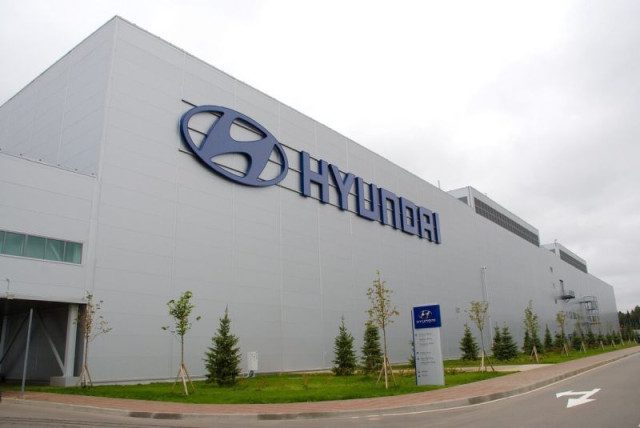
The Hyundai plant in St. Petersburg

Hyundai can be dropping hope and contemplating promoting its plant in St. Petersburg, in accordance to Moscow media

“The Russian market could become more volatile and could even stagnate. We risk no longer being able to deliver new vehicles,” the group warned, as quoted by Russian information company Tass.

Korean manufacturers Kia and Hyundai are additionally getting ready to go away the Russian market, the place they’ve been the one various to Chinese imports in current months. Kia has already moved most of its Russian workplace to Kazakhstan, and has confirmed plans to begin assembling vehicles there in a three way partnership with native firm Allur Auto.

Comments are heard within the Russian media that this enterprise shall be primarily geared toward exporting to Russia – maybe “in the second way”, in order not to immediately violate the sanctions.

Kia and Hyundai have been respectively the quantity 2 and three gamers within the Russian market earlier than the battle in Ukraine, second solely to AvtoVAZ by way of gross sales. In 2021, the 2 Korean corporations offered 205,000 and 197,000 automobiles, respectively.

After the beginning of the battle, the Koreans waited, hoping to save their Russian enterprise. Now, nonetheless, this hope appears to have disappeared, as a result of Hyundai can be contemplating the sale of its Russian plant in St. Petersburg, Gazeta.ru claims. There can be hypothesis concerning the value – about 500 million {dollars}, which in accordance to specialists is virtually half of the true worth of the enterprise.

Elseddik Haftar, the Other Libya

0

In the Haftar family, we know the father: Marshal and leader of the Libyan National Army (ANL). A Libyan tutelary figure. Since the fall of Muammar Gaddafi on October 20, 20112, who died in the city of Sirte, a stronghold of the Ferjany tribe, from which the family originated, Khalifa Haftar has reigned over the east of the country. It is often ignored that the Benghazi master has eight sons – certainly one of his only points in common with the former “guide of the revolution”.

Elseddik Haftar – When charisma rhymes with leadership

The eldest, Elseddik is a doctor of international law. He wears the suit and the fine moustache with elegance. Nothing to do with the trellis, the uniform of the members of the clan. Far from the sound of bullets, Dr Elseddik prefers start-ups and economic and social development programs. A builder at heart, Doctor Elseddik envisages the reconstruction of a fragmented and clanified Libya.

He wants it pacified, reunited and on the move….An influential figure in the field of engineering and infrastructure in Libya, the “Doctor” as he is nicknamed, oversees projects related to the reconstruction and development of roads, buildings and public services in Libyan cities, thus contributing to the improvement of living conditions and the development of community infrastructure.

Its objective: To breathe new life into Libya and thus get out of the deadly impasses that plague the country. More than ten years of conflict have left it in full decline. Two governments, the proliferation of armed militias and terrorist groups. A military, political and social divide without counting on the ever-increasing migration crisis.

Regain your sovereignty

“Take in hand the ongoing reconciliation process in your country, Africa and all the other partners will accompany you there until the general elections which should seal the return to constitutional order”, this exhortation was launched by the leader of the Congolese State Denis Sassou N’Guesso, Chairman of the High Level Committee of the African Union (AU), on July 20, as part of the preparatory meeting for the inter-Libyan reconciliation conference.

A priority – THE priority. Recreate the country’s unity and create security for the Libyan people, bruised by years of lead, and find peace.

“We have to turn the page, turn the bloody page of violence, of hatred to move towards reconciliation. To put my country back on track, all parts of the population will have to take each other by the hand, whatever their tribe, their social class. The urgency today is to save the country from the current situation in which we find ourselves after the events. This country must be built on democratic foundations, that is to say, a multilateral country, where everyone has their place in this reconstruction. This is Doctor Haftar’s vision.

The Future of Libya – the Strength of its Youth

Those under 25 represent almost half of the seven million Libyans, which is to say that their future is crucial for the development of the country. A youth raised in the school of propaganda and the “green book”, a veritable bible of Muammar Gaddafi. A youth, which today dreams of an elsewhere, since its horizon has still not cleared up. In this oil-rich country – it has the largest reserves in Africa – the Libyan population does not see any future.

Galloping corruption, record unemployment rate, and economic crisis direct consequence of political insecurity. Many young people are forced into unregulated and underpaid jobs. As for those under ten, a large number of them do not go to school, the fault for the ten years of conflict.

A reality against which the discreet but influential “Doctor” has decided to attack.

“ The education of boys and girls is a non-negotiable priority for my country. It is essential to give back to this youth, the desire to build and to undertake”. And to financially support innovative projects aimed at young people. But not only… ” It is time to put in place a policy of equality between men and women. The place of the Libyan woman is essential in our society. The right to freedom, the right to work and the right to emancipation. Libya must take this path. »

A Haftar dynasty?

In 2017, Doctor Elseddik joined the very closed circle of the “Eastern Forces General Staff”, a government composed mainly of the sons and relatives of the strongman of Benghazi. To the “Doctor”, Marshal Haftar entrusted diplomacy. The task force, since Elseddik spent his doctorate in Egypt, a country with which the Haftars have kept strong ties. A key position, which could position him favourably to enter the race for succession in place of his father.

One thing is certain: At 49, Doctor Elseddik presents himself as a diplomatic and consensual figure, well-established with many Libyan tribes, one of the political keys to managing this country.

It remains to be seen whether this new challenge will tempt “Doctor” Elseddik HAFTAR.

Originally published at Almouwatin.com

Unlocking Creativity: How Music Can Inspire Innovation and Productivity

0
several guitars beside of side table
Photo by Wes Hicks on Unsplash

Creativity is a crucial element for innovation and productivity in various aspects of life, whether it’s in the workplace, academia, or the arts. While creativity can be elusive at times, there are several strategies and techniques that can help unlock it. One such method is through the power of music. Music has a unique ability to stimulate the brain, evoke emotions, and enhance cognitive processes, making it a valuable tool in inspiring creativity. In this article, we will explore how music can unlock creativity and its impact on innovation and productivity.

Music as a Gateway to Emotion and Inspiration

Music has a profound effect on our emotions and can act as a powerful catalyst for creativity. It has the ability to evoke feelings, memories, and images, which can in turn stimulate the creative process. Different genres and styles of music have distinct emotional qualities. For example, classical music often evokes a sense of serenity and introspection, while upbeat pop music can spark energy and enthusiasm. By harnessing these emotional responses, individuals can tap into their creative potential.

One way music can inspire creativity is by providing a mental escape from the daily grind. When we immerse ourselves in music, it allows us to disconnect from the outside world and enter a realm of imagination and inspiration. This break from reality can rejuvenate the mind and help generate fresh ideas and perspectives.

Moreover, music can serve as a source of inspiration by connecting us to the stories and emotions of others. Listening to lyrics or instrumental compositions can spark empathy and a deeper understanding of human experiences. This connection to the human condition can inspire innovative thinking and new solutions to problems.

Enhancing Cognitive Processes and Focus

Beyond its emotional impact, music also has the ability to enhance cognitive processes that are crucial for creativity, such as memory, attention, and focus. Research has shown that background music, especially instrumental music without lyrics, can improve concentration and productivity. It helps drown out external distractions and creates a conducive environment for deep thinking and problem-solving.

In addition, music can facilitate the association of ideas and stimulate memory recall. When listening to music, neural networks responsible for memory are activated, which can trigger connections between related concepts, leading to new insights and innovative problem-solving.

Furthermore, synchronizing tasks with music can increase productivity and efficiency. The rhythm and tempo of music can act as a metronome, helping individuals establish a steady pace and rhythm in their work. This synchronization can streamline processes and boost creative output.

In clossing, music has an extraordinary ability to unlock creativity by evoking emotions, inspiration, and enhancing cognitive processes. It acts as a gateway to imaginative realms, provides a mental escape, and connects us to the experiences of others. Moreover, music improves focus, memory, and productivity, making it an invaluable tool for innovation and creativity. Whether it’s playing in the background while working or actively engaging with lyrics and melodies, incorporating music into our lives can stimulate our minds and unlock our creative potential. So, the next time you find yourself in need of inspiration or looking to enhance your productivity, turn on your favorite tunes and let the magic happen.