“The journey of a thousand miles begins with one step.”
“By letting go all gets done.”
“All things change.”
“Let it be.”
All of these familiar quotes and cherished ideas originate from a short volume written 2,500 years ago by a reclusive old man who did so only to gain exit from a gatekeeper who wouldn’t let him leave and thus vanish into oblivion without passing on his wisdom.
We are indebted to that gatekeeper who stopped Lao-Tzu. Otherwise, we would have no Tao, the religion which struggles to express and define quite frankly absolutely everything in life and the universe. As Lao-Tzu himself wrote, “There was something undifferentiated and yet complete, which existed before Heaven and Earth. Soundless and formless, it depends on nothing and does not change. It operates everywhere and is free from danger. It may be considered the mother of the universe. I do not know its name; I call it Tao.”
“Tao” (pronounced roughly “Dow”) literally means “The Way” but actually does not name any one tangible definable thing. It is the ultimate essence of life and the universe, impossible to describe and possible only to experience through the process of living.
The gifts of Taoism are the profound influence its concepts have had on thinkers, leaders and artists throughout history—from Art of War author Sun Tzu to Christian writer C.S. Lewis to the Beatles. Confucius, a contemporary of Lao-Tzu, visited the old man and came away stunned, somewhat bewildered, but in awe. “Of birds I know they have wings to fly with,” he told his disciples. “Of fish, that they have fins to swim with, of wild beasts that they have feet to run with. For feet there are traps, for fins there are nets, for wings there are arrows. But who knows how dragons surmount wind and cloud into heaven? This day I have seen Lao-Tzu. Today I have seen a dragon.”
Lao-Tzu and his legacy have also manifested themselves in our own day through the generosity of the nearly 9 million Taoists who make their homes mainly in Asia. The Tao Foundation for Culture and Arts respects the past by preserving the ancient music and culture of the Philippines, and at the same time provides for the future through educational scholarships to deserving youth. Partnering with a dozen major charities Tao Group Hospitality Cares has, in the last year, raised $165,525 for cancer research, nearly $180,000 for COVID relief, has served nearly 70,000 meals to individuals suffering from food insecurity, local homeless shelters, and pediatric cancer children’s hospitals, and has secured 450 vaccine appointments through the vaccine appointment program.
Tao Sangha’s nonprofit organization, Earth Caravan – Global Uni Community, (GUC) undertakes global aid projects. GUC gives direct help and support to local communities by cooperating with them on their particular needs. To date GUC has supported people economically in Afghanistan, India, Thailand, Bangladesh, Haiti, Sri Lanka, the USA, Israel, and Japan.
The gifts of Taoism have influenced our philosophies, our arts, have fed the hungry, helped the sick and have helped our world in ways both subtle and mighty. Not a bad legacy from an old man who simply wanted to leave the town in peace.
China responsible for “serious human rights violations” in Xinjiang province according to the UN human rights report
A long-awaited report by the Office of the UN High Commissioner for Human Rights (OHCHR) into what China refers to as the Xinjiang Uyghur Autonomous Region (XUAR) has concluded that “serious human rights violations” against the Uyghur and “other predominantly Muslim communities” have been committed.
The report published on Wednesday in the wake of the visit by UN High Commissioner of Human Rights, Michelle Bachelet in May, said that “allegations of patterns of torture, or ill-treatment, including forced medical treatment and adverse conditions of detention, are credible, as are allegations of individual incidents of sexual and gender-based violence.”
In a strongly-worded assessment at the end of the report, OHCHR said that the extent of arbitrary detentions against Uyghur and others, in context of “restrictions and deprivation more generally of fundamental rights, enjoyed individually and collectively, may constitute international crimes, in particular crimes against humanity.”
‘Rigorous review’
The UN rights office said that Wednesday’s report was “based on a rigorous review of documentary material currently available to the Office, with its credibility assessed in accordance with standard human rights methodology.
“Particular attention was given to the Government’s own laws, policies, data and statements. The Office also requested information and engaged in dialogue and technical exchanges with China throughout the process.”
Published on Ms. Bachelet’s final day of her four-year term in office, the report says that the violations have taken place in the context of the Chinese Government’s assertion that it is targeting terrorists among the Uyghur minority with a counter-extremism strategy that involves the use of so-called Vocational Educational and Training Centres (VETCs), or re-education camps.
‘Interlocking patterns’
OHCHR said that the Government policy in recent years in Xinjiang has “led to interlocking patterns of severe and undue restrictions on a wide range of human rights.”
Even if the VETC system has as China says, “been reduced in scope or wound up”, said OHCHR, “the laws and policies that underpin it remain in place”, leading to an increased use of imprisonment.
The systems of arbitrary detention and related patterns of abuse since 2017, said OHCHR, “come against the backdrop of broader discrimination” against Uyghur and other minorities.
Violations of international law
“This has included far-reaching, arbitrary and discriminatory restrictions on human rights and fundamental freedoms, in violation of international laws and standards”, including restrictions on religious freedom and the rights to privacy and movement.
Furthermore, the report said that Chinese Government policies in the region have “transcended borders”, separating families, “severing” contacts, producing “patterns of intimidations and threats” against the wider Uyghur diaspora who have spoken out about conditions at home.
OHCHR said that the Chinese Government “holds the primary duty to ensure that all laws and policies are brought into compliance with international human rights law and to promptly investigate any allegations of human rights violations, to ensure accountability for perpetrators, and to provide redress to victims.”
Report recommendations
Among the recommendations that the UN rights office makes in the report, is for the Government to take “prompt steps” to release all individuals arbitrarily imprisoned in XUAR, whether in camps or any other detention centre.
China should let families know the whereabouts of any individuals who have been detained, providing exact locations, and help to establish “safe channels of communication” and allow families to reunite, said the report.
The report calls on China to undertake a full legal review of its national security and counter-terrorism policies in XUAR, “to ensure their full compliance with binding international human rights law” and repeal any laws that fall short of international standards.
It also calls for a prompt Government investigation into allegations of human rights violations in camps and other detention facilities, “including allegations of torture, sexual violence, ill-treatment, forced medical treatment, as well as forced labour and reports of deaths in custody.”
Chinese rebuttal
In a long and detailed response published along with the hard-hitting report, the Chinese Government said in conclusion, that authorities in the Xinjiang region operate on the principle that everyone is equal before the law, “and the accusation that its policy is ‘based on discrimination’ is groundless.”
China said that its counter-terrorism and “de-radicalization efforts” in the region, had been conducted according to “the rule of law” and by no means add up to “suppression of ethnic minorities.”
On the issue of the camps, Beijing responded that the VETCs are “learning facilities established in accordance with law intended for de-radicalization” and not “concentration camps”.
No ‘massive violation of rights’
“The lawful rights and interests of workers of all ethnic groups in Xinjiang are protected and there is no such thing as ‘forced labour’”, China’s statement said, adding that there had been no “massive violation of rights”.
The statement calls on the international community to be “clear-eyed about the truth” of its counter-terrorism campaign in the region, and “see through the clumsy performances and malicious motives of anti-China forces in the US and the West, who attempt to use Xinjiang to contain China.”
It calls instead, for the UN and other international organizations, to investigate “the human rights disasters caused, and numerous crimes committed, by the US and some other Western countries, both at home and abroad.”
Bachelet’s May mission
The human rights chief undertook her mission in May, at the invitation of the Chinese Government and visited XUAR to review the situation there.
During her mission, Ms. Bachelet spoke with a range of government officials, several civil society organisations, academics, and community and religious leaders. In addition, she met several organizations online ahead of the visit, on issues relating to Xinjiang province, Tibet, Hong Kong, and other parts of China.
At the end of her visit, while expressing concern over issues relating to Xinjiang, Tibet, Hong Kong, human rights defenders and labour rights, she praised China’s “tremendous achievements” in alleviating poverty, and eradicating extreme poverty, 10 years ahead of its target date.
A number of other developments in the country were welcomed by Ms. Bachelet, including legislation that improves protection for women’s rights, and work being done by NGOs to advance the rights of LGBTI people, people with disabilities, and older people.
The UN rights chief underscored the important role that China has to play, at a regional and multilateral level, and noted that everyone she met on her visit, from Government officials, civil society, academics, diplomats and others, demonstrated a sincere willingness to make progress on the promotion and protection of human rights for all.
InvestEU in Germany: EIB supports social and affordable housing in Hanover with €60 million
The European Investment Bank (EIB), backed by the new InvestEU programme, is lending €60 million to the municipal housing provider hanova. The loan will support hanova’s construction programme of social and affordable housing in the city of Hanover, which will also meet the European Union’s high energy efficiency standards.
Hanova has been Hanover’s housing company since 1927 and owns around 15 000 housing units. The company supports the city’s housing policy, in particular in building new social and affordable flats for rent. The project involves the construction of 640 new units, of which 232 are social and 408 are affordable housing units.
This project is the first in Germany to receive a loan by the EIB under the new InvestEU programme. Thanks to the InvestEU guarantee from the EU budget, the EIB will be able to fill a financing gap offering an unsecured loan with a very long maturity.
Hanover, the capital of the federal state of Lower Saxony, has a growing economy and attractiveness as an urban centre, with a quickly expanding population and therefore rising demand for housing. As in many urban areas across Germany, rents have risen sharply in recent years. The project will help address the imbalances in the local housing market by providing adequate and affordable housing for local low and medium-income residents. In Lower Saxony, the income threshold for social housing is €23 000 a year for a two-person household.
The hanova project is also energy efficient: 82% of the buildings will achieve an energy performance that will be at least 20% better than the German nearly zero-energy building standard (KfW 55). The rest will target an energy performance of at least 10% better than this standard. The project is also aligned with the EU Energy Performance of Buildings Directive.
The project is therefore fully compliant with the EIB’s climate action and environmental sustainability objectives. It will help to reduce CO2 emissions in buildings and support Hanover’s efforts to become climate neutral. It will also contribute to social inclusion and provide people on low and middle incomes with greater housing options to live in the city.
Valdis Dombrovskis, Executive Vice-President of the European Commission for an Economy that Works for People, said: “This agreement is an excellent example of how InvestEU can contribute to achieving our shared social and green objectives while having a positive and meaningful impact on the lives of our citizens. This is the first project supported by InvestEU in Germany and will make 640 new social and affordable homes available in Hanover that will meet high energy efficiency standards.”
EIB Vice-President Ambroise Fayolle, who oversees activities in Germany, welcomes the project: “Together with hanova, we are demonstrating that even energy-efficient new builds do not always have to mean high rents. We are proud that this project will help to sustain and grow a vibrant city.”
Director of hanova Karsten Klaus agrees: “We are pleased to have found a partner in the EIB who will support hanova in its goal of providing the city of Hanover with affordable, energy-efficient and sustainable new housing.”
Hanova-CEO Karsten Klaus agrees: “We are pleased to have found a partner in the EIB who will support hanova in its goal of providing the city of Hanover with affordable, energy-efficient and sustainable new housing.”
Background information
The InvestEU programme provides the European Union with crucial long-term funding by leveraging substantial private and public funds in support of a sustainable recovery. It also helps mobilise private investments for EU policy priorities, such as the European Green Deal and the digital transition. The InvestEU programme brings together under one roof the multitude of EU financial instruments currently available to support investment in the European Union, making funding for investment projects in Europe simpler, more efficient and more flexible. The programme consists of three components: the InvestEU Fund, the InvestEU Advisory Hub, and the InvestEU Portal. The InvestEU Fund is implemented through financial partners who will invest in projects using the EU budget guarantee of €26.2 billion. The entire budgetary guarantee will back the investment projects of the implementing partners, increase their risk-bearing capacity and thus mobilise at least €372 billion in additional investment.
The European Investment Bank (EIB) is the long-term lending institution of the European Union owned by its Member States. It makes long-term finance available for sound investment in order to contribute towards EU policy goals. The EIB’s activities focus on the following priority areas: climate and environment, development, innovation and skills, small and medium-sized businesses, infrastructure and cohesion. The EIB works closely with other EU institutions to foster European integration, promote the development of the European Union and support EU policies in over 140 countries around the world.
As a municipal group, hanova is helping to shape the urban development of Hanover in order to make the state capital more lovable and liveable. In doing so, economic success and social responsibility are always balanced. As the largest real estate service provider in Hanover, hanova manages residential and commercial premises, builds schools and kindergartens, creates parking spaces and actively develops the city every day — with Hanover heart and real estate understanding.
The study found that people consumed about 6.5% less wine when they drank from smaller glasses.
A new study identifies a simple trick that may help people drink less.
According to recent research that was recently published in the scientific journal Addiction, households in the United Kingdom drank wine at a rate of roughly 6.5% less while using smaller (290 ml) glasses than when using bigger (350 ml) glasses.
In this randomized controlled experiment, 260 UK families were chosen from the general population who drank two or more 75cl bottles of wine each week. In two 14-day intervention periods, families were asked to purchase a predetermined quantity of wine to consume at home in either 75cl or 37.5cl bottles, in random order. Additionally, they were randomly assigned to either smaller (290ml) or bigger (350ml) drinking glasses.
After each 14-day intervention period, the amount of wine drunk was recorded by taking pictures of the bought bottles and weighing them on the supplied scales. Using smaller glasses lowered the quantity of wine consumed by roughly 6.5% (253ml per fortnight), though there is some uncertainty around this effect. Drinking from smaller bottles lowered the quantity of wine consumed by 3.6% (146ml per fortnight), however, there is greater uncertainty around this effect.
Wine is the most commonly drunk alcoholic beverage in Europe, and most of it is consumed in homes rather than in bars, restaurants, or pubs. It’s already known that using larger glasses increases the volume of wine sold in restaurants and the size of wine glasses, in general, has increased dramatically over the last three decades. If the effects of wine glass size on consumption are proven reliable, with effects sustained over time, reducing the size of wine glasses used in homes could contribute to policies for reducing drinking.
These policies could include pricing glasses according to capacity to increase the demand for smaller glasses, and regulating glass sizes in bars, restaurants, and other licensed premises to help shift social norms for what constitutes an acceptable glass size for use outside as well as within the home.
Reference: “Impact of wine bottle and glass sizes on wine consumption at home: a within- and between- households randomized controlled trial” by Eleni Mantzari, Minna Ventsel, Jennifer Ferrar, Mark A. Pilling, Gareth J. Hollands and Theresa M. Marteau, 18 July 2022, Addiction. DOI: 10.1111/add.16005
The Farm to Fork Strategy is at the heart of the European Green Deal aiming to make food systems fair, healthy and environmentally-friendly.
Today, in order to support the EU’s transition to sustainable food systems and the reduction of chemical pesticide use under the Farm to Table strategy, the Commission is adopting new rules to increase the availability and access to organic plant protection products for use in Member States’ fields.
The new rules will make it easier to authorize micro-organisms for use as active substances in plant protection products and give EU farmers additional options to replace chemical plant protection products with more sustainable alternatives.
Health and Food Safety Commissioner Stella Kyriakides said: “The transition to more sustainable food systems means finding alternatives to chemical pesticides that respect our planet and our health. The Commission is committed to facilitating this process by increasing the number of organic and low-risk alternatives on the market – we have already approved 20 low-risk alternatives since the beginning of our mandate. With these new rules, we will ensure that organic alternatives can get to our farmers even faster. The more resources we collectively invest in the evaluation of plant protection products, the more safe alternatives we will have to meet our commitment to reduce chemical pesticide use by 50 percent by 2030.”
The new rules will place the biological and ecological properties of each microorganism at the heart of the scientific risk assessment process, which must demonstrate safety before microorganisms can be approved as active substances in plant protection products. This should speed up the approval of micro-organisms and biological plant protection products containing them.
Already approved by Member States in February 2022, the new rules will apply from November 2022. More information is available in our Q&A.
The best voice-over in film history is Ray Liotta’s 16-minute opening to Goodfellas. Understated, earnest, almost reassuring, it entices the viewer into a world of brute force, bloodshed and butchery.
So it was a no-brainer that Liotta, who passed away earlier this year, would be the first choice as the narrator for Stephen Edwards’ Holocaust documentary about the derring-do of three Italian doctors who saved Jewish lives by hoodwinking the Nazis about a completely made-up highly infectious disease, “Syndrome K.”
Edwards knew Liotta personally through their daughters who attended the same school. He pitched the idea to the actor and “two weeks later he’s in my studio.”
Liotta, pro that he was, navigated with ease through tongue-twisting Italian names and places, finishing the job in three hours. “He walked in, and it’s not an easy gig: It’s Fatebenefratelli Hospital, Adriano Ossicini, Giovanni Borromeo, Vittorio Sacerdoti, all the Roman names, plus all the German names, all this vocabulary,” Edwards said. “And he was such a fun guy to work with, super-funny, top-level pro, profane, lots of F-bombs, we were just laughing, we were having a ball… we were just so sorry to lose the guy.”
Syndrome K is set in late 1943. After the fall of Mussolini, Nazi troops rushed in to occupy Rome. On October 16, the mass deportation of Roman Jews to concentration camps began. Pope Pius XII—not only the spiritual head of the Catholic Church but also the temporal leader of Vatican City, a sovereign state within the Rome city limits—took no action, lodged no protest, remained silent.
In the shadow of the Vatican, however, Fatebenefratelli Hospital began admitting fleeing Jews as patients. Three doctors—Giovanni Borromeo, Adriano Ossicini and a Jewish doctor working undercover as a Catholic, Vittorio Sacerdoti—concocted an elaborate ruse: a virulent highly contagious and incurable disease, “Syndrome K” (the “K” serving as a tongue-in-cheek nod to the Nazi General Army’s Chief for Italy, Kesselring, as well as the SS Colonel of Rome, Kapler). The three put together realistic lab charts, records, case histories and other important and official-looking evidence of this “very aggressive and neurologically degenerative” disease. “Patients” in the K ward were instructed to say nothing but cough loudly when Nazi inspectors arrived. The end result was that, as the doctors described it, SS agents ran in fear while the Nazi doctor summoned to verify the cases was “completely in terror.”
The hospital also served as a radio relay point for vital transmissions to the Allies. With SS officials regularly frequenting the halls and offices and making surprise searches there were a number of close calls, but neither the radio transmitters nor the fake patients were ever found out.
When the Allies arrived nine months later, 80% of the Jewish population of Rome had been saved, not only through the ingenuity and daring of the doctors at Fatebenefratelli, but also through the generosity and courage of the Catholic community of Rome who did not wait for the Pope’s approval to save their fellow human beings. All told 4,500 Roman Jews went into hiding when the Nazis arrived. They hid in convents, churches, monasteries and other Vatican properties, and nearly all of them survived.
Director Stephen Edwards was amazed that the story had never been told and attributes it to the very real possibility that those responsible kept it in an undertone from history as a precaution from any future reprisal.
The last surviving doctor of the three, Dr. Adriano Ossicini, bears witness in the movie, telling his story. “Life is beautiful if you live life with honesty and bravery. Those are fundamental values. Bravery always wins.”
And for Ray Liotta, who did not survive to see his final voice-over make it to the big screen, the opportunity to tell a true story where real-life bloodshed and butchery meet their match in kindness and bravery must have been a delicious closure from the fictionalized brutality he narrated so long ago.
Do you like cinematic trips? Would you like to listen to a track that makes you travel through a story without lyrics, feel you are part of a drama, fly over some old fears that might hide in the dark of your memories, but above all, feel a deep sense of aesthetic that touches your inner senses? Well, that’s only a small part of what “It Gets Dark” has to offer.
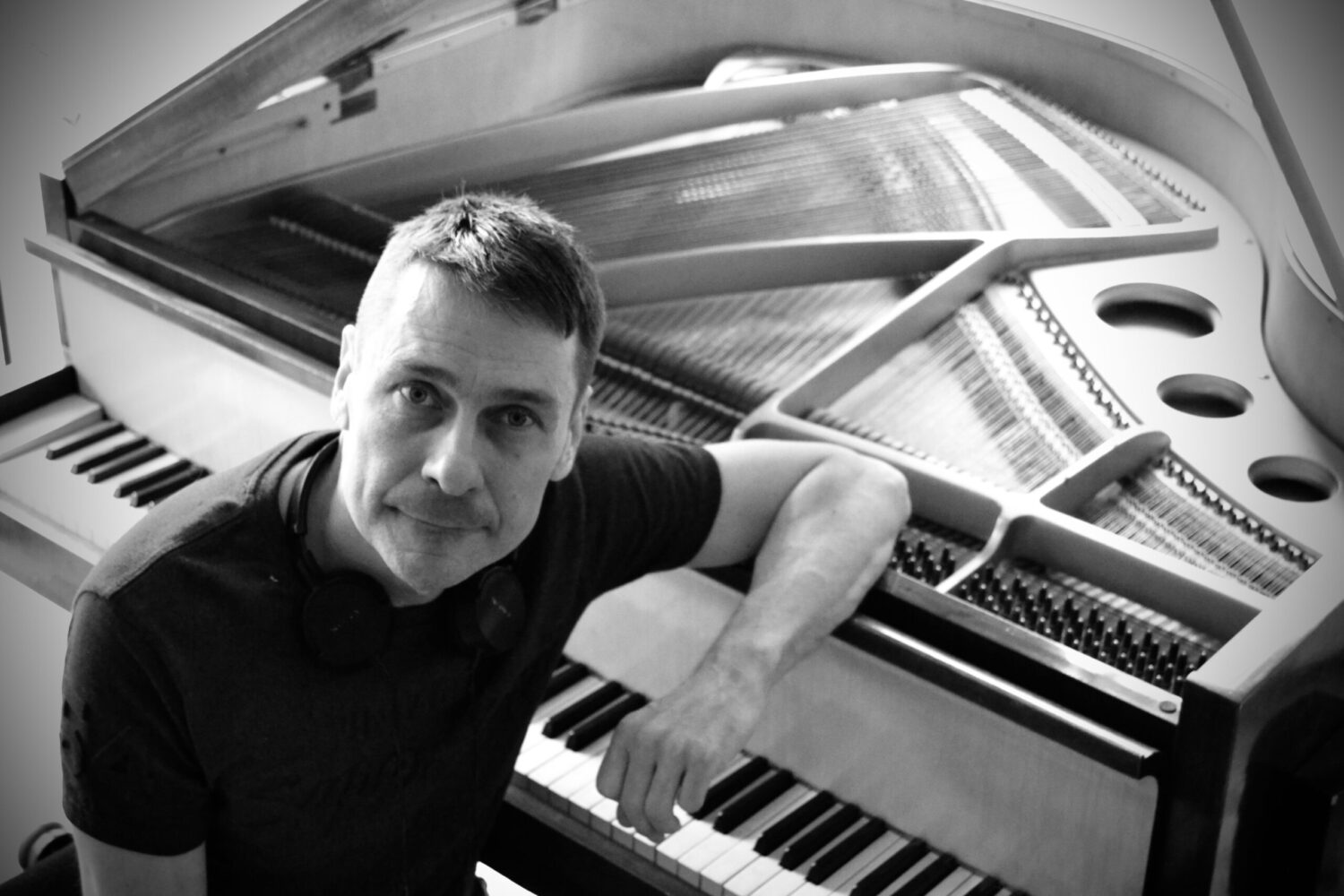
Kepa Lehtinen is a well-known Finnish composer who made his name as a film and television composer. His distinctive brand is special: he is a pianist and crafts well-thought melodies and harmonies that brings everything that a classical feeling mixed with a cinematic story can bring to a listener. But man, he also plays theremin! What is theremin, dear reader? It’s nothing less that the first electronic instrument planet Earth ever discovered. It’s so crazy that you don’t even touch it.
Kepa with his theremin
Invented by a Russian scientist at the beginning of the 20th century, the theremin is a sort of electronic version of the musical saw. It has a very distinctive sound that gives a dramatic and profound feeling to any piece of music that uses it correctly. Leon Theremin invented this weird instrument after the 1917 Revolution, an instrument that reacts to the moves of your two hands as regards the volume and the tone of the produced sound, through 2 small antennas that detects the variations of your moves through their impacts on the frequency of the wavelength produced by the device. Later, after some successful career in the US, Theremin went back to Soviet Union where he had to work for the infamous Beria (chief of the ancestor of KGB) to develop some spying devices that have been used to spy over Western embassies. But that’s a complete other story.
“It Gets Dark”, as most of the art pieces by Kepa Lehtinen, blends piano with theremin and double bass. The bass is played by his brother Ari Lehtinen, and Kepa plays the two other instruments. It’s dark, yes, it’s dark. But it’s also high. You don’t get trapped in that dark feeling, you fly over and through it, with an aerial sensation of being told a story that belongs to you, and only you.
“It Gets Dark” single cover
Kepa is not a dark person. Far from it. He is a radiant being (and in addition he is a skateboarder… which is also a complete other story, at least I believe), who brings a full range of emotions to you through an incredible distinctive creative voice made of sonorities that you are familiar with, and sonorities that you are not familiar with. The result is impressive. I have added it to my favorite classical music playlist, while it sincerely does not fit with anything else in it. Because it’s peculiar. It’s modern. It’s beautiful. It’s aerial. And it’s what it is. You love it or you don’t. I do.
Finally, I’ll add that the choice of putting together these three instruments is a very clever one. First, each of them covers its own range of the musical space, and they don’t compete at all to occupy the space but covers it in full, with harmony and completeness. Then, they carry every wavelength your ears and heart need to perceive to feel fulfilled. And last, they reinforce each other in giving you the powerful sensitive and emotional message of the song.
That is why, without any further delay, I encourage you to discover Kepa’s last creation “It Gets Dark”:
Researchers simulated a superheated steam dishwasher, finding that it killed 99% of bacteria on a plate in just 25 seconds.
Washing dishes with superheated steam is more effective and Earth-friendly.
Simulations show steam kills bacteria on a plate in just 25 seconds — without soap.
Often, conventional dishwashers do not kill all the harmful microorganisms left on plates, bowls, and cutlery. They also require long cycle times that use large amounts of electricity. Additionally, the soap pumped in and out is released into water sources, polluting the environment.
A more effective, environmentally friendly solution could be provided by superheated steam dishwashers. In a study published on August 30, 2022, in
Bacteria concentration on the plate within the dishwasher over time. The superheated steam kills off the bacteria within 25 seconds. Credit: Laila Abu-Farah and Natalie Germann
“Steam comes out of the nozzle at a very high velocity. We can see shocks, and the turbulent flow that is created has eddies and vortices,” said author Natalie Germann, of the Technical University of Dortmund. “We also include heat transfer, which shows how the heat changes in the simulation box and the condensation on the solid surfaces.”
The shock waves, created by the high velocity of the steam, are reflected at surfaces in the dishwasher. In the work, the team focused on bacteria. However, the shocks could be used to effectively remove food debris in the future.
“Our study helps determine the strength of the shocks, the position of the shocks, and the vortices that are created inside the dishwasher,” said author Laila Abu-Farah, of the Technical University of Munich. “These things are very important for arranging the items or objects inside the dishwasher and the placement and orientation of the nozzles.”
While the simulations show quick inactivation of the bacteria, actual applications of the dishwasher would include more than one plate and would therefore require more time. However, the scientists believe it would still be much faster and more effective than conventional technology.
Although the superheated steam dishwasher would initially cost more, it would pay off in the long run with savings on water, electricity, and detergent. It would be ideal for use in places that must meet high hygienic standards, including restaurants, hotels, and hospitals.
“We confirmed that the dishwasher application using superheated steam is promising,” said Germann. “This is the first work combining fluid dynamics and heat transfer with phase change and bacterial inactivation. It thus lays the foundation for future computational research and further technical work.”
Reference: “Simulations of thermal phase changes and bacterial inactivation in a superheated steam dishwasher” by L. Abu-Farah and N. Germann, 30 August 2022, Physics of Fluids. DOI: 10.1063/5.0090418
The Commission of the Bishops’ Conferences of the European Union (COMECE) releases its contribution to the European Education Area on Thursday 1 September 2022, calling on the EU and its Member States to implement integral education in their policies. Fr. Barrios: “We must ensure that learners are respected in their dignity and find their vocation in life”.Read the contribution
Official logo of the European Educational Area. (Credit: European Commission)
Drafted by the COMECE Working Group on Culture and Education, the document addresses the six dimensions of the European Education Area – proposed by the European Commission in 2020 and to be achieved by 2025 – highlighting the perspective of the EU Bishops’ Conferences in the area of education and training.
In order to tackle the challenges that educators and learners of all ages are facing today, the contribution delves into the anthropology of the human person and focuses on the need for integral education, as stressed by Pope Francis in His Global Compact on Education.
As stated by the Pope, we should “make human persons in their value and dignity the centre of every educational programme, both formal and informal, in order to foster their distinctiveness, beauty and uniqueness, and their capacity for relationship with others and with the world around them”.
The COMECE contribution addresses the situation of education in the EU, mentioning the long-term effects of the COVID-19 pandemic on the learning paths of pupils and students, as well as the socio-economic and psychological implications of the health crisis.
The document elaborates on the main challenges in the domains of quality education, inclusion, the green and digital transition, teaching and universities, as well as the role of education in external relations.
Among the recommendations to EU policymakers, the COMECE document includes: reinforcing cooperation between the EU and third countries’ universities in order to foster meaningful dialogue and fraternity; enhancing support for teachers in their mission to accompany learners; promoting innovation in teaching practices with a balanced approach between digital and in-person teaching methods.
COMECE also suggests involving families and communities in educational efforts and supporting Vocational Education and Training (VET) providers in their initiatives to ensure better social inclusion of disadvantaged people.
In this sense, Fr. Manuel Barrios Prieto, General Secretary of COMECE, explains that “only by including entire communities in the educational process will learners be respected in their dignity and find their vocation in life, introducing creative and transformative processes for the Common Good and the future of humanity”.
According to the EEA report, production of renewable energy by consumers — prosumption — can offer many benefits for the participating individuals and the society. With high energy prices and energy insecurity currently affecting Europe, small-scale prosumption provides a pathway for citizens to increase their energy independence. Prosumerism can also have social benefits, including a sense community and empowerment.
Moreover, prosumer projects largely draw on private funds from households that would otherwise not be available for renewable energy investments, the EEA report notes. This can speed up Europe’s energy transition to renewables, reduce dependency on imports, and curb greenhouse gas emissions.
Prosumers still face many challenges, including costs, regulatory barriers, or lack of volunteers or expertise. However, opportunities for prosumers are growing with technological development and, importantly, an increasingly supportive EU policy framework. Prosumers are now a key element of the recent REPowerEU proposal and its Solar Rooftop initiative. According to the EEA report, almost all EU citizens can potentially become energy prosumers.