Asthma is a disease that can cause your airways narrow and swell as well as produce additional mucus.
Rather than merely treating its symptoms, a new strategy targets one of asthma’s causes.
Researchers from Aston University and
Dr. Jill Johnson, Aston University’s School of Biosciences. Credit: Aston University
In the UK, about 1,200 people die from asthma every year, and just under 5.5 million people get treatment for it. Asthma results in symptoms like wheezing and shortness of breath because the airways become thickened and constricted.
Current treatments, such as steroids, give temporary relief from these symptoms by relaxing the airways or decreasing inflammation. However, no existing medications target the structural changes that asthma causes in the airway and lungs in order to provide a more long-lasting treatment.
Lead researcher, Dr. Jill Johnson, from Aston University’s School of Biosciences, said: “By targeting the changes in the airway directly, we hope this approach could eventually offer a more permanent and effective treatment than those already available, particularly for severe asthmatics who don’t respond to steroids. However, our work is still at an early stage and further research is needed before we can begin to test this in people.”
The study focused on a kind of stem cell known as a pericyte, which is located primarily in the lining of blood vessels. When asthmatics have an allergic and inflammatory reaction, such as to household dust mites, the pericytes migrate to the airway walls. Once there, the pericytes mature into muscle cells and other cells that thicken and stiffen the airway.
This movement of the pericytes is triggered by a protein known as CXCL12. The researchers used a molecule called LIT-927 to block the signal from this protein, by introducing it into the mice’s nasal passages. Asthmatic mice that were treated with LIT-927 had a reduction in symptoms within one week and their symptoms virtually disappeared within two weeks. The researchers also found that the airway walls in mice treated with LIT-927 were much thinner than those in untreated mice, closer to those of healthy controls.
The team is now applying for further funding to carry out more research into dosage and timing, This would help them to determine when might be the most effective time to administer the treatment during the progress of the disease, how much LIT-927 is needed, and to better understand its impact on lung function. They believe that, should this research be successful, it will still be several years before the treatment could be tested in people.
Reference: “Chemokine CXCL12 drives pericyte accumulation and airway remodeling in allergic airway disease” by Rebecca Bignold, Bushra Shammout, Jessica E. Rowley, Mariaelena Repici, John Simms and Jill R. Johnson, 13 July 2022, Respiratory Medicine. DOI: 10.1186/s12931-022-02108-4
The study was funded by the Medical Research Council.
New Delhi (India), 31 August 2022 – Youth, children and adolescents comprise the core of India’s 1.3 billion strong population. Over 27 percent of the country’s population is between the ages of 15-29 years. At 253 million, India is also home to the world’s largest adolescent population (10-19 years). Hence, it is essential to engage this young population with education and activity-based learning, not only on academic, professional and vocational skills, but also on life skills that concern society at large – and on which their actions matter.
In this context, the International Youth Day 2022 in India was marked with a joint consultation meeting convened by the UN Office on Drugs and Crime (UNODC) Regional Office for South Asia and the Central Board of Secondary Education (CBSE) with senior officials of 12 key institutions of the Government of India, under the theme ‘Mainstreaming education on integrity, peace, SDGs and health: Empowering Youth, Educators and Families’. This notion is also reflected in India’s National Education Policy (NEP) 2020.
India’s massive youth population faces risks, however, including falling into drug use. According to a 2019 survey conducted by the National Drug Dependence Treatment Centre (NDDTC) of the All India Institute of Medical Sciences (AIIMS), over 400,000 children and 1.8 million adults need help for inhalant abuse and dependence. Law enforcement agencies and health experts have also raised concerns over the rising drug use among young people.
One of the participants highlighted the need for stronger cooperation and coordination to counter the drug problem, noting that “young people have a right to know what risks, challenges, and vulnerabilities surround them. For this, education must enable them to act as responsible citizens with integrity, empathy and a sense of purpose. Prevention is key when it comes to addressing drugs and crime”.
As a response to the calls for support and engagement, UNODC showcased good practices in immersive activity-based learning, including its initiatives aimed at engaging students, educators and parents through education.
The UNODC Global Resource for Anti-Corruption Education and Youth Empowerment – i.e., the Global GRACE Initiative – brings to the international community knowledge and experience working with educators, academics, youth, and anti-corruption authorities to foster a culture of rejection of corruption. The Family Skills Programme, meanwhile, targets the whole family and offer skills-building for parents on monitoring and supervision of children’s activities, communication and setting age-appropriate limits. Finally, the Lockdown Learners series, initiated during the COVID-19 pandemic, offers continuous capacity building of educators and students on critical issues such as corruption, cybercrime, discrimination, misinformation, gender inequality, and the environment, among others. At the same time, the series also built capacities of educators and provided mentorship and knowledge support to students to develop initiatives/solutions to address social challenges.
The participants of the event (including officials from the Ministry of Tribal Affairs, Ministry of Panchayati Raj, the Delhi Directorate of Education, NITI Aayog policy think tank, National Council on Educational Research and Training (NCERT), National Council on Vocational Educational Training (NCVET), National Institute of Open Schooling (NIOS), Kendriya Vidyalaya Sangathan (a system of central government schools), the National Anti-Doping Agency and Sarvodaya Vidyalayas school chain, among others) welcomed the UNODC initiative, emphasizing that engaging young people, families and educators effectively was critical to efforts aimed at building back better from the pandemic.
Recommendations from the event to effectively incorporate integrity, crime prevention, Sustainable Development Goals (SDGs), and health in the school educational framework, in line with INEP 2020, will feed into UNODC’s planned activities for student engagement and educators’ capacity building in India.
They come from Limerick, Ireland, the country where music is maybe drunk more than Guinness (and that’s a lot!) and they have the Irish musical blood in their veins. Not that they sound like trad folk and sing in Gaelic, but you can definitely feel the influence of U2, either in their bass lines, their production or the vocals. But it’s still a song of its kind.
“Breathe Easy” is very good pop-rock, well produced, and melodious song. I don’t know if it’s my imagination elaborating on their Limerick origin, but listening to it I could not help but having the sensation of flying above the green Irish grooves and clovers.
Besides that, they are four guys making the show: Fint Tynan is the singer, Colum Kelly plays guitar, Damien Ruddy’s got the bass (and sounds like Adam Clayton from U2), and Adam Reeves plays drums. Four young guys full of energy and poetry.
Here they tell you to breathe easy, which might be easy for you, unless you’re a young lady which gets crazy for these 4 folks, as it will surely happen in a very next future. Not that I’m a soothsayer, albeit sometimes I am, but I can predict without any backoff that Raging Sons will soon be one of the greatest rising bands on the European scene. They have everything for this, and above all, they make good music that makes you dream and cool down, even when it’s made of roaring distorted guitars.
Well, you understood, I liked it. Up to you now:
The song comes from their recently released album 20:20
President of the Conference of European Churches (CEC) Rev. Christian Krieger delivered greetings at the World Council of Churches (WCC) 11th Assembly, welcoming the global ecumenical community in Europe with a hope that the assembly will “empower churches to strengthen their vision of reconciliation and unity, in our fractured world today.”
The WCC assembly commenced on 31 August in Karlsruhe, Germany, addressing the theme “Christ’s love moves the world to reconciliation and unity” with a strong participation from CEC Member Churches and Organisations in Partnership from across Europe.
Krieger said that “reconciliation and unity acquires new meaning in the light of current global realities such as global health crisis, migration, racism, rise of populist polarization and shrinking of democracy, continued destruction of the natural environment, and resurgence of armed conflict, including the recent Russian invasion of Ukraine.”
He went on to say that the “WCC Assembly theme is at the heart of our mission, as we continue to lift up the voices of churches in increasingly plural and secular European societies, and especially with regard to the European political institutions, we are moved by the love of Christ that embraces the whole of creation.”
Krieger also introduced a report from the European Regional Pre-Assembly organised by CEC in February, sharing how the featured reflections show sentiment of the churches in Europe concerning the war in Ukraine, highlighting voices from Ukrainian churches.
He prayed that may the assembly be a “life-transforming event for the global fellowship of churches that will strengthen their common journey towards unity and reconciliation in the power of the Holy Spirit.”
Which foods and products healthily reduce the desire to eat
A major factor in gaining weight is the enjoyment of food and the desire for more and more. Add mint to your menu and a miracle will happen to your figure – this herb induces a feeling of satiety and suppresses appetite, nutritionists say. According to them, the feeling of pleasure from eating occurs due to the production of endorphins, and mint contains a substance that helps to increase the level of this hormone of happiness.
Endorphins regulate mood and manage feelings of satiety. When consuming mint
menthol is released, which increases the production of the hormone in question
A study cited by the nutrition website Eat this, not that! found that people who smelled peppermint every two hours lost 2.2 kg of weight per month because their appetite decreased. The site advises weight-loss enthusiasts to keep peppermint extract in their purse and snort it often, especially when hungry. The lotion can be prepared at home with the essential oil of the herb. Sugar-free peppermint gum also helps.
And other products have been proven to lie about hunger and with them you can lose weight in a healthy way. Such are the nuts, which, although high in calories, contain appetite-suppressing fibers that are digested slowly and remain in the stomach longer, giving rise to a feeling of satiety. 1/4 cup of almonds, for example, contains 4 grams of such fiber. In addition, nuts are a source of healthy fats that lower cholesterol levels. Oatmeal is also rich in these fibers – there are 5 g of them in half a bowl. Porridge also increases levels of the appetite-suppressing hormone cholecystokinin.
Apples are a proven hunger killer, and they contain a lot of water, which is also satiating. The pectin in them protects against spikes in blood sugar, which increase the desire to eat.
And spices reduce the urge to chow down and increase metabolism. A study shows that people who season their soup with red pepper accumulate 60 fewer calories and burn 10 more calories per day than those who do not add the spice.
Avocados are full of monounsaturated fats, which are satiating. Half of this fruit on a piece of toast in the morning will kill your appetite until lunchtime.
So does edamame green soybeans—a half-cup serving contains only 95 calories, but more than 8 grams of filling protein.
Water-rich leafy vegetables fill the stomach permanently
Try a Brussels sprouts and kale salad for lunch.
The omega-3 fatty acids in flaxseed also suppress appetite, and a tablespoon of flaxseed contains 2.3 grams of them, as well as satiating fiber. The omega-6 in the seed increases cholecystokinin in the body. Chia seeds have a similar effect.
Eggs are a famous product for diets and the protein in them controls hunger for up to 36 hours. The ayrian protein drink burns excess fat and gives the body energy.
Eating acidic food curbs sweet cravings. In this regard, lemon is indispensable. Make a salad dressing with fresh lemon juice, olive oil, a spoonful of balsamic vinegar, a teaspoon of honey, two spoons of chia seeds, and you will satisfy your hunger.
Vinegar also kills appetite because it slows stomach emptying and lowers the glycemic index when consuming carbohydrates such as pasta. Some people drink apple cider vinegar every day because it is rich in vitamins and aids in digestion.
Other appetite-suppressing foods include soup, beans, salmon, fruits and vegetables, and green tea. And to suppress the appetite, a glass of water with a little lemon before a meal is indispensable. At the same time, it hydrates the body, and people sometimes confuse dehydration with hunger.
Russian forces have advanced several tens of kilometers from the city – Ukraine’s government will ask the UN cultural watchdog to add the historic port of Odessa to the list of protected world heritage sites as Russia’s invasion continues.
Russian forces have advanced several tens of kilometers from the city, which flourished after Empress Catherine the Great decreed in the late 18th century that it would be Russia’s modern gateway to the Black Sea.
Analysts believe Russian President Vladimir Putin may soon direct a Russian advance on Odessa to completely block Ukraine’s access to the Black Sea, possibly with heavy bombardments like those that destroyed the Mariupol port.
In late July, the commercial port and other areas of the city were hit by missiles just hours after Russia agreed to allow Ukrainian grain to be shipped from it.
“On July 24, 2022, part of the glass canopy and windows of the Museum of Fine Arts, opened in 1899, were destroyed” by the impacts, UNESCO’s cultural agency said after its director Audrey Azoulay met with Ukraine’s culture minister Alexander Tkachenko in Paris.
It said UNESCO experts already on the ground would provide technical assistance so that Odessa could be urgently added to both the World Heritage List and the list of heritage sites in danger.
She will ask the World Heritage Committee to include the Saint Sophia Cathedral in Kyiv and the historic center of Lviv, which are already recognized as UNESCO sites, in the list of endangered sites.
The addition of a remarkable site or traditional activity to the UNESCO list aims to mobilize attention to ensure that they are preserved against threats to their existence.
The agency said 175 Ukrainian cultural and historical sites have been damaged since Russia began its invasion in February, including monuments, museums, libraries and religious buildings.
Many have suffered despite being marked with the distinctive “blue shield” that indicates they are protected by the 1954 Hague Convention on Culture in Armed Conflict, to which both Russia and Ukraine are signatories.
“The agency has already mobilized nearly 7 million dollars and provided several aid measures and experts to advise the specialists” working to protect the sites or to move the works of art to safer places, UNESCO said.
In July, Ukraine also won recognition of the beetroot soup, known as borscht, on its list of intangible cultural heritage, which it says is under threat from the Russian invasion.
The average person spends a third of their life on earth sleeping. Although this may seem like a lot of sleep in your life, studies show that 1 in 3 adults still do not get enough sleep, and almost 30% of those people report that their lack of rest is caused by difficulty falling asleep.
These sounds will help you sleep like a baby:
1. Nature
Sounds from nature, such as steady rain, rustling leaves, wind, and a beating heart, are known as pink noise. Pink noise is a classification of sound that can be picked up by the human ear regardless of the frequency of the sound. Studies show that these environmental sounds slow down our brain waves and can help us fall asleep faster and more deeply. Yeah, they’re like that:
Running water
Light but constant rainfall
Fresh wind
Heart palpitations
Soft waves crashing on the shore
2. Balanced and consistent tones
More commonly known as white noise, these sounds have been found to effectively put fussy babies to sleep faster. White noise is spread in equal amplitude frequencies that are picked up by our ears, allowing the brain to maintain focus and concentration. This is helpful for people who have difficulty falling asleep or staying asleep because these sounds can cancel out other noises and help the brain focus on sleep.
Some forms of white noise you can try listening to in bed include:
Radio or TV static
The whirring sound of an electric fan
Humming radiator
The quiet hum of an air conditioner
3. Low sounds
Some people find lower frequency sounds more soothing when it comes to falling asleep. These sounds are called brown noise. Compared to white and pink noise, brown is bold, deep and strong, like the rumble of thunder or crashing waves. Although the effectiveness of these deep noises has yet to be scientifically proven, there are a number of claims that brown noise has helped people with their sleep.
Types of brown noise you may hear include:
Ocean currents and powerful waterfalls
Crashing waves
Rumbling thunder
A soft roar or tremor
4. Kitchen noise
There are various noises in the kitchen that can actually help you fall asleep. The sizzling of food cooking in a pan is a form of pink noise, while the constant hum of a stove hood is a form of white noise. Even the motor of a running fridge or freezer can help you or a fussy child fall asleep.
5. Personal playlists
One of the main reasons we can’t sleep is caused by stress, and one way to relieve that tension is through music. Music has been shown to have a powerful effect on stress and emotions. By listening to a set of your favorite tunes before bed, you may be able to let go of your worries and clear your mind for a better night’s sleep.
6. Nothing
Sometimes all you need to fall asleep is some peace and quiet. Black noise or the sound of nothing is the complete silence you may need to get a good night’s sleep.
Therefore, it should be known that man, being dual ¬ composed of soul and body, also possesses dual sensations and accordingly ¬ their virtues; with five being the soul and five the body. And the perceptions of the soul, which the heathen philosophers call possibilities, are the following: reason, thought, opinion, idea, and sensation. The bodily ones are: sight, smell, hearing, taste and sensation. Whence their virtues are double, vices also double. So it is necessary for every man to know clearly how many are the passions of the soul and what are the passions of the body.
Of the virtues of the soul we say that there are four most exalted, which are the following: manliness, prudence, prudence, and justice, and from them arise those virtues of the soul: faith, hope, love, prayer, humility, meekness, longsuffering, endurance of evils , goodness, non-anger, divine knowledge, dispassion, simplicity, equanimity, unpretence, non-vanity, low-mindedness, unenvy, guilelessness, unselfishness, compassion, charity, charity, fearlessness, non-sorrow, contrition, respectability, fearlessness, desire for future good, aspiration for the kingdom God, desire to be adopted and [by God].
The bodily virtues are the following (or rather the means of the virtues), obtained in knowledge and from God, leading man out of all pretense and gratification, into the progress of humility, and to dispassion. And these are: abstinence, fasting, craving, staying awake, standing at night, kneeling unceasingly, not washing, wearing a single garment, eating dry food, eating scanty food, eating fast, drinking water and not wine, lying on one’s bed on the ground, poverty, impoverishment , neglect, non-coquettishness, unselfishness, seclusion, tranquility, sitting at home, scarcity, self-sufficiency, silence, doing work with one’s own hands, and all forbearance of evil, exercise of the body, all of which are precisely the most necessary and useful, in a situation, that the body is healthy even when it is disturbed by carnal passions. And if he is sick and has survived with God’s help from them, they are not so necessary, since holy humility and prayer fill everything.
We are obliged, therefore, to speak of both spiritual and bodily passions. And the passions of the soul are these: forgetfulness, ignorance, from these very passions the eye of the soul, i.e. the mind, darkened, is governed by all passions, such as these: impiety, wrong opinion, i.e. every heresy, blasphemy, anger, wrath, malice, short temper, hatred of man, spitefulness, slander, condemnation, unreasonable despondency, fear, apprehension, quarrelsomeness, jealousy, envy, vanity, pride, pretense, falsehood, unbelief, desire for more, desire for material gain, partiality, attachment to earthly things, indifference, narrow-mindedness, ingratitude, murmuring, vanity, prejudice, haughtiness, boasting, lust for power, people-pleasing, deceit, shamelessness, insensibility, flattery, dissimulation, mockery, duplicity, habituation to the sins of the passionate part [of the soul] and constant preoccupation with them, wandering of thoughts, love of self ¬ parent of all evils; and the root of all evil is covetousness, and malice, and wickedness.
And the passions of the flesh are: gluttony, gluttony, luxury, drinking, eating in secret, every lust for pleasure, fornication, adultery, licentiousness, moral impurity, incest, corruption of children, bestiality, evil desires and all unnatural and shameful passions, theft, robbery of shrines, robbery, murder, bodily indulgence and enjoyment of the pleasures of the flesh (when the body is stronger), divination, sorcery, incantations, bird-divination, gossiping, coquettishness, ear-ringing, idle talk, adornment, massaging the faces, reprehensible idleness, wandering of the mind, gambling, addiction and abuse of worldly pleasures, living for the sake of the body, which fattens the mind and makes it earthly and animal, and never allows it to rise to God and to the perfection of virtue.
Roots of all passions and as some would say ¬ riots ¬ are love of pleasure, love of fame, love of money, from which all evil is born. But a man commits no sin unless, as Mark, the wisest of ascetics, says, he has been overcome and subdued by these mighty giants; namely: forgetfulness, carelessness and ignorance. They give them pleasure and relaxation, this ¬ to love fame among people, anointing. And the primary cause of all these, and in the capacity of the most evil mother, as has already been said, is self-love, or unreasonable love of the body and strong excitement, because the dissipation and release of reason by jokes and shameful thoughts are the hosts of many evils and downfalls, such as recklessness and laughter.
In addition to all this, it must be understood how diverse and diverse the passionate love of pleasures is and that many pleasures deceive the soul when it is not sober according to God, does not behave from the fear of God and from the love of Christ, occupied by work on the virtues. Precisely because a thousand pleasures are brought about, drawing the eyes of the soul to themselves: these are [pleasures] of the body, of money, of luxury, of fame, of carelessness, of anger, of social position, of avarice, of excess. And in the guile they appear with a look of splendor and pleasing; they are apt to attract those who look with reverence on such things, and do not particularly love virtue, and cannot endure its hardness. Any association with anything earthly and attachment to any of the material things causes useless and [even] harmful pleasure and enjoyment of addictions. The passionate libido of the soul in him shows how because of this [he], oppressed by deprivation of what is desired, throws himself into anger, wrath, sadness, and bad memory.
But if by means of predilection, and whatever established habit, it seems that one imperceptibly and incurably drifts to the end of the unreasonable predilection, which prepares the one caught by the hidden pleasure in himself. For, as was said before, the pleasure occasioned by desire is diverse; and it is filled not only with fornication and other bodily pleasures, but also with other passions. Therefore, to be wise is not only to abstain from fornication and subliminal pleasures, but also to be outside of other pleasures. Because of them the lover of money, silver and luxury is insatiable. Just as he loves the body, so this one loves money. But this one is more insatiable, inasmuch as there is no such force of nature to repel it.
So we must clearly understand that the love of pleasures does not consist only in licentiousness and enjoyment of the bodies, but also in every manner and deed of the soul’s personal choice because of predilection. But in order to understand more clearly about the passions according to the trimerium of the soul, we decided to briefly state the following.
On the tripartiteness of the soul
The soul is divided into three: rational, sensual and instinctive. Of the sensible sins are the following: unbelief, heresy, imprudence, slander, ingratitude, and approval of bodily sins, which arise from the passionate portion [of the soul]. The cure for these evils is unshakable faith in God, true and firm and orthodox dogmas of piety, unceasing care for the thoughts of the spirit, pure and unceasing prayer, and communion before God.
For the sensual
On the sensual side, the sins are the following: cowardice, hatred, hard-heartedness, malice, envy and murder, constant concern for such things. The treatment and therapy of these is humanity, love and kindness.
For the drive
On the instinctive part, the sins are the following: gluttony, gluttony, excessive drinking of wine, fornication, adultery, impurity, unrestrainedness, love of money, passion for empty fame, and for gold and wealth, and for carnal pleasures. Their treatment is: fasting, abstinence, longsuffering of evils, non-suffering, distribution of personal means to the poor, striving for those future immortal goods, seeking the kingdom of God, and earnestly desiring to be adopted by God.
We need to write something also about the judgment of the thoughts born of passion, through which every sin is committed.
Eight are all the thoughts that encompass evil: the thought of gluttony, that of fornication, that of avarice, anger, sadness, carelessness, vanity, haughtiness.
Illustration: V. M. Vasnetsov, St. Virgin and Child (Kyiv), fresco, XIX c.
But still evil exists and it is obvious how much it is spread throughout the world. Therefore, they say: “Whence is it, if it is not without beginning and not created?” Investigating this, we will ask where do diseases come from? Where did the bodily harm come from? Disease is not something unborn, but it is not a creature of God either. On the contrary, animals are created with a constitution which resembles them according to their nature, and are introduced into life as perfect organisms; they get sick when they deviate from what is natural for them: either from bad food or from some other disease-causing cause. Therefore, God created the body, not the disease. The soul has become damaged, deviating from what is natural for it. And what was the most important good for her? Abiding with God and being united with Him through love.
Falling away from Him, she began to suffer from various infirmities. Why is she even susceptible to evil? By reason of a free striving, more than anything peculiar to the rational nature. Not being bound by any necessity, given by the Creator a free life as created in the image of God, she understands the good, knows how to enjoy it, is endowed with freedom and strength, residing in the contemplation of the beautiful and in reasonable enjoyment, can observe the natural for her life; but there is also the freedom to deviate from the beautiful at times. And this happens when, satiated by the blissful pleasure and as in a kind of slumber, falling from her exalted state, she enters into communion with the flesh for vile pleasures of voluptuousness.
Adam was once high, not by habitation, but by good will; high was he when, receiving a soul, he saw heaven, admired its beauty, loved the Benefactor, who granted him the enjoyment of eternal life, placed him in the midst of heaven, gave him a rulership in the likeness of the angels, made him similar to the archangels and able to listens to the Divine voice. Despite all this, being under the protection of God and enjoying His benefits, he soon became fed up with everything and, being blinded by spiritual beauty, preferred what appeared pleasant to the carnal eyes and placed the filling of the stomach above the spiritual.
Soon he was out of heaven, out of the blissful life, becoming evil not out of necessity but out of recklessness. Thus he, having sinned by wrong choice, died by sin. God is life, and the deprivation of life is death. Adam himself prepared death by moving away from God according to what is written: “Those who move away from You perish” (Ps. 72:27). God did not prevent our destruction, for reasons explained above, lest he should preserve the defect itself in us as immortal, any more than the potter would put into the fire a vessel of clay which leaks, until he had corrected the defect in question.
But they will say, “Why is not infallibility built into our very constitution, so that we cannot sin even if we would?” Therefore, because you also do not recognize your servants as good as long as you keep them bound, but when you see that they voluntarily perform their duties before you. Therefore, God is pleased not with compulsion, but with virtue. And virtue comes from good will, not necessity. And good will depends on what is in us; and that which is in us is free. Thus, he who reproaches the Creator for not having made us naturally sinless, he actually prefers an unreasonable nature to a rational one, an immovable and desireless nature to a nature endowed with free will and action.
This is said as a necessary deviation, so that a person who has fallen into the abyss of thought, by losing what he desires, may not also lose God. So let’s stop correcting the Wise. Let’s stop looking for something better than what He created. Although the reasons for its private provisions are hidden from us, let us affirm in our souls that no evil proceeds from the Good.
Related to this question about concepts is another – about the devil. “Where is the devil from, if evil is not of God?” What shall we say to that? In such a matter the same reasoning which we have presented concerning the cunning of man is sufficient. Why is a person cunning? Of his own will. Why is the devil evil? For the same reason, because he also had a free life, and he was given the power to dwell with God or to depart from the Good. Gabriel is an angel and is always before God. Satan is an angel who has completely fallen from his rank. Good will preserved the former in the heights, and freedom of will overthrew the latter. But the first was preserved by the insatiable love of God, and the second was made to be denied by moving away from God. That which is alienated from God is evil. A small movement of the eye causes us to either look at the sunny side or to be on the shadow side of our body. And there enlightenment is ready for him who looks straight on, obscuration is necessary for him who turns his gaze to the shadow. So also the devil is cunning, having his cunning according to his will, not that his nature is contrary to good.
“Why is he at enmity with us?” Therefore, becoming the receptacle of every vice, he took in himself the disease of envy and envied our honor. Our happy life in paradise was unbearable for him. Deceiving man with treachery and cunning and using as a means of deception precisely the same desire that man had – to be like God, he showed the tree and promised that by tasting the fruit man would become like God. Because he said: “In the day you taste of them, your eyes will be opened and you will be like gods, knowing good and evil” (Genesis 3:5). Therefore, he was not created as our enemy, but out of envy he was brought to enmity with us. For, seeing that he himself was cast down by the angels, he could not indifferently watch how the earth-born, through success, was elevated to angelic dignity.
And inasmuch as he became an enemy, God preserved our resistance to him, when, referring a threat to himself, he said to the beast that served as his weapon: “I will sow enmity between you and the woman and between your seed and her seed” (Gen. 3:15). It is really harmful to get close to vice, because in those who get close, such a union of friendship arises usually as a result of simulating one another. It has been rightly said: “Do not lie, evil talk corrupts good character” (1 Cor. 15:33). As in countries with an unhealthy climate the air inhaled even for a short time is bound to cause disease, so bad society brings great disturbance to the soul. That is why the enmity with the snake is irreconcilable. If the cannon is worthy of such abhorrence, then should we not be at war even more with the wielder of the cannon?
But they will say, “What was the tree in Paradise for, by means of which the devil could succeed in his malice against us? And if there was not that tempting bait, how could he draw us into death by disobedience?” It was because a commandment was needed to test our obedience. Therefore, it was a plant bearing beautiful fruit, that we, abstaining from what is pleasant, might show the excellence of abstinence, and rightly be honored with crowns of patience. After the tasting followed not only transgression of the commandment, but also knowledge of nakedness. “She ate and gave to her husband, and he also ate. Then the eyes of both of them were opened, and they realized that they were naked” (Gen. 3:6-7). And it was not necessary to know the nakedness, so that the mind of man would not be distracted, inventing clothes and protection from the nakedness, and in general, with cares for the flesh, to divert his focused attention in pursuit of God.
But why was he not provided with clothes immediately after creation? Because neither natural nor artificial clothes were decent. Natural clothing is characteristic of the speechless: such are feathers, fur, and rough skin capable of protecting against cold and enduring heat. And in this one animal does not have the slightest advantage over another, because in all nature is of equal dignity. And it was proper for a man according to the love of God to receive excellent gifts and goods. Exercises in art would produce a scarcity of time, which was chiefly to be avoided as injurious to man. That is why the Lord, once again calling us to a heavenly life, removes care from our souls, saying: “Do not worry about your soul – what you will eat and drink – nor about your body, what you will wear” (Mat. 6:25) . Therefore, it was not necessary for man to have both natural and artificial coverings. On the contrary, if he had shown his prowess, other coverings would have been prepared for him, which, by the grace of God, would have beautified the man and would have shone upon him in the form of bright garments, similar to those of angels, surpassing the variegated colors, lightness and radiance of the stars. For this reason, garments were immediately given to man, because they were intended for him as a reward for virtue, but the malice of the devil prevented man from receiving them.
And so the devil became our adversary in consequence of the fall to which we were brought by his malice. And according to God’s house-building, we are in a struggle with him in order to defeat him with obedience and triumph over the adversary. Another thing, if he had not become a devil, but resided in the rank in which the Chief had first placed him! But inasmuch as he became an apostate, an enemy of God and an enemy of men, created in the image of God (he is a man-hater for the same reason that he is a God-fighter: he hates us as God’s creations, he hates us also as God’s likeness), then the wise and the benevolent Master of human affairs availed himself of his cunning for the training of our souls, as the physician uses the poison of the echidna in the composition of a salutary medicine.
“Who is the devil? What is his rank? What dignity does he have? And why is he actually called Satan?
– Because it is an opponent of good. Such is the meaning of the Hebrew word, as we know from the book Kingdom. “And the Lord raised up an adversary for Solomon – Adera the Idumean, of the Idumean royal family” (3 Kings 11:14). He is a devil because he is both an instigator and an accuser of our sins, he rejoices in our destruction and makes a mockery of our deeds. And his nature is incorporeal according to the words of the Apostle: “Our struggle is not against flesh and blood, but against principalities, against powers, against the rulers of darkness” (Eph. 6:12). The place of his leadership is in the air, as the same Apostle says: “The prince of the power of the air, that is, of the spirit that now works in the sons of unbelief” (Eph. 2:2). That is why he is called the prince of this world, because his authority is in the heavenly realms. Thus the Lord says: “Now is judgment upon this world; now will the prince of this world be cast out” (John 12:31). And also: “The prince of this world is coming, and he has nothing in Me” (John 14:30). When talking about the host of the devil, that these are “the heavenly spirits of malice” (Eph. 6:12), it should be known that the Scriptures usually call the sky air, for example, “the birds of the air” (Matt. 6:26) – and “ascend unto the heavens” (Ps. 106:26), that is, rise high into the air. That is why the Lord saw “Satan fall from heaven like lightning” (Lk. 10:18), i.e. removed from his power, thrown down below, so that those who trust in the Lord will defeat him. Because He has given His disciples “power to tread on serpents and scorpions and on every power of the enemy” (Luke 10:19).
To the extent that his evil oppression has been defeated and the earth has been purified through the redemptive sufferings of the Peacemaker of “all that is in Heaven and that is on earth” (Col. 1:16), then the Kingdom of God is already preached to us. Thus John spoke: “The Kingdom of Heaven is at hand” (Mat. 3:2), and the Lord everywhere preaches the “Gospel of the Kingdom” (Mat. 4:23) and from the beginning the angels exclaim: “Glory to God in the highest, and on earth peace.” (Luke 2:14), and those rejoicing because of our Lord’s entry into Jerusalem exclaim: “Peace in heaven and glory in the highest!” (Luke 19:38). In all, thousands are the victorious voices testifying to the final overthrow of the enemy; therefore, that there may remain no struggle and no feat in the heights, no one opposes or diverts us from the blessed life, but we may calmly go forward to enjoy the tree of life for ever, to join that which hindered us at first the cunning of the serpent, for “God set a Cherubim and a flaming sword… to guard the way to the tree of life” (Gen. 3:24). By completing this path without hindrance, let us enter into the grace of Jesus Christ, our Lord, to whom be glory and dominion forever!
Amen!
Source: Works of Basil the Great, Archbishop of Caesarea Cappadocia. Ed. 4, h. 4. Holy Troitskaya Sergieva Lavra, 1901 (in Russian).
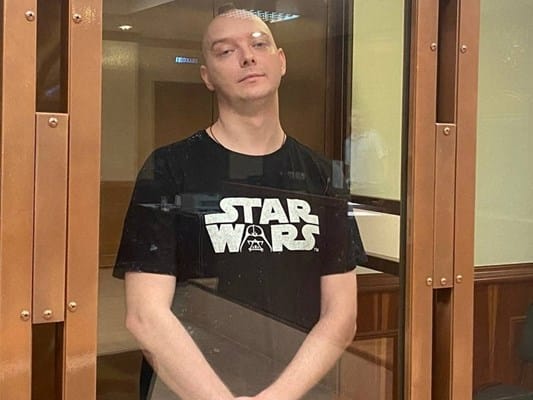
On 30th of August, the Russian Prosecutor’s Office requested 24 years in prison for the journalist and specialist in military affairs Ivan Safronov, who was accused of treason and has been arrested since 2020, reported France Press.
“The prosecutor’s office requested that Safronov be found guilty of treason and sentenced to 24 years in prison,” said the Moscow City Prosecutor’s Office, quoted by TASS. The information was released after a closed court hearing.
Thirty-two-year-old Safronov is a defense expert and was arrested in July 2020, amid increasing pressure on the independent press in Russia.
According to Safronov’s colleagues, the trial against him is revenge for his articles, which described existing gaps in the armed forces and cases that put the army in an embarrassing position.
Since the following April, the hearings in Safronov’s case have been held behind closed doors, since it is about accusations of espionage and treason. When the trial began, the journalist declared his innocence and criticized the “incredible cynicism” of the Russian justice system.
Safronov worked for two Russian dailies – Vedomosti and Kommersant. After he was forced to leave Kommersant in 2019, in May 2020 he became an adviser to the former director of Russia’s space agency Roscosmos, Dmitry Rogozin.
According to Russia’s Federal Security Service (FSS), Safronov is suspected of “handing over state secrets related to Russia’s military-technical cooperation and security to an intelligence service of a NATO country.”
The Kremlin assures that the arrest of Ivan Safronov has nothing to do with his activities as a journalist
A Russian rapper who opposes the war in Ukraine can also be declared an extremist.
The Moscow prosecutor’s office asked a court to declare the work of the rapper Oxxxymiron, one of the most popular musicians in Russia, who publicly opposed the invasion of Ukraine, as “extremist”, reported Reuters.
A spokesman for the Moscow prosecutor’s office said the rapper was being investigated for “justifying violence” because of the content of one of his songs, Interfax reported. According to Russian law, any content declared “extremist” is banned, BTA reported.
Oksimiron, whose real name is Miron Fedorov, became known for his politicized song lyrics, often targeting the Kremlin and its policies. Shortly after the start of the invasion of Ukraine on February 24, he canceled a planned tour of Russia, saying: “I can’t entertain you while Russian missiles are falling in Ukraine.” He then left Russia and gave a series of concerts in Istanbul, London and Berlin under the title “Russians against the war”. Proceeds from these events go to Ukrainian refugees.
Photo: Ivan Safronov stands in a defendant’s cell during a court hearing in Moscow on August 30, 2022 / Press Office of the Moscow City Court