Addressing ambassadors, Finnish Foreign Minister Elina Valtonen, who currently chairs the OSCE, described the conflict as the most serious challenge to European security in decades and a direct attack on the foundations of the rules-based international order.
“Russia’s war of aggression against Ukraine is the largest and longest war in Europe since World War II,” she said. “In Ukraine, Russia is violating the United Nations Charter and each of the Helsinki principles.
Ms. Valtonen traced these principles to the Helsinki Final Act of 1975 – a Cold War-era agreement signed by the United States, the Soviet Union and European countries that laid the foundation for security cooperation. The agreement affirms, among other points, respect for borders, territorial integrity, non-use of force and fundamental human rights.
“How this war ends will decisively determine the future of peace and stability, not only in Europe, but throughout the world,” Valtonen warned, calling for continued international support for Ukraine to achieve “a just and lasting peace.”
She also highlighted the importance of cooperation between the OSCE and the United Nations, noting that their partnership allows regional diplomacy to strengthen Security Councilthe global role of
“Multilateral cooperation based on international law can and must be the foundation of international peace and security, and is also what countries and people around the world expect,” she said.
Under Chapter VIII of the United Nations Charter, regional organizations such as the OSCE are encouraged to help prevent and resolve conflicts before they reach the Security Council, she added, calling the partnership essential for peace and stability.
Focus on responsibility
Accountability, she added, remained at the heart of Finland’s OSCE Chairmanship, particularly regarding the illegal deportation of Ukrainian children. Through the OSCE Support Program for Ukraine, the organization helped register missing children and support their rehabilitation.
Beyond Ukraine, she highlighted the OSCE’s broader regional engagement. In Moldova, she reaffirmed her support for the settlement process in Transnistria and, in the South Caucasus, she welcomed progress between Armenia and Azerbaijan.
She also highlighted engagement in Georgia, Central Asia and Southeast Europe, including support for the constitutional order of Bosnia and Herzegovina, social dialogue in Serbia and efforts to resolve the political and institutional crisis in Kosovo.
The European Commission will reinforce checks on food, animal and plant products entering the EU. Through increased checks at EU borders and in third countries, Europeans will continue to benefit from the highest levels of food safety.
Every year, thousands of people across Europe fall ill after eating contaminated food, with eggs, meat and ready-to-eat (RTE) food products among the most frequent sources of infection. The report shows that while food safety standards in Europe remain high, foodborne diseases continue to affect people across all age groups – especially those most vulnerable to severe illness – even though many of these diseases are preventable.
In 2024, Listeria caused the highest proportion of hospitalisations and deaths among all foodborne infections reported in the European Union (EU). About 7 in 10 people infected with Listeria needed hospital care, and 1 in 12 people died.
The upward trend of infections seen in recent years may reflect several factors, including Europe’s ageing population, changing eating habits – such as the increasing consumption of RTE foods – as well as improper food handling and storage practices.
For RTE foods, contamination levels remain very low across most categories: the latest data onListeria monocytogenes show that the proportion of samples exceeding the EU food safety limits ranged from 0% to 3% across all products analysed, with fermented sausages being the most frequently contaminated products.
“Even though contamination is rare, Listeria can cause severe illness, which makes it one of the most serious foodborne threats we monitor,” said Ole Heuer, Head of ECDC’s One Health Related Diseases Unit. “Protecting vulnerable groups, such as older adults, pregnant women or those with weakened immune systems, requires strong surveillance, safe food production and key precautions at home.”
Other common foodborne infections
While Listeria poses the greatest risk of severe illness, Campylobacter and Salmonella remain the most common causes of foodborne illness in Europe, with poultry meat and eggs being important sources of infection.
Recent data in the animal sector also show significant increase over the past decade in the number of breeding chickens and turkey flocks testing positive for Salmonella. Controlling these bacteria in the food chain remains essential to reducing human cases:
“This year, a significant number of EU countries failed to meet all the targets for reducing Salmonella in poultry, with only 14 Member States reaching full compliance,” said Frank Verdonck, Head of EFSA’s Biological Hazards and Animal Health and Welfare Unit. “This reminds us that controlling foodborne bacteria along the food chain requires continuous effort and coordination across sectors, in line with the One Health approach.”
Enhanced surveillance tools, such as whole genome sequencing Visualisation of the entire genetic makeup of a particular organism, allow authorities to detect and investigate outbreaks more effectively, supporting coordinated actions across the food chain.
Most foodborne diseases are preventable
Following proper food hygiene practices in the kitchen can help people greatly reduce the risk of infection. These include:
Keeping the fridge at 5°C or below.
Consuming foods, including ready-to-eat products, before the use-by date.
Cooking food thoroughly, especially meat and poultry.
Washing hands, knives and surfaces after handling raw foods.
Keeping cooked food separated from raw products.
Vulnerable groups should avoid consuming high-risk foods, such as RTE products, unpasteurised milk and soft cheese made from it.
Resources
To make data more accessible, EFSA and ECDC are publishing a plain language summary (PLS) of the European Union One Health 2024 Zoonoses Report, along with storymaps and dashboards that allow users to search and visualise data on foodborne outbreaks and 14 zoonotic A term given to diseases and infections that can be transmitted between animals and humans pathogens. EFSA and ECDC are also publishing an infographic.
Zaragoza (Spain) has won the 2026 Access City Award, for its outstanding efforts to making the city accessible for persons with disabilities. Initiatives include accessible homes, a fully accessible tram network, extensive step-free pedestrian routes, and certified accessible websites and apps.
The Council and European Parliament have reached a deal to postpone the application of the EU deforestation law and introduce further simplification measures. These will focus on reducing administrative burdens while preserving the objectives of the existing rules on deforestation-free products.
On 7 December 2025, we celebrate 25 years of the Charter of Fundamental Rights of the EU.
The Charter protects and promotes the fundamental rights of everyone in the EU. Since 2009, with the entry into force of the Treaty of Lisbon, the Charter has had the same legal value as the EU’s founding treaties. This means its rights are legally binding for EU institutions and EU countries when they implement EU law. The Commission, as the guardian of the Treaties, can take action against those who do not respect these fundamental rights.
The Charter is a modern instrument designed to reflect societal, scientific, and technological changes over time. It contains 50 fundamental rights and freedoms, covering 6 categories
dignity
freedoms
equality
solidarity
citizens’ rights
justice
These rights shape everyday life – from personal data protection to ensuring fair working conditions, freedom of movement and speech, the right to vote, and access to education and healthcare.
To mark the 25th anniversary, the Commission has published a series of videos with people across the EU reflecting on how fundamental rights matter in daily life. They aim to raise awareness of the Charter and highlight its relevance to individuals across diverse social and cultural contexts.
Strengthening the application of the Charter is an ongoing effort. In 2020, the Commission adopted a strategy to ensure that its rights become a reality for all. Additionally, the Commission publishes annual reports to monitor the progress on the Charter’s application.
The EU is built on the founding values of fundamental rights, democracy, and the rule of law. Protecting democracy and upholding EU values remains one of the Commission’s main priorities.
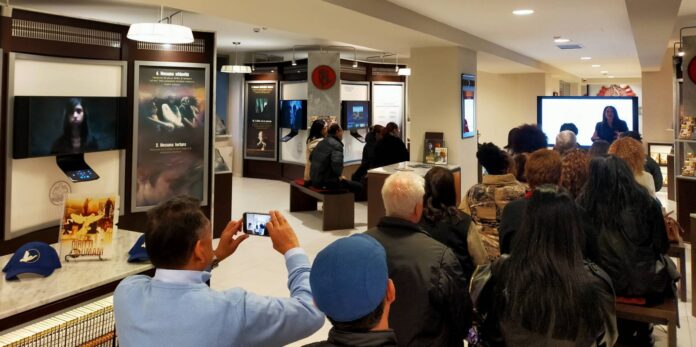
Graduates of “United for Human Rights” programme in the Church of Scientology of Milan prepare to expand human-rights education projects across northern Italy
KINGNEWSWIRE // PRESS RELEASE // MILAN, ITALY — In recent days, the Church of Scientology of Milan hosted a special human-rights gathering organised by the association Diritti Umani e Tolleranza (recognized with UN ECOSOC Consultative Status), bringing together representatives of Latin American and African communities living in northern Italy for an evening of training, recognition and dialogue on the Universal Declaration of Human Rights (UDHR). The event was led by Fiorella Cerchiara, president of the association, who welcomed participants and underscored the need for practical human-rights education within Milan’s diverse communities.
The participants — community leaders, association representatives and volunteers — were honoured for completing the full study of “Uniti per i Diritti Umani”, the Italian version of the international United for Human Rights education programme. The course presents the 30 articles of the UDHR through accessible materials, short films and practical tools designed for use in schools, youth groups and neighbourhood initiatives.
From study to action in Milan’s multicultural communities
With their graduation, the representatives are now equipped to bring the programme into their own communities, churches, cultural associations and informal networks. Several attendees outlined plans for workshops with youth, information meetings for parents and collaborative activities with local institutions.
The event took place in a city where questions of coexistence and equal rights have very concrete meaning. According to official data from the Municipality of Milan, more than 300,000 of the city’s 1.4 million residents are foreign nationals, representing just over 21 percent of the population. In the wider area, data for the Metropolitan City of Milan indicate around 487,000 foreign residents, about 15 percent of the local population.
At national level, Italy’s statistics and demographic reports show that the country hosts approximately 5.4 million foreign residents — roughly 9 percent of the population — confirming that foreign nationals play a significant role in the country’s demographic balance. These figures have been highlighted in recent analyses of Italy’s demographic trends, where foreign residents help counterbalance falling birth rates and an ageing population.
Across the European Union, the broader picture reflects persistent challenges. A recent Eurobarometer survey on discrimination found that majorities of respondents perceive discrimination based on being Roma, skin colour or ethnic origin as widespread in their country. In parallel, the EU Agency for Fundamental Rights has documented these realities in detail; its latest “Being Black in the EU” report describes widespread racism and discrimination experienced by people of African descent, including high levels of harassment and racial profiling.
The Council of Europe’s anti-racism body, the European Commission against Racism and Intolerance (ECRI), has likewise called on European states to address racial profiling by law enforcement and the segregation of Roma children in schools. Italy is among the countries encouraged to strengthen safeguards in these areas. In this context, the organisers of the Milan event underlined the importance of equipping local leaders with clear, accessible human-rights tools that can be used directly in their own language and cultural context.
“United for Human Rights”: a secular programme supported by Scientologists
The “Uniti per i Diritti Umani” materials used in the Milan course form part of United for Human Rights, a secular, nonprofit education initiative that provides educators, community groups and institutions with booklets, public-service videos and full teaching guides on the UDHR in multiple languages. The programme is dedicated to implementing the Universal Declaration at local, regional, national and international levels.
These resources are proudly sponsored by the Church of Scientology and Scientologists, but are designed for use by people of any belief or none and are widely employed by schools, associations, human-rights bodies and training programmes in various countries. The Milan initiative also sits alongside other European efforts in this field, such as the Council of Europe’s Compass manual for human-rights education with young people and the European-level education portals that promote human-rights and citizenship education for teachers and youth across the continent.
A European perspective: turning principles into daily practice
In a message commenting on the initiative, Ivan Arjona, representative of the Church of Scientology to the European Union, OSCE, Council of Europe and United Nations, linked the Milan graduation to wider European concerns:
“Across Europe we see how questions of migration, integration and discrimination are testing our commitment to the Universal Declaration of Human Rights,” said Arjona. “What happened in Milan shows a very practical response: community leaders — many of them migrants themselves — studying all 30 articles of the UDHR and then returning home with concrete tools to explain them to children, parents and neighbours. This is how human rights stop being abstract and become daily practice in our cities.”
Arjona added: “At European level there is strong consensus on the importance of human-rights education. This kind of work at the local level complements what the Council of Europe, the EU institutions and national authorities are trying to achieve: societies where everyone, regardless of origin, is treated with dignity and has the same opportunities to participate.”
Scientology’s human-rights work in Europe
Human-rights education has long been a priority for the Scientology community. Scientology Founder L. Ron Hubbard famously stated that “human rights must be made a fact, not an idealistic dream”, a quotation cited in the Church’s own human-rights materials and programmes.
In 2003, the Church of Scientology International established its European Public Affairs and Human Rights Office in Brussels, which then evolved in 2018 into an EU-recognized religious organization through the Spanish Ministry of Presidency and the EU Transparency Registry and which serves as a focal point for cooperation with institutions, NGOs and faith communities on issues such as freedom of religion or belief, anti-discrimination and human-rights education. The office operates from Brussels’ Boulevard de Waterloo, and is referenced in public registries and event listings, including EU-focused directories and the Churches of Scientology for Europe site.
Today, Scientology churches, missions and groups across the European continent support United for Human Rights and its youth branch, Youth for Human Rights International, by hosting conferences, school presentations and community events, including those marking key dates such as Human Rights Day on 10 December.
The Church of Scientology is a contemporary religion founded by L. Ron Hubbard in the 1950s. The first Church of Scientology was established in Los Angeles in 1954, and the movement has since expanded to thousands of churches, missions and related groups worldwide. It rallies more than 11,000 Scientology churches, missions, related organisations and affiliated groups in over 165 countries.
In Europe, Scientology is present through more than 140 churches, missions and community groups and thousands of social betterment and reform groups in many member states, including a central hub in Brussels serving the European institutions and international organisations. The Church has been recognised as a religion in a number of jurisdictions, including Spain, UK, Netherlands, Sweden, Portugal, Greece, the ECHR and more.
The Church of Scientology, its missions, groups and members are present throughout the European continent, engaged in education, prevention and community-betterment activities. Their support for secular initiatives such as United for Human Rights, Youth for Human Rights International, The Way to Happiness and the Foundation for a Drug-Free World reflects a long-term commitment to strengthening communities, promoting dignity and contributing to universal human-rights values.
The draft resolution during the emergency special session was approved by 91 votes in favor, 12 against and 57 abstentions, exceeding the required two-thirds majority of members present and voting.
THE resolution expresses its deep concern about the fate of Ukrainian children separated from their families since 2014 – when Moscow annexed Crimea –, in particular those transferred to occupied Ukrainian territory and those deported to Russia.
It calls these acts violations of the Geneva Conventions, which prohibit the forcible transfer or expulsion of protected persons from occupied territories.
It “demands that the Russian Federation guarantee the immediate, safe and unconditional return of all Ukrainian children who have been forcibly transferred or expelled” and urges Moscow to cease any further practices of expulsion, separation from families, change of citizenship, adoption or placement in foster families and indoctrination.
The text also calls on the UN Secretary-General to intensify his good offices, notably through his Special Representative for Children and armed conflictto coordinate UN action, work with Russia to find captured people and guarantee access for international surveillance and humanitarian organizations.
He also expressed support for international initiatives aimed at ensuring the rapid return of Ukrainian children as well as their rehabilitation and reintegration, including access to health care, psychosocial support and education.
Kidnapped at gunpoint
Opening of the meeting, President of the General Assembly Annalena Baerbock described the ordeal faced by Ukrainian children removed from their homes.
“Imagine you are 16 years old and you are going about your day […] “When suddenly soldiers armed with machine guns and wearing balaclavas to hide their faces burst into your home,” she said.
“They force you into your vehicle and chase you in an unknown direction, and you end up stuck in a nightmare for months, with a different name.”
She stressed that international law is unambiguous.
“So what we are seeing is not just a tragedy for some children, but a violation of international law,” Baerbock said, citing Article 49 of the law. Fourth Geneva Convention.
Question of humanity
Presenting the draft, Ukrainian Deputy Foreign Minister Mariana Betsa said the text “is not about politics… but about humanity.”
Amid Russia’s war of aggression, she said, children were killed, injured, raped, separated from their families and expelled.
“It is unimaginable that anyone could consider children as war trophies,” she said, adding that at least 20,000 Ukrainian children have been deported to Russia.
“Not a single child should be separated from their family,” she stressed.
“Cynical lie”
Russia rejected the resolution as politically motivated. Ambassador Maria Zabolotskaya, deputy permanent representative to the United Nations, said the meeting went against peace efforts and called the resolution “a particularly cynical lie.”
She insisted that Moscow remained open to cooperation on children’s issues, calling on all states to oppose the text.
“Every vote in favor of the resolution is support for lies, war and confrontation,” she said.
By this resolution, the General Assembly also decided to temporarily adjourn its emergency special session, authorizing the President of the Assembly to reconvene it at the request of Member States.
This comes as humanitarians continue to receive reports that air strikes, shelling, gunfire and other continuing Israeli military operations in the enclave are causing more civilian casualties, displacement and destruction.
In recent days, hundreds of families were reportedly displaced in two neighbourhoods in eastern Gaza City following strikes and movement of military equipment, UN Spokesperson Stéphane Dujarric told journalists in New York on Wednesday.
He was asked about the killing of the boys, which occurred on Saturday.
The Israeli Defense Forces (IDF) acknowledged the strike in a post on social media, saying troops had identified two terrorists crossing the ‘yellow line’ in northern Gaza, thus posing an immediate threat to them.
The incident was “horrific, to say the least,” Mr. Dujarric said.
“It’s hard to see how two boys, eight and 10, can be considered a threat. And there needs to be an investigation and accountability into what happened.”
Health sector support in Rafah
Across Gaza, the UN and partners continue to aid people in need, wherever access is available, and six additional healthcare service points have opened since Sunday.
“Yesterday in Rafah, a team from the World Health Organization (WHO) also managed to reach the European Hospital, which remains non-operational, to move some vital equipment to functioning healthcare facilities,” he said.
However, the Israeli security authorities continue to deny attempts to gain access to Kamal Adwan Hospital in North Gaza.
WHO also facilitated the referral and transfer of the first patient to the Emirati Field Hospital since before the Rafah incursion last year, which had rendered the facility inaccessible. It is the only functioning medical facility serving the Rafah area.
Winter supplies for vulnerable households
Meanwhile, preparations for winter are a key priority, Mr. Dujarric said, and the UN and partners continue to deliver shelter supplies and other critical items to the most vulnerable households.
“Since Sunday, some 4,400 families received tents, tarpaulins, blankets, winter clothing and kitchen sets across Gaza through UN-coordinated deliveries,” he said.
“In addition, our partners managing displacement sites report that work is ongoing to help prepare suitable locations for those seeking to leave high-risk areas, including shoreline communities.”
Moving to safety
Humanitarians report that in Khan Younis, an estimated 4,000 households live along the coast, and around 1,000 are at especially high risk due to their proximity to the water line.
Some of these families have reportedly started to relocate to the two sites deemed safe by the local municipality
Efforts to improve water and sanitation access also continue. Partners report that 42 truckloads of debris have been cleared over the past 48 hours to reach three wells in Beit Lahiya, North Gaza, and repairs are expected to begin soon.
In the meantime, unexploded remnants of war continue to pose a deadly threat to civilians. Over the past week, partners working in the sector were able to carry out 50 assessments across Gaza to help lower the risks for aid workers.
Six people were reportedly killed last week, and 10 others injured, in two incidents involving explosive ordnance in Gaza City and Deir Al-Balah.
Coinciding with the anniversary of the collapse of the former regime, “things are improving,” Mohammad Al Nsour, Chief of the Middle East and North Africa Section at OHCHR told UN News.
“Every time we go to Damascus, we can see the change.”
OHCHR – blocked from operating inside Syria for many years – now has a team permanently deployed in Damascus. For Mr. Al Nsour, this marks a significant turning point after a long period of monitoring human rights conditions remotely from Beirut.
“The former government denied access to OHCHR,” he recalled, speaking from Geneva. “We tried many times,” but now, “it is a great advantage to be on the ground”, he added.
Syria continues to face a number of pressing priorities: the need to rebuild a war-damaged country, addressing the many remaining grievances, and achieving justice for past and present violations.
The senior official noted that insecurity also remains an alarming concern – from the northeast, to Sweida – to the mass killings earlier this year in coastal areas, including by members of the government’s security forces.
Yet, he insisted that the overall direction is “very constructive and positive.”
“There is a political will from the government to improve,” he said, emphasising daily engagement between OHCHR and the authorities. The government has been receiving technical assistance from UN officials aimed at reforming legislation, strengthening human rights in law enforcement institutions, and improving public administration.
These steps, he said, show a commitment to a rights-based future.
He stressed that one of the major advantages of having an office inside the country is that is functions “as an advisor to the authorities.”
“We monitor, report, and use advocacy to alert the authorities of violations in order to prevent them. Our purpose and main objective is not to shame and blame any government, rather to prevent violations.”
Symbolic change
Preparations are under way for Syria’s first ever Human Rights Day celebration on 10 December, only two days after it marks a year since the fall of the Assad regime.
The event is co-organized by OHCHR and the Syrian Ministry of Foreign Affairs under the theme: A human rights approach to reconstruction.
Mr. Al Nsour said the celebration will mark “a new chapter in our relationship with the Syrian government” and discussions will focus on “how to advance the human rights agenda in the new Syria.”
Accountability and justice
For many Syrians, accountability remains central.
After violent incidents in the coastal region last March, the authorities established a National Investigative Committee – which received significant technical advice from OHCHR – and now, some perpetrators are being tried before a national court.
Mr. Al Nsour noted that the Government also accepted the renewal of the UN Commission of Inquiry’s mandate, enabling continued independent international investigations, not only in the violations committed under the Assad regime, but also since its fall.
Looking ahead, transitional justice is the priority for 2026.
“There is a need not only for accountability,” he said, “but also truth-telling, reparations, and national reconciliation.”
Women’s voices
OHCHR is also supporting women-led civil society organisations and promoting greater women’s representation in political institutions, particularly in the wake of parliamentary elections – a request Mr. Al Nsour said the authorities are becoming increasingly receptive to.
At the same time, it is also empowering these organisations by training them to use advocacy to promote their cause and connecting them with international human rights mechanisms.
The OHCHR official emphasised that the greatest source of hope for Syria is Syrians themselves.
“What is amazing about Syria is the resilience of the Syrian people,” he said. “What gives you hope is this amazing, educated young generation that is willing to engage with the new Syria in a very positive way.”
Across the country, he noted that young people have launched grassroots initiatives, from cleaning public parks to supporting local services – small acts that rebuild a sense of community after conflict.
“They saw what happened in other countries – post conflict situations in the region and beyond – and they are trying their best to push in the right direction.”
A long road ahead
Financial pressures are mounting, but donors have shown “very positive indications” of increased funding for Syria, according to Mr. Al Nsour.
“There is great interest from major donors to promote human rights in the new Syria”, he explained, both from within and outside the region.
Despite many hurdles, he noted the determination of Syrians to rebuild their country, grounded in human rights.
As Syrians mark Human Rights Day this year, perhaps the greatest message is clear: progress, however fragile, is finally visible – and hope is rising with it.