Monday, March 23, 2026
Home Blog Page 970

Green Deal: Modernising EU industrial emissions rules

0
Modernising EU industrial emissions rules

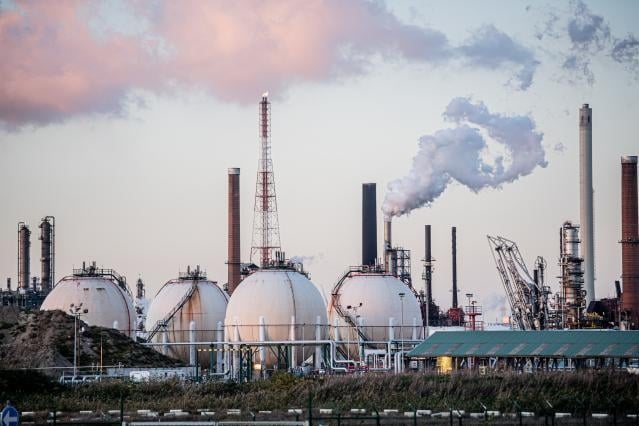
Today, the Commission is presenting proposals to update and modernise the Industrial Emissions Directive, key legislation to help prevent and control pollution. Updated rules will help guide industrial investments necessary for Europe’s transformation towards a zero-pollution, competitive, climate-neutral economy by 2050. They aim to spur innovation, reward frontrunners, and help level the playing field on the EU market. The revision will help provide long-term investment certainty, with first new obligations on industry expected in the second half of the decade.  

The revision builds on the overall approach of the existing Industrial Emissions Directive, which currently covers some 50,000 large industrial installations and intensive livestock farms in Europe. These installations need to comply to emissions conditions by applying activity-specific ‘Best Available Techniques’. These techniques are determined together by industry, national and Commission experts, and civil society. The new rules will cover more relevant sources of emissions, make permitting more effective, reduce administrative costs, increase transparency, and give more support to breakthrough technologies and other innovative approaches.  

Executive Vice-President for the European Green Deal Frans Timmermans said: “By 2050, economic activity in the European Union should no longer pollute our air, water and the wider environment. Today’s proposals will enable important reductions of harmful emissions coming from industrial installations and Europe’s largest livestock farms. By modernising Europe’s industrial emissions framework now there is certainty about future rules to guide long-term investments, increase Europe’s energy and resource independence, and encourage innovation.”  

Commissioner for the Environment, Oceans and Fisheries Virginijus Sinkevičius said: “These new rules will enable large industrial plants and intensive livestock farming to play their part in achieving the objective of the European Green Deal and its zero-pollution ambition. Solely from action on livestock farms, benefits to human health would amount to at least €5.5 billion per year. The changes will create more jobs, as the EU’s eco-innovation sector has shown successfully in the past. Measures that proactively tackle the pollution, climate and biodiversity crises can make our economy more efficient and more resilient.”  

Updating a proven approach for the long term  

Following extensive consultation with industry and stakeholders and a thorough impact assessment, the existing framework will be enhanced with new measures to boost its overall effectiveness. The main changes include: 

  • More effective permits for installations. Instead of settling for the least demanding limits of the best available techniques, as some 80% of installations do currently, permitting will have to assess the feasibility of reaching the best performance. It will also tighten the rules on granting derogations by harmonising the assessments required and securing a regular review of derogations granted.  
  • More help for EU innovation frontrunners. As an alternative to permits based on well-established best techniques, frontrunners will be able to test emerging techniques, benefitting from more flexible permits. An Innovation Centre for Industrial Transformation and Emissions (INCITE) will help industry with identifying pollution control solutions. Finally, by 2030 or 2034 operators will need to develop Transformation Plans for their sites to achieve the EU’s 2050 zero pollution ambition, circular economy and decarbonisation aims.  
  • Supporting industry’s circular economy investments. New best available techniques could include binding resource use performance levels. The existing Environmental Management System will be upgraded to reduce the use of toxic chemicals.  
  • Synergies between depollution and decarbonisation. Energy efficiency will be an integral part of permits, and systematic consideration will be given to technological and investment synergies between decarbonisation and depollution when determining best available techniques.  

The new rules will also cover more installations, notably:  

  • More large-scale intensive livestock farms. Under the new rules, the largest cattle, pig, and poultry farms would be gradually covered: about 13% of Europe’s commercial farms, together responsible for 60% of the EU’s livestock emissions of ammonia and 43% of methane. The health benefits of this extended coverage are estimated at more than €5.5 billion per year. As farms have simpler operations than industrial plants, all farms covered will benefit from a lighter permitting regime. The obligations stemming from this proposal will reflect the size of farms as well as the livestock density through tailored requirements. The Common Agricultural Policy remains a key source of support for the transition. 
  • Extraction of industrial minerals and metals and large-scale production of batteries. These activities will significantly expand in the EU to enable the green and digital transitions.  This requires that the best available techniques are employed to ensure both the most efficient production processes and the lowest possible impacts on the environment and human health. The governance mechanisms of the Directive that closely associate industry experts to the development of consensual and tailored environmental requirements, will support the sustainable growth of these activities in the Union.  

Finally, the new rules will increase transparency and public participation in the permitting process. In addition, the European Pollutant Release and Transfer Register will be transformed into an EU Industrial Emissions Portal where citizens will be able to access data on permits issued anywhere in Europe and gaining insight into polluting activities in their immediate surroundings in a simple way.  

Next steps  

The Commission proposal stipulates that Member States will have 18 months to transpose this directive into national legislation, after the proposal is finally adopted by the European Parliament and by the Council. After that, the Best Available Techniques will be developed and once adopted by the Commission, industrial operators will have four years and farmers three years to comply. 

Background  

Industrial activities, like electricity and cement production, waste management and incineration, and the intensive rearing of livestock, are responsible for emissions of harmful substances to air, water and soil. These emissions include sulphur oxides, nitrogen oxides, ammonium, dust and mercury and other heavy metals. Pollution caused by them can lead to health problems such as asthma, bronchitis and cancer, and it generates costs measured in billions of euro and hundreds of thousands of premature deaths each year. Industrial emissions also damage ecosystems, crops, and the built environment.  

Thanks to the Industrial Emissions Directive, in the last 15 years emissions to air for many pollutants have been reduced by between 40% and 75% from Europe’s largest industrial plant and intensive livestock farms. Heavy metals emissions to water have also declined by up to 50% during this period.  

Despite successes in curbing emissions, the over 50,000 industrial installations covered still account for around 40% of greenhouse gas emissions, over 50% of total emissions to air of sulphur oxides, heavy metals and other harmful substances and around 30% of nitrogen oxides and fine particulate matter air emissions, warranting further action. 

Question time with Commission President Ursula von der Leyen

0
Question time with Commission President Ursula von der Leyen | News | European Parliament

“Question time” is a question and answer session, where MEPs can ask the Commission about specific topical issues.

During “question time” with Ursula von der Leyen on Tuesday, MEPs took stock of the Commission’s course of action, looking back at its first two years of work.

Rule of law in Hungary and Poland

Ursula von der Leyen announced that EU Budget Commissioner Johannes Hahn has informed the Hungarian authorities about the Commission’s plans to “move on to the next step” and formally “launch the rule of law conditionality mechanism” to protect the EU budget, mainly over corruption concerns.

Replying to concerns regarding the disbursement of recovery funds for Poland, President von der Leyen said that the independence of the judiciary was still a major concern in Poland. The conditions that need to be met to approve Poland’s recovery plan are still, as put forward by the EU Court of Justice: dismantling the disciplinary chamber of the Polish Supreme Court, reforming the disciplinary regime and reinstalling unlawfully dismissed judges.

Strengthened commitment to the Green Deal

Ursula von der Leyen confirmed to MEPs that besides the pandemic and the war in Ukraine, there was an “equally serious climate crisis looming in the background”. She stressed that the “last horrible four to six weeks” have only reconfirmed for the EU how important it is to push through with the green deal and get rid of the “ugly dependence on fossil fuels”. Investment in renewable energy sources was now a “strategic investment in security”, she stressed.

Russian invasion of Ukraine

Replying to MEPs’ questions regarding the EU’s strategic autonomy, its energy independence and support for EU countries receiving large numbers of refugees from Ukraine, President von der Leyen stressed the importance of the EU acting together in the procurement of new gas channels and pointed to an analysis of the EU’s defence capabilities. Finally, she praised Central and Eastern European countries for welcoming Ukrainian refugees, confirmed the promised financial assistance to countries receiving many refugees, and spoke of her plans for the “Stand up for Ukraine” pledging event to be held together with Canadian Prime Minister Justin Trudeau on 9 April in Warsaw.

Other questions

MEPs also asked about mid-term plans to revise the current Multiannual Financial Framework, progress on social policy legislation, namely on unemployment reinsurance, poverty reduction and the minimum wage directive. They also demanded more “tax justice” and asked why the Commission was not prioritising the fight against tax havens even more now that it was clear that they were undermining the sanctions against Russia.

Click here to listen again to the full “Question time” with questions from 13 MEPs across political groups.

Background

The current Commission assumed office on 1 December 2019, following the European Parliament’s approval. This “Question Time” format, being tested this week, gives MEPs the possibility to question the Commission on specific topical issues in a lively debating format requiring short questions and answers without prior notice or preparation.

Pope: UN powerless in Ukraine war, where the logic of powerful prevails

0
Pope: UN powerless in Ukraine war, where logic of powerful prevails - Vatican News

By Vatican News staff reporter – logic of powerful – At the Wednesday General Audience, Pope Francis decried the war in Ukraine, and the powerlessness of the United Nations, noting how the “old story” of competition between greater powers continues today despite efforts to establish lasting peace.

Working for respect and peace

Pope Francis focused his catechesis on his weekend journey to Malta, and underscored how competition between greater powers has continued to today despite attempts to establish peace after World War II.

The war in Ukraine today has made us witnesses of “the impotence of the United Nations,” he observed.

“In the ongoing war in Ukraine, we witness the impotence of the International Organizations of the United Nation.”

He said this in the context of describing how Malta lies in a strategic location between Europe and Africa, and close to Asia, making it a place where peoples from around the world meet.

And while Malta, rich in history and civiliation, represents a mindset that should characterize our world with respect, freedom and peaceful coexistence, the dominating mindset of colonization of the most powerful still prevails today.

Welcomed with “unusual kindness”

Recalling the motto of the Malta journey taken from the Acts of the Apostles when the Apostle Paul was welcomed by the inhabitants “with unusual kindness” after his shipwreck there, the Pope said he chose those very words “with unusual kindness” as a way to show the path to follow.

This regards not just migrants, he explained, but kindness that creats a more fraternal, livable world, saving us from the “shipwreck” that we all risk facing, as we are all “in the same boat.” The Pope thanked the authorities and people of Malta for for their very warm welcome.

Welcoming and understanding migrants

A second key theme the Pope highlighted regards migration in Malta, where at the John XXIII Reception Centre he met numerous migrants landing there following harrowing journeys across the sea.

He stressed that we must always be open to hearing their stories, the only way to get beyond an often distorted vision of this phenomenon presented in the media.

Each person has a story, carries wounds, and has roots and culture, all with human dignity, he said, adding, “Each of them is the bearer of a wealth infinitely greater than the problems that welcoming them might entail.”

The Pope paid tribute in particular to Franciscan Fr. Dionysius Mintoff who founded the John XXIII Centre, also called “Peace Lab”, and continues his work at the age of 91 in welcoming and assisting migrants, creating a culture of encounter and peace through fraternity, compassion and solidarity.

Continuing legacy of evangelization

In conclusion, Pope Francis noted Malta’s key role in contributing to evangelization, where so many priests, religious and lay faithful have given their Christian witness around the world.

The Pope called his visit “an act of gratitude” to God, to the faithful of Malta and the island of Gozo.

In addition to recalling his visit as a pilgrim in the footsteps of Saint Paul, he paid tribute to their immense trust in the Blessed Mother, as experienced together during his visit to the National Marian Shrine of Ta’Pinu on Gozo.

What can the UN do? 5 of your questions answered

0
What can the UN do? 5 of your questions answered

Here at UN News, we’ve taken a deep dive into the UN Charter to try and give you the answers you might be looking for.

Can the Security Council stop a war?

Well, first let us review its mission.

The functions and powers of the Security Council are set out in the UN Charter, the Organization’s founding document. It was signed on 26 June 1945, in San Francisco, at the conclusion of the United Nations Conference on International Organizations and came into force on 24 October 1945.

The Security Council, made up of 15 members – five permanent seats belong to China, France, Russian Federation, the United Kingdom and the United States, with 10 non-permanent seats that rotate by election among other UN member countries – is the body that was granted the primary responsibility for the maintenance of international peace and security. It takes the lead in determining the existence of a threat to the peace, breach of the peace or an act of aggression.

What you might not know is that before 1965, the Security Council was comprised of 11 members, six of which were non-permanent. The expansion to 15 members occurred in 1991 after the amendment of Article 23(1) of the Charter through the adoption of a General Assembly resolution.

Although there are still some 60 UN Member States that have never sat on the Security Council, all members of the UN, however, agree under Article 25 of the Charter, to accept and carry out decisions adopted by the Council. In other words, actions taken by the Council are binding on all UN member countries.

When dealing with crises, the Council, guided by the UN Charter, the Security Council can take several steps.

Acting under Chapter VI of the Charter, the Council can call upon parties to a dispute to settle it by peaceful means and recommend methods of adjustment or terms of settlement. It can also recommend the referral of disputes to the International Court of Justice (ICJ), which is widely known as the ‘World Court’ and is the principal judicial organ of the United Nations, seated at The Hague in the Netherlands.

In some cases, the Security Council may act under Chapter VII of the Charter and resort to imposing sanctions or can even authorize, as a last resort, when peaceful means of settling a dispute are exhausted, the use of force, by Member States, coalitions of Member States or UN-authorized peace operations to maintain or restore international peace and security.

Importantly, the action required to carry out the decisions of the Security Council for the maintenance of international peace and security shall be taken by all the Members of the United Nations or by some of them, as the Security Council may determine pursuant to Chapter VII.

The first time the Council authorized the use of force was in 1950, under what was referred to as a military enforcement action, to secure the withdrawal of North Korean forces from the Republic of Korea.

UN Photo/Loey Felipe

The UN Security Council meets on the situation in Ukraine, 27 February 2022.

What is the ‘veto power’ and how can it be used?

The voting procedure in the Security Council is guided by Article 27 of the UN Charter which establishes that each member of the Council has one vote.

When deciding on “procedural matters”, nine members need to vote in favour for a decision to be adopted. On all other matters an affirmative vote of nine members “including the concurring votes of the permanent members” is necessary.

In other words, a negative vote by any of the permanent five (China, France, Russian Federation, the United Kingdom or the United States) can prevent the adoption by the Council of any draft resolution relating to substantive matters.

Since 1946, all five permanent members – widely referred to as the ‘P5’ – have exercised the right of veto at one time or another on a variety of issues. To date, approximately 49 per cent of the vetoes had been cast by the Union of Soviet Socialist Republics and thereafter the Russian Federation (the membership of the USSR in the United Nations, including in the Security Council, was continued by the Russian Federation), 29 per cent by the United States, 10 per cent by the United Kingdom, and six per cent each by China and France. Find more information here about vetoes in the Security Councils since 1946.

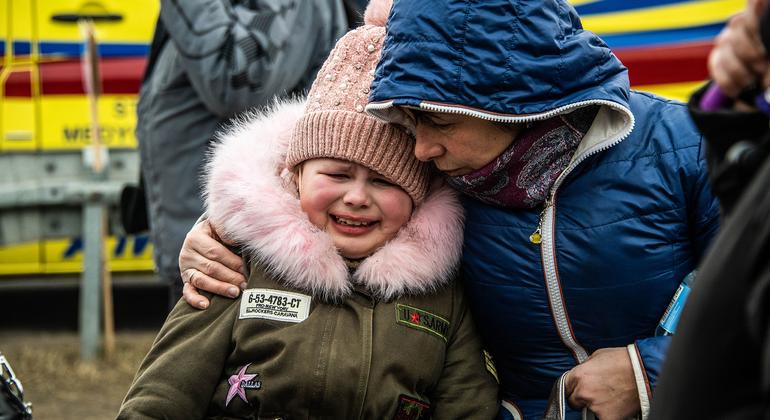
Families arrive in Berdyszcze, Poland, after crossing the border from Ukraine, fleeing escalating conflict. © UNICEF/Tom Remp

Families arrive in Berdyszcze, Poland, after crossing the border from Ukraine, fleeing escalating conflict.

Can the General Assembly step in when the Security Council is unable to take a decision on stopping a war?

According to the General Assembly’s 1950 resolution 377A (V), widely known as ‘Uniting for Peace’, if the Security Council is unable to act because of the lack of unanimity among its five veto-wielding permanent members, the Assembly has the power to make recommendations to the wider UN membership for collective measures to maintain or restore international peace and security.

For instance. most frequently, the Security Council determines when and where a UN peace operation should be deployed, but historically, when the Council has been unable to take a decision, the General Assembly has done so. For example, in 1956, the General Assembly established the First UN Emergency Force (UNEF I) in the Middle East.

In addition, the General Assembly may meet in Emergency Special Session if requested by nine members of the Security Council or by a majority of the Members of the Assembly.

To date, the General Assembly has held 11 Emergency Special Sessions (8 of which have been requested by the Security Council).

Most recently, on 27 February 2022, the Security Council, taking into account that the lack of unanimity of its permanent members had prevented it from exercising its primary responsibility for the maintenance of international peace and security,  decided to call an Emergency Special Session of the General Assembly in its resolution 2623 (2022).

As a result, on 1 March 2022, the General Assembly, meeting in emergency session, adopted a resolution by which it deplored “the aggression by the Russian Federation against Ukraine in violation of Article 2 (4) of the Charter and demanded that the Russian Federation immediately cease its use of force against Ukraine and completely and unconditionally withdraw all of its military forces from the territory of Ukraine within its internationally recognized borders.

However, unlike Security Council resolutions, General Assembly resolutions are non-binding, meaning that countries are not obligated to implement them.

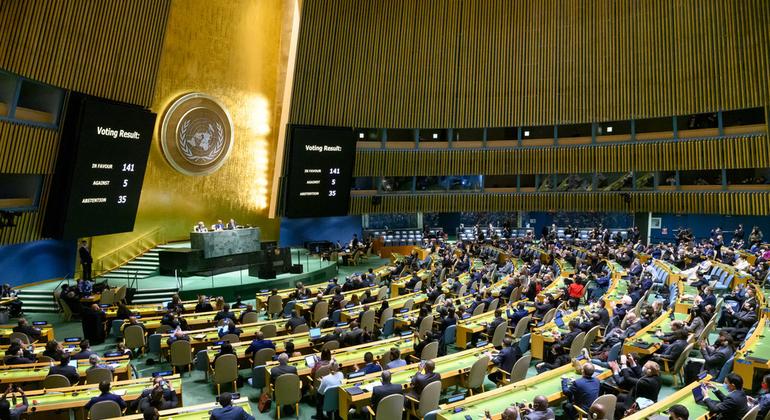
UN General Assembly adopts resolution deploring the aggression by the Russian Federation against Ukraine in violation of the UN Charter. UN Photo/Loey Felipe

UN General Assembly adopts resolution deploring the aggression by the Russian Federation against Ukraine in violation of the UN Charter.

Can a country’s membership in the UN be revoked?

Article 6 of the Charter reads as follows:

A Member of the United Nations which has persistently violated the principles contained in the present Charter may be expelled from the Organization by the General Assembly upon the recommendation of the Security Council.

This has never happened in the history of the United Nations.

Article 5 provides for the suspension of a Member State:

A Member of the United Nations against which preventive or enforcement action has been taken by the Security Council may be suspended from the exercise of the rights and privileges of membership by the General Assembly upon the recommendation of the Security Council. The exercise of these rights and privileges may be restored by the Security Council.

The suspension or expulsion of a Member State from the Organization is effected by the General Assembly upon the recommendation of the Council. Such a recommendation requires the concurring vote of the Security Council’s permanent members.  

Unless they agree to their own expulsion or suspension, permanent Council members can only be removed through an amendment of the UN Charter, as set out in Chapter XVIII.  

The UN has, however, taken steps against certain countries to end major injustices. One example is the case of South Africa and the world body’s contribution to the global struggle against apartheid, by drawing world attention to the inhumanity of the system, legitimizing popular resistance, promoting anti-apartheid actions by governmental and non-governmental organizations, instituting an arms embargo, and supporting an oil embargo and boycotts of apartheid in many fields.

Along the road to ending apartheid, the Security Council, in 1963, instituted a voluntary arms embargo against South Africa, and the General Assembly refused to accept the country’s credentials from 1970 to 1974. Following this ban, South Africa did not participate in further proceedings of the Assembly until the end of apartheid in 1994.

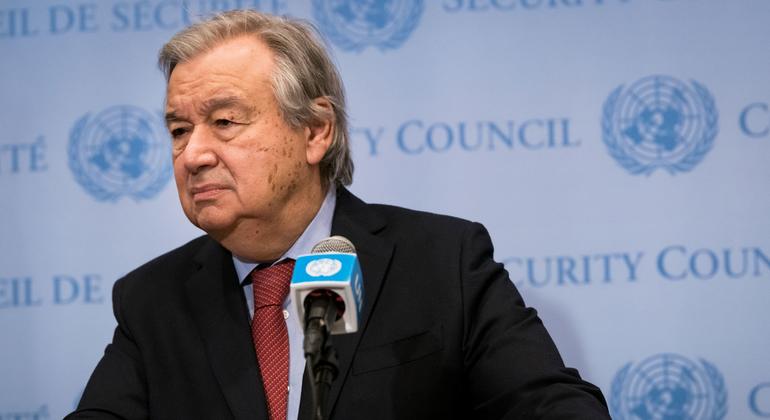
Secretary-General António Guterres briefs reporters on the war in Ukraine. UN Photo/Mark Garten

Secretary-General António Guterres briefs reporters on the war in Ukraine.

What are the Secretary-General’s ‘good offices’?

Secretary-General as an important peace-making actor has evolved through extensive practice. The range of activities carried out by the Secretary-General has included good offices, mediation, facilitation, dialogue processes and even arbitration.

One of the most vital roles played by the Secretary-General is the use of his (thus far in the Organization’s 75-year history, all nine Secretaries-General have been men) ‘good offices’ – steps taken publicly and in private, drawing upon their independence, impartiality and integrity, and the power of quiet diplomacy, to prevent international disputes from arising, escalating or spreading.

In practice, this means a UN chief can use his authority, legitimacy and the diplomatic expertise of his senior team to meet with Heads of State and other officials and negotiate an end to disputes between parties in conflict

At the end of March, Secretary-General Antonio Guterres invoked the use of his good offices and asked Under Secretary-General Martin Griffiths, the UN emergency relief coordinator, to explore the possibility of a humanitarian cease-fire with Russia and Ukraine, and other countries seeking to find a peaceful solution to the war.

For more coverage of the Ukraine war, visit our In Focus page.

Ukraine’s President calls on Security Council to act for peace, or ‘dissolve’ itself

0
Ukraine’s President calls on Security Council to act for peace, or ‘dissolve’ itself

“We are dealing with a State that is turning the veto of the United Nations Security Council into the right to die”, President Zelynskyy warned.  If it continues, countries will rely not on international law or global institutions to ensure security, but rather, on the power of their own arms.

Noting that he had just returned from Bucha, the newly liberated suburb of Kyiv that has become notorious since images of mass civilian deaths there emerged at the weekend, he recounted how Russian forces had sought and purposely killed anyone who served Ukraine.

He was addressing the Council today, he said, in honour of the deceased:  those shot in the head after being tortured, thrown into wells, crushed by tanks while sitting in their cars, and those whose limbs were cut off and tongues pulled out because the aggressors “did not hear what they wanted to hear”.

Tactics used by terrorists

He accused Russia of wanting to “turn Ukrainians into silent slaves” and openly stealing everything, “starting with food and ending with gold earrings that are pulled out and covered with blood”.

These tactics, he said, are no different than those used by terrorist group Da’esh – except that they are now being perpetrated by a permanent member of the Security Council.  “Where is the security that the Security Council must guarantee?” he implored.

‘The power of peace must dominate’

Recalling that Holocaust organizer Adolf Eichmann did not go unpunished, the Ukrainian president said it was time for reform.  “The power of peace must become dominant”.

He challenged the Council to either remove the Russian Federation as a source of war so it can no longer block decisions made about its own aggression, or simply “dissolve yourselves altogether” if there is nothing to do other than engage in conversation.  “Are you ready to close the United Nations?  Do you think that the time for international law is gone?” he asked.

“Ukraine needs peace.  Europe needs peace.  The world needs peace,” he insisted.

Bolstering that plea in an earlier briefing to the Council, UN Secretary-General António Guterres, expressed deep regret over divisions that have prevented the Council from acting not only on Ukraine – but on other threats to peace around the world.  He urged the Organization’s flagship security body to do “everything in its power” to end the war.

Doubling of civilian deaths

Under-Secretary-General for Political and Peacebuilding Affairs Rosemary DiCarlo similarly noted that conditions had seriously deteriorated since her 17 March briefing.  The number of Ukrainian civilians killed has more than doubled; Ukrainian cities continue to be mercilessly pounded, often indiscriminately, by heavy artillery and aerial bombardments; and hundreds of thousands of people remain trapped in encircled areas under nightmarish conditions.

“The devastation wrought on Mariupol and other Ukrainian cities is one of the shameful hallmarks of this senseless war,” she said.

She called on Kyiv and Moscow to quickly translate any progress in their ongoing negotiations into action on the ground, emphasizing that indiscriminate attacks are prohibited under international humanitarian law and may amount to war crimes.

“The massive destruction of civilian objects and the high number of civilian casualties, strongly indicate that the fundamental principles of distinction, proportionality and precaution have not been sufficiently adhered to,” she stressed.

‘Perilous’ conditions obstruct UN access

Addressing the Council from Geneva, Emergency Relief Coordinator Martin Griffiths, said that over a quarter of Ukraine’s population has fled.

“Perilous conditions are hampering our efforts to access civilians – or for them to access us,” he stressed.

In one sign of progress, he announced that in the past day, another convoy was dispatched from the humanitarian coordination hub in Dnipro to Sievierodonetsk –  in the far east – with food, winter clothing, non-food items, medicine and hygiene kits offloaded to the Ukraine Red Cross today.

UN Photo/Loey Felipe

UN relief chief Martin Griffiths briefs the Security Council Meets on Situation in Ukraine.

‘A long road ahead’

The Emergency Relief Coordinator also described “long and frank” exchanges with Minister for Foreign Affairs Sergey Lavrov and his Deputy, Sergey Vershinin, on 4 April, and separately with the Deputy Minister for Defence, with whom he shared suggestions for mutually agreed upon military freezes to allow for evacuations of civilians and for the safe passage of aid.

He said he came away from these meetings believing that “we have a long road ahead of us – but it must be travelled, and we will travel it”.  On 7 April, he intends to travel to Ukraine to lead discussions with senior Government officials on these same issues.

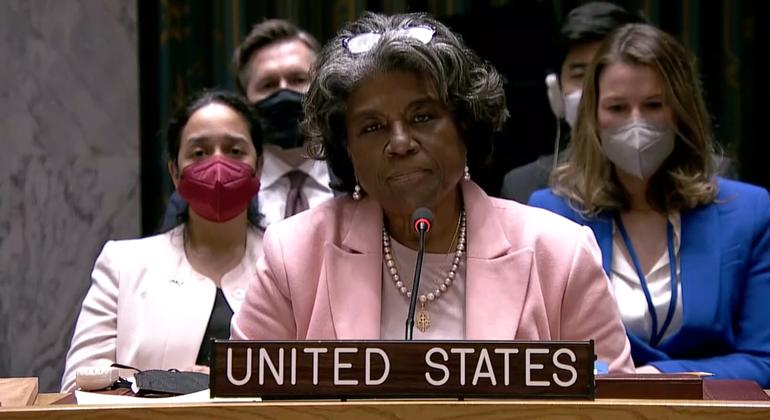
US ambassador Linda Thomas-Greenfield addresses the Security Council. UN Photo

US ambassador Linda Thomas-Greenfield addresses the Security Council.

Lives stuffed into backpacks

In the ensuing debate, United States Ambassador Linda Thomas-Greenfield said that behind the images of bombed out buildings, many people had “stuffed their lives into backpacks” and left the only home they had ever known.

She gave her own account of the refugee crisis in parts of Europe, having returned on 4 April from the Republic of Moldova and Romania.

Based on available information, she said the United States has assessed that Russian forces committed war crimes in Ukraine.  The United States is seeking suspension of the Russian Federation from the Human Rights Council, as Moscow uses its membership as a platform for its propaganda, she said.

The Russian Ambassador Vassily Nebenzia, during the Security Council meeting on the situation in Ukraine UN Photo/Manuel Elías

The Russian Ambassador Vassily Nebenzia, during the Security Council meeting on the situation in Ukraine

Russia’s Ambassador counters accusations

Russian Ambassador Vassily Nebenzia countered that in fact his country had saved 123,500 people in Mariupol, without any help from Ukraine.  Over 600,000 people have been evacuated to Russian territory since its “special operation” began.  “We’re not talking about coercion or abduction”, he clarified.  These voluntary decisions are supported by videos on social media, he said.

To Ukraine’s President, he said: “We place on your conscience the ungrounded accusations against the Russian military,” which are uncorroborated by eye-witnesses.

He said any hopes tied to the President’s election had failed to materialize following his launch of a linguistic inquisition against Russian speakers in the Donbas region. “We were on the verge of correcting injustices” sparked by the 2014 events at Maidan, he recalled.

In reply to accusations against Russian forces criminality in Bucha, he blamed Kyiv and the Western media for promoting “flagrant inconsistencies” and said that there are, in fact, recordings of Ukrainian radicals shooting civilians.

Moreover, he said, the corpses seen in a graphic video presented to the Council by President Zelenskyy “in no way” resemble those who reportedly had been on the ground for four days.  He implored Ukraine’s President to recognize that his country is only a pawn in the geopolitical game against the Russian Federation.

Olof Skoog, EU representative to the UN, speaks at the Security Council meeting on Upholding the United Nations Charter (file photo). UN News

Olof Skoog, EU representative to the UN, speaks at the Security Council meeting on Upholding the United Nations Charter (file photo).

European perspective

From the European perspective, said Olof Skoog, head of the European Union delegation – which numbers most of the nations taking in millions of refugees fleeing Ukraine – Russia’s war of aggression jeopardizes the rules-based order, as well as European and global security.

He described images from Bucha as a “stain on our common humanity”, and demanded that Moscow immediately stop its military aggression, unconditionally withdraw all forces from Ukraine and fully respect its territorial integrity, sovereignty and independence within its internationally recognized borders.

ECtHR: Belgium condemned for discriminating against Jehovah’s Witnesses

0
ECHR

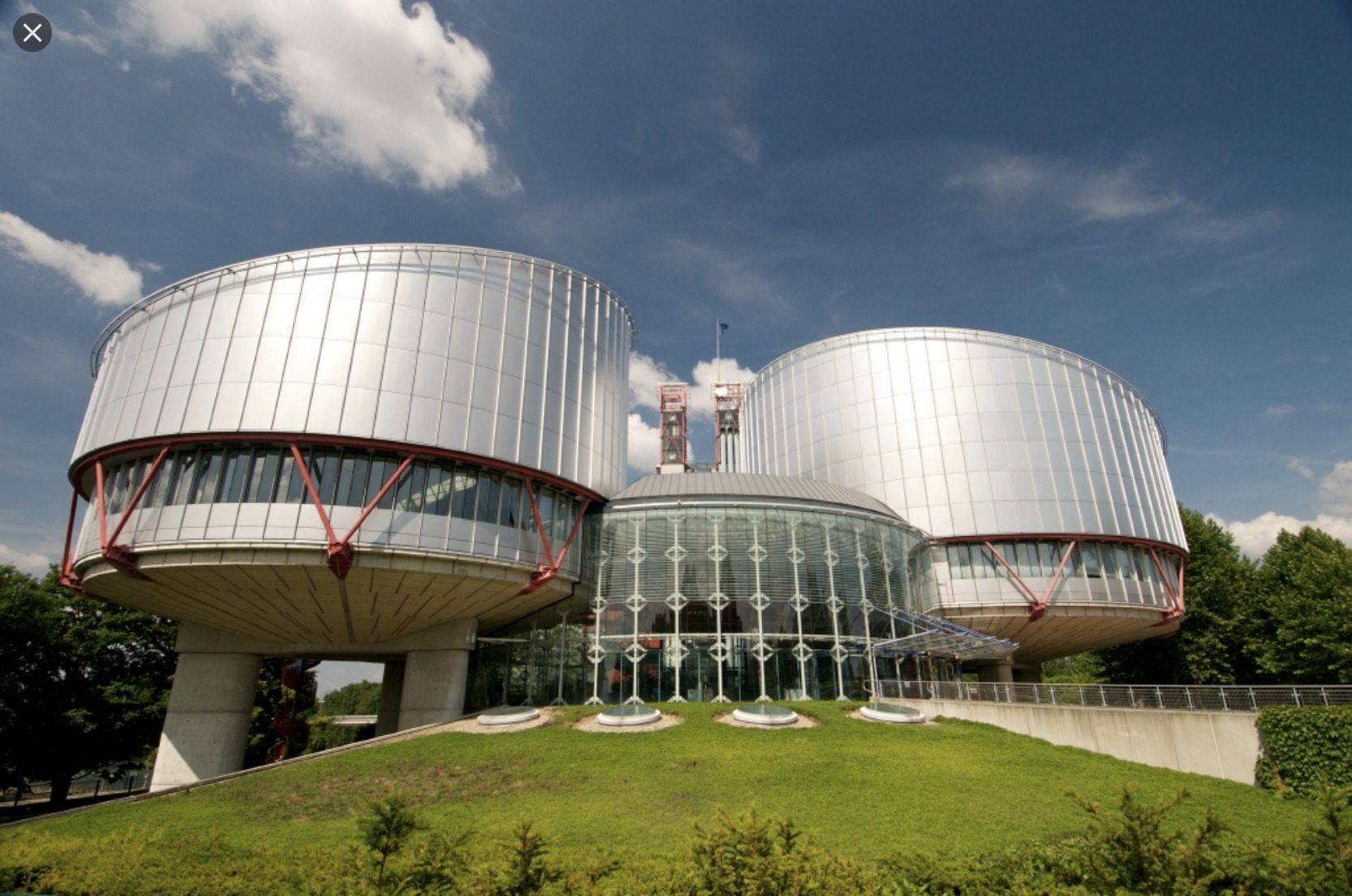
Belgium was condemned for discriminating against Jehovah’s Witnesses. Failure to grant congregations of Jehovah’s Witnesses exemption from property tax in the Brussels-Capital Region since 2018 was discriminatory

ECHR 122 (2022) 05.04.2022

In today’s Chamber judgment1, in the case of Assemblée Chrétienne Des Témoins de Jéhovah d’Anderlecht and Others v. Belgium (application no. 20165/20) the European Court of Human Rights held, unanimously, that there had been:

a violation of Article 14 (prohibition of discrimination) read in conjunction with Article 9 (freedom of thought, conscience and religion) of the European Convention on Human Rights and with Article 1 of Protocol No. 1 (protection of property) to the Convention.

The case concerned congregations of Jehovah’s Witnesses which complained of being denied exemption from payment of a property tax (précompte immobilier) in respect of properties in the Brussels-Capital Region used by them for religious worship. According to an order of 23 November 2017 enacted by the legislature of the Brussels-Capital Region, as of the 2018 fiscal year the exemption applied only to “recognised religions”, a category that did not include the applicant congregations.

The Court held that since the tax exemption in question was contingent on prior recognition, governed by rules that did not afford sufficient safeguards against discrimination, the difference in treatment to which the applicant congregations had been subjected had no reasonable and objective justification. It noted, among other points, that recognition was only possible on the initiative of the Minister of Justice and depended thereafter on the purely discretionary decision of the legislature. A system of this kind entailed an inherent risk of arbitrariness, and religious communities could not reasonably be expected, in order to claim entitlement to the tax exemption in issue, to submit to a process that was not based on minimum guarantees of fairness and did not guarantee an objective assessment of their claims.

Plant health summit aims to boost food security, safeguard human health

0
Plant health summit aims to boost food security, safeguard human health
The world’s plant protection body met on Tuesday, aiming to set new plant health standards to both safeguard human wellbeing and preserve food security, according to the UN Food and Agriculture Organization (FAO).
Plant pests and diseases cause food crop losses of up to 40 per cent, according to FAO estimates.

And the damage they cause to agriculture and food production, exacerbates world hunger and threatens rural livelihoods.

In her opening remarks, to the 16th session of what’s formally known as the Commission on Phytosanitary Measures (CPM), FAO Deputy Director-General Beth Bechdol highlighted “crucial opportunities ahead” to raise the profile of plant health issues.

The Commission is the governing body of the International Plant Protection Convention (IPPC) an intergovernmental treaty signed by over 180 countries to coordinate the prevention and control of plant pests.

Celebrating plants

The senior official pointed out that the first celebration of the International Day of Plant Health will be held on 12 May and the first International Plant Health Conference will be hosted by the United Kingdom in September.

Ms. Bechdol thanked Finland for its leadership in implementing the International Year of Plant Health, which came to a close in July, and Zambia for championing the declaration of the annual International Day, which the General Assembly decided on last week.

Moreover, she said that last year, increased cooperation with the Comité de Liaison Europe-Afrique-Caraïbe-Pacifique resulted in a Memorandum of Understanding “that will trigger the development of advocacy materials and e-learning courses for use by phytosanitary practitioners around the world.”

Health and trade standards

With a total of 184 parties to the IPPC, the Commission is the only global or UN entity mandated to set standards for protecting plants and their products across borders while also facilitating save and efficient conditions for trading plants worldwide.

The IPPC Secretariat also sets up a global pest outbreak alert and a response system so that States can prepare for, and respond to, emerging pests in their territories.

And the Secretariat is currently working on adopting IPPC standards to help nations design best practices in plant health and safe trade.

The current challenges we are witnessing today leave us with no option but to join our efforts and show full commitment towards the mitigation of the effects of the risks by adopting the IPPC standards and applying them at country and regional levels,” said CPM Chairperson Lucien Kouame Konan.

Without plant production, there will be no food for humans or feed for animals – IPPC Secretary

Positive ripple effects

The safe trade of healthy plants and their products across borders form the basis of a robust food value chain and are a key component in the fight against world hunger.

“Without plant production, there will be no food for humans or feed for animals,” reminded IPPC Secretary Osama El-Lissy.

He underscored the Convention’s “essential role” in providing knowledge and polices to safely move “billions of plants and plant products across borders,” adding that this also supports the Sustainable Development Goals (SDGs).

UN climate report: It’s ‘now or never’ to limit global warming to 1.5 degrees

0
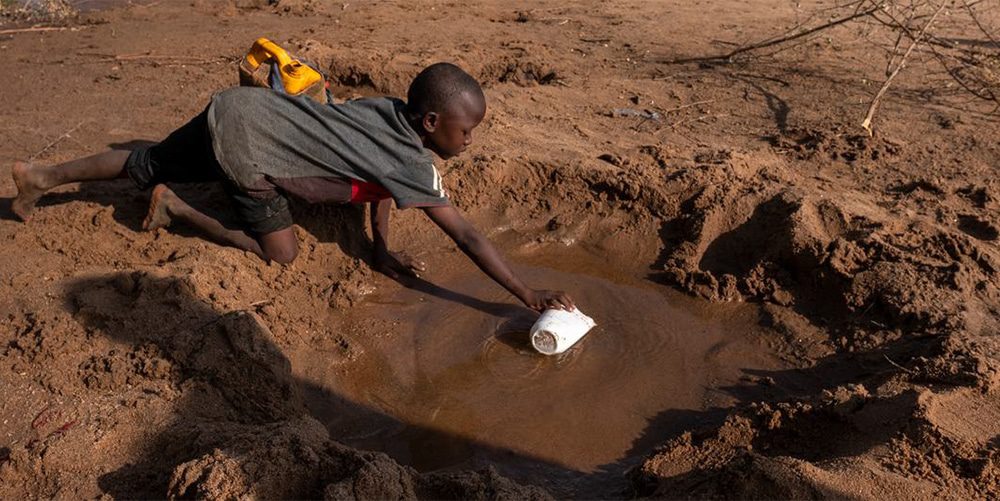
A young boy collects what little water there is in a dry river in Somalia.
© UNICEF/Sebastian Rich - A young boy collects what little water he can from a dried up river due to severe drought in Somalia.
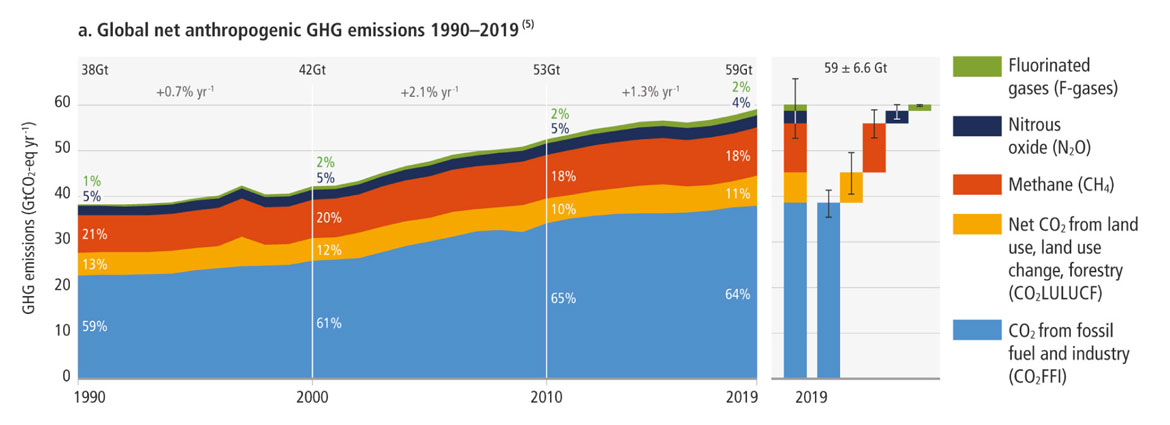
A new flagship UN report on climate change out Monday indicating that harmful carbon emissions from 2010-2019 have never been higher in human history, is proof that the world is on a “fast track” to disaster, António Guterres has warned, with scientists arguing that it’s ‘now or never’ to limit global warming to 1.5 degrees.

Reacting to the latest findings of the Intergovernmental Panel on Climate Change (IPCC), the UN Secretary-General insisted that unless governments everywhere reassess their energy policies, the world will be uninhabitable.

Capture décran 2022 04 05 à 19.55.34 UN climate report: It’s ‘now or never’ to limit global warming to 1.5 degrees

His comments reflected the IPCC’s insistence that all countries must reduce their fossil fuel use substantially, extend access to electricity, improve energy efficiency and increase the use of alternative fuels, such as hydrogen.

Unless action is taken soon, some major cities will be under water, Mr. Guterres said in a video message, which also forecast “unprecedented heatwaves, terrifying storms, widespread water shortages and the extinction of a million species of plants and animals”.

Horror story

The UN chief added: “This is not fiction or exaggeration. It is what science tells us will result from our current energy policies. We are on a pathway to global warming of more than double the 1.5-degree (Celsius, or 2.7-degrees Fahreinheit) limit” that was agreed in Paris in 2015.

Providing the scientific proof to back up that damning assessment, the IPCC report – written by hundreds of leading scientists and agreed by 195 countries – noted that greenhouse gas emissions generated by human activity, have increased since 2010 “across all major sectors globally”.

In an op-ed article penned for the Washington Post, Mr. Guterres described the latest IPCC report as “a litany of broken climate promises“, which revealed a “yawning gap between climate pledges, and reality.”

He wrote that high-emitting governments and corporations, were not just turning a blind eye, “they are adding fuel to the flames by continuing to invest in climate-choking industries. Scientists warn that we are already perilously close to tipping points that could lead to cascading and irreversible climate effects.”

Urban issue

An increasing share of emissions can be attributed to towns and cities, the report’s authors continued, adding just as worryingly, that emissions reductions clawed back in the last decade or so “have been less than emissions increases, from rising global activity levels in industry, energy supply, transport, agriculture and buildings”.

Striking a more positive note – and insisting that it is still possible to halve emissions by 2030 – the IPCC urged governments to ramp up action to curb emissions.

The UN body also welcomed the significant decrease in the cost of renewable energy sources since 2010, by as much as 85 per cent for solar and wind energy, and batteries.

UN climate report: It’s ‘now or never’ to limit global warming to 1.5 degrees
IPCC – Global net anthropogenic emissions have continued to rise across all major groups of greenhouse gases.

Encouraging climate action

“We are at a crossroads. The decisions we make now can secure a liveable future,” said IPCC Chair Hoesung Lee. “I am encouraged by climate action being taken in many countries. There are policies, regulations and market instruments that are proving effective. If these are scaled up and applied more widely and equitably, they can support deep emissions reductions and stimulate innovation.”

To limit global warming to around 1.5C (2.7°F), the IPCC report insisted that global greenhouse gas emissions would have to peak “before 2025 at the latest, and be reduced by 43 per cent by 2030”.

Methane would also need to be reduced by about a third, the report’s authors continued, adding that even if this was achieved, it was “almost inevitable that we will temporarily exceed this temperature threshold”, although the world “could  return to below it by the end of the century”.

Now or never

It’s now or never, if we want to limit global warming to 1.5°C (2.7°F); without immediate and deep emissions reductions across all sectors, it will be impossible,” said Jim Skea, Co-Chair of IPCC Working Group III, which released the latest report.

Global temperatures will stabilise when carbon dioxide emissions reach net zero. For 1.5C (2.7F), this means achieving net zero carbon dioxide emissions globally in the early 2050s; for 2C (3.6°F), it is in the early 2070s, the IPCC report states.

“This assessment shows that limiting warming to around 2C (3.6F) still requires global greenhouse gas emissions to peak before 2025 at the latest, and be reduced by a quarter by 2030.”

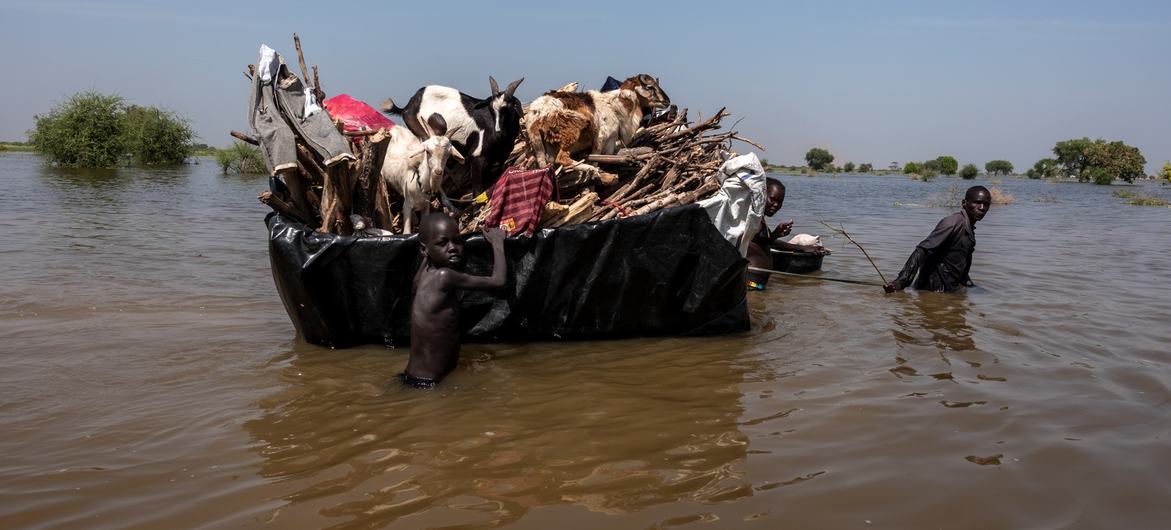
UN climate report: It’s ‘now or never’ to limit global warming to 1.5 degrees
© UNICEF/Sebastian Rich – Families forced to move all their belongings, including livestock, South Sudan.

Policy base

A great deal of importance is attached to IPCC assessments because they provide governments with scientific information that they can use to develop climate policies.

They also play a key role in international negotiations to tackle climate change.

Among the sustainable and emissions-busting solutions that are available to governments, the IPCC report emphasised that rethinking how cities and other urban areas function in future could help significantly in mitigating the worst effects of climate change.

“These (reductions) can be achieved through lower energy consumption (such as by creating compact, walkable cities), electrification of transport in combination with low-emission energy sources, and enhanced carbon uptake and storage using nature,” the report suggested. “There are options for established, rapidly growing and new cities,” it said.

Echoing that message, IPCC Working Group III Co-Chair, Priyadarshi Shukla, insisted that “the right policies, infrastructure and technology…to enable changes to our lifestyles and behaviour, can result in a 40 to 70 per cent reduction in greenhouse gas emissions by 2050. “The evidence also shows that these lifestyle changes can improve our health and wellbeing.”

EU measures to guarantee safe and decarbonised energy

0
EU measures to guarantee safe and decarbonised energy

From heating to transport, energy is essential to everyday life, but also a major source of emissions. Read about EU solutions to decarbonise the sector.

Energy is the biggest source of greenhouse gas emissions in the EU, accounting for more than three quarters . It covers electricity production, heating and transport – all essential to everyday life. In order to reach the EU’s ambitious target of climate neutrality by 2050, emissions need to be drastically cut in the energy sector.

In 2021 gas and electricity have hit record prices. The EU is highly dependent on energy imports, especially when it comes to natural gas (90%) and oil (97%), making them vulnerable to disruptions that can increase prices. Better cooperation and interconnections of energy networks with the development of renewable energy sources can help EU countries secure energy supplies.

Read on to find out about the different proposals the EU is working on to reduce emissions from the energy sector and guarantee a safe supply.

Better connections between EU countries

Connecting energy infrastructure between EU countries can help to secure a diverse supply of energy and better mitigate possible disruptions.

The EU is currently revising rules on the funding of cross-border energy infrastructure projects in order to meet its climate goals. Every two years, a list of key infrastructure projects is selected. These projects can benefit from simplified permits and the right to apply for EU funding.

In April 2022, the Parliament backed a deal reached with the Council to phase out EU funding for natural gas projects and instead redirect money to hydrogen infrastructure and carbon capture and storage.

Renewable hydrogen

When hydrogen is used as an energy source, it does not emit greenhouse gases, meaning it could help decarbonise sectors where it is hard to decrease CO2 emissions. It is estimated that hydrogen could supply 220-50% of the EU’s energy demand in transport and 5-20% in industry by 2050.

However, in order to be sustainable, hydrogen must be produced by renewable electricity. MEPs have insisted on the importance of a clear distinction between renewable and low-carbon hydrogen as well as on phasing out fossil-based hydrogen.

Offshore renewable energy

Currently, wind is the only offshore renewable energy source used on a commercial scale, but the EU is looking into other sources, such as tidal and wave power, floating solar energy and algae for biofuels.

The European Commission has proposed an EU strategy to dramatically increase the production of electricity from offshore renewable sources. Offshore wind capacity alone would grow from 12GW today to 300GW by 2050. Parliament will set out its position later.

More ambitious targets

Increasing the share of renewable energy and enhancing energy efficiency are both needed in order to decarbonise the energy sector. Under legislation aiming to deliver the Green Deal’s targets, the Commission has proposed to revise the targets for both renewable energy (currently 32% by 2030) and energy efficiency (32.5% by 2030).

Read more

Zelenski to Spain: “It feels like April 1937 in Guernica”.

0
Zelenski to Spain
Zelenski to Spain Twitter Spanish Parliament

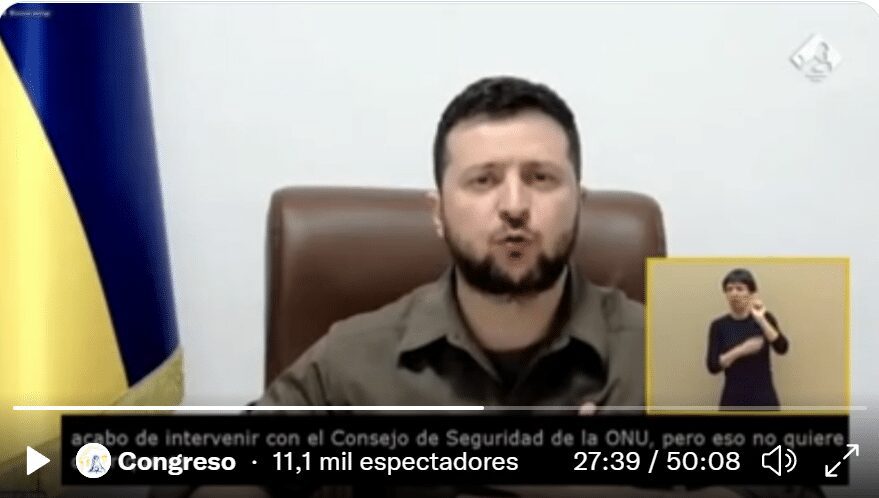
The newspaper 20 Minutos from Spain reported that the President of Ukraine, Volodimir Zelenski, addressed the Spain Congress of Deputies (Parliament) on Tuesday in the presence of deputies and senators in a packed Chamber. He referred, as a historical fact, to the bombing of Guernica, during the Civil War.

Zelenski to Spain: “We are in April 2022, but it seems like April 1937 in Guernica”, he said. After him, the Prime Minister, Pedro Sánchez, said that “Spain condemns with the utmost determination this merciless war by Putin against Ukraine”.

“President Zelenski, count on Spain. Spain is and will always be with the Ukrainian people”, said the head of the Executive after Zelenski who received several ovations from the Chamber and thanked Spain for its support while calling for “tougher sanctions” against Russia. Before Spain, Zelenski connected with a dozen parliaments around the world in recent weeks, including those of the United States, France, Italy and Israel.

The president of the Chamber of Deputies, Meritxell Batet, commented that the aim is for the Ukrainian president to take away from his appearance the “firm” commitment that Spain will be “at the forefront of the fight for European values” and in defence of both international law and the sovereignty of states.

Source 20Minutos.ES