The Conference of European Churches (CEC) conducted a training for Polish churches in Warsaw, focusing on crisis management and ways of ensuring security for religious communities. The training was held as part of theSafer and Stronger Communities in Europe (SASCE), a European Commission-funded project, carried out by CEC and other European faith organisations.
The hybrid event was held on 29 March in cooperation with the Polish Ecumenical Council.
The participants discussed how the low rate of violence in Polish society throughout the pandemic has recently been impacted by the Russian aggression on Ukraine. It was shared that security risks, challenges, and threats in Poland have been triggered by the war, which is reflected in the dynamics of ideologies related to religious identities and any association with them.
The participants identified other issues such as religiously motivated threats, challenges with Islamic militants in the public spaces, far-right extremists, and their activities, which are mainly online and include hate speech, hate crime, and cybersecurity issues. It was noted that these threats translate further into fake news, mostly onset by the war in Ukraine.
The training was conducted by CEC Executive Secretary for Human Rights Dr Elizabeta Kitanovic and Dr Tomasz Bialek, a retired Polish colonel.
The SASCE project was presented by Dr Kitanovic with an emphasis on two cases, namely the vandalism of the Evangelical Lutheran Cemetery in Nowa Wieś Ełcka, which took place in June 2021 in Poland, and the Halle case study in Germany, an attack on a synagogue during Yom Kippur in 2019.
“Cooperation with all religious communities and local authorities is the best way to keep our communities safe,” emphasised Dr Bialek in his message.
“Today’s meeting was of great importance in bringing Polish churches closer and to work more on security together, especially when we are faced with the challenges posed by the war in Ukraine,” said the director of the Polish Ecumenical Council, Rev. Dr Grzegorz Giemza.
On behalf of the Polish Ecumenical Council, Ms Weronika Kluza was nominated as the SASCE ambassador for Poland.
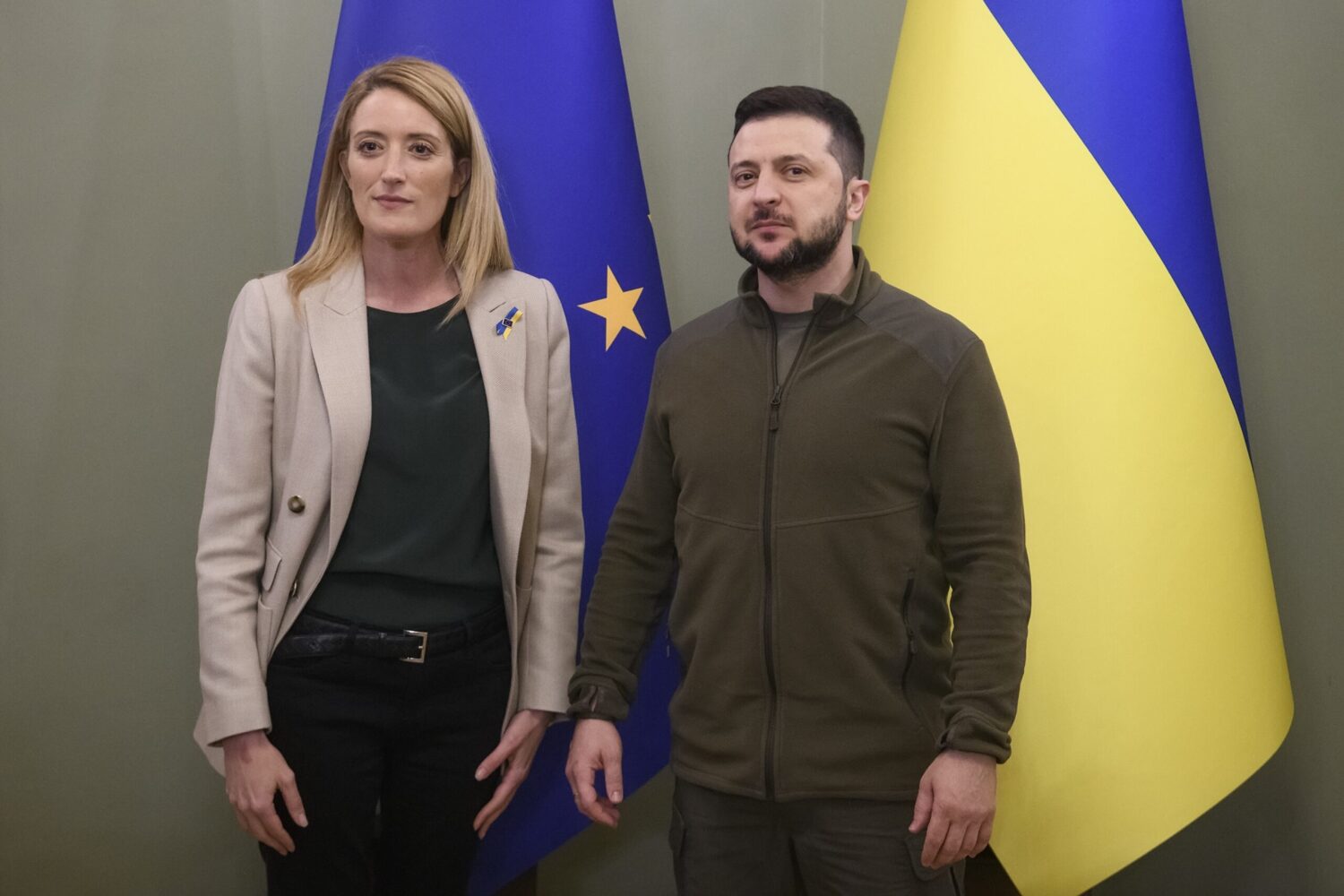
Roberta METSOLA, EP President in Kyiv ( Ukraine ) - Meeting with Volodymyr ZELENSKY, President of Ukraine
The European Parliament President Roberta Metsola was in Kyiv Friday to express the European Union´s support and hope to the Ukrainian people and condemn the unjustified Russian attack. Saturday she visited the Otwock School in Warsaw region hosting Ukrainians fleeing war together with the Polish Prime Minister Mateusz Morawiecki.
She extended her thanks to Poland, the Prime Minister and the government, to local and regional authorities, as well as to the numerous NGOs and volunteers who have ensured an exceptional effort in receiving and hosting Ukrainian families fleeing the war.
President Metsola stated: “We are impressed by the efforts made by Poland, its communities and citizens. You have given people in need a safe and secure space. This is heartwarming to see it – it is the best of Europe.”
“However, Poland has been carrying the largest weight of the consequences of the war outside Ukraine. Therefore, we need more support to Poland and other countries that are receiving and hosting people who are feeling the war in Ukraine”, she called.
At the Otwock school, President Metsola and Prime Minister Morawiecki exchanged with Ukrainian families. The school offers a temporary place for Ukrainians to rest, spend the night, and eat a warm meal. Children are taken care of and given the comfort that they need.
President Metsola thanked all the volunteers and local community workers who tirelessly help Ukrainians. “Polish people have shown to the world, that with solidarity, you can make a difference. The Ukrainians fleeing war, of whom 90% are women and children, know that they are received here with open arms”, she said.
In her remarks to the press, President Metsola reminded, that the humanitarian crisis in the heart of Europe calls us to do all we can to help our fellow Europeans fleeing the war. The European Union has approved a first set of extraordinary measures to provide emergency support, but it is clear that more resources need to be mobilised urgently.
Returning from Kyiv, President Metsola explained that she had passed in Ukraine a message of support and hope to brave Ukrainians defending their country: “I am proud that the European Union has already done so much by welcoming millions of Ukrainians into our countries, homes and hearts.”
Recalling the promise of Europe to Ukraine to take care of all the Ukrainians fleeing the war, until they can return safely and rebuild their lives and livelihoods, she said: “We need to do more, and we will make sure that everyone is taken care of.”
In a private meeting with Prime Minister Morawiecki, President Metsola thanked the Prime Minister for Poland’s efforts in receiving and hosting the largest number of Ukrainians. She also conveyed to the Prime Minister a message of President Zelenskyy to Europe.
David Peace, 55, is the author of 11 novels, including The Damned Utd, made into a film with Michael Sheen in the lead role as Brian Clough, and the Red Riding Quartet, set amid the Ripper murders in West Yorkshire, where Peace grew up. One of Granta’s best young British novelists in 2003, he won the James Tait Black prize a year later for GB84. Tokyo Redux, out in paperback this month, concludes a true-crime trilogy about US-occupied Japan, and concerns the death (still unexplained) of Sadanori Shimoyama, the first president of Japanese National Railways. Peace spoke from Tokyo, his home since 1994.
What led you to write about postwar Japan? I really wanted to write about Tokyo after I finished GB84, around 2003. My children were young and I wanted to know the city’s modern history to be able to tell them about the area we live in, the east end, which was one of the areas bombed flat in March 1945. I wanted to try to understand the experience of survival and how the city rebuilt itself into the Lost in Translation Tokyo people are familiar with. Because I’d tried to understand the time and place in which I grew up by examining the effect of crime on its society, I decided to try to write about three crimes in the occupation period.
What drew you to Shimoyama’s case in particular? It’s generated so many conspiracies and theories; it was the beginnings of the cold war and we’re still living in its legacy. America came to Japan promising democracy, but by 1949, with the Japanese Communist party doing well and the iron curtain going up in Europe, it changed policy – the Reverse Course – and Shimoyama was very much a big part of that. He’s appointed the head of the national railways and gets given a list by America of 100,000 people whose jobs should be cut, mainly leftwing agitators. Posters go up all over Tokyo against him. Then his body turns up on the railroad tracks, decapitated. People asked: was it suicide or murder? And if it was murder, was it the left? The Japanese right? The Americans? The Soviets? Do you seeTokyo Year Zero,Occupied CityandTokyo Reduxas crime novels? When I wrote Nineteen Seventy-Four [his debut], I wanted to write the best crime novel ever; I don’t think I did, but that was my intention. Now I don’t think about that any more. It’s odd: in Europe I’m a crime writer but in the UK I’m not. In Germany I’ve won a Deutscher Krimipreis three times – Redux won it – and ElPaís made Redux their crime novel of the year, but I’ve never been invited to the Harrogate crime-writing festival or anything like that. My publishers have a hard time because fundamentally my books are too literary for a crime audience and too crimey for a literary audience. Yet The Damned Utd sold loads of copies, and half that book is told in the second person in a voice I took from Company by Samuel Beckett. Publishers should be less risk-averse. Look at Hawthorn and Childby Keith Ridgway, or The Treatmentby Michael Nath; if novels are going to survive, novelists have a responsibility to push the boundaries.
I can’t overstate the education you got from reading the NME between 1979 and 1985
Tokyo Reduxtook10 years, during which time you also wrote a novel about Bill Shankly,the Goldsmiths prize-shortlistedRed or Dead, 700 intensely repetitive pages that don’t exactly seem a relaxing side project… But it was! I wasn’t getting Redux right; I wrote probably 300,000 words that didn’t go in, because I was obsessed with keeping the novel in 1949, when the great importance of the Shimoyama case is how [views of it] change over time. So those two joyful years writing Red or Dead were a breath of fresh air. I got this huge box of tapes from Shankly’s ghostwriter and all I had to do was sit in my little room in Tokyo and listen to Shankly, a hero of mine, and read football reports and results. It was a real pleasure to write, even though to a lot of people it’s not a pleasure to read; it is quite obsessional, I realise that. Part of my process is that I take notes from what I’m reading and work them into a text to read aloud, trying to attain a kind of poetry; a great deal of it is reconstructing other people’s sentences. I was lucky to be exposed young to TS Eliot, Beckett and Dos Passos, and I’ve always been attracted to that kind of technique.
Longstanding fears that using mobile phones may increase the risk of developing a brain tumor have been reignited recently by the launch of 5G (fifth generation) mobile wireless technologies. Mobile phones emit radiofrequency waves which, if absorbed by tissues, can cause heating and damage.
Since mobile phones are held close to the head, the radiofrequency waves they emit penetrate several centimeters into the brain, with the temporal and parietal lobes being most exposed. This has led to concern that mobile phone users may be at an increased risk of developing brain tumors, with the International Agency for Research on Cancer (IARC) classifying radiofrequency waves as ‘possibly carcinogenic.’ However, most of the studies that have investigated this question to date have been retrospective studies in which individuals report mobile phone use after a diagnosis of cancer, meaning that the results may be biased.
Today, researchers from Oxford Population Health and IARC have reported the results of a large UK prospective study (a study in which participants are enrolled before they develop the disease(s) in question) to investigate the association between mobile phone use and brain tumor risk. The results are published in the Journal of the National Cancer Institute.
The researchers used data from the UK Million Women Study: an ongoing study which recruited one in four of all UK women born between 1935 and 1950. Around 776,000 participants completed questionnaires about their mobile phone usage in 2001; around half of these were surveyed again in 2011. The participants were then followed up for an average of 14 years through linkage to their NHS records.
Mobile phone use was examined in relation to the risk of various specific types of brain tumor: glioma (a tumor of the nervous system); acoustic neuroma (a tumor of the nerve connecting the brain and inner ear); meningioma (a tumor of the membrane surrounding the brain); and pituitary gland tumors. The researchers also investigated whether mobile phone use was associated with the risk of eye tumors.
Key findings:
By 2011, almost 75% of women aged between 60 and 64 years used a mobile phone, and just below 50% of those aged between 75 and 79 years
Over the 14 year follow-up period, 3,268 (0.42%) of the women developed a brain tumor
There was no significant difference in the risk of developing a brain tumor between those who had never used a mobile phone, and mobile phone users. These included tumors in the temporal and parietal lobes, which are the most exposed parts of the brain
There was also no difference in the risk of developing glioma, acoustic neuroma, meningioma, pituitary tumors, or eye tumors
There was no increase in the risk of developing any of these types of tumors for those who used a mobile phone daily, spoke for at least 20 minutes a week and/or had used a mobile phone for over 10 years
The incidence of right-sided and left-sided tumors was similar in mobile phone users, even though mobile phone use tends to be considerably greater on the right than the left side
Co-investigator Kirstin Pirie from Oxford Population Health’s Cancer Epidemiology Unit said: ‘These results support the accumulating evidence that mobile phone use under usual conditions does not increase brain tumor risk.’
Although the findings are reassuring, it remains unclear whether the risks associated with mobile phone use are different in those who use mobile phones considerably more than was typical of women in this cohort. In this study, only 18% of phone-users reported talking on a mobile phone for 30 minutes or more each week. Those who use mobile phones for long durations can reduce their exposure to radiofrequency waves by using hands-free kits or loudspeakers.
Lead investigator Joachim Schüz from IARC said: ‘Mobile technologies are improving all the time, so that the more recent generations emit substantially lower output power. Nevertheless, given the lack of evidence for heavy users, advising mobile phone users to reduce unnecessary exposures remains a good precautionary approach.’
The study is published in Journal of the National Cancer Institute.
Reference: “Cellular Telephone Use and the Risk of Brain Tumors: Update of the UK Million Women Study” by Joachim Schüz, PhD, Kirstin Pirie, MSc, Gillian K Reeves, PhD, Sarah Floud, PhD, Valerie Beral, FRS, for the Million Women Study Collaborators, 29 March 2022, JNCI: Journal of the National Cancer Institute. DOI: 10.1093/jnci/djac042
The study was funded by the UK Medical Research Council and Cancer Research UK.
EUBAM (European Union Integrated Border Management Assistance Mission) signatory ceremony with Republic of Moldova and Ukraine
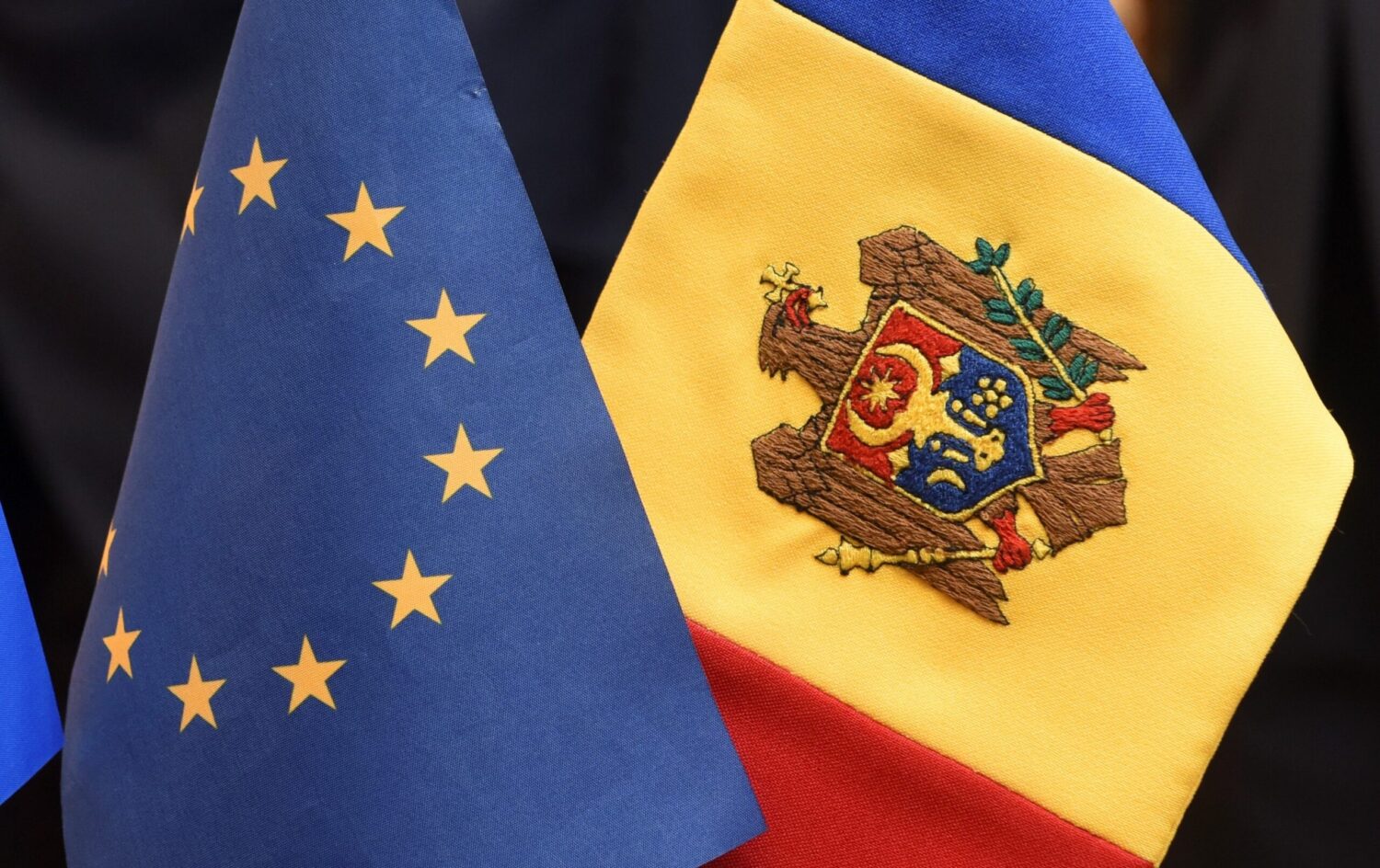
A European Parliament delegation, which travelled to the Republic of Moldova against the backdrop of a worsening security situation in Europe, finalised its visit on Saturday.
In Chișinău, seven members from the European Parliament’s Foreign Affairs Committee and Subcommittee on Security and Defence, led by Urmas Paet (Renew Europe, Estonia) and Nathalie Loiseau (Renew Europe, France), met with Moldova’s top political leadership, including President Maia Sandu, Speaker of the Parliament Igor Grosu, Prime Minister Natalia Gavrilița, and Defence Minister Anatolie Nosatîi.
During their visit, which took place from 31 March to 2 April, MEPs praised the generosity of the Moldovan people for hosting large numbers of Ukrainian refugees. They called on the EU to continue scaling up its efforts to support Moldova in providing shelter and help for the large number of refugees fleeing from the Russian aggression.
The delegation expressed the European Parliament’s solidarity with the people and authorities in Moldova amid a worsening security situation in eastern Europe. The European Parliament is visibly active in the region through its parliamentary diplomacy, which included the visit by Parliament’s President Roberta Metsola to the Ukrainian capital Kyiv.
Stronger cooperation to combat cyber threats and fight disinformation
In their exchanges, MEPs addressed several possible repercussions of the Russian invasion of Ukraine on neighbouring countries like Moldova. They also discussed a variety of other related risks currently facing the country, especially in the energy and cyber security spheres, and underlined the need for the EU to assist Moldova in increasing its energy security arrangements and resilience to hybrid threats, in particular cyber attacks and disinformation.
With regard to Moldova’s recent formal application to join the European Union, Members voiced support for the pro-European government and its chosen reform-path to bring the country closer to the EU.
MEPs discussed with the Moldovan Parliament the follow-up to the Memorandum of Understanding between the two institutions and announced that the European Parliament’s Democracy Support Group would visit. The objective will be to assess possible enhanced parliamentary democracy support measures, including in the areas of information security, tackling cyber attacks and disinformation and strengthening overall capacities and resilience of the Moldovan Parliament.
Besides Chișinău, the delegation visited Palanca, a village on the border with Ukraine and host centre for Ukrainians fleeing Russian aggression. At the border, Members were briefed by Moldovan border authorities on the humanitarian situation for refugees in the area and border management practices, and exchanged views with representatives of the European Union Border Assistance Mission to Moldova and Ukraine (EUBAM) and the UN refugee agency UNHCR.
Quotes
“The consequences of Russia’s aggression against Ukraine are strongly felt in Moldova, and the country is a very important recipient of Ukrainian war refugees. As such, Moldova has the full support of the European Union, both politically and economically,” said Urmas Paet.
“The EU should stand in solidarity with Moldova in these difficult times. Both when it comes to providing help to refugees in the country and strengthening its resilience against Russian cyber and disinformation attacks, the EU must support Moldova”, said Nathalie Loiseau.
Audiovisual material
All the audio and video materials from the delegation visit will be made available here.
When something goes wrong during DNA replication, cells call their own version of 911 to pause the process and fix the problem — a failsafe that is critical to maintaining health and staving off disease.
Now, scientists at Van Andel Institute and The Rockefeller University have for the first time revealed how a key piece of this repair process — appropriately called the 911 DNA checkpoint clamp — is recruited to the site of DNA damage. The findings, published today in Nature Structural and Molecular Biology, illuminate new insights into the way cells ensure genetic instructions are properly passed from one generation of cells to the next. The project was led by the study’s co-corresponding authors Huilin Li, Ph.D., of VAI, and Michael E. O’Donnell, Ph.D., of The Rockefeller University and Howard Hughes Medical Institute.
“DNA damage can have severe consequences, including cancer and other diseases. Because of this, our cells have a host of checks and balances to ensure DNA integrity,” Li said. “Our high-resolution structure of the 911 DNA checkpoint clamp as it interacts with the molecule that loads it onto the DNA strand gives us a detailed look at the essential process of DNA repair. We hope these insights can be leveraged toward the development of new therapeutic strategies for diseases linked to DNA damage.”
Each day, billions of cells in the human body are replaced through cell division, a process by which one cell splits into two. This fundamental function drives growth and facilitates maintenance of tissues such as skin and muscle. A central part of this system is DNA replication, in which our genetic instruction manual is carefully replicated to ensure each cell has an accurate copy.
DNA damage can result from mistakes in this process or through other factors that directly harm DNA, such as exposure to UV light from the sun or carcinogens such as tobacco smoke. When damage occurs, cells have emergency response systems to either stop replication until the problem can be repaired or to kill the cell, thus preventing the incorrect information from being passed on.
This is where the 911 DNA checkpoint clamp comes in. When DNA damage is detected, the ring-shaped clamp is loaded on the DNA and transported to the site of the error. Once there, it sends a signal to halt cell division while also flagging other repair molecules to remove the damaged DNA and replace it with a corrected sequence.
The structure was determined through use of VAI’s cryo-electron microscopes (cryo-EM), which allow scientists to visualize molecular structures at the atomic level. In the case of the 911 DNA checkpoint clamp, cryo-EM also revealed a surprise: rather than loading onto DNA from the 3’ (or “three prime”) end like all other known DNA clamps, the 911 clamp is loaded onto DNA from the opposite end, called the 5’ (“five prime”) end. This novel and unexpected finding reshapes what we know about DNA replication and sets the stage for further studies in this area.
Reference: “DNA is loaded through the 9-1-1 DNA checkpoint clamp in the opposite direction of the PCNA clamp” by Fengwei Zheng, Roxana E. Georgescu, Nina Y. Yao, Michael E. O’Donnell and Huilin Li, 21 March 2022, Nature Structural & Molecular Biology. DOI: 10.1038/s41594-022-00742-6
Other study authors are Fengwei Zheng, Ph.D., of VAI; and Roxana E. Georgescu, Ph.D., and Nina Y. Yao, Ph.D., of The Rockefeller University. Cryo-EM data were collected in collaboration with VAI’s Cryo-EM Core and the David Van Andel Advanced Cryo-Electron Microscopy Suite.
Research reported in this publication was supported by Van Andel Institute (Li), The Rockefeller University (O’Donnell) and the National Institute of General Medical Sciences of the National Institutes of Health under award nos. R01GM115809 (O’Donnell) and R35GM131754 (Li); the Breast Cancer Research Foundation under award no. 20-068 (O’Donnell); and Howard Hughes Medical Institute (O’Donnell). The content is solely the responsibility of the authors and does not necessarily represent the official views of the National Institutes of Health or other granting organizations.
About Van Andel Institute
Van Andel Institute (VAI) is committed to improving the health and enhancing the lives of current and future generations through cutting edge biomedical research and innovative educational offerings. Established in Grand Rapids, Michigan, in 1996 by the Van Andel family, VAI is now home to almost 500 scientists, educators and support staff, who work with a growing number of national and international collaborators to foster discovery. The Institute’s scientists study the origins of cancer, Parkinson’s and other diseases and translate their findings into breakthrough prevention and treatment strategies. Our educators develop inquiry-based approaches for K-12 education to help students and teachers prepare the next generation of problem-solvers, while our Graduate School offers a rigorous, research-intensive Ph.D. program in molecular and cellular biology.
In honor of women’s month, the Jasmeen media agency in collaboration with the Arab British Chamber in Mayfair has launched its campaign ” Passion Into Action” in a special event that aims to empower and educate women about mental health. Jasmeen Media Agency has attracted top Arab businesses in London such as Atyab Almarshoud and Floward co to identify, understand and respond to signs of mental health challenges by Arab women who are living currently in the UK. The campaign provided the opportunity to train the attendees about top tips and skills needed to overcome the most challenging mental health issues, presented by famous Arab females doctors.
The participation of the Kuwait embassy in London and the Arab Brands in London to support this campaign was even more significant, as the pandemic exacerbated mental health issues globally with high rates of anxiety and depression in particular among all women around the world. Grace the head manager of Atyab AlMarshoud Knightsbridge branch said “it’s our pleasure to support Arab women in London, as part of social responsibility, the brand has been always a great supporter of women’s initiatives. The brand has one of the oldest perfume manufacturers in Kuwait.
The floward co as part of their social responsibility have joined the Jasmeen media campaign, showing great support and understanding of the global mental health challenges that are facing women’s daily life. Diego has represented the floward company and said: ” We are thankful for this opportunity and look forward to expanding our business through the UK, at the same time our aim is to engage the brand name with the values that we believe in to serve our community”.
Jasmeen media agency believes in the important role of women in all industries and has dedicated most of their creative work to empowering women with different brands & agencies. The aim is to create dialogues between cultures, especially East and West, and connect women from different backgrounds to come closer together, that’s through exclusive events and workshops. This event has come to connect and engage Arab women with the Arab brands in London, providing new visibility and enhancing a deep relationship with the brand’s values.
To discuss collaboration with the Jasmeen media Agency
contact: emmajounal.uk@gmail.com
jasmeen.kw@gmail.com
www.jasmeen.co
Press release distributed by Pressat on behalf of Jasmeen Media Agency, on Saturday 2 April, 2022. For more information subscribe and follow https://pressat.co.uk/
The meeting brought together DRC’s Prime Minister Jean-Michel Sama Lukonde, Archbishop Ettore Balestrero, the Apostolic Nuncio to DRC, representatives of CENCO and senior government officials. The focus of the meeting held Thursday was to begin preparations for the papal visit.
According to the Minister of Communications and Media, who doubles up as the spokesperson of the Government, the meeting involved among other matters, the setting up of various preparatory committees.
“You remember that recently the Prime Minister, together with the Apostolic Nuncio and the entire hierarchy of CENCO, announced this great event, namely the arrival of the Pope. Since then, several activities have taken place both at the level of the Church and that of the Government,” said Mr Patrick Muyaya, the spokesperson.
He added, “Today, we have agreed to work more closely to see how we can organise a worthy visit that the Pope deserves,” he said.
The Prime Minister has instructed the various sectors of communication, logistics, finances and others to immediately outline guidelines for committees to start working.
“At the level of communication, at the level of logistics, of stewardship, at the level of finances … the committees will present reports regularly. There will be meetings like this until the Pope arrives. This is to make sure that things are done as they should be done,” emphasised Mr Muyaya.
The Pope is coming for everyone
The Apostolic Nuncio said the visit is not only for Catholic Christians alone but is meant for all Congolese, regardless of their beliefs. The Pope’s visit is intended to promote the reconciliation of all.
“The Pope comes not only for Catholics. He comes for everyone. He wants to see everyone. This is why we are committed to preparing the event well. The Church must do the more specific preparatory work concerning the essential aspects of the Pope’s visit … The Pope comes to lead us to Jesus and to invite everyone to reconciliation,” said Archbishop Balestrero.
There’s a huge amount of variety among exoplanets – planets outside our solar system. There are water worlds, lava planets, egg-shaped worlds, planets with multiple suns, and even planets with no sun at all! What can we learn from all this weird, wondrous variety? What does it tell us about both the exoplanets themselves and our own home planet?
What would be even more awesome, if we found another earth, or a bunch of earths.
That’s one of the things we’re looking for at NASA as we study exoplanets, planets outside our solar system.
But maybe searching for a planet similar to our own, where conditions might have led to an entirely unique origin of life, finally telling us that we’re not alone in the universe, maybe that’s not your thing.
That’s cool.
Maybe you’re more interested in just how weird exoplanets can be.
We think there are entire worlds covered by deep oceans, water worlds.
Not weird enough for you?
Okay. How about planets covered entirely in oceans of lava?
There are egg-shaped planets, worlds that orbit so close to their stars that they’re pulled by gravity into a lopsided shape.
And there are planets where conditions might be just right for it to rain things like glass, or even rubies and sapphires.
There are planets that orbit pairs and even groups of stars. Imagine having three or four suns in the sky!
On the opposite end of the spectrum, there are the loners, rogue planets wandering out in space with no star to call their own.
There are even planets that orbit dead stars, stars that exploded long ago and left behind a rapidly spinning core called a pulsar. Some of these pulsar planets could be among the oldest in our galaxy, pushing 13 billion years.
Such planets would have witnessed most of the history of the universe. Sadly, nearly all of it without tacos.
Now, we think that we haven’t found one yet, that there probably are exoplanets pretty similar to earth out there.
But in the meantime, there are absolutely tons of weird, wondrous worlds in our galaxy.
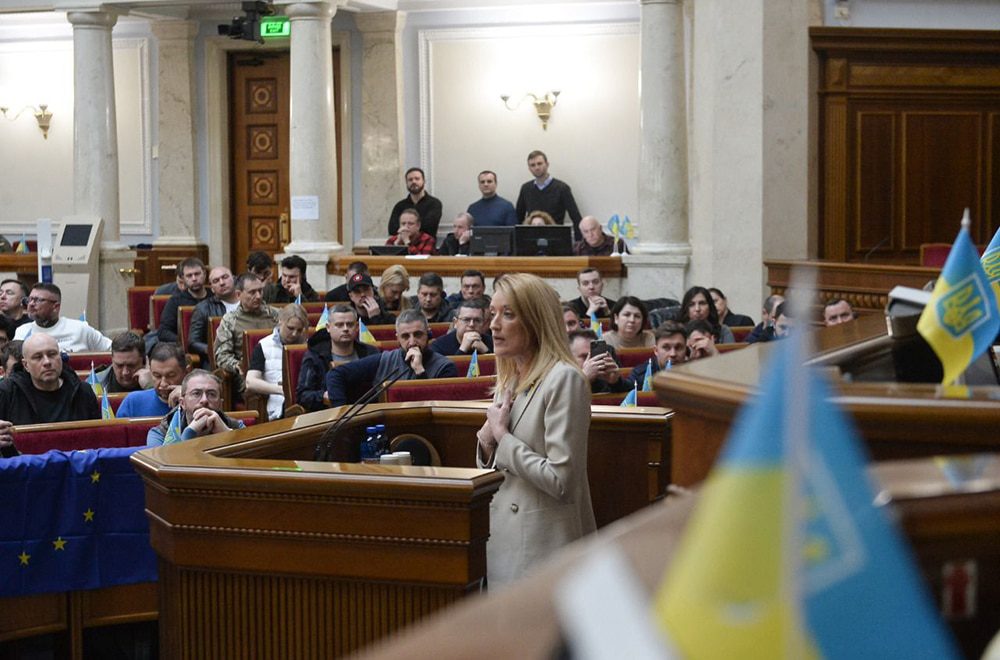
Today, the European Parliament President Roberta Metsola was in Kyiv to deliver a message of courage and hope to all Ukrainians defending their country. In her address to the Verkhovna Rada, she reiterated the European Parliament’s support to Ukraine’s European path, to hold those responsible for the war accountable, and to rebuild cities and towns once the war is over.
Dear Ruslan, Dear Members of the Rada, Dear brave warriors Dear brothers and sisters,
Thank you for inviting me to Kyiv to address the Rada. It is an honour to be here among you fellow European parliamentarians. But more than that, it is a duty for me to be here. It is a duty that I must fulfil. A responsibility to you on the frontline. To show the world that even in the darkness of war, parliamentary democracy is the light.
I am here today, as a representative of the European Parliament, of the people of Europe, to tell you one thing. We are with you. In good times and in less good times – we are with you.
The images we have seen around the world these last horrible months have been of destruction, of death, of innocent lives torn apart, women, children forced to abandon their homes and their lives.
But Europe and the world have also seen your courage and the defiance of Ukrainian families. The heroes of Snake Island are known across the globe. The proud warriors of Mariupol will inspire generations and generations to come.
And soon – I have no doubt- we will see the triumph of hope over fear. Because you show the world, that no amount of terror can intimidate and that bombs will never destroy pride and they will never destroy dignity.
The EU and the world has seen: you are the defenders of your country. But you are not fighting only to protect your homes and your territory. You are fighting for what we all believe in. Freedom. Democracy. The rule of law. And here, in Ukraine, these values are not buzzwords; they are being fought for because you know that without them, there is nothing else.
The European Union was created to interlink the destinies of the nation-states of Europe so that they could no longer engage in the kind of conflict that led, in less than thirty years, to two world wars. The European Union is a project for peace. But even above that, it is a project about freedom.
And let me say that Ukraine is Europe.
These are sad and tragic times. So many Ukrainians have lost their lives, you have lost family members, relatives and friends. Our thoughts are first of all with all of you. And please believe me, when I say that the European Parliament, the European Union and the people of Europe Stand With Ukraine.
Now words, they can inspire. And words can sometimes change the world. But the world also needs action. And the world also needs compassion. And I am here to convey that message of support and hope, that we will not abandon Ukraine. And that we will not ever let down our guard.
Mariupol is a town I have never visited, but it is the name of a town that I will never ever forget. The shelling of a maternity ward and the killing of children is an act that will go down in infamy. It is an act of inhumanity that sums up the nature of the threat that you have risen to face down. And we will never forget that has happened there. Ever.
Now, let me make three promises to you.
First of all, this invasion of your country puts Russia in direct confrontation with Europe, the international community and the rules-based world order. And it is not something that we will let Putin do unchallenged. We need more and harder sanctions. We will hold those responsible accountable for what they have committed here.
Second, the European Union recognises Ukraine’s European ambitions and your aspirations to be a candidate country for accession. And I stand before all of you here to say, that you can count on me, you can count on the European Parliament in supporting Ukraine’s path in achieving this goal. We know what blood was spilt to get here. And we will not let you down.
And we know more than ever that Ukraine looks to the European Union as its destination. We will respond with honesty and with hope. Every country has its own path – but the European Union’s future of Ukraine should never be in doubt.
Thirdly, we will take care of your families who are forced to flee, until the day they can safely return to their homes and rebuild their lives. And we will help you to rebuild your cities and your towns when this illegal, unprovoked and unjustified invasion is over. We have already provided assistance: financial, military and humanitarian. This will continue and this will increase. We will create the Ukraine Solidarity Trust Fund and organise an International Donors Conference, to help rebuild. Because this attack on your homeland has changed everything.
You did not invite this invasion. Nor did you provoke it. You did not seek a confrontation. But you have risen to meet this moment that is testament to the greatness of a people, to your courage, to your strength of character.
Now, my call is for the Europe Union to meet this moment with the same vigour. Because this must be our whatever-it-takes moment.
The rules-based order of the world remains strong. Putin miscalculated not only the courage and resistance of your country, but the strength of the democratic order. He fundamentally mistook our debates for weakness. And he has paid an unprecedented cost. Our sanctions hurt and we must go further still.
Millions of your country women and men have fled this country. Millions more are internally displaced and are expected to make their way to other European countries. We must be ready – but more importantly we are willing to do what is necessary to provide a future without fear for those arriving at our borders. And that willingness will remain steadfast. And it will never wane.
The face of Europe, we will show, will continue to be one that is of open hearts and open homes – a tangible expression of our shared European way, where we match compassion with strength.
We need to re-double our efforts to reduce our energy dependencies on the Kremlin. And I want to see a moment when Europe is completely free and secure with our energy supplies.
In this moment of crisis, we need to remember that energy is – and has always been – political. Russia has understood this for years. But so have you.
Europe’s target must be towards a future of zero gas from Russia. Zero gas. This is ambitious but it is necessary.
Because the bottom line is that: we should not, in consuming Kremlin energy, indirectly fund the bombs falling on your homes. And we will speed up our efforts to make sure that this happens sooner rather than later.
Allow me a word on the information war that we are facing. Not only do we need to bolster, strengthen our cyber-defences but we need to keep pushing back against the narrative that confronting Putin makes Europe somehow anti-Russia. Russians are standing up to Putin – and there are many – despite the threat of jail, they are on the right side of history. They are on our side.
Let me end by quoting Jonathan Sacks who said “It’s hard to defeat fear in the name of hope; it needs enormous courage. Yet as our powers of destruction grow even greater, we need that courage even more.”
And in the words of your national poet Taras Shevchenko “Keep fighting – you are sure to win”.
You have the courage.
Ukraine has that courage.
We are with you today, we will be with you tomorrow and we will never ever leave your side.






![Exoplanets: Weird, Wondrous Worlds [Video]](https://i2.wp.com/scitechdaily.com/images/Weird-Exoplanets-777x437.jpg?w=696&resize=696,0&ssl=1 "Exoplanets: Weird, Wondrous Worlds [Video]")