Sunday, March 22, 2026
Home Blog Page 977

Carbon-Free Europe shows the European Union’s most feasible, cost-effective pathway to net-zero by 2050

0

BRUSSELS, BELGIUM, March 30, 2022 – New first-of-its-kind modelling commissioned by Carbon-Free Europe shows the European Union’s most feasible, cost-effective pathway to net-zero by 2050 must retain existing carbon-free energy sources including nuclear and bring all available low-carbon technologies online. This analysis shows crucial steps Europe and individual Member States must take over the next three decades to ensure credible trajectories to net-zero.

To reduce dependence on Russian gas in the next 12 months the EU must maximise its existing clean energy from nuclear power plants, increase ambition around energy efficiency and electrification of buildings and transport, and build an unprecedented amount of renewable energy.

The analysis reinforces that the chances of reaching emissions goals for individual countries and the EU increase as more clean technology and fuel options, such as carbon capture, direct air capture, hydrogen, and nuclear power, are included as viable mitigation options. Increased optionality reduces risk and makes it more likely that clean energy will be cost-effective and net-zero goals can actually be achieved.

The optimal energy mix to achieve these goals would require the EU to make the investments and scale infrastructure to generate 20% of its electricity from nuclear, 18% from offshore wind, 27% from onshore wind, and 27% from solar, and 8% other resources like biomass, geothermal, and hydro by 2050. Pursuing a 100% renewable energy strategy would cost the EU at least €80 billion more a year by 2050 and require the EU to quadruple its electricity generation compared to a tripling in other net-zero pathways. Using every low- and zero-carbon resource to get to net-zero would also help the EU insulate itself from persistently high natural gas prices and significantly increase its energy sovereignty.

Key takeaways include:

● Electricity Generation: The EU needs to add over 2000 GW of clean energy by 2050. That’s like building the equivalent of two new Europe’s worth of power.
● The EU will need to build on average between 27-79 GWs of solar annually, 6-25 GWs of onshore wind annually, and 11-22 GWs of offshore wind annually out to 2050. In comparison, historically (2011-2020) the entire EU has built on average 23 gigawatts of renewables a year.
● Attempting 100% renewables would require a quadrupling of electricity generation to support additional hydrogen demand, making the buildout challenge even more unrealistic. That would require the EU to add 126 GW every year, 2.6 times more than what Germany built over seven years from 2013 to 2019 during the scale up of the Energiewende.
● Electrification: The EU’s goal to accelerate electrification of buildings, transportation, and parts of industry is a crucial strategy to meet carbon neutrality but, combined with increasing electricity demand to produce hydrogen, will result in more than a 250% increase in the EU’s electricity demand by 2050 compared to today – a significant factor in the buildout challenge outlined above.
● New passenger vehicle sales would need to be fully electric by around 2035 to have a fully electrified passenger vehicle fleet by 2050.
● Industry: Around 50% of the industrial sector is decarbonised by electrifying process heat, and remaining industrial emissions are eliminated using a combination of clean hydrogen and carbon capture.
● Clean hydrogen will develop as an entirely new industry, becoming the backbone of decarbonising industry, freight, shipping, and aviation. By 2050, Europe will need to produce around 31 million metric tons of hydrogen.
● Carbon capture is required in all net-zero pathways in order to decarbonise cement and create negative emissions with bioenergy with carbon capture and storage (BECCS) and direct air capture (DAC).
● Land Use: Our land use constraint analysis suggests the EU and UK have sufficient land for siting renewables, around 8,274 GW of renewables potential if only considering available land and not factoring in economic constraints. After factoring in resource quality and cost of transmission to load centres, the model chooses to deploy 1,900 GW of renewables by 2050 in the Core scenario. Conversations around wind and solar resource potential must consider these economic factors in addition to land use limitations.

Josh Freed, co-founder of the Carbon- Free Europe initiative said: “If policymakers take urgent action to deliver on Europe’s net-zero ambitions, the EU can move away from Russian gas, reduce price volatility for citizens and industry, and enable lower household energy bills in the medium-long term.”

Lindsey Walter, co-founder of the Carbon-Free Europe initiative said: “Our modelling shows the EU can still meet its energy requirements without a regressive turn back to fossil fuels like coal.” “By sticking to its decarbonisation plan and using a diversity of clean energy technologies, the EU also ensures its energy sovereignty and future leadership in sustainable technologies.”

The data will be available here.

Carbon-Free Europe

Carbon-Free Europe is working to galvanise support across Europe for an ambitious decarbonisation agenda and is driving efforts to innovate and modernise European energy systems. Through a combination of cutting-edge research and advocacy, the organisation seeks to encourage national governments to deploy every clean energy technology necessary for the world to achieve net-zero emissions by 2050 at the latest.

The modelling demonstrates how Europe can decarbonize its entire economy, not just the power sector, showing how different sectors interact as they work together to reduce emissions.

More information about Carbon-Free Europe can be found on their website: https://www.carbonfreeeurope.org/

‘Difficult months ahead’ in Ukraine, as deaths rise, along with global shortages

0
‘Difficult months ahead’ in Ukraine, as deaths rise, along with global shortages
At least 1,100 civilians have been killed in a month of fighting in Ukraine, a senior UN humanitarian official told the Security Council on Tuesday, stressing that the conflict “shows no signs of abating.”
Joyce Msuya, Assistant Secretary-General for Humanitarian Affairs, told the 15-member Council that the real death toll is likely much higher than what has been confirmed so far, with so many of the most heavily-bombarded areas targeted by Russian forces, inaccessible to verify casualties.

“Cities, like Mariupol, Kharkiv, Chernihiv and many others – bustling and full of life just one month ago – are encircled, bombarded and blockaded,” she said, emphasizing that at least 99 children number among the dead and injured, as hospitals, homes and schools are destroyed.

‘Not even safe to bury the dead’

Providing an update on the humanitarian situation four weeks into the conflict, the Assistant Secretary-General noted that civilians in the encircled towns and cities lack food, water, medicine, electricity and heating.

“In some neighborhoods, it’s not even safe to bury the dead,” she said.

Meanwhile, more than 10 million people – including more than half of Ukraine’s children – have fled their homes.

That includes some 6.5 million who are internally displaced within the country, according to figures from the International Organization for Migration (IOM)

Scaled-up response

In response, the UN humanitarian system has scaled up its work dramatically.

Since 24 February, humanitarian organizations have reached around 890,000 people across Ukraine with food, shelter, blankets, medicine, bottled water and hygiene supplies.

On 18 March, after delays due to ongoing hostilities, the first UN-organized convoy reached the town of Sumy in northeast Ukraine, delivering food and supplies to some 35,000 people and helping to repair the town’s water system.

second convoy reached Kharkiv, just on Monday.

However, treacherous security risks and access challenges are hampering those efforts, with many routes disrupted and humanitarian convoys and workers frequently unable to pass due to shelling, fighting and landmines.

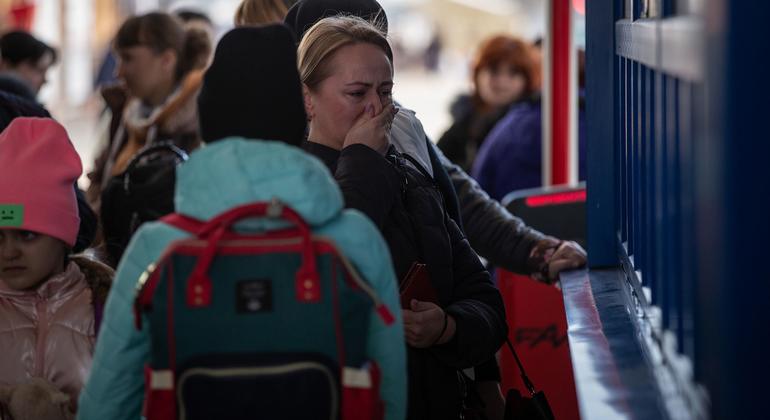
At the border crossing between Ukraine and Moldova at Palanca, refugees stand in line © UNICEF/Vincent Tremeau

At the border crossing between Ukraine and Moldova at Palanca, refugees stand in line

Impacts on global food supply

Also briefing the Council on Tuesday was David Beasley, Executive Director of the World Food Programme (WFP), who described the humanitarian situation in Ukraine as a “catastrophe on top of a catastrophe.”

As Ukraine transforms “from a breadbasket to a bread line,” he also warned of reverberating impacts on the global food supply, stressing that food insecurity in the Sahel, North Africa and the Middle East is likely to worsen and cannot be ignored.

Much of those regions’ supplies of wheat and other food staples comes from Ukraine and the Russian Federation, where it is currently planting season for maize. June and July are the harvest seasons for wheat crops.

The UN Food and Agriculture Organization (FAO) issued a similar warning, also on Tuesday.

Mr. Beasley stressed that the problem of food insecurity will be further compounded by a reduction in fertilizer-based products from the Russian Federation and Belarus, which is likely to result in a 50 per cent drop in yields in many countries.

“There will be difficult months ahead,” he warned.

MEPs demand more action to protect EU budget from misuse

0
MEPs demand more action to protect EU budget from misuse | News | European Parliament

The EU needs tougher measures to protect its budget from misuse by political elites serving their own interests, according to a report to be voted on by MEPs.

The report by Parliament’s budget control committee says there are more political elites than ever misdirecting public funds from the EU budget to serve their own interests. The report also highlights the countries where this is a concern.

As the EU is administrating an unprecedented €1.8 trillion budgetary package for 2021-2027  to support the recovery from the Covid-19 pandemic and other policy priorities, the use of the funds must be subject to stringent scrutiny at EU level, said the report.

The elites involved in misuse frequently rely on businesspeople to act on their behalf while hiding the real beneficiaries. These practices are often connected to widespread corruption, tight control over the media  – in many cases to avoid criminal activities being exposed – and the lack of an independent judicial system.

“The aim of this report is to stop the flow of EU subsidies – our taxpayers’ money – into the hands of the oligarchs,” said report author Petri Sarvamaa (EPP, Finland). “In light of the Recovery and Resilience Facility and possible new instruments, it is clear that the issue could not be more current.”

Protecting payments

Sarvamaa said that it’s high time to end these practices. He calls on the European Commission to create a more explicit definition of “professional conflicting interests” to include lobbying activities and staff frequently moving between public admininistration and companies affected by legislation.

Although the report says the European Anti-Fraud Office (Olaf),  the European Public Prosecutor’s Office and Europol are doing “an invaluable job” in combating financial crimes, it also says these bodies are chronically understaffed and lack financial resources. This is why Sarvamaa urges the Council to invest more in staff for these agencies.

“The most important thing is that the Commission must finally start to use all the tools it has to prevent the misuse of EU funds,” said Sarvamaa. These include the interruption of payment deadlines, the suspension of payments, financial corrections or the exclusion of expenditure from EU financing.

The EU could also benefit from having a single data-mining and risk-scoring tool to analyse data on those who benefit directly or indirectly from the EU budget, the report says. Non-sensitive data could be made public to increase the scrutiny of EU spending.

Parliament will debate Sarvamaa’s report on Wednesday 23 March in Brussels and vote on it the following day.

Future of Europe: Conference debates proposals for EU action

0
Future of Europe: Conference debates proposals for EU action | News | European Parliament
As the Conference on the Future of Europe enters the final stages, a plenary took place on 25-26 March to examine concrete proposals.

The Conference plenary in Strasbourg once again brought together citizens and representatives of the European Parliament, national parliaments, governments, EU institutions, regional and local authorities, civil society and social partners.

Over the course of two days, they met first in working groups to discuss proposals for EU action in particular fields and then together in plenary to review progress.

The working groups are focusing on the recommendations of European and national citizens’ panels as well as contributions from the Conference’s digital platform. The Russian invasion in Ukraine brings to the fore new challenges to be considered.

The working groups: state of play

A stronger economy, social justice and jobs

While citizens’ representatives in this working group focused on the need for more social protection and social safety, other members of the plenary spoke about supporting industry and small and medium-sized enterprises and fostering innovation.

“The main point [of discussions] was to see how we can ensure economic growth is reconciled with social justice… We need progress on both sides,” said the chair of the working group, Iratxe García Pérez, a Spanish MEP from the S&D group. She emphasised the social and economic consequences of the war in Ukraine and said energy poverty and food security have to be addressed.

Culture, education, youth and sport

Recognition of professional qualifications, support for young people trying to enter the labour market and their involvement in political life were among the topics debated. Speakers said diversity is part of the EU identity and they want multilingualism to be supported as it encourages mobility.

Digital transformation

Speakers said the EU should set global standards in the digital sphere. “The common goal is that the EU must become more ambitious and must become a leader in digital connectivity; where there is discussion is how we do that,” said Assita Kanko, a Belgian ECR MEP.

European democracy

EU-wide referenda, the introduction of pan-EU voting lists at EU elections and giving the European Parliament the right to initiate legislation are among the proposals in the democracy-working group. Many called for more citizen participation in political life.

Values and rights, rule of law, security

Attacks on the rule of law, media freedom and disinformation are among the concerns addressed in the group. Daniel Freund, a German MEP from the Greens/EFA group, warned against dismissing the most ambitious and far-reaching proposals, in particular related to sanctioning rule of law violations: “These proposals need to be taken seriously and they cannot be dismissed because they require more ambitious reforms or even treaty change.”

Climate change and the environment

While creating a circular economy, improving public transport and promoting sustainable consumption remain key objectives, the war in Ukraine puts a new focus on reducing energy dependency and promoting local food production, plenary members said.

Working group members said there is no consensus on the future of nuclear energy, as even if it does not emit greenhouse gases, there are concerns about the disposal of nuclear waste.

Health

The proposals include setting minimum standards for health care, promoting healthy lifestyles and ensuring everyone has access to quality health care. Speakers agreed that health care should be a universal right and insisted on more EU competences in the field.

EU in the world

Reinforcing the EU’s autonomy, using the EU’s power as a trade bloc to influence social and environmental standards abroad and improving decision-making in the EU were some of the foreign policy issues.

Andrius Kubilius, an EPP MEP from Lithuania, called for qualified majority voting in the Council on foreign and security policy recalling the historic example of the Polish-Lithuanian kingdom where the requirement of unanimity in parliamentary decision-making was exploited by foreign powers. Kubilius also called for clearer commitment to EU enlargement.

Migration

As close to four million Ukrainian refugees come into the EU, speakers said the EU should map the needs of the economy for skilled labour, ensure fair working conditions for migrants and reform the system of receiving migrants, which should be based on solidarity and responsibility sharing.

Coming up next

The working groups will present their draft proposals at the next plenary session of the Conference on 8-9 April. Another session at the end of April will finalise the position of the plenary. The outcome from the Conference will be presented at an event on 9 May.

Learn more: Future of Europe: EU in the world, migration 

World football goes for goal, in aid of Ukraine

0
World football goes for goal, in aid of Ukraine
With the number of refugees fleeing Ukraine rapidly approaching four million, the UN refugee agency (UNHCR) and the World Food Programme (WFP) on Wednesday launched a new emergency appeal, with an assist from some top football players who know firsthand what it’s like to flee for your life from a warzone.
The Football for Ukraine Emergency Appeal, #football4Ukraine, is led by the two UN agencies, together with six leading footballers – three of whom are former refugees – aiming to raise funds to help those on the run, inside and outside wartorn Ukraine. 

Football stars and Goodwill Ambassadors

The video-appeal includes players from across the English Premier League, Germany’s top division, the Bundesliga, and from the highest division of women’s football in France, Division 1 Féminine, accompanied by music from WFP’s Goodwill Ambassador, the Weeknd.

The three players with a refugee background are UNHCR Goodwill Ambassador and FC Bayern Munich sensation, Alphonso Davies, Mahmoud Dahoud (Borussia Dortmund) – the first Syrian refugee to play in the Bundesliga – and Everton FC goalkeeper, Asmir Begovic, who was forced to flee his home in Bosnia and Herzegovina.

They are joined by Manchester City right-back and FIFA Women’s Player of 2020, Lucy Bronze; Olympique Lyonnais’ Ada Hegerberg, the first woman recipient of the Ballon d’Or; and Manchester United’s Juan Mata, a World Cup winner with Spain.

“It is very sad to see millions of people displaced from around the world due to war. The need for support is growing by the day. This is why this appeal is important, to get urgent aid where it is needed, for everyone”, said Alphonso Davies, who was the first football player to take UNHCR’s Ambassadorial role

Growing crisis

The joint appeal comes at a time when almost a quarter of Ukraine’s population – more than 10 million people – have been forced from their homes. According to UNHCR, some 3.9 million refugees have been forced to flee the country, making this the fastest-growing refugee crisis since the Second World War.

Following recent data, an additional 6.5 million people have been displaced within Ukraine’s borders, and at least 13 million are estimated to be stranded in affected areas or unable to leave due to heightened security risks, destruction of bridges and roads, as well as lack of resources or information on where to find safety and accommodation.

‘Heartbroken’ for Ukraine

Speaking of the millions of people including many children who have been forced to flee their homes in Ukraine, with no idea of what the future holds, Lucy Bronze said she was “heartbroken by the situation”.

“It’s even more shocking to think that this is on top of the more than 84 million people already displaced around the world. I hope our appeal for people displaced in Ukraine will deliver the support they need,” she added.

The joint appeal brings together UNHCR’s expertise in protecting families forced to flee and WFP’s experience in saving lives in conflict zones.

We are inspired by the response we’ve seen from football fans all over the world. – UN High Commissioner for Refugees Filippo Grandi

The two organizations will ensure donations have the greatest impact for people affected by the emergency in Ukraine, allocating resources raised to provide food, shelter, psychosocial support, financial assistance, and other life-saving aid.  

On the ground

In Ukraine, UNHCR is working to provide emergency, shelter and cash assistance and critical protection services for those who have fled their homes.

The agency is also helping coordinate the refugee response across the region, providing critical humanitarian and protection assistance, and supporting authorities to increase capacities to receive and host new arrivals.

© WFP

Bread distribution inside a subway station in Kharkiv, Ukraine.

We are inspired by the response we’ve seen from football fans all over the world, who are showing their support for people affected by the conflict in Ukraine”, said UN High Commissioner for Refugees, Filippo Grandi.

“Our message to everyone, is to remember that no-one chooses to become a refugee. Refugees – from Ukraine and beyond – are placed in the most heart-breaking of circumstances, forced to flee for their lives. Each of us can do our bit and unite behind the campaign, to extend our support”.

Millions of people in Ukraine are living their worst nightmare. – WFP Executive Director David Beasley

WFP is building a massive operation to provide food for civilians trapped in major cities and assist others impacted by the conflict who have fled to neighboring countries.

The UN emergency food agency’s teams are also setting up operations and hubs in several locations in the neighboring countries to facilitate delivery of humanitarian assistance into Ukraine.

“There cannot be a harvest where it’s raining bombs”, said WFP Executive Director David Beasley.

Millions of people in Ukraine are living their worst nightmare and, unless the war stops now, the breadbasket of Europe will be unable to feed itself. With each day of fighting, hunger is tightening its grip not only in Ukraine but also in countries far away from its borders, who rely on Ukrainian wheat and grain to keep their poorest citizens alive. This war is a catastrophe for the world”, Mr. Beasley added.

Stand together

The players, are calling on fans – wherever they are and whatever club they support – to stand together as one team and support people driven from their homes by the war in Ukraine by donating to the appeal here

In a year of unprecedented humanitarian needs, the crisis in Ukraine is a catastrophe compounding what is already a catastrophic year for the poorest and most vulnerable around the world.

While UNHCR and WFP scale up to respond to the growing needs of the Ukraine crisis, they continue to deliver in other critical situations such as in Afghanistan, Syria, South Sudan, Yemen, and other humanitarian crises around the world, often far away from the spotlight. 

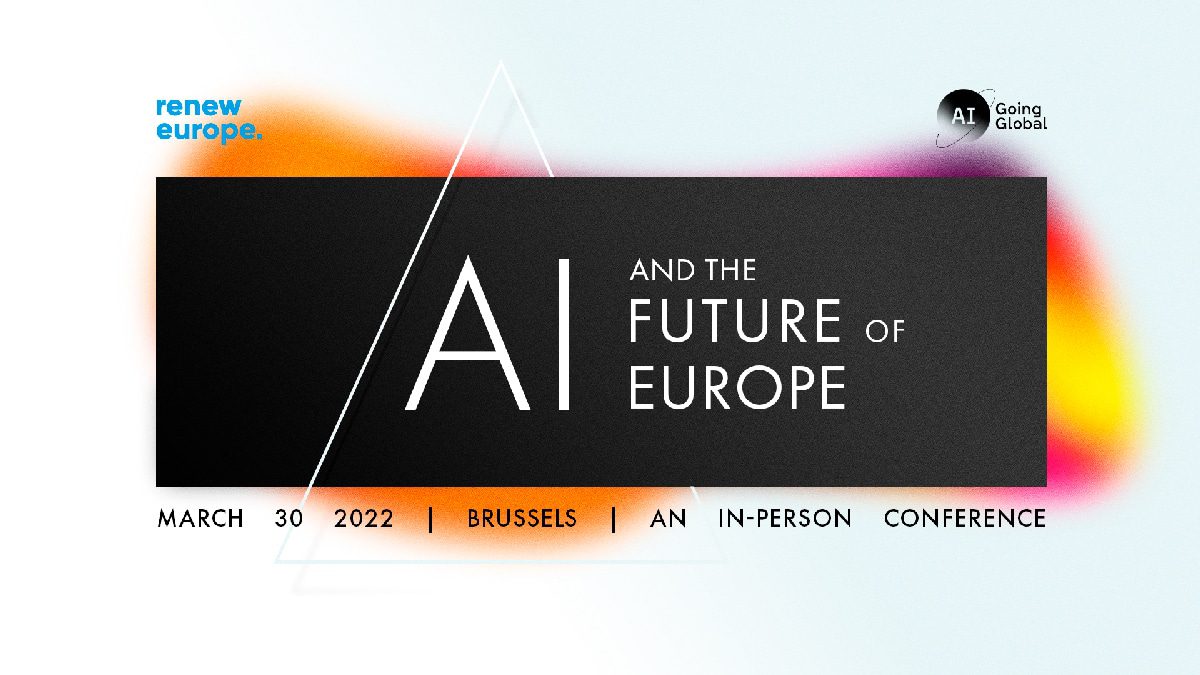
AI and the Future of Europe – Conference in Brussels on the 30th of March

0
AI and the Future of Europe - Conference in Brussels on the 30th of March

Renew Europe MEP Dragos Tudorache, chair of AIDA (Special Committee on Artificial Intelligence in the Digital Age) and Parliament co-rapporteur on the AI Act, is organizing an in-person, high-level conference in Brussels on Artificial Intelligence and its role in the future of Europe. Together with his guests, he will debate policy ideas around European security and European democracy and forward the outcome of the debates in the form of a white paper with concrete policy recommendations to the Commission, French Presidency, and the Conference on the Future of Europe.

Date and location: 30th of March 2022, 2:30pm to 5:30pm, Brussels, live-streamed on:

Facebook: https://fb.me/e/2elx0rorn | LinkedIn: https://bit.ly/3tCFPgv

The European Union is at a crossroads. This is not an ordinary crossroads, and it is not an ordinary and periodic moment of soul-searching and fine-tuning of the European project. Overlapping mutations in the fabric of global affairs, with yet unknown effects, make the following years crucial for the future and perhaps survival of Europe. This has been accelerated to urgency by Russia’s invasion of Ukraine. Technology, and artificial intelligence (AI) as a universal technology, in particular, will be a key ingredient for building a stronger and more democratic Europe and for countering the centrifugal forces that are undermining the European project and are threatening our security. The digital transformation, fueled by AI, will underpin Europe’s transformation,” declared Dragos Tudorache.  

Artificial Intelligence can be applied to every field of human activity and in every transformation process required to strengthen and consolidate the European Union. Given the current strategic landscape, two areas where AI can have an impact stand out as foundations that need reinforcing for securing the future of Europe: European security and European democracy. If the Union is secure and if its democracy is strengthened and stable, we have a real chance to make the Union a technology-powered geopolitically relevant actor on the world scene. Artificial intelligence can serve as a catalyst, he continued.  

Confirmed speakers:

  • Dragoș Tudorache, MEP, Chair of the European Parliament Special Committee on Artificial Intelligence (host)
  • Roberta Metsola, President of the European Parliament
  • Margrethe Vestager, Executive Vice-President of the European Commission
  • Věra Jourová, Vice President of the European Commission
  • Alexandra van Huffelen, Dutch Minister for Digitalisation, Government of the Netherlands
  • Mircea Geoană, NATO Deputy Secretary-General
  • Katalin Cseh, Vice-President Renew Europe, European Parliament
  • Yll Bajraktari, CEO of the Special Competitive Studies Project and former Executive Director of the National Security Commission on Artificial Intelligence.
  • Tobias Vestner, Head of Security and Law Programme, Geneva Centre for Security Policy
  • Torsten Reil, Founder and CEO, Helsing
  • Nathalie Smuha, Researcher on AI, KU Leuven, Faculty of Law
  • Richard Youngs, Senior Associate, Carnegie Endowment for International Peace

Event moderator: Gry Hasselbalch, Senior Key AI Ethics Expert InTouchAI.eu

Panel 1 AI europeantimesnews small AI and the Future of Europe - Conference in Brussels on the 30th of March
Panel 2 AI europeantimesnews small AI and the Future of Europe - Conference in Brussels on the 30th of March

Videogame culture provides overlooked opportunity to engage with climate change, says new report

0
Videogame culture provides overlooked opportunity to engage with climate change, says new report

Organisations wishing to have an impact on climate change shouldn’t overlook the opportunities presented by working with the breadth of videogame culture, according to a report from the global entertainment and research charity OKRE and commissioned by UKRI.

Iain Dodgeon, Director of OKRE, said: “Videogames are a global cultural force. Relentless technological and creative innovation alongside the core consideration of the player in the game design process has propelled the sector’s expansion. No other media exhibits quite such a mutability of form and purpose.”

And indeed as videogames have evolved, so too has how people engage with them – not just playing videogames, but playing with them in other media and in other areas of our lives.

Iain Simons, co-author of the report and curator-at-large for the National Videogame Museum, said: “Because so much of the industry marketing around them is about technology – ‘faster! more realistic! better than last year’s model!’ – it’s tempting to think that games are just hardware and software. The most interesting and important part of videogames is how we live with them. They’re a fantastically rich place for public engagement, both in the games themselves and in the cultures we build around them.”

As games such as Fortnite have become social destinations in their own right, they provide a significant and mostly untapped opportunity for public engagement. However rather than focusing on developing a single game with climate themes, the report, Playing With Videogame Culture, identifies seven broader strategic opportunities for public engagement with climate science through videogames

These opportunities include embracing the breadth of videogame culture in both digital and non-digital spaces. This culture includes streaming, fan communities, fan-fiction and cosplay, and provides a rich and collaborative space that can reach diverse audiences.

Harnessing interest in videogames to inspire engagement with a wide array of STEAM skills and careers is another area of focus, and the report says practitioners should particularly try to understand their potential applications in other sectors, such as future innovation around climate change.

Enabling a more diverse range of communities to creatively explore opportunities for climate action is also key, and one recommended way to go about this is by utilising no-code game design tools to open up participation and creative expression, removing a requirement for technical skills. Organisations should also prioritise local and hyper-local engagement, focusing on social and environmental concerns of more direct relevance to these communities who are often underrepresented in public engagement work.

One opportunity for doing this is through the creation of site and time-specific games – projects that are uniquely relevant to different communities and calendar events, and which can enable people to interact with their area in new and exciting ways.

Digital exclusion is a key concern, and OKRE’s report recommends that both digital and non-digital access points should be included in any programme, with public engagement practitioners embracing board games, card games and other physical games alongside videogames to maximise engagement and access.

Iain Dodgeon said: “By embracing the breadth of opportunities available to engage with videogame culture, organisations can create lasting impact in their public engagement work. This is an area that has been overlooked until now, and so there is really exciting potential for organisations to work in fresh ways.”

The report brings to light past and present examples of videogames engaging with climate change and work being done within the industry in a bid to mitigate its own carbon footprint. It concludes that engagement with climate change should not focus on the development of a single game with climate themes, but rather consider the opportunities available within wider videogame culture to engage diverse communities and increase impact.

OKRE is a new charity providing a global centre for collaboration and knowledge exchange across research, the entertainment industry, and the social impact sector. The charity runs the OKRE Network, which connects professionals across sectors, as well as curating events such as the OKRE Development Rooms, and providing funding and resources to catalyse the creation of entertainment that benefits from alternative insights brought via research and lived experience.

To read the full report, click here: https://bit.ly/3vMLxvV

Notes to editors:

For more information or interview requests, please contact Kat Harrison-Dibbits. Head of Communications at OKRE on 07833 523295 or email k.harrison-dibbits@okre.org.

The seven opportunities identified within OKRE’s report are:

  1. Embracing the breadth of videogame culture
  1. Harnessing interest in videogames to inspire engagement with STEAM skills and careers
  1. Utilising no-code game design tools to open up participation and creative expression
  1. Prioritising local and hyper-local engagement
  1. Incorporating digital and non-digital access points
  1. Deploying site and time-specific games
  1. Improving understanding of the potential of videogame culture to engage underrepresented audiences

To read the full report, click here: https://bit.ly/3vMLxvV

About OKRE

OKRE: Opening Knowledge across Research & Entertainment is a new charity and unique, global hub of expertise bringing together research, entertainment and personal lived experience.  Through facilitating better cross-sector collaboration, OKRE supports the creation of compelling content that expands our understanding of the world.

OKRE works with organisations including UKIE, UKRI, BBC, BFI, Brown Girls Doc Mafia, Bond International, Cannes Festival, Counterpoints Arts, Science Entertainment Exchange and Think-Film Impact Production, and is supported by partners including Unbound Philanthropy, Joseph Rowntree Foundation, Esmée Fairbairn Foundation and Wellcome.

Visit: okre.org

Connect: @okresocial

Press release distributed by Pressat on behalf of OKRE, on Tuesday 29 March, 2022. For more information subscribe and follow https://pressat.co.uk/

The Oxford Legal Walk Returns for 2022!

0
elegant diverse female business partners with documents talking on street
Photo by Sora Shimazaki on Pexels.com

Lawyers and their colleagues from across Oxford are getting together to raise money for free specialist legal advice agencies in Oxford. This year, the Oxford Legal Walk, takes place on Monday 16thMay, led by Judge Joanna Vincent, and the High Sheriff of Oxfordshire, Mark Beard. The 10K walk will welcome fundraisers from all across the legal profession and anyone else who supports giving access to justice for all, hoping to beat last year’s total of £15,000.

What does the walk include?

Walkers will be welcomed at Oxford Combined Court from 5.00pm with walkers heading off at 5.30pm. From there, fundraisers will take part in the 10k walk, which takes in lots of Oxford’s most iconic landmarks finishing with a reception at the end of the walk.

Last year, the walk welcomed over 200 people from law firms, barristers’ chambers, legal advice agencies, courts, law schools and those associated with the law industry walking in teams or on their own but it’s also open to anyone who wants to support free legal advice in Oxford.

Why we walk:

Judge Joanna Vincent, from Oxford Combined Court, says “Last year the Oxford Legal Walk supported many Oxford advice agencies, including Agnes Smith Advice Centre, Oxfordshire Welfare Rights and Citizens Advice Oxford. This support is vital at a time when many of our services are still under pressure due to Covid-19.”

“The Oxford Legal Walk changes real lives by allowing advice centres to support people facing homelessness, discrimination, wrongly denied benefit claims and asylum issues and who can’t afford to pay for a lawyer”.

Ruby’s Story

Ruby has a long-term physical health condition, which causes her severe chronic pain. This escalated to the point where Ruby could not work, and the Department for Work refused to pay her sickness benefit, claiming she was fit to work. Ruby came to a local free legal advice agency who helped her to appeal the decision, which was successful. This agency also helped her successfully claim for a disability benefit, to dramatically improve her quality of life. This was all possible because of the help and goodwill of the Oxford advice agency.

To sign up for the Oxford legal walk please follow this link, or email signups@llst.org.uk

**ENDS**

Notes

LLST was founded in 2003 and is an independent funder striving to increase access to justice through free legal advice.

We help to support over 100 frontline free legal advice charities in London and the south-east through:

  • provision of grant funding
  • supporting infrastructure of the sector, and
  • helping agencies reduce costs and save money via pro bono or discounted schemes as part of our grants plus commitment

in 2020, LLST provided over £800,000 worth of grants and support to legal advice agencies in London and the South East.

History of the walk

The Oxford Legal walk is now in its 5th year. It is organised in collaboration between Oxford Advice Agencies and London Legal Support Trust (LLST). LLST promotes fair access to justice, which means people should all be able to access legal advice equally, irrespective of their financial or social position. This is more important than ever due to national legal aid cuts and court closures and is critical to the local community.

For more information, visit https://rebrand.ly/OxfordLegalWalk22

Contact: Curtis Howett curtis@llst.org.uk – signups@llst.org.uk

Press release distributed by Pressat on behalf of London Legal Support Trust, on Tuesday 29 March, 2022. For more information subscribe and follow https://pressat.co.uk/

The EU response to the Ukraine refugee crisis

0
The EU response to the Ukraine refugee crisis | News | European Parliament

Russia’s invasion of Ukraine has forced millions of people to leave their homes. Find out what the EU is doing to help them and manage its external borders.

Russia’s invasion of Ukraine in February 2022 has created one of the largest humanitarian crises in Europe’s recent history, with the ongoing war causing increasing numbers of casualties, destruction and displacement within and outside Ukraine’s borders.

Ukraine’s civilian population is being subjected to shelling and violence, with millions of people having been displaced, either within the country or to neighbouring states – mainly to Poland, but also Romania, Slovakia, Hungary and Moldova. An estimated 90% of them are women and children, who are also at higher risk of violence and abuse, including human trafficking, smuggling and illegal adoption.

Read more on migration in Europe

EU funds to support frontline countries

The refugee crisis triggered by the war has spurred waves of solidarity and mobilisation throughout Europe, with the EU and its member states providing emergency relief to the displaced and support to the countries bordering Ukraine.

On 24 March, MEPs approved the European Commission’s proposal for Cohesion’s Action for Refugees in Europe (Care) to redirect available funds to EU countries sheltering people fleeing from the Russian aggression. This could include an additional €10 billion from React-EU, a fund created to act as a bridge between Covid emergency measures and cohesion funds.

Parliament also extended for one year – until mid-2024 – the period in which the Asylum, Migration and Integration Fund and the Internal Security Fund operate. The extension allows EU countries to urgently redeploy unused funds to deal with the influx of refugees from Ukraine and is expected to free up around €420 million for additional support, such as accommodation, food, healthcare or extra staff.

Further assistance, such as medical supplies, tents and power generators, has been channelled to neighbouring countries and Ukraine via the EU Civil Protection Mechanism and  RescEU medical stockpiles.

During the 23-24 March plenary session, MEPs also agreed to provide Moldova with financial support to help with the reception of refugees, in addition to the granting of macro-financial aid to cover part of its external financing needs.

Temporary protection for people fleeing Ukraine

In a resolution adopted during an extraordinary plenary on 1 March, Parliament welcomed the activation of the Temporary Protection Directive for the first time since it entered into force in 2001. The directive aims to grant immediate temporary protection in the EU to people fleeing the war in Ukraine, including Ukrainian citizens, people from outside the EU, stateless people or people with residence permits in the country.

This allows displaced people to benefit from the same rights across the EU, such as a resident permit, the possibility to work, housing, and access to social welfare and medical assistance. Temporary protection does not prevent those concerned from applying for asylum.

On 9 March, MEPs called on the EU to introduce a proper migration system that shares responsibility for refugees.

The EU pact on migration and asylum, which is being negotiated, includes a solidarity mechanism that distributes responsibility for protection among EU countries and measures addressing mass influxes of migrants.

Management of EU external borders

On 4 March, the Commission issued new guidelines to help EU countries manage arrivals efficiently and assist border guards carrying out checks at the borders with Ukraine, including the simplification of border controls for vulnerable persons and the establishment of temporary border crossing points.

Parliament also approved the deployment of the European Border and Coast Guard Agency (Frontex) to help Moldova, which is not a member of the EU, manage the massive number of people crossing the border from Ukraine.

European Electoral Act: MEPs want transnational lists and all countries to vote on 9 May

0
The Constitutional Affairs Committee proposes a reform of the European Electoral Act defining common minimum electoral standards and a Union-wide constituency.

With 19 votes to 9 and without any abstentions, the EP Committee on Constitutional Affairs backed on Monday a legislative initiative to replace the current European Electoral Act that defines how Members are elected to the European Parliament.

Transnational electoral lists

In their proposal, MEPs, led by the rapporteur Domènec Ruiz Devesa (S&D, ES), suggest that each voter should have two votes, one to elect MEPs in national constituencies and one in a European Union-wide constituency. 28 additional MEPs should come from the Union-wide constituency.

EU-wide lists of candidates should be submitted by European electoral entities, such as coalitions of national political parties and/or national associations of voters or European political parties. These lists will have to respect geographical representation so that smaller member states are not put at a competitive disadvantage. A new European Electoral Authority would be in charge of registering the lists, according to MEPs.

Minimum electoral standards in all member states

In order to promote a public European debate, MEPs propose a set of minimum standards to be observed during elections in the EU. Every European Union citizen over the age of 18 should have the right to stand as a candidate and a mandatory electoral threshold of at least 3.5% for large constituencies (those with at least 60 seats) should be introduced. The text also sets 9 May as the common European voting day in all member states.

Member states should ensure that European electoral entities are given equal treatment and opportunities as national political parties and that ballot papers used in elections give equal visibility to the names, acronyms, symbols and logos of these entities.

All citizens, including persons with disabilities, should have equal access to the elections. There should always be the option of postal voting, so that for example citizens living in non-EU countries can exercise their right to vote. Gender equality should be mandatory on lists of candidates.

Next steps

The Constitutional Affairs Committee will vote on Tuesday, 29 March on an accompanying resolution to the draft Regulation.

Both texts will then have to be voted on by the European Parliament plenary, possibly during the 2-5 May session. According to Article 223 of the Treaty on the Functioning of the European Union (TFEU), following endorsement by plenary, the legislative initiative will have to be adopted unanimously by the Council, obtain Parliament’s consent and receive the approval of all the member states in accordance with their respective constitutional requirements.

Background

The European Electoral Act, dating back to 1976 (modified in 2002 and 2018, although the later amendment is not yet in force), contains common principles that must be respected by member states’ laws on the elections to the European Parliament. However, the current Act does not define a uniform electoral system applicable across the EU.

According to Article 223 of the TFEU, it is the European Parliament which has the legislative initiative for the European Electoral Act. The EP shall draw up a proposal to lay down the provisions necessary for the election of its Members by direct universal suffrage in accordance with a uniform procedure in all Member States or in accordance with principles common to all Member States.