Female circumcision is the partial or complete removal of the external genitalia without the medical need to do so
About 200 million girls and women who now live on planet Earth have undergone the extremely painful procedure of female circumcision, also called infibulation.
Female circumcision is the partial or complete removal of the external genitalia without the medical need to do so. This operation is commonly referred to as “female genital mutilation” and “female genital mutilation.”
The essence of the operation is that the labia majora are sutured in such a way that only a tiny hole remains, through which urine and menstrual blood are difficult to pass.
In this case, the clitoris and the external labia are often completely amputated and the internal – partially. Due to the deep incision made during the operation, a noticeable scar is formed after healing, which actually completely covers the vulva.
It is said that infibulation is the ideal way to preserve a girl’s virginity until marriage, but it is necessary to perform another operation after reaching the age of marriage so that she can have sex.
Some peoples have a custom according to which on the wedding night the husband takes a knife and with it cuts his wife’s crotch and only then has sexual intercourse with her. Once conceived, it is sutured again.
When it is time for the woman to give birth, the vaginal area is cut again so that the baby can come out, and sutured again after birth.
Usually such interventions are extremely painful for women. Because they are all performed without anesthesia, women in labor lose consciousness from pain.
Death from complications is not uncommon. The instruments are not disinfected, hence the risk of tetanus and other infections increases. Sometimes this barbarism leads to infertility.
The causes of female genital mutilation vary by region, change over time, and are a combination of family and community-specific sociocultural factors.
This practice is usually justified by the following most common reasons:
• In areas where such a practice is part of the customs, incentives for its continuation are social pressure and fear of social rejection. In some communities, female genital mutilation is almost mandatory and the need for it is not disputed.
• These surgeries are often considered a necessary part of a girl’s upbringing and a way to prepare for adulthood and marriage.
• Often the motives for performing these operations are views on proper sexual behavior. The purpose of the operations is to ensure the preservation of virginity before marriage.
• In many communities, the practice of genital mutilation in women is believed to help suppress libido and thus help them resist extramarital sex.
• The practice of female genital mutilation is associated with cultural ideals of femininity and modesty, in which girls are clean and beautiful.
• Although religious texts do not speak of such practices, those who perform such operations often believe that religion supports the practice.
In most communities, this practice is considered a cultural tradition, which is often used as an argument for its continuation.
Seafarers // The United Nations has underlined its support for the men and women working at sea, whose immeasurable contributions help to keep global trade moving.
Secretary-General António Guterres highlighted both their critical role, as well as the challenges they face, In his message to mark the Day of the Seafarer on Saturday.
“The world counts on seafarers,” he said.
“Ships transport a remarkable 90 per cent of the world’s commodities — from grains and energy, to consumer goods and much more. Without ships and the women and men who work on them, economies would stall and people would starve.”
Pandemic challenges
However, seafarers have faced immense challenges stemming from the COVID-19 pandemic.
The UN chief listed some of these issues, which include contracts extended long beyond their expiry dates and maximum periods of service, and problems related to vaccinations, medical care and shore leave.
The International Maritime Organization (IMO) continues to advocate for seafarers during the pandemic by urging countries to designate them as key workers.
Kitack Lim, the IMO Secretary-General, stated (see PDF below) that without seafarers, there would be no shipping.
Sharing the journey
The theme for this year’s international day celebrates maritime journeys and voyages, providing a chance “to recognize and pay tribute to seafarers everywhere, whatever their voyage”, he said.
As part of an IMO campaign, seafarers from around the globe are using social media to share images and information about what truly resonates with them, whether a positive experience or challenging circumstances.
“Shipping and the call of the oceans, form a way of life,” said Mr. Lim. “It is a meaningful, important career that provides a solid foundation for life and offers endless opportunities to learn and progress.”
A greener future
The international day is also an opportunity to look to the future, and for the UN Secretary-General, this means listening to seafarers.
“They know better than anyone their needs and what this industry needs to do to address key challenges. This includes the expansion of social protection, better working conditions, addressing the crew-change crisis, adopting new digital tools to enhance safety and efficiency, and making this industry greener and more sustainable,” he said.
The UN chief concluded his message by calling for renewed commitment to supporting seafarers everywhere, and honouring their knowledge, professionalism and experience.
At the end of June, 25 years after Madrid last hosted a North Atlantic Treaty Organization (NATO) summit, the Spanish capital will again be the scene of a new chapter in European security. And Europe, for the most part, will have to be the protagonist. Ultimately, the alliance’s coming gathering must help us Europeans step up and assume our responsibilities with regard to our continent’s security. That is the best and most necessary contribution that Europe can make to NATO’s future.
Today’s geopolitical context is very different from that of a quarter-century ago. At its 1997 Madrid summit, NATO invited three former Warsaw Pact countries — the Czech Republic, Hungary, and Poland — to join. In addition, following the signing that year of the NATO-Russia Founding Act and the subsequent establishment of the NATO-Russia Council, Europe was looking at a future of unprecedented rapprochement with the Kremlin. Now, of course, little of that optimism remains.
NATO has shown itself to be indispensable for Europe’s security and the best guarantee of their national security for a growing number of countries. One of the most important consequences of the war in Ukraine has been Finland and Sweden’s applications to join NATO — two countries with all the credentials to contribute positively to the alliance. Following Danish citizens’ recent decision to join the European Union’s defense policy, the institutions that form the basis of European security are becoming increasingly aligned.
For decades, a false dichotomy between Europeanists and Atlanticists has fueled a sterile and unproductive security debate in Europe. Today, few doubt that Europeans must contribute more to the alliance and European security, and that they should develop the capacity to lead in future security crises. The question, therefore, is how Europe can best contribute to NATO’s mission.
A strong Europe is indispensable for revitalizing the trans-Atlantic security bond. In one of my first meetings as EU high representative for foreign affairs and security policy, a former British chief of the defense staff pertinently described the direction this relationship should take. “A Europe that remains allied with the United States simply because of its own weakness,” he said, “is of limited value.”
The European response to Russia’s invasion of Ukraine, after the measures the continent adopted to mitigate the economic consequences of COVID-19, has confirmed that Europe becomes stronger in times of adversity. True, Russian President Vladimir Putin’s aggression has made it easier for Europe to unite. But its leaders’ ambition is noteworthy, given some of the measures’ economic costs to Europe.
The basis for advancing European defense integration already exists. Progress in the past 20 years in common security and defense policy, the experience of both civil and military EU missions, the work of the European Defense Agency, and the adoption of the Strategic Compass put Europe in a favorable position to confront the challenge.
The willingness of national publics and EU institutions to finance joint projects to strengthen the European defense sector is an essential first step. The German government’s recent policy shift — nearly doubling defense expenditure in 2022, to 100 billion euros ($107 billion) — represents a historic opportunity to finance projects with other European partners.
And Germany is not alone. The war in Ukraine has prompted EU member states to announce unprecedented increases in defense spending totaling 200 billion euros over the next four years. These commitments contrast with Europe’s previous sluggishness in this domain. Over the past 20 years, the percentage increase in EU member states’ combined defense spending was three times less than that of the US, 15 times less than that of Russia, and 30 times less than that of China.
Fortunately, the amount of military expenditure is less important than how it is spent. We must spend better, together, and as Europeans. Joint defense spending is more efficient than national efforts and helps to reinforce Europe’s industrial and technological base. The European Commission’s recent commitment to allocate 500 million euros for joint defense procurement suggests that Europe is headed in the right direction.
Europe currently relies on spending outside its borders for 60% of its military capabilities. More and better defense expenditure must avoid increasing Europe’s dependence on other countries’ arms industries, as this would undermine efforts to achieve greater European strategic autonomy. But while we should encourage investment in an entirely European defense industry, European Commission President Ursula von der Leyen’s proposed European Defense Union must not create new internal dependencies that benefit a few national industries within Europe.
The development of the EU’s common defense policy neither entails dividing responsibilities with regard to European security, nor pretends to substitute the vital function that NATO fulfills. The responsibilities of the organizations that form the basis of the trans-Atlantic security bond will remain the same. What matters is to assume those responsibilities with all our existing capacities.
The American commentator Walter Lippmann said that alliances are like chains: They can’t be strong with weak links. On the eve of NATO’s 2022 Madrid summit, this is the best way to describe the political challenge facing the trans-Atlantic relationship. Only the political will of Europeans and their leaders will be able to strengthen our continent’s security.
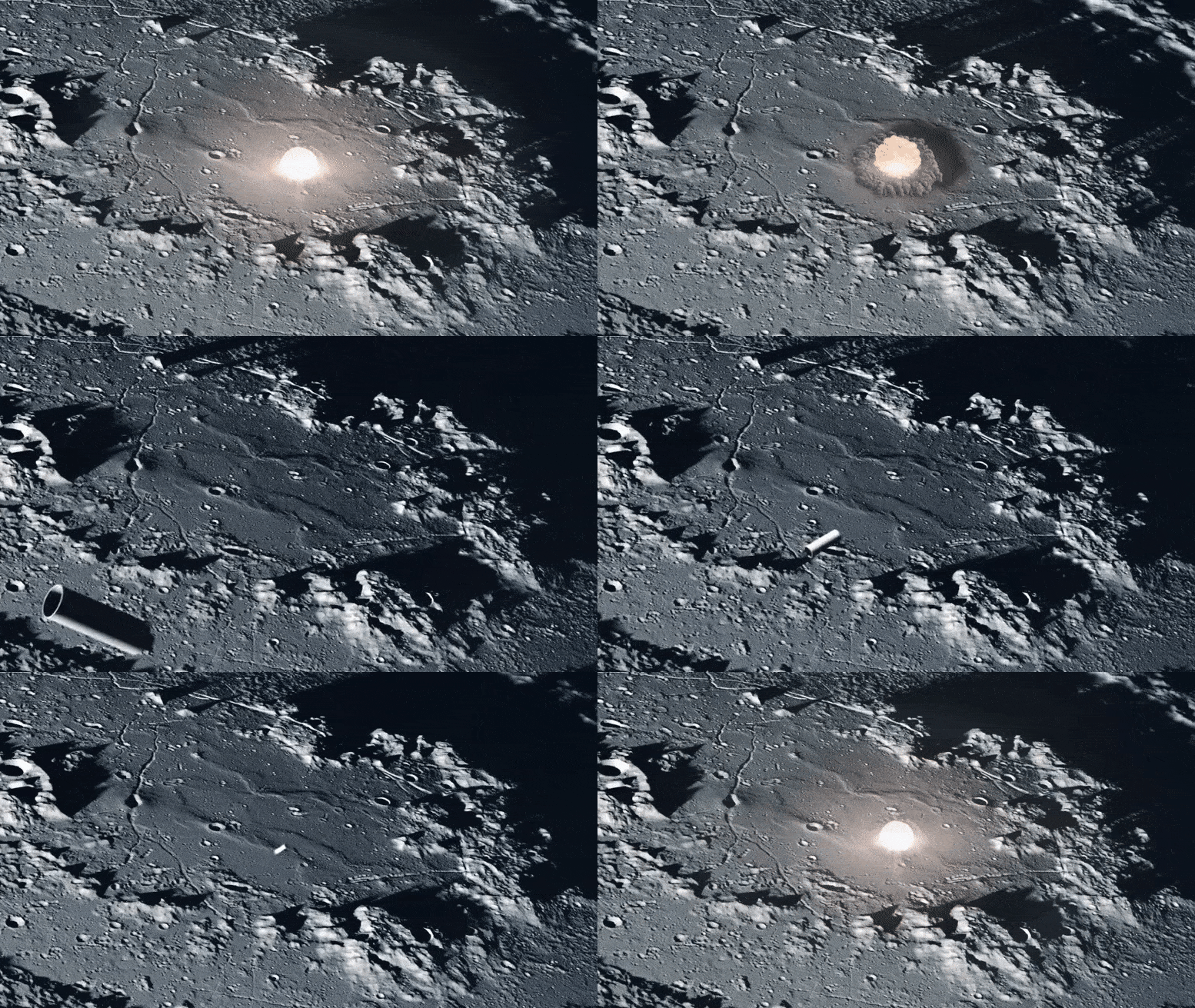
Artist’s animation of a rocket booster crashing into the moon.
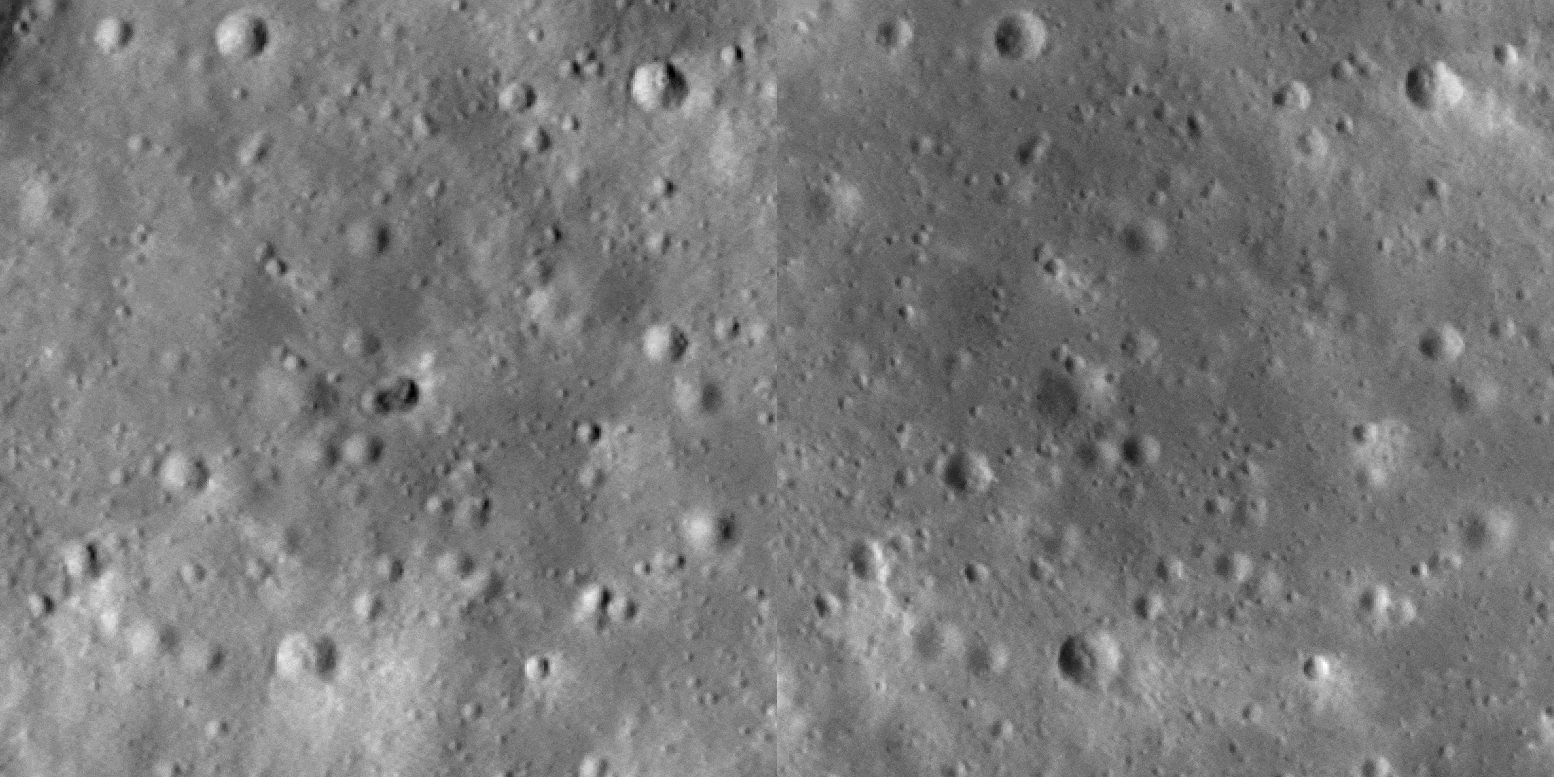
Astronomers discovered a rocket body heading toward a lunar collision late last year. Impact occurred on March 4, 2022, with NASA’s Lunar Reconnaissance Orbiter (LRO) later spotting the resulting crater. Surprisingly the crater is actually two craters, an eastern crater (18-meter diameter, about 19.5 yards) superimposed on a western crater (16-meter diameter, about 17.5 yards).
This animated GIF confirms the location of the newly formed rocket body double crater. The before image is LRO’s view from Feb. 28, 2022 (M1400727806L). The after image is from May 21, 2022 (M1407760984R). The width of the frame is 367 meters, about 401 yards. Credit: NASA/Goddard/Arizona State University
The double crater was unexpected and may indicate that the rocket body had large masses at each end. Typically a spent rocket has mass concentrated at the motor end; the rest of the rocket stage mainly consists of an empty fuel tank. Since the origin of the rocket body remains uncertain, the double nature of the crater may indicate its identity.
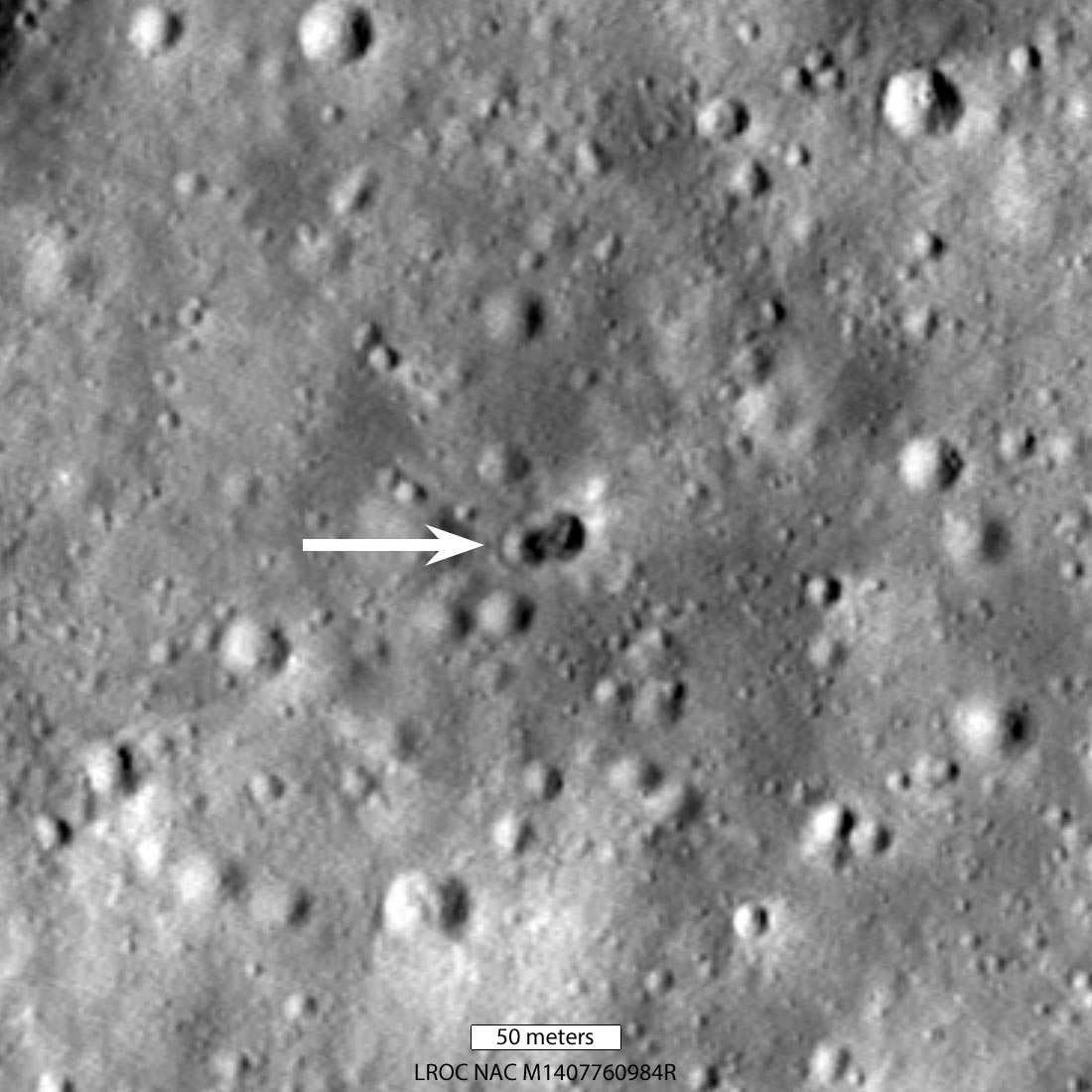
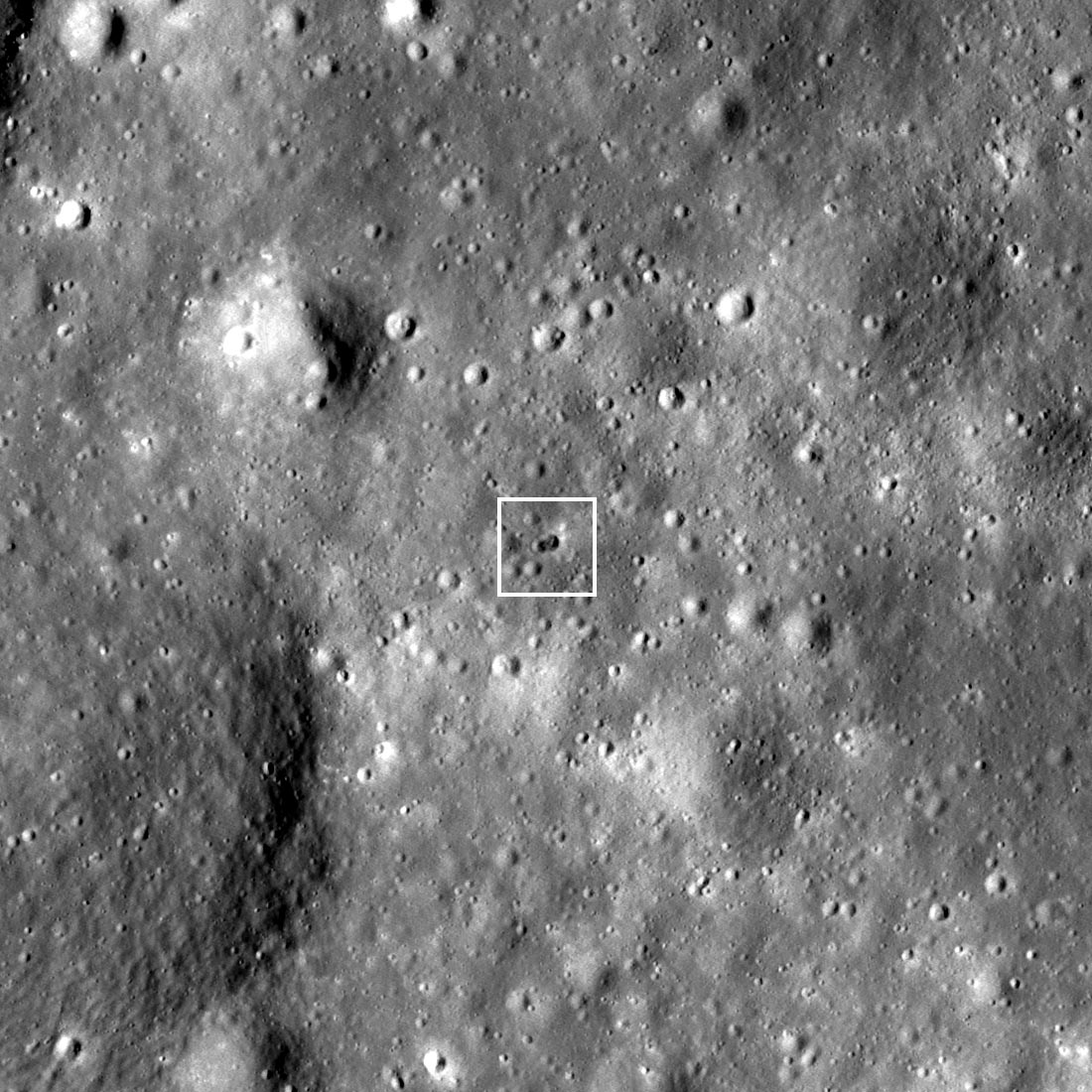
A rocket body impacted the Moon on March 4, 2022, near Hertzsprung crater, creating a double crater roughly 28 meters wide in the longest dimension. LROC NAC M1407760984R; image enlarged 3x. Credit: NASA/Goddard/Arizona State University
No other rocket body impacts on the Moon created double craters. The four Apollo SIV-B craters were somewhat irregular in outline (Apollos 13, 14, 15, 17) and were substantially larger (greater than 35 meters, about 38 yards) than each of the double craters. The maximum width (29 meters, about 31.7 yards) of the double crater of the mystery rocket body was near that of the S-IVBs.
These four images show craters formed by impacts of the Apollo SIV-B stages: crater diameters range from 35 to 40 meters (38.2 to 43.7 yards) in the longest dimension. Credit: NASA/Goddard/Arizona State University
NASA’s Lunar Reconnaissance Orbiter is a robotic spacecraft currently orbiting the Moon in an eccentric polar mapping orbit. LRO data is essential for planning NASA’s upcoming human and robotic missions to the Moon.
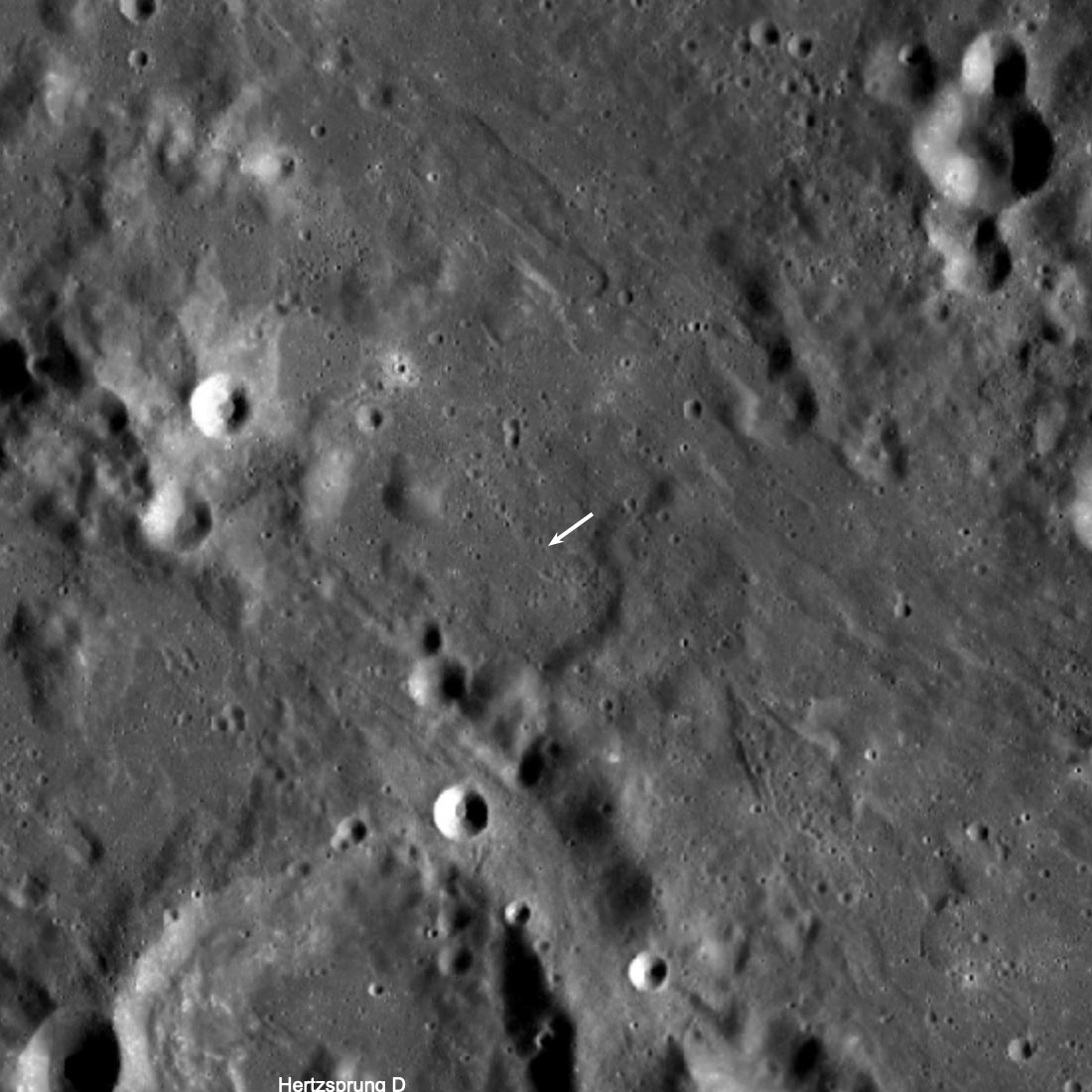
The crater formed (5.226 degrees north, 234.486 degrees east, 1,863 meters elevation) in a complex area where the impact of ejecta from the Orientale basin event overlies the degraded northeast rim of Hertzsprung basin (536 kilometers (333 miles) diameter). The new crater is not visible in this view, but its location is indicated by the white arrow. LROC WAC mosaic, 110 kilometers (68 miles) width. Credit: NASA/Goddard/Arizona State University
LRO is managed by NASA’s Goddard Space Flight Center in Greenbelt, Maryland, for the Science Mission Directorate at NASA Headquarters in Washington. Launched on June 18, 2009, LRO has collected a treasure trove of data with its seven powerful instruments, making an invaluable contribution to our knowledge about the Moon.
Full resolution (100 cm pixels) image centered on the new rocket body impact double crater. NAC M1407760984R, image width 1,100 meters. Credit: NASA/Goddard/Arizona State University
With Artemis, NASA is returning to the Moon with commercial and international partners to expand human presence in space and bring back new knowledge and opportunities.
The CEC Annual Report 2021 titled “Churches Together for Hope” is now available. The report provides an overview of activities carried out by the Conference of European Churches (CEC), highlighting accomplishments and challenges.
The report describes CEC’s work in the context of COVID-19, covering areas such as peace and reconciliation, ecclesiology and mission, dialogue with European Institutions, EU policy and legislation, human rights, care for creation and sustainable development, science, new technologies, education, democracy and diversity, as well as migration and asylum.
In their introduction to the report, CEC President Rev. Christian Krieger and CEC General Secretary Dr Jørgen Skov Sørensen shared how despite pandemic-related restrictions and organisational challenges, CEC managed to navigate unpredictable circumstances, adapting to a situation beyond control. “This was possible through CEC’s dedicated staff, committed Member Churches, National Councils of Churches and Organisations in Partnership.”
“CEC moved towards new directions in 2021. Several years of organisational scrutiny and analysis brought the CEC Governing Board to decide on working towards a better profiled, and not least, more focused organisation, by the end of 2021.”
“As we read about CEC’s journey in 2021, learning about its accomplishments and challenges, let us hold on to a resilient hope, as we move into our common future,” they added.
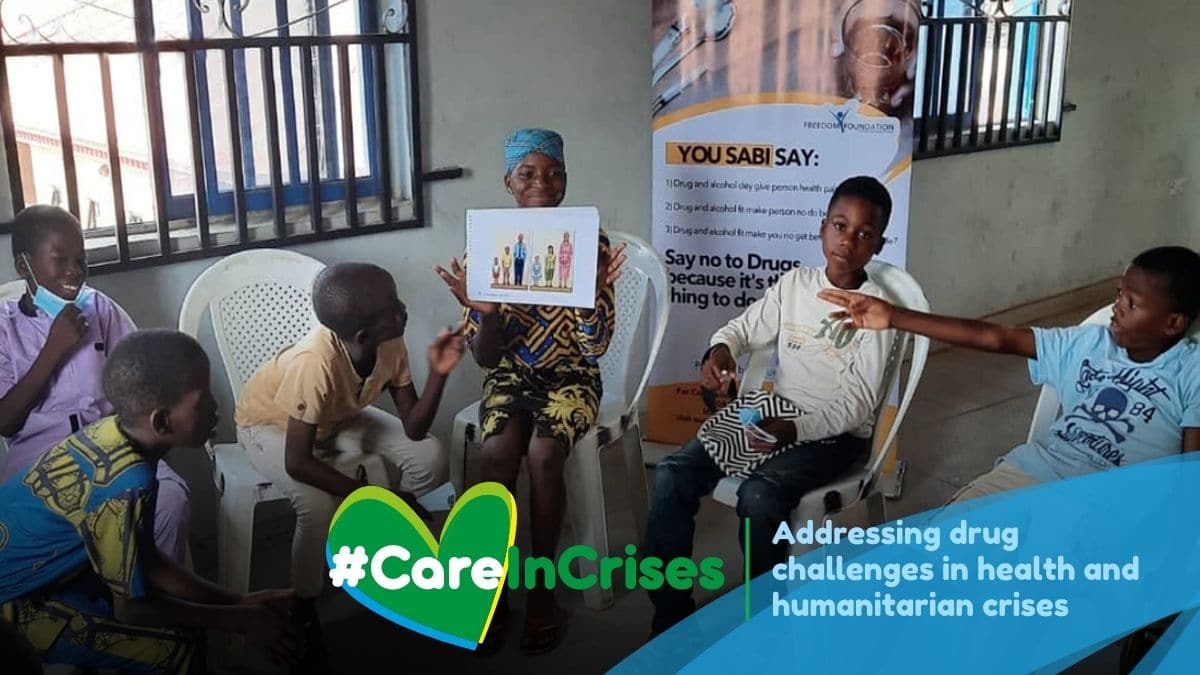
The theme of World Drug Day 2022 is ‘health and humanitarian crises’. To commemorate the Day, UNODC is highlighting its work on drug prevention and treatment around the world, particularly in crisis situations.
Nigeria, 24 June 2022 – Yemisi, a student at a university in Nigeria, had two problems in early 2020.
She was a drug user. And she was pregnant – without the knowledge of her conservative Nigerian family, who were also unaware of her drug habit.
When Nigeria imposed a lockdown following the outbreak of COVID-19, Yemisi’s university closed, and she had to return to her family. Already five months pregnant at the time, Yemisi had yet to enroll in prenatal treatment and was using a cocktail of drugs – cannabis, codeine, diazepam – all harmful to her and her unborn child. Yemisi worried most about how her father, who was severely ill, would react.
“I use drugs to cope with feelings of anxiety, failure, and disappointment,” Yemisi confessed. “I’m pregnant and worried that my sick father will find out and it will lead to his death. I can’t bear that thought.”
Stories like Yemisi’s have become more and more common in Nigeria due to a humanitarian crisis in its northeastern region. According to the UN Office for the Coordination of Humanitarian Affairs, an estimated 8.4 million women, men, and children are in need of humanitarian assistance in 2022. Attacks by non-state armed groups, together with conflicts over land rights, have displaced millions and decimated livelihoods and the provision of essential services.
According to the UN Office on Drugs and Crime (UNODC), drug use and drug use disorders are increasingly recognized as major causes of morbidity and mortality in many conflict or disaster-affected situations. Displaced populations may be vulnerable to such disorders for numerous reasons, including pre- or post-displacement stress and trauma, loss of homes and livelihoods, violence, torture, and family separation. COVID-19 exacerbated such challenges, as the health crisis disrupted the traditional delivery of services and treatment to people using drugs.
Nigeria’s COVID-19 lockdown meant that the estimated three million Nigerians living with some form of drug use disorder were at risk of losing access to treatment options.
Help arrived for Yemisi via a friend who shared the telephone number for DrugHelpNet, a network of drug treatment service professionals providing over-the-phone assistance to drug users during the lockdown.
Yemisi called DrugHelpNet’s counsellors. “I’m worried that I might not have access to drugs and won’t cope with my current situation without using drugs,” she told them.
“I’m still traumatized from the brutal loss of my mother during the farmer-herder crisis in our community,” she continued, referring to the often-deadly disputes over the shrinking amount of land available for farming and grazing.
“My life is ruined and I feel useless.”
But thanks to DrugHelpNet, Yemisi was given a place to live and received both prenatal care and psychosocial support, placing her on the path to recovery. DrugHelpNet also connected her with a suicide prevention group to manage her suicidal thoughts.
“Before now, I felt like this pandemic had strangled the last ray of hope I had to make things right,” Yemisi shared. But after receiving the first three weeks of support, Yemisi said she had learned “how to cope with my cravings,” adding that “my sleep has improved…I’m also not using as much as before.”
Yemisi is one of over 1,000 drug users who have benefitted from DrugHelpNet since its launch in April 2020. DrugHelpNet is composed of over 80 frontline health workers, including medical doctors, drug counsellors, and allied professionals across the six geopolitical zones in Nigeria. It includes seven drug treatment drop-in centres, supported by the European Union-funded “Response to Drugs and Related Organised Crime Project”, implemented by UNODC.
As COVID-19 restrictions ease in Nigeria and worldwide, the Nigerian Society of Addiction Medicine – the current manager of DrugHelpNet – hopes to make the network a more permanent structure. Initiatives underway include efforts to create toll-free lines for DrugHelpNet to increase accessibility to its services.
Further information
Click here for more on UNODC’s work in Nigeria and here to learn about World Drug Day.
Granting candidate status to Ukraine and Moldova would not only strengthen the two countries, but also the EU, Roberta Metsola told EU leaders.
The President of the European Parliament was speaking at the start of an EU summit on 23 June to discuss Russia’s war against Ukraine as well as EU membership applications from Ukraine, Moldova and Georgia.
“I know there are no easy answers or easy decisions, rest assured that there are wrong ones, that we must avoid,” said Metsola. “And it would be a historically wrong decision not to grant candidate status to Ukraine and Moldova today, or give a clear perspective to Georgia.”
She added: “We should be clear this is not simply some symbolic act, this will strengthen the EU and it will strengthen Ukraine and Moldova. It will show our people, as well as theirs, that our values matter more than rhetoric. That hope can mean results. And other countries waiting – those in the Western Balkans – also need to see hope lead to results. It is time.”
Referring to the impact of Russia’s war in Ukraine, the Parliament’s President said: “We have to acknowledge that inflation-fuelled fatigue is setting in, that we are seeing many cases where the resilience of our citizens to the social and economic impact is waning and we need to push back harder. We need to counter the Kremlin’s narrative not feed into the fears it spreads.”
Metsola also said the current situation should not be a reason to backslide on the EU’s climate goals. “It is about security as well as the environment. So my appeal is to ensure that immediate, short-term measures do not become the new normal in the medium-term.”
A ”steady, clear and united approach” will be needed to tackle rising costs and inflation, said the President. She said it would be wrong to dismiss concerns regarding prices as in many countries the peak had not yet been reached.
Aid for Ukraine needed to be sped up while sanctions against Russia needed to be advanced, she said. The EU should also help Ukraine to export its agricultural products.
In closing, Metsola addressed the future of the EU and said a convention to revise the EU treaties was needed to increase the Union’s capacity to act in vital areas: “We must be ready to look at how we operate and see where we can do better. “
You are the crown of virginity, You are the Virgin Mother! And who among the people is able to adequately praise the all-singing Mary? O miracle! She is both the Mother and the Virgin! Closing remarks at the III Ecumenical Council (113, 252).
From the prince of this age, the virginity of Mary, Her birth, and also the death of the Lord were hidden, the loud mysteries that took place in the silence of God. Hieromartyr Ignatius the God-bearer (113, 253).
The power of God, which found on the Virgin, overshadowed her and made the Virgin fruitful. Martyr Justin the Philosopher (113, 253).
The Mother and the Virgin are one and the same: neither virginity prevented Her from giving birth, nor birth violated her virginity. Saint Gregory of Nyssa (113, 253).
She who said the words: “Behold the Servant of the Lord; be it to me according to your word” (Luke 1, 38) and after she conceived in the womb, Virgin, and after she gave birth, Virgin, for the prophet also announced not only that the Virgin will conceive, but also what the Virgin will give birth to (Is. 7, 14) St. Ambrose of Milan (113, 253).
Ever-Virgin Mary is the Mother of God. The Blessed Virgin Mary gave birth to Him Who, being true God, at the very moment of conception in Her womb, took human nature into the unity of His Hypostasis. So that in the incarnation from Her He was, and after the incarnation invariably remains the one Divine Person, as He existed from eternity until the incarnation. She gave birth to the Lord Jesus Christ – not according to His Divinity, but according to humanity, which, however, from the very moment of His incarnation, became inseparably and hypostatically united in Him with His Divinity. From the very moment of His incarnation, it was deified by Him, and became His own Divine Face. So that both the conception, and the stay in the womb of the Virgin during a certain period of gestation, and the birth from Her belonged to His Divine Person proper. She gave birth not to a simple man, but to true God, and not just to God, but to God in the flesh, who did not bring a body from heaven and passed through Her as through a canal, but who took from Her flesh consubstantial with us, which in Himself received a hypostasis. Saint John of Damascus (113, 253).
The Holy Spirit shone in a pure mirror, in the immaculate body of the Virgin, forming a perfect Man not according to the law of nature, not in time, not from human seed, but by one appearance, by spiritual and holy power moved the Virgin to birth, inexplicably draining the Embryo in Her, as if what fabric to save people. Saint John Chrysostom (42, 913).
From His Immaculate Mother, the Lord borrowed pure flesh, and gave Her the Divinity instead of the flesh that She gave Him. Oh, wonderful and wonderful exchange. Saint Simeon the New Theologian (60, 398).
The Virgin Mother is, as it were, the only boundary between the created and uncreated Divine nature. And all who see God will recognize Her as the place of the Uncontainable. And all those who praise God will also sing of Her after God. She is the cause of the blessings and gifts that were before Her to the human race, and the Giver of the present, and the Intercessor of the eternal ones. She is the foundation of the prophets, the beginning of the apostles, the foundation of martyrs, the foundation of teachers. She is the glory of those who are on earth, the joy of those who are in heaven, the adornment of all creation. She is the beginning, the source and the root of the hope prepared for us in heaven, which may we all be honored to receive through Her prayers for us, to the glory of Jesus Christ, our Lord, who was born before the ages from the Father and in recent times became incarnate from Her. Saint Gregory Palamas (65, 144).
Speaking of the Uncorrupted and Unartistic, it is impossible to use the word “conception” in the proper sense, because the words “virginity” and “carnal conception” are incompatible in the One and the Same.
But just as the Son is given to us without a father (earthly), so the Child is born without a carnal conception. Just as the Virgin did not know how a God-acceptable body was formed in Her body, she did not feel birth. According to the testimony of prophecy, Her birth was without illnesses: “before her pains came, she was born with a son” (Is. 66, 7). Saint Gregory of Nyssa (19, 336).
… The Virgin (Eve) expelled us from paradise, through the Virgin (Mary) we found eternal life – by what we are condemned, by that we are crowned. St. John Chrysostom (39, 196).
The Virgin Mary became heaven for us, God’s throne, because the highest Divinity descended and dwelt in Her in order to exalt us… In Her the Divinity was clothed in a robe for us, in order to deliver salvation to us. Saint Ephraim the Syrian (29, 226).
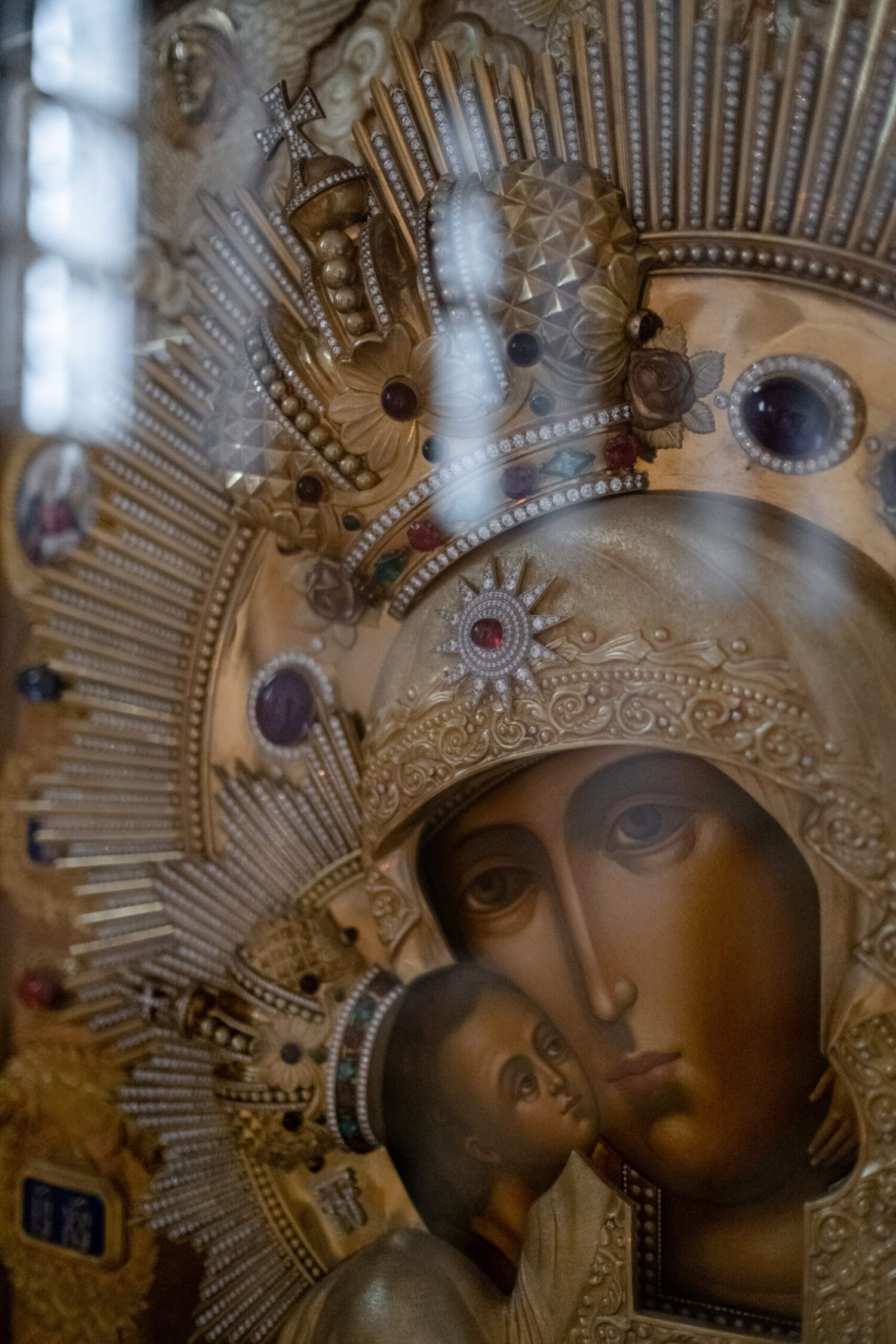
When you see the icon of the Most Holy Theotokos, turn your heart to Her, the Queen of Heaven, and thank Her for appearing so ready for obedience to the will of God that she gave birth, nurtured and raised the Redeemer of the world, and that in our invisible warfare she never becomes impoverished intercession to help us. Saint Nicodemus the Holy Mountaineer (64, 95).
She was of average height, or, as some say, somewhat above average. Her hair was golden, her eyes were lively, her eyebrows were arched, dark, her nose was straight, elongated, her lips were flowering, her face was not round and not pointed, but somewhat elongated, her arms and fingers were long. Nicephorus Callistus (113, 255).
She was a Virgin not only in body, but also in soul: humble in heart, prudent in words, prudent, reticent, a lover of reading … industrious, chaste in speech, honoring not a person, but God as the Judge of Her thoughts. Her rule was not to offend anyone, to be well-disposed to everyone, to honor elders, not to envy equals, to avoid boasting, to be sane, to love virtue. Has She ever offended her parents with her facial expression or been in disagreement with her relatives, has she become proud in front of a modest person, laughed at the weak, evaded the poor? She had nothing stern in her eyes, nothing imprudent in her words, nothing indecent in her actions: her body movements were modest, her tread was quiet, her voice was even; so that Her appearance was a reflection of the soul, the personification of purity. Saint Ambrose of Milan (113, 256).
In conversation, She retained modest dignity, did not laugh, did not become indignant, and especially did not get angry. Absolutely artless, simple, She did not think in the least about Herself, and far from effeminacy, she was distinguished by complete humility. She was content with the natural color of her robes, which even now is proved by Her sacred head covering. In short, in all Her actions, a special grace was revealed. Nicephorus Callistus (113, 256).
We all know that the Ever-Virgin Mother of God is full of grace and all virtues. It is said that in persecutions and troubles she was always cheerful, in need and poverty she was not upset, she was not angry with those who offended her, but even did good to them. She was meek in well-being, merciful to the poor and helped them as much as she could, she was a mentor in piety and in every good deed. She especially loved the humble, because she herself was filled with humility. Many praises are given to Her by those who have seen Her. People worthy of trust told about Her, that according to Her holiness in Her appearance, angelic nature and human nature were united. Saint Hieromartyr Ignatius the God-bearer (113, 256).
When I was introduced before the face of the God-like, most luminous Virgin, a great and immeasurable Divine light shone around me from without and from within, and such a wondrous fragrance spread around me that neither my feeble body nor my spirit itself could endure such abundant and great signs and firstfruits. eternal bliss and glory. My heart has failed, my spirit has failed in me from Her glory and Divine grace! The human mind cannot imagine any glory and honor (even in the state of people glorified by God) higher than the bliss that I then tasted, unworthy, but rewarded by mercy and blessed beyond any idea. Saint Dionysius the Areopagite (113, 256).
Annunciation and the establishment of the sacrament of the Body and Blood. What a combination! We partake of the true Body and true Blood of Christ – the very ones that, in incarnation, are received from the immaculate blood of the Most Pure Virgin Mary. Thus, in the incarnation that took place at the hour of the annunciation, the foundation was laid for the sacrament of the Body and Blood. And now this is brought to memory by all Christians, so that, remembering this, they honor the Most Holy Theotokos as their true Mother, not only as a prayer book and intercessor, but also as a nourisher of all. Children feed on mother’s milk, and we feed on the Body and Blood, which are from the Blessed Virgin Mary. Bishop Theophan the Recluse (107, 96-97).
Who will not be surprised that for all the time from the crime of Adam to the incarnation of the Word of God, who came to earth for the salvation of the human race in half the sixth thousand years, there was not a single such virgin on earth who would be pure not only in body, but also in spirit ? She alone turned out to be the first and last such Virgin, who, by her purity of body and soul, became worthy to be a church and a temple of the Holy Spirit. And just as then, thanks to her virginal purity, she ascended and drew near to God the Holy Spirit and was united into one spirit with God – as it is said in Scripture: “he who is united with the Lord is one spirit with the Lord” (1 Cor. 6, 17), so and in her most honorable Dormition, by the same step, she ascended to him, to heaven and beyond heaven. She ascended to God the Son on the level of humility, for through humility she became worthy to be His Mother. With the same step She ascended to heaven and surpassed in honor and dignity all the faces of the saints … With the same high step of the deepest humility, she reached the highest honor of the Birth of God, incorruptible motherhood, for during Her humble words: “Behold, the Servant of the Lord” (Lk 1:38) in Her most pure virginal womb “The Word became flesh and dwelt among us” (John 1:14). Humility is the foundation of everything, and all other virtues serve as a superstructure on this foundation. And in her life, the Most Pure Virgin most of all, through humility, approached God, Who says:
“On whom I will look: on the humble and contrite in spirit” (Is. 66, 2). With the same humility and in her Assumption, She ascended to heaven and was elevated with glory to the throne of the Heavenly Kingdom, for humility reigns by the Most Pure Virgin where pride is cast down.
To the third most important person of the Holy Trinity – God the Father, She ascended the third highest step – love, for according to the apostle “the love of them is greater” (1 Cor. 13, 13). Through her She became the Daughter of the Heavenly Father. How the Most Pure Virgin loved God, no language can explain this, no mind can comprehend, for love is one of the unknown secrets of the heart, known only to God, and to the testing heart, known.
… In people, love differs by type: in a special way they love their parents, otherwise a friend, otherwise a son. The love of the Most Pure Virgin had no differences, for the One whom She loved was for Her both the Father, and the only Son, and the imperishable Bridegroom. All Her all-encompassing love was directed to the one God, and for her sake She was called both the bride of the Holy Spirit, and the Mother of God the Son, and the Daughter, not by such communion as all become faithful children of God, according to the words of Scripture: “To those who believe in His name, He gave power be children of God” (John 1:12), and in another place: “And I will receive you. And I will be your Father, and you will be My sons and daughters, says the Lord Almighty” (2 Cor. 6:17-18) . The Most Pure Virgin became the daughter of God the Father in a different, incomparably higher, more honest and closest assimilation.
Let us imagine that a certain man took in two young orphaned girls, brought them up as daughters, and named them both his daughters, and then made one of them the bride of his half-blooded son. This maiden, combined with his son, becomes, according to the law of nature, his closest daughter, related to him to a greater extent than the maiden who was not combined with his son. For this one is only his named daughter, the first one becomes his daughter according to the law of nature, since she becomes one flesh with his son, according to the law of nature – the daughter of the same father. The same can be said about the Most Pure Mother of God. So with these three steps (I do not mention countless others), the Mother of God now ascends in the heavenly: to God the Holy Spirit – with virgin purity, to God the Son with humility, and to God the Father – love. I will say more: by all these steps She ascended to the one God in the Trinity. For by what pleased God the Holy Spirit, by the same it pleased both God the Son and God the Father; what pleased God the Son, the same pleased both God the Father and God the Holy Spirit; what pleased God the Father, the more pleased God the Son and God the Holy Spirit. Saint Demetrius of Rostov (103, 681-686).
The divine body of the God-Man was conceived Divinely and born Divinely. Virgo. was born, being at the time of birth filled with the most holy spiritual joy. Sickness did not accompany this birth, just as illness did not accompany the taking of Eve from Adam (111, 403).
The Mother of God was the only verbal vessel into which God indwelled with His very being (111, 404).
With all the greatness of the Mother of God, Her conception and birth took place according to the general law of mankind, therefore, the general confession of the human race about conception in iniquity and birth in sin belongs to the Mother of God. The Mother of God confesses before all mankind in the Gospel … that the God born by Her is also Her Savior. If God is Her Savior, then She was conceived and born in sin according to the general law of fallen humanity (111:405-406).
The descent of the Holy Spirit on the Ever-Virgin happened twice. For the first time, the Holy Spirit descended on Her after the gospel uttered by the Archangel Gabriel, cleansed Her, pure according to the human concept, made her graciously pure, capable of receiving God’s Word into herself and becoming His Mother … The second time the Holy Spirit descended on the Virgin on the day of Pentecost … Then the Holy Spirit destroyed in Her the dominion of eternal death and original sin, elevated Her to a high level of Christian perfection, made Her a new person in the image of the Lord Jesus Christ (111, 407-408).
The Mother of God did not know the struggle with carnal desires: before lust could act in Her, the Holy Spirit descended on Her, sealed Her purity, bestowed upon Her spiritual pleasure, to which Her heart clung (111, 413).
The Ever-Virgin Mother is above all saints, both for the reason that she became the Mother of the God-Man, and for the reason that She was the most constant, most attentive hearer and performer of the teaching proclaimed by the God-Man (111, 423).
Just as the Lord replaced Adam with Himself, so He replaced Eve with the Mother of God. Eve, being created a virgin, transgressed the commandment of God and could not retain in herself the holy feeling of virginity… The Mother of God, being conceived and born in the sin of the forefathers, prepared Herself with a chaste and God-pleasing life into the vessel of God (111, 425).
The Mother of God on the third day, according to her blessed Dormition, resurrected and now lives in heaven in body and soul. She not only lives in heaven, She reigns in heaven … The Holy Church, turning with petitions to all the greatest saints of God, to all the Angels and Archangels, says to them: “Pray God for us”, she asks only the Mother of God: “Save us “. Bishop Ignatius (Bryanchaninov) (111, 428).
In the summer of 1395, Tamerlane invaded the Russian borders. He boasted that grass does not grow where his horse steps. Tamerlane had already taken the city of Yelets, beat up a lot of people and moved on to Moscow. Grand Duke Vasily Dimitrievich hastily gathered an army and waited for a formidable guest at Kolomna. Beleno was to transfer the famous Vladimir icon from Vladimir to Moscow. Weeping stood in Moscow churches, innumerable candles flickered in front of the icons … The inhabitants of Moscow with the grand-ducal family and with all the clergy went to Kuchkovo field, towards the icon, and a miracle happened. At the hour of the meeting of the icon in Moscow, Tamerlane was sleeping in his tent. In a dream he saw a high mountain. Hierarchs with golden wands descended from the mountain, above them in the air in indescribable grandeur, in the radiance of bright rays, stood the radiant Virgin. Dark Angels surrounded the Virgin and held fiery swords in their hands … Tamerlane woke up in horror and called the wise men. “This Virgin,” they said, “the Intercessor of the Russians, the Mother of the Christian God… Her power is irresistible.” Tamerlane ordered his hordes to turn back. “Tamerlane fled, says the chronicler, driven by the power of the Blessed Virgin.” Moscow Patericon (94, 6-7).
Once, in the dead of night, Saint Sergius was doing his cell rule and before the icon of the Mother of God he sang the Akathist, which he did daily… now to have a wonderful visit.” And immediately a voice was heard: “Behold, the Most Pure One is coming!”… The elder got up, went out into the hallway, and here a light brighter than the sun shone on him. He beheld the Most Blessed Virgin, accompanied by the Apostles Peter and John the Theologian… Unable to endure this wondrous radiance and the ineffable glory of the Mother of Light, St. Sergius fell on his face. But the good Mother touched him and said: “Do not be afraid, My chosen one. Your prayer for your disciples has been heard. Do not grieve any more about your monastery. From now on, it will have abundance in everything – not only during your lifetime, but also after that, how will you go to God. I will not leave this place and will always keep it “… Troitzkiy (Trinity) Patericon (90, 250, 253).
Europeans love to travel, and many people choose to visit warmer climates during the summer months. This infographic shows which European cities are the warmest, based on average temperatures over the course of the year.
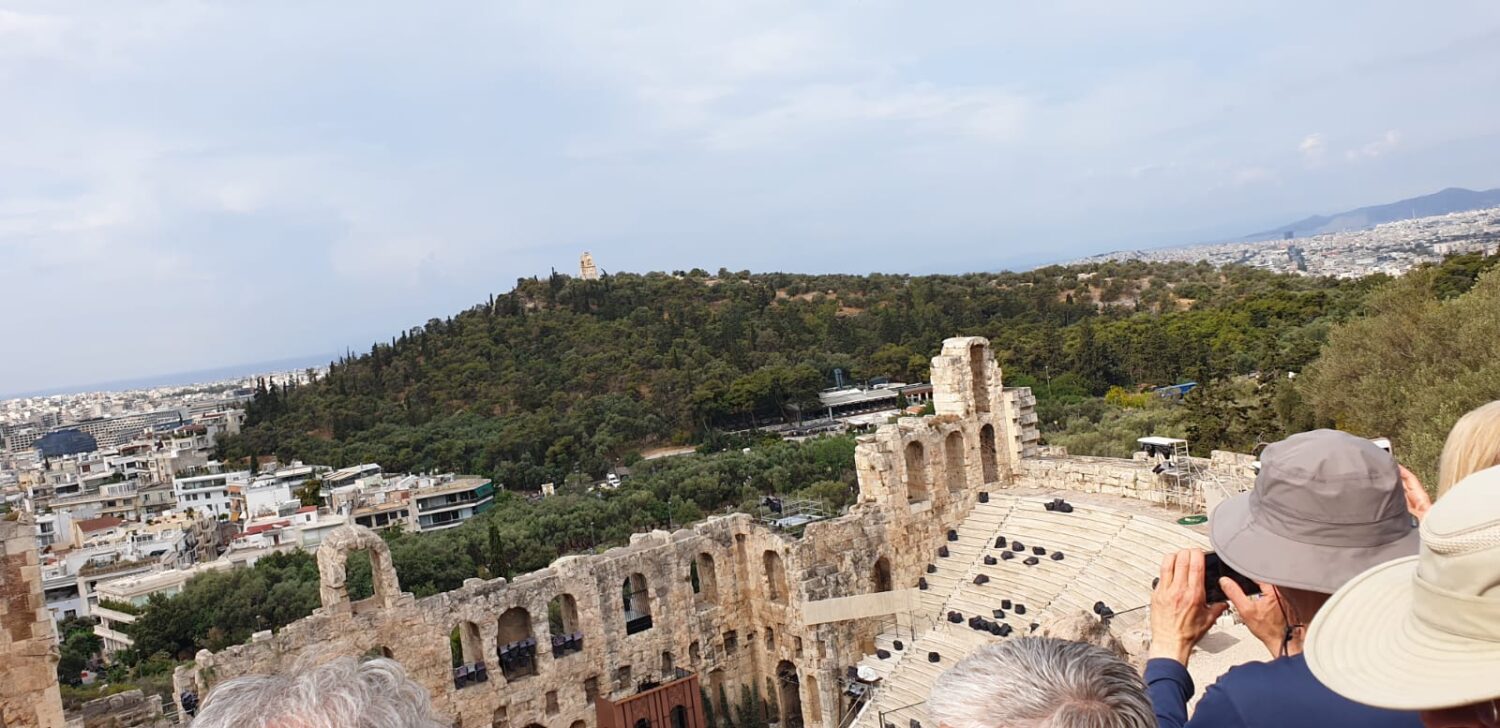
Athens, Greece
Athens, Greece has been ranked as one of the world’s ten hottest cities by TripAdvisor. It’s located at the foot of Mount Olympus, where the Greek gods lived.
Barcelona, Spain
Located in the northeast corner of Spain, Barcelona is known for its beautiful architecture, lively nightlife, and delicious food. It is very multicultural and multi-religious, so regardless of what your belief is, you may find places and activities both for entertainment and your spiritual care.
Budapest, Hungary
With more than 1 million residents, Budapest has been named one of the happiest places to live in the world by the United Nations. It also ranks as one of the safest cities in Europe with an impressive crime rate of just 0.5 per 100,000 people, while on the other side, if you are not Christian, your Freedom of Religion or Belief is not guaranteed.
Dublin, Ireland
Located in the Emerald Isle, Dublin is the capital city of Ireland. It’s known for its lively pubs, beautiful architecture, and friendly locals.
Edinburgh, Scotland
With its stunning castles, cobblestone streets, and historic buildings, Edinburgh is one of the most popular tourist destinations in the UK.
Tourists can escape the heat and join the historic Underground Ghost tours taking visitors through formerly inhabited subterranean sections that were used until the 1700s. Due to the narrow passages, guides recommend tourists travel light or preemptively leave bulky bags in secure locations for luggage storage Edinburgh centric
Cocaine named from the Quechua “kúka” is a natural alkaloid synthezised by the coca plant (family of Erythroxylaceae) as a secondary metabolitefor its protection. It is extracted from the leaves to an amount of 0.3 to 1.5%. The use of the coca for religious, medicinal and stimulant purposes has been known since pre-Inca times. The people used to chew coca leaves for at least 8000 years to relieve hunger, to alleviate strenuous activities and also as a stimulant.
Dry leaves are also used for tea: the “mate de coca”. Initially starting on the Andean ridge (South America), the use of coca leaves has then spread to neighbour countries as Chile, Uruguay, Argentina and Brazil. From the 16th Century it started to be exported and from the 19th Century with its chemical extraction as the psychoactive cocaine powder form it reached the whole world with the development of the routes of communication. Nevertheless, Evo Morales, the President of Bolivia (2006 to 2019) used to say: “la coca no es cocaina” (the coca is not cocaine).
Nowadays, the cocaine use although under the control of international Conventions, is a matter of public health due to its great addictive potential and toxicity. This is resulting in great psychological dependence, physical disorders and side effects, producing harming impacts on the individual, the familial cell, the workplace, the society, and finally on the economy of the country. Usually available as an hydrochloride salt (formula: C17H22ClNO4) cocaine has limited medical use as an anaesthetic and vasoconstrictor. This contrasts with the increasing misuse of the cocaine as a central nervous system stimulant since the early years of the twentieth century. The cocaine became popular in the sixties through artists and mass media.
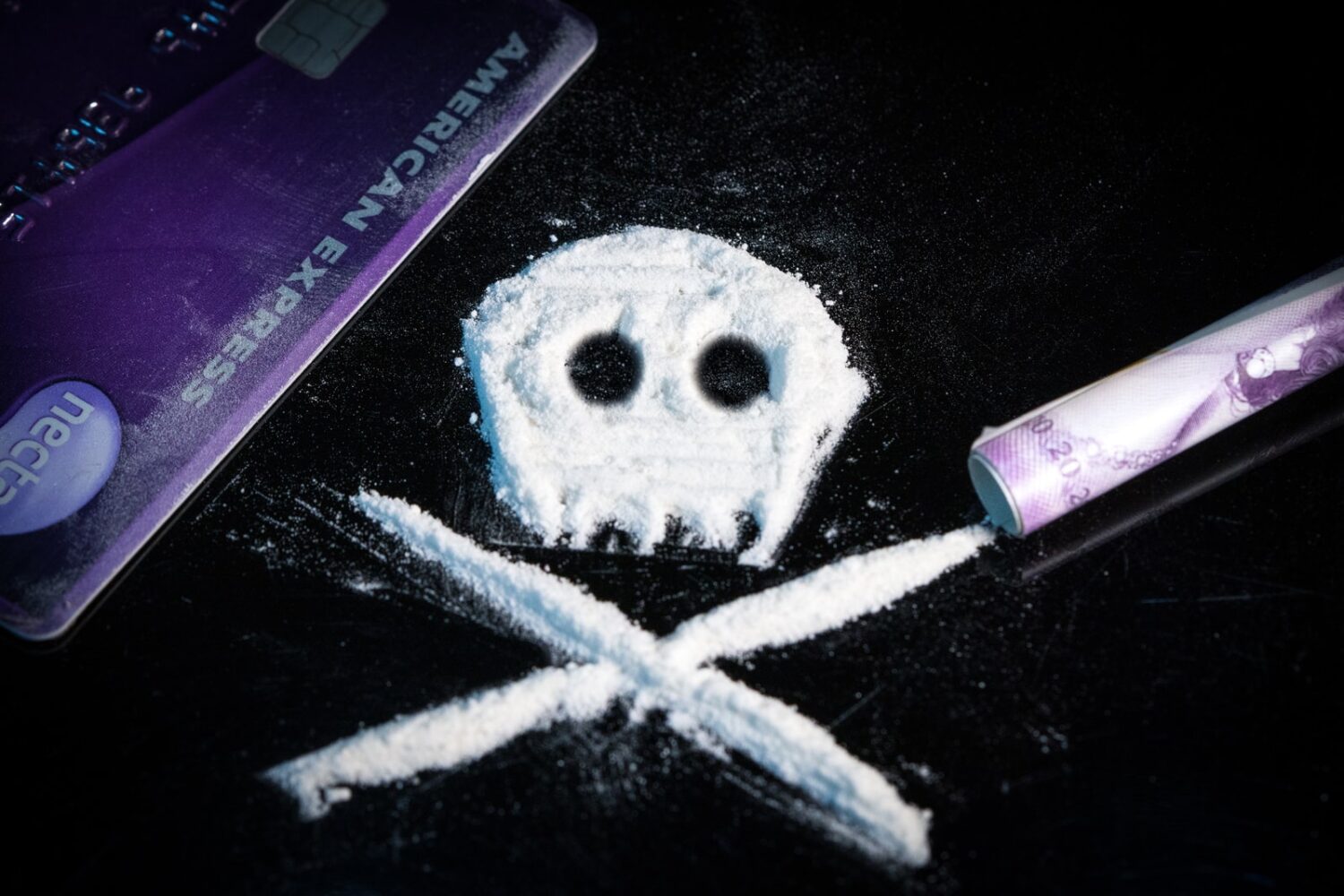
In illicit use and search of the “high”, the cocaine powder (Coke, Snow, etc.) is ritually sniffed/snorted by 69% of the users, from “lines” and absorbed through the nasal mucosa and less commonly (for 2%) intraveinuously injected. The free base, sometimes known as crack, a crystal form, is smokable or heated and inhalated as fumes (for 26%). The ingestion (2% of the users) leads to a loss of psychoactive activity due to enzymatic hydrolysis in the gut.
A typical dose of cocaine or crack for a shoot is 100–200 mg.
Historical points…
In 1859, Dr. Paolo Mantegazza, (Italy) back from Peru, described the use of coca as medicine;
In 1860, the chemist Albert Niemann (Germany) isolated and coined the name “cocaine”;
In 1863, Angelo Mariani French pharmacist, using coca leaves macerated in Bordeaux wine created the tonic drink “Vin Mariani”;
In 1885, the U.S. manufacturer Parke-Davis sold cocaine in various forms, stating that cocaine products “supply the place of food, make the coward brave, the silent eloquent and render the sufferer insensitive to pain.”
In 1886, John S. Pemberton (USA), pharmacist veteran of the Secession war and morphine user changed his Pemberton’s French Wine Coca in a non-alcoholic then non-cocaine (replaced by caffeine) tonic beverage, inventing the famous “Coca-Cola”.
In Europe
Most of the cocaine available in Europe, using well-organized networks, continues to be smuggled into the largest container ports of the European Union (EU) located in Belgium (Antwerp), the Netherlands (Rotterdam) and Spain (Valencia and Algeciras). In addition to Hamburg (Germany), ports in France (Le Havre, Dunkerque, Marseille), Romania (Constanta), and Italy (Gioia Tauro) have also become significant cocaine entry points. The German authorities have attributed the recent increase in seizures in the port of Hamburg to the activities of Balkan and Albanian-speaking organised crime networks (BundesKriminalAmt, 2021).
The Southeast European Law Enforcement Center (SELEC) reported that in this part of Europe alone, the cocaine seized in 2020 amounts to 5,821.9 kg, representing a 22.3% increase. The total estimated value (street price) in 2020 is more than 281 million EUR.
According to the European Monitoring Center for Drugs and Drug Addiction (EMCDDA), the cocaine retail market concerns about 14.0 million adults in the European Union (aged 15-64), about 5 % of this age group. This market was worth at least EUR 10.5 billion in 2020; this represents about a third of the illicit market in all drugs and makes cocaine the second-largest market after cannabis. Since the mid-1990s the drug is more affordable for consumers than in the past so the overall cocaine usage in Europe has been on the rise.
Corruption at all levels is broadly used as a facilitator of drug trafficking activities and is a key threat in the EU according to the last EU Serious and Organised Crime Threat Assessment (SOCTA) report (Europol, 2021a).
In addition, the cocaine gotten from the streets could be prepared with variable proportions of caffeine, ammonia, solvents, industrial products such as battery acid, and even gasoline, kerosene and quicklime, increasing their toxicity but a greater profit.
EMCDDA report that cocaine seized at or destined for EU ports in 2020 (378 seizures) was smuggled within legitimate goods (132 tonnes), followed by the rip-on/rip-off method (108 tonnes).
Cocaine trafficking concerns all EU Member States (Europol, 2021a) via diversified smuggling routes: roads for private cars and lorries, railways, maritime transports, commercial or passengers and light aircraft, and increasingly the post services (Council of Europe, 2021).
Effects and Risks
The cocaine psychoactive substance is a tropane alkaloid as for scopolamine used in World War II, when the THC of the cannabis is a terpene. Alkaloids are also present in the pine, citrus, lavender, poppy, etc. About a fifth of the total plant species is synthesizing alkaloids as secondary metabolites such as in plant families from the nightshade (Solanaceae), coca (Erythroxylaceae), bindweed (Convolvulaceae), cabbage/broccoli (Brassicaceae). Not all are psychoactive.
As for the psychoactive substances, the liposoluble cocaine passes easily through the blood-brain barrier, reaching via the bloodstream and the Central nervous system (CNS) in about five seconds to produce the euphoric effect sought by the user.
In the mid-brain, the target of the cocaine is the Nucleus Accumbens located in the limbic system and known to be the pleasure center or reward system (Lopez Hill et al. 2011). In this area the cocaine inhibits the re-uptake from the synaptic cleft of the neurotransmitter dopamine by the presynaptic neurons by blocking their dopamine transporters. Thus, the artificial accumulation of dopamine in the synaptic cleft continuing to stimulate the receptors and the newly synthezised ones on the post-synaptic neurons is creating the lasting euphoric effects: the “high” from snorting may last about 15 to 30 minutes and from smoking 5 to 10 minutes. Injecting provides a quick, strong but short result.
When the use is stopped, the mechanisms of re-uptake of dopamine are re-activated so the stimulating effect disappears giving the manifestations of anxiety, feeling of lack and depression. Cocaine interfers also with the activities of the receptors of serotonin (regulation of behaviors, anxiety, learning, etc.) and noradrenaline (alertness, excitment, attention, etc.).
Considering that the nerves of the limbic area (emotions and reward system) are in relation to the cortex pre-frontal(judgement and decision) this explains the compulsive urge for the user to seek for more drug to continue the “high”. This is explaining the overall and powerful addictive effect of cocaine.
Mental effects of cocaine use include an intense feeling of happiness, sexual arousal, loss of contact with reality, paranoia, and agitation (Pomara C., et al. 2012). But also it increases the physical risks of stroke, cardiac arrhythmia, lung injury for smokers, sweating, high blood pressure, body temperature, dilated pupils and sudden cardiac death. The withdrawal symptoms include depression, decreased libido and ability to feel pleasure and increased fatigue feeling.
Based on data from 20 European countries there were an estimated 473 cocaine-related deaths in 2020 or about 13.5 % of all drug-induced deaths. These results are underestimated.
In Fine…
At a time whenthe governmental debates on eventual drug decriminalization or legalization are gaining all the countries and neglecting the health consequences for their peoples, when the profits and corruption at high levels are taking over the population and youth safety, it is more than ever vital to remind the words of Ms. Johansson of the European Commission (31.3.2022): “The new EU Drugs Strategy 2020-2025 …[has] the aims to ensure a high level of health promotion, social stability and security and contribute to awareness raising”.
The “awareness raising” can be easily achieved through education. Indeed, as for any other subject,
“Education is the progressive discovery of our own ignorance” said William Durant (1885-1981). This ignorance of the drug effects is life endangering when not fatal for the cocaine and drug users!
To contribute to this drug preventive education of the youth (and parents) the Foundation for a Drug Free Europe and its hundred of associations and groups across Europe are delivering lectures, distributing informative booklets (14 booklets on most used drugs of 24 pages, in 17 languages, including on cocaine), educative audiovisual materials and a guide for lessons as part of the Foundation for a Drug-Free World campaign The Truth About Drugs.
Witness to the harming effects of drug use, let’s preventively educate the youth and people so they will be able to realize their full life potentials in a safer society and in a better world!