Watermelon is valued for its juiciness and sweet taste, which are best revealed chilled. However, not everyone can enjoy their pleasant taste. You need to know how to choose a sweet watermelon. Useful properties of watermelon The birthplace of watermelon is South America. The fruit has been known since the time of Ancient Egypt – watermelons were left in the tombs of the pharaohs as food for the afterlife, which shows that the wonderful taste of the fruit was highly valued in ancient times. Watermelon consists of 90-95% water, so it normalizes the body’s water balance, protects against dehydration and heat stroke. The large amount of water has a positive effect on the functioning of the kidneys and urinary tract in general, helps to remove salts, thus preventing the formation of stones. Because watermelons contain large amounts of potassium and magnesium, they have a positive effect on the cardiovascular system. Watermelon is deservedly considered a powerful antioxidant, as it perfectly removes toxins and significantly reduces the level of bad cholesterol. The sweet fruit is rich in vitamins B1, B2, C, PP, E, A, calcium, phosphorus, iron, sodium, folic acid and vitamin C.
How to choose a well-ripened watermelon? Probably each of us has bought or tasted a bad watermelon at least once in his life. It is difficult to identify a good product at first glance, so people often come across green or overripe fruit. However, there are some secrets that will help you always choose juicy and sweet watermelons. The maturity of the watermelon can be determined by its sound. Tap your fingers. You should feel a clear sound. A beautiful watermelon always resonates! Pull the handle. Unripe watermelons usually have green twigs. There is a pattern between the size of the fruit and its quality. Large fruits are almost always juicier and sweeter. At the same time, too large shapes also do not always show good quality. The ideal weight of a watermelon is 6-10 kg. It is better to buy watermelons with bright stripes that contrast sharply with each other. The stronger the contrast, the tastier and juicier it is. Watch out for a yellow spot on the side, which indicates that the watermelon is ripe. Choose women’s watermelons. Yes, watermelons also have sex. They are round and sweet. Also pay attention to the brown spots on the skin, which also suggest a well-ripened watermelon.
Zuhra Pavlova, a candidate of medical sciences and endocrinologist at Moscow State University, explained what watermelon lovers should be afraid of. Many people mistakenly believe that these are nitrates, said the doctor. According to her, “it is still rare to come across a nitrate-poisoned watermelon in the middle of the season.” “Nitrate poisoning was relevant half a century ago, when watermelons were much more expensive than fertilizers,” the doctor explained, adding that there would be no problems with nitrates if you chose a fruit without suspicious spots and lumps on the surface.
“The most dangerous thing in watermelon is fructose. And this is a scientific fact,” said Zuhra Pavlova. This leads to a risk of overweight and obesity, “warned the endocrinologist. She explained that it is very easy to deal with excess fructose.” You should always eat watermelon as a dessert – no more than 200-300 grams in quantity. You do not need to expand your stomach with large amounts of fruit – over the years its elasticity decreases and you may risk getting a “watermelon belly”, the doctor advises.
The queen considered the astronaut a real gentleman.
Yuri Gagarin’s visit to Buckingham Palace was remembered by the Queen and all members of her family for a long time.
The cosmonaut, without hesitation, offered Her Majesty to make tea for two from one bag, with which she readily agreed.
At the end of the tea party, Gagarin took a slice of lemon from the bottom of his glass and ate it.
The Queen immediately followed suit. In the future, she always finished eating lemon, which had a beneficial effect on her health.
Leaving, Yuri put his chair upside down on the table, which also did not embarrass the royal person. In an interview with the BBC, Elizabeth II noted that she was delighted with communicating with the astronaut.
“Yuri was intelligent and behaved like a real gentleman.” Queen Elizabeth II
For whom do the bells toll? In Appleton, Wisconsin, it’s for the parishioners of Zion Lutheran Church, and it’s thanks to the sturdy hands and generous heart of Gary Neumann.
Appearing far younger than his 80 years, Gary’s living proof that keeping busy on the things you love is a surefire path to a dip in the fountain of youth. He’s been volunteering his time in restorations to the church and claims his love for “rebuilding old things” has him returning day after day to ensure the glorious sounds remain a part of the historic landmark.
Built in 1902, the church has weathered its 120-year history of serving as a gathering place of worship for so many in the Appleton community, but time takes its toll, and when the four-faced clock and bell tower ceased to work, and the threat of a computerized system was imminent, Gary rolled up his sleeves and stepped up to his calling to repair the cherished chimes and antique clock, saving the church thousands of dollars in the process.
Gary teamed with his son to search for parts needed for the repairs, and by volunteering hundreds of hours over many months, he made the repairs for a cost to the church of less than $200.
This generous act enabled contributions to be earmarked toward the professional repair of a substantial leak in the church ceiling.
Bell towers and timekeepers aren’t the only precious aspects of the church that Gary had a hand in rescuing. When the organ pipes needed replacing, Gary drove from his home in Appleton to Elmira, New York, to secure the pipes from a church no longer in need of them.
His next project? Restoring the intricate stained glass in the structure—a complex undertaking that the Zion congregation has no doubt Gary will deliver on.
Now retired, Gary is thrilled to share his years of experience and excellent skillset as an electrical engineer with the historic landmark and those who have come to call it their spiritual home, proving once again that the best gifts are often received from the selfless act of giving.
More than 1,400 legendary items from the Mecca of cinema are up for auction
Several dresses worn by Marilyn Monroe for “Gentlemen Prefer Blondes” and “No Other Business Like Show Business” will be auctioned off this summer, along with 1,400 other legendary items in Hollywood history.
In three days in July, Turner Classic Movie and Julian’s Action will team up to auction off Captain America’s “Captain America: The First Avenger” shield, a Givenchy suit worn by Audrey Hepburn as Holly Golightly in “Breakfast at Tiffany’s” as well as Jules Winfield’s portfolio from “Criminal”.
One of the six original Star Wars: New Hope helmets will also be among the bids.
Props from the Harry Potter movies, such as Draco Malfoy’s “Nimbus 2001” broom and Voldemort’s magic wand, as well as the hammer used by Chris Hemsworth in “Thor: The Dark World” are some of the items connoisseurs will bid for.
The yacht, once owned by industrialist Paul Getty and used in the outdoor scenes of “Friend Joey,” starring Frank Sinatra, Rita Hayworth and Kim Novak, will also be put up for auction.
The auction will take place from July 15 to 17 at Julian’s Auctions, Beverly Hills.
On the contrary, in church healings there are no “black boxes” with incomprehensible content. For, here everything is openly said: Lord, come and heal the sick person, if this is in accordance with Your good will! It may be that it would be better for a person to get sick for a while. Of course, God loves us as much as we can imagine. But this love sometimes manifests itself in a way that is not at all what we imagine it to be. If God sees that it will be more useful for man, for the salvation of his soul, to get sick, He will not undertake to heal him. And this will be the truest manifestation of love for this person.
That is why the church miracle-healers never promised a “100% result”, as we can read in the advertisements of modern magicians. And if God already acted through them, then this was an undoubted testimony of God’s action. Here is how the Bible describes such a case in the third chapter of the Acts of the Holy Apostles:
“1. Peter and John went up to the temple together at the ninth hour of prayer.
2. There was a man, lame from his mother’s womb, whom they carried and placed every day at the temple gates, called Krasni, to beg alms from those who entered the temple;
3. When he saw Peter and John coming into the temple, he asked them for alms.
4. And Peter looked upon him with John, and said, Look on us.
5. And he stared at them, hoping to get something from them.
6. But Peter said, I have no silver and no gold: but whatsoever I have I give thee: in the name of Jesus Christ of Nazareth arise and walk.
7. And he took him by the right hand, and lifted him up; and immediately his feet and ankles were strengthened,
8. And he jumped up, and stood up, and walked, and entered with them into the temple, walking, leaping, and praising God.
9. And all the people saw him walking and praising God;
10. And they knew him, that it was he which sat at the red doors of the temple for alms; and they were filled with terror and wonder at what had happened to him. “
To make it clearer: chromium from the mother’s womb means that this person has been deprived of the opportunity to walk since birth. He has never walked in his life, and he has not even stood on his feet. Neither the body’s muscles, nor the nerve conduction pathways, nor its reflexes, nor the corresponding parts of the motor areas in the cerebral cortex – nothing of it didn’t work for him. Complete atrophy, no chance of recovery. And suddenly he jumped, jumping with joy at his suddenly strengthened legs. And whom does he praise for this; the healer? Praise God, Whose Name alone has done such a wonderful miracle with him. And the Orthodox healer himself calmly goes on to preach the Gospel to the people.
This is the essential thing that can be said briefly here about the difference between “healers through magic” and holy Christian miracle workers.
Self-fulfilling prophecy
And with “harmless divination”, Nikolai, things are the same. And divination is the same “black box” in which there is some action at the entrance, and at the exit – a result in the form of a prediction of someone’s fate or an event. And the question arises: if this is all just a game, a harmless prank, and the man does not believe in divination, then why bother with it at all?
And if he still, albeit a little, but believes, then he has every reason to think – how this thing works. Because this is not about some trifles – the fate of man is clarified, sometimes for years and decades to come. What is this powerful force that can help a person see the future, and in such dubious manipulations as pouring wax, spilling coffee grounds and card solitaires?
It would be simplest to attribute this power to God – only He has the absolute fullness of knowledge about everything, and for Him the future is as open as the past and the present. But such an answer is completely out of the question, because in the Bible God speaks of such activities, very simply and unambiguously: “Do not heal or foretell.” (Lev. 19:26).
Then who is in the “black box” and provides the necessary information at the exit?
It seems that in the “harmless” divinations and divinations we risk again turning to the enemy of the human race. And this is always associated with misery and harm to man; if not physically, then probably spiritually.
The thing is, fallen angels don’t know the future, and for that reason, they can’t predict it. On the other hand, they can create a scenario for the person, symbolically express it in divination, convince him of his “truth” and consistently direct the life of the trusted unfortunate to the final point of their “prediction”.
Oddly enough, even modern science has drawn attention to this phenomenon, naming it The Self-Fulfilling Prophesy. Its author, the American sociologist Robert Merton, formulated the mechanism of such a prediction as follows: “Self-fulfilling prophecy is a falsely defined situation, provoking new behavior that turns the original false image into reality.”
Simply put, a person’s belief in the prophecy begins to change his behavior in such a way that the prediction eventually comes true. One of the clearest examples of this kind can be considered the well-known from everyone’s school desk “Song of the Wise Oleg” by Pushkin. There the prince was so concerned with the sorcerer’s prediction of his death, which his beloved horse would bring him, that he immediately gave it to his servants for life. And when he learned that his horse was dead, for some reason he went to examine his remains, stepped on the horse’s skull and received a deadly bite from a snake crawling out of the skull. And would the prince have gone wandering among the horse’s bones, and digging them with his foot, if he had not believed in the magician in the past? The question must be superfluous.
Indeed, the American sociologist does not include demons in his reasoning; he is therefore a scientist. On the other hand, in his definition sounds the word, which is extremely important for understanding what actually happens in divination. This word is “lie” – a false definition of a false idea.
And believers are well aware of who the Scriptures call the spirit of lies. This is the fallen angel himself – the devil, about whom the Lord says: “He was a murderer from the beginning and did not stand in the truth, because there is no truth in him. When he speaketh a lie, he speaketh of his own: for he is a liar, and the father of it. (John 8:44).
The ancient Romans had a doctrine of fatum – predestination, the inevitable fate that awaits man, no matter what. This pagan principle still underlies divination today. The person who has decided to engage in divination, consciously or vaguely believes that his destiny is static, like a finished painting, already painted by a metaphysical artist. And that everything that happens to him in life is just another fragment of a giant canvas, which is gradually revealed to him. But he wants to see the future and the day after tomorrow… And if he can, he can see the whole picture. Although, if you think about it, what is the use of such knowledge, even if it is real, if you know for sure that you can not change anything you see? And given that you know that in the “black box” between casting wax and “knowing” your fate, you can hide the father of lies, who has always been a murderer…? Perhaps divination, Nikolai, is not as harmless as you write. And it is no coincidence that the Church warns its members about it.
Christianity also presupposes a general picture of human life. But unlike all kinds of pagan fatalism, this painting is not a complete canvas. Every moment we draw new details on it, change the plot, invent new forms. Although, of course, there is some initial predestination here as well.
Christians believe that God has a unique plan for everyone, in which the highest good for this person consists. But to follow God’s plan or to oppose it is a personal free choice of each of us. And the Christian can know God’s will for himself by comparing his actions with the Holy Scriptures, the teachings of the saints and his own conscience. Let’s say that you are offered a well-paid job, where your obligations will include systematic fraud of the company’s partners or users of its services. As this fraud is generally unpunished – all activities are formally within the law. And you know that “every one that doeth iniquity is an abomination unto the LORD thy God” (Deuteronomy 25:16). And depending on your decision, your further life will either get closer to God’s plan for you, or will move away from it.
This is how we all paint the picture of our lives – moving, plastic and unfinished to our last breath. So divination is an absolutely pointless activity for a Christian, and because there is simply no pre-painted picture of his future in his worldview.
As Saint Basil the Great writes: “Do not be curious about the future, but dispose of the present with benefit. Because, what is the use for you to foresee God’s decision? If the future will bring you something good, it will come without knowing it in advance. And if it’s something sad, why bother in advance? Do you want to be sure of the future? Do what is required by the Law of the Gospel and expect enjoyment of the good. ”
Photo: Icon “Devils at an aerial toll house”
Source: The article by Alexander Tkachenko was published in the magazine foma.ru
Get rid of the secrets. There should be a series of studies, talk and public debate, as well as a referendum, the economist recommends
The Bulgarian people will lose if they join the eurozone. This will increase the risk of higher inflation. Why the Bulgarian society will want something that is risky – this is a political decision, commented to bTV the world-famous economist Prof. Steve Hanke, who introduced the currency board system in Bulgaria.
He also criticized the way in which the introduction of the euro was being addressed.
“This is the old approach of Borissov’s government, which was trying to do so – secretly from society,” the economist said. According to him, there is no economic analysis of the benefits and the price for society and the economy from the introduction of the euro, we need an analysis of the BNB and the Ministry of Finance.
“Get rid of the secrets. There needs to be a series of surveys, talk and public debate, and a referendum,” Steve Hanke recommended.
“Yes, you have a new government and I know that the coalition is discussing the introduction of the euro. But first let’s let the sun shine. Why would you want to change the currency board system, which works very well. Why abandon it and how exactly. Lithuania and Estonia are the countries with the highest inflation rates in the euro area – 16% in Lithuania and 15% in Estonia. inflation is only 10.5%, “said Prof. Hanke, who is a staunch opponent of the eurozone.
He is adamant that the risk of rising inflation is much higher if we adopt the euro and abandon the currency board.
“Does the Bulgarian public support this? No. About 60-70% of Bulgarians do not want to give up the currency board. It is politically unpopular in Bulgaria to do so. In addition, Bulgaria does not meet the criteria for joining the eurozone, why are you in a hurry. “The whole idea is crazy,” the economist said.
If you read the EU membership agreement carefully, it is your obligation to eventually join the euro, but it is not specified when. How would things develop if Bulgaria was in the eurozone and it collapsed?
Business and the EC have declared a commitment to a tenfold increase in production capacity in Europe
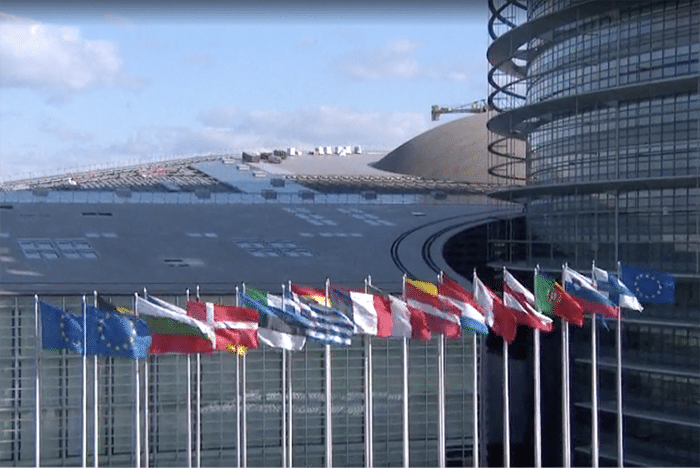
Manufacturers of electrolytic cells in Europe have committed to increase their production capacity tenfold – to 17.5 GW per year by 2025. This is part of a joint declaration with the European Commission, which was presented in Brussels recently.
The joint declaration was agreed at a summit on electrolysis issues in Brussels and was signed on May 5th by 20 chief executives of the industry along with EU Internal Market Commissioner Thierry Breton, Euractiv reported.
“Today, the industry has agreed to a tenfold increase in the capacity of electrolytic cells in Europe. The Commission will support this important industrial boost for industrial leadership in clean energy technologies of the future,” Breton said. The increase in capacity will allow the annual production of 10 million tonnes of renewable hydrogen in Europe by 2030, the Commission said in a statement.
The goal is in line with plans presented in March by the EU executive to end the EU’s dependence on Russian gas “long before 2030”. and accelerating the transition to clean energy sources.
To support the rapid growth of the industry, the joint declaration includes a commitment from the EU executive to put in place a supportive regulatory framework, facilitate access to finance and promote efficient supply chains.
The joint statement said this included “a legislative proposal to speed up the issuance of permits for renewable energy projects” and a faster review of state aid notifications sent to Brussels. Manufacturers of electrolytic cells, for their part, are committed to applying only for high-quality project proposals that are fully in line with the EU’s climate goals.
Jon Andre Locke, CEO of Nel Hydrogen and President of Hydrogen Europe, called it a “historic day” for the EU electrolysis industry. “It is time to bring the talks to action,” he added on Twitter, warning that there would be no “acceleration of electrolysis production in Europe without adequate regulatory and financial support.”
The EU is a world leader in the production of electrolyzers. Although China-made electrolyzers are cheaper, they are also considered less efficient and reliable than Chinese manufacturers themselves, according to Recharge.
“German and European companies are in an excellent position to produce key components for the value chains of the hydrogen economy – vehicles, transport solutions, cells, fuel cells,” said Veronica Grimm, an economist who is a member of the Hydrogen Council in Germany.
Bosch, the German industrial giant, is among the companies in the best position to compete in the global electrolysis market. Earlier this week, the engineering and technology company announced a 500m-euro investment in research into hydrogen cell components.
Hydrogen will be essential for Europe’s future economy, especially for storing and transporting green energy. This was stated recently before the European Parliament by the Executive Vice President of the European Commission for Climate Affairs Frans Timmermans. “I strongly believe in green hydrogen as the driving force of our energy system of the future,” Timmermans said at a meeting with the European Parliament’s environment committee, Euractiv reported.
“Hydrogen will be a key element in our economy of the future,” he added in a discussion on the impact of the war in Ukraine, the state of new European climate legislation and food security.
The European Commission is proposing long-term partnerships that will start with the supply of LNG and “end in the hydrogen economy”, Timmermans said. “Does this link our long-term to LNG supplies? Not if we offer long-term cooperation projects that switch to hydrogen,” he explained.
Timmermans envisions a hydrogen economy around the Mediterranean, where each country is dependent on the other and each has a “share in this production, distribution and use of green hydrogen”. “This is the future,” Timmermans said. “In this way, you also create more stability in the geopolitical system. This is how you offer a huge opportunity for the development of Africa.”
Europe “will never be able to produce enough hydrogen of its own,” Timmermans said. He added that green hydrogen produced from renewable energy is the European Commission’s preferred option, but blue hydrogen produced from fossil gas with carbon capture and storage to tackle emissions would also be a temporary option.
The EU is already looking beyond its borders when it comes to future supplies of renewable hydrogen.
The ideal case would be to transport renewable electricity by cable from European partners in the EU, but when this is not possible, energy can be stored in hydrogen or ammonia and transported to Europe. It would also provide more green hydrogen for the EU to help decarbonise difficult electrification sectors, including aviation and heavy industry.
But others are less convinced of the hydrogen future. During the meeting, centrist MEP Nils Torvalds warned of the “hydrogen boom” being talked about in Europe, citing reports of its leaks into the atmosphere and its impact as a greenhouse gas.
A study by the UK’s Department of Business, Energy and Industry warns that hydrogen is estimated to be at best six times worse than CO2 for a climate over a 100-year period.
Note the following statements about some prominent religious leaders and the war in Ukraine:
• “The head of the Russian Orthodox Church, Patriarch Kirill, did not say a word against Russia’s aggression. … His church’s systematic propaganda against Ukraine serves as Putin’s justification for the war. “(EUobserver, 7 March 2022)
• “Patriarch Kirill … made his strongest statement so far, justifying his country’s invasion of Ukraine. In this way, he described the conflict as part of the fight against sin. “(AP News, March 8, 2022)
• “On Monday, the leader of the Orthodox Church in Ukraine, Metropolitan Epiphanius of Kiev, blessed his people ‘in the fight against the Russian occupiers’ …” [He] also said that killing Russian soldiers was not a sin. “(Jerusalem Post, March 16) 2022)
• “We [the All-Ukrainian Council of Churches and Religious Organizations (VSCIRO) – This council includes 15 churches, including the Orthodox, Greek and Roman Catholic, Protestant and Evangelical Churches, as well as Jewish and Muslim organizations.] Support the armed forces of Ukraine and all its defenders, we bless their efforts to defend Ukraine from the invaders, and we pray for them. ”(Speech by VSCIRO, February 24, 2022)
What do you think? Is it right for religions that claim to follow Jesus Christ to encourage their members to fight? What does the Bible say?
The participation of religion in wars throughout history
History has shown that religion has often endorsed, justified, and even incited war, while claiming to contribute to peace. Jehovah’s Witnesses have been exposing this religious hypocrisy for decades. Take a look at some of the examples given in our publications.
• The article “The Crusades – A Tragic Illusion” shows how the Roman Catholic Church was responsible for the bloodshed in the name of God and Christ.
• The article “The Catholic Church in Africa” gives an example of how religion has failed to stop inter-tribal conflicts, even genocide.
• The articles “Is Religion to Blame?”, “Religion’s Role in Man’s Wars” and “Religion Takes Sides” explain how the clergy of the Catholic, Orthodox and Protestant Churches supported both sides in many wars.
Is it right for Christian religions to support wars?
Jesus taught, “Love your neighbor as yourself.” (Matthew 22:39) “Love your enemies.” (Matthew 5: 44-47)
Think: Can a religion claim to keep Jesus’ commandments of love, and at the same time encourage its supporters to kill others in war? See the answer in the articles “True Christians and War” and “Is it possible to love our enemies?”.
Jesus taught, “My kingdom is not part of this world. If my kingdom were part of this world, my servants would fight so that I would not be betrayed. ”(John 18:36)“ All who draw the sword will perish by the sword. ”(Matthew 26: 47-52)
Think about it: If Christians shouldn’t even fight to protect Jesus, should they take up arms today for any other reason? Read the article “Is War Compatible with Christianity?” To understand how the early Christians faithfully followed Jesus and followed his teachings.
What will happen to religions that support wars?
The Bible teaches that God rejects religions that claim to represent Jesus but do not follow his teachings. (Matthew 7: 21-23; Titus 1:16)
• The book of Revelation shows that God holds such religions responsible for the deaths of “all who were slain on earth.” (Revelation 18:21, 24) To understand why, read “What is Babylon the Great?”
• Jesus pointed out that all religions rejected by God will be destroyed because of their evil deeds, just as a rotten tree that bears rotten fruit is “cut down and thrown into the fire.” (Matthew 7: 15-20) Read the article “The End of False Religion Is Near!” To learn how this will happen.
Jehovah’s Witnesses are different
In Russia and Ukraine, as in the rest of the world, Jehovah’s Witnesses keep Jesus’ commandments to remain politically neutral and not to engage in war. For this reason, we do not support or participate in this or any other military conflict. Some Witnesses have been persecuted for their determination to adhere to their Bible-based beliefs. (John 15:19, 20; 2 Timothy 3:12) For example, the authorities in Russia imprisoned many of Jehovah’s Witnesses and even tortured some. In addition, our places of worship were confiscated. For more information see www.jw-russia.org.
• Watch the 4-minute video “Jehovah’s Witnesses in Irkutsk Remain Faithful to Searches and Harassment” to see how Jehovah’s Witnesses in Russia are persecuted for their faith.
• Jehovah’s Witnesses have long been known for their neutrality. Watch the video “Tough in Trial” to see how they remained neutral despite the enormous persecution in Nazi Germany and the former Soviet Union.
A new UN-led push to prevent an arms race in outer space has received wide-ranging support and participation from civil society and Member States – including all five permanent members of the Security Council – at talks in Geneva.
The first Open-ended Working Group on Reducing Space Threats that’s been meeting all week in the Swiss city, is the result of a UN General Assembly resolution last December, seeking to promote “norms, rules and principles of responsible behaviours” among countries already present in the cosmos – or which are planning to have a presence in space.
“The situation has changed dramatically in the last few decades. We have so many space activities there is a growing number of space-faring nations – and even those that are not space-faring are sending their own satellites,” explained Hellmut Lagos, chair of the working group talks.
“There are so many activities and the regulations …are not enough to deal with the different risks and threats to the security of all those activities.”
Progress on disarmament is a key priority of UN Secretary-General António Guterres, who recently reported on ways to reduce the “risks of misunderstanding and miscalculations” on outer space issues.
Treaty revamp push
An international Outer Space Treaty already exists that forms the basis of international space law.
Its main focus is on the peaceful “exploration and use of outer space, including the moon and other celestial bodies…for the benefit and in the interests of all countries…and shall be the province of all mankind”.
In keeping with the optimism of the era surrounding the space race, astronauts are described “as envoys of mankind”, and there is also a nod to today’s concerns over space pollution, with explicit wording that States must avoid the “harmful contamination” of space, the moon and other “celestial bodies”.
Russia, the UK and the US provided the original impetus for the treaty, whose impressive title in full is “Treaty on Principles Governing the Activities of States in the Exploration and Use of Outer Space, Including the Moon and Other Celestial Bodies”.
But the Outer Space Treaty is 55 years old and needs updating urgently, to take account of new space-based threats to global security – and the fact that all nations rely on space today for everything from navigation to communication, broadband and finance, explained Mr. Lagos:
“The most basic things that we do in in modern life, they are dependent on these technologies and services that come from space: GPS, critical infrastructure, energy, everything, everything is controlled by space technologies…everyone is becoming increasingly aware of this issue.”
Weapons loophole
Chilean diplomat Lagos also pointed out that although nuclear and other weapons of mass destruction are banned in the 1967 space accord – “the cornerstone of the international space regime”, in his words – there was no way of knowing about today’s new generation of missile systems that can target satellites.
Equally important, there is no review mechanism of the treaty as there is with other major treaties, Mr. Lagos noted, which is why all Member States need to find “common ground” on new norms, rules and principles, to plug legal gaps that might be exploited by space-faring nations.
To date, China, Indian Russia and the US have reportedly used anti-satellite (ASAT) technology, sparking concerns about attempts to weaponise space – and the fact that an unknown number of fragments may now be hurtling around around earth in low orbit, threatening spacecraft including the International Space Station.
NASA/Johnson
NASA astronaut Scott Kelly is seen floating during a spacewalk on 21 December 2015 as he and fellow astronaut Tim Kopra released brake handles on crew equipment carts on either side of the space station.
Inclusive approach
Underlining the increasing number of non-State actors involved in space exploration, Mr. Lagos welcomed the significant number of civil society representatives at the talks in Geneva, and the fact that countries from all regions of the world attended.
“Civil society is extremely important, not only because there are an increasing number of non-State actors in space, but also because their participation in these multilateral processes, they give an additional layer of legitimacy to the result, to the outcome of the process.”
And although global tensions are higher than they’ve been for decades, as a result of the Russian invasion of Ukraine on 24 February, the underlying push for consensus of the working group’s agenda has kept discussions on track, Mr. Lagos insisted.
Last week, the head of Russia’s space agency reportedly confirmed that in response to sanctions over the war in Ukraine, Russia was planning to pull out of the International Space Station.
“It is obvious that the geopolitical context now is really concerning and it has an impact on all the discussions and all the processes all over the world – that does not exclude us,” said Mr. Lagos.
“But we are trying to have a positive momentum in this process at least to try to make progress because it is in everybody’s interest, and so far we have achieved that – we see that there is big engagement and interest in moving things forward.”
The next session of the Working Group is planned for September, where the item will be “current and future threats by States to space systems, and actions, activities and omissions that could be considered irresponsible”.
Next year, the group will take up its item on the preparation of recommendations to the General Assembly.
Ensuring everyone has access to a healthy diet is among the goals of a UN-backed initiative launched on Friday in line with efforts to transform food systems globally.
The Coalition of Action for Healthy Diets from Sustainable Food Systems for all (HDSFS), brings together governments, UN agencies, civil society organizations, academic institutions, and social movements.
The Summit called for progress towards achieving the SDGs by examining how food systems are linked to global challenges such as malnutrition, climate change, and poverty.
Sickness and inequality
The HDSFS comes at a crucial time, according to the World Health Organization (WHO), one of its members, because “our food systems are making us sick”.
Every year, unhealthy diets cause 11 million deaths, while a further 420,000 people die from consuming unsafe foods.
Unhealthy diets are also related to six of the top 10 risk factors for the global burden of disease, but some three billion people worldwide cannot afford to buy healthy food.
“The burden of malnutrition represents a violation of the human right to food and continues to drive health and social inequalities,” said WHO.
The picture gets worse, as the UN agency said the unsustainable practices which define food systems today are also driving deforestation, biodiversity loss, the depletion of the oceans, antimicrobial resistance, and the emergence of zoonotic diseases.
A woman buys fresh vegetables at an organic farm store in Rome, Italy.
More than food
For WHO, “healthy diets from sustainable food systems” goes beyond having affordable access to foods that promote health and prevent disease.
It also means having food that is produced and distributed in ways that ensure decent work and help sustain the planet, soil, water, and biodiversity.
WHO pointed to the wider impacts this would have towards achieving the SDGs, such as ending hunger and malnutrition, promoting healthy lives and well-being, improving maternal and child health, encouraging responsible consumption and production, and advancing urgent action to combat climate change.
Coordinated action
The HDSFS will work as a “Coalition of the willing”, serving as a platform for coordinated action on healthy diets from sustainable food systems through which countries can share experiences, champion policy actions, and gain support, information and inspiration.
As urgent action is needed in policies, practices, availability of data, and resource allocation, the Coalition’s work will be centred around three main areas: mobilizing stakeholders to align action across food systems; facilitating peer-to-peer learning between countries, and managing special projects on integrating nutrition, health and sustainability through food.
So far, 16 nations and the European Commission are “frontrunner countries” in the HDSFS.
The Coalition’s “core group members” include WHO and four other UN agencies: the Food and Agricultural Organization (FAO), the UN Environment Programme (UNEP), the UN Children’s Fund (UNICEF), and the World Food Programme (WFP).
Other members from civil society and academia include the World Wildlife Fund, the humanitarian organization CARE, the Scaling Up Nutrition (SUN) Movement, and the Centre for Food Policy at City, University of London.