A virtual fashion show of Russian designer Valentin Yudashkin during Paris Fashion Week has been canceled because he “did not differentiate” from the war in Ukraine, said the president of the French Haute Couture Federation Ralph Toledano. The show was supposed to be on Tuesday. Yudashkin is one of the regular participants in the parades in Paris. He is one of the authors of the design of the uniforms of the Russian army.
“Our team wanted to understand Valentin Yudashkin’s position. If he had expressed reservations about the war in Ukraine, it would have been difficult to remove him,” Toledano said. However, this was not the case, which necessitated the decision.
Asked whether it would affect Russian designers Ulyana Sergeenko and Yanina Couture, who are attending Paris Fashion Week, Toledano explained that the issue would be considered by a special commission meeting every six months. She decides which fashion houses can present their collections at the event. According to him, the next meeting of the commission, composed of members of the federation and industry representatives, will be in June.
Discreet since the beginning of the war in Ukraine, the luxury and fashion industry is increasingly distancing itself from Russia, limiting its presence in the country and financially supporting Ukrainian refugees.
At the beginning of the Paris Fashion Week, which began on February 28, Ralph Toledano called on the 110 members of the French Haute Couture Federation to make donations to Ukrainian refugees, BTA reports.
After two years of health crisis, Fashion Week in the French capital was considered a “kind of gathering”, but it is impossible to “celebrate” …, “when monstrous things happen two hours from the City of Love,” he said. Toledano.
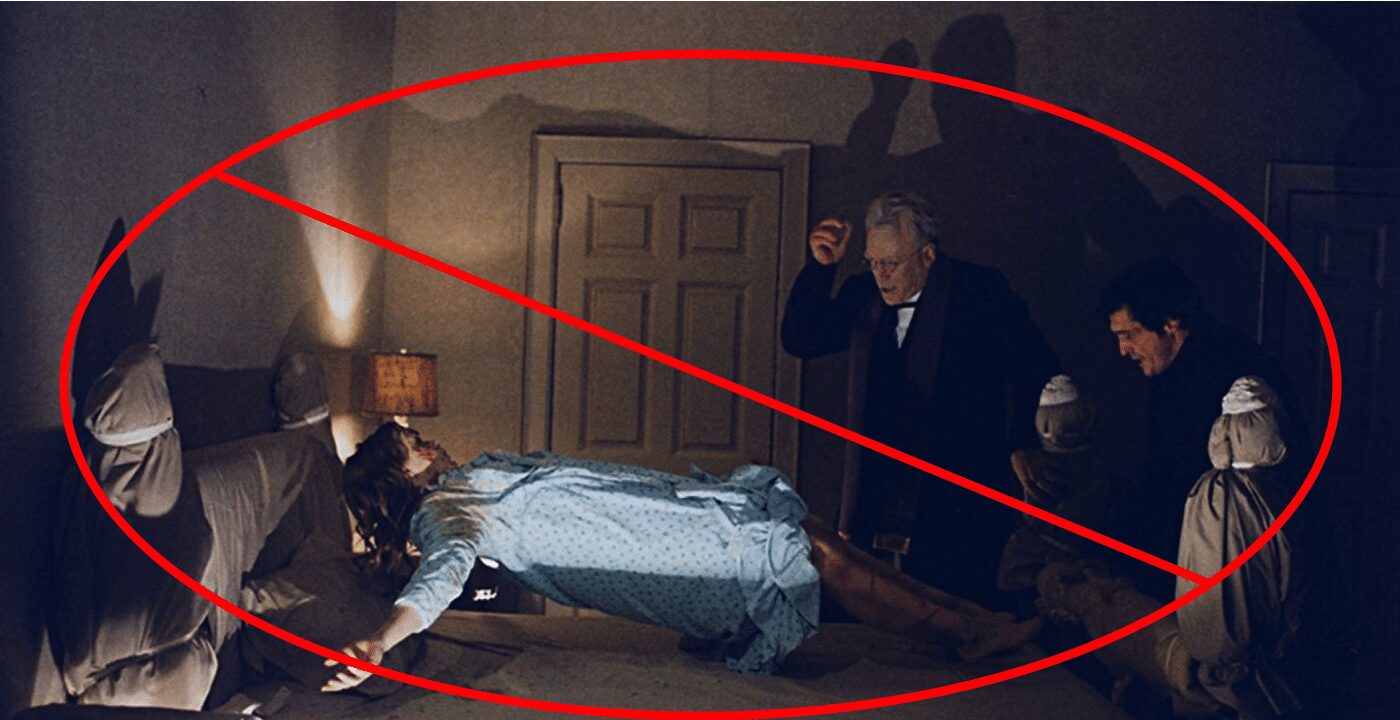
The church’s review: “Irrational violence has no distancing objectivity and its attempts to shock are too realistic in scenes of bloodshed.”
“Last Tango in Paris”
Church Review: “Sex scenes, while not pornographic, are unnecessarily long and detailed.”
“From Russia with love”
The Church Review: A spy thriller overshadowed by some scenes of sadistic violence, casual sex, and sinful dialogue.
“Photo magnification”
The Church Review: The cold and impersonal film is unconvincing in its pessimistic vision of modern life. Nudity in a sexual context.
“The good, the bad and the evil”
The Church Review: Directed with the class by Sergio Leone, the good in the film is overshadowed by the bad and the evil.
“Orange with clockwork”
The Church Review: Kubrick-Burgess’s message on the human right to free will is not very new or shocking … Excessive violence and nudity in a sexual context.
“Fight Club”
The Church Review: A drunken fantasy of macho brutality and senseless terrorism against society before the plot self-destructs to no avail. Excessive violence, sexual contact, nudity, rude language and swearing.
“Requiem for a dream”
The Church Review: A lewd homosexual act, as well as several sexual contacts, nudity, realistic portrayal of drug addiction, violence, and repetitive harsh language.
“Angels in America”
The church review: “Angels in America” has flaws and many worrying aspects that would make it a hard-to-bear film by Catholics.
“Marked”
The Church Review: Brian De Palma’s ugly, gloomy, dirty, and violent film is classic only in the sense of its gross self-indulgence. Perversely excessive violence.
A resident of New York cloned his favorite French bulldog and got four similar dogs, with which he lives happily in his home, reports the New York Post.
The 62-year-old hairdresser Roberto Novo says he once saw a small French bulldog in a pet store near the salon where he worked. The man decided to go to the store and get to know the puppy better.
The animal immediately began to lick his face. “He seemed to be telling me that I was his man!” Novo recalls, adding that he took the dog home the same day.
He called it Machito. The dog and the owner soon became inseparable, and when Machito was 12, the man considered cloning his favorite pet. He turned to a dog cloning company and gave the DNA sample to his favorite bulldog. Two years later, the dog died and Novo decided to continue cloning.
The procedure cost $ 50,000, but Novo did not have that amount. So he decided to sell the silk screen print to Andy Warhol’s butterfly, which hung on his wall. “It was nice to see something beautiful on my wall, but he couldn’t give me the missing love,” he explains.
After collecting the money, the American paid for the cloning and waited for the results. After a while, they called him and told him that the procedure was successful. There is now not only a healthy French Bulldog puppy, but three or four more bulldogs: the cloned Machitou, Tulula and their children, whom he named Pfizer and Moderna.
Earlier, it was reported that a 6-year-old chihuahua dog named Miracle Milly had been cloned 49 times. Specialists wanted to know why it was so small.
According to some data, the Russian-speaking diaspora in the world has 25-30 million people.
This huge number of immigrants in other countries around the world is the result of terrible events that took place in Pycia at the beginning of the 20th century. The maximum emigration peaks were observed at the beginning of the 20th century and in the period of the 90s and the beginning of the 21st century, writes in a material on zen. уаndех.ru.
Throughout the history of the territory of the Russian Empire, the USSR and the Russian Federation, there have been representatives of many nationalities. And if we take the first emigrants who left Russia in the period 1900-1925, it turns out that not all of these descendants are considered Russians.
This is why the term “Russian diaspora” is often used instead of the term “Russian language diaspora”. In 2008 in the United States of America about 3 million declared their Russian origin and just about 700 000 people use Russian language amongst the American citizens.
Therefore, it is necessary that not only the speakers of the language speak, but also those who are the ones who speak the language.
US
Apart from the Commonwealth of Independent States, the largest country currently lives in the United States. By 2021, there are almost 3.5 million people in the United States, which will be identified as pycnats. This is about 1% of the population of the country. The biggest peak of the event in the United States is observed during the time of the Perestroyka of Gorbachov.
The most popular places in the United States, where the Pycnacs are located, are Chicago, Loc Angelic, Houston and New York, and more specifically the Brighton Beach area. For active young people, who have skills in the IT field in the USA, they have excellent opportunities for realization and life.
Germany
Germany is the host of the largest diacpoa in Europe. There are more than 1.2 million German citizens, who say so. At the same time, according to some reports, the number of people living in Germany can reach 5 million people. Many of them are descendants of Russian Germans, who lived in the Russian empire.
Israel
Certainly, it is not true that we are talking about the Piazza diacpopa in Israel, because, in fact, all those citizens, who, after 1948, died in Israel in the 1990s. And it is possible that they can read about the citizens of the country, but we do not know whether the Europeans, who were sent to the USSR and immigrated to Israel, are identified as Russians.
Although we are talking about the Russian-speaking population of Israel, then, according to many publications, the number of people is more than 1.2 million. In some cities, the share of citizens living in the country is more than 20% (for example, Ashkelon, Bat Yam and Naharia), and in the city of Sderot – almost half.
Latvia
Due to the fact that in comparison with the previous mentioned countries, the number of children in Latvia is not that high, but only about 620,000 people, as a percentage of the whole 35%. Latvia, this is the country from which the USSR became a member of the USSR. The number of people on the list was less than 50,000. According to the Latvian sociological center, 94.4% of the population in the country can now speak for themselves. Most of the citizens of Russian roots are concentrated in the big cities, except that almost the whole big business in Latvia is controlled by Russians.
Canada
By 2020, there are about 500,000 speaking citizens in the country. Canada has a lot to say about the arrival of foreigners in this country. There are many federal programs, so many people can move to Canada.
In 2001 the Ministry of Education of Newfoundland province included Russian in the programme of one high school – a proof for the augmentation of the citizens of Russian origin in the region.
Ukraine and Kazakhstan
Of course, amonst the countries with the largest Russian population in the world would need to include Ukraine and Kazakhstan, where more than 10 million people live. This is not surprising, since before the events of the 1990s, the territories of these countries were part of the USSR, so that many people moved to live and live.
Since 2014, more than 6.5 million people have lived in Ukraine. And in Kazakhstan, according to data for 2019, more than 3.5 million Russians live in the country.
Argentina
Biggest Russian diaspora in South America is in Argentina. The first waves of Russian settlers in these exotic places have been observed since the 19th century – it was started by Russian Germans living in the Volga river region. The main emigration from Russia to this country occurred in the post-Soviet period. About 300,000 people live in Argentina. In some cities there are five schools, and in Сhоеlе-Сhоеlе there is a colony of the religious minority of Old Believers, which has preserved its national identity and Russian traditions.
Other countries
And in many other countries also have large diasporas. In Belarus, for example, there are about 800,000 people, which is 8% of the population, but there is more than 70% of the population using the world.
In other countries, this can be as small as a few thousand people or a few thousand people. For example, in Italy Russian diaspora has 35,000 people, and the Russian community in Austria is about 100,000 people. In Australia, the total number of Russians is 65,000. And in Belgium – about 12,000 people.
Whether the huge emigration waves are still waiting for the First Federation will be revealed. However, young people will always face the fact that emigration is always a negative factor, as young, educated and motivated young people leave most often.
Archaeologists have found out from what people weaved clothes 8.5 thousand years ago
In one of the most famous ancient cities, cloth for clothing was discovered, and scientists figured out what it was made of.
Fossil textiles were discovered in the ancient city of Chatal Huyuk, which was founded 9 thousand years ago in the territory of modern Turkey. Previously, scientists suggested that local residents made the fabric for clothing from wool or flax. But the new study suggests a very different composition, according to Phys.
Chatal Huyuk is one of the most famous ancient cities in the world, dating back to the Neolithic era. According to archaeologists, it was founded more than 9 thousand years ago and people lived here for about 2 thousand years. Scientists have been arguing about what clothes the locals wore thousands of years ago since 1962, when the first pieces of fabric were discovered. Some assumed that the ancient people sewed clothes from wool, others said – from flax. Only after so many years there is an unequivocal answer to this question: not from wool, and not from flax.
Fabric samples
During new excavations, which ended in 2017 in Chatal Huyuk, several new pieces of fabric were discovered. Subsequently, scientists learned that their age is from 8500 to 8700 years. Using these fabrics, scientists have found the answer to the question: what were they created from?
The tissue research was carried out by Lise Bender Jorgensen of the Norwegian University of Science and Technology and Antoinette Ras Eicher and the University of Bern.
The answer to a long-standing question
“The locals preferred to use bast fiber to create fabrics. This is the conclusion we made as a result of the analysis,” says Bender Jorgensen.
Scientists found that the fiber sample in the found fabric was made from oak bast fiber. And it is the oldest surviving woven fabric in the world. Bast fiber is found between the bark and wood of trees such as willow, oak or linden. People used oak wood to build houses and collected bast fibers to make clothes, scientists say.
There was no flax here
Also, according to the researchers, local residents did not grow flax, because they did not find a large amount of flax seeds here. Scientists concluded that residents of the city of Chatal Huyuk did not import linen from other places, as was previously believed, but used the resources to which they have access on the spot.
An international team of researchers, including Russian ones, has established that horses were first domesticated on the territory of the modern Volga-Don region of Russia more than 4200 years ago. The article devoted to the origin of domesticated horses was published in the journal Nature.
The domestication of horses has radically influenced the course of human history, significantly increasing the speed of human development of new territories and changing the face of agriculture and the art of war. Where and when this happened, however, remained unclear. Previously, scientists found evidence of the use of horses at the site of the Botay settlement in northern Kazakhstan around 3500 BC, but these animals were not the ancestors of modern horses.
A team of 162 scientists analyzed the genomes isolated from the remains of 273 horses from all the assumed places of horse domestication – the Iberian Peninsula, Anatolia, the Pontic-Caspian steppe and the steppes of Central Asia – who lived between 50,000 and 20 years BC. The researchers compared these genomes to those of modern horses.
It turned out that for a relatively long time, horse populations in Eurasia were genetically different from each other. However, at the turn of 2000-2200 BC, a sharp change took place – the genetic profile, previously characteristic only for the lower Volga and Don, began to spread widely outside the region, displacing the populations of wild horses from Western Europe to Mongolia in several centuries.
The researchers found that there were two important differences between the genomes of newly domesticated and wild horses, associated with the positive selection of two genes, ZFPM1 and GSDMC. One is responsible for more obedient behavior, the other for a stronger backbone. In addition, the results of the study show that horses spread across Asia at the same time as chariots and Indo-Iranian languages. At the same time, the migration of representatives of the Yamnaya culture, associated with the spread of Indo-European languages, cannot be explained by the domestication of horses.
Announcing the law, TASS noted that the social initiative aims to “protect the national interests of the country from the hostile actions of foreign countries and international organizations.”
Russian President Vladimir Putin has signed a new law that allows his government to quickly increase pensions and take a number of other anti-crisis measures after Russia came under economic sanctions over Ukraine, Reuters reported, citing RIA Novosti. BTA reported.
Another measure in the new law gives individuals and small and medium-sized businesses the right to request “credit vacations”.
In addition, President Putin has ordered an additional 455 billion rubles ($ 3.6 billion) from the state budget for payments to families with children aged 8 to 16, Russian Finance Minister Anton Siluanov said.
Announcing the law, TASS noted that the social initiative aims to
“protect the national interests of the country from the hostile actions of foreign countries and international organizations.”
The law introduces mechanisms to support the economic sector, including by simplifying existing legislation defining the regime for issuing permits and licenses and regulating the legal regime for public procurement of goods and work, as well as services to meet state and municipal needs.
At the same time, Russia’s central bank has adopted new measures
in support of financial market players, including private pension funds, asset management companies, financial intermediaries and others, adds Reuters.
In a statement issued by the Telegram, the institution said the measures were aimed at adapting regulatory requirements to the new economic reality in Russia and eliminating penalties for certain breaches of regulations if they are related to the current market situation.
A maximum of ten items per purchase
Jobbers are buying tons of food in Russia, the authorities have set a limit on sales of basic goods
The main goods, the prices of which are subject to state control, include bread, opiz, flour, eggs and selected meats and dairy products.
About 250 companies have left Pythia or launched operations in the country, since President Vladimir Zhitin left for Ukraine on February 24. The list includes technology giants such as Arrle and Microsoft and energy companies such as BP and Hell, as well as a number of automotive manufacturers and manufacturers.
According to Andrei Turchak, Secretary of the General Council of the United Russia Party, “the West has opened a sanction war against Russia, which includes not only governments but also private companies.”
“Some of them are announcing their withdrawal from the business in Pycia and the closure of their companies.
He notes that the proposed nationalization is a “final measure, but we will not blunt our efforts and we will protect our future.”
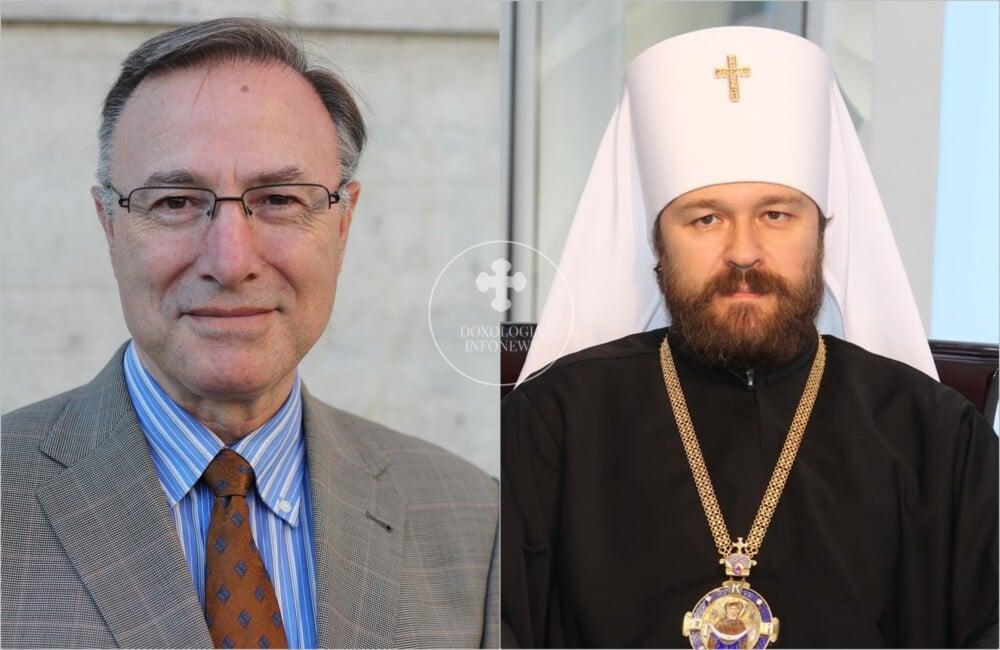
In a public statement of March 2 and in a private letter of March 3 on the occasion of Russia’s military invasion of Ukraine, I expressed, as Dean of the Faculty of Theology at the University of Freiburg /Switzerland, to Metropolitan Hilarion (Alfeyev), Director of the Department of Ecclesiastical External Relations of the Patriarchate of Moscow and Full Professor of the Faculty since 2011, my expectation that he will use his ecclesiastical and political influence, to publicly and unequivocally condemn the military invasion of Ukraine by Russia, which is contrary to international law, publicly and unequivocally call on President Putin to immediately withdraw Russian troops, and publicly and unequivocally commit to a solution to the conflict based on dialogue, on the basis of international law and human rights.
In a letter dated March 3, Metropolitan Hilarion informed me that he and his Church have been engaged in the humanitarian field, especially since 2014, in the context of the Ukrainian conflict, and that they are doing everything possible to help people in need and end the conflict. However, since this does not correspond to what the faculty expects of him at this time, he considers it appropriate to suspend his position as full professor, while personally thanking me and the faculty for the many years of collaboration fruitful.
As dean of the faculty, I am disappointed that Metropolitan Hilarion, a long-time tenured professor in our faculty, does not feel able to oppose Russia’s blatant violation of international law. I am particularly shocked by the public statements of the highest authority of the Patriarchate of Moscow regarding Russia’s military invasion of Ukraine. The sermons of February 27 and March 6 in which Patriarch Kirill I justifies Russia’s war against Ukraine by calling it a “metaphysical fight” are outrageous from a theological and political point of view. As Metropolitan Hilarion seems, by his silence, to endorse the position of his Patriarch, I declare that the post of full professor granted to him in 2011 is suspended until further notice. This in no way affects the thanks for the collaboration we have had.
The reason for this decision is obvious: as too often in the history of Christianity, a Church leadership does not dare to ask the question “by what right?” when the rulers of its own people set in motion a machine of aggressive war against a brother people, whether for tactical-diplomatic considerations or for reasons of ideological connivance. Since the catastrophe of the First World War, nationalism, a perversion of the biblical idea of election, has often become a new political religion. The peoples of Europe, who in 1815 considered themselves in the manifesto of the “Holy Alliance” as “one Christian nation of brothers”, have so far not been able to permanently overcome the pathology of nationalism. Churches and theologies are not innocent in this process.
Prophetic courage is represented in today’s Russia by simple laity, priests and deacons or by civil society actors who publicly protest against Putin’s war, when they have more to fear than a leadership of the Church who let themselves be courted by him. The Faculty of Theology of Friborg will continue to be a place of understanding and encounter with and between the different Churches of Orthodoxy. But silence, when it comes to speaking loud and clear, is not part of the prophetic tradition of Christianity, as it is so prominent for our faculty.
Teacher. Dr. Dr. Dr. h.c. Mariano Delgado
Dean of the Faculty of Theology at the University of Friborg
Six months later, 80 percent of American boys and girls are immunized against polio
In the 1940s and 1950s, a polio epidemic raged in the United States and around the world. In the late 1940s, the disease paralyzed an average of 35,000 people a year, most of them children. In 1952 alone, there were 58,000 deaths.
Tens of thousands of children are disabled for life every year, and hospitals are overcrowded with young patients who can’t even breathe on their own because their fragile bodies are paralyzed and subjected to iron-lung ventilation.
The United States is in a state of panic, and scientists are frantically looking for salvation. Franklin Delano Roosevelt himself was diagnosed with polio when he was 39, and remained paralyzed from the waist down due to the sinister disease.
In 1951, Dr. Jonas Solk, head of the viral research laboratory at the University of Pittsburgh, was able to distinguish three different types of polio-causing viruses, which allowed him to develop a “dead” vaccine to inject into a child. to produce antibodies. Preliminary tests of the polio vaccine began in 1952, with Dr. Solk administering experimental doses to himself, his wife and three sons.
Two years later, the New York Department of Health launched a massive campaign to vaccinate against polio. “But the cost of the drug, apathy and ignorance have become serious obstacles to efforts to eradicate the serious disease,” wrote historian Stephen Moadsley.
Influential journalist Walter Winchel made matters worse after saying to his 50 million-strong radio and television audience on April 4, 1954, “Good morning, Mr. and Mrs. America and everyone else. Please pay attention! tell me about the new polio vaccine that is said to cure. But it could be a killer! “
An even bigger blow to the authorities’ efforts to persuade parents to vaccinate their children follows. In April 1955, more than 200,000 children from five US states were immunized, but the batch turned out to be defective – the polio virus was not killed. The investigation shows that the batch of the vaccine, produced by the California family company Cutter Laboratories, infected 40,000 children, 200 of whom were paralyzed and 10 lost their lives.
In the following months, the number of immunized children fell sharply and the authorities took a surprising but, as it turned out, particularly profitable move.
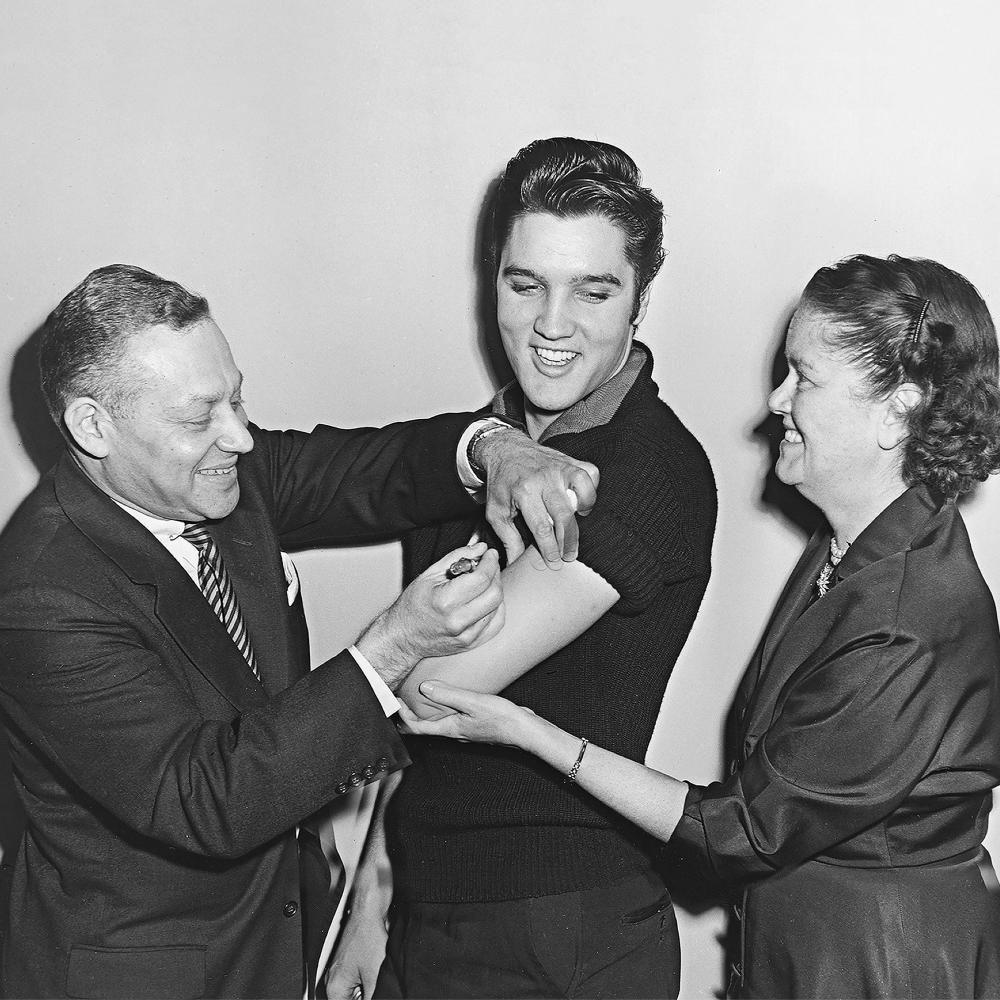
On October 28, 1956, America’s biggest star, King of Rock Elvis Presley, went to the CBS studio to participate in The Ed Sullivan Show and publicly received his polio vaccine in front of photographers. At that time, the percentage of vaccinated teenagers in the United States, who are the most at risk group, was only 0.6 percent.
New York Health Commissioner Leona Baumgartner and her deputy, Harold Fürst, vaccinated Elvis, and photos of the event flooded the press across the country. Six months later, 80 percent of American boys and girls are immunized against polio.
In just 5 years, the number of patients decreased by 96 percent, and Dr. Jonas Salk became a national hero.
President Dwight D. Eisenhower paid special attention to him during a ceremony at the Rose Garden in the White House. However, what impresses and leaves people speechless is Dr. Solk’s refusal to patent his discovery, although estimates released by journalists and experts would make him the richest man in the world with a revenue of $ 7 billion.
Photo: Department of Health Collection, NYC Municipal Archives
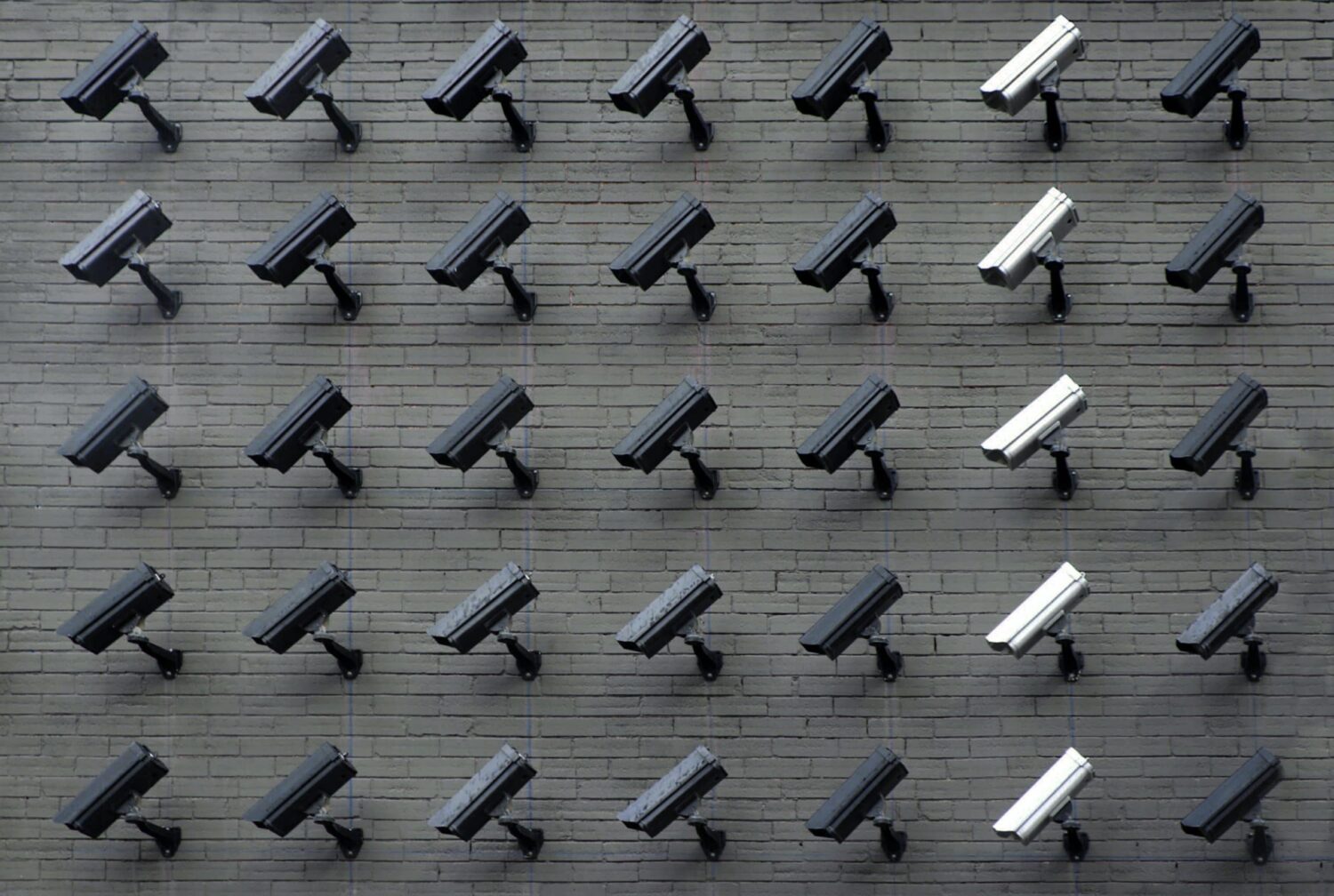
Joy, sadness, puzzlement, fatigue – this is not the whole range of sensations subject to video analytics. Gartner experts promise that in 2022 every tenth gadget will support emotion recognition technology. Not only technology giants, but also small startups are investing in this area, finding new applications for it. Zaur Abutalimov, Executive Director of the Ivideon cloud video surveillance service, tells Hi-Tech how emotional AI appeared and why it catches our smiles.
When cameras learned to recognize emotions and how it works now
Scientists began studying emotion markers long before the advent of artificial intelligence, in the 1970s. Of course, then there was no talk of the connection of emotions with neural networks. Emotions were the subject of scientific interest of psychologists: scientists Paul Ekman and Wallace Friesen collected all possible variants of facial movements into a single system, with the help of which any facial expression could be broken down into separate components. A certain set of mimic units corresponded to any emotion.
Modern algorithms are arranged in a similar way: the system processes streaming images, and then artificial intelligence limits the areas of the eyes, lips, nose, and eyebrows with points. Then the neural network analyzes the position of these points and matches them with the emotion template. Ultimately, the neural network remembers that rounded eyes correspond to surprise, a half-open mouth to fear, and lowered corners of the lips to fatigue or sadness.
The ability of neural networks to work with emotions was seriously discussed already in the “zero”, when it became clear that the future was with face recognition systems. And although teaching a computer to scan emotions is more difficult than just looking for a face, in a couple of decades, the direction of Facial Emotion Recognition has taken a big step forward. Already in 2020, Mordor Intelligence analysts estimated the emotion recognition market at $19.9 million.
At the same time, most of the FER market will be in North America due to the presence of countries such as the United States and Canada on the continent. It is in them that the largest retail markets with high demand for such solutions are located.
What is it for
The first solutions based on the emotion recognition system originated in the entertainment industry. For example, in 2015, Microsoft developed an application that guessed a person’s mood: the user “feeded” photos to him, and the program analyzed the emotion based on facial microexpressions in the image. The algorithm analyzed eight basic states – contempt, anger, disgust, fear, happiness, sadness, surprise or calmness, and then distributed conditional scores between them.
Now the scope of such solutions is much wider than you might imagine. In retail, devices with facial recognition can assess not only the gender, age and ethnicity of the buyer, but also his emotions at the time of purchase. In 2017, world leader Walmart took advantage of this by installing smart cameras at the checkout lines to monitor the mood of visitors. If the system found an upset customer, the store manager immediately learned about it from notifications.
Emotion recognition is a service that is used not only by industry giants like Walmart. Ivideon cooperates with more than 1,000 retailers, including small supermarkets and brick and mortar stores. About 15% of them, without high revenue figures and multi-faceted marketing campaigns, still show interest in the Facial Emotion Recognition feature in order to better understand the client.
In retail, facial recognition devices can assess not only the gender, age, and ethnicity of a shopper, but also their emotions at the time of purchase.
recruiting
Another area in which emotion detection technology has proven to be in demand is recruiting. Large companies are implementing artificial intelligence to control the behavior and psychological state of employees. Cameras with video analytics modules installed in the office can detect signs of stress in employees and warn personnel departments about it. For example, the Chinese company Taigusys has developed a program that analyzes facial expressions of a person and, based on the data obtained, creates detailed reports about his mental state. Such solutions are also being developed today by Limeaid, VirginPulse, Glint, Ultimate Software and other companies.
FER-technologies also allow corporations to evaluate the effectiveness of television advertising. The American company Affectiva has created an application that scans videos of people and forms an idea of their emotions at the time of broadcasting a commercial. With the help of artificial intelligence, you can evaluate the reaction to any product. For example, Disney uses machine learning algorithms to understand whether viewers like the cartoons the company creates.
Medical institutions also use FER to determine the emotions of patients in the waiting rooms. This helps doctors prioritize those patients who feel worse and call them for an appointment earlier. But there are more experimental ways to implement developments. In 2018, scientists using emotion recognition technology discovered a new therapy for children with autism. With the help of Google Glass augmented reality glasses and a special application for a smartphone, a sick child could find out what feelings others are experiencing.
In schools and other educational institutions, “emotional” technologies are being introduced to control the psychological health of students and can serve as a basis for preventing acts of violence and bullying. At customs at airports, such systems help intelligence officers to identify a person with a high level of anxiety and nervousness, which often indicates his involvement in smuggling. In 2019, China actively began to introduce intelligent systems for these purposes.
Medical institutions also use FER to determine the emotions of patients in waiting rooms.
Reads not only in the eyes: can AI scan a person’s thoughts
Despite the fact that the cameras seem to be an all-seeing eye, there are things that they still cannot do. For example, cameras cannot read minds and detect hidden emotions. But there is good news: you can recognize hidden discontent and disappointment by the voice. Several programs already process audio information and analyze paralinguistic signals, intonation, tempo and timbre of the speaker’s speech. Then artificial intelligence translates the data into the language of emotions. Such solutions are already being used by major brands in marketing research.
The mind-reading device is also a very real technology. So far, such devices are not widely used, but scientific developments are already underway in this area. The Meta (Facebook) company has advanced in this direction, which last year, together with the University of California at San Francisco (UCSF), presented a brain-computer interface (BCI) that recognizes words and whole phrases that a person wanted to say: electrodes connected to the brain read signals and convert them to text.
In 2019, Neuralink, along with Elon Musk, presented a similar Link device. This microgadget, the size of a small coin, is supposed to be “sewn” into the human brain with the help of tiny wires thinner than a human hair. It is expected that the device will transmit information about the activity of the centers of the brain and translate a person’s thoughts into text that can be broadcast to a computer or phone. The mind-reading device is also a very real technology.
Feelings and reason: can artificial intelligence gain empathy
So far, smart devices only work with other people’s emotions. But already with might and main they say that the day is near when the robots themselves will experience feelings. True, in this case we are not talking about love and hate, but about empathy – the ability to sympathize and empathize.
Of course, at the biochemical level, this is impossible, since artificial intelligence is devoid of sense organs. However, it is quite possible to train robots to respond to the psychological state of a person. Modern technology proves that machines can understand emotions using numbers even better than people themselves.