Today, the Eurogroup endorsed a recommendation by euro area member states to the Council. Ministers agreed with the European Commission’s and the European Central Bank’s positive assessment of Croatia’s fulfilment of convergence criteria. The recommendation proposes that Croatia should introduce the euro on 1 January 2023. This is the first step in a process by which the EU Council adopts legal acts that will enable Croatia to become a member of the euro area and to benefit from using our common currency, the euro, as of next year.
I am very pleased to announce that the Eurogroup agreed today that Croatia fulfils all the necessary conditions to adopt the euro. This is a crucial step on Croatia’s path to become the 20th member of our euro area and a strong signal for European integration. I want to pay particular tribute to the Croatian government for its commitment and hard work to achieve this result over the past few years, in particularly challenging circumstances.
Paschal Donohoe, President of the Eurogroup
Next steps
This recommendation is set to be adopted by the Ecofin Council (by a qualified majority vote of the euro area member states) at its meeting of 17 June 2022. The Council is also expected to endorse a letter by the President of the Ecofin Council to the European Council. The European Council will discuss the matter at its meeting on 23-24 June.
The process will conclude with the adoption by the Council (after it has consulted the European Parliament and the European Central Bank) of three legal acts that are necessary to enable Croatia to introduce the euro on 1 January 2023. The adoption of these acts is expected to take place in July.
CANADA, June 16 – Kennedy Stewart, mayor, City of Vancouver –
“Vancouver is thrilled to welcome the world to Vancouver in 2026! Following the success of hosting the FIFA Women’s World Cup in 2015, Vancouver is poised to take the next step and host the largest FIFA World Cup ever. With world-class amenities, excellent venues, one of the best stadiums in North America, and Canada’s biggest football fans, we can’t wait to partner with Host First Nations and the Province of B.C. to host the world’s largest sporting event!”
Chief Wayne Sparrow, Musqueam Indian Band –
“Soccer is a globally unifying sport. It is an important sport to Musqueam – just like it is important to so many communities around the world. We are thrilled to host the 2026 FIFA World Cup in our ancestral territory. There is no doubt that our youth will not only take pride in our involvement, but be inspired to continue playing the game that so many of us love.”
Sxwíxwtn, Wilson Williams, spokesperson, Squamish First Nation –
“The Squamish Nation is thrilled the FIFA World Cup will kick off on our shared traditional territories in 2026! We look forward to working with our partners to make this world cup the biggest and best one yet. This event will promote Coast Salish cultures and languages to billions of soccer fans around the world and will inspire all Indigenous athletes to compete on the global stage.”
Chief Jen Thomas, Tsleil-Waututh Nation –
“Soccer is incredibly important to the Tsleil-Waututh community, and we are pleased that this tournament will be hosted in our territory in 2026. Sport is like medicine to our people and can help heal and inspire our communities. We are excited to collaborate on these games and look forward to the opportunities they will bring to our people.”
Jason Elligott, executive director, BC Soccer –
“We are very pleased to hear the positive news that Vancouver was selected as a host city for FIFA World Cup 2026. Having matches held here in B.C. as part of a tournament of this magnitude is amazing for soccer and for the people in our province. These matches will bring the highest level of competition to B.C. and will most definitely provide inspiration into our game.”
Gwendolyn Point, chair, B.C. Pavilion Corporation (PavCo) board of directors –
“We are tremendously proud to be named as a Canadian host city for FIFA World Cup 2026. This event represents the highest level of international soccer competition, and we are excited to welcome the world to BC Place Stadium, Canada’s premier sporting venue, and Vancouver. BC Place has long served the province as a hub for sport, culture and community, and now as part of the historic legacy of the FIFA World Cup, we look forward to providing an inclusive and unforgettable experience for not only British Columbians but fans all across the globe.”
Richard Porges, CEO, Destination BC –
“We’ve seen the incredible and lasting impacts that events of this scale can have on a destination, generating social, cultural and economic benefits, not only for the host city, but across the entire province – benefits that are more crucial than ever as our hard-hit tourism sector works toward immediate recovery and long-term renewal. As the international gateway to British Columbia, rich in culture, natural beauty and remarkable experiences for every traveller, Vancouver is a consummate host city for this tournament. We are thrilled to welcome the world to B.C. for FIFA World Cup 2026.”
Tamara Vrooman, president and CEO, Vancouver Airport Authority –
“Hosting one of the world’s most celebrated sporting events, the FIFA Men’s World Cup, is an honour, one that we at YVR are incredibly proud to be a part of. As the first and last impression of our region, we will continue to do what we do best – provide a safe, seamless and exceptional airport experience for the many athletes, officials, media, fans and partners who travel to Vancouver to enjoy the beautiful game in our beautiful city.”
Royce Chwin, president and CEO, Destination Vancouver –
“GOAL! The beautiful game’s greatest spectacle is coming to Vancouver, and we could not be more thrilled. FIFA World Cup fans ‘put the fan in fandom’ and the diversity of support we’ll see in this multicultural city will be amazing. An investment in an event of this scale will showcase Vancouver’s appeal as a global destination of choice and a critical step to building a vibrant and resilient visitor economy.”
Brenda Baptiste, chair, Indigenous Tourism BC board of directors –
“Congratulations to Vancouver for being selected as one of three host cities for FIFA World Cup 2026. Hosting the world’s largest single sporting event will surely have positive impacts for tourism, arts, culture and sport in B.C., including Indigenous tourism and athletics. Excellence in sport is a cultural principle for Indigenous Peoples, and soccer is world-renowned for being a sport with relatively few barriers. Sport brings people together. We look forward to working with our partners to host a tournament that will not only attract global visitors and boost the B.C. economy, but also inspire Indigenous youth to achieve success in sport.”
Walt Judas, CEO, Tourism Industry Association of BC –
“British Columbia’s stellar reputation for hosting major events has been further bolstered by today’s exciting announcement. Thanks to the Province and indeed all levels of government, the FIFA World Cup 2026 will not only draw international attention to our destination, but also bring visitors from around the world to B.C., providing tremendous benefits to our visitor economy before, during and after this prestigious event.”
Ingrid Jarrett, president and CEO, British Columbia Hotel Association –
“Large-scale events, such as the FIFA World Cup, have the power to bring together communities, support our province’s economic growth and keep our tourism and hospitality community competitive for decades to come. Following two years of significant pandemic losses, our province’s accommodation industry is delighted to welcome guests from across the globe and is looking forward to showcasing our uniquely British Columbian hospitality on the world stage once again.”
Bridgitte Anderson, president and CEO, Greater Vancouver Board of Trade –
“We are thrilled that Vancouver will be an official host city for the 2026 FIFA World Cup. Local businesses across Metro Vancouver are excited for the substantial economic benefits to come from jointly hosting the world’s biggest tournament. Through collaboration with Indigenous partners, the 2026 FIFA World Cup presents us with an opportunity to show the world everything our incredible region has to offer.”
Axel Schuster, CEO and sporting director, Vancouver Whitecaps FC –
“We are ecstatic that Vancouver has been named a host city for the 2026 FIFA World Cup. This is an incredible opportunity to welcome everyone back to Vancouver, as we did for the 2010 Winter Olympics and the 2015 FIFA Women’s World Cup, and once again celebrate our special city. Vancouver Whitecaps FC are excited to support our partners at the Province of British Columbia, City of Vancouver, and BC Place Stadium as we get set to host the world in our home city and stadium.”
Stefan Szkwarek, president, Comox Valley United SC –
“We at the Comox Valley United SC are delighted that Vancouver has been selected as a host city for the 2026 Men’s World Cup! This is a fantastic opportunity to witness the world’s largest sporting event, first-hand. This will be especially important for grassroots clubs such as ourselves, as witnessing the pinnacle of our sport locally will certainly inspire millions to take up the beautiful game. We are genuinely thrilled to watch one of our national teams play at the highest stage!”
Aaron Walker-Duncan, president, Gorge Soccer Association –
“Having the World Cup on our doorstep will be an amazing once-in-a-lifetime experience. This will be such a great opportunity for the growth of soccer in our local community and will inspire future generations of players.”
Then the LORD God formed the man from the dust of the ground. He breathed the breath of life into the man’s nostrils, and the man became a living person. —Genesis 2:7
According to Jewish law, life begins at the first breath. The basis for this position is the passage cited above from Genesis. It is upon that line and others that Judaism takes the position that identity and the rights of personhood come into being at the first breath and not before. Moreover, the Talmud, the body of Jewish civil and ceremonial law, asserts that a fetus is a part of its mother throughout the pregnancy, dependent fully on her for its life. So, therefore, a pregnant woman convicted of murder, for example, may be executed without fear that more than one human life is being taken. And, though it is widely agreed that abortion is permitted if continuing the pregnancy poses a threat to the life of the mother, the precise definition of “threat to the life” has varied widely among scholars, some including the mental as well as the physical health of the mother, as in the case of rape and incest.
The synagogue contends that the law “prohibits Jewish women from practicing their faith free of government intrusion and this violates their privacy rights and religious freedom,” adding that people who “do not share the religious views reflected in the act will suffer” and that it “threatens the Jewish people by imposing the laws of other religions upon Jews.”
Congregation L’Dor Va-Dor’s Rabbi, Barry Silver, observed that Florida Governor Ron DeSantis signed the law at an evangelical church. Concerned that when the line between religion and government begins to blur those who suffer most are the minority religions.
“Every time that wall starts to crack, bad things start to happen,” Rabbi Silver said.
Rabbi Danya Ruttenberg, scholar in residence at the National Council of Jewish Women agrees. “This ruling would be outlawing abortion in cases when our religion would permit us,” she said, “and it is basing its concepts of when life begins on someone else’s philosophy or theology.”
The lawsuit filed by Congregation L’Dor Va-Dor poses some weighty questions: What happens when religious freedom for one faith violates that of another’s? And to what degree may the state be the final authority on morality?
A recent Pew Research survey found that 85% of Jews favor abortion in most or all cases, or more than any other religion surveyed. But only 2.4% of American adults identify as Jews. These percentages lead to a third question: Does majority rule also apply to whatever is the religious majority?
In signing the Florida bill into law Governor DeSantis has opened the floor to a problem that will need a truly Solomonic resolution.
Jehovah’s Witnesses acquitted on appeal for alleged discrimination and incitement to hatred
On 7 June 2022, the Ghent Court of Appeal acquitted the Belgian Association of Jehovah’s Witnesses of all charges of discrimination and incitement to hatred, after they had surprisingly been fined 96,000 euros by the Ghent Criminal Court in March 2021.
In 2015, a former Jehovah’s Witness went to the public prosecutor’s office, claiming that once members left the community, they were ostracised and completely socially isolated by order of the organization.
The public prosecutor’s office in Ghent had summoned Jehovah’s Witnesses on four counts: incitement to discrimination on the basis of religious beliefs against a person, and against a group, and incitement to hatred or violence against a person, and against a group.
In the first instance, the Belgian Association was found guilty of inciting discrimination and hatred or violence against former members who had left the community but it appealed the decision.
The Court of Appeal of Ghent hereby confirmed on 7 June 2022 that Jehovah’s Witnesses’ biblical practice of limiting or avoiding contact with former followers, also called shunning, was legal and does not incite discrimination, segregation, hatred or violence.
Human Rights Without Frontiers largely covered the judicial proceedings in 2021 in Bitter Winter, addressing the following issues:
Timeline
The trial
Who are the claimants?
The statements of the claimants
The position of the CCJW
The verdict and its consequences
Ghent Appeal Court decision in line with Belgian and European jurisprudence
The decision on appeal is in line with the opinion of leading scholars who have followed this case. It is also in conformity with previous rulings by Belgian courts of appeal and the Court of Cassation on the same issue.
On 10 January 2012, the Court of Appeal of Mons rejected the discrimination claim of J.L., a former Jehovah’s Witness.
On 5 November 2018, the Court of Appeal of Brussels confirmed the decision of the Court of Appeal of Mons and rejected again the said discrimination claim.
Last but not least, on 7 February 2019, the Court of Cassation also rejected the appeal against the judgment of the Court of Appeal of Brussels.
The European Court of Human Rights had also previously emphasized that determining doctrinal or behavioral standards to which members of a religious community must conform in their private lives is a feature common to many religions.
Referring to these well-established legal principles, Holly Folk, associate professor at Western Washington University, observed as well: “It is not the role of governments to intervene in the choices that consenting adults make. And the reality is that many religions have a norm of no longer having strong ties to people who leave their religious traditions.”
Verdict: Charges not proven and claims of the civil parties unfounded
About the criminal charges, the Court of Appeal of Ghent declared that the charges against the Christian Community of Jehovah’s Witnesses had not been proven and discharged it from prosecution.
About the civil field, the Court of Appeal dismissed as unfounded the claims of the civil parties and the Interfederal Centre for Equal Opportunities and Opposition to Discrimination and Racism, a public institution having taken sides against Jehovah’s Witnesses in the case.
Whilst the condemnation of Jehovah’s Witnesses in first instance was widely covered by printed media, radio and TV, their acquittal was ignored by almost all of them. The media and journalists should avoid stigmatization of any religious group and sensationalism but devote the same attention and importance to a final acquittal.
French President Emmanuel Macron did not want to go to a hotel in Constanta during his visit to Romania, but preferred to sleep in a tent at the Mihail Cogalniceanu military base, Romania’s Digi 24 television reported. The information was confirmed by the Elysee Palace.
Macron arrived in Romania yesterday to visit the French military, based at the Mihail Cogalnicanu base near Constanta, which is part of a mission to strengthen NATO’s eastern flank following Russia’s invasion of Ukraine. France leads a NATO battle group in Romania of about 800 troops, including 500 French troops, along with others from the Netherlands and Belgium. Paris has also deployed a surface-to-air missile system.
In the morning, before the start of the official program of the visit, Macron did a jog and then had breakfast with the military, reports the French television TV5 Monde.
Last night, Macron had dinner with the French and Belgian military from the NATO Response Force, and the menu included dishes from authentic Romanian cuisine.
Yesterday morning, French President Emmanuel Macron met with his Romanian counterpart, Klaus Johannes, to discuss the situation in Ukraine, support for the Republic of Moldova and Romania’s accession to the Schengen area. Macron then went on a visit to the Republic of Moldova.
The French leader has been criticized by Ukraine and its Eastern European allies for what they see as its ambiguous support for Ukraine in the war against Russia.
In recent days, French officials have sought to boost public relations, while Macron seems to have taken a firmer stance when he was with his troops.
“We will do everything we can to stop Russia’s military forces, to help the Ukrainians and their army, and to continue negotiations,” he told French and NATO troops at a military base in Romania.
“But in the foreseeable future, we will have to defend, dissuade and be present,” he said.
In recent weeks, Macron has repeatedly said it is vital not to “humiliate” Russia so that a diplomatic solution can be found when the fighting is over, and he has continued to keep channels of communication with the Kremlin open, annoying more Allied hawks.
This is the French president’s first tour of Southeast Europe since Russia’s invasion of Ukraine.
But the authorities do not like the strength of the ruble. However, they do not know how to tame it.
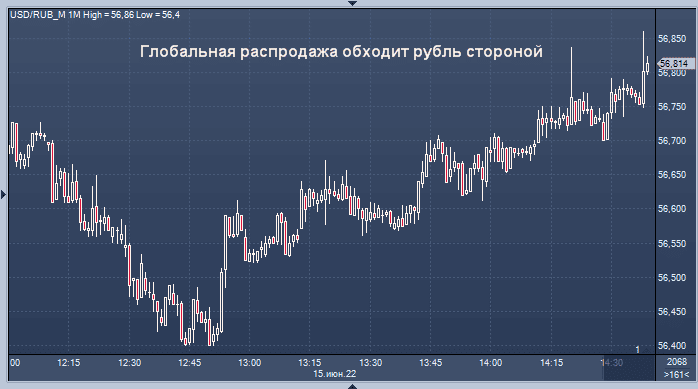
The Russian ruble was flat in Wednesday trading as stocks edged higher, protected from a wide-ranging global sell-off in recent days by Moscow’s capital controls.
At 14:20 Moscow time, the ruble was unchanged against the dollar at 56.58 and added 0.1% to trade at 59.1 against the euro.
The currency remains near multi-year highs thanks to Russia’s widening current account surplus and the recently relaxed capital controls that Moscow imposed after Western sanctions were imposed in an attempt to stem the ruble’s fall.
Isolated from the turmoil in world markets, Russian stock indices rose in trading in Moscow. The dollar-denominated RTS index rose by 0.56% to 1280.3 points. The Russian MOEX index, denominated in rubles, grew by 0.52% and amounted to 2,301.7 points.
The Russian political and business elite arrived in St. Petersburg on Wednesday for the annual Russian Economic Forum.
Once emblematic of the Kremlin’s openness to international investment, this year’s conference includes discussions on sanctions and the exit of Western businesses.
Hundreds of companies have left Russia in response to Moscow sending tens of thousands of troops to Ukraine as part of a special military operation.
At the same time, the authorities cannot yet stop the ruble from strengthening. The strengthening ruble is a challenge for the Russian economy, Maxim Reshetnikov said. Inflation and economic recession may be lower than expected; the country is going through the crisis better than expected in March, this may be the basis for adjusting the forecasts, in June the MED will reassess, he added.
After 100 years, the island of Hans in the Arctic Ocean was divided
The territorial dispute between Denmark and Canada over the island of Hans, called the Whiskey War, has been resolved. As incredible as it sounds, the European Union and Canada already have a land border.
The island of Hans, located in the territorial waters of Canada and Denmark, is located in the middle of the Kennedy Strait Arctic Ocean. For many years, his affiliation has been the subject of controversy between Denmark and Canada. The “intelligent war”, or “whiskey war”, as it is known, consisted of periodically changing the national flags of the two countries on the island.
Following the agreement, Denmark will control 60% of the island and Canada 40%. The agreement was signed by the leaders of both countries.
The war in the cold waters of the Arctic Ocean lasted more than a hundred years The small rock called Hans (Hans Island, Ile Hans) with an area of 1.3 square kilometers is just a cobblestone piece of land where no one lives and nothing grows. But for the participants in the dispute, the question is fundamental – even a piece of stone can not be given to another country just like that.
In the beginning, the island did not belong to anyone. The Inuit locals have always known of its existence, but did not attach much importance to such barren land. In the early 1920s, a Danish expedition explored the area and in 1933, along with all of Greenland, added the island to its kingdom. The logic was simple: the island belongs to Greenland, and Greenland belongs to Denmark, which means that the island is also owned by the kingdom, decided in the Danish parliament.
Fifty years later, Denmark and Canada began negotiations on a maritime border between the two countries
In order for the contract to be completely fair, the division had to be done by computer. It would clarify to the millimeter where the middle passes between the territories and put a border right in the center. The computer did its job, crossing the center of Hans in two equal parts.
The agreement between Denmark and Canada included a line divided into 127 segments. The section between the 122nd and 123rd points is omitted – this is where the island of Hans is located, which caused the misunderstanding between the two countries. At the same time, the Canadian oil company sent its research team to the island to study the ice. Learning of this, the situation between the two countries worsened. Perhaps in addition to oil, other valuable treasures were hidden on the small island. In that case, the omission of the agreement could not be allowed. The parties convened a council again and agreed not to conduct any research so as not to escalate tensions.
In 1984, Denmark sent a warship to the area. . The military hoisted the Danish flag on the island, leaving a bottle of Danish schnapps under it and a note: “Welcome to the Danish island!”.
As soon as the Canadian team noticed the insidious act of their neighbors, they sent their “gift” to the island – changed the Danish flag to Canadian, and left on the ground bottles of Canadian whiskey “Canadian Club”. This is why the Hans Island dispute has been called the “whiskey war” or the “alcohol war” between Denmark and Canada.
The war lasted for over 30 years, and all the while one or the other side sent its own team, which drank the alcoholic property of the “enemy”, then declared the territory its own and replaced the foreign flag with its own. Knowing that the second country will undoubtedly return to the island sooner or later, the first remains there its national drink: the Danes – schnapps, and the Canadians – whiskey.
The new rules on product safety aim to ensure that all kinds of products in the EU, whether sold online or in traditional shops, comply with the highest requirements.
On Thursday, the Internal Market Committee adopted its position on the EU’s updated rules on product safety of non-food consumer products with 41 in favour, one against and two abstentions. MEPs adopted changes to enhance the safety of products sold in the EU and future-proof the existing legal framework. MEPs also clarified obligations for economic operators and online marketplaces and strengthened product safety requirements.
Clearer rules for operators and safety of products
All economic operators, such as manufacturers, importers and distributers, would have to comply with the updated general safety obligations to place products on the EU market. If those economic operators are not established in the EU, they would have to designate a responsible person in the EU as a contact point for authorities.
If they fail to comply, penalties can reach up to 4% of their annual turnover.
MEPs also strengthened provisions on safety requirements for products to take into account possible specific risks to the most vulnerable consumers such as children, the elderly and persons with disabilities. Products should be safe for all users, including women, whose safety should also always be considered when products are designed. Technological aspects, like cyber interference, but also the effects that digitally connected products can have on children’s mental health need to be considered.
Removal of dangerous goods
According to the adopted text and in line with the recently agreed Digital Services Act, online marketplaces would have to establish single contact points to communicate swiftly with surveillance authorities and consumers. Authorities can oblige online marketplaces to remove and disable access to illegal listings of dangerous products. After being notified, online marketplaces would have one day to act. They would conduct random checks to identify the dangerous products.
MEPs also want the rapid alert system for dangerous products (“Safety Gate” portal) to be modernised to allow online marketplaces to detect unsafe products more easily. The portal should become more intuitive and information should be easily accessible for users, including persons with disabilities.
Efficient recall procedures and access to information
In case a dangerous product needs to be recalled or there is a safety warning, economic operators and online marketplaces would be required to inform consumers and widely disseminate the information online. Consumers would be informed of their right to repair, replacement or refund.
MEPs also added a provision to make sure that information on products’ safety is available in easily understandable language and accessible to persons with disabilities.
Quote
The rapporteur Dita Charanzová (Renew, CZ) said: “Today, we take a crucial step towards making sure all products are safe in Europe, by giving consumers more rights and businesses, including online marketplaces, more responsibilities. And importantly, we do so in a way that protects small businesses without limiting consumer choice. Our “Safety Net” will be more effective and new obligations will target sectors where action is most needed. I look forward to a quick adoption under the Czech Presidency of the Council of the EU.”
Next steps
Once the Council adopts its negotiating mandate, interinstitutional talks between Parliament and member states can start. Once an agreement is reached, it will have to be endorsed by Parliament and Council before its publication and entry into force.
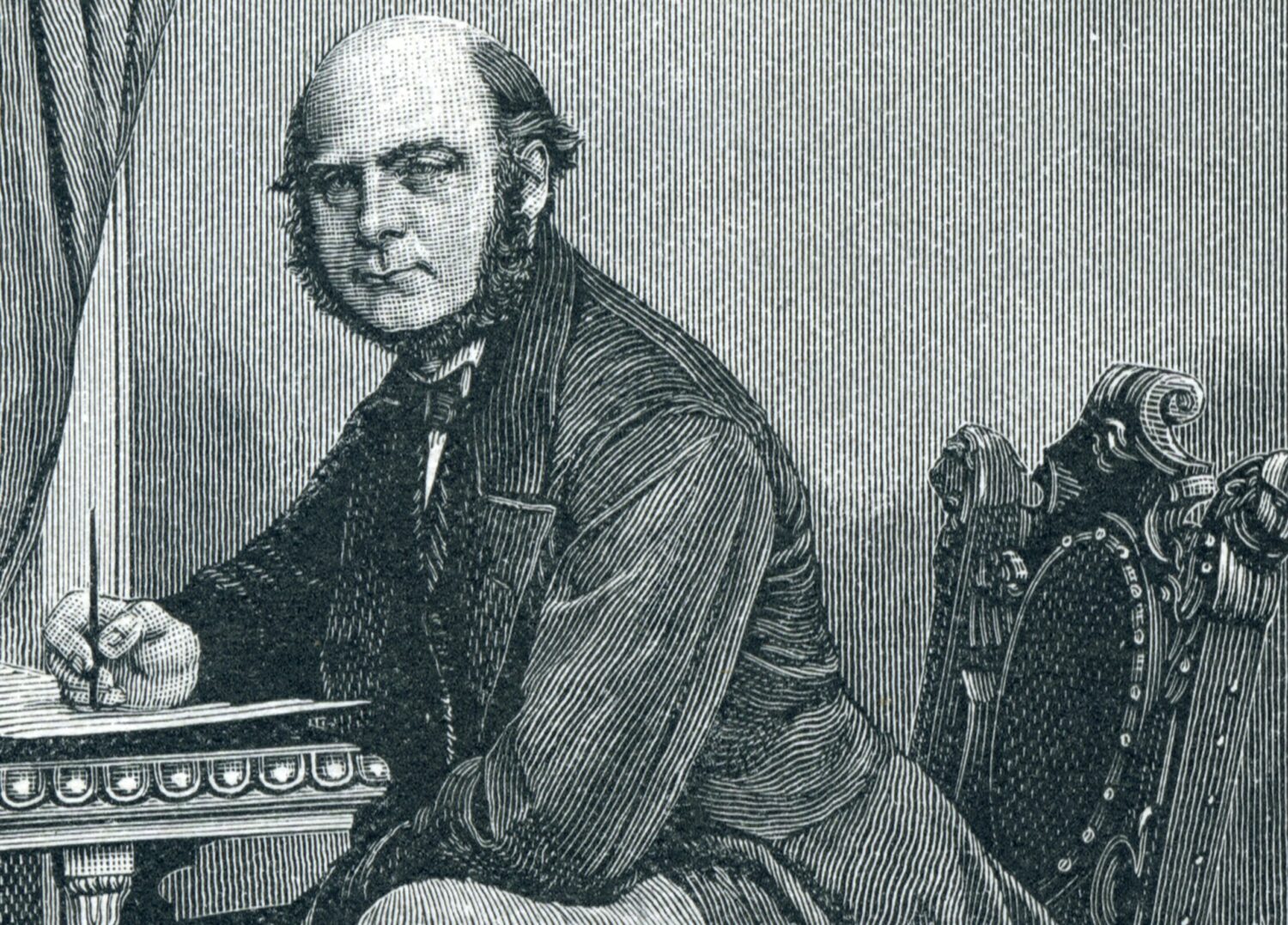
Sir Francis Galton, FRS FRAI, was an English Victorian era: statistician, sociologist, psychologist, anthropologist, tropical explorer, geographer, inventor, meteorologist, psychometrician and a proponent of social Darwinism, eugenics and scientific racism
Learn more about the troubling theory of human improvement
The term “eugenics” refers to a set of beliefs and practices that aim to improve the perceived genetic quality of the human population.
Although most often associated with the Nazi regime of the 1930s and 1940s, the history of eugenics is far more comprehensive than that, both in time and geographically.
The basic idea of eugenics is that the human race can be genetically improved by excluding those groups that are considered lower and encouraging those groups that are considered higher.
While the term was most commonly used under the Nazi regime of the 1930s and 1940s, the concept of eugenics actually dates far back.
Browse our gallery and find out more about eugenics:
Ancient Greece: There is evidence of attempts to control human populations dating back to the ancient Greeks. Around 400 BC, Plato actually proposed selective breeding in humans.
Modern eugenics: The modern history of eugenics began in the late 19th century, when the discovery of evolution and genetics sparked a new scientific movement dedicated to the cause. The movement first appeared in the United Kingdom, where it was named by British scientist Francis Galton. The word “eugenics” comes from the Greek “eugenes”, which means “well born”.
From the United Kingdom, the movement spread to many countries around the world, including the United States, Canada, Australia and many European countries. With the spread of the movement, people began to wonder which genetic traits were desirable and which were not. The problem was that the desired genetic traits were largely determined by the prejudices that existed in the country at the time. Whole groups of people, including immigrants and people with disabilities, were considered “unfit” for reproduction based on their genetic traits.
Many countries have taken steps to control reproduction among “undesirable groups”, such as restricting immigration and banning interracial alliances. Perhaps the most horrific example of eugenics in action is the Nazi regime in Germany, which systematically eliminated millions of Jews and other minorities. The enormous scale and brutality of the Nazi regime made it an extraordinary event in the history of eugenics.
However, Nazi eugenic policy did not differ from the policies pursued by other governments around the world in the mid-20th century. Many countries have introduced formal eugenics policies, of which sterilization has often been a key element. Sweden, Canada and Japan, for example, have forcibly sterilized thousands of people. Sterilization of individuals with “undesirable” characteristics was particularly common in the United States. Between 1907 and 1979, more than 60,000 people in the United States were sterilized under eugenics policies, and 32 states passed laws to sterilize “mentally defective” individuals.
A person has often been defined as “mentally defective” based on superficial mental health diagnoses and intelligence tests. Moreover, the tests used to determine an individual’s mental capacity were often linguistically and culturally biased against the immigrant population. The situation in California, USA was particularly severe between 1920 and 1945 – many more Latin American women were sterilized than other women.
After the atrocities of World War II, many countries began to ban their eugenics policies, although some countries continued to use forced sterilization for decades. The countries that have slowly given up forced sterilization are Sweden and the United States, and laws in California were not repealed until 1979.
Although the general influence of eugenics has been blunted since the mid-20th century, many countries continue to carry out illegal forced sterilizations. In addition, since the 1980s and 1990s, there have been fears that eugenics may return with a vengeance thanks to new technologies. The development of assisted reproductive technology procedures, including cytoplasmic transfer, which was first performed in 1996, has raised concerns about a new, more powerful form of eugenics.
Europe – and in particular, its resorts – suffered significantly more from the sanctions imposed against Russia than tourism in Russia. The fact is that many “Russian” resorts in Europe were left virtually without tourists, according to tourprom.ru. Some countries where Russians traditionally vacationed, as well as where a lot of real estate was bought, are threatened by a simply disastrous tourist season this summer. Interestingly, this assessment of the situation is voiced by Turkish experts.
Thus, the assessment of the “reflection of anti-Russian sanctions” on European tourism was described in detail by a Turkish tourism expert, a representative of the Antalya resort, Recep Yavuz. “Russia, which used to send 45 million tourists around the world and generate $36 billion in added value, has the ability to flip the balance. We see this now, when due to sanctions, not a single plane has taken off from Russia or landed in any area of Europe since February. The damage this has caused to the EU countries cannot be underestimated,” he said.
According to him, the income from tourism in European countries has already collapsed, since Russia has been closed by air sanctions since February – and only new losses are expected in the season. Russian tourists were preferred in many resorts and made an important economic contribution. “European countries that relied on the Russians fell into the trap of the embargo they imposed,” says a Turkish expert.
Among the affected countries, he names the following countries:
• Cyprus and Greece – according to Turkish experts, these countries can be called the most affected by the absence of Russian tourists due to the embargo.
• The 350,000 Russian tourists who have summer villas in Bulgaria have no chance of coming to the country.
• Montenegro is one of the countries where Russian “dachas” are concentrated, but tens of thousands of houses will be left empty because of the Russians who cannot come to the country. Yacht tourism will also suffer.
• In Italy, which started 2022 with a target of 37 million tourists, the share of Russians is 2.5%. Italy struggles to find tourists who shop and stay in high end places like Milan. Previously, about 1 million Russian tourists traveled only to Rome. The economic losses caused by Russian tourists who were unable to come due to the embargo this year are expected to amount to 150 million euros, again in Rome alone.
• The “Russian” resort of Karlovy Vary in the Czech Republic also remained empty this year. “The fact that wealthy Russian tourists came to the region before the pandemic and spent an average of 3 weeks in the hot springs was the most important source of income in the region. It’s been going on for about 30 years now, and it’s completely over with sanctions and stuff. In the absence of Russian tourists, who were of great importance not only for the resorts, but also for the merchants of the city, the city is practically deserted. By the end of May, just a few rooms are loaded in hotels, the shops are empty and closed, ”says the Turkish expert.
• Spain also suffered, with 1.3 million Russian tourists. “The Spaniards, who once flew Russian flags saying ‘Don’t come again!’, are now looking for Russian tourists with lanterns,” says Mr. Yavuz.