The last May order of Rostourism set a sad record – for the first time 58 tour operator companies of outbound tourism left the market at once. Moreover, only four of them left the market voluntarily – mostly they were deleted from the register of tour operators due to the inability to find an insurer – 54 companies suffered from this.
So, the following tour operators were among the companies deleted from the register due to failure to provide information about the availability of financial security for a new period:
1. LLC (Limited Liability Company) “Taiga x-tour”
2. LLC “ATLAS TOUR”
3. LLC “Golden Horse”
4. LLC “Travel agency “My Passport”
5. LLC “Movement of Light”
6. LLC “Sport Invest Group”
7. LLC “Icebreaker”
8. LLC “Anabar Tour”
9. LLC “Planet Yakutia”
10. LLC “TatianaToursCompany”
11. Trade and industrial company “Exhibitions, conferences and business events” LLC
12. LLC “Dream Tour”
13. LLC “Dalintourist”
14. LLC “Vivat”
15. LLC “Le.To-Rise”
16. LLC “Svena-Tour”
17. LLC “Vismant”
18. CJSC “UTES”
19. Federal State Budgetary Scientific Institution “All-Russian Research Institute of Hunting and Fur Breeding named after Professor B.M. Zhitkov”
20. LLC “Business Travel”
21. LLC “Fly tour”
22. LLC “Mintur”
23. Intersputnik LLC
24. LLC “Discovery-South”
25. LLC “Ekaterinburg-Center”
26. LLC “Intour-plus”
27. OOO “Hotel Management Company”
28. OOO International Consulting Group Megaland
29. LLC “Inco-Travel”
30. LLC “Excursion and tourist agency “Eksta LTD”
31. LLC “Intel-T”
32. LLC “Vitors”
33. LLC “Edelweiss”
34. LLC “Nevsky Paradise”
35. OOO “Insider Tour”
36. LLC “East Express”
37. LLC “Alliance Travel Company”
38. LLC Training center “Fregat”
39. LLC “Travel Ural”
40. LLC “Hunting Club of the Urals”
41. LLC “Tour agency Aguna”
42. LLC “Conference Bureau”
43. Turbaza Polyana LLC
44. LLC “Express Tour”
45. LLC “SKO Health and Rest”
46. Ekka-Sochi-Travel LLC
47. LLC “Spartak-Tour”
48. LLC “TOR”
49. LLC “Atlas”
50. Malibu Travel Agency LLC
51. LLC “Golden Orchid”
52. LLC “Children’s creative center “Pioneer”
53. LLC “Splim Group”
54. LLC “Baska Tut”
As for tour operators, information about which was excluded from the Register in connection with the submission of an application for the termination of tour operator activities, i.e. those who voluntarily left the market, there are four such companies:
Instead of being thrown away, the many other trolleys are good enough to be renovated – with Bulgarian expertise, said Prof. Daria Vladikova
The prototype of a trolleybus, which scientists from the Bulgarian Academy of Sciences (BAS) are transforming to run on hydrogen, was shown on June 3, 2022 at the Levski trolleybus depot, where the development of Bulgaria’s first demonstration project for hydrogen implementation in transport was presented. .
Scientists are developing a mileage extension that will provide 100 kilometers of autonomous electric drive of the trolley outside the power grid.
The European Commissioner for Innovation, Research, Culture, Education and Youth Maria Gabriel thanked the scientists from the Bulgarian Academy of Sciences for what they have done and revealed that this project is given as an example in Brussels.
The development is part of the implementation of the National Scientific Program “Low Carbon Energy for Transport and Life – EPLUS”, implemented under the auspices of the Bulgarian Academy of Sciences and funded by the Ministry of Education and Science.
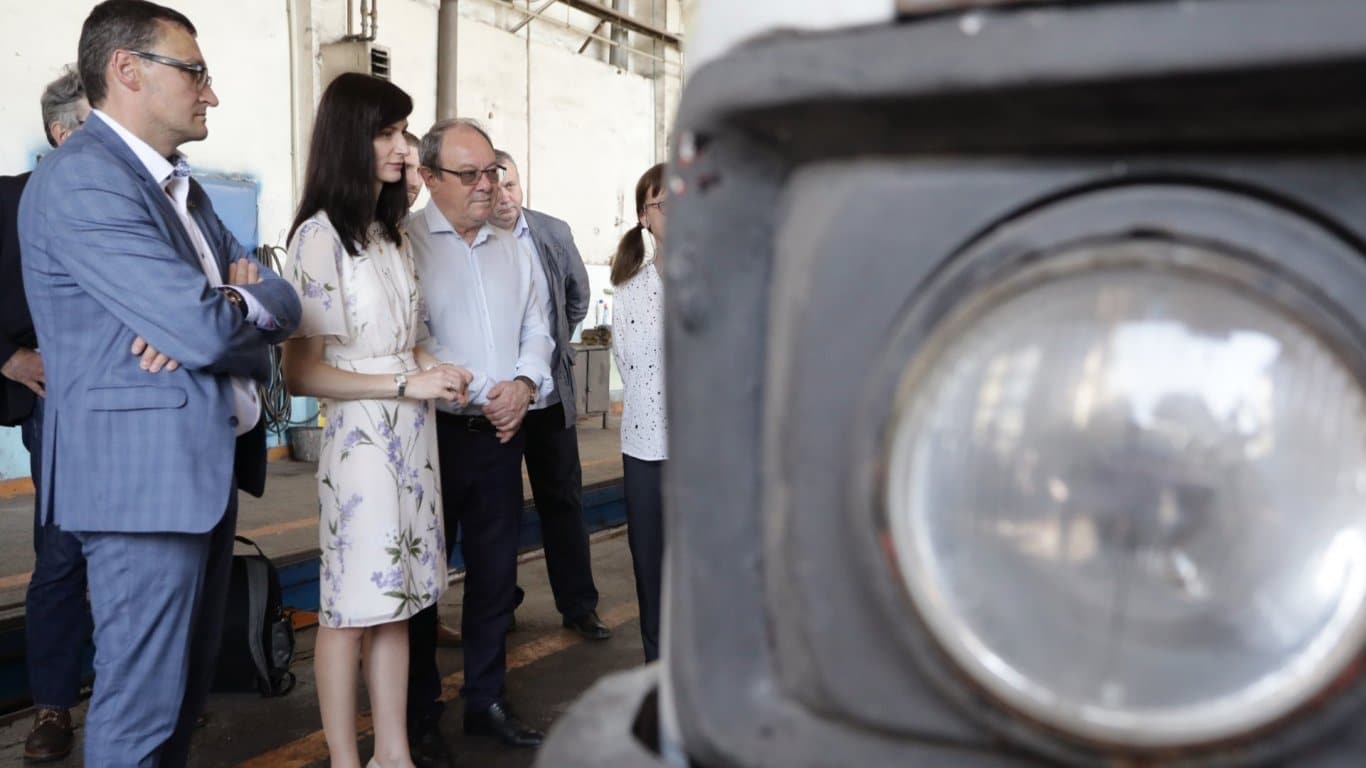
Maria Gabriel, the executive director of the public-private enterprise “Partnership for Pure Hydrogen” Bart Beebeek, the President of BAS Acad. Julian Rewalski, scientists and representatives of the Sofia Municipality examined the prototype of the trolleybus in the landfill.
This is the first demonstration project in Bulgaria with hydrogen, which is subsidized by the Ministry of Education and Science under the “EPLUS” program, said to journalists Prof. Daria Vladikova, who is a professor of electrochemistry at the Institute of Electrochemistry and Energy Systems at BAS. and is chairman of the Bulgarian Association for Hydrogen, Fuel Cells and Energy Storage.
“The approach is unique, we take an old trolley from the Sofia Municipality (SO), we have a contract with the Sofia Municipality, and we will turn it into a modern hydrogen-powered trolley. The trolley can work offline, for example we have a new neighborhood and don’t have to a pound is being lifted. The pound is being taken down and the trolley is moving like an electric vehicle, because hydrogen fuel cell vehicles are also electric vehicles as well as battery vehicles. kilometers per day, which we want to provide by introducing a hydrogen propulsion system for this trolley “, explained Prof. Vladikova.
She stressed that this is a prospect because there are many trolleys in Bulgaria that can be discarded, but are good enough to be upgraded to work as hydrogen vehicles. “We are trying to create a Bulgarian expertise, this is not a project in which we have partners with expertise in individual components of hydrogen technology. This is an expertise that we create here, buy these components and do the integration for the first time such a system. in Europe, retrofit is a very interesting topic because there are many vehicles that are not produced often and have a very long lifespan, such as locomotives and large vehicles used in mines, ships. And there the official policy is already retrofit, “he said. Prof. Daria Vladikova.
We continue with the creation of a small company that will process these trolleys, and in Bulgaria there are ten cities with trolleys and we have the opportunity to introduce hydrogen transport in them. “We will also switch to locomotives and ships, and in this way we believe that we will be unique and will arouse the interest of European manufacturers,” said Prof. Vladikova.
She announced that there are plans to build a hydrogen charging station with solar panels located on the territory of this landfill.
“This trolley will be ready in a few months for demonstration, but we have to certify that it can transport people. The purpose of this stage is a demonstration project and for that we need maybe a year and a half, and a new project, We expect the trolley to be ready for demonstration in a few months, and in a year and a half it will be able to move in Sofia. At the moment, the investment amounts to about BGN 1 million, “said Prof. Daria Vladikova.
EU Commissioner Maria Gabriel noted that it is no coincidence that Sofia was chosen as one of the top 100 climate-neutral cities. She thanked the scientists from BAS for what they have done on the project, because it is appreciated. This project is also given in Brussels as an example of how, at the local level, things from the time that we think are past are combined with innovation and technology. It will be of great benefit to people to be convinced of the usefulness of hydrogen technology, said Maria Gabriel. “You can also count on our support, because in this project, what I like the most is that it does not rest on old laurels, but wants to reach the next phases, which are important for citizens, small and medium. enterprises, both for the positioning of Sofia and Bulgaria in this sector “, with these words the European Commissioner Maria Gabriel addressed the scientists.
The President of BAS, Acad. Julian Rewalski, said that business support for such innovative projects is also important.
EU Commissioner Gabriel and the executive director of the public-private partnership “Partnership for Pure Hydrogen” Bart Beebeek are in the country to get acquainted with the achievements of projects for the development of innovative hydrogen technologies in Bulgaria. During their visit, they will discuss the future development of the country’s hydrogen economy as a key moment in achieving the goals of the European Green Deal.
Photo: Maria Gabriel and Bart Beebuke have now visited the Institute of Electrochemistry and Energy Systems at the Bulgarian Academy of Sciences.
In my country, Portugal, inflation has hit us quickly and wildly. According to DECO, the Portuguese consumer protection agency, an essential basket of food costs 12,2% more today than it did before the war (February 23). But by now, everyone knows that inflation has been around for a long time…
Around November 2021, I was doing a story about local businesses with a colleague of mine. For the piece, we needed to interview some merchants, and so we interviewed Miss Margarida, the manager of the restaurant “O Bitoque” (bitoque is the name of a popular Portuguese dish). In the interview, she said something interesting and surprising (at the time).
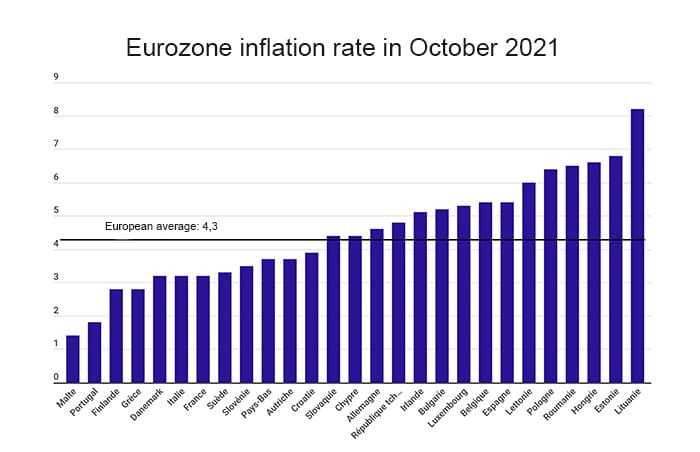
Eurozone inflation
So, in the interview that we did, my colleague and I wanted to answer the question, “What has been affecting local businesses in recent years?”. We were already expecting some answers. Like “pandemic”, “big chain restaurants”, etc. And we already had some notes about all those issues to then write them in the story. But when we asked that question, Ms. Margarida, talked a little about the pandemic, of course, but then, said this:
“ (After describing how the pandemic had affected local businesses) But of course we cannot forget inflation, the prices… Money is not enough for everything, as they say… And we, nowadays, notice the difference between the prices at the beginning of the year, and the prices today… There was a notable increase in the prices. Logically, if we buy things more expensively, we also need to sell them more expensively. And so we have to raise the prices of the dishes… (…) We sometimes say: ‘oh, it’s only twenty, fifty cents’. But people noticed it right away. They say: ‘this is getting more expensive by the day’. But what can we do about it? (…) This is affecting us a lot.”
Miss Margarida, current manager of the restaurant “O Bitoque”
My colleague and I were a bit startled by this statement. Of course, by November, we had already heard about some inflation in Germany and the Netherlands; however, all the Portuguese economists were saying that: one, inflation had not arrived in Portugal yet; and two, that Portugal would most likely not be affected.
And no, the 0,9% increase in the salaries of public servants was not always about inflation. Yes, the 0,9% figure was calculated from the inflation figure at the time of the 2022 State Budget (the first draft of this document, the one that wasn’t approved by the Assembly of the Republic). But a raise in the salaries of public servants was already a long time promise of the Socialist government and their left-wing supporters.
Economists say that inflation in Portugal only started with the war (or that it, at least, was minimal before the war), but I disagree. It had already been affecting local businesses for some time, I would say, for at least September/October.
Soon after the interview, I started noticing stories about inflation in Portuguese newspapers. I remember one about inflation in grain and bread only one week after the interview, in the Portuguese newspaper “Diário de Notícias”.Of course, I rushed to my colleague to show him how the manager was right. The story said that the price of grain could potentially increase 50%(!). This was months before the war.
At the same time as the election (in January), the economic specialized newspapers couldn’t stop talking about inflation and how it was getting worse in other countries. But had not yet reached Portugal. The generalist newspapers continued to mostly ignore the issue.
And then the invasion… Only a week after the stories about frontlines, sanctions, and whatnot… It was here, inflation had finally arrived in Portugal.
Many Portuguese have never experienced this level of inflation, because they are already accustomed to the euro. But many others, not only remember but fear inflation, as they experienced it in full force during the post revolutionary years.
My colleague and I have never experienced inflation. We would normally get some kebabs or other street foods for about €1 or €2, now, that’s basically impossible. We now have to search for the restaurants least affected by inflation, or the rare ones that still haven’t been affected by it.
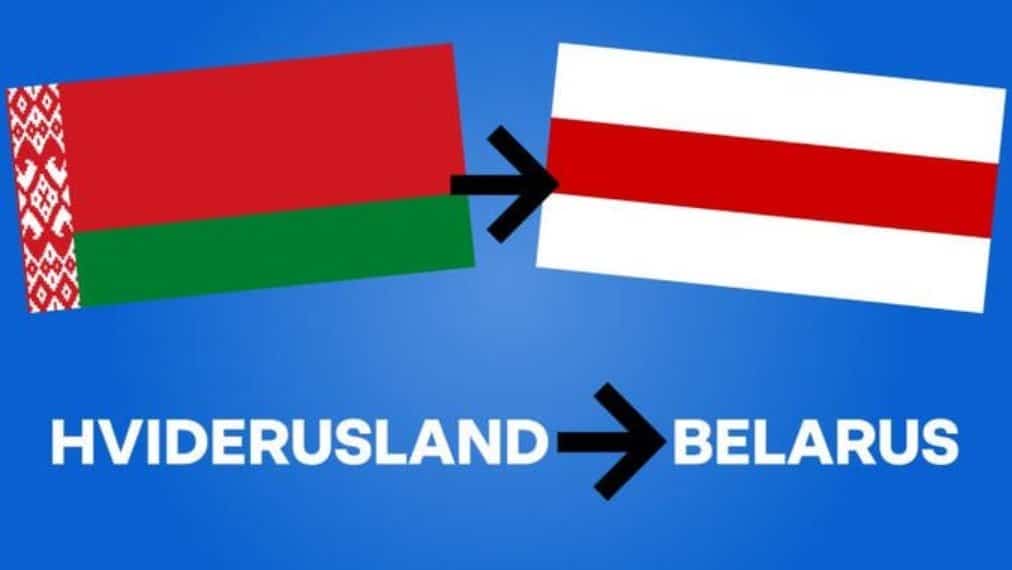
In late May, Norway’s foreign minister announced that Belarus’ official name in Norwegian would be changed. Instead of the traditional Hviterussland (literally Belaya Rus or Belaya Russa), the form Belarus will be used.
The decision was made shortly after Norwegian government officials met with Svetlana Tikhanovskaya, a former Belarusian presidential candidate in the 2020 elections. unnecessary, (and, of course, negative) ie. of course negative associations with Russia.
Similar decisions have already been made by two other Scandinavian countries – Denmark in 2021 and Sweden in 2019, and the decision of the Swedish government was officially welcomed by the Ambassador of Belarus to this country Dmitry Mironchik.
Finland intends to follow the same path, whose president also supported the replacement of the historic Finnish name Valko-Venäjä with Belarus.
This epidemic of name changes that has engulfed Scandinavia is remarkable in its own way. After all, before the question of how to properly call Belarus was only about Russian and how the country is called in other languages, it did not matter to anyone.
The Belarus or Belarus dispute dates back to 1991, when the Byelorussian SSR became officially known as the Republic of Belarus. Until 1991, the “Belarus” format was considered normative for the Russian language, while “Belarus” was considered an exclusively Belarusian-language version.
With the acquisition of independence, the systematic replacement of the old name Belarus, used in the Soviet and pre-revolutionary periods, began on a daily basis.
Belarusian society has gradually become accustomed to the idea that the name Belarus is incorrect and insulting, and that only Belarus should be spoken and written.
And if the state confines itself to quiet bureaucratic procedures, removing the “wrong” name from signs, placards and official forms, the nationalist opposition organizes regular noisy actions against “Belarus”.
Moreover, these actions are addressed not so much by the Belarusians themselves, but by Russia, where the name “Belarus” is still used both officially and on a daily basis.
On the eve of the political crisis of 2020, when a “soft Belarusization” campaign was launched in Belarus, businesses also joined the fight against the country’s “wrong” name.
For example, the Korean carmaker Hyundai, often called Hyundai in informal communication in both Belarus and Russia, ran an advertising campaign under the slogan “Belarus, not Belarus! Hyundai, not Hyundai!” “.
Where did this discrepancy come from and why did it become so painful?
First of all, we note that both Belarus and Belarus are derivatives of the toponym Belaya Rus.
As a result of the division of ancient Russia between different political entities, its individual parts began to acquire specific definitions related to color or size over time.
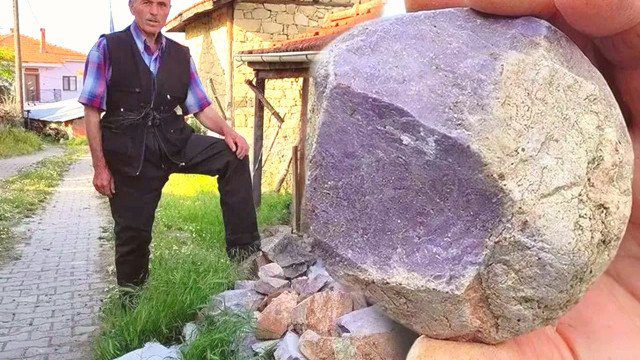
Farmer Ali Aiden, who lives in the village of Akpanar in the Harmandzhik region, found unusual purple stones in his field. He became curious and brought them for expertise in the regional city of Bursa. As a result of their research, it was established that the stones found in his field were made of purple jade.
These purple colored stones are a mixture of the colors of basic jadeite, quartz, phlogopite, chlorotoid, epidote and six orthoclase minerals. They are known to occur only in this region.
In the past, villagers in the region were unaware of the value of the stones and sold them cheaply as a cladding material. Foreign traders bought them by truck, and some of them were even simply stolen or taken without money.
It turns out that purple stones are used in jewelry design. So Ali Aidan, who has about 1 ton of stone left, is really lucky. Now he is considering selling the stones for a large sum if he finds a buyer.
He complained to the Anatolian State Agency:
“It was too late until I realized the fact that the purple stones found in my field were the purple jade gemstone. I have missed a great fortune so far, but I now aim to make money with the last stones I have left.”
Aiden added: “I understand that this stone cost $ 1,600. He was known in Japan to bring happiness. He brought happiness to me too. It turned out that I have a treasure in my field. At first I couldn’t believe it. “
Although the green and white “jade” found in many regions of the world has been known since ancient times, the rich mineral deposit containing purple jade with the quality of precious stones has not been registered elsewhere. Therefore, the only known source of purple jade in the world is located in this geologically studied region. The most typical raw blocks of purple jade are obtained from the deposit near the village of Akpanar. This bulky material is known for its “very suitable for cutting various objects and gemstones”.
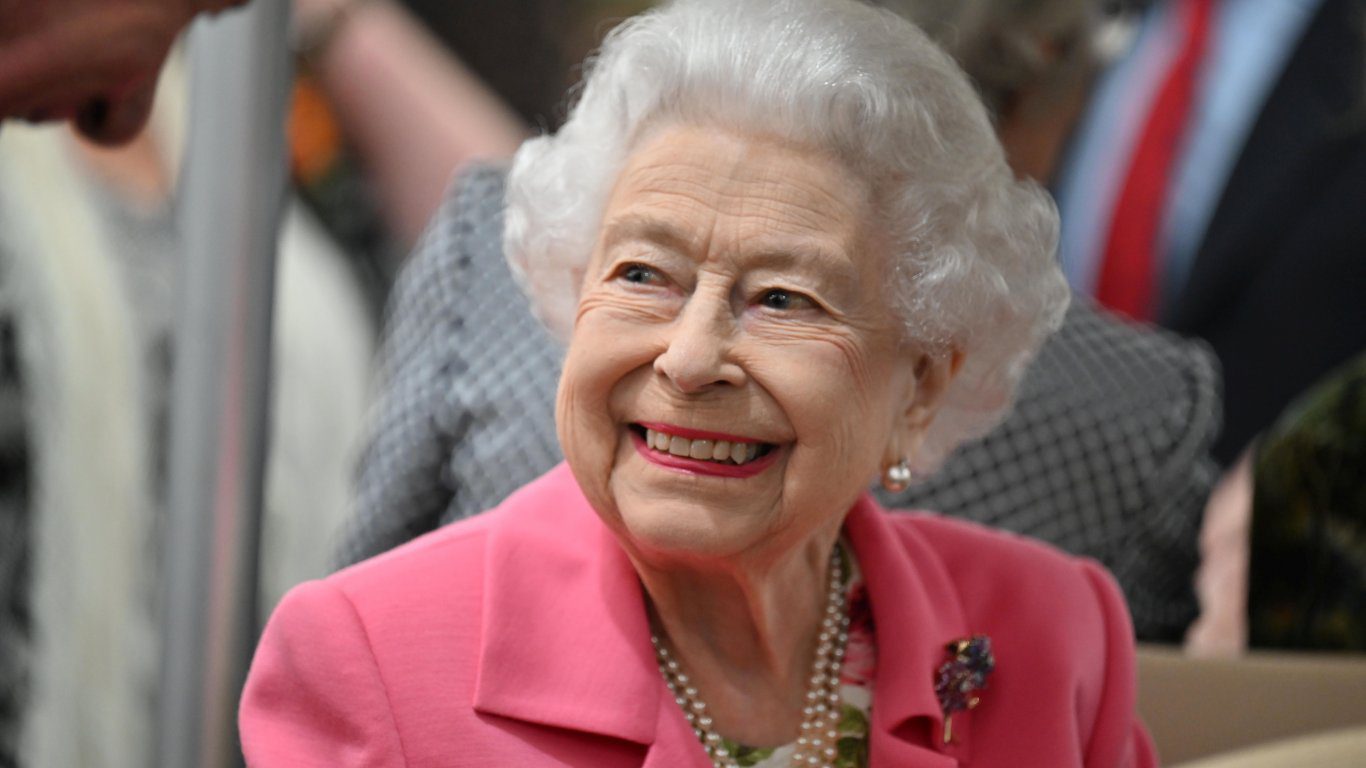
Elizabeth II is a very beloved person and according to the latest poll on the Island on the subject. Often super famous people are attacked by mentally ill people. These and other facts were gathered by the media in the UK on the occasion of her platinum anniversary, celebrated recently.
The queen owns all the dolphins and whales in British waters. This dates back to a statute from 1324, which is still valid today and means that the creatures have the title “royal fish”.
She has nine royal thrones – six at Buckingham Palace, two at Westminster Abbey and one at the House of Lords.
Her Majesty speaks fluent French, learned from her French and Belgian governesses.
She sent her first email in 1976 from an army base.
The list of rich people of the “Sunday Times” for 2022 sets its net worth at £ 370 million – £ 5 million increase over 2021.
Elizabeth dedicated an acre of land in Ranimeide, Surrey, to US President John F. Kennedy after his assassination in 1965.
In Papua New Guinea, where she is a constitutional monarch, she is known in Pidgin as “Mrs. Quinn” and “Mother of the Big Family.”
On June 13, 1981, she rode her horse Burmese during the Trooping the Color military parade, when six shots were fired from the audience. A 17-year-old man named Marcus Simon Sargent from Kent has been arrested. He was sentenced to five years in prison, serving three. He wrote a letter of forgiveness to the queen, but it is said that he did not receive a reply. He was prompted to do so by Kennedy and Lennon’s executioners, and wanted to become “the most famous teenager.”
Months later in Dunedin, New Zealand, another 17-year-old aimed a rifle at the Queen from the fifth floor of a building overlooking the parade – but missed. He was sentenced to three years in prison.
Among the unusual gifts she has received over the years are jaguars and sloths from Brazil and two black beavers from Canada. She was also given pineapples, eggs and shrimp.
Animals donated to the Queen are often sent to the care of the London Zoo.
She sent her first tweet in 2014, announcing the opening of a new exhibition at the Science Museum in London, signed by Elizabeth R.
Tony Blair was the first prime minister born during the Queen’s reign. He was born in 1953.
The Queen successfully sued The Sun in 1993, after her Christmas message was published two days before it aired. The newspaper apologized on the front page and paid £ 200,000 for damages donated to Save the Children.
Elizabeth has a pillow in her private living room in Balmoral embroidered with the words “It’s good to be a queen.”
At public banquets, she does not like to serve raw food or messy dishes such as spaghetti, which risks embarrassing the people who eat.
The Queen first paid income tax in 1993 after a series of financial reforms under Prime Minister John Major.
With her youngest child, her son Edward, who seems to be the only one who did not embarrass her with public actions
She sent a congratulatory message to the astronauts of Apollo 11 for the first landing on the moon on July 21, 1969. The message was captured and deposited on the moon in a metal container.
The reason she usually wears a solid color outfit and a decorative hat is to make sure she can be seen in the crowd.
Prior to that year, the Queen attended every opening of Parliament, with the exception of 1959 and 1963, when she was pregnant with Prince Andrew and Prince Edward.
The oldest person to whom she wrote a letter was a 116-year-old Canadian in 1984.
She became the longest-ruling monarch in Britain on September 9, 2015, breaking the record previously set by her great-great-grandmother Queen Victoria.
The Queen was the first British monarch to visit China in 1986.
She also paid a historic visit to the Republic of Ireland in May 2011, the first visit by a British monarch since Irish independence.
Her Majesty is known for her love of corgis, as her first pet, Susan, was given to her as a gift for her 18th birthday, and later accompanied her on her honeymoon.
She creates her own dog breed – the Dorgi – when one of her Corgi mates with a dachshund named Pipkin, owned by Princess Margaret, her sister.
The Queen hosted the first ladies’ event of its kind at Buckingham Palace in 2004. The lunch of the women with significant achievements was attended by J. K. Rowling, Tuigi and Kate Moss, and others.
For her 80th birthday in 2006, she invited 2,000 children to celebrate with her at Buckingham Palace.
Two days earlier, she had organized a party for other 80-year-olds across the country.
For her Golden Jubilee in June 2002, she hosted the first public concert at Buckingham Palace. The palace party was one of the most watched TV shows in history, with 200 million viewers worldwide.
It went down in history in 1982, when Pope John Paul II became the first to be accepted by a British monarch in 450 years.
Elizabeth II is the 40th monarch since William the Conqueror received the crown of England in 1066.
At least eight actresses have played her in movies and TV series, the most recent being Olivia Coleman in The Crown.
In 1993, she opened Buckingham Palace to tourists for the summer as part of her efforts to modernize her image.
The country has not participated in any EU military mission so far because it was not part of the common European defense policy.
A large majority of Danes (66.9 percent) supported Denmark’s integration into EU defense policy. This is shown by the results of all counted ballots from the referendum held on the issue yesterday, AFP reported.
“Tonight, Denmark has sent an important signal. To our allies in Europe and NATO and to President Vladimir Putin. We have shown that when Putin invades a free country and threatens the stability of Europe, we, the others, unite,” said the Danish Prime Minister. Mete Frederiksen in front of his supporters.
“There is one Europe before February 24, before the Russian invasion, and one Europe after that,” she added.
Two weeks after the Russian invasion, the Prime Minister of Denmark announced an agreement with most of the parties in parliament to hold a referendum on whether to join Denmark’s European defense policy. Until now, the country has enjoyed the right of exception. Most parties in parliament have also agreed to increase defense investment to meet the 2 per cent of GDP threshold demanded by the alliance.
Denmark, a traditionally Eurosceptic country, was granted in 1993 a series of exceptions to some European policies. For example, the country has not participated in any EU military mission so far because it was not part of the common European defense policy.
European Commission President Ursula von der Leyen and European Council President Charles Michel welcomed the historic vote in Denmark.
“I welcome the strong message of commitment to our common security sent by the Danish people,” von der Leyen wrote on Twitter. She expressed confidence that Denmark and the EU would benefit from this decision.
“The people of Denmark have made a historic choice,” added Charles Michel.
Giraffes were not always long-necked, but always preferred head-to-toe positions.
Giraffes did not always have long necks, but they always preferred to hit their heads to maintain their position. Evidence of this is the discovery of a fossil specimen of a giraffe, endowed with a real “skull shield”, AFP reported, citing a publication in the journal Science.
The finding supports the theory that the initial driving force for neck lengthening in these animals was sexual selection.
Discovered in northern China, Discokeryx xiezhi is the first new species to live 17 million years ago.
The ancient ruminant, the size of a large deer, had a thick bony disc at the top of its skull and neck with remarkable cervical vertebrae that allowed it to withstand strong frontal blows, according to paleontologist Shu-Qi Wang of the Chinese Academy of Sciences, lead author. the article.
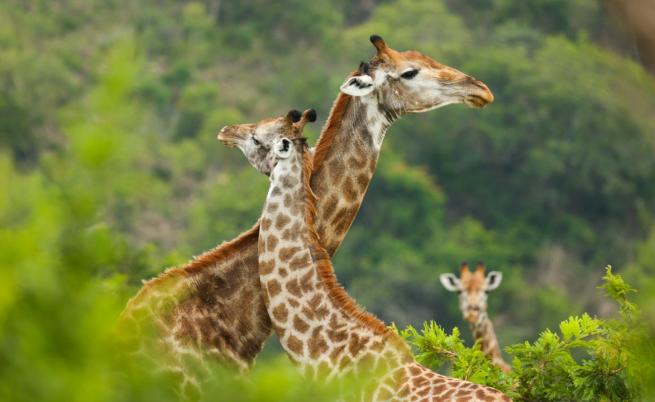
This “special morphology” was most likely adapted to head-to-head behavior between males, the researchers suggested. They compare the behavior of ancient animals to “neck paint” in modern male giraffes, which fight for supremacy, swinging their heads with small horns with all their might against their opponents.
The discovery of Chinese paleontologists plays a crucial role in a debate as old as paleontology itself: why does a giraffe have such a long neck?
Paleontologists have long defended the thesis of ecological advantage, according to which this long neck gives its owner a decisive advantage in reaching the high leaves of trees. According to a more recent and well-disputed theory, a long and powerful neck influences the outcome of fights between males and therefore favors its growth.
The research of Shu-Qi Wang and his colleagues supports the latter thesis: this type of battle is probably the first reason why giraffes have long necks. Subsequently, this acquisition gave them the advantage of being able to graze high leaves.
“This is a perfect example of ‘exaptation’, ie an advantage granted by an organ that will later be useful for other uses,” explains Gregoire Mete, a paleontologist at the National Museum of Natural History in Paris, who welcomed the “excellent research”. “.
According to him, the giraffes have started a “race” for a long and powerful neck. This shows once again that sexual competition is one of the driving forces of evolution, leading to morphological innovations that can be used for other purposes.
In the case of Discokeryx xiezhi, the morphology of the species is the most optimal adaptation for head-to-head battles compared to modern species that resort to this practice.
This morphology has given Discokeryx xiezhi the incomparable ability to absorb the energy of the blow and protect its brain.
But then why didn’t Discokeryx xiezhi also get a long neck? First, because the species did not need it: it experienced a remarkable episode of the Miocene, during which the climate warmed and this allowed it to graze to satiety. And secondly, because this is just the beginning of the history of giraffes and that of the growth of their long necks.
Scientists have identified what they define as the largest plant in the world – a type of seagrass that stretches about 180 kilometers off the coast of Western Australia, the DPA reported.
Australian researchers have noticed a “clone” of Posidonia australis seagrass in the shallow waters of Shark Bay, according to a publication in the Proceedings of the Royal Society.
The discovery is the work of experts from the universities of Western Australia and Flinders.
They studied how many different species thrive in seagrass meadows in Shark Bay, 831 kilometers north of Perth, when genetic tests showed it was a single plant. It is believed to be at least 4,500 years old.
Lead author of the study Jane Edgelow of the University of Western Australia says the team took samples of seagrass shoots from different parts of the bay for research.
“Only one plant has spread over 180 km in the Gulf of Sharks, making it the largest known plant on Earth,” she said. “The answer struck us.”
According to Edgelow, the existing 200 square kilometers of meadows have been expanded by a single colonizing seedling.
Co-author Martin Breed of Flinders University says the plant has no sex. “How it has survived and thrived for so long is really puzzling. Asexual plants also tend to have the reduced genetic diversity they usually need when dealing with environmental change,” he said.
Researchers from the Polytechnic Institute in Utica, New York have analyzed a detailed study on the subject
Yawning affects others by mobilizing them and increasing their vigilance to objects in front of their faces, Science Direct magazine writes, citing the results of an American study.
Researchers at the Polytechnic Institute in Utica, New York, and the Department of Biological Sciences at New Southwestern University in Fort Lauderdale, Florida, have analyzed the latest research in animal behavior, psychology and neurology that proves similar properties. of yawning.
Its contagion is a signal for synchronization and coordination of group activities. These reactions are consistent with the physiological significance of yawning, as well as with the frequency of the process in mammals and birds, depending on the context of the situation.
In addition, according to magnetic resonance imaging studies, yawning individuals activate the prefrontal cortex and areas of the upper temporal sulcus of the brain that are responsible for attention during visual search and recognition of potential threats.
Scientist Andrew Gallup confirms some of this evidence with experiment. Participants had to look for snakes or frogs in one of eight photos. Before being shown the images, the volunteers watched two videos, one showing yawning people and the other a neutral scene.
It turned out that the subjects found the dangerous snakes faster if they had previously seen people yawning, but this did not affect the speed with which they look for frogs.